Yoto Player (3rd Generation)
Yoto Player (3rd Generation) – Yoto
The screen-free audio player for families with children aged 3 to 12 who want a device that works everywhere, lasts all day, and a child can operate alone.
Overview
Somewhere over the Alps on a February afternoon, with our youngest showing early signs of the cabin-fever that was about to define the next two hours, the seatback screen froze. The flight attendant shrugged in that specific way that means “I’ve seen this seven times today.” Our daughter reached into her bag, pulled out a small orange card, and slotted it into a cube roughly the size of a large apple. She was absorbed in a Roald Dahl audiobook within about four seconds. The next two hours were ours.
That is the Yoto Player (3rd Generation): not a marketing promise, but a routine Tuesday at 33,000 feet over the Alps, solved in four seconds flat.
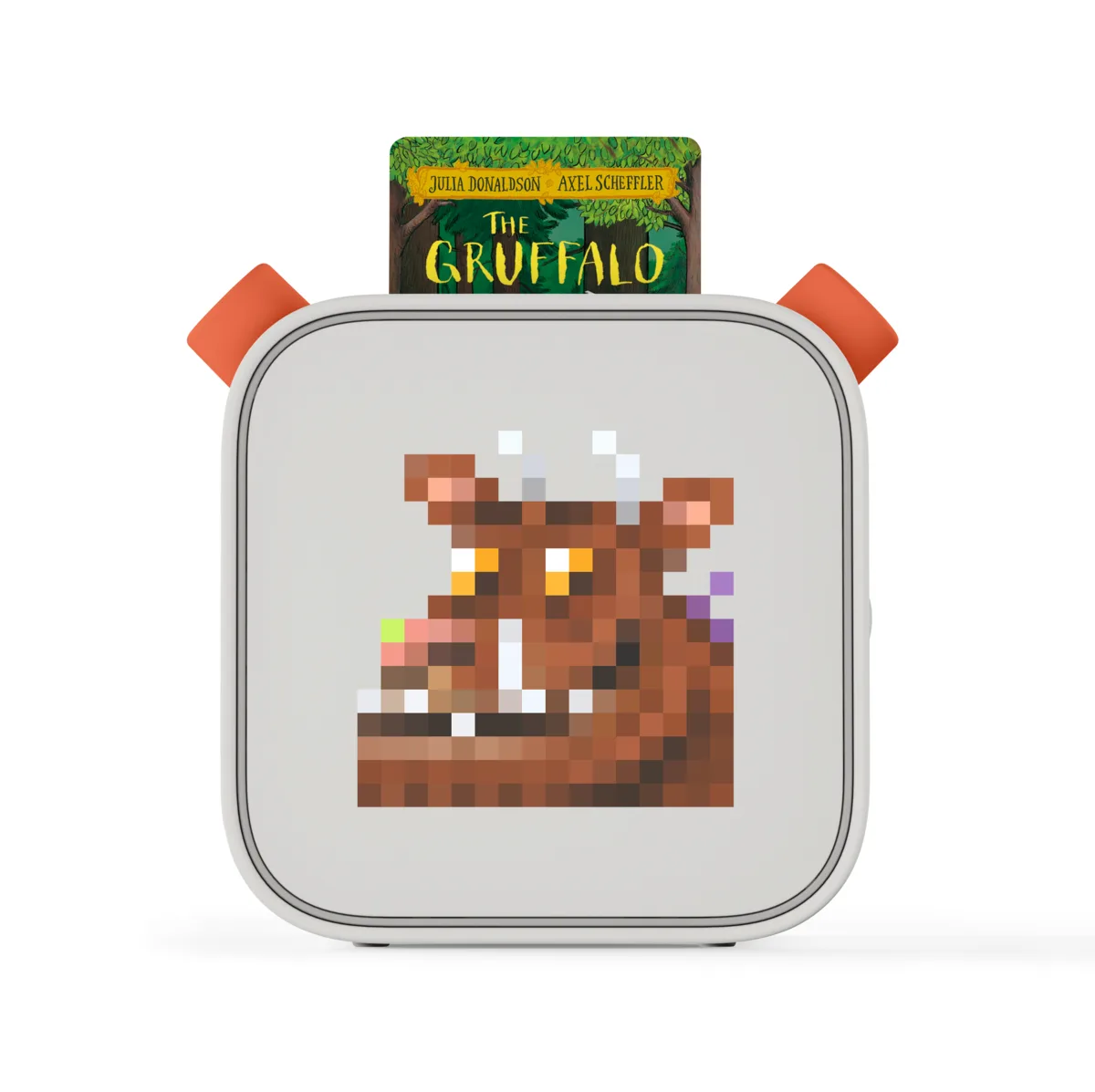
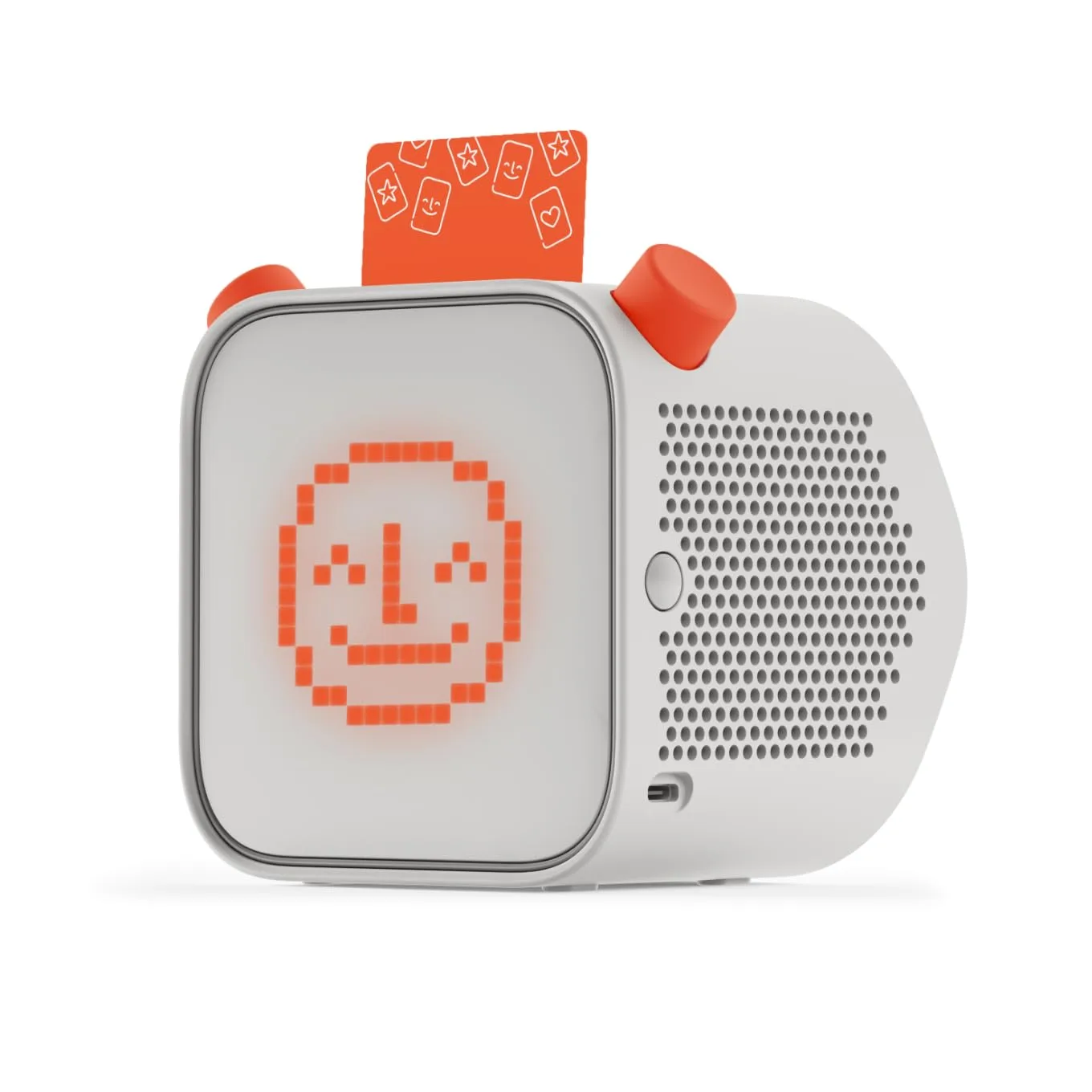
The device is a screen-free audio player for children aged 3 to 12. Physical cards slot into the top of the unit; audio plays out through acoustically engineered 40mm stereo speakers. There is no browser, no recommendation algorithm, no camera, no microphone, and no advertisements. At €99.99 it sits at a fair entry point for the category, with an ongoing card-library cost addressed plainly below. For families navigating airports, car journeys of four hours or more, and hotel bedtimes in unfamiliar time zones, the case for the Yoto Player is essentially this: it works everywhere, lasts all day, and a child operates it alone from around age three.
Why It’s Great for Family Travel
The number worth understanding first is 32. Thirty-two gigabytes of internal storage holds over 600 hours of audio: books, podcasts, music, sleep soundscapes, and a curated daily radio programme for children, all downloadable over Wi-Fi at home and playable entirely offline afterward. No hotel network required. Aircraft flight mode is not a crisis. A remote mountain property with patchy signal is not a problem, as long as you have synced the cards before leaving home.
Battery life reaches 16 hours at standard playback, extending to 24 hours in battery-saver mode. A long-haul flight, a layover, and the hotel bedtime: covered on a single charge with margin left over. That 24-hour real-world figure has been confirmed by multiple independent parent reviewers across different trips and conditions. For context, the leading competitor in the younger-children segment tops out around seven hours; that gap becomes acutely felt across a two-leg journey with a child who has strong opinions about silence.
The 3rd Generation launched in 2023 with three meaningful changes from the previous model: the proprietary magnetic charger was replaced with USB-C, internal storage roughly quadrupled to 32GB, and battery life more than doubled. For travel specifically, those changes addressed the three most frequent complaints about earlier Yoto models: incompatible charging cables abroad, running out of downloaded content mid-trip, and hitting a flat battery on day two of a long journey.
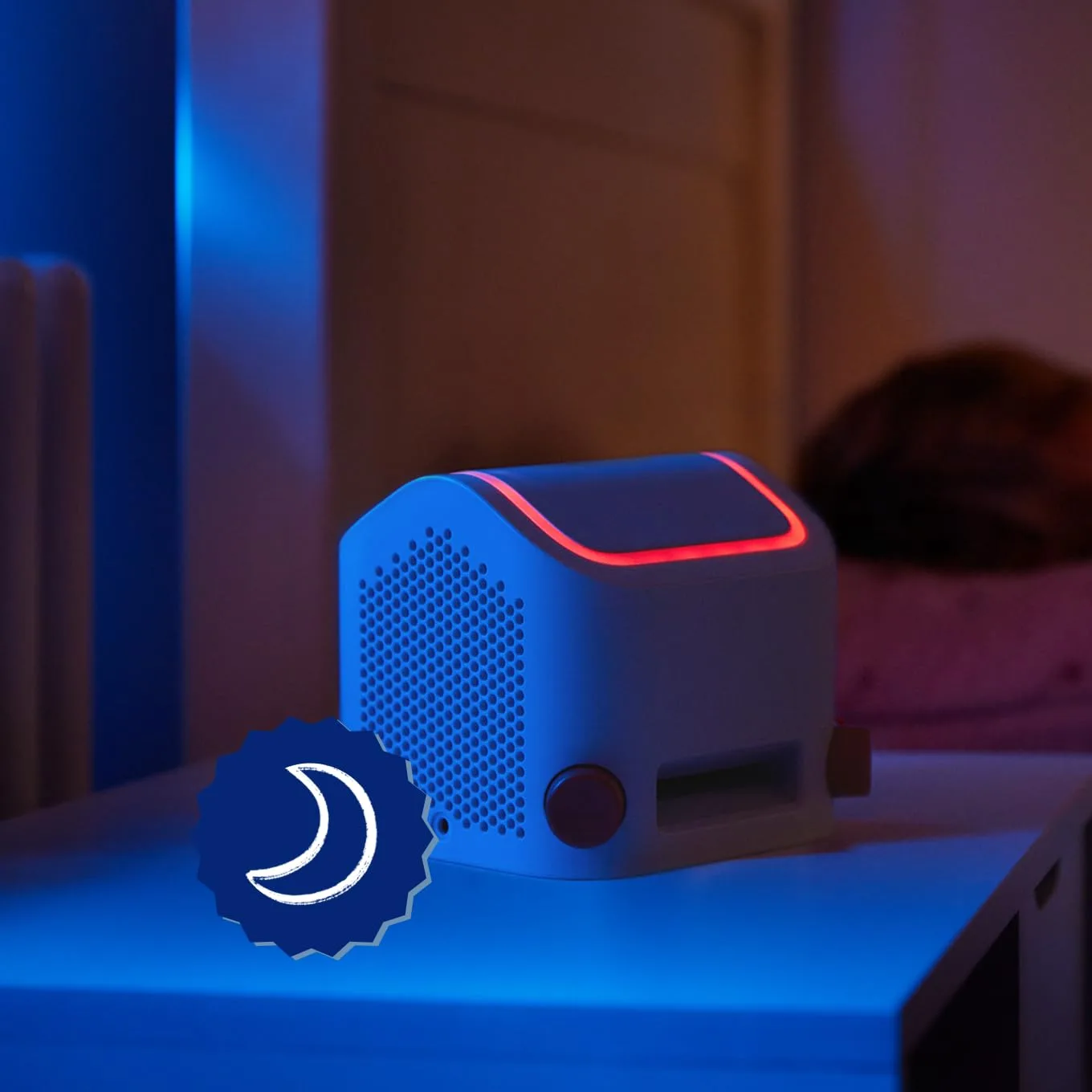
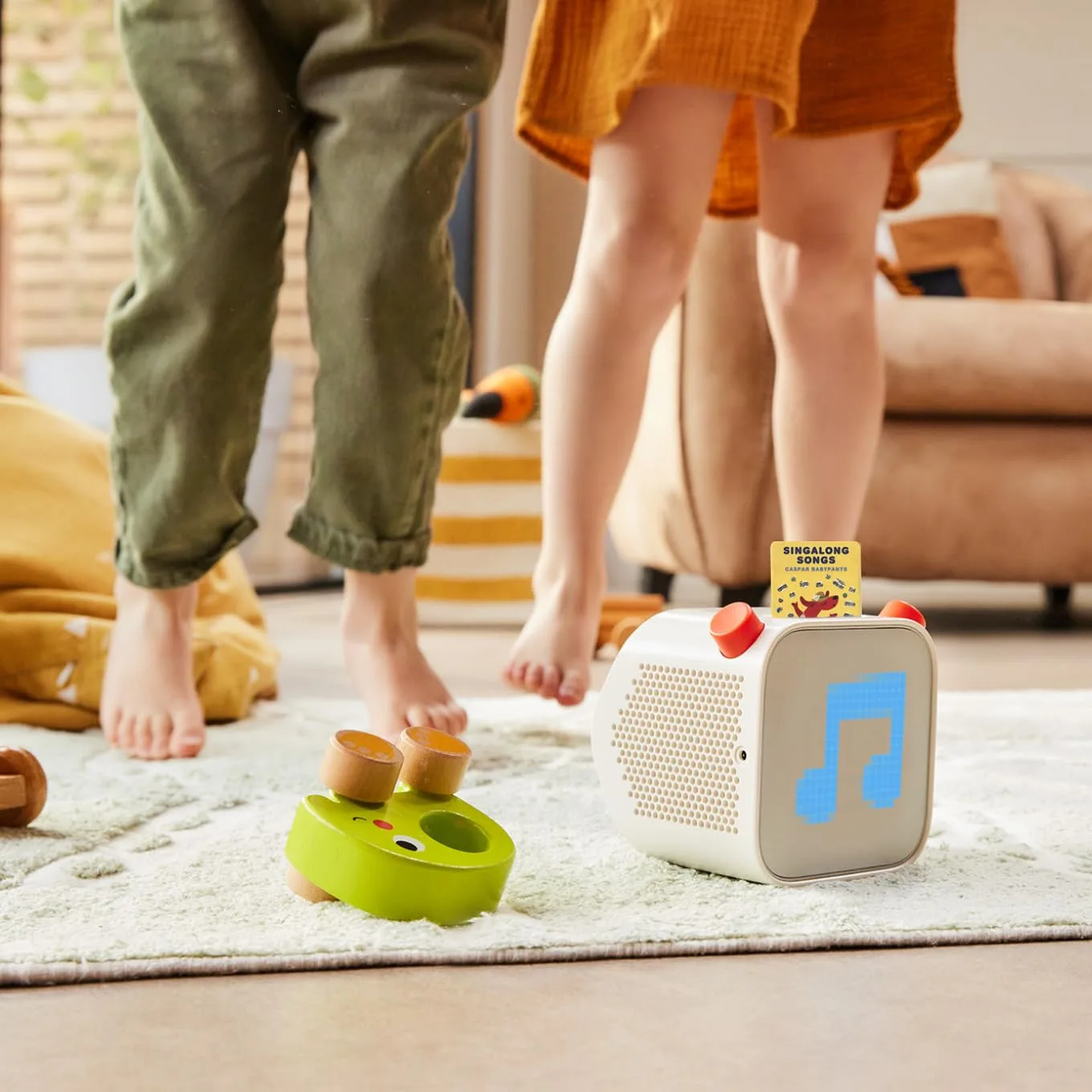
What lifts the Yoto Player above a Bluetooth speaker running a streaming app is the cluster of built-in sleep and bedroom tools: a seven-colour night light, an ok-to-wake clock, a room thermometer, and a library of sleep-sound cards. Families who travel with young children know the cost of a disrupted hotel bedtime. The Yoto addresses most of it without requiring a separate device. The 40mm 5W stereo speaker produces considerably more volume than the device’s size suggests; one reviewer described it as “the most powerful working speaker in the house,” and the range from full room-fill to headphone mode on an aircraft covers most travel listening contexts in one unit.
Bluetooth headphone support alongside the 3.5mm jack means two children in adjacent aircraft seats can listen to different content at the same time. Apple CarPlay and Android Auto compatibility rounds out the picture for road-trip families who manage audio from the car’s central screen.
Real-World Use (Airport / Car / Hotel)
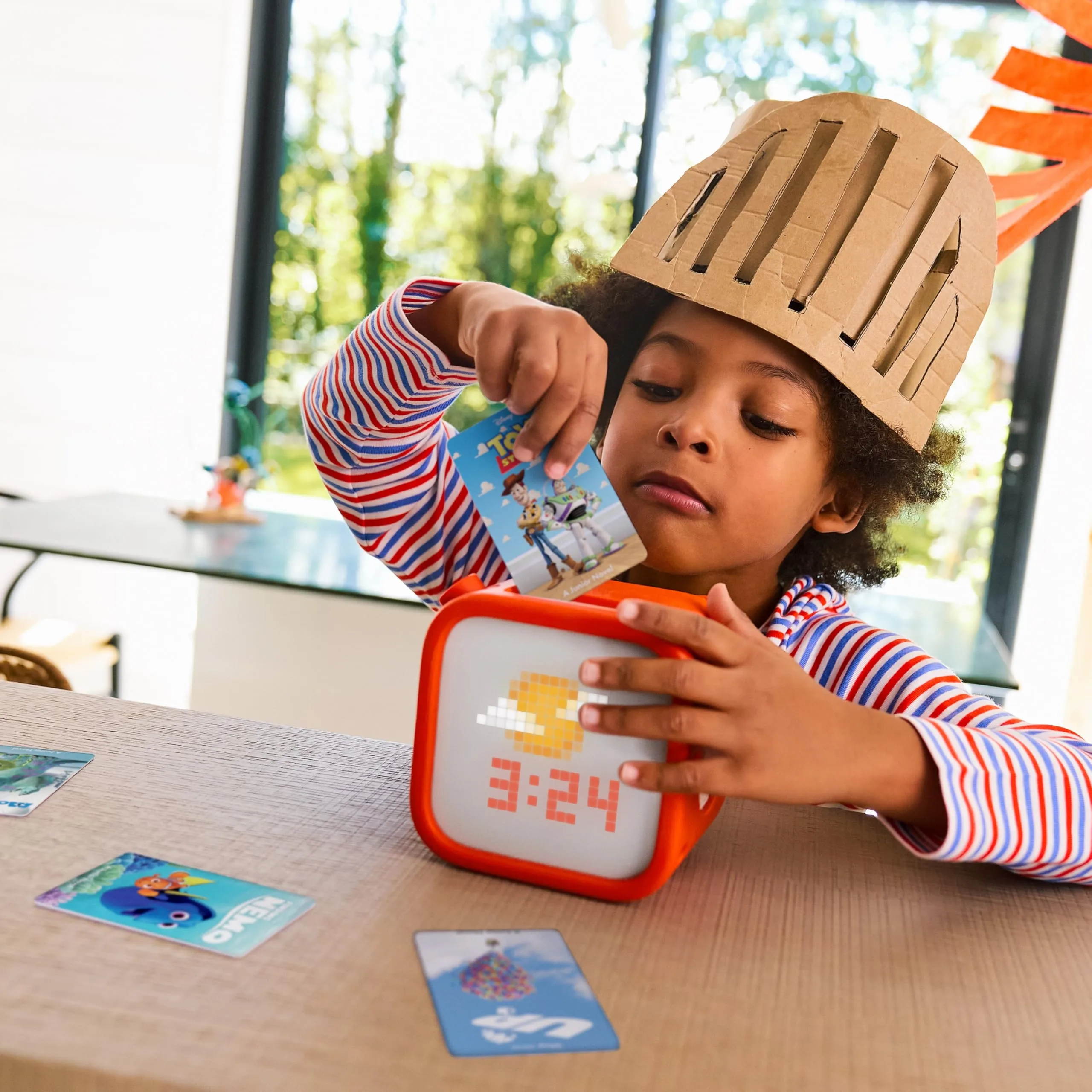
At the airport, the Yoto Player raises no flags. No camera, no microphone, no cellular radio: it passes security without comment or a second look. The cube form factor (110×110×102mm, 600g) sits in a child’s small daypack alongside a water bottle and a travel pillow without eating the available space. The two physical dials on the sides (volume on one, track selection on the other) are within a three-year-old’s independent reach. Children who have grown up with the device operate it autonomously from around their third birthday, with no adult instruction required at the gate or in the cabin.
One preparation step is non-negotiable: cards must be downloaded over Wi-Fi before you leave home. The player stores content internally, but the download itself requires a network connection. Forget to sync a new card the evening before departure and you will be reading airport Wi-Fi terms and conditions during boarding. Add it to the packing checklist alongside the passport check and the USB-C cable.
In the car, the CarPlay and Android Auto integration lets you queue playlists from the dashboard screen on longer road trips, which is a meaningful upgrade if you manage in-car audio that way. Without those systems, the player sits in a cup holder or a seat-back mesh pocket as a standalone speaker. Cards can eject on rough road surfaces; a small drawstring pouch or a piece of tape across the card slot solves this without adding meaningful bulk.
At the hotel, the ok-to-wake clock does real work in an unfamiliar room. A child accustomed to a green light at 6:30 at home will respect the same signal in a hotel in a different time zone, recovering a useful slice of a jet-lagged morning. The room thermometer earns its keep when you are calibrating nap conditions in a room whose climate you cannot fully control. Sleep soundscapes provide the audio continuity that helps some children settle in a strange environment without needing a parent to stay in the room.
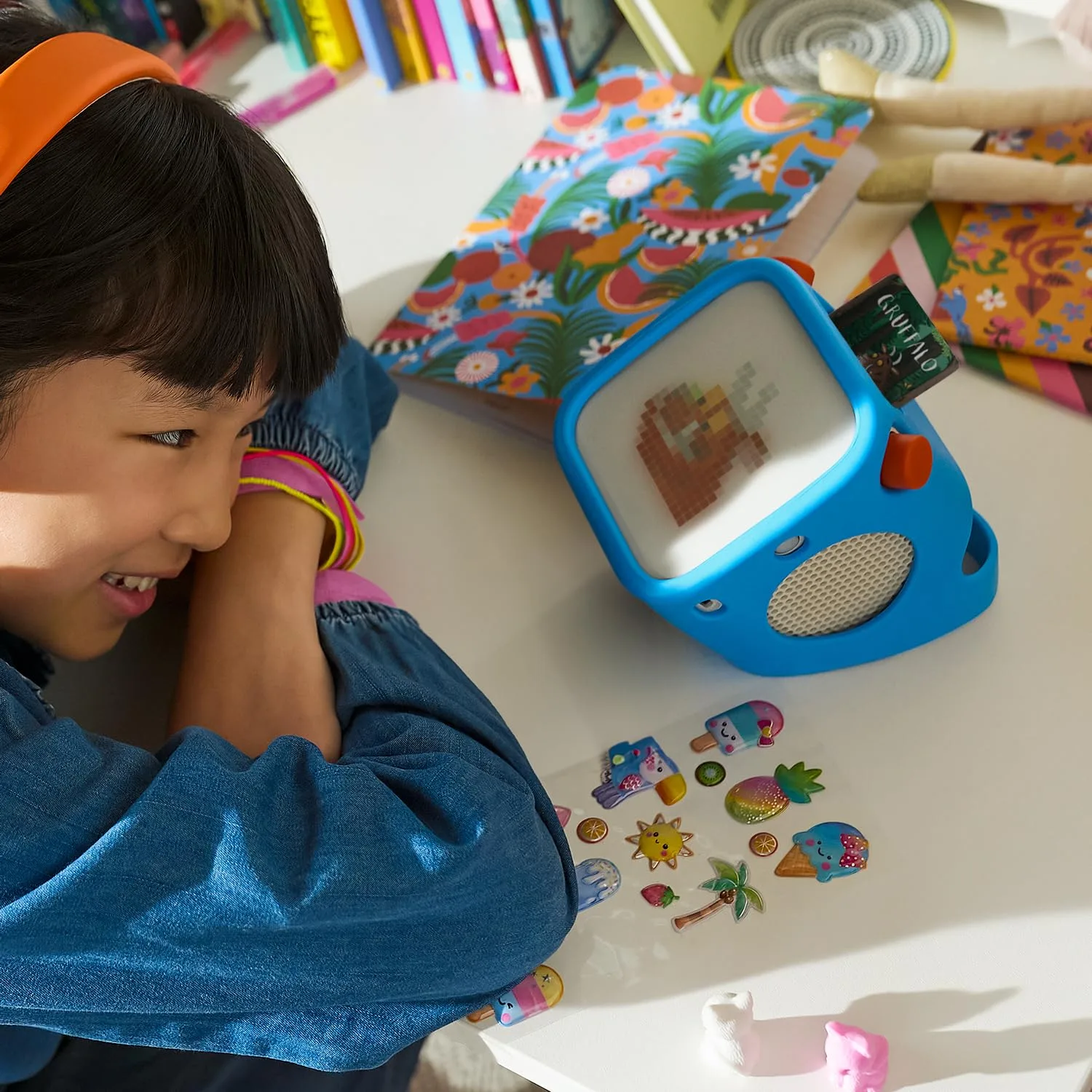
The front display does scratch over time. Without the Adventure Jacket protective case (sold separately at around €20), the screen accumulates surface marks across a travelling season. This is cosmetic rather than structural, but it is worth knowing before handing the device to a child on day one of a two-week trip.
Specs That Actually Matter
- Weight: 600g, light enough for a child’s own bag on a day trip.
- Dimensions: 110mm × 110mm × 102mm; compact cube, carry-on friendly on all standard airlines.
- Battery: 16 hours standard playback; 24 hours battery-saver mode; USB-C charging (fast-charge compatible, approximately 3 hours to full).
- Storage: 32GB internal, holds 600+ hours of downloaded audio content.
- Speaker: 40mm, 5W stereo, acoustically engineered.
- Connectivity: Bluetooth, Wi-Fi 802.11, Apple CarPlay, Android Auto, 3.5mm headphone jack.
- Warranty: 2-year manufacturer guarantee; memory storage faults covered for 4 years.
- Age range: 3–12+ years, as stated on the official Yoto product page.
Pros & Cons
Pros
- 32GB offline library means playback works in the air, in remote locations, and in tunnels without any network dependency.
- 24-hour battery-saver runtime covers any realistic family travel day without a mid-trip charge.
- No camera, no microphone, no ads — a device parents hand to children without reservation.
- Night light, ok-to-wake clock, and sleep soundscapes replace a separate bedtime device in hotel rooms.
- Bluetooth and 3.5mm headphone support keeps siblings’ audio independent on shared journeys.
Cons
- Cards must be downloaded over Wi-Fi before departure — easy to forget on a rushed packing night.
- The Adventure Jacket case (approximately €20 extra) is near-essential for ruggedised travel use.
- Front display accumulates surface scratches without a case; no weather sealing for beach or ski environments.
- Building a card library costs €9–€28 per title; factor this ongoing spend alongside the hardware price.
- Full Player dimensions are larger than the Yoto Mini, worth considering for families who pack ultralight.
FFH Gear Score
- Functionality: 9.0 / 10.
- Quality & Durability: 7.5 / 10.
- Ease of Use: 8.8 / 10.
- Family Practicality: 8.7 / 10.
- Pricing: $$ of $$$$$.
- FFH Gear Score: 8.5 / 10.
Final Verdict
The Yoto Player 3rd Generation covers a specific family-travel problem with unusual completeness. A device children aged 3 to 12 operate themselves, that functions without internet, sustains 24 hours on a single charge, and replaces both a night light and an ok-to-wake clock in an unfamiliar hotel room: that combination is hard to match in one unit at this price.
The card costs are a real and recurring line item, not a caveat to gloss over. Yoto Club membership (a monthly subscription) takes 10 percent off card purchases and provides two cards per month; free daily radio and podcast content available through the companion app reduces how quickly you need to expand the paid library. Budget the library alongside the hardware and the Adventure Jacket, and the annual running cost of a Yoto settles into something reasonable for the family that reaches for it on every trip, which based on the volume of parent testimony gathered across years of use, describes most owners.
If your children are under three (at the stage where the physical character on the box matters as much as the audio inside it), the Toniebox is designed for that developmental window and is more forgiving of the roughest handling. For children aged 3 to 12 on any trip involving a flight, a car journey over four hours, or a hotel bedtime in a different time zone, the Yoto Player is the better-specified device by the criteria that matter most on the road.
Download the cards the evening before you leave, confirm the Adventure Jacket is in the bag, and do not give the device another thought until the next frozen seatback screen reminds you why you brought it.
Gallery
Yoto Player (3rd Generation): Family Travel Questions
Who is the Yoto Player (3rd Generation) best suited for?
The Yoto Player is designed for families with children aged 3 to 12 who want a screen-free audio device their children operate independently. It is the strongest fit for families who travel regularly: on flights, long car journeys, or trips where hotel bedtimes need managing in an unfamiliar room. Parents who prioritise no camera, no microphone, and no advertising on a device their child uses unsupervised will find the design built around exactly those priorities. A single Yoto serves children across approximately nine years of a family’s heaviest travel window.
What age range does the Yoto Player officially cover?
Yoto states the Player (3rd Generation) is suitable from age 3 upward, with an upper guideline of 12 and older. The card-insert mechanism is within a three-year-old’s independent reach, and the content library extends into early teenage years through audiobooks, podcasts, and radio. Families with children under three typically find a more tactile audio device a better fit for that earlier developmental stage, while the Yoto Player’s broader content range and longer battery life make it the stronger choice as children move through primary school.
How big is the Yoto Player — will it fit in carry-on luggage or a child’s daypack?
The Yoto Player (3rd Generation) measures 110mm × 110mm × 102mm and weighs 600g. (sourced from three independent retailers; Yoto does not publish official specs on eu.yotoplay.com) The cube form factor fits in a child’s small daypack alongside a water bottle and travel pillow, and raises no airline security concerns: no camera, no microphone, no cellular radio. It meets carry-on requirements on all standard commercial airlines. Families packing ultralight may prefer the Yoto Mini; the full Player’s dimensions are manageable for any child old enough to carry their own bag.
Does the Yoto Player need Wi-Fi to work during a trip?
All downloaded content plays offline once synced to the device’s 32GB internal storage, which holds over 600 hours of audio. Wi-Fi is required for initial setup and for downloading cards before a trip, but not for playback itself. The player has no cellular radio and no streaming-only mode. The single most common complaint among travelling families is forgetting to download new cards before departure: make it part of the packing checklist, not an afterthought at the gate.
How do you charge the Yoto Player while travelling?
The 3rd Generation uses USB-C charging, replacing the proprietary magnetic connector on earlier models — a meaningful improvement for families who already carry USB-C cables for phones and tablets. A fast-charge compatible charger (QC or PD standard) brings the player to full in approximately three hours; a standard charger takes five to six and a half hours. A wireless charging dock is sold separately by Yoto but is not required for travel. The USB-C cable is included in the box; the mains adapter is sold separately.
Yoto Player vs. Toniebox: which is better for family travel?
For children aged 3 and over, the Yoto Player outperforms the Toniebox on the criteria that matter most for travel: battery life (24 hours vs approximately 7 hours), offline storage (32GB vs microSD-limited), and built-in travel features including an ok-to-wake clock, room thermometer, and sleep soundscapes. The Toniebox wins on tactile design for very young children and drop-survival without a separately purchased case. Families who travel with both a toddler and older children — and who also use a sleep-monitoring device such as the Nanit in the early months — will find the Yoto Player a natural addition as older siblings move into the 3-to-12 window.
Does the Yoto Player need a protective case for travel?
The player body is robust enough to survive everyday drops; multiple owners report units falling down stairs without structural damage. The front pixel display is the weak point: it accumulates surface scratches without protection and there is no weather sealing for beach or ski environments. Yoto’s Adventure Jacket (sold separately, approximately €20 (eu.yotoplay.com, 2026-08-22)) provides a rubberised outer shell that several reviewers describe as near-essential for travel. The player functions without it, but families who travel regularly should budget for the case alongside the hardware.
How much do the Yoto content cards cost, and how quickly does the library expense add up?
Individual Yoto cards range from approximately €9 to €28 depending on content type and length. This is the most consistently cited concern among owners: building a library of 20 cards over the first year adds €180 to €560 on top of the hardware cost. Mitigation options include Yoto Club membership (a monthly subscription offering 10 percent off cards and two cards per month), the extensive free daily radio and podcast content available through the companion app, and the Make Your Own Card feature for family audio recordings. Per-use cost drops significantly for families who listen daily and travel frequently.
Is the Yoto Player permitted and safe to use on aeroplanes?
Yes. The Yoto Player (3rd Generation) has no camera, no microphone, and no cellular radio, placing it in the same category as a Bluetooth speaker or portable audio player under standard airline electronics guidelines. It operates normally in flight mode once content has been downloaded; Bluetooth headphone support works in flight mode on most aircraft. The device does not require power-off during taxi, takeoff, or landing on most airlines, though individual airline policies should be confirmed before travel. No safety recalls have been issued for this model as of the last verified date.