Maxi-Cosi Pebble 360 Pro² Infant Car Seat
Maxi-Cosi Pebble 360 Pro² Rotating Infant Car Seat by Maxi-Cosi (Pebble 360 Pro²)
For a newborn’s first flight and every airport transfer after it, when a flat, certified seat matters more than a cheap one.
Overview
The Pebble 360 Pro² is Maxi-Cosi’s rotating, sliding infant carrier, built around one number worth knowing before anything else: €259.99 for the shell alone on Maxi-Cosi’s German site in September 2026, with the rotating FamilyFix 360 Pro base sold separately at €269.99. That is not a small outlay for a seat a child uses for roughly eighteen months. It is, on the evidence, a defensible one for the right family. It is no longer the newest Pebble, though: Maxi-Cosi now also sells the Pebble Slide Pro at €269.99, which pairs with a different base, the FamilyFix Slide Pro.
ADAC and Stiftung Warentest published their grades for it in May 2024: 2.2 overall on the German school scale, where lower is better, with a strong 1.5 safety sub-score on the vehicle’s own belt and 1.7 with the FamilyFix 360 Pro base fitted. The crash and handling grades are inherited from the original Pebble 360 Pro, which ADAC failed in October 2023 over naphthalene in its cover; the Pro² got a new cover, and it passed. The seat is also TÜV-approved for use on aircraft, in every recline position, which is the detail that actually changes how a family plans a long-haul trip with a two-week-old.
We looked at this the way most parents actually shop for one: the seat first, the base as the second, more painful invoice a few weeks later once the first hospital bills have cleared.

Why It’s Great for Family Travel
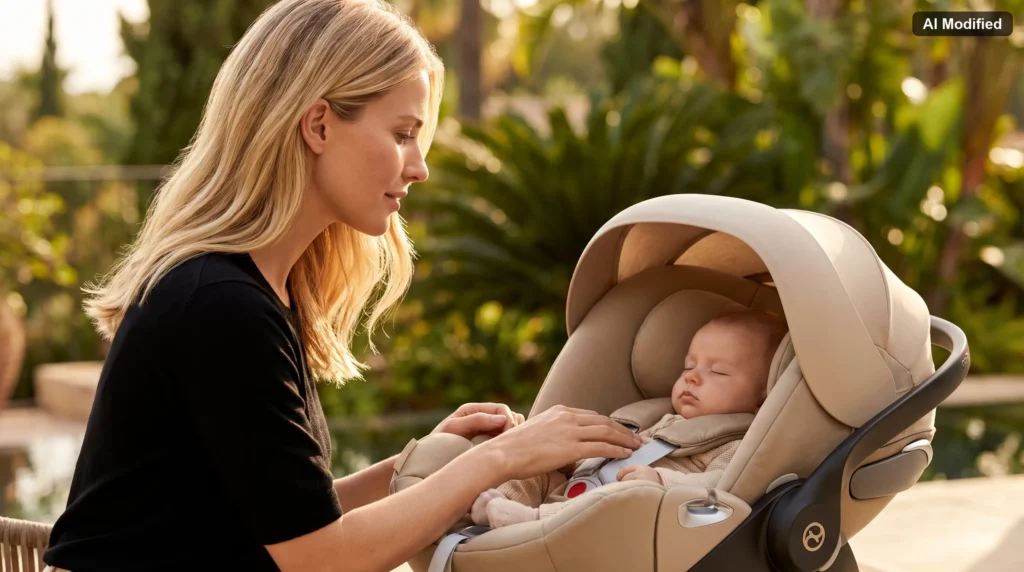
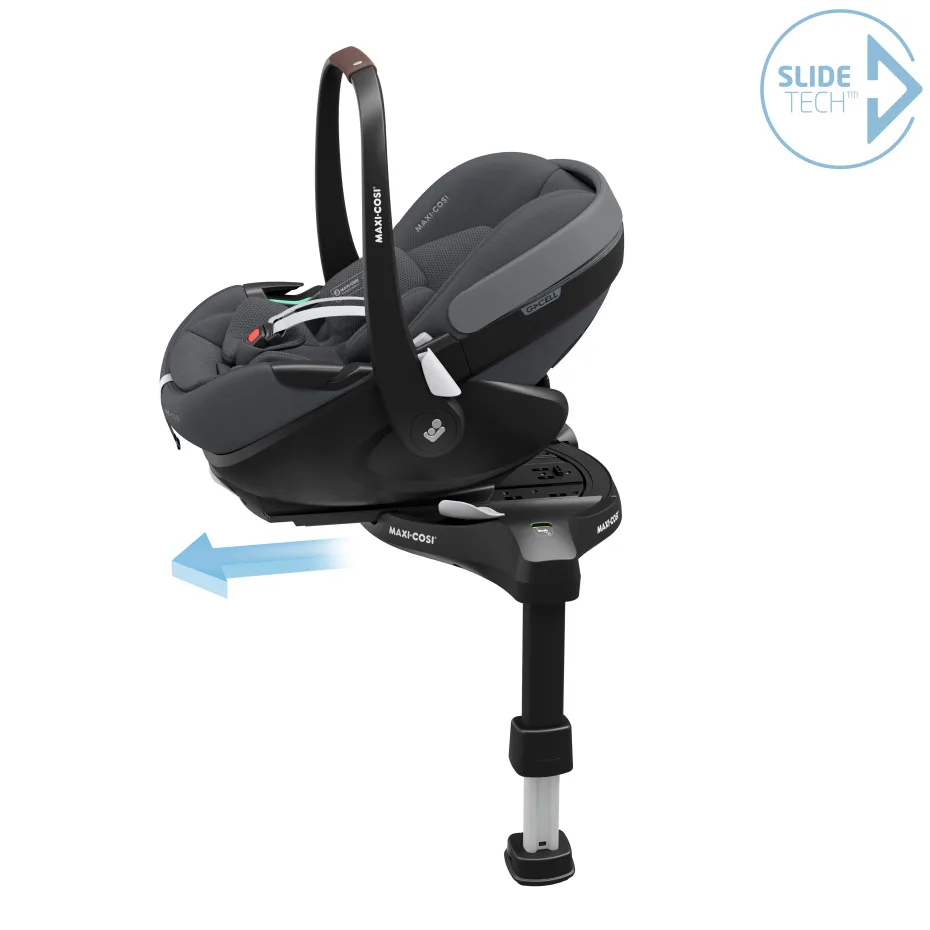
SLIDETECH is the feature Maxi-Cosi puts first, and it earns the billing. Once the seat sits on the FamilyFix 360 Pro base, a single motion rotates it toward the door and slides it 17cm closer to the parent, so buckling in a newborn no longer means kneeling half inside the car with a strap digging into your knee. Cybex’s Base T offers the rotating half of the same idea, and both brands are right that it matters more than most spec-sheet features do. Before the car moves, the seat has to be locked back in its rear-facing position; Maxi-Cosi’s manual rules out travelling with it turned toward the door.
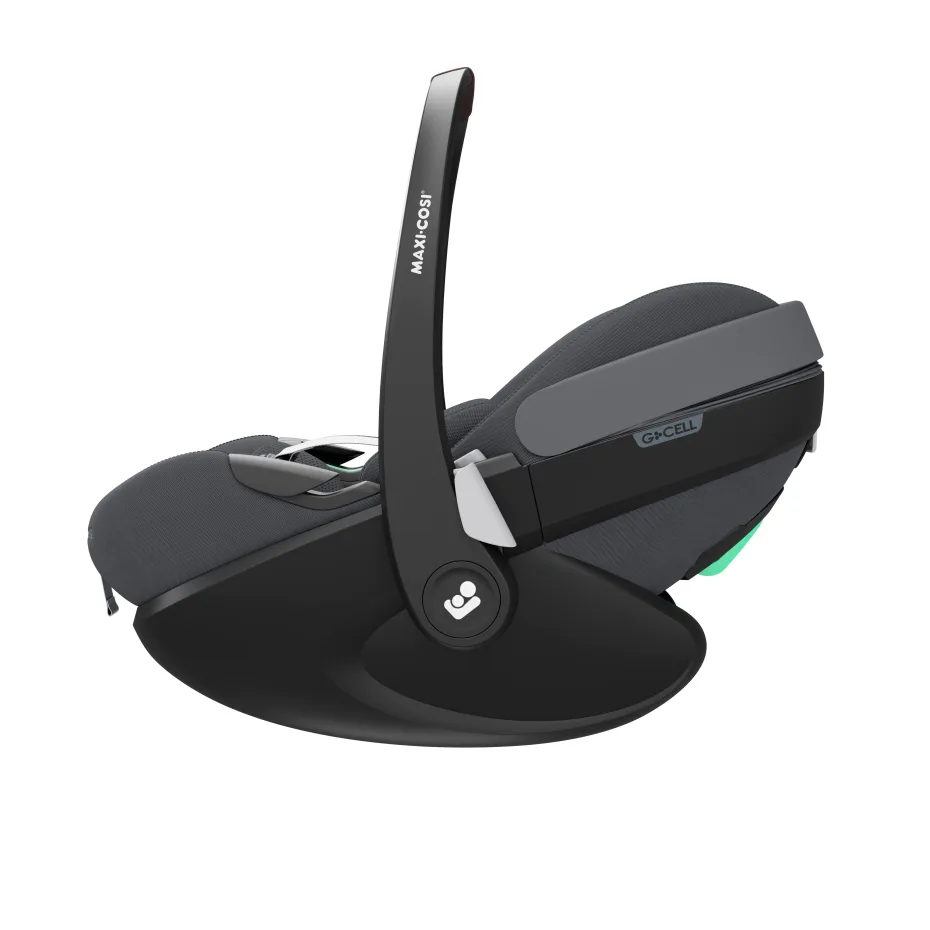
G-CELL is Maxi-Cosi’s side-impact protection, designed to channel crash forces away from the child, and the independent evidence sits beside the design: ADAC rated the side-impact injury risk very low with the seat on the vehicle belt and low on the base, inside safety grades of 1.5 and 1.7, and on ADAC’s scale 1.5 is still the last step of ‘very good’.
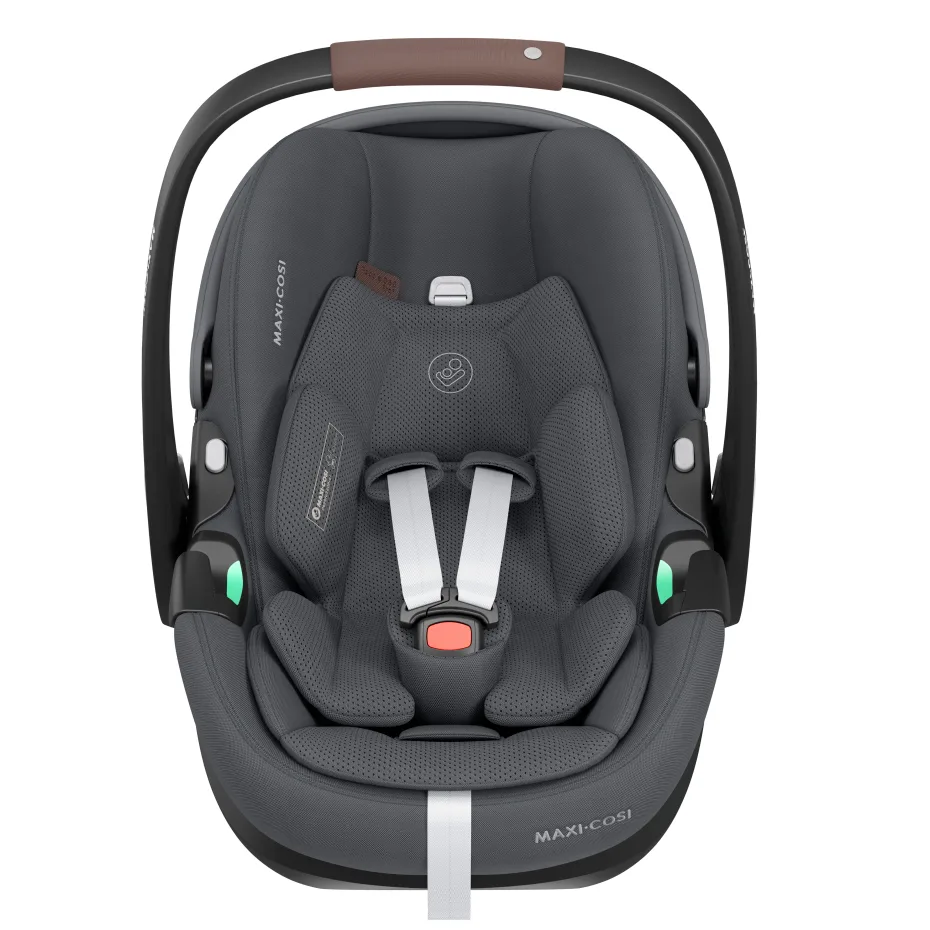
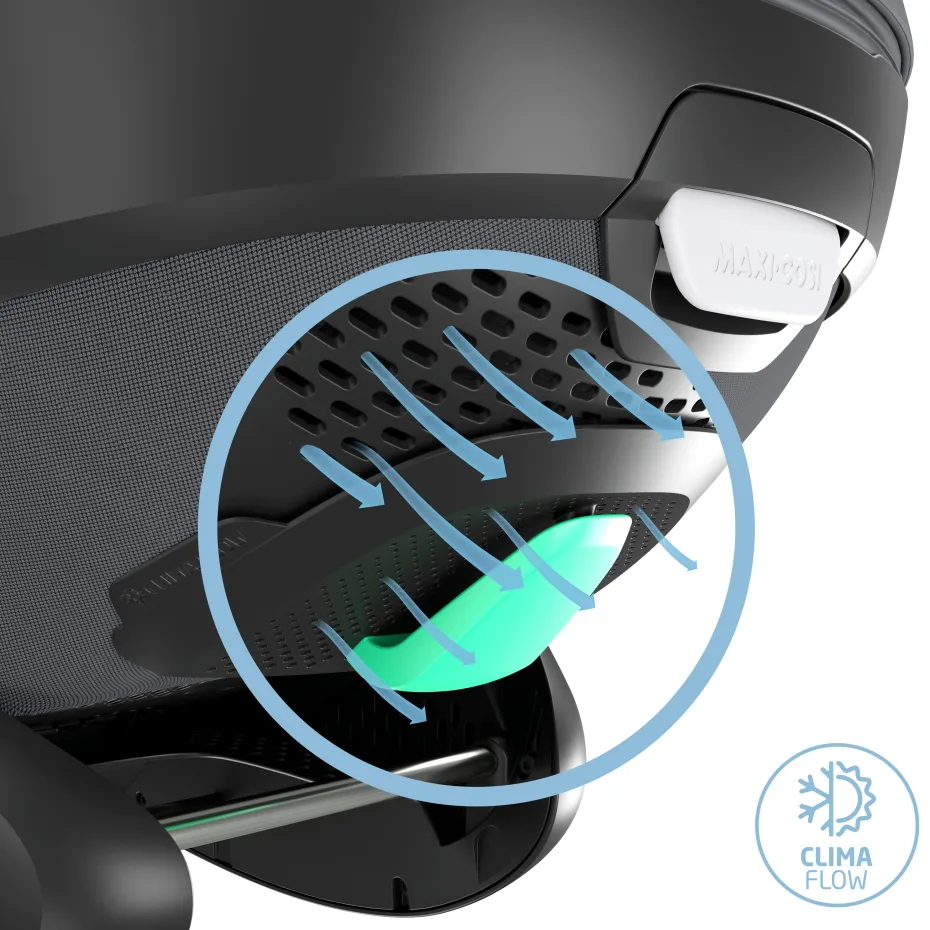
ClimaFlow, Maxi-Cosi’s mix of ventilation openings, breathable foam and open mesh fabric, is a smaller thing that still shows up in daily life: fewer sweaty-necked wake-ups on a warm drive, which matters more on a Mediterranean transfer in August than it does on paper.

Real-World Use (Airport / Car / Hotel)
Airport: this is where the Pebble pulls clear of the Cybex Cloud T i-Size. The Pebble 360 Pro² is TÜV-approved for aircraft use in any recline position, including the flattest, and the ADAC test notes an approval for certain aircraft too. It goes on a forward-facing passenger seat, held by the aircraft’s lap belt, so the baby needs a booked seat of its own rather than a parent’s lap. Airlines still set their own boarding and seating rules for any car seat, so confirm with yours before you rely on it, but a family that clears those steps can fly with its own seat rather than trust an airline bassinet or a rental desk’s mismatched loaner.
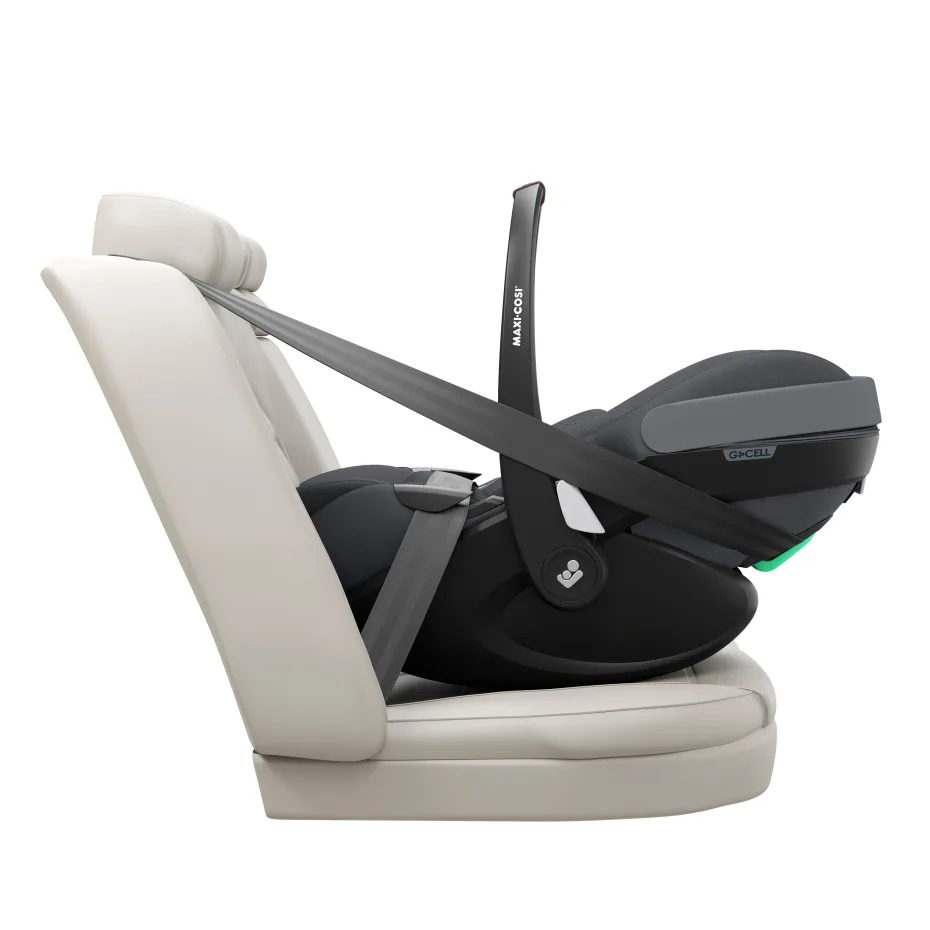
Car: without the base, the Pebble 360 Pro² installs on the vehicle’s own three-point belt, and ADAC’s 1.5 safety score on exactly that configuration is genuinely reassuring for anyone not ready to spend another €269.99 on day one. Add the FamilyFix 360 Pro and the ISOFIX connectors plus load leg take over, with visual indicators confirming a correct fit. One catch for hire cars abroad: the base is approved only on i-Size seating positions or in vehicles on Maxi-Cosi’s type list, so the belt fit is the fallback worth practising at home. ADAC’s handling sub-score, 2.8 in both configurations, is the one number worth pausing on. It sits in ADAC’s ‘satisfactory’ band, and the reasons are specific: high weight, a cover that is hard to remove, a slightly raised risk of operating errors and, on the belt alone, a more involved install. ADAC rates buckling the baby in as easy either way. For scale, the Cybex Cloud T i-Size managed 2.2 for handling on its Base T in ADAC’s October 2023 round, but 3.0 on the belt alone.
Hotel: a capsule seat earns its keep in a hotel room as a portable, familiar place to put a jet-lagged baby down, and the flat recline helps more here than the marketing photos suggest. Keep it on the floor, never on an elevated surface such as a table or chair. Within the approval limits of 87cm and 13kg, the rule for when to move up is the head: once it reaches the top edge of the shell, the next seat is due, so watch the head rather than the eighteen months on the box.

Specs That Actually Matter
- Age/size range: birth (from 40cm) to approximately 18 months, up to 87cm and 13kg; also suitable for premature babies.
- Safety standard: UN R129/03 (i-Size).
- Independent test result: ADAC/Stiftung Warentest, May 2024: 2.2 overall on the vehicle’s own belt (Safety 1.5, Handling 2.8, Ergonomics 2.0, Pollutants 1.0); 2.2 overall with the FamilyFix 360 Pro base (Safety 1.7, Handling 2.8, Ergonomics 2.1, Pollutants 1.0). The Pro² matches the tested original Pebble 360 Pro except for its cover, which was tested separately.
- Seat weight: 4.7kg nominal, 5.2kg on the scales in the ADAC and Stiftung Warentest test; the FamilyFix 360 Pro base weighs 8.6kg.
- Dimensions: 44cm seat width; length varies with the recline, so check your boot space before you buy.
- Base: FamilyFix 360 Pro (ISOFIX with load leg, sold separately, €269.99), required for the 360-degree rotation and SLIDETECH’s 17cm slide; installation via the vehicle’s own three-point belt is also possible with no base at all. The same base later takes the toddler-stage Pearl 360 Pro.
- Materials: 59 percent polypropylene, with small shares of EPP foam, other plastics, several steel grades and aluminium, plus 22 percent fabric.
- Care: the cover goes in the machine at 30°C or wipes down with a damp cloth, though ADAC found it hard to remove.
- Warranty: 24 months as standard, extended to five years if the seat is registered online within six months of purchase.
- Price: €259.99 for the seat on Maxi-Cosi’s German site on 23 September 2026 (Twillic Graphite, in stock); German retailers also list Twillic Black, Green and Truffle, and one had the seat at €199 that day. FamilyFix 360 Pro base: €269.99. All-in at list prices: close to €530.

Pros & Cons
What earns its keep:
- TÜV approval for aircraft use in every recline position, a real advantage on long-haul trips with a newborn.
- Strong, independently tested safety scores: 1.5 on the belt alone, 1.7 with the base, both from ADAC/Stiftung Warentest in May 2024.
- The base’s rotate-and-slide motion simplifies loading a newborn once it is fitted.
- The same FamilyFix 360 Pro base later supports the toddler-stage Pearl 360 Pro, so the more expensive purchase is not a one-seat investment.
What to weigh before buying:
- The FamilyFix 360 Pro base is a separate €269.99 purchase; at Maxi-Cosi’s list prices the all-in cost is closer to €530 than the €259.99 headline.
- ADAC grades handling at only 2.8, ‘satisfactory’, citing high weight (5.2kg for the seat and 8.6kg for the base as tested), a hard-to-remove cover and a slightly raised risk of operating errors.
- Maxi-Cosi’s spec table lists no external dimensions, which makes a pre-purchase car-boot check harder than it should be.
- Buy the Pro² specifically: the first-generation Pebble 360 Pro failed ADAC’s October 2023 pollutant test over naphthalene in its old cover.

FFH Gear Score
Functionality: 8.8 / 10.
Build Quality & Durability: 7.9 / 10.
Ease of Use: 7.7 / 10.
Family Practicality: 8.2 / 10.
Pricing: $$$$ of $$$$$.
FFH Gear Score: 8.2 / 10.

Final Verdict
Buy the Pebble 360 Pro² for the aircraft approval and the safety numbers, not for the price. At €259.99 the seat costs about €10 less than the Platinum-line Cybex Cloud T i-Size we reviewed; add each brand’s base and the Maxi-Cosi system ends up roughly €20 dearer at German list prices, close to €530 against about €510. What tips it for a specific kind of family is the TÜV aircraft approval, set against ADAC grades that trail the Cybex on its base, 2.2 overall against 1.7. If the budget stops well under €500 for seat and base, a cheaper capsule is defensible: ADAC’s May 2023 test graded the belt-fitted Joie i-Snug 2, at about €119, 2.0 overall with the same 1.5 safety sub-score, though it is approved only to 75cm, roughly the first year.
For everyone else booking flights in the baby’s first eighteen months, this is the seat that lets a family carry one child restraint through the terminal, the taxi and the hotel room instead of renting a mismatched one at the other end, and that convenience is worth the invoice.
Gallery
Maxi-Cosi Pebble 360 Pro²: Frequently Asked Questions
Who is the Maxi-Cosi Pebble 360 Pro² best suited for?
Families who want an aircraft-approved infant seat and a strong, independently tested safety score, and who are prepared to budget for the FamilyFix 360 Pro base as a near-essential second purchase. The seat is TÜV-approved for use on aircraft in every recline position, and ADAC/Stiftung Warentest rated it 2.2 overall in May 2024, with a 1.5 safety sub-score on the vehicle's own belt. It suits a family flying often with a newborn more than one doing mostly short local drives, where a simpler, cheaper i-Size capsule will do the job.
What age, height and weight range does the Pebble 360 Pro² cover?
From birth (40cm) to approximately 18 months, up to 87cm and a maximum of 13kg, under UN R129/03 (i-Size); it also suits premature babies, and the newborn inlay is used until the baby passes 60cm. Within those limits, the switch to the next seat is due once the child's head reaches the top edge of the shell, so watch the head rather than the calendar when planning the follow-on seat.
Do I need the FamilyFix 360 Pro base, and what does it add?
Not strictly, but the 360-degree rotation and SLIDETECH's slide only work once it is fitted. The seat and the FamilyFix 360 Pro base are sold separately, at €259.99 and €269.99 (checked 23 September 2026). Without the base, the Pebble 360 Pro² installs on the vehicle's own three-point belt, and ADAC's May 2024 grades gave that configuration a 1.5 for safety. With the base fitted, ISOFIX and a load leg take over and the seat rotates and slides 17cm toward the parent for loading. The base is approved only on i-Size seating positions or in vehicles on Maxi-Cosi's type list, which matters in a hire car.
Can the Pebble 360 Pro² actually be used on a plane?
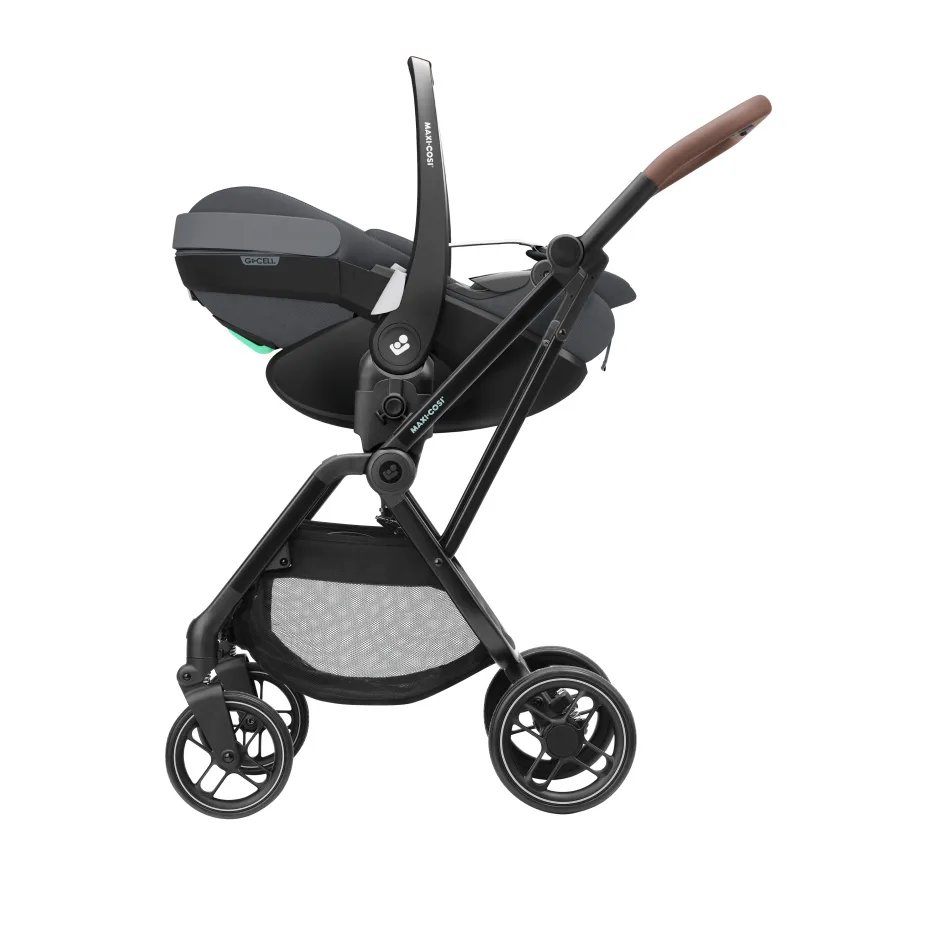
The Pebble 360 Pro² is TÜV-approved for use on aircraft, in every recline position including the flattest. The ADAC test notes an approval for certain aircraft too. It is allowed only on a forward-facing passenger seat, fastened with the aircraft's lap belt, so the baby needs its own booked seat rather than a parent's lap. Airlines still set their own rules on car seats in the cabin, so confirm with your carrier before you fly. Through the terminal, the shell clicks onto a compatible stroller for the walk between gates.
How easy is the Pebble 360 Pro² to install and use day to day?
Easy on the base, a little more involved on the belt alone. ADAC's May 2024 grades rate buckling the baby in as easy in both configurations and the base installation as easy, but flag a more involved install with the vehicle belt. The handling grade is 2.8 either way, only 'satisfactory' on ADAC's scale, pulled down by high weight (5.2kg for the seat and 8.6kg for the base as tested), a cover that is hard to remove and a slightly raised risk of operating errors. The Easy-in harness, designed to stay open and out of the way, is the part of the daily routine that most clearly helps.
What safety certifications and independent test results does the Pebble 360 Pro² have?
It is approved under UN R129/03 (i-Size) and was graded by ADAC and Stiftung Warentest in May 2024, scoring an overall 2.2 both on the vehicle's own belt (Safety 1.5, Handling 2.8, Ergonomics 2.0, Pollutants 1.0) and with the FamilyFix 360 Pro base fitted (Safety 1.7, Handling 2.8, Ergonomics 2.1, Pollutants 1.0). The Pro² matches the original Pebble 360 Pro apart from its cover, so those crash results carry over from that seat's October 2023 test, which it failed only because of naphthalene in the old cover; the new cover was tested separately and passed. Its G-CELL side-impact system is designed to channel crash forces away from the child, and ADAC rated the side-impact injury risk very low on the belt and low on the base.
What are the main real-world drawbacks of the Pebble 360 Pro²?
Cost, handling and weight. The FamilyFix 360 Pro base is a separate €269.99 purchase, so at list prices the system most families end up buying costs close to €530 rather than the €259.99 headline seat price. ADAC's handling grade of 2.8 is only 'satisfactory', citing high weight (5.2kg for the seat as tested, against a nominal 4.7kg), a hard-to-remove cover and a slightly raised risk of operating errors. Length varies with the recline, so check your boot space before ordering.
Is the Pebble 360 Pro² worth the price compared with cheaper i-Size infant seats?
For a family that flies often with a young baby, yes; for occasional local drives, probably not. Cheaper i-Size capsules with comparable crash results exist: ADAC's May 2023 test graded the belt-fitted Joie i-Snug 2, at about €119, 2.0 overall with the same 1.5 safety sub-score, though it is approved only to 75cm, roughly the first year. What the Pebble's premium buys is the 87cm range, the rotating and sliding base system and the aircraft approval. That approval is not exclusive to this seat either, since older capsules such as the Pebble Plus and Citi are TÜV Rheinland approved for aircraft too, so look for an aircraft marking on any cheaper model if flying is the point.
How does the Maxi-Cosi Pebble 360 Pro² compare with the Cybex Cloud T i-Size or the Doona Liki Trike S5?
The closest contest is with the Cybex Cloud T i-Size, another premium infant capsule; at German list prices the Maxi-Cosi system with its base costs about €20 more, roughly €530 against €510. On their bases, ADAC graded the Cybex better overall (1.7 against 2.2), for safety (1.3 against 1.7) and for handling (2.2 against 2.8); on the belt alone the gap narrows to 2.1 against 2.2, with the Cybex safer (1.0 against 1.5) but harder to handle (3.0 against 2.8). The Pebble's edge is the aircraft approval, which the ADAC test notes for the Pebble and not for the Cloud T. The Doona Liki Trike S5 answers a different question: it is rated for 10 to 36 months, so it overlaps with the Pebble's later months as a way to move a toddler around town, but it is not a car seat at any stage.