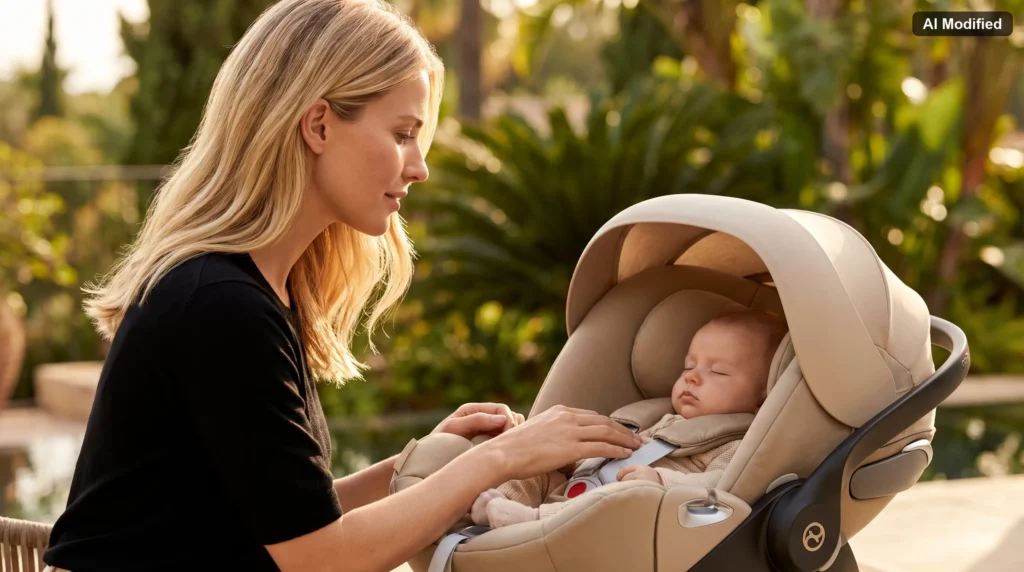
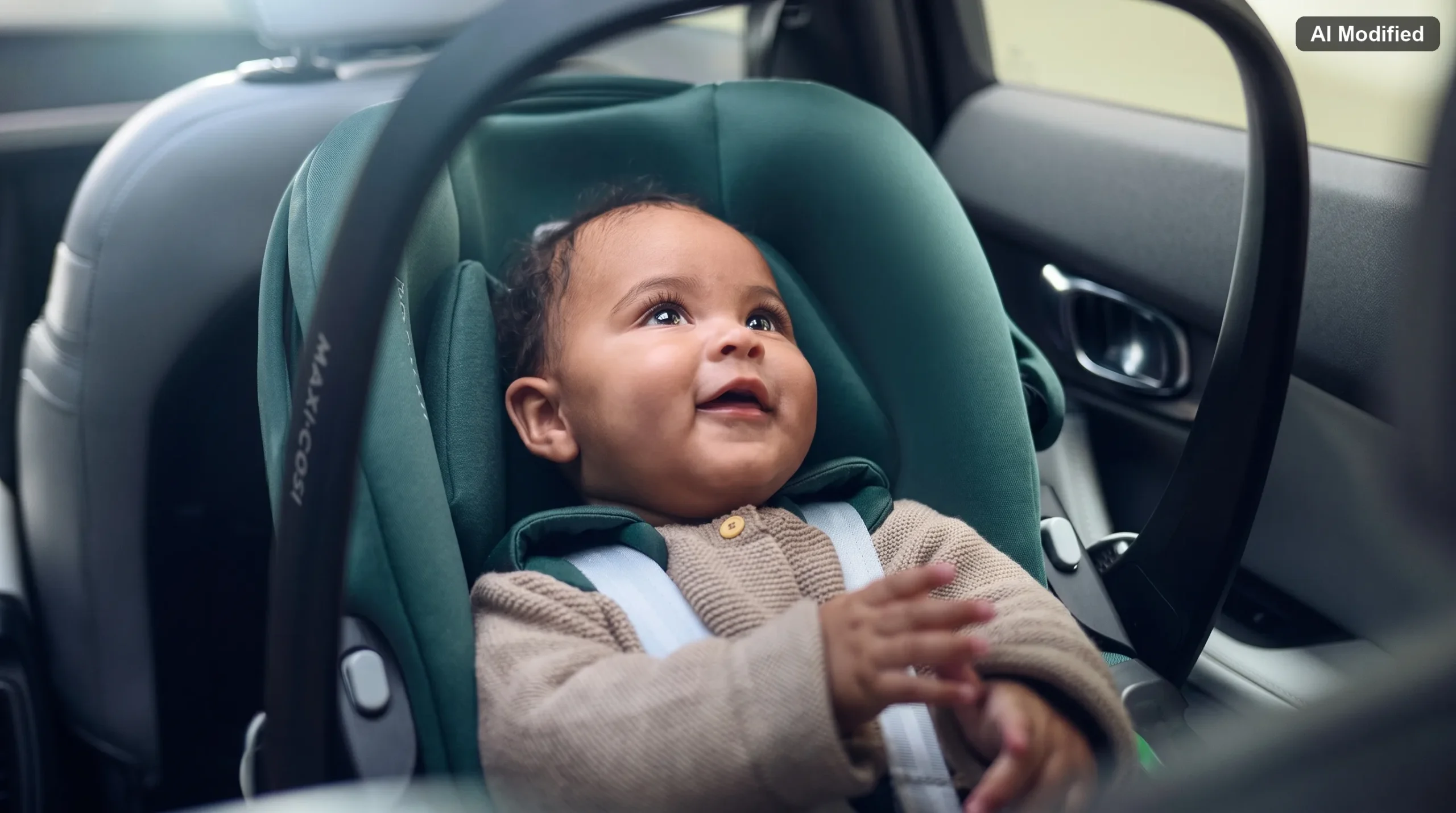
Maxi-Cosi Pebble 360 Pro² Infant Car Seat
Silla de coche giratoria para bebé Maxi-Cosi Pebble 360 Pro² de Maxi-Cosi (Pebble 360 Pro²)
Para el primer vuelo de un recién nacido’s y todos los traslados desde el aeropuerto que vengan después, cuando una silla homologada y reclinable importa más que ahorrar.
Resumen
La Pebble 360 Pro² es el portabebés giratorio y deslizante de Maxi-Cosi. Antes que nada, conviene tener presente una cifra: €259.99 por la silla, sin base, en la web alemana de Maxi-Cosi en septiembre de 2026. La base giratoria FamilyFix 360 Pro se vende aparte por €269.99. No es una inversión menor para una silla que se utiliza unos dieciocho meses, pero para la familia adecuada resulta justificable. Ya no es el modelo Pebble más reciente: Maxi-Cosi comercializa también la Pebble Slide Pro por €269.99, compatible con otra base, la FamilyFix Slide Pro.
ADAC and Stiftung Warentest published their grades for it in May 2024: 2.2 overall on the German school scale, where lower is better, with a strong 1.5 safety sub-score on the vehicle’s own belt and 1.7 with the FamilyFix 360 Pro base fitted. The crash and handling grades are inherited from the original Pebble 360 Pro, which ADAC failed in October 2023 over naphthalene in its cover; the Pro² got a new cover, and it passed. The seat is also TÜV-approved for use on aircraft, in every recline position, which is the detail that actually changes how a family plans a long-haul trip with a two-week-old.
La analizamos como suelen comprarla la mayoría de familias: primero la silla; unas semanas más tarde, cuando ya se han pagado las primeras facturas del hospital, la segunda factura, más dolorosa, de la base.

Por qué es ideal para viajar en familia
SLIDETECH es la función que Maxi-Cosi destaca en primer lugar, y con razón. Una vez instalada en la base FamilyFix 360 Pro, la silla gira hacia la puerta y se desliza 17cm hacia el adulto en un solo movimiento. Sujetar al recién nacido deja así de exigir medio cuerpo dentro del coche, de rodillas y con una correa clavándose en la pierna. La Base T de Cybex ofrece la parte giratoria de la misma idea, y ambas marcas aciertan al darle más importancia que a muchas funciones de ficha técnica. Antes de iniciar la marcha, la silla debe quedar bloqueada de nuevo en posición a contramarcha: el manual de Maxi-Cosi no permite circular con ella orientada hacia la puerta.
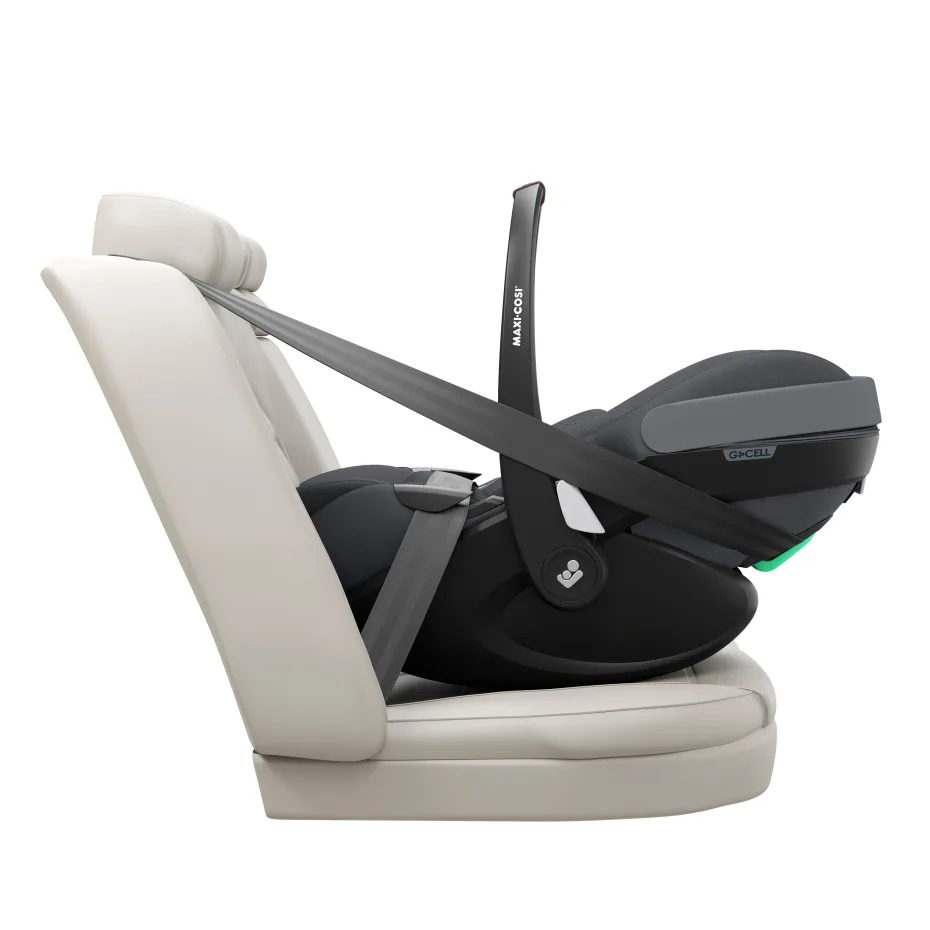
G-CELL is Maxi-Cosi’s side-impact protection, designed to channel crash forces away from the child, and the independent evidence sits beside the design: ADAC rated the side-impact injury risk very low with the seat on the vehicle belt and low on the base, inside safety grades of 1.5 and 1.7, and on ADAC’s scale 1.5 is still the last step of ‘very good’.
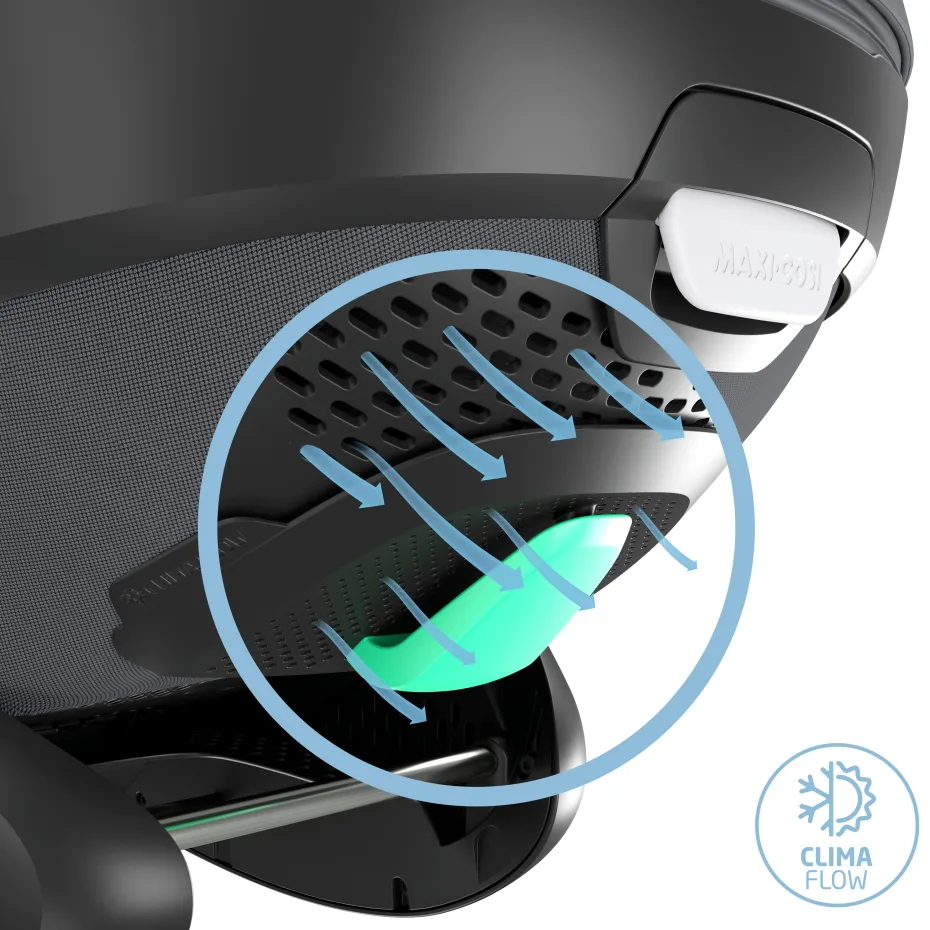
ClimaFlow, la combinación de aberturas de ventilación, espuma transpirable y tejido de malla abierta de Maxi-Cosi, parece un detalle menor hasta que entra en la rutina: menos despertares con la nuca sudada en trayectos calurosos. En un traslado mediterráneo de agosto importa bastante más que sobre el papel.

Uso real (aeropuerto / coche / hotel)
Aeropuerto: this is where the Pebble pulls clear of the Cybex Cloud T i-Size. The Pebble 360 Pro² is TÜV-approved for aircraft use in any recline position, including the flattest, and the ADAC test notes an approval for certain aircraft too. It goes on a forward-facing passenger seat, held by the aircraft’s lap belt, so the baby needs a booked seat of its own rather than a parent’s lap. Airlines still set their own boarding and seating rules for any car seat, so confirm with yours before you rely on it, but a family that clears those steps can fly with its own seat rather than trust an airline bassinet or a rental desk’s mismatched loaner.
Coche: without the base, the Pebble 360 Pro² installs on the vehicle’s own three-point belt, and ADAC’s 1.5 safety score on exactly that configuration is genuinely reassuring for anyone not ready to spend another €269.99 on day one. Add the FamilyFix 360 Pro and the ISOFIX connectors plus load leg take over, with visual indicators confirming a correct fit. One catch for hire cars abroad: the base is approved only on i-Size seating positions or in vehicles on Maxi-Cosi’s type list, so the belt fit is the fallback worth practising at home. ADAC’s handling sub-score, 2.8 in both configurations, is the one number worth pausing on. It sits in ADAC’s ‘satisfactory’ band, and the reasons are specific: high weight, a cover that is hard to remove, a slightly raised risk of operating errors and, on the belt alone, a more involved install. ADAC rates buckling the baby in as easy either way. For scale, the Cybex Cloud T i-Size managed 2.2 for handling on its Base T in ADAC’s October 2023 round, but 3.0 on the belt alone.
Hotel: a capsule seat earns its keep in a hotel room as a portable, familiar place to put a jet-lagged baby down, and the flat recline helps more here than the marketing photos suggest. Keep it on the floor, never on an elevated surface such as a table or chair. Within the approval limits of 87cm and 13kg, the rule for when to move up is the head: once it reaches the top edge of the shell, the next seat is due, so watch the head rather than the eighteen months on the box.

Especificaciones que realmente importan
- Rango de edad/talla: birth (from 40cm) to approximately 18 months, up to 87cm and 13kg; also suitable for premature babies.
- Norma de seguridad: UN R129/03 (i-Size).
- Resultado de pruebas independientes: ADAC/Stiftung Warentest, May 2024: 2.2 overall on the vehicle’s own belt (Safety 1.5, Handling 2.8, Ergonomics 2.0, Pollutants 1.0); 2.2 overall with the FamilyFix 360 Pro base (Safety 1.7, Handling 2.8, Ergonomics 2.1, Pollutants 1.0). The Pro² matches the tested original Pebble 360 Pro except for its cover, which was tested separately.
- Peso de la silla: 4.7kg nominal, 5.2kg on the scales in the ADAC and Stiftung Warentest test; the FamilyFix 360 Pro base weighs 8.6kg.
- Dimensiones: 44cm seat width; length varies with the recline, so check your boot space before you buy.
- Base: FamilyFix 360 Pro (ISOFIX con pata de apoyo, se vende por separado, €269.99), necesaria para el giro de 360 grados y el deslizamiento de 17cm de SLIDETECH; también es posible instalarla únicamente con el cinturón de tres puntos del vehículo, sin base. Más adelante, esta misma base es compatible con la Pearl 360 Pro para la etapa infantil.
- Materiales: 59 percent polypropylene, with small shares of EPP foam, other plastics, several steel grades and aluminium, plus 22 percent fabric.
- Cuidados: the cover goes in the machine at 30°C or wipes down with a damp cloth, though ADAC found it hard to remove.
- Garantía: 24 months as standard, extended to five years if the seat is registered online within six months of purchase.
- Precio: €259.99 por la silla en la web alemana de Maxi-Cosi el 23 de septiembre de 2026 (Twillic Graphite, disponible); comercios alemanes también ofrecen Twillic Black, Green y Truffle, y uno la tenía ese día por €199. Base FamilyFix 360 Pro: €269.99. Total a precio de lista: cerca de €530.

Pros & contras
Lo que justifica su compra:
- TÜV approval for aircraft use in every recline position, a real advantage on long-haul trips with a newborn.
- Sólidas notas de seguridad en pruebas independientes: 1.5 con cinturón y 1.7 con la base, ambas de ADAC/Stiftung Warentest en mayo de 2024.
- El movimiento giratorio y deslizante de la base simplifica acomodar al recién nacido una vez instalada.
- La misma base FamilyFix 360 Pro es compatible después con la Pearl 360 Pro para la etapa infantil, de modo que la compra más costosa no sirve para una sola silla.
Qué conviene valorar antes de comprar:
- La base FamilyFix 360 Pro cuesta €269.99 por separado; a precios de lista de Maxi-Cosi, el conjunto se acerca más a €530 que a los €259.99 anunciados.
- ADAC grades handling at only 2.8, ‘satisfactory’, citing high weight (5.2kg for the seat and 8.6kg for the base as tested), a hard-to-remove cover and a slightly raised risk of operating errors.
- La tabla de especificaciones de Maxi-Cosi no incluye dimensiones exteriores, lo que complica más de lo necesario comprobar el maletero antes de comprar.
- Conviene elegir específicamente la Pro²: la Pebble 360 Pro de primera generación suspendió la prueba de contaminantes de ADAC de octubre de 2023 por naftaleno en su funda anterior.

Puntuación FFH Gear
Funcionalidad: 8.8 / 10.
Calidad de fabricación y durabilidad: 7.9 / 10.
Facilidad de uso: 7.7 / 10.
Practicidad para familias: 8.2 / 10.
Precio: $$$$ de $$$$$.
Puntuación FFH Gear: 8.2 / 10.

Veredicto final
Buy the Pebble 360 Pro² for the aircraft approval and the safety numbers, not for the price. At €259.99 the seat costs about €10 less than the Platinum-line Cybex Cloud T i-Size we reviewed; add each brand’s base and the Maxi-Cosi system ends up roughly €20 dearer at German list prices, close to €530 against about €510. What tips it for a specific kind of family is the TÜV aircraft approval, set against ADAC grades that trail the Cybex on its base, 2.2 overall against 1.7. If the budget stops well under €500 for seat and base, a cheaper capsule is defensible: ADAC’s May 2023 test graded the belt-fitted Joie i-Snug 2, at about €119, 2.0 overall with the same 1.5 safety sub-score, though it is approved only to 75cm, roughly the first year.
Para quienes vayan a reservar vuelos durante los primeros dieciocho meses del bebé, esta es la silla que permite llevar una misma retención infantil por la terminal, el taxi y la habitación de hotel, sin alquilar una alternativa poco compatible al llegar. Esa comodidad justifica la factura.
Galería
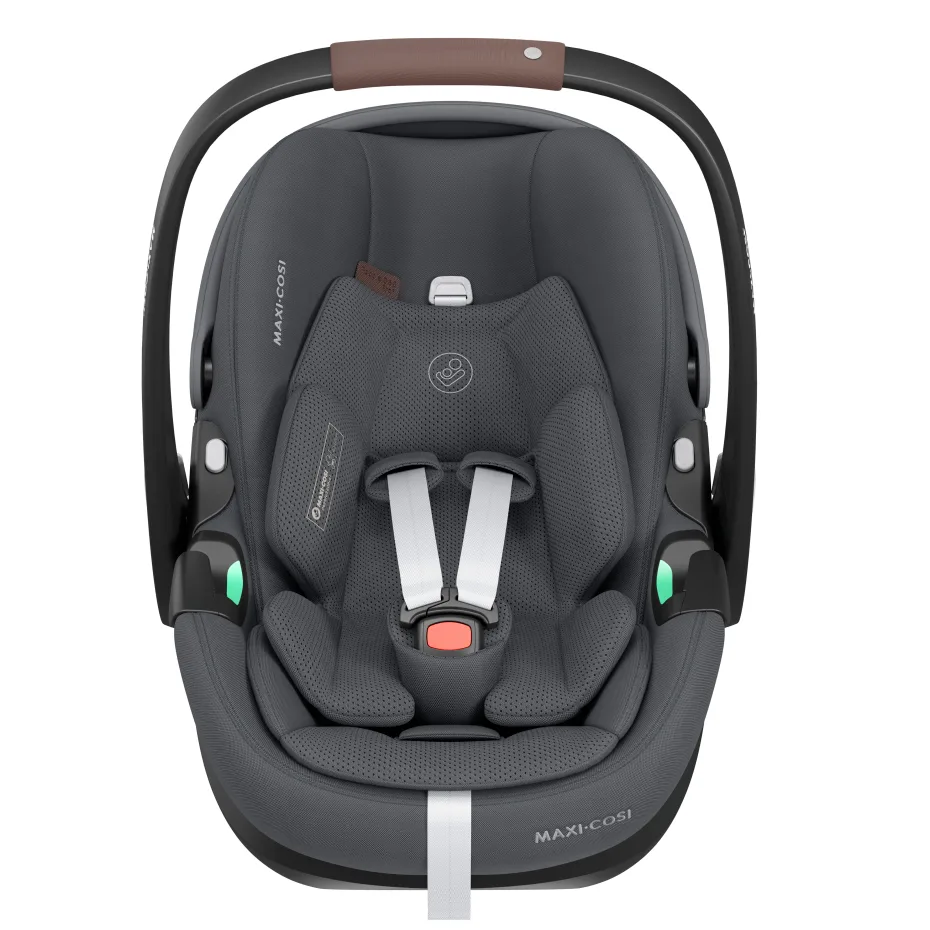
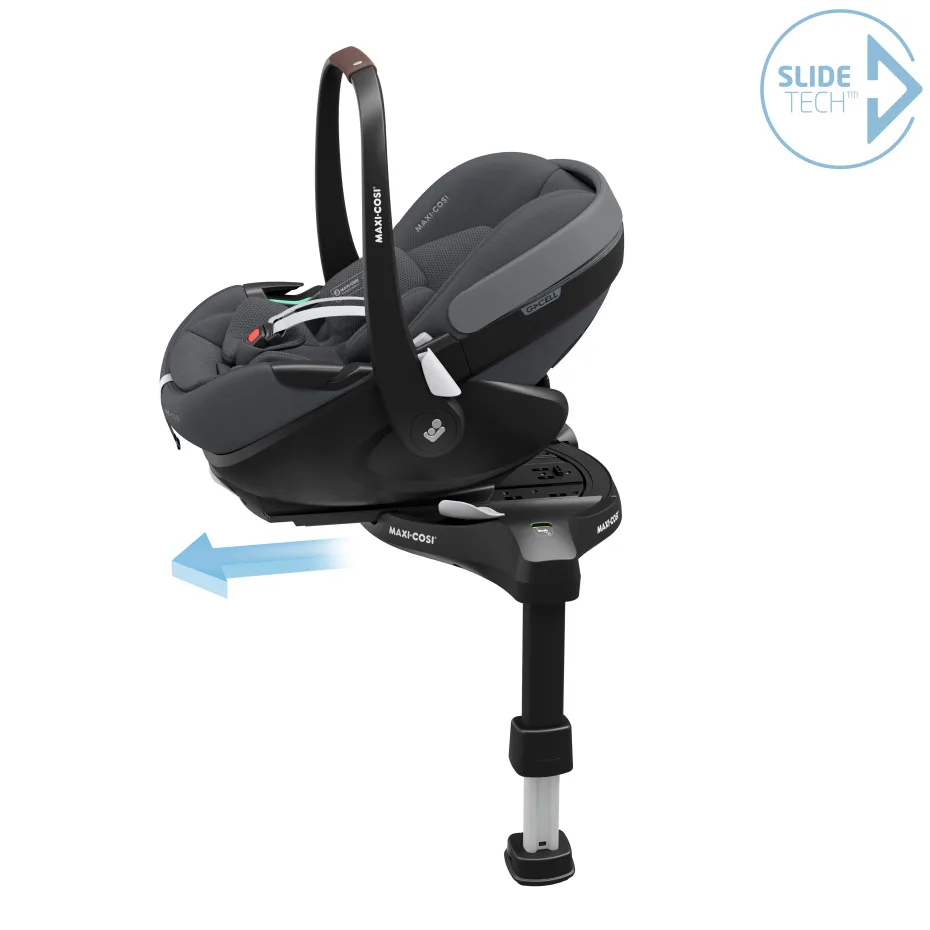
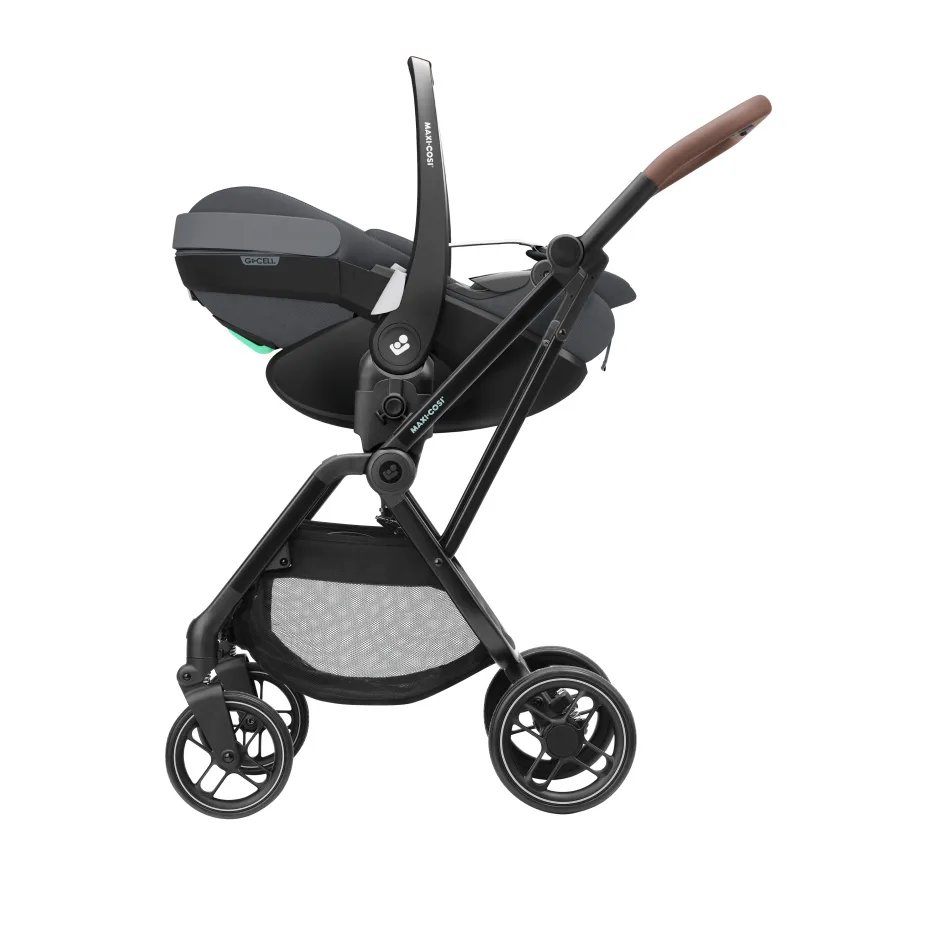
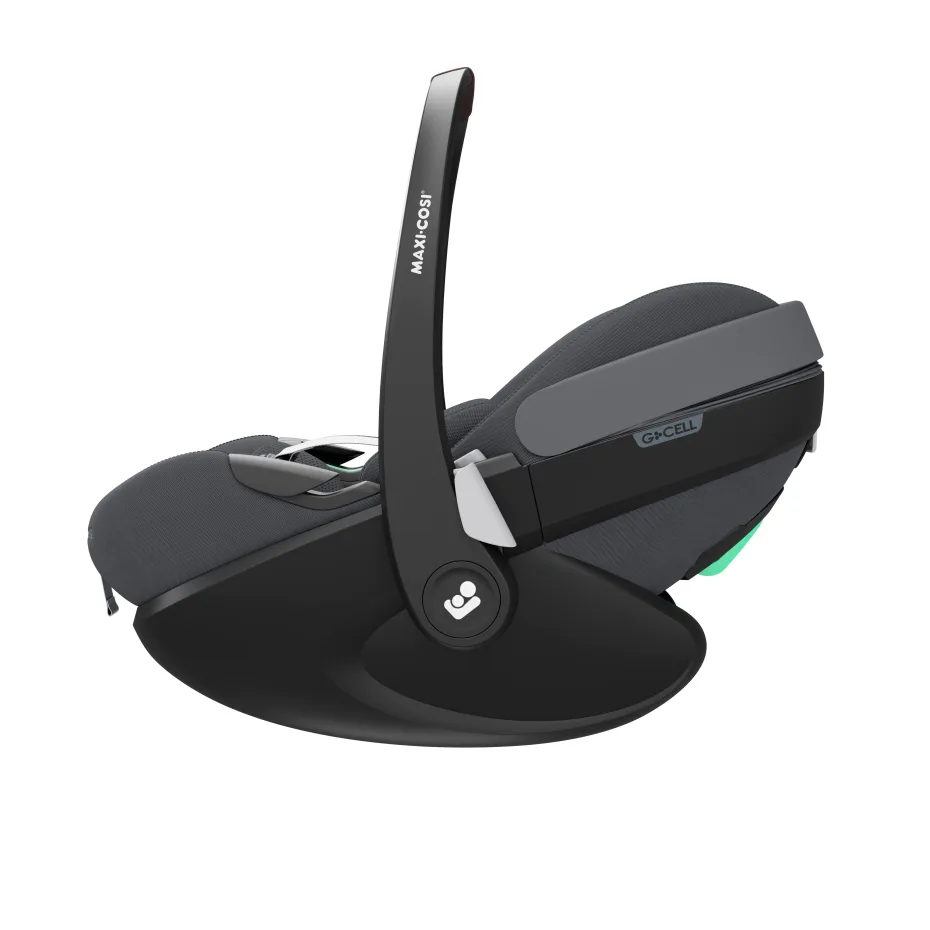
Maxi-Cosi Pebble 360 Pro²: preguntas frecuentes
¿Para quién es más adecuada la Maxi-Cosi Pebble 360 Pro²?
Families who want an aircraft-approved infant seat and a strong, independently tested safety score, and who are prepared to budget for the FamilyFix 360 Pro base as a near-essential second purchase. The seat is TÜV-approved for use on aircraft in every recline position, and ADAC/Stiftung Warentest rated it 2.2 overall in May 2024, with a 1.5 safety sub-score on the vehicle's own belt. It suits a family flying often with a newborn more than one doing mostly short local drives, where a simpler, cheaper i-Size capsule will do the job.
¿Qué rango de edad, altura y peso cubre la Pebble 360 Pro²?
Desde el nacimiento (40cm) hasta aproximadamente los 18 meses, con un máximo de 87cm y 13kg, under UN R129/03 (i-Size); it also suits premature babies, and the newborn inlay is used until the baby passes 60cm. Within those limits, the switch to the next seat is due once the child's head reaches the top edge of the shell, so watch the head rather than the calendar when planning the follow-on seat.
¿Es necesaria la base FamilyFix 360 Pro y qué aporta?
No de forma estricta, pero el giro de 360 grados y el deslizamiento de SLIDETECH solo funcionan con ella instalada. The seat and the FamilyFix 360 Pro base are sold separately, at €259.99 and €269.99 (checked 23 September 2026). Without the base, the Pebble 360 Pro² installs on the vehicle's own three-point belt, and ADAC's May 2024 grades gave that configuration a 1.5 for safety. With the base fitted, ISOFIX and a load leg take over and the seat rotates and slides 17cm toward the parent for loading. The base is approved only on i-Size seating positions or in vehicles on Maxi-Cosi's type list, which matters in a hire car.
¿Puede utilizarse realmente la Pebble 360 Pro² en un avión?
The Pebble 360 Pro² is TÜV-approved for use on aircraft, in every recline position including the flattest. The ADAC test notes an approval for certain aircraft too. It is allowed only on a forward-facing passenger seat, fastened with the aircraft's lap belt, so the baby needs its own booked seat rather than a parent's lap. Airlines still set their own rules on car seats in the cabin, so confirm with your carrier before you fly. Through the terminal, the shell clicks onto a compatible stroller for the walk between gates.
¿Qué tal se instala y utiliza la Pebble 360 Pro² en el día a día?
Sencilla con la base, algo más laboriosa solo con cinturón. ADAC's May 2024 grades rate buckling the baby in as easy in both configurations and the base installation as easy, but flag a more involved install with the vehicle belt. The handling grade is 2.8 either way, only 'satisfactory' on ADAC's scale, pulled down by high weight (5.2kg for the seat and 8.6kg for the base as tested), a cover that is hard to remove and a slightly raised risk of operating errors. The Easy-in harness, designed to stay open and out of the way, is the part of the daily routine that most clearly helps.
¿Qué homologaciones de seguridad y resultados de pruebas independientes tiene la Pebble 360 Pro²?
Está homologada conforme a UN R129/03 (i-Size) y fue evaluada por ADAC y Stiftung Warentest en mayo de 2024, scoring an overall 2.2 both on the vehicle's own belt (Safety 1.5, Handling 2.8, Ergonomics 2.0, Pollutants 1.0) and with the FamilyFix 360 Pro base fitted (Safety 1.7, Handling 2.8, Ergonomics 2.1, Pollutants 1.0). The Pro² matches the original Pebble 360 Pro apart from its cover, so those crash results carry over from that seat's October 2023 test, which it failed only because of naphthalene in the old cover; the new cover was tested separately and passed. Its G-CELL side-impact system is designed to channel crash forces away from the child, and ADAC rated the side-impact injury risk very low on the belt and low on the base.
¿Cuáles son los principales inconvenientes de la Pebble 360 Pro² en el uso real?
Precio, manejo y peso. The FamilyFix 360 Pro base is a separate €269.99 purchase, so at list prices the system most families end up buying costs close to €530 rather than the €259.99 headline seat price. ADAC's handling grade of 2.8 is only 'satisfactory', citing high weight (5.2kg for the seat as tested, against a nominal 4.7kg), a hard-to-remove cover and a slightly raised risk of operating errors. Length varies with the recline, so check your boot space before ordering.
¿Merece la pena la Pebble 360 Pro² frente a sillas infantiles i-Size más económicas?
Para una familia que vuela con frecuencia con un bebé pequeño, sí; para desplazamientos locales ocasionales, probablemente no. Cheaper i-Size capsules with comparable crash results exist: ADAC's May 2023 test graded the belt-fitted Joie i-Snug 2, at about €119, 2.0 overall with the same 1.5 safety sub-score, though it is approved only to 75cm, roughly the first year. What the Pebble's premium buys is the 87cm range, the rotating and sliding base system and the aircraft approval. That approval is not exclusive to this seat either, since older capsules such as the Pebble Plus and Citi are TÜV Rheinland approved for aircraft too, so look for an aircraft marking on any cheaper model if flying is the point.
¿Cómo se compara la Maxi-Cosi Pebble 360 Pro² con la Cybex Cloud T i-Size o la Doona Liki Trike S5?
La comparación más directa es con la Cybex Cloud T i-Size, another premium infant capsule; at German list prices the Maxi-Cosi system with its base costs about €20 more, roughly €530 against €510. On their bases, ADAC graded the Cybex better overall (1.7 against 2.2), for safety (1.3 against 1.7) and for handling (2.2 against 2.8); on the belt alone the gap narrows to 2.1 against 2.2, with the Cybex safer (1.0 against 1.5) but harder to handle (3.0 against 2.8). The Pebble's edge is the aircraft approval, which the ADAC test notes for the Pebble and not for the Cloud T. The Triciclo Doona Liki S5 answers a different question: it is rated for 10 to 36 months, so it overlaps with the Pebble's later months as a way to move a toddler around town, but it is not a car seat at any stage.