Maxi-Cosi Pebble 360 Pro² Infant Car Seat
Maxi-Cosi Pebble 360 Pro² drehbare Babyschale von Maxi-Cosi (Pebble 360 Pro²)
Für den ersten Flug mit dem Neugeborenen und jeden anschließenden Flughafentransfer, wenn eine flach verstellbare, zertifizierte Babyschale wichtiger ist als ein niedriger Preis.
Überblick
Der Pebble 360 Pro² ist Maxi-Cosis dreh- und ausziehbare Babyschale. Zunächst zählt vor allem eine Zahl: Im September 2026 kostet die Schale auf der deutschen Maxi-Cosi-Website €259.99, die drehbare FamilyFix 360 Pro Basis kommt separat für €269.99 hinzu. Für einen Sitz, der rund achtzehn Monate genutzt wird, ist das keine kleine Investition. Für die passende Familie ist sie jedoch gut begründbar. Das neueste Pebble-Modell ist er inzwischen nicht mehr: Maxi-Cosi bietet auch den Pebble Slide Pro für €269.99 an, der mit der anderen Basis FamilyFix Slide Pro kombiniert wird.
ADAC and Stiftung Warentest published their grades for it in May 2024: 2.2 overall on the German school scale, where lower is better, with a strong 1.5 safety sub-score on the vehicle’s own belt and 1.7 with the FamilyFix 360 Pro base fitted. The crash and handling grades are inherited from the original Pebble 360 Pro, which ADAC failed in October 2023 over naphthalene in its cover; the Pro² got a new cover, and it passed. The seat is also TÜV-approved for use on aircraft, in every recline position, which is the detail that actually changes how a family plans a long-haul trip with a two-week-old.
Wir haben ihn so betrachtet, wie die meisten Eltern tatsächlich einkaufen: erst die Babyschale, dann einige Wochen später die zweite, deutlich schmerzhaftere Rechnung für die Basis, sobald die ersten Krankenhausrechnungen beglichen sind.

Warum es sich hervorragend für Familienreisen eignet
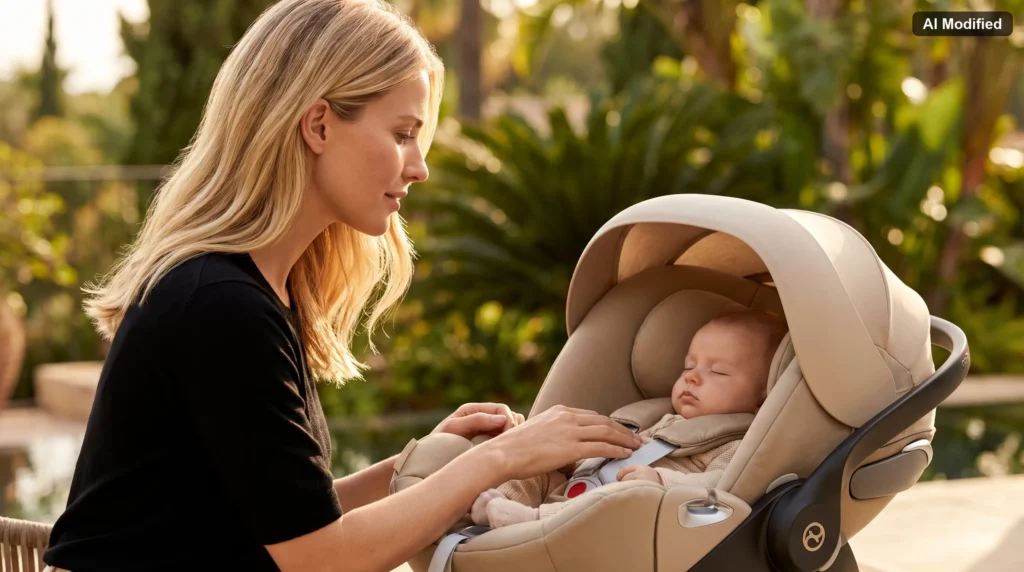
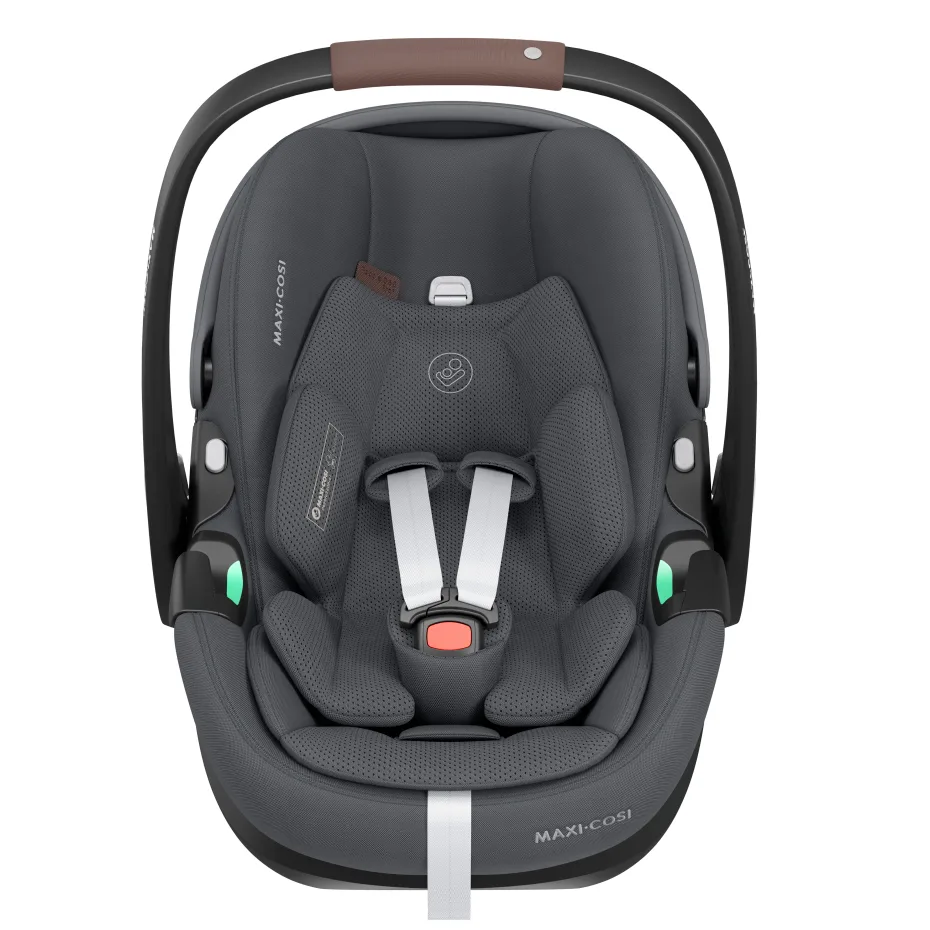
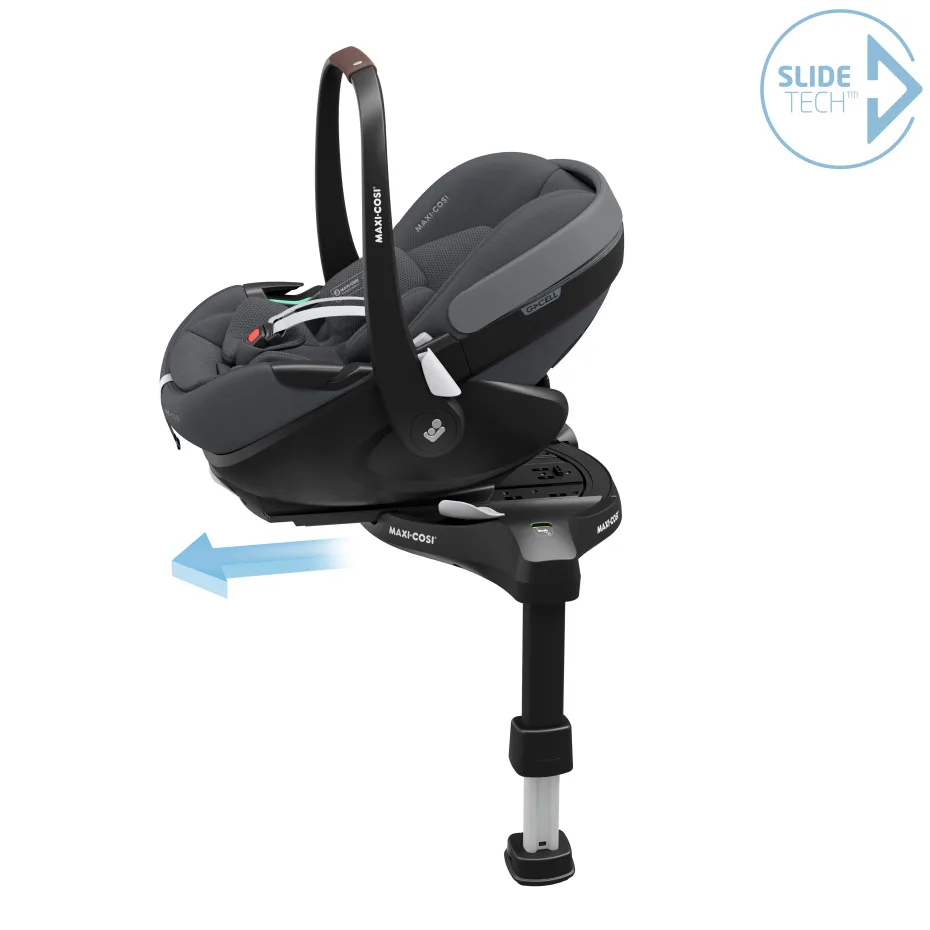
SLIDETECH stellt Maxi-Cosi an erste Stelle, zu Recht. Auf der FamilyFix 360 Pro Basis lässt sich der Sitz mit einer Bewegung zur Tür drehen und 17cm näher zu den Eltern schieben. Das Anschnallen eines Neugeborenen bedeutet damit nicht länger, halb im Auto zu knien, während ein Gurt in die Kniekehle drückt. Die Base T von Cybex bietet den drehbaren Teil derselben Idee. Beide Marken haben recht: Im Alltag zählt das mehr als die meisten Datenblattfunktionen. Vor der Fahrt muss der Sitz wieder rückwärtsgerichtet einrasten, denn laut Maxi-Cosi-Handbuch darf nicht mit zur Tür gedrehtem Sitz gefahren werden.
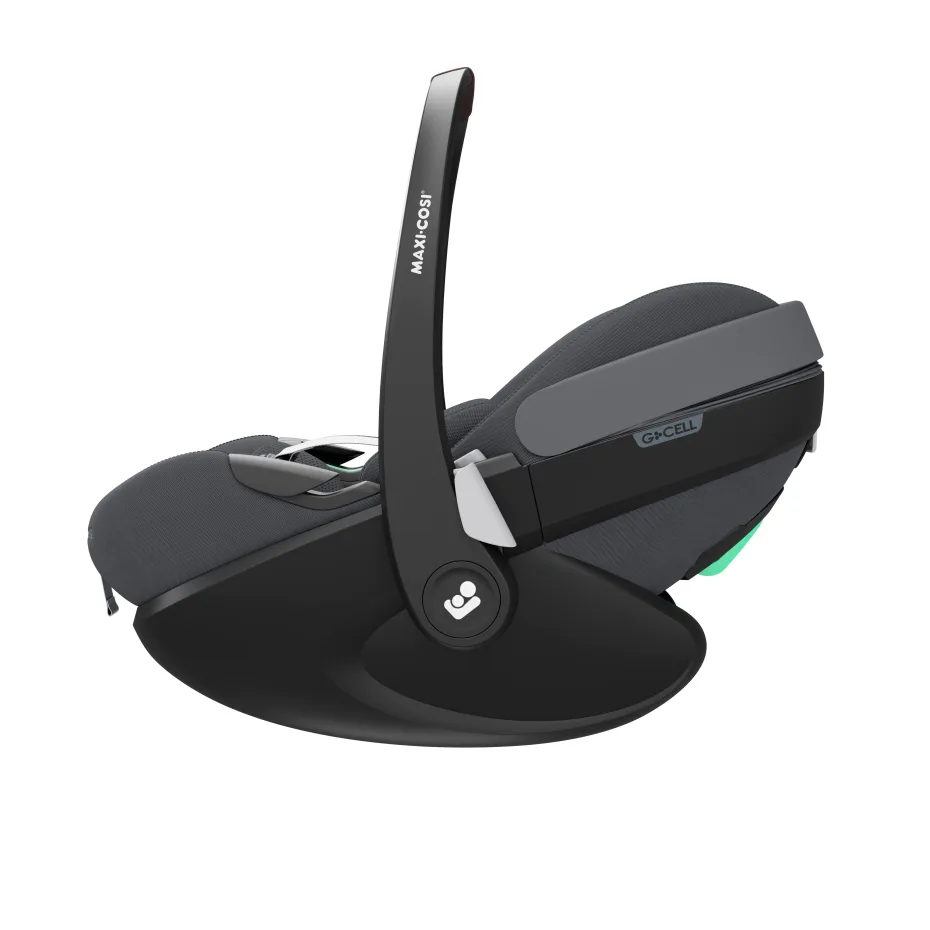
G-CELL is Maxi-Cosi’s side-impact protection, designed to channel crash forces away from the child, and the independent evidence sits beside the design: ADAC rated the side-impact injury risk very low with the seat on the vehicle belt and low on the base, inside safety grades of 1.5 and 1.7, and on ADAC’s scale 1.5 is still the last step of ‘very good’.
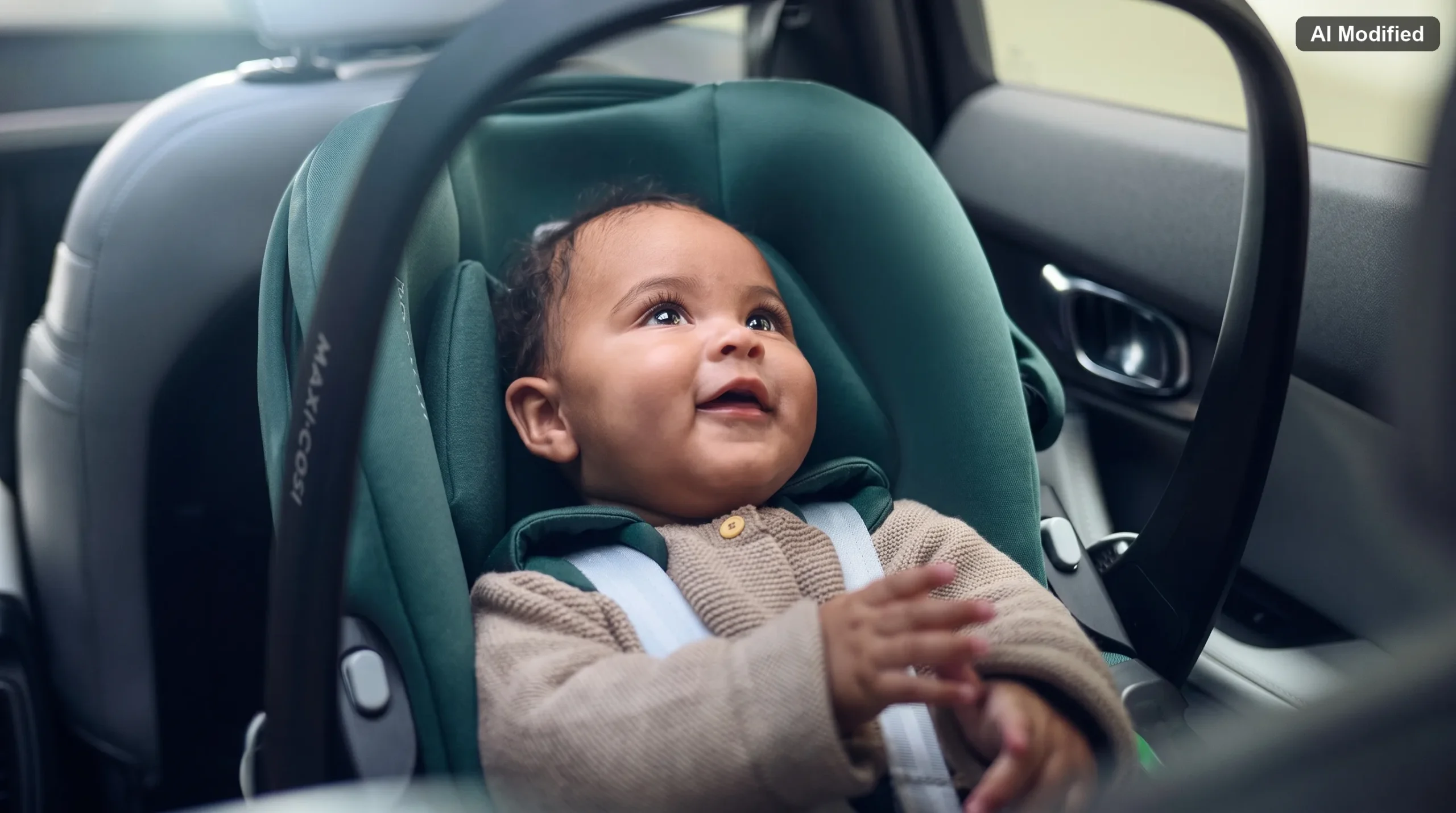
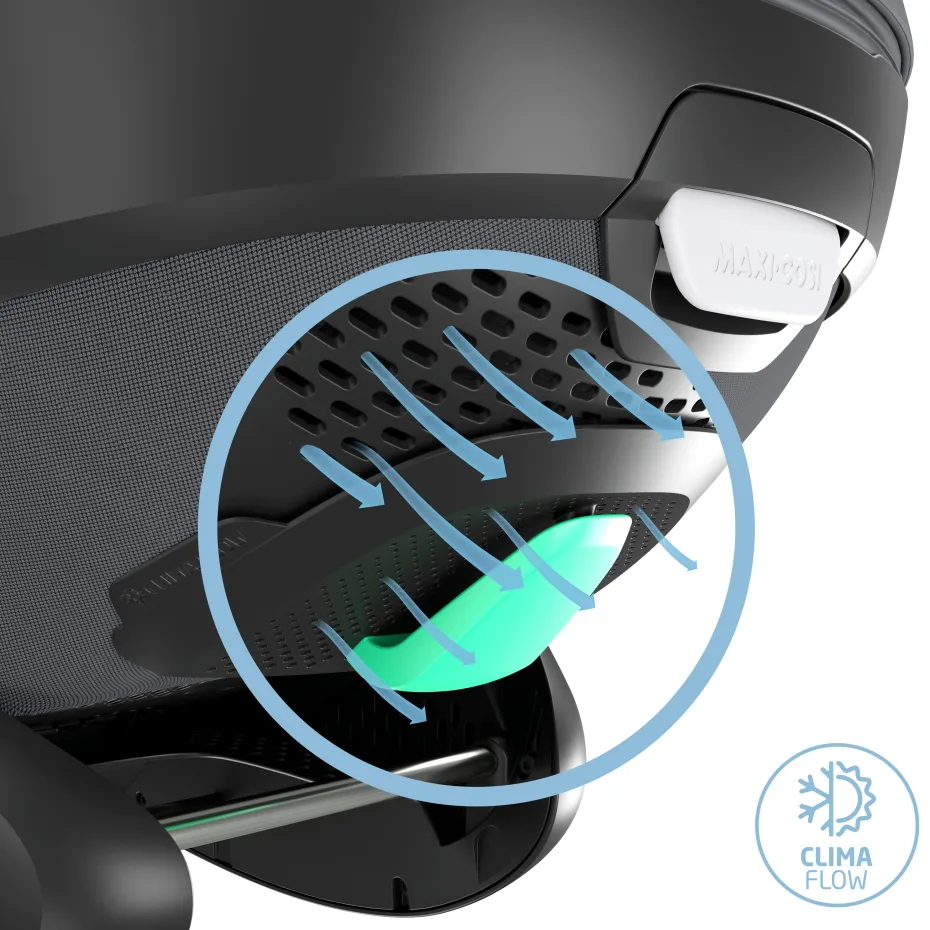
ClimaFlow, Maxi-Cosis Zusammenspiel aus Belüftungsöffnungen, atmungsaktivem Schaum und offenem Mesh-Gewebe, ist ein kleineres Detail mit spürbarer Alltagswirkung: weniger schweißnass aufwachende Nacken auf einer warmen Fahrt. Beim Transfer am Mittelmeer im August zählt das weit mehr als auf dem Papier.

Im Alltagstest (Flughafen / Auto / Hotel)
Flughafen: this is where the Pebble pulls clear of the Cybex Cloud T i-Size. The Pebble 360 Pro² is TÜV-approved for aircraft use in any recline position, including the flattest, and the ADAC test notes an approval for certain aircraft too. It goes on a forward-facing passenger seat, held by the aircraft’s lap belt, so the baby needs a booked seat of its own rather than a parent’s lap. Airlines still set their own boarding and seating rules for any car seat, so confirm with yours before you rely on it, but a family that clears those steps can fly with its own seat rather than trust an airline bassinet or a rental desk’s mismatched loaner.
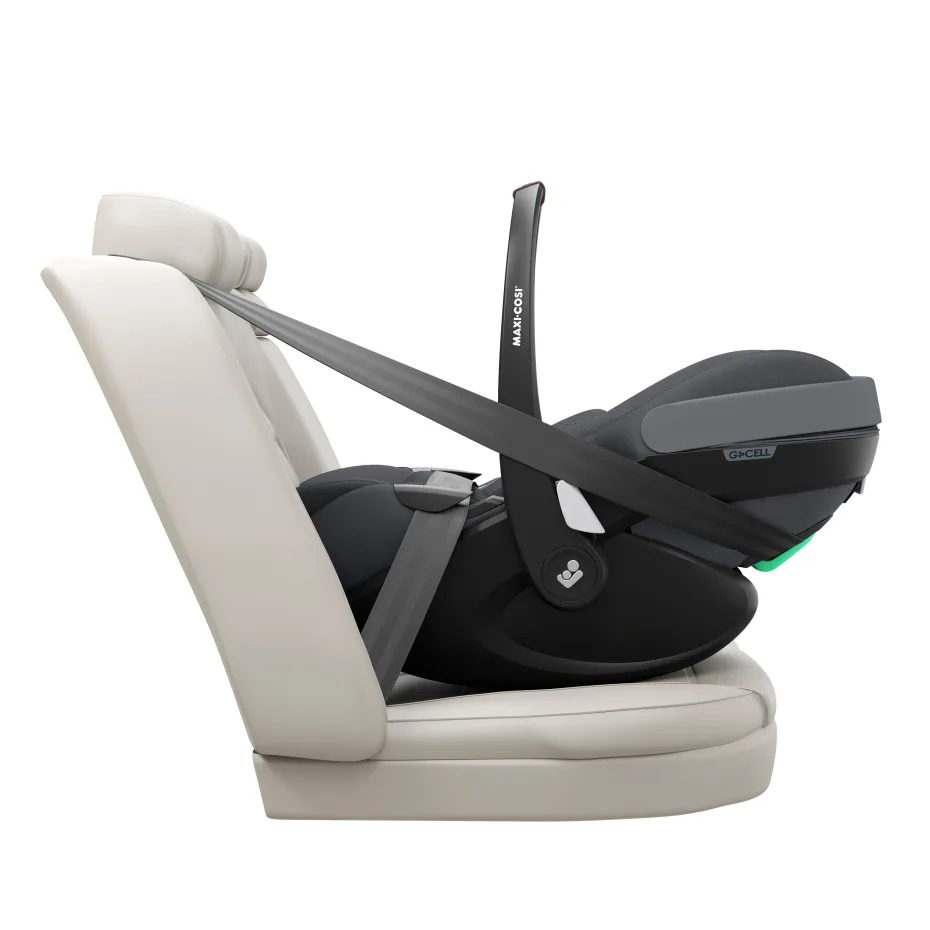
Auto: without the base, the Pebble 360 Pro² installs on the vehicle’s own three-point belt, and ADAC’s 1.5 safety score on exactly that configuration is genuinely reassuring for anyone not ready to spend another €269.99 on day one. Add the FamilyFix 360 Pro and the ISOFIX connectors plus load leg take over, with visual indicators confirming a correct fit. One catch for hire cars abroad: the base is approved only on i-Size seating positions or in vehicles on Maxi-Cosi’s type list, so the belt fit is the fallback worth practising at home. ADAC’s handling sub-score, 2.8 in both configurations, is the one number worth pausing on. It sits in ADAC’s ‘satisfactory’ band, and the reasons are specific: high weight, a cover that is hard to remove, a slightly raised risk of operating errors and, on the belt alone, a more involved install. ADAC rates buckling the baby in as easy either way. For scale, the Cybex Cloud T i-Size managed 2.2 for handling on its Base T in ADAC’s October 2023 round, but 3.0 on the belt alone.
Hotel: a capsule seat earns its keep in a hotel room as a portable, familiar place to put a jet-lagged baby down, and the flat recline helps more here than the marketing photos suggest. Keep it on the floor, never on an elevated surface such as a table or chair. Within the approval limits of 87cm and 13kg, the rule for when to move up is the head: once it reaches the top edge of the shell, the next seat is due, so watch the head rather than the eighteen months on the box.

Technische Daten, die wirklich zählen
- Alters- und Größenbereich: birth (from 40cm) to approximately 18 months, up to 87cm and 13kg; also suitable for premature babies.
- Sicherheitsstandard: UN R129/03 (i-Size).
- Ergebnis unabhängiger Tests: ADAC/Stiftung Warentest, May 2024: 2.2 overall on the vehicle’s own belt (Safety 1.5, Handling 2.8, Ergonomics 2.0, Pollutants 1.0); 2.2 overall with the FamilyFix 360 Pro base (Safety 1.7, Handling 2.8, Ergonomics 2.1, Pollutants 1.0). The Pro² matches the tested original Pebble 360 Pro except for its cover, which was tested separately.
- Gewicht des Sitzes: 4.7kg nominal, 5.2kg on the scales in the ADAC and Stiftung Warentest test; the FamilyFix 360 Pro base weighs 8.6kg.
- Abmessungen: 44cm seat width; length varies with the recline, so check your boot space before you buy.
- Basis: FamilyFix 360 Pro (ISOFIX mit Stützfuß, separat erhältlich, €269.99), erforderlich für die 360-Grad-Drehung und den 17cm-Auszug von SLIDETECH; die Montage allein mit dem fahrzeugeigenen Dreipunktgurt ist ebenfalls möglich. Auf derselben Basis folgt später der Kleinkindsitz Pearl 360 Pro.
- Materialien: 59 percent polypropylene, with small shares of EPP foam, other plastics, several steel grades and aluminium, plus 22 percent fabric.
- Pflege: the cover goes in the machine at 30°C or wipes down with a damp cloth, though ADAC found it hard to remove.
- Garantie: 24 months as standard, extended to five years if the seat is registered online within six months of purchase.
- Preis: €259.99 für die Schale auf Maxi-Cosis deutscher Website am 23. September 2026 (Twillic Graphite, verfügbar); deutsche Händler führen zudem Twillic Black, Green und Truffle, einer bot die Schale an diesem Tag für €199 an. FamilyFix 360 Pro Basis: €269.99. Zusammen zum Listenpreis: knapp €530.

Vor- & Nachteile
Was ihn besonders praktisch macht:
- TÜV approval for aircraft use in every recline position, a real advantage on long-haul trips with a newborn.
- Starke, unabhängig getestete Sicherheitsnoten: 1.5 mit Gurt, 1.7 mit Basis, beide von ADAC/Stiftung Warentest im Mai 2024.
- Die Dreh- und Schiebefunktion der Basis erleichtert das Hineinsetzen eines Neugeborenen nach dem Einbau.
- Auf derselben FamilyFix 360 Pro Basis kann später der Kleinkindsitz Pearl 360 Pro genutzt werden. Die höhere Investition gilt also nicht nur einem einzigen Sitz.
Was vor dem Kauf abzuwägen ist:
- Die FamilyFix 360 Pro Basis kostet zusätzlich €269.99; zum Maxi-Cosi-Listenpreis liegt das Komplettsystem mit knapp €530 deutlich näher an €530 als am Einstiegspreis von €259.99.
- ADAC grades handling at only 2.8, ‘satisfactory’, citing high weight (5.2kg for the seat and 8.6kg for the base as tested), a hard-to-remove cover and a slightly raised risk of operating errors.
- Maxi-Cosis Spezifikationstabelle nennt keine Außenmaße, was die Prüfung des Kofferraums vor dem Kauf unnötig erschwert.
- Gezielt zum Pro² greifen: Der Pebble 360 Pro der ersten Generation fiel im ADAC-Schadstofftest vom Oktober 2023 wegen Naphthalin im alten Bezug durch.

FFH Gear Score
Funktionalität: 8.8 / 10.
Verarbeitungsqualität & Langlebigkeit: 7.9 / 10.
Bedienkomfort: 7.7 / 10.
Familientauglichkeit: 8.2 / 10.
Preisklasse: $$$$ von $$$$$.
FFH Gear Score: 8.2 / 10.

Fazit
Buy the Pebble 360 Pro² for the aircraft approval and the safety numbers, not for the price. At €259.99 the seat costs about €10 less than the Platinum-line Cybex Cloud T i-Size we reviewed; add each brand’s base and the Maxi-Cosi system ends up roughly €20 dearer at German list prices, close to €530 against about €510. What tips it for a specific kind of family is the TÜV aircraft approval, set against ADAC grades that trail the Cybex on its base, 2.2 overall against 1.7. If the budget stops well under €500 for seat and base, a cheaper capsule is defensible: ADAC’s May 2023 test graded the belt-fitted Joie i-Snug 2, at about €119, 2.0 overall with the same 1.5 safety sub-score, though it is approved only to 75cm, roughly the first year.
Für alle, die in den ersten achtzehn Monaten des Babys häufig fliegen, ist dies die Schale, die Kinderrückhaltesystem, Terminal, Taxi und Hotelzimmer miteinander verbindet, statt am Ziel auf einen unpassenden Leihsitz angewiesen zu sein. Dieser Komfort rechtfertigt die Rechnung.
Galerie
Maxi-Cosi Pebble 360 Pro²: Häufige Fragen
Für wen eignet sich der Maxi-Cosi Pebble 360 Pro² besonders?
Families who want an aircraft-approved infant seat and a strong, independently tested safety score, and who are prepared to budget for the FamilyFix 360 Pro base as a near-essential second purchase. The seat is TÜV-approved for use on aircraft in every recline position, and ADAC/Stiftung Warentest rated it 2.2 overall in May 2024, with a 1.5 safety sub-score on the vehicle's own belt. It suits a family flying often with a newborn more than one doing mostly short local drives, where a simpler, cheaper i-Size capsule will do the job.
Welches Alter, welche Größe und welches Gewicht deckt der Pebble 360 Pro² ab?
Von Geburt an (40cm) bis etwa 18 Monate, bis 87cm und maximal 13kg, under UN R129/03 (i-Size); it also suits premature babies, and the newborn inlay is used until the baby passes 60cm. Within those limits, the switch to the next seat is due once the child's head reaches the top edge of the shell, so watch the head rather than the calendar when planning the follow-on seat.
Ist die FamilyFix 360 Pro Basis nötig, und was bringt sie?
Zwingend nötig ist sie nicht, doch 360-Grad-Drehung und der Auszug von SLIDETECH funktionieren nur mit montierter Basis. The seat and the FamilyFix 360 Pro base are sold separately, at €259.99 and €269.99 (checked 23 September 2026). Without the base, the Pebble 360 Pro² installs on the vehicle's own three-point belt, and ADAC's May 2024 grades gave that configuration a 1.5 for safety. With the base fitted, ISOFIX and a load leg take over and the seat rotates and slides 17cm toward the parent for loading. The base is approved only on i-Size seating positions or in vehicles on Maxi-Cosi's type list, which matters in a hire car.
Lässt sich der Pebble 360 Pro² tatsächlich im Flugzeug verwenden?
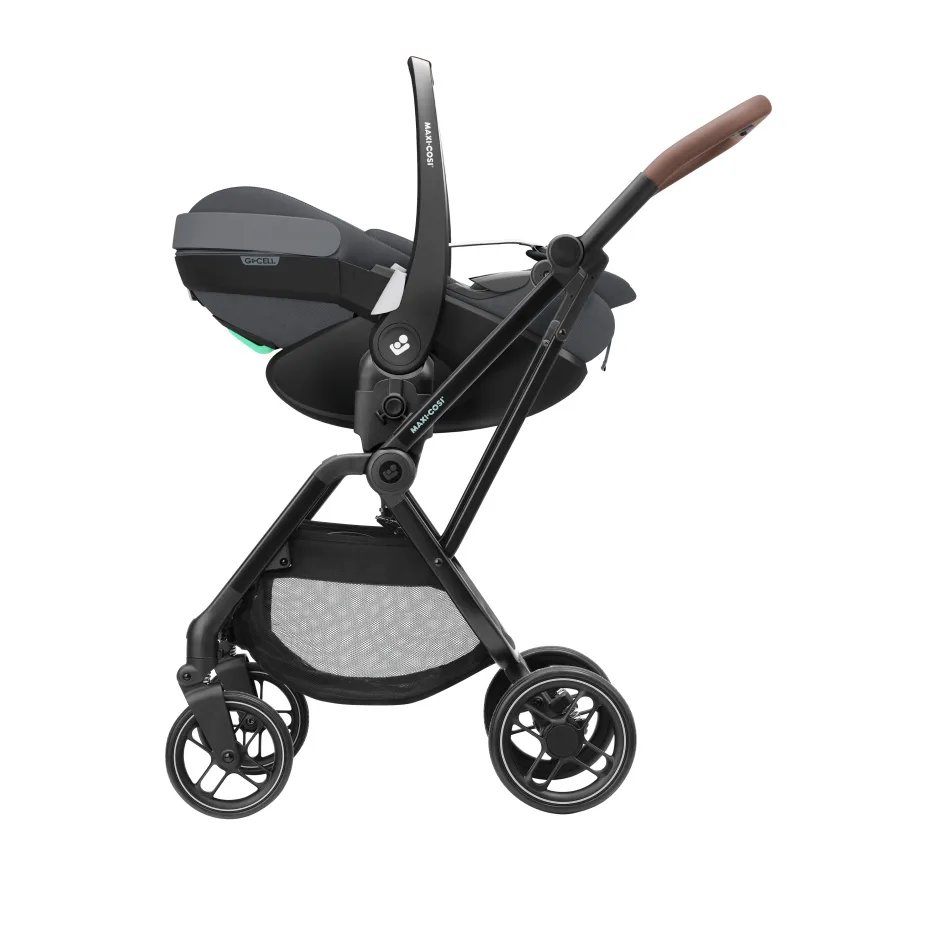
The Pebble 360 Pro² is TÜV-approved for use on aircraft, in every recline position including the flattest. The ADAC test notes an approval for certain aircraft too. It is allowed only on a forward-facing passenger seat, fastened with the aircraft's lap belt, so the baby needs its own booked seat rather than a parent's lap. Airlines still set their own rules on car seats in the cabin, so confirm with your carrier before you fly. Through the terminal, the shell clicks onto a compatible stroller for the walk between gates.
Wie einfach lässt sich der Pebble 360 Pro² einbauen und im Alltag nutzen?
Mit Basis einfach, allein mit Gurt etwas aufwendiger. ADAC's May 2024 grades rate buckling the baby in as easy in both configurations and the base installation as easy, but flag a more involved install with the vehicle belt. The handling grade is 2.8 either way, only 'satisfactory' on ADAC's scale, pulled down by high weight (5.2kg for the seat and 8.6kg for the base as tested), a cover that is hard to remove and a slightly raised risk of operating errors. The Easy-in harness, designed to stay open and out of the way, is the part of the daily routine that most clearly helps.
Welche Sicherheitszertifizierungen und unabhängigen Testergebnisse hat der Pebble 360 Pro²?
Er ist nach UN R129/03 (i-Size) zugelassen und wurde im Mai 2024 von ADAC und Stiftung Warentest bewertet, scoring an overall 2.2 both on the vehicle's own belt (Safety 1.5, Handling 2.8, Ergonomics 2.0, Pollutants 1.0) and with the FamilyFix 360 Pro base fitted (Safety 1.7, Handling 2.8, Ergonomics 2.1, Pollutants 1.0). The Pro² matches the original Pebble 360 Pro apart from its cover, so those crash results carry over from that seat's October 2023 test, which it failed only because of naphthalene in the old cover; the new cover was tested separately and passed. Its G-CELL side-impact system is designed to channel crash forces away from the child, and ADAC rated the side-impact injury risk very low on the belt and low on the base.
Was sind die wichtigsten Nachteile des Pebble 360 Pro² im Alltag?
Preis, Handhabung und Gewicht. The FamilyFix 360 Pro base is a separate €269.99 purchase, so at list prices the system most families end up buying costs close to €530 rather than the €259.99 headline seat price. ADAC's handling grade of 2.8 is only 'satisfactory', citing high weight (5.2kg for the seat as tested, against a nominal 4.7kg), a hard-to-remove cover and a slightly raised risk of operating errors. Length varies with the recline, so check your boot space before ordering.
Lohnt sich der Pebble 360 Pro² im Vergleich zu günstigeren i-Size-Babyschalen?
Für Familien, die mit einem kleinen Baby häufig fliegen, ja; für gelegentliche kurze Fahrten vor Ort vermutlich nicht. Cheaper i-Size capsules with comparable crash results exist: ADAC's May 2023 test graded the belt-fitted Joie i-Snug 2, at about €119, 2.0 overall with the same 1.5 safety sub-score, though it is approved only to 75cm, roughly the first year. What the Pebble's premium buys is the 87cm range, the rotating and sliding base system and the aircraft approval. That approval is not exclusive to this seat either, since older capsules such as the Pebble Plus and Citi are TÜV Rheinland approved for aircraft too, so look for an aircraft marking on any cheaper model if flying is the point.
Wie schneidet der Maxi-Cosi Pebble 360 Pro² gegenüber dem Cybex Cloud T i-Size oder dem Doona Liki Trike S5 ab?
Der direkteste Vergleich ist der mit dem Cybex Cloud T i-Size, another premium infant capsule; at German list prices the Maxi-Cosi system with its base costs about €20 more, roughly €530 against €510. On their bases, ADAC graded the Cybex better overall (1.7 against 2.2), for safety (1.3 against 1.7) and for handling (2.2 against 2.8); on the belt alone the gap narrows to 2.1 against 2.2, with the Cybex safer (1.0 against 1.5) but harder to handle (3.0 against 2.8). The Pebble's edge is the aircraft approval, which the ADAC test notes for the Pebble and not for the Cloud T. The Doona Liki Trike S5 answers a different question: it is rated for 10 to 36 months, so it overlaps with the Pebble's later months as a way to move a toddler around town, but it is not a car seat at any stage.