Fujifilm Instax Mini 12 Instant Camera
Fujifilm Instax Mini 12 Instant Camera – Fujifilm
For the family that comes home from a fortnight abroad with 900 phone photos nobody will ever print: this is the little camera that hands your eight-year-old one real, developing-before-their-eyes keepsake per day, and cures the memory-trapped-on-a-device problem in the most tactile way possible.
Overview
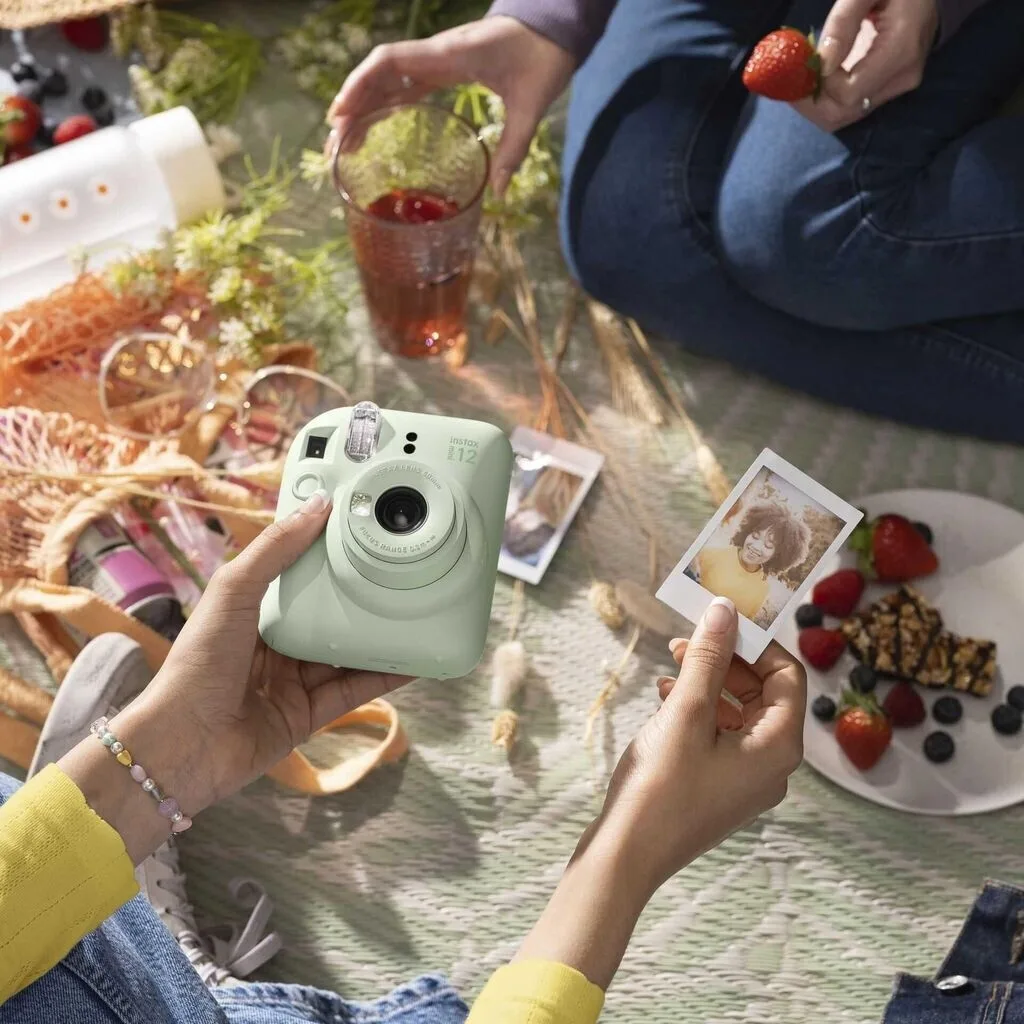
We have a rule on the road now: one Instax print a day, chosen by whichever child is holding the camera. It started as a way to keep small hands busy in departure lounges and turned into the thing they talk about for weeks afterwards. The Fujifilm Instax Mini 12 is not a serious camera in any photographer’s sense of the word. It has no manual controls, no screen, no app, and a flash you cannot switch off. What it has instead is a twist-to-wake lens, a fully automatic exposure system, and the small daily miracle of a physical, credit-card-sized photograph sliding out of the top and developing in your palm while you wait for the passport queue to move.
Fujifilm sells it in five pastel colourways (Mint Green, Pastel Blue, Blossom Pink, Lilac Purple and Clay White), and it won both the Red Dot and iF design awards in 2024, which tells you the bubbly, rounded shape is deliberate rather than accidental. It weighs 306 grams before you load the two AA batteries, which is to say it weighs nothing you will notice in a day bag. It costs a fraction of anything else we pack. And it has become, somewhat to our surprise, the single item our children ask about first when the suitcases come out.
Why It’s Great for Family Travel
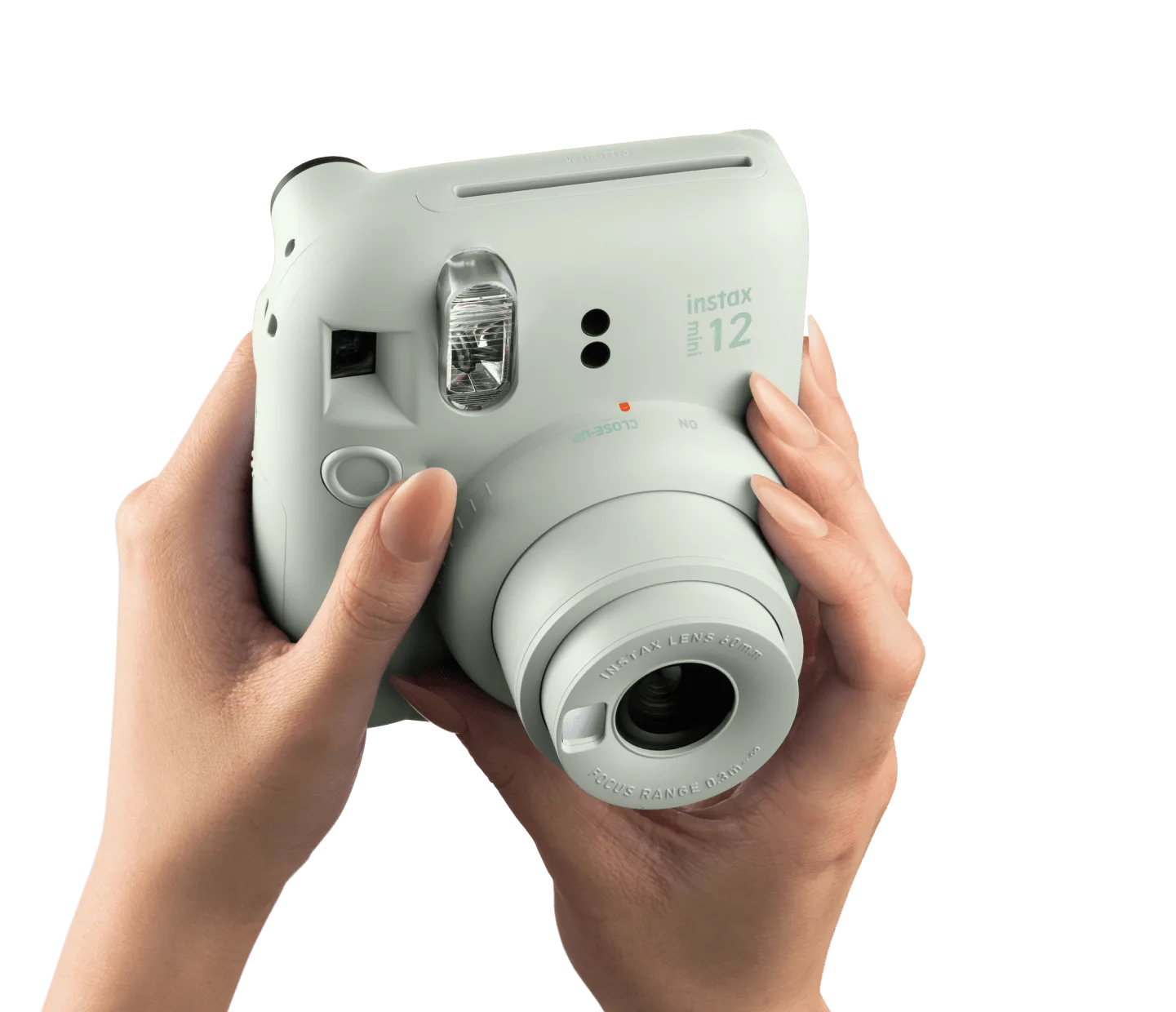
The pitch writes itself the moment you hand it to a child. There is no learning curve to speak of: you twist the lens barrel to turn it on, twist it a click further for close-ups, look through the finder, press the shutter button on the front. That is the entire operating manual. Our six-year-old had it figured out before the plane had finished boarding, and our tween had appointed herself the family’s official holiday documentarian by the second morning. That transfer of ownership matters more than any spec. A trip photographed by the children, on their terms, produces a completely different record than the one you curate on your phone.
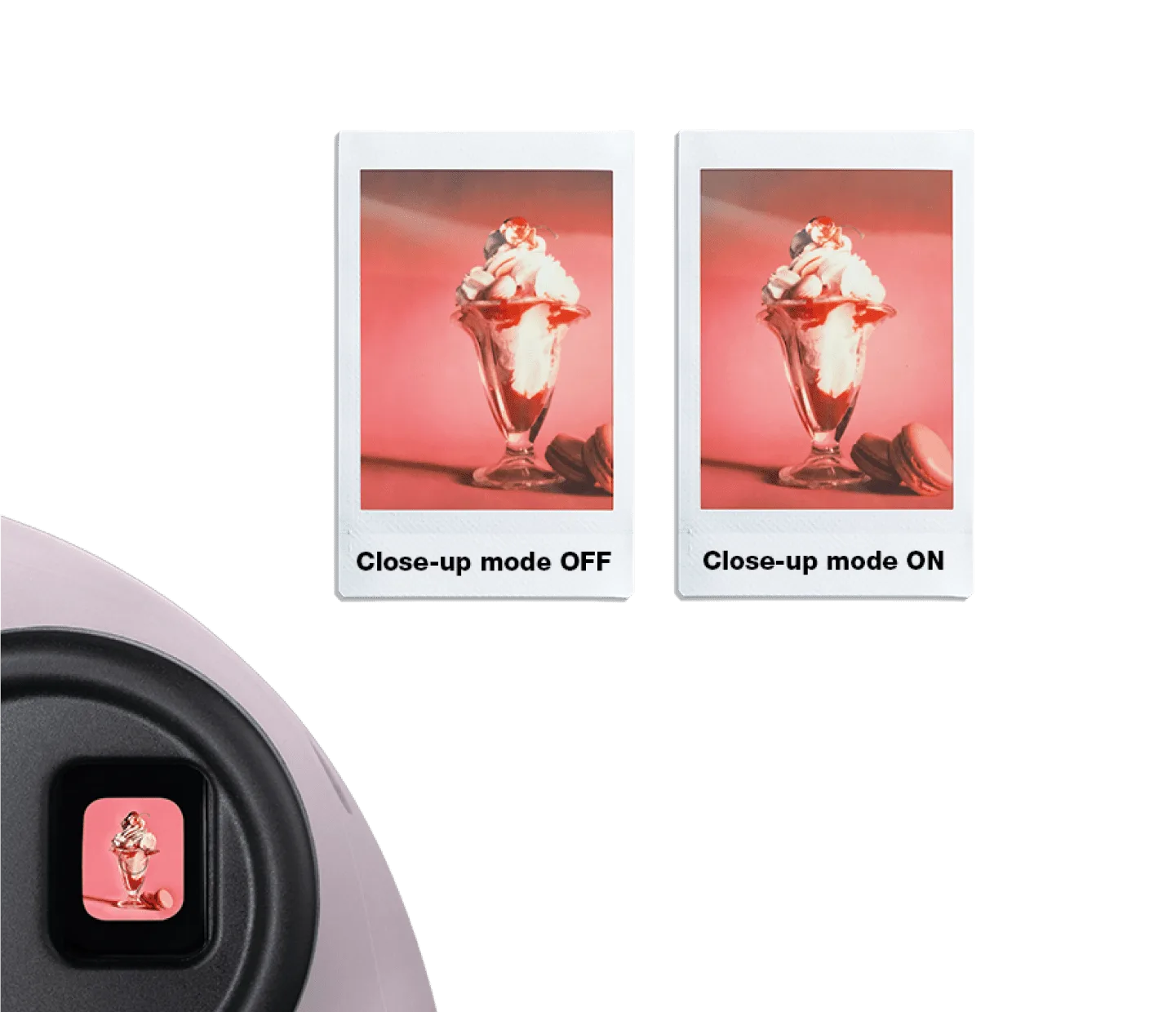
The close-up mode deserves specific praise, because it quietly solves the classic kid-photography failure. Children hold cameras far too close to their subjects, and on most cameras that means a blurry mess. Twist the Mini 12’s lens to its second position and it focuses down to around 30 centimetres, with a small parallax-correcting adjustment in the finder, so the endless close-range shots of siblings, hotel breakfasts and beach crabs actually come out. The same twist reveals a little selfie mirror beside the lens, which the tweens found roughly as compelling as the camera itself.
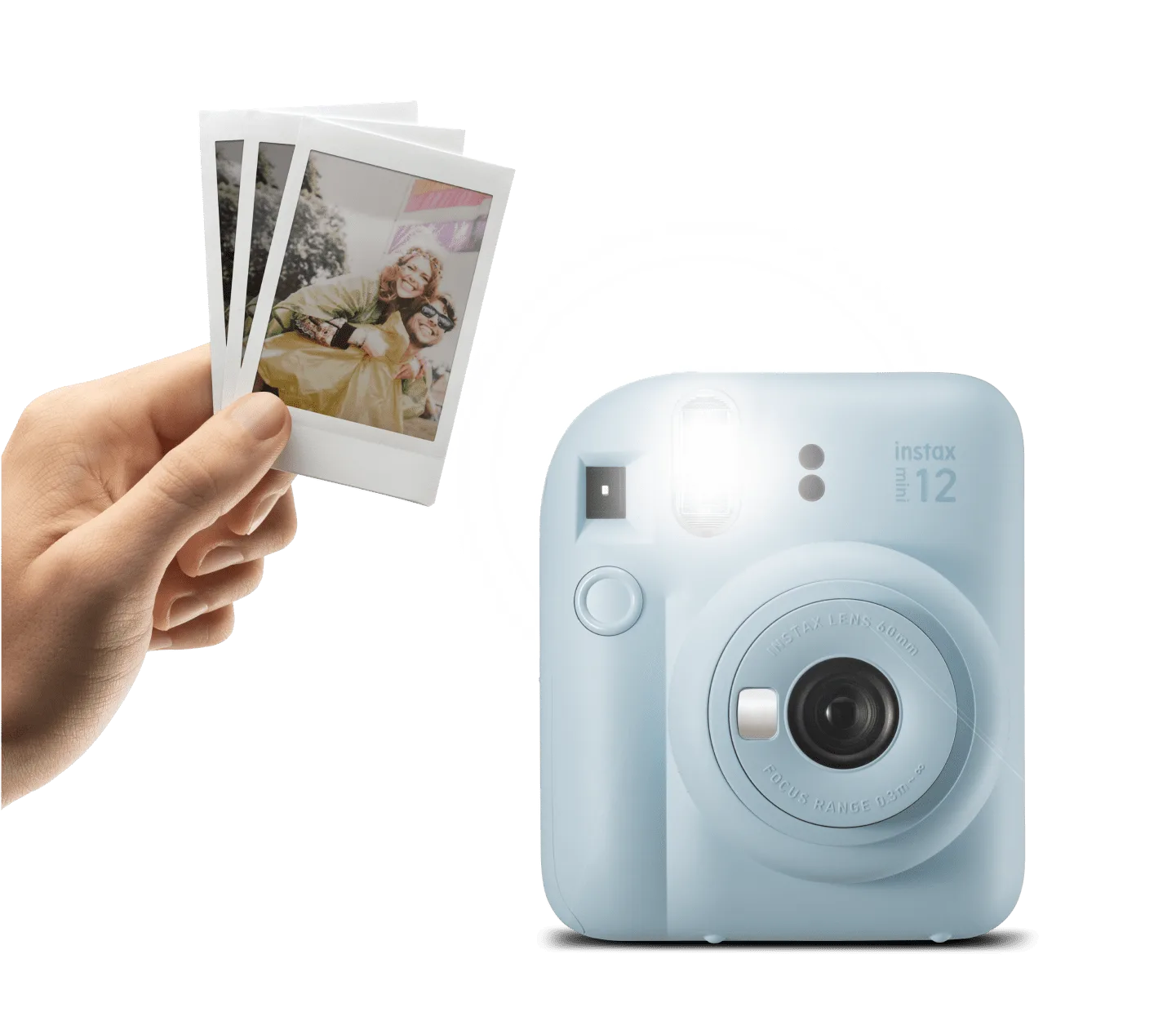
Then there is the keepsake economy. A phone photo is infinite and therefore worthless to a child; an Instax print is singular, physical, and theirs. Ours have Blu-Tacked a summer’s worth of slightly-overexposed prints around their bedroom mirrors. On a long trip we let each child keep a running “travel diary” of one print per day, dated on the white border in felt-tip. It is the cheapest and most durable souvenir we have ever brought home, and it survives a phone upgrade, a cracked screen, and a deleted cloud account.
Real-World Use (Airport / Car / Hotel)
Airport: here is the one piece of homework the Mini 12 demands, and it is worth reading before you fly. Instax mini film is ISO 800 and modern airport CT scanners can fog unexposed film. Fujifilm officially recommends carrying your camera and all unused film packs in cabin baggage, never in the hold, and we now travel with the spare packs in a clear zip bag and ask security for a hand check. Already-developed prints are completely unaffected, so the diary is safe. The camera itself is carry-on friendly: no lithium cells, no liquids, nothing to declare.
Car: on a long drive it earns its keep as an activity rather than a screen. A print of a motorway service station is not high art, but it keeps a restless child occupied through the boring middle hours of a transfer, and the results end up in the diary alongside the good stuff. The always-on flash is a small nuisance in a bright car; more on that below.
Hotel: this is where the joy factor peaks. Kids photograph the pool, the balcony view, the tiny toiletries, each other in matching bathrobes, and the whole thing becomes a ritual. Battery life is generous enough that we get through a full pack-heavy holiday on one set of AAs, roughly 100 shots, though we always pack spares because there is no charging your way out of a dead camera at 9pm in a resort with one shut minibar.
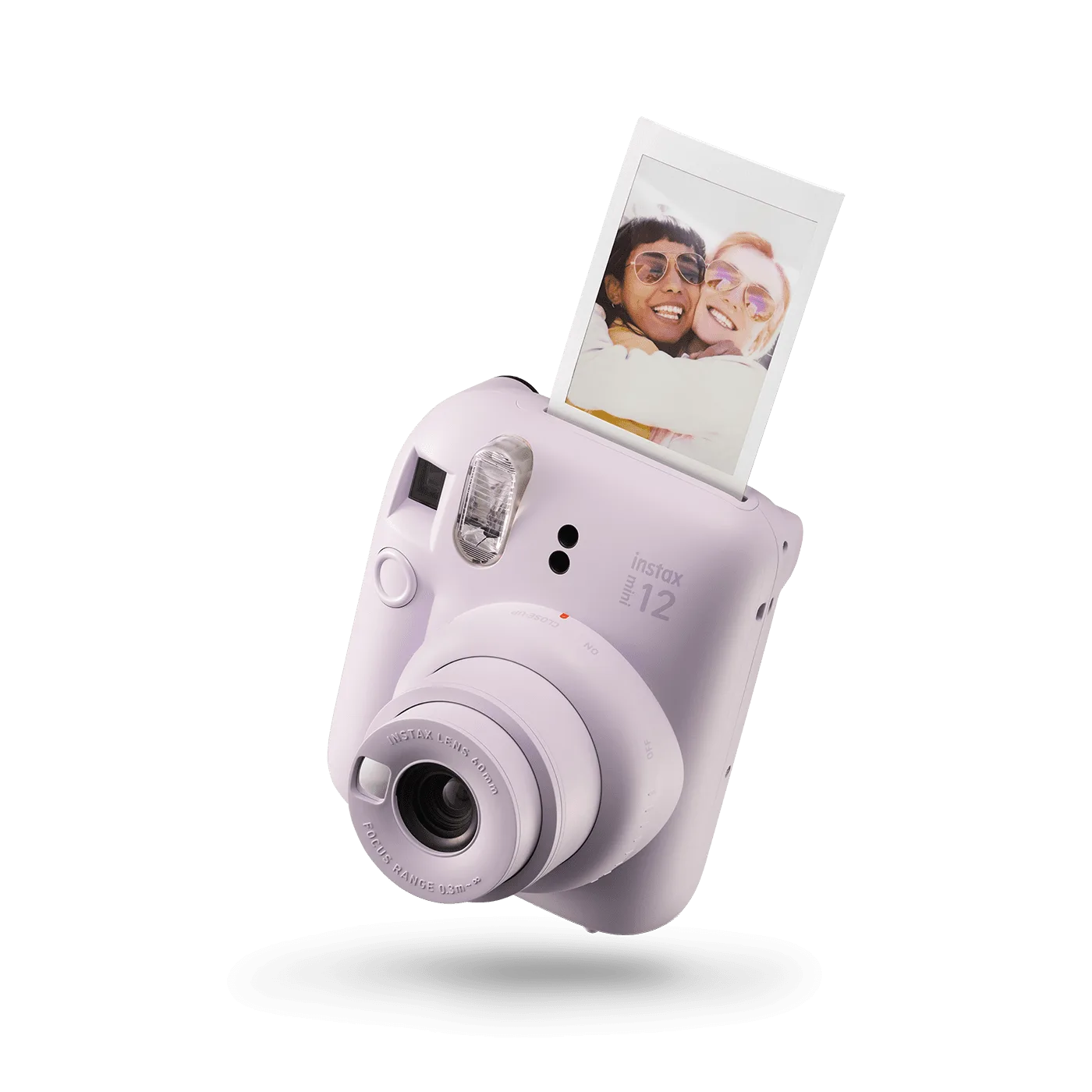
An honest word on the two things that will annoy you. First, the flash fires on every single shot and cannot be disabled, so bright-daylight scenes, such as the beach at noon or the ski slope in full sun, sometimes come back overexposed and washed out. There is no workaround; you simply learn which shots to attempt. Second, the body is smooth, glossy plastic that picks up fine scratches with distressing ease, and it is neither weather-sealed nor drop-proof. On our second trip the battery-door latch, a notoriously flimsy little plastic catch, started to feel loose, which is a well-documented weak point on this model. A cheap silicone sleeve or a dedicated pouch is not optional for family travel; treat it as part of the purchase.
Specs That Actually Matter
- Weight: 306 g body only; roughly 352 g loaded with two AA batteries. You will not feel it in a day bag.
- Dimensions: 104 mm (W) × 122 mm (H) × 66.6 mm (D), pocketable only in a large coat pocket, realistically a bag item.
- Battery: 2 × AA alkaline (manganese cells not supported), about 100 shots per set, flash ready in under 7 seconds on fresh batteries, auto power-off after around 5 minutes.
- Film: Instax mini, ISO 800, credit-card-sized prints, 10 exposures per pack, roughly €0.70-€1.00 per shot (the real running cost).
- Modes: fully automatic exposure; twist-to-activate close-up mode (focus range approx. 30–50 cm) with a built-in selfie mirror; always-on flash that cannot be disabled.
- Materials: ABS plastic body in five pastel colourways.
- Warranty: 1-year Fujifilm limited warranty; the EU statutory 2-year Gewährleistung applies on purchases from authorised German and EU retailers with proof of purchase.
- Age suitability: no official Fujifilm minimum; comfortable independent use from around 8, supervised fun from 6, and a firm favourite with tweens and teens.
Pros & Cons
Pros
- Effortless: children as young as eight operate it with zero instruction.
- Close-up mode plus selfie mirror dramatically raise the hit rate for kids.
- Produces physical, dated keepsakes that outlive any phone or cloud account.
- Light at 306 g and inexpensive to buy; five appealing pastel colours.
- Long battery life on cheap, replaceable AAs, so no charger to lose.
Cons
- Flash cannot be switched off, so bright-daylight shots can blow out.
- Glossy plastic scratches easily and the body is not weather- or drop-resistant.
- The battery-door latch is a documented fragile point; a protective case is essential.
- Ongoing film cost of roughly €0.70-€1.00 per print adds up on a long trip.
- ISO 800 film needs a hand check at airport security to avoid CT-scanner fogging.
FFH Gear Score
The Mini 12 is scored for exactly what it is: an instant camera for family memory-making, not a photographer’s tool. It excels wildly at the first job and makes no attempt at the second, and our numbers reflect both the joy it reliably delivers and the fragility you have to plan around.
- Functionality: 8.5 / 10.
- Quality & Durability: 6.5 / 10.
- Ease of Use: 9.2 / 10.
- Family Practicality: 8.0 / 10.
- Pricing: $$ of $$$$$.
- FFH Gear Score: 8.1 / 10.
Final Verdict
If you buy the Mini 12 expecting a rugged, do-everything travel camera you will be disappointed within a week. If you buy it for what it actually is a foolproof joy-machine that turns a child into the family’s photographer and sends everyone home with a shoebox of real, developing-in-your-hand memories, it is close to unbeatable at the price. Budget for a protective case from day one, pack spare AAs and a clear bag of film for the security hand check, make your peace with the un-killable flash, and hand it to the youngest confident set of hands in the family. Ours has come home from three trips scuffed, loved, and still working, its border-diary now the first thing the children reach for when they want to remember where we have been. For a camera this cheap, that is a remarkable return on a fortnight’s holiday.
Gallery
Fujifilm Instax Mini 12 Instant Camera: Family Questions Answered
Who is the Fujifilm Instax Mini 12 best for on family trips?
It’s best for families who want kids to create real, physical holiday memories. The Mini 12 turns taking photos into a daily ritual (for example, one print per day), and the credit-card-sized prints make a durable, screen-free keepsake. It’s designed to be simple rather than “serious” photography: no manual controls, no screen, no app: just point, shoot, and watch the photo develop.
What age is the Instax Mini 12 suitable for?
There’s no official Fujifilm minimum age, but independent use is comfortable from around 8. In our experience it’s supervised fun from about 6, and it’s also a firm favourite with tweens and teens thanks to the selfie mirror and the instant-print payoff. The key is confidence handling a small device and understanding that each shot costs film.
How big and heavy is the Instax Mini 12 for packing?
It’s genuinely day-bag friendly: 306 g body-only and about 352 g with two AA batteries. Dimensions are 104 mm (W) × 122 mm (H) × 66.6 mm (D). It’s “large coat pocket” at best, but realistically a bag item: small enough to live in a daypack without you noticing the weight.
Is the Instax Mini 12 easy enough for kids to use without help?
Yes. There’s almost no learning curve. You twist the lens barrel to turn it on, twist one click further for close-ups, look through the viewfinder, and press the shutter button. That simplicity is the point: it makes it easy to hand over “ownership” of holiday photos to a child, with minimal adult troubleshooting.
Does the Instax Mini 12 work well for close-ups and selfies?
Yes. The close-up mode is one of the most useful kid-friendly features. Twist the lens to the close-up position and it focuses down to around 30–50 cm, with a parallax-correcting adjustment in the finder to help framing at short distances. There’s also a small selfie mirror beside the lens, which is especially popular with tweens.
How much does it cost to run the Instax Mini 12 (film cost per photo)?
The real running cost is the film: roughly €0.70–€1.00 per print. Instax mini film comes in packs of 10 exposures, and each press of the shutter is one physical photo. That “scarcity” is part of the magic for kids, but on long trips the costs add up quickly, so it’s worth setting a daily-print rule.
What batteries does the Instax Mini 12 use, and how long do they last?
It uses 2 × AA alkaline batteries and manages about 100 shots per set. Fujifilm notes manganese cells aren’t supported. Flash ready time is under 7 seconds on fresh batteries, and it auto powers off after around 5 minutes. For travel, spares are sensible: there’s no charging your way out of a dead camera late in a hotel.
Can you switch off the flash on the Instax Mini 12?
No. The flash fires on every shot and can’t be disabled. In bright daylight (think beach at noon or a ski slope in full sun) this can lead to overexposed, washed-out prints. There isn’t a workaround mentioned here beyond learning which scenes it handles well and accepting it as the Mini 12’s biggest limitation.
Can Instax Mini film go through airport scanners?
Fujifilm recommends keeping the camera and all unused film in cabin baggage and asking for a hand check. Instax mini film is ISO 800, and modern airport CT scanners can fog unexposed film, so don’t put it in checked luggage. Already-developed prints are unaffected, so the photos you’ve already taken are safe.
What are good alternatives if we want a different kind of travel entertainment than an instant camera?
If you’d rather avoid film costs, consider audio or interactive learning alternatives. The Toniebox Starterset (pricing tier 3) is a screen-free listening option for travel downtime, while tiptoi Books, Ravensburger (tiptoi Starter-Set) (pricing tier 2) leans more toward interactive activities. The Instax Mini 12 (pricing tier 2) is about tangible photo keepsakes, but it does come with ongoing per-print costs.