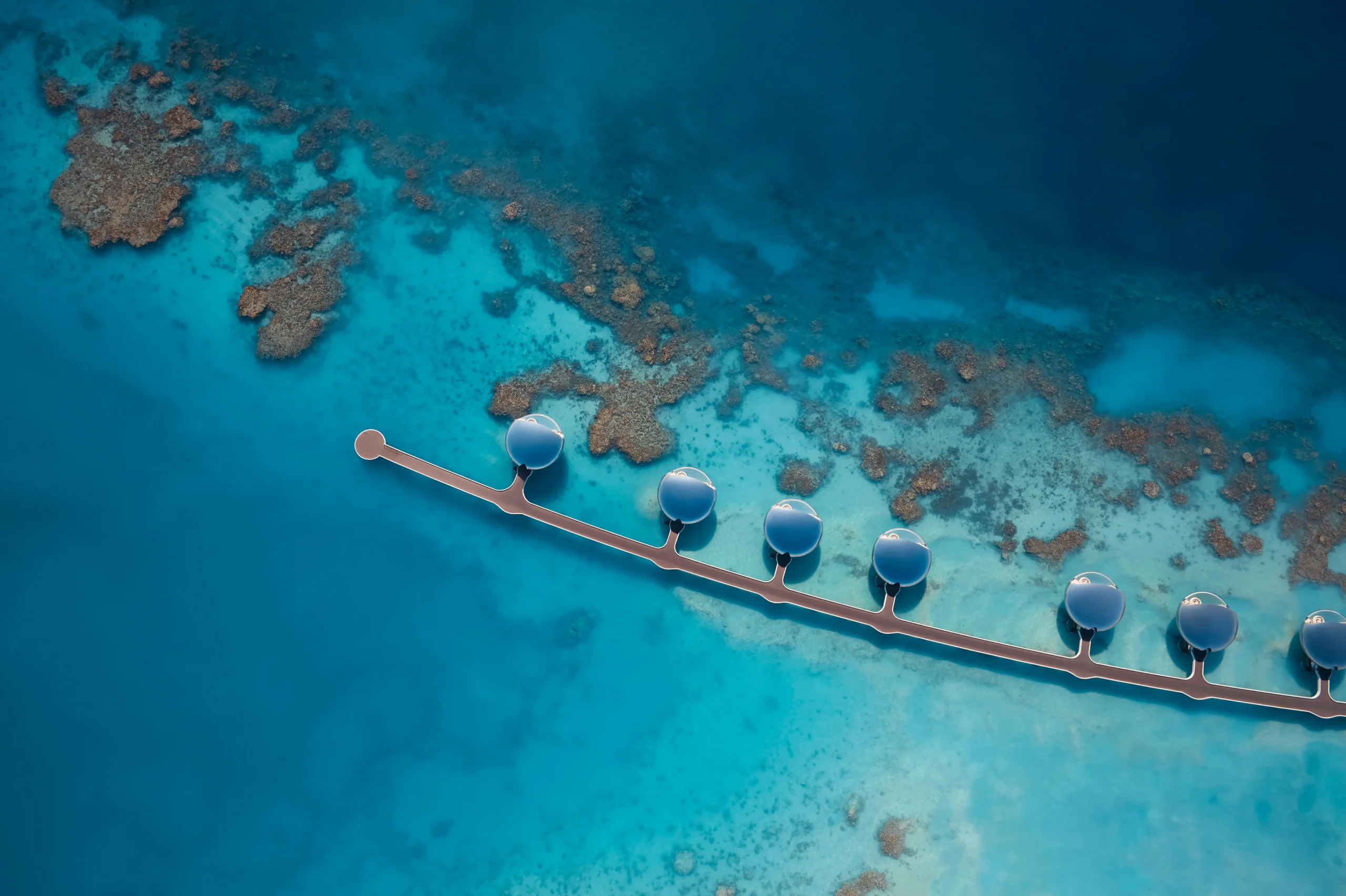
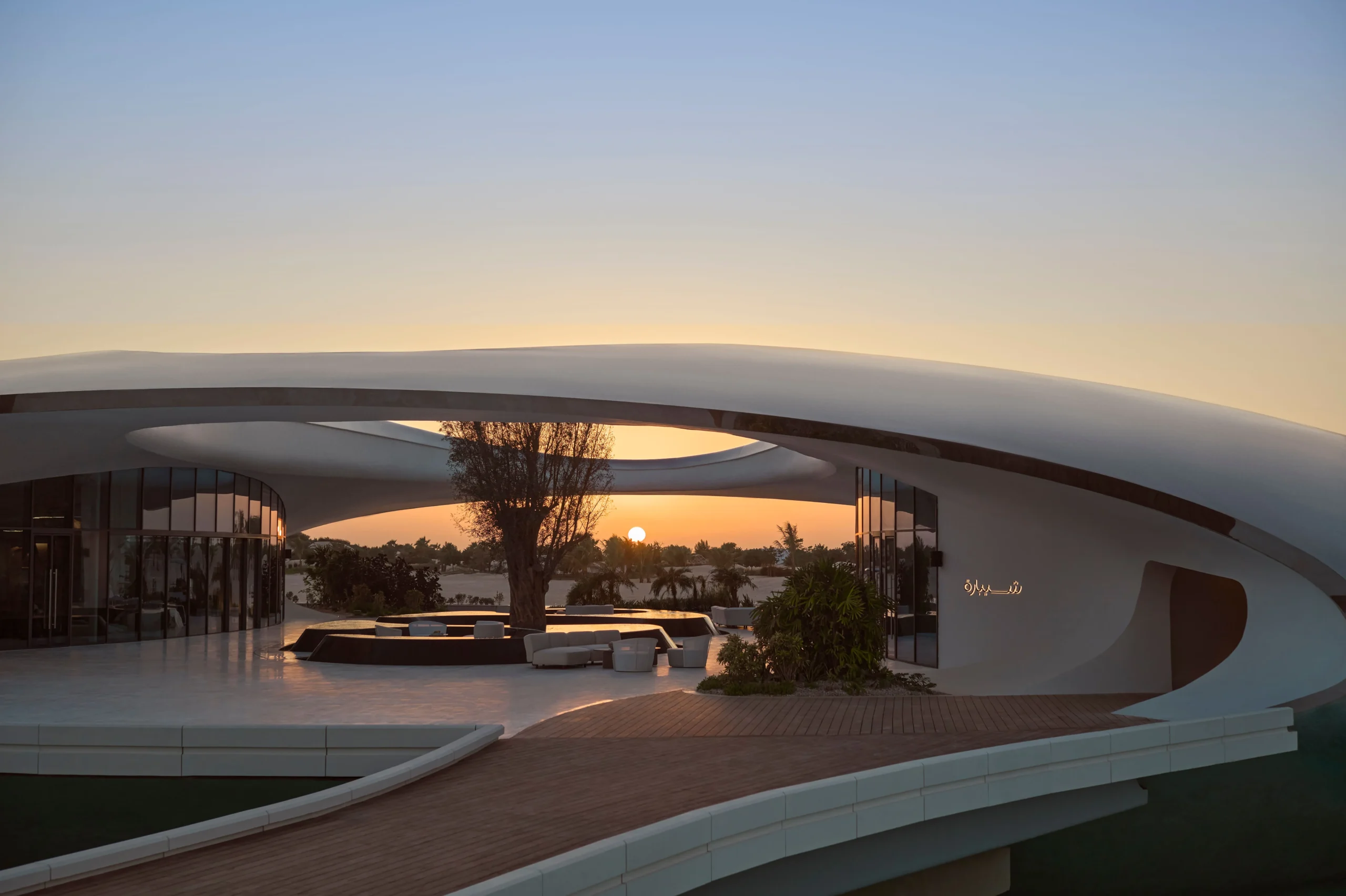
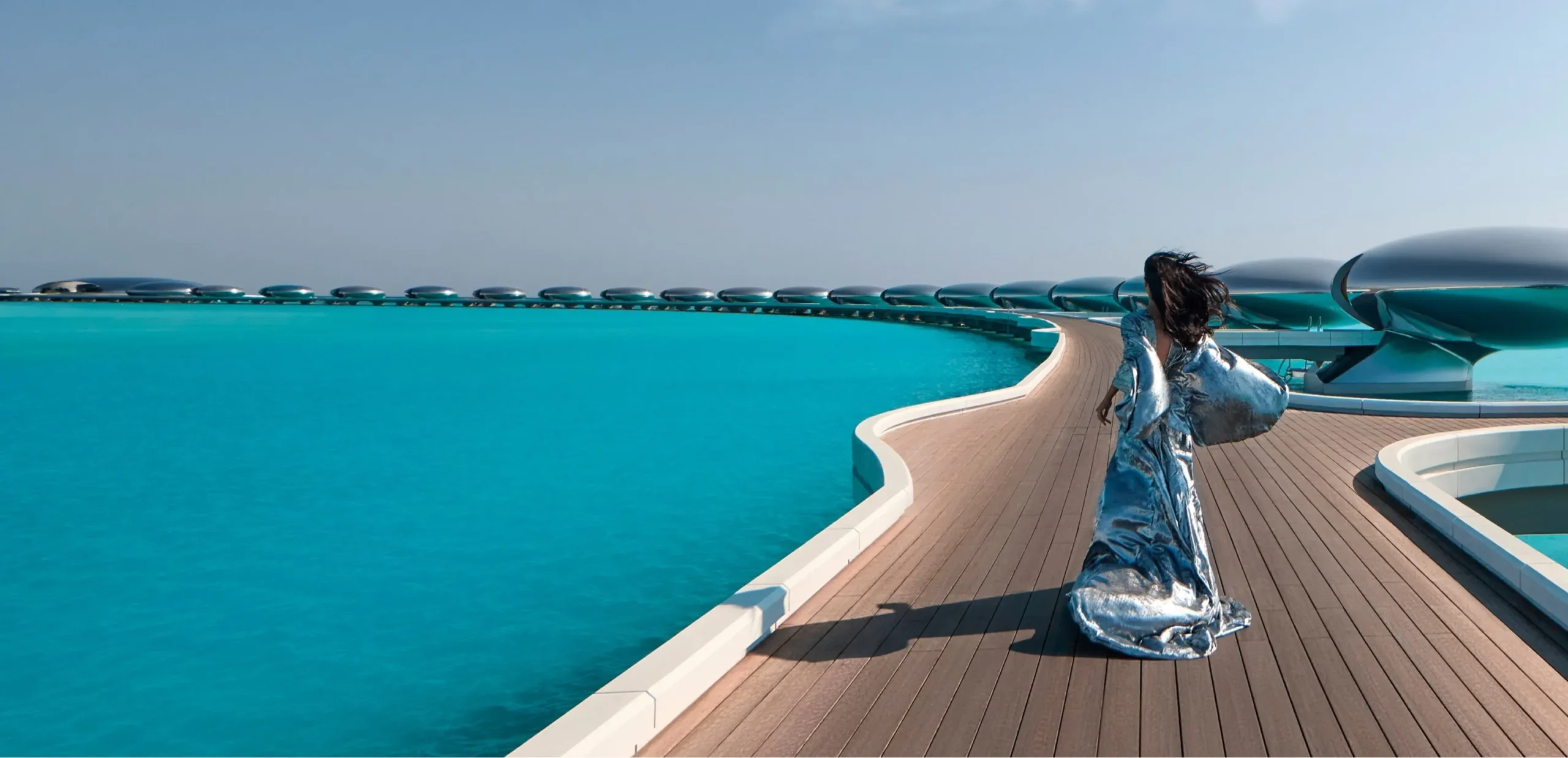
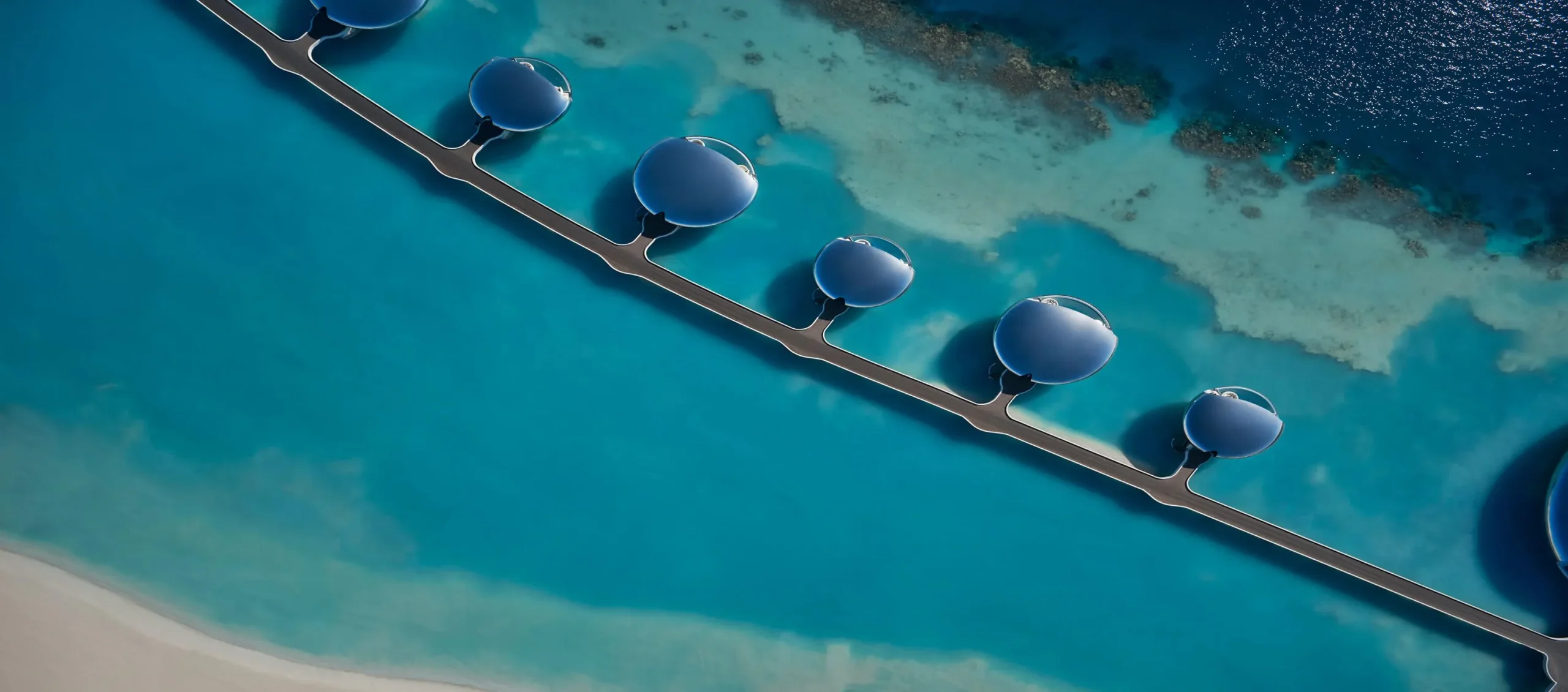
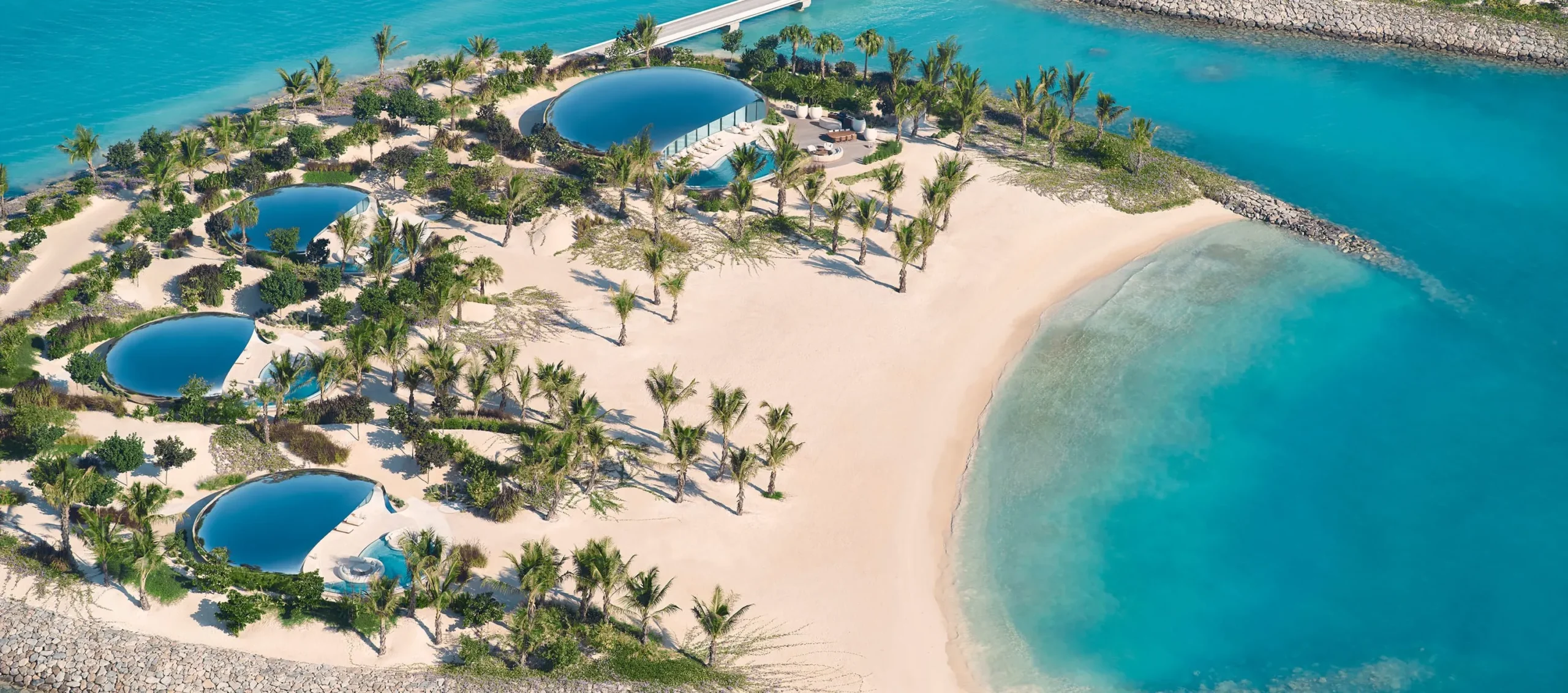
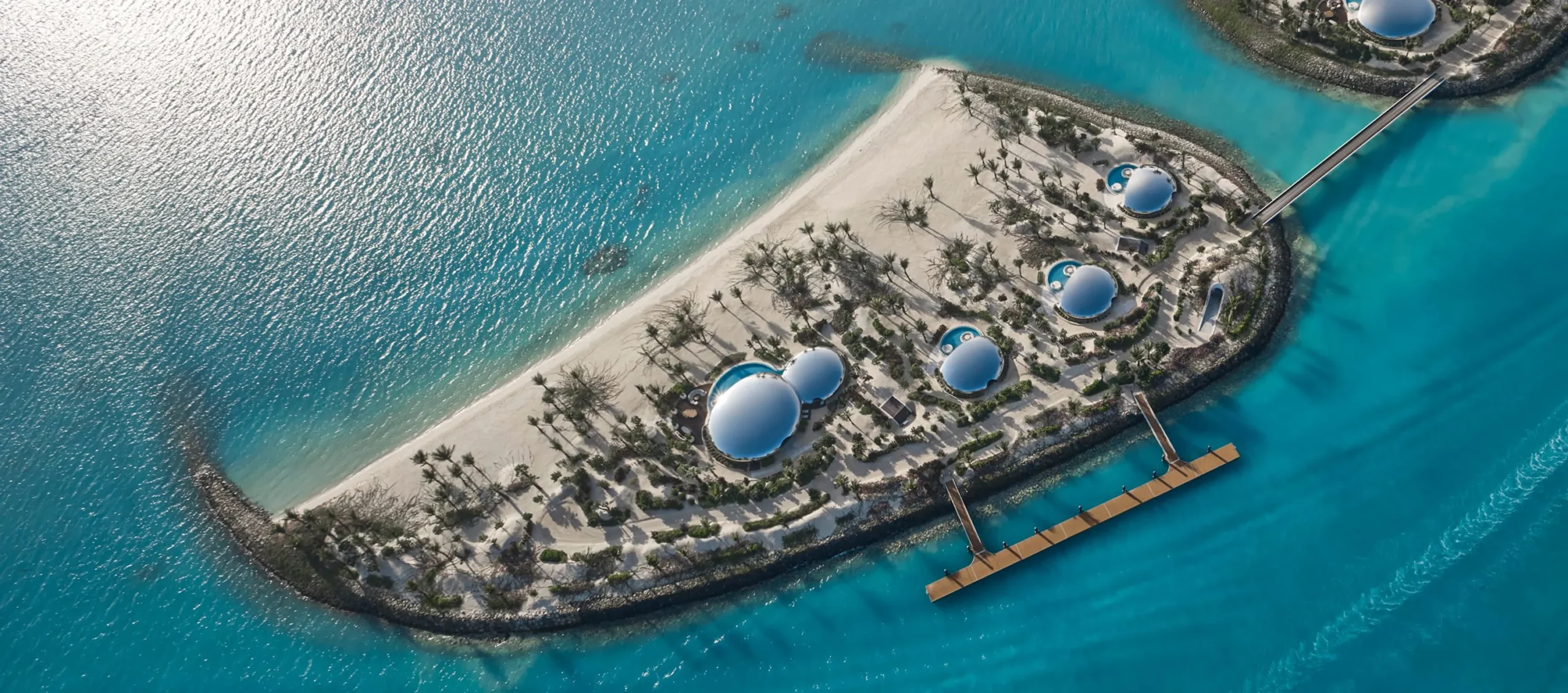
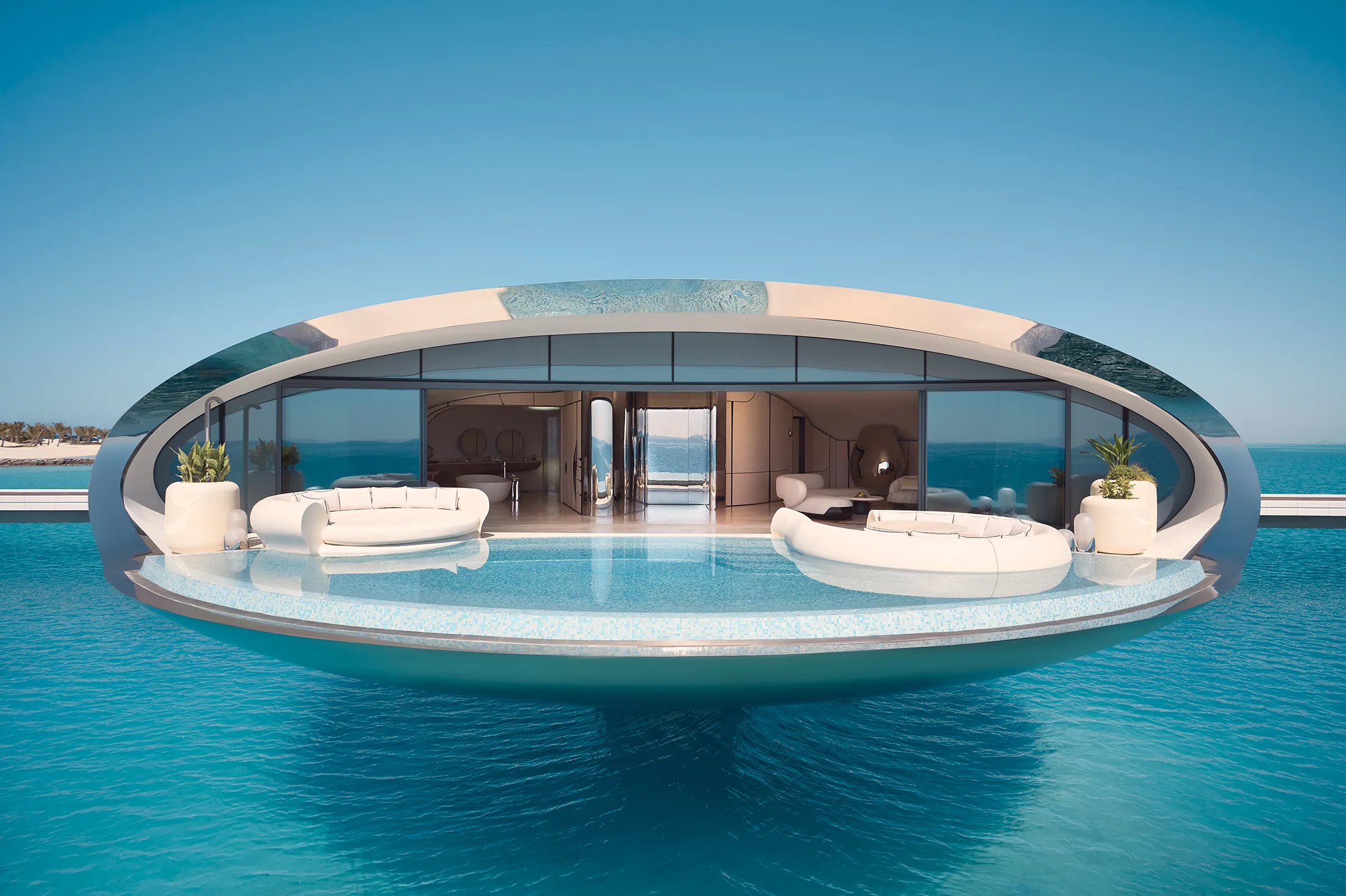
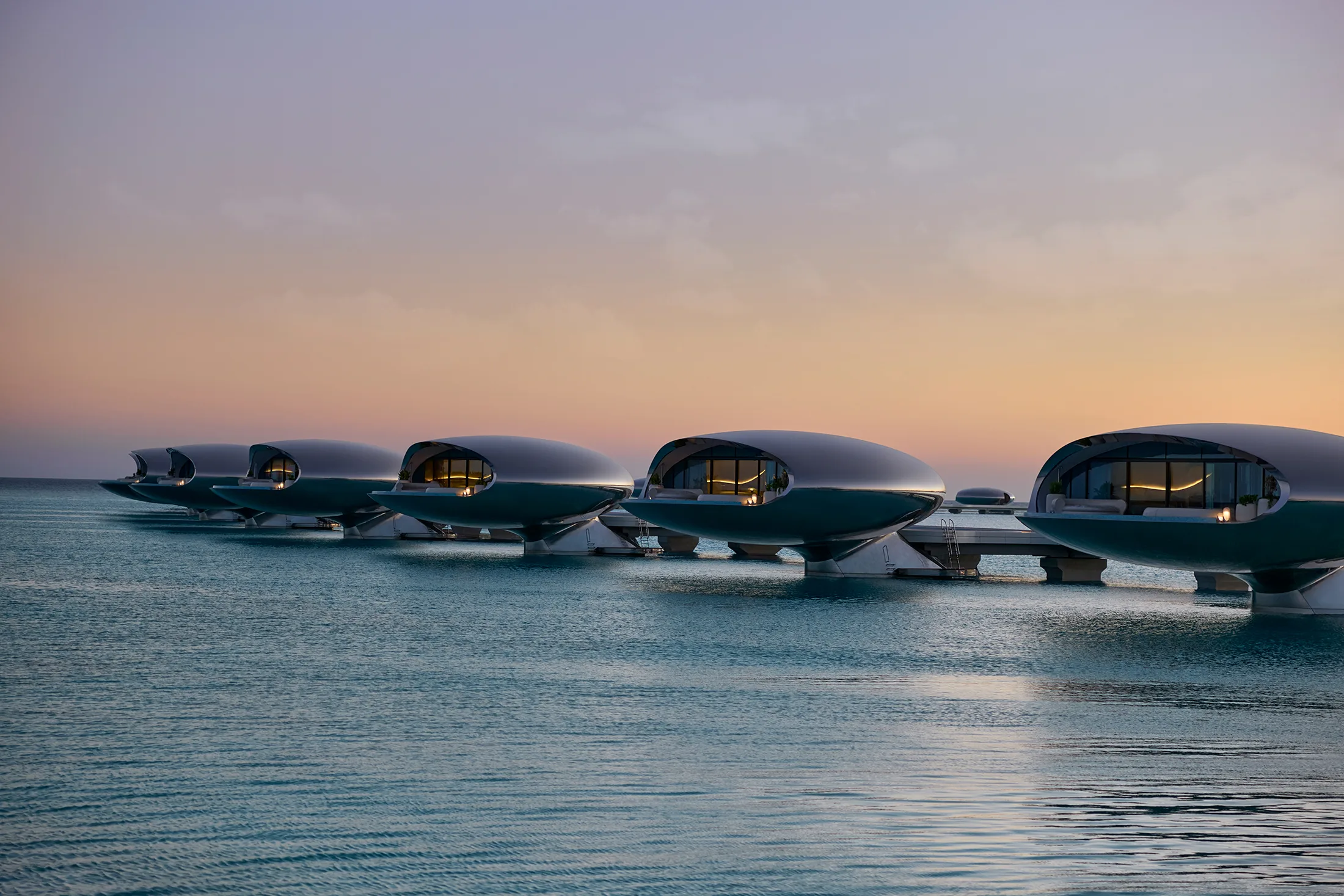
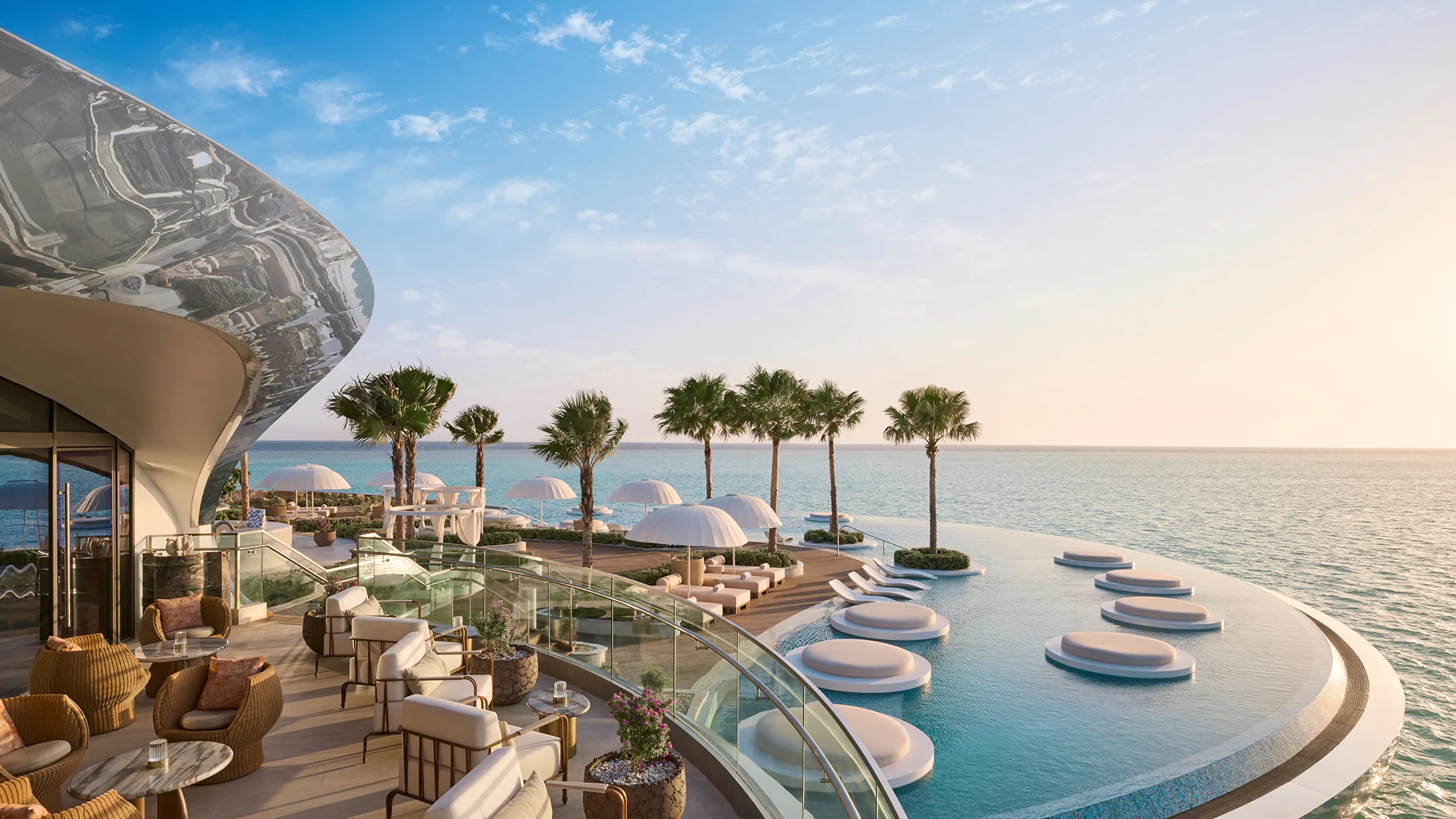
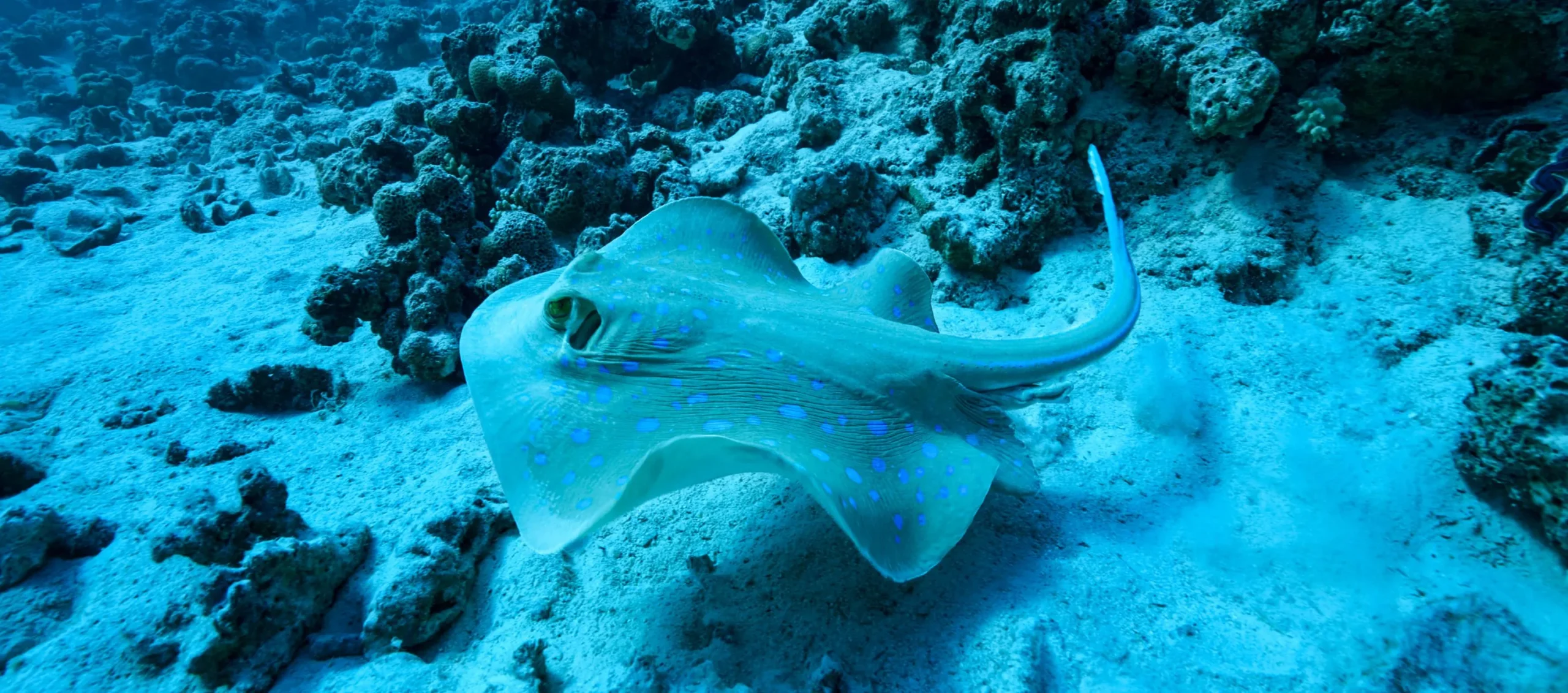
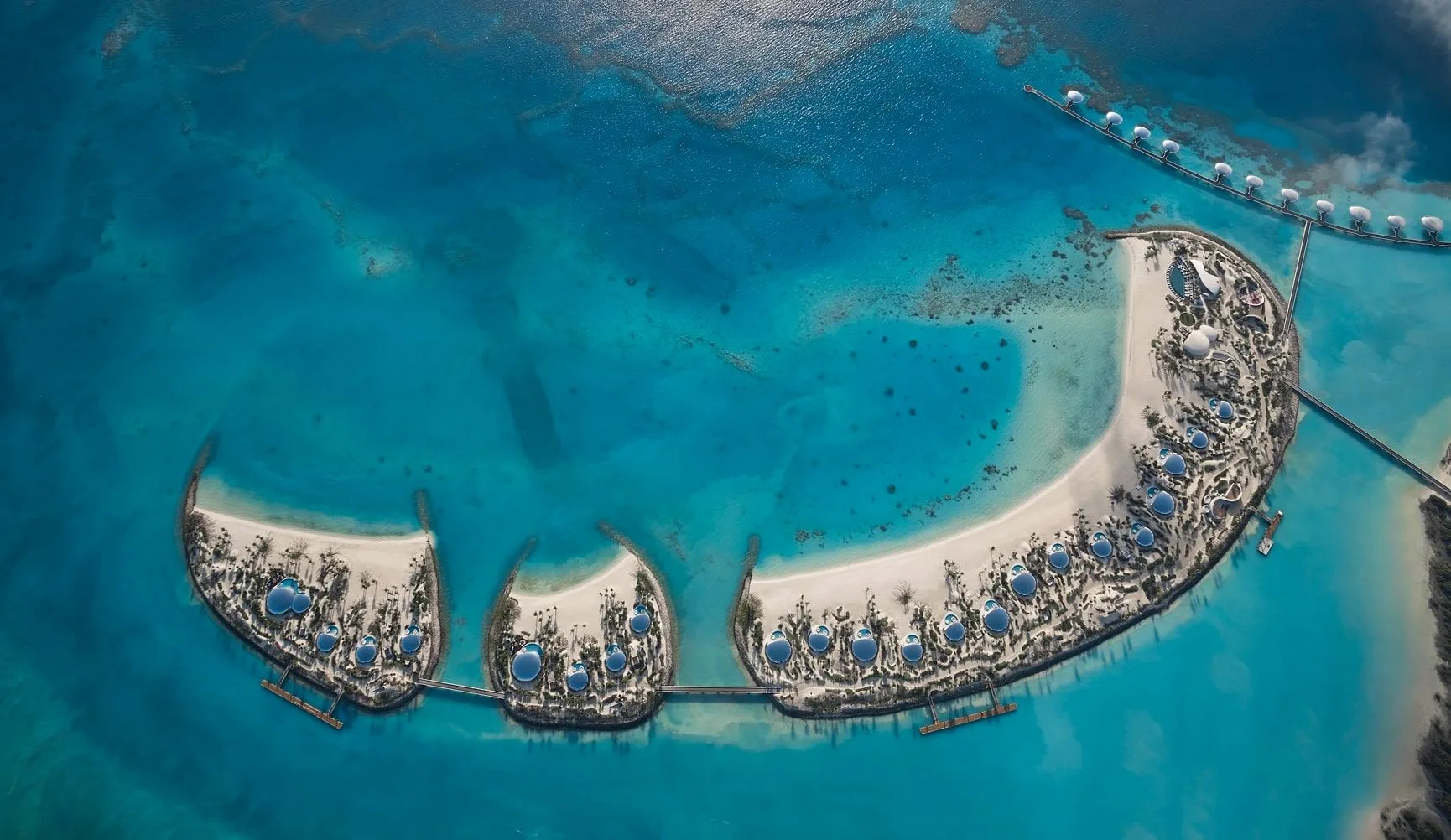
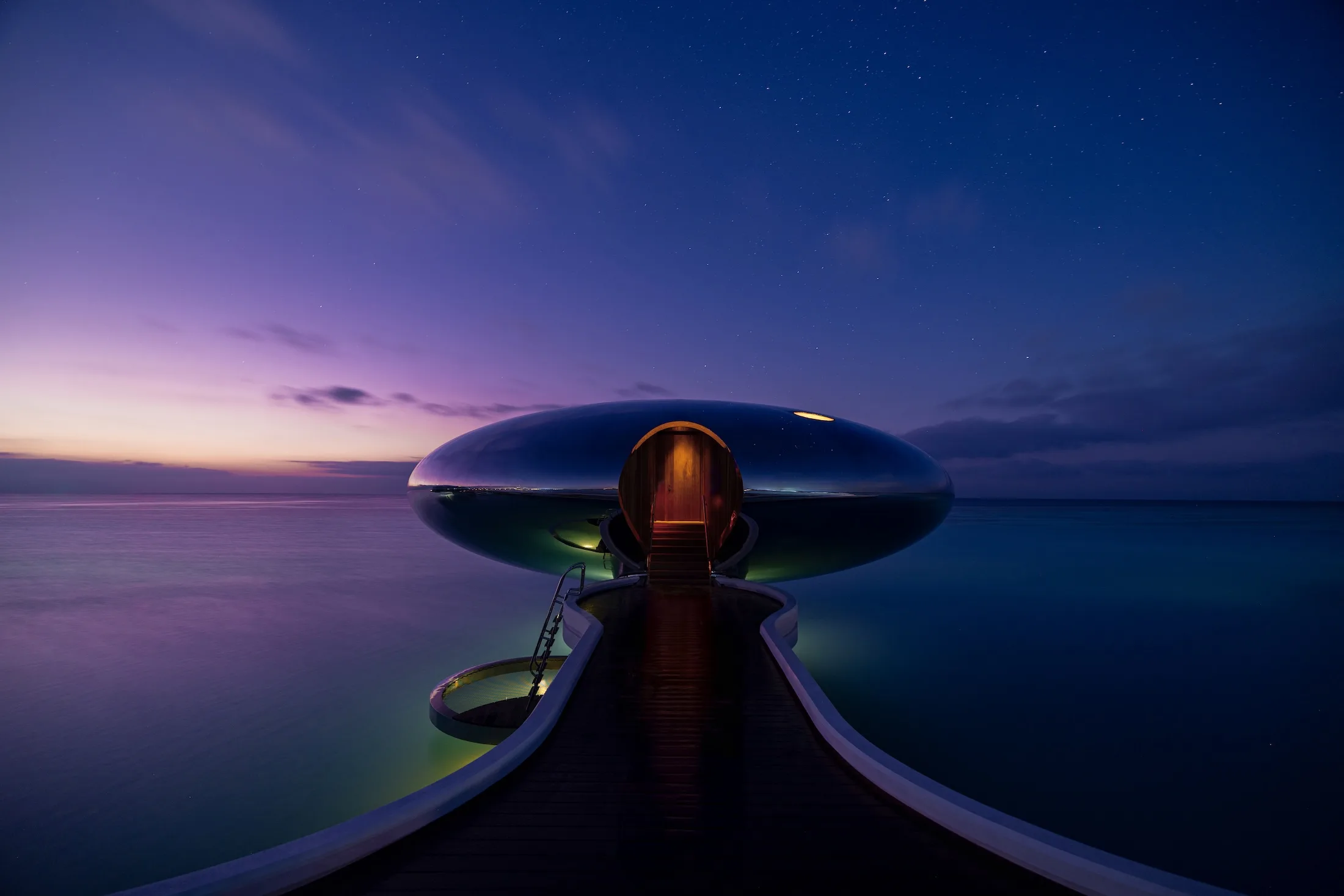
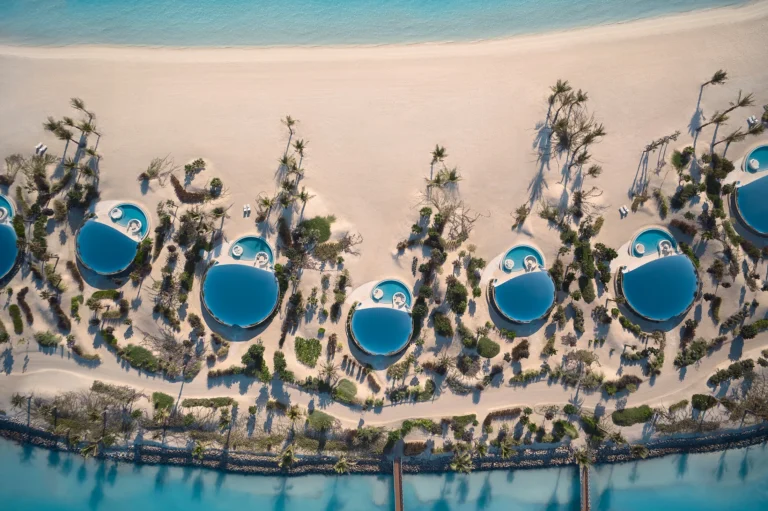
73 spherical pods. That is the full accommodation inventory at Shebara Resort: 73 mirrored stainless-steel villas, half suspended over the Red Sea, half anchored to the beachfront of Sheybarah Island, roughly 25 kilometres off the coast of Umluj, and every single one designed by Killa Design, the Dubai studio responsible for the Museum of the Future. The number matters because it fixes everything else about this place: the low guest density, the unhurried pace on the water, the sense that you have stumbled into something the world has not quite processed yet. TIME Magazine named Shebara one of its World’s Greatest Places in 2025. Booking a two-bedroom beachfront villa for four and watching children snorkel with an eagle ray off the front deck at 8 a.m. puts that designation in concrete terms.
Shebara opened in November 2024 as the first hotel fully owned and operated by Red Sea Global, the Saudi Vision 2030 infrastructure company behind one of the most ambitious tourism developments in modern history. It sits on Sheybarah Island in the Al Wajh Lagoon, roughly 25 kilometres off the Saudi mainland in Tabuk Province. The island is surrounded by a 2,081 km² marine protected area, one of the least-disturbed coral reef systems on the planet, with underwater visibility averaging 30 to 40 metres. No vehicles operate on the island. The resort runs entirely on solar power. Zero single-use plastics. It is the first 100% renewable resort in Saudi Arabia, and the ecological baseline it sits on is extraordinary. For families who want their children to understand what a healthy reef actually looks like, the comparison with the bleached patches they may have snorkelled before is striking.
The candid framing: this is a bucket-list destination that accommodates families rather than a family resort that happens to be photogenic. The kids’ club is strong, children’s menus cover every restaurant, and multiple family reviewers rate the experience among the best of their lives. But the programming depth for young children does not rival a decade-old Maldives family resort. Infants and toddlers will need attentive parents around the overwater terraces. Getting here adds a logistics layer (a flight to the new Red Sea International Airport, then a 30-minute speedboat or seaplane transfer) that families should factor in well before booking. Come for the reef. Come for the architecture. Come knowing exactly what you are walking into.
Location & Accessibility
Red Sea International Airport (IATA: RSI) is the intended gateway. Saudia flies from Riyadh and Jeddah; Qatar Airways connects from Doha; flydubai from Dubai. Beond, which pioneered direct service from Milan Malpensa, is expanding its RSI network to London, Paris, Zurich, Munich, and Moscow from late 2026; verify the current schedule at time of travel, as the route map continues to evolve.
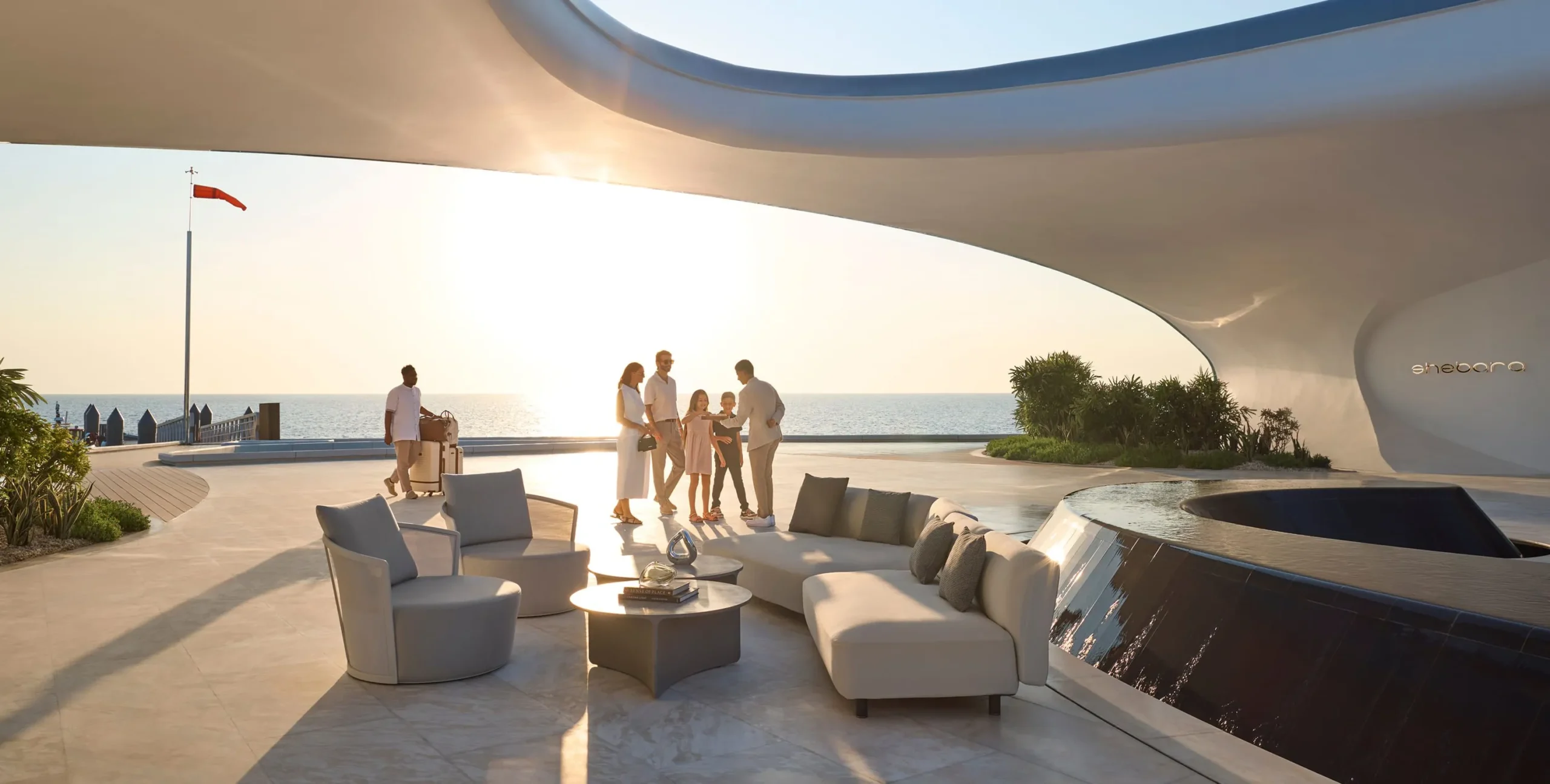
From RSI, the standard transfer is an electric vehicle to the Turtle Bay Arrival Lounge on the mainland coast (roughly 30 minutes, 20 km), then a private or shared boat to Sheybarah Island (30 to 40 minutes on the water). Total door-to-dock: allow 60 to 80 minutes. The seaplane alternative is a 30-minute direct flight from RSI, and multiple guests describe the low-altitude approach to 73 floating silver spheres as the most memorable arrival of their travel lives. Transfer costs are not published; contact the resort directly to confirm current transfer pricing before finalising your itinerary.
Saudi Arabia issues an online tourist e-visa for citizens of EU, EEA, UK, US, Canada, and most developed nations. It costs approximately SAR 300 (around €75) plus mandatory travel insurance (approximately SAR 140 additional), allows a one-year multiple-entry window with stays up to 90 days, and typically processes within a few days. Minimum passport validity is six months from entry. Children require their own passports or are included in a parent’s application depending on nationality. Saudi Arabia no longer denies entry based on Israeli passport stamps, though Israeli citizens themselves require separate visa arrangements. The resort operates under fully international standards; swimwear at pools and on the beach is standard for guests. Conservative dress applies only during any mainland transit; beachwear and relaxed resort attire are fully standard on the island itself.
One logistical note for families: the island has no external foot traffic. On-island transport runs via buggy, requested through the dedicated WhatsApp butler line. The remoteness is one of Shebara’s most compelling selling points, but it also means there is no pharmacy down the road, no paediatric clinic you can walk to, and no last-minute activity pivot outside the resort’s own offerings. Plan and pack accordingly.
The best months to visit are October through April, with November to March the sweet spot: sea temperatures around 24 to 28°C, air around 18 to 28°C on the coast, and peak marine life activity on the reef. Summer (June to September) brings sustained temperatures above 38°C with humidity. The resort appears to operate year-round, but summer heat materially constrains outdoor activity for children.
Accommodation (Rooms & Suites)
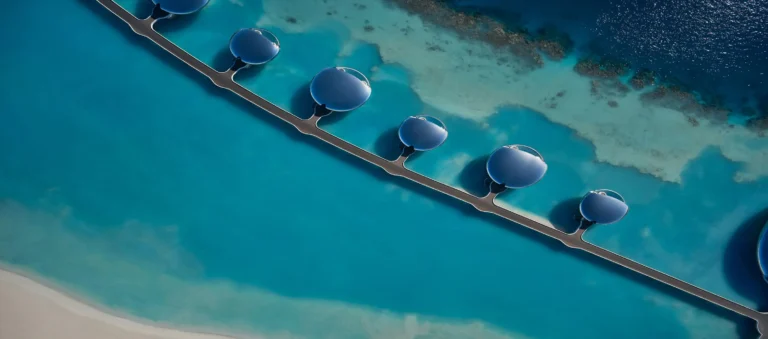
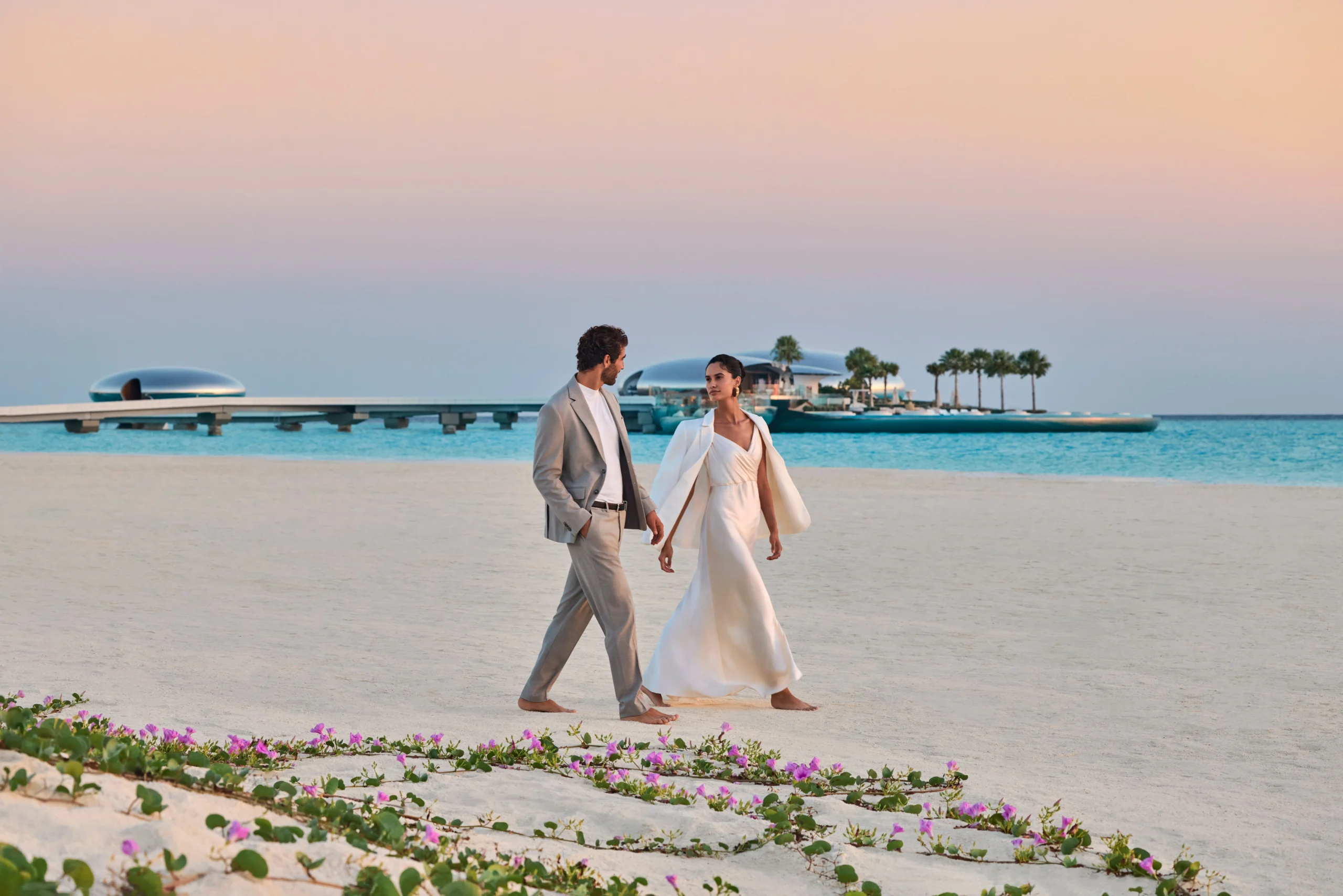
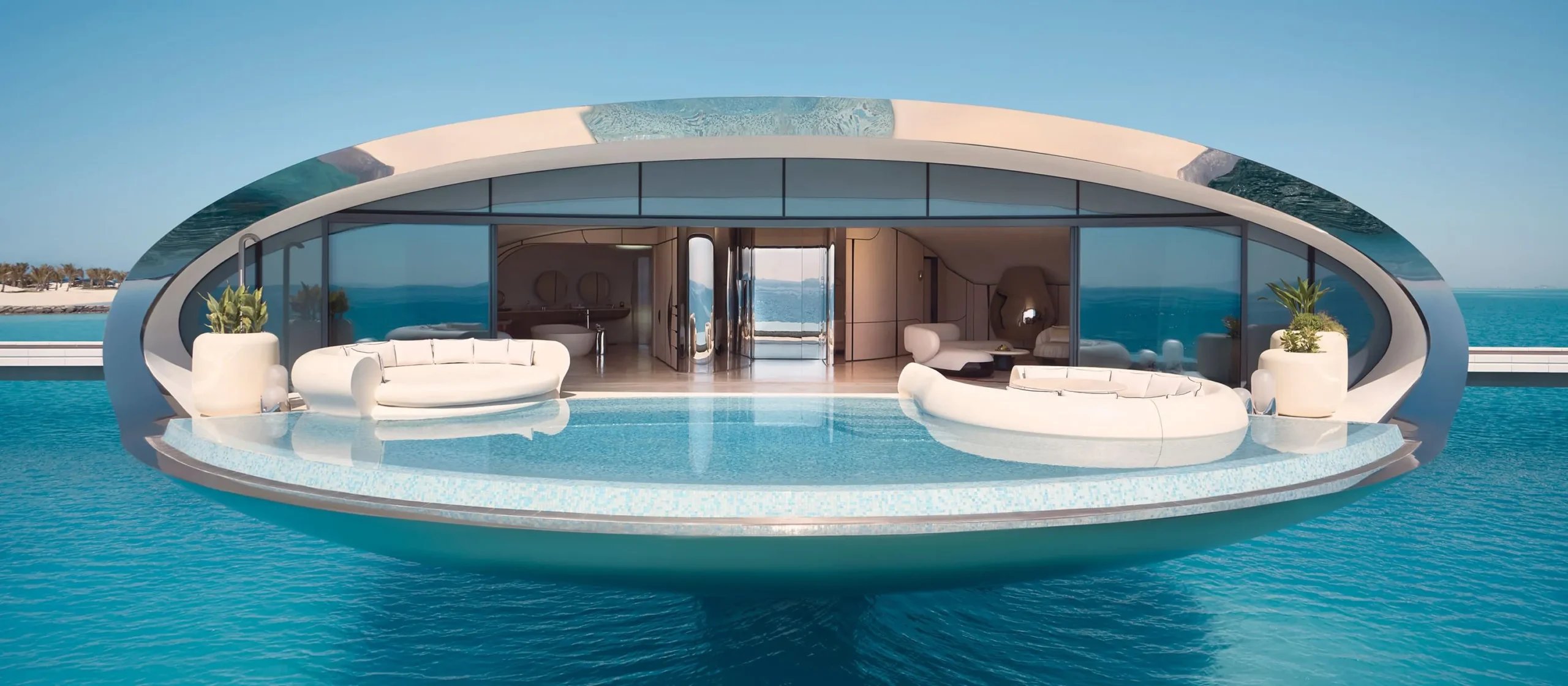
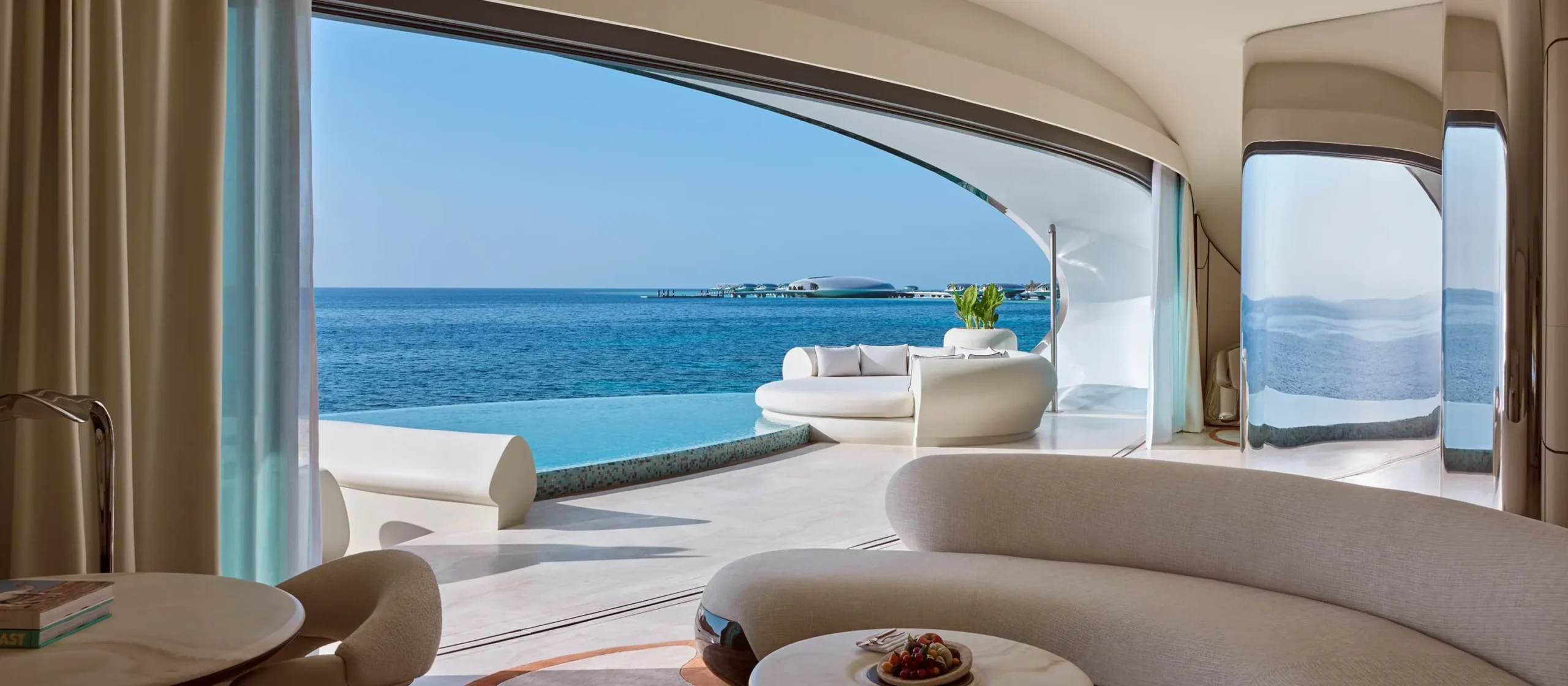
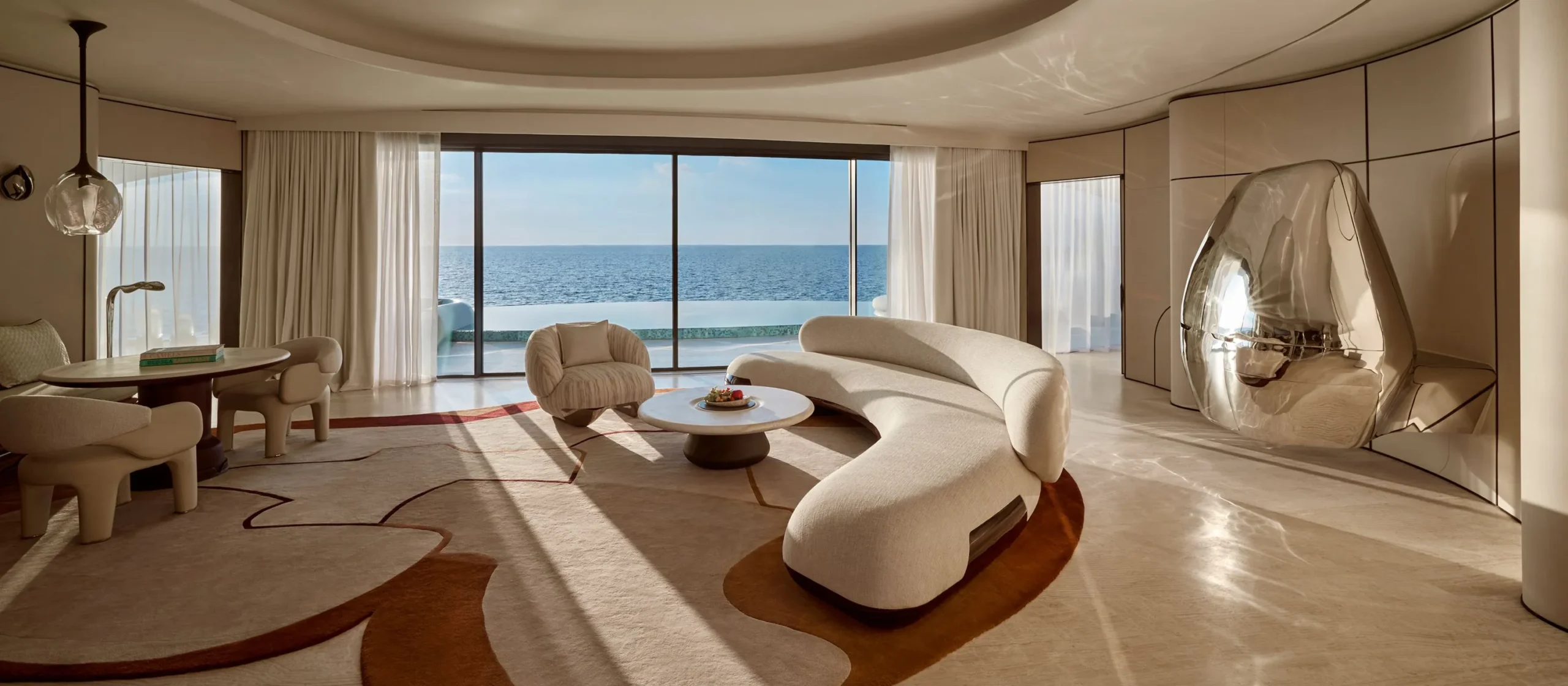
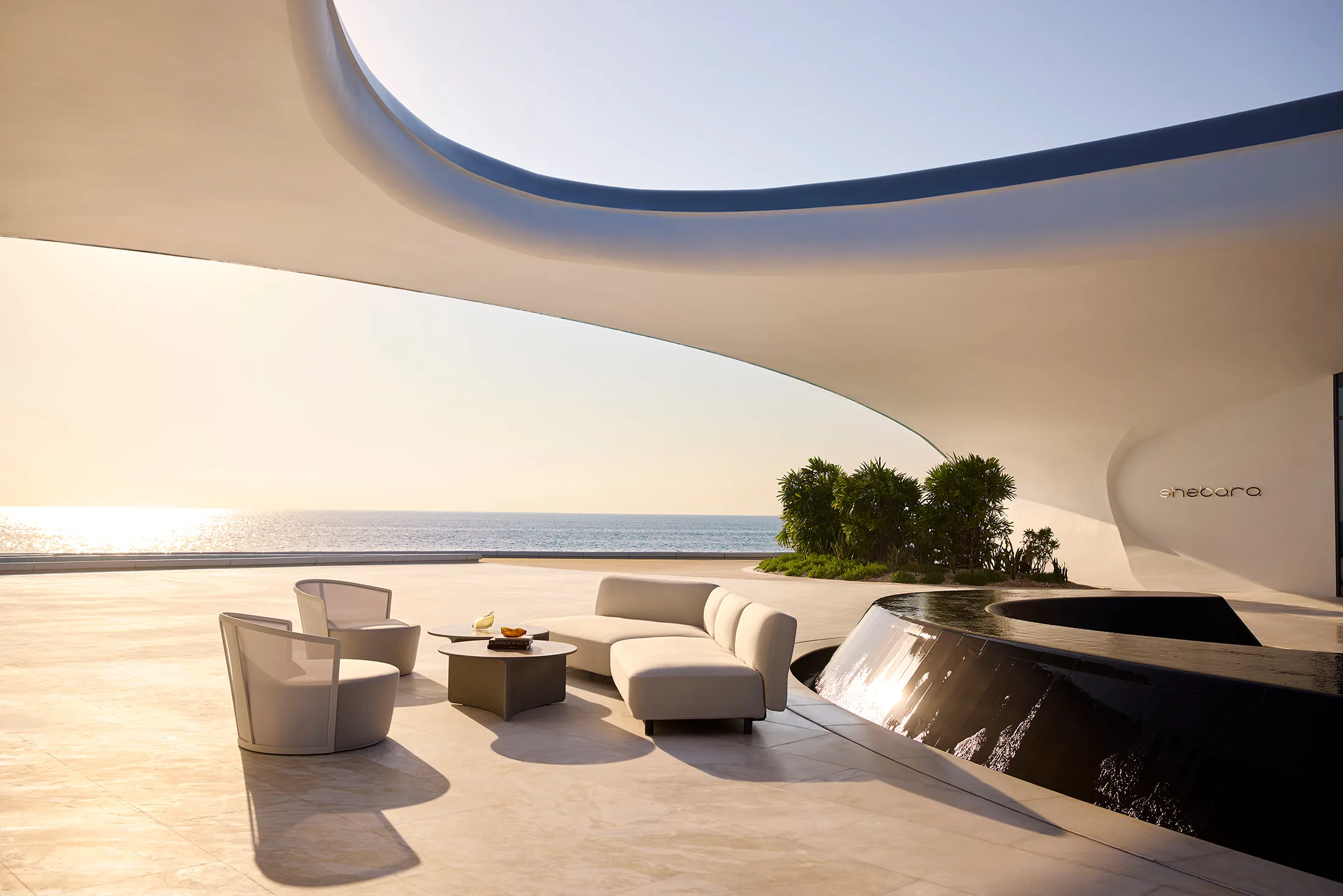
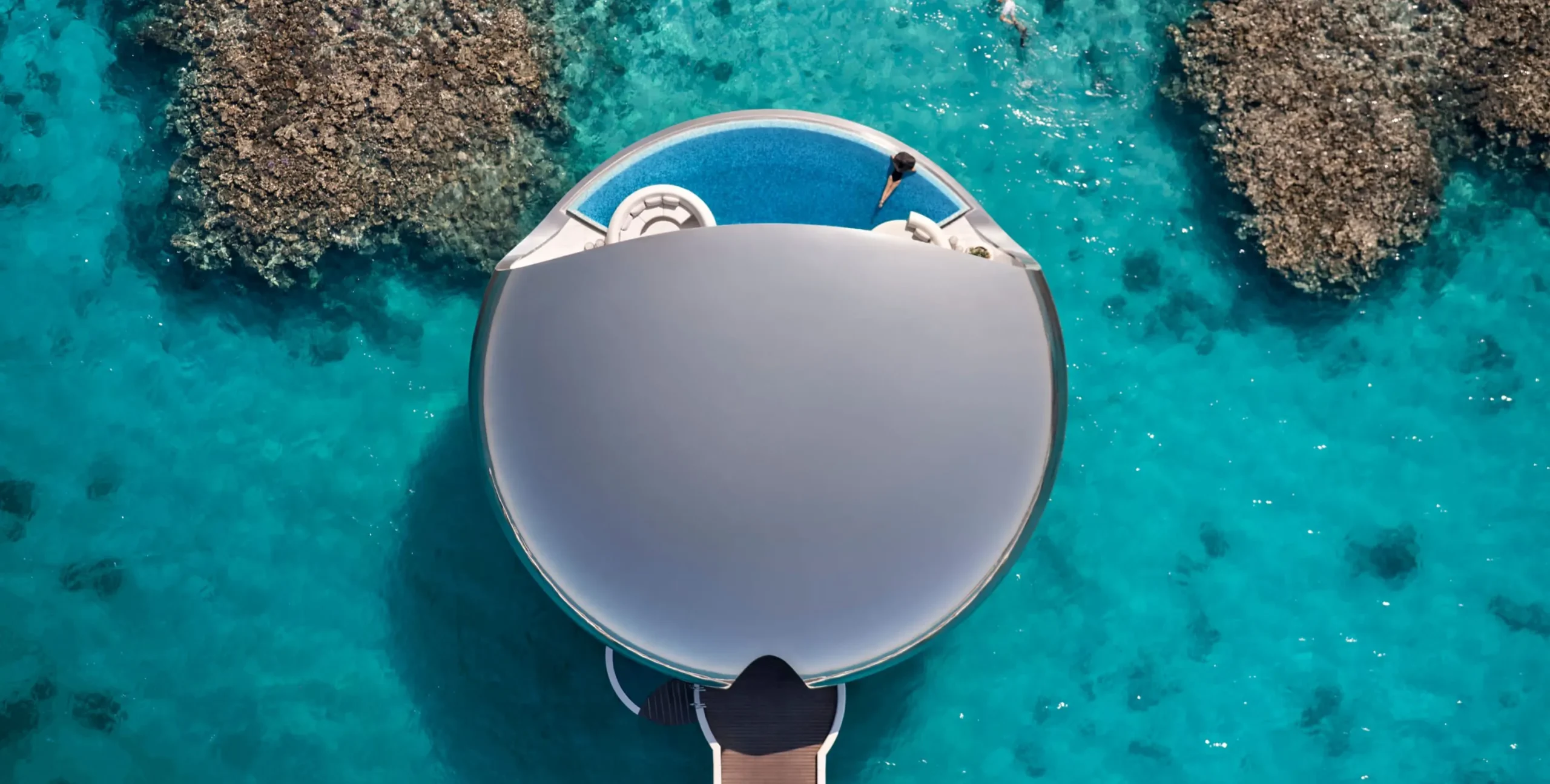
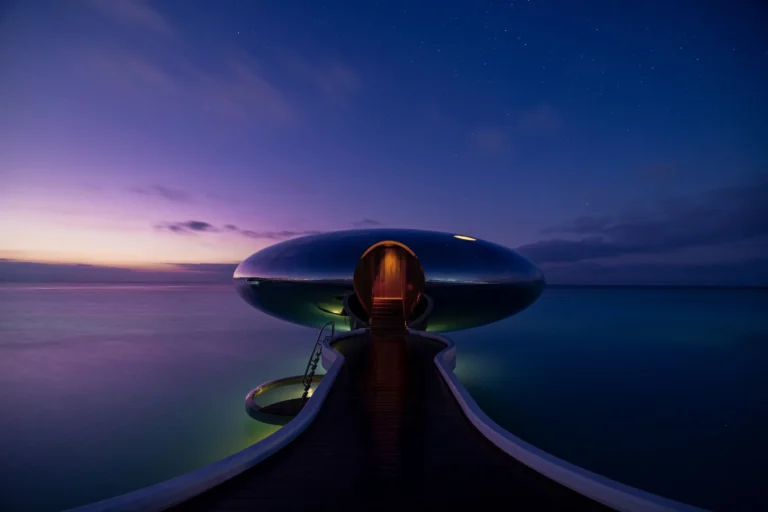
The architecture is the accommodation. Killa Design’s brief was to create something that looked as if it had always belonged in the sea, and the result achieves exactly that: polished stainless-steel spheres on slender steel legs, mirrors of the water and sky at every hour of the day, becoming star-filled lanterns after dark. Walking past a row of overwater villas at dusk, reflections of the Saudi sky layered into the curved surfaces, is an experience that resists easy description. Guests repeatedly reach for words like spaceship and surreal planet. They are not being dramatic.
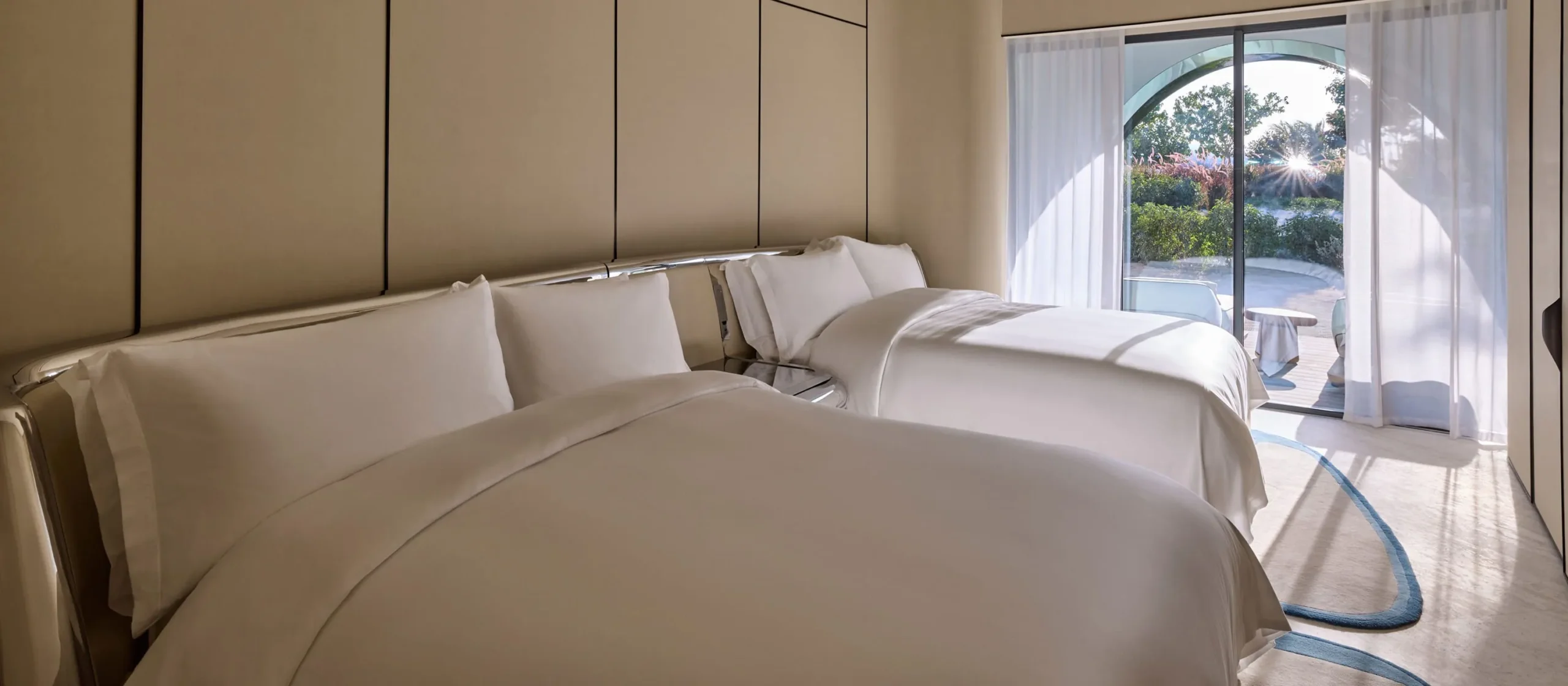
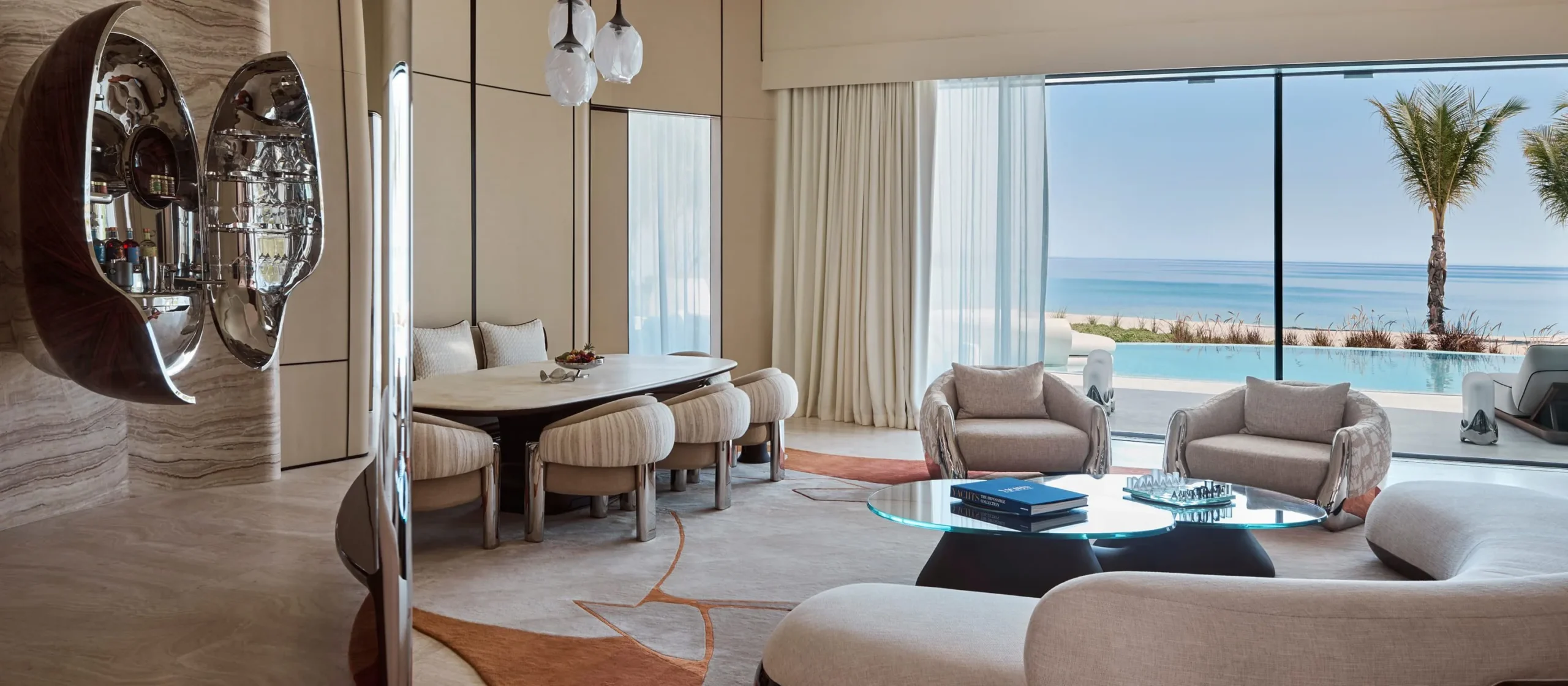
The 38 overwater villas divide into one-bedroom (188 sqm total, 103 sqm interior, private infinity pool, king bed, maximum 2 adults plus 1 child plus 1 infant) and two-bedroom (288 sqm total, 189 sqm interior, king plus two queens, maximum 4 adults plus 2 children plus 1 infant). A key family planning point: Shebara does not permit children under 12 to stay in overwater villas on safety grounds. Families with children under 12 must book beachfront villas. Interior finishes are leather and dark wood panels with touchscreen-controlled curtains, a free-standing bathtub, and a walk-in rain shower. The terrace looks directly onto the reef below through a glass-floor section. One reviewer noted a ceiling skylight opening without a full blackout option, meaning ambient light enters at night: relevant for families with young children on disrupted sleep schedules.
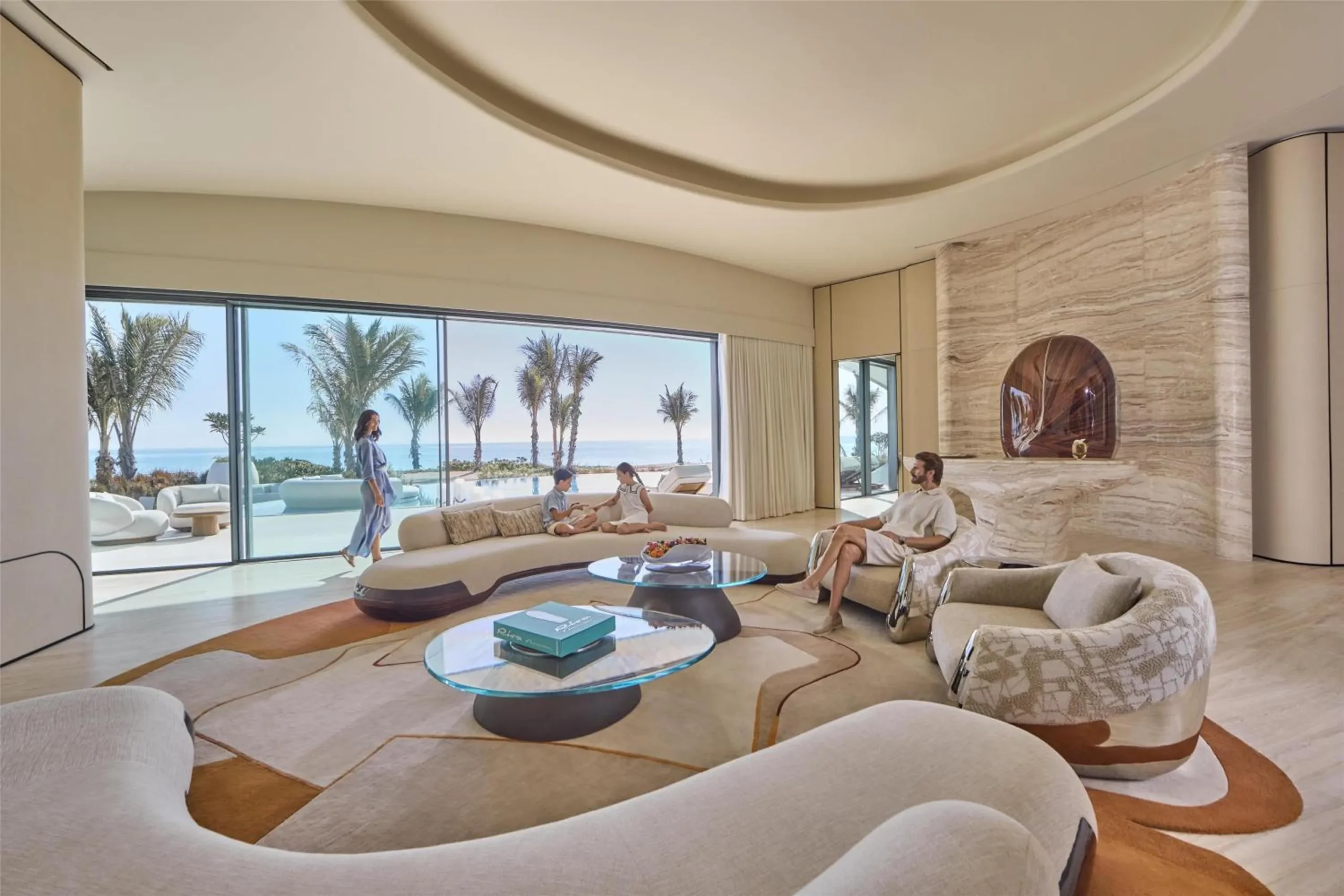
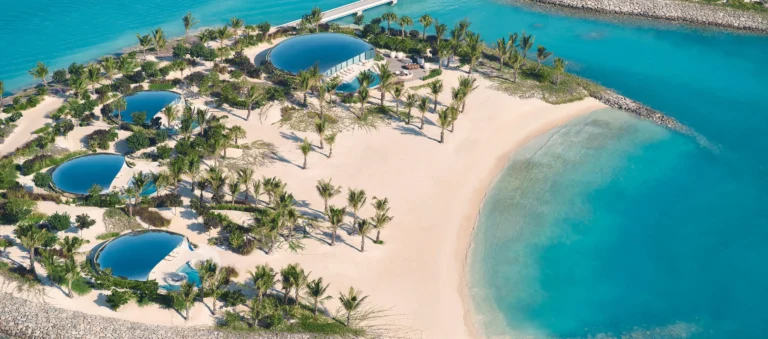
The 35 beachfront villas are the family configuration of choice. One-bedroom beach villas (248 sqm, 145 sqm exterior) offer more outdoor space than their overwater equivalents. The two-bedroom beach villa (367 sqm total, 196 sqm interior, 171 sqm exterior) works comfortably for a family of four to five. For larger families or multi-generational travel, the three-bedroom Beach Crown Villa ensemble reaches 692 sqm with room for 6 adults and 3 children; the four-bedroom Beach Royal Villa ensemble (900 sqm) accommodates 8 adults and 4 children. All villas include private infinity pools, private terraces, and direct sea or beach access.
Four two-bedroom villas are ADA-accessible, with roll-in showers, accessible toilets, portable pool lifts, beach wheelchairs, and accessible dining access. Cribs, nappy bins, and children’s toiletries are confirmed standard provision; bottle warmers, sterilisers, and stroller hire are unconfirmed, so request these in advance. Connecting-room configurations are not listed on the official site; families requiring adjoining rooms should enquire directly with the resort at time of booking.
For families with children aged 12 and over who are confident in the water, an overwater villa offers something that cannot be replicated at most family resorts: snorkelling directly off the private deck, reef fish visible through the glass floor panels, the impression of floating above an ecosystem rather than next to it. Families with younger children must book beachfront.
Family Amenities & Kids’ Activities
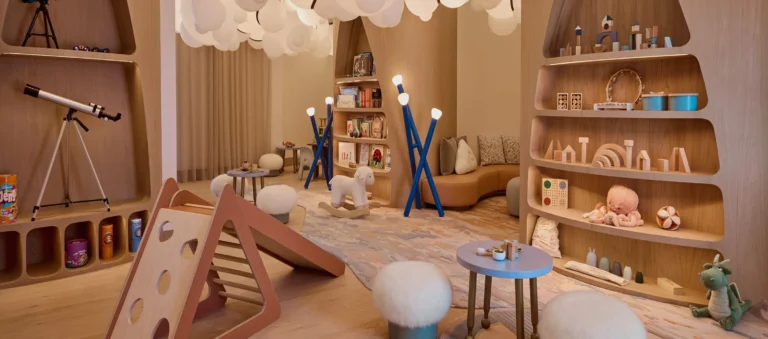
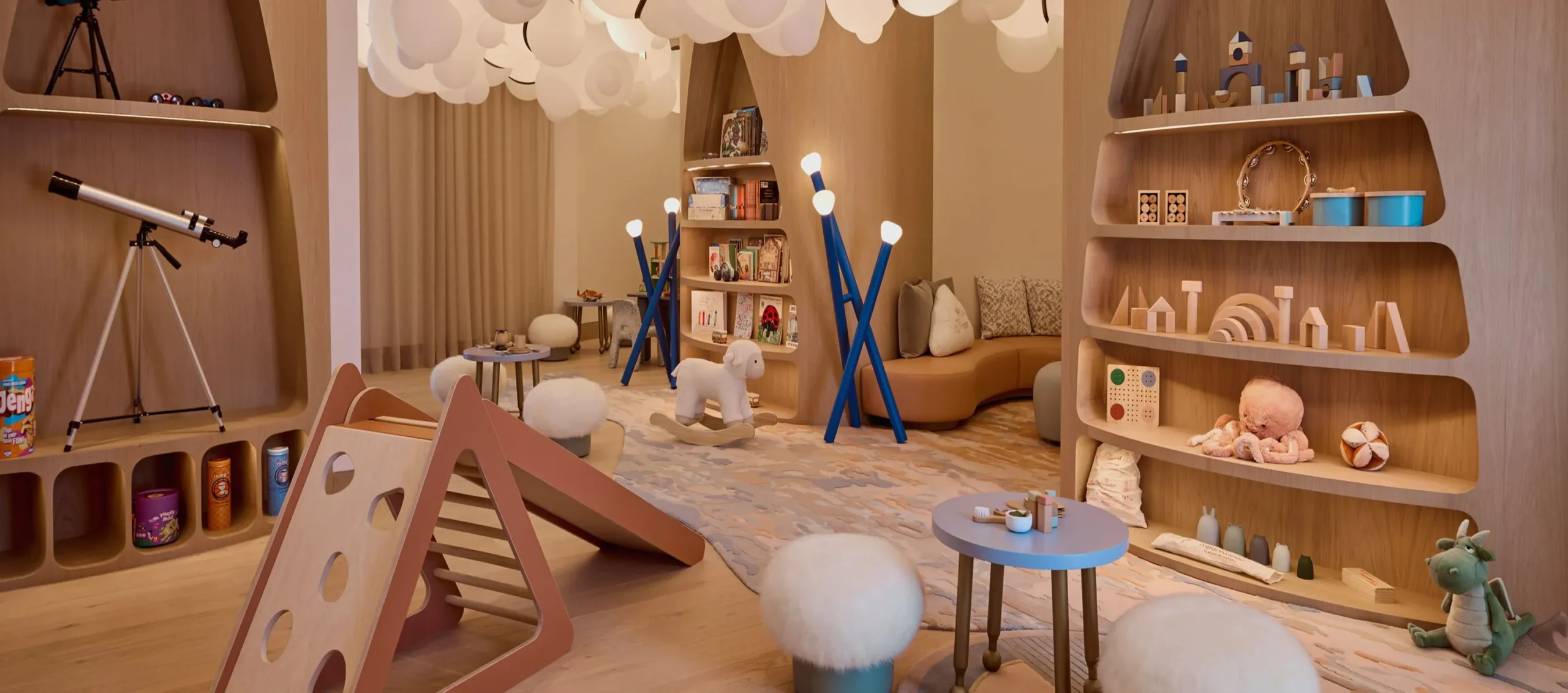
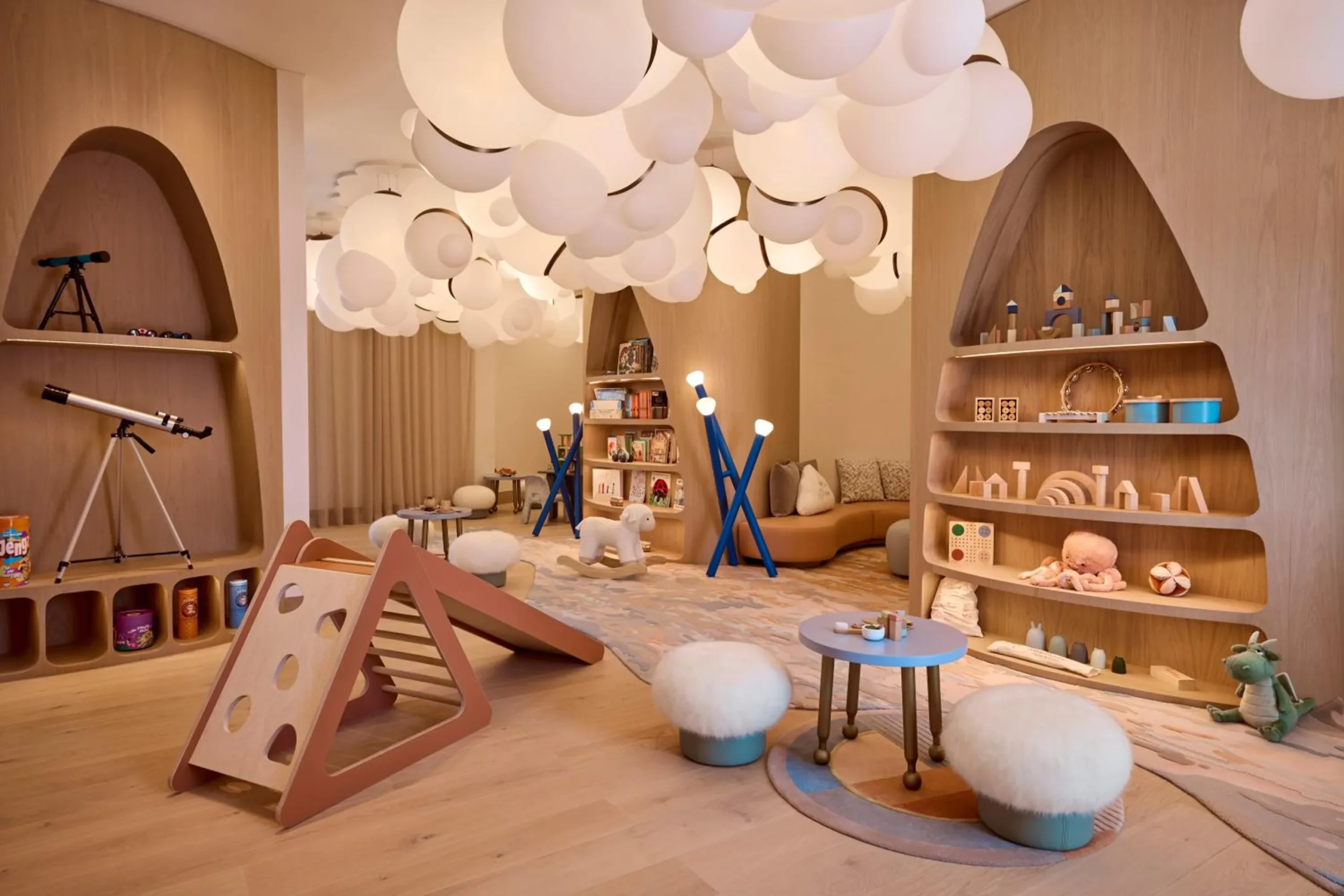
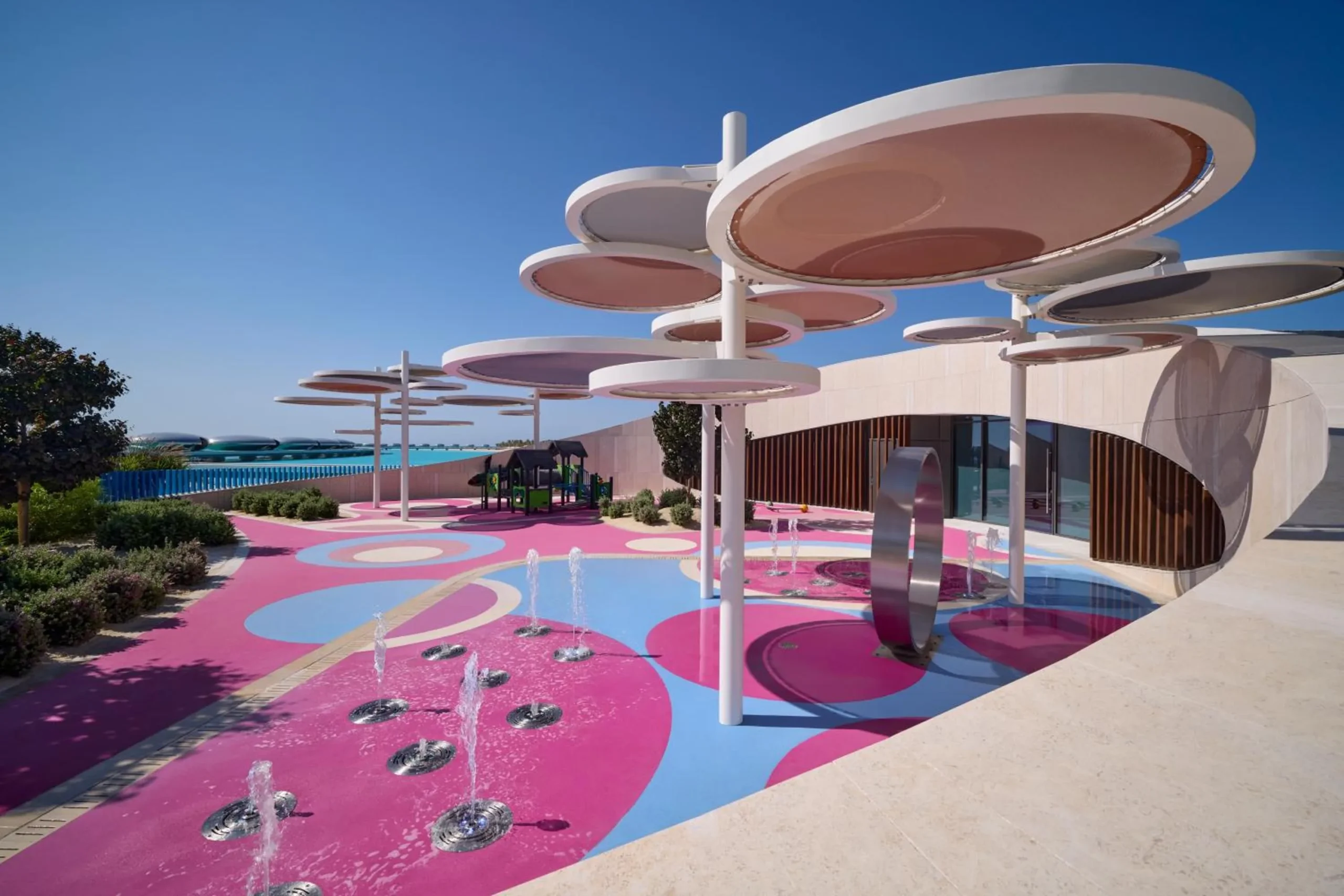
The kids’ club runs daily from 10 a.m. to 7 p.m. for children aged 3 to 12. Children aged 1 to 2 are welcome with a parent or guardian. The programme covers arts and crafts, storytelling, kite flying, cookie decorating, sand castle building, outdoor splash pad, PlayStation, and a large screen. The space features floating cloud installations overhead and a separate outdoor play area. Multiple family reviewers single out specific staff members by name (Charles, Prossie, Shoug) as exceptional, which is the most reliable signal that a kids’ club operates with real care rather than pure liability management. The National’s Katy Gillett, who reviewed with two children, confirmed the kids’ club as a centrepiece of the stay. The club is included in the room rate based on multiple sources, though formal confirmation from the official site is not published: verify when booking.
The Galaxea Diving Centre runs the full PADI curriculum from Discover Scuba to Rescue Diver. The entry programme for children is called Bubble Makers, targeting young beginners; the Seal Team provides structured junior challenges. Night diving and PADI AWARE Fish ID are also available. The house reef is snorkellable directly from many beachfront villas, and guided reef tours (both house reef and a 10-minute boat ride to the outer reef) run alongside night snorkelling sessions and pool introduction lessons. Reviewers consistently describe the reef as pristine: eagle rays, turtles, reef sharks, and schools of fish visible within swimming distance. One guest described a 60-minute snorkelling session as a surreal-planet encounter after spotting both an eagle ray and a turtle. For older children and teens with any snorkelling or diving interest, this is the single strongest argument for choosing Shebara over any other property in this price bracket.
The Wama Water Sports Centre adds sea-bobs, kayaks, stand-up paddleboards, e-SUP, e-foiling, e-surfing, e-bodyboarding, wakeboarding, catamaran sailing instruction, and windsurfing lessons. Diving courses, e-foiling, and some specialist water sports carry a surcharge; prices are not publicly listed. Complimentary activities (kayaks, paddleboards, guided snorkelling) are confirmed in principle, though the precise boundary between included and charged varies.
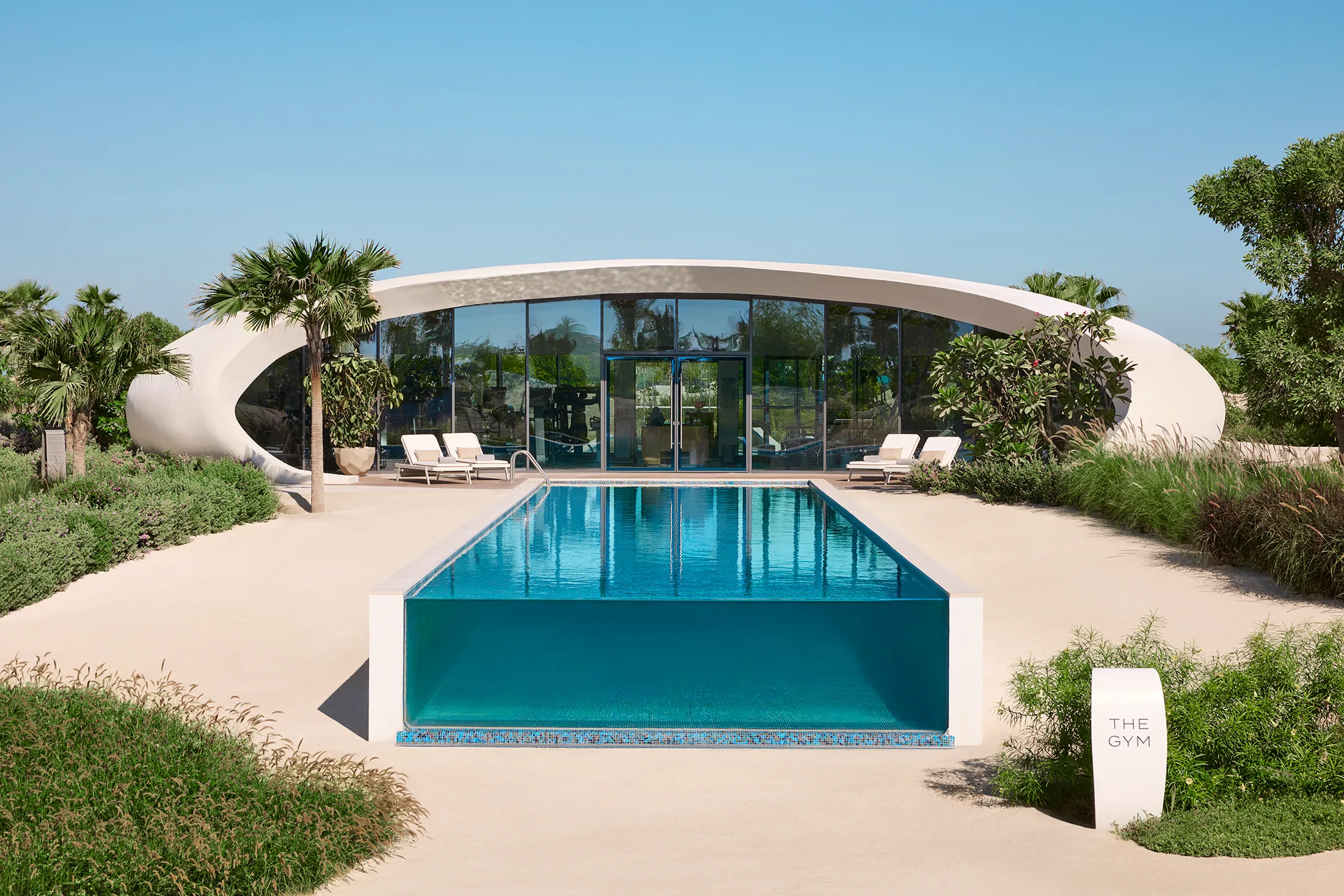
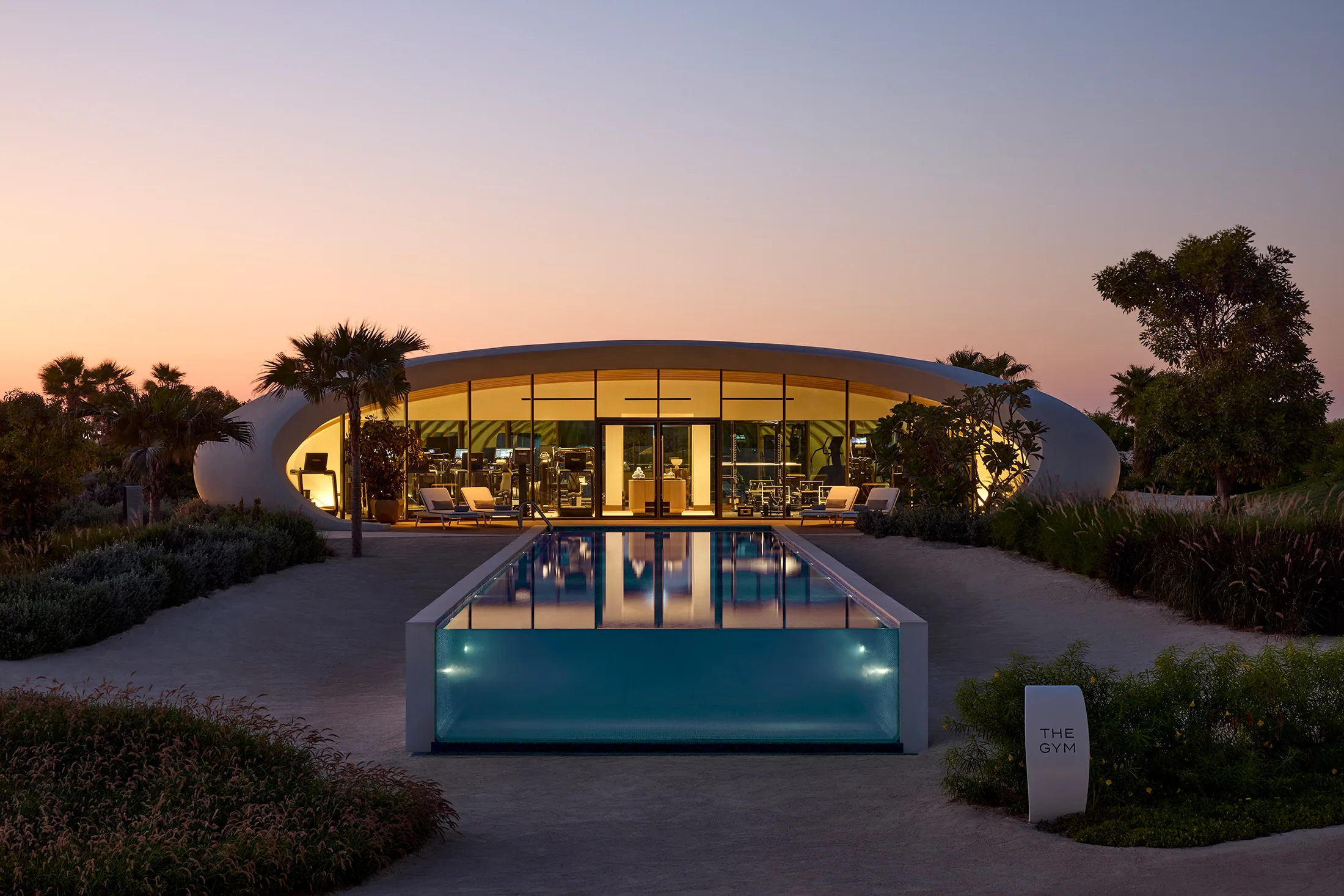
A family infinity pool sits adjacent to the SARIA bar and grill, the property’s all-day family-friendly pool venue. The adults-only pool and SOLERA bar occupy a separate circuit. Beachside yoga classes run from the dedicated pavilion, with aerial yoga available; the class programme draws consistent praise, and instructor Reddy is named multiple times across reviews as outstanding. Tennis and padel courts (one each) open from 7 a.m. to 10 p.m. Teens who want full adult activity access have the diving centre, padel, water sports, yoga, and a Technogym fitness centre with personal trainers available 7 a.m. to 7 p.m. There is no dedicated teen lounge, but the extraordinary architecture and marine environment tend to hold their own.
Babysitting is available according to multiple sources; hourly rates and advance notice requirements are not publicly confirmed. Confirm directly with the resort if babysitting is essential to your trip.
Dining
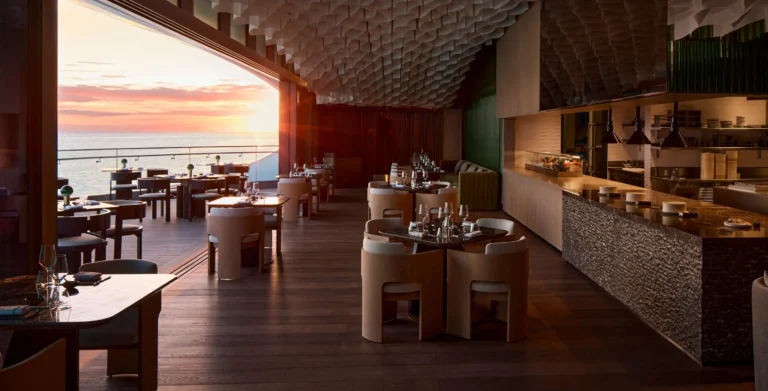
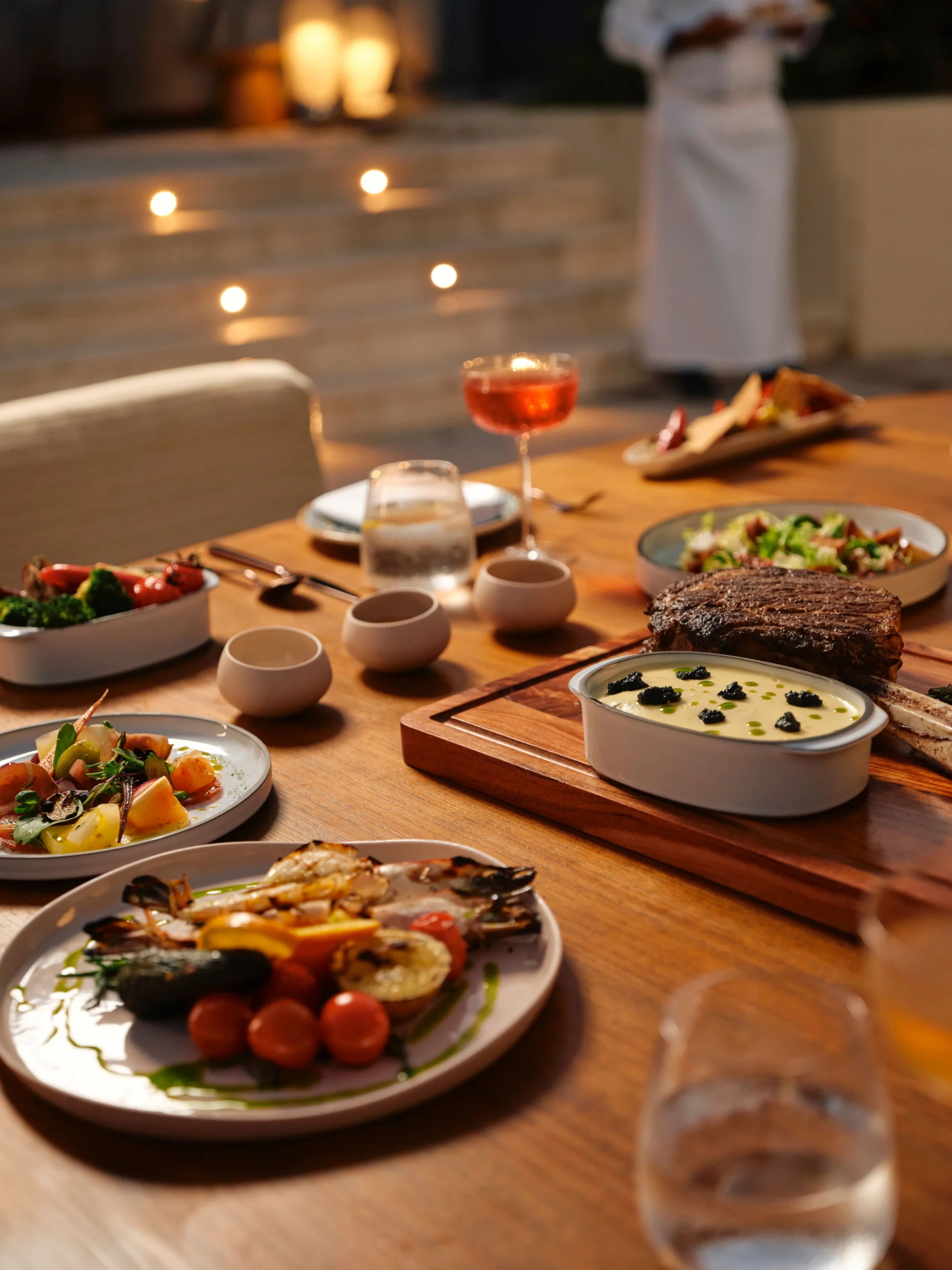
Five venues. No alcohol anywhere on the property; Saudi Arabian law applies island-wide, no exceptions. All restaurants offer children’s menus. Those two facts, taken together, shape the family dining experience at Shebara in ways that are both a practical convenience and a genuine editorial consideration for FFH readers planning a celebration trip.
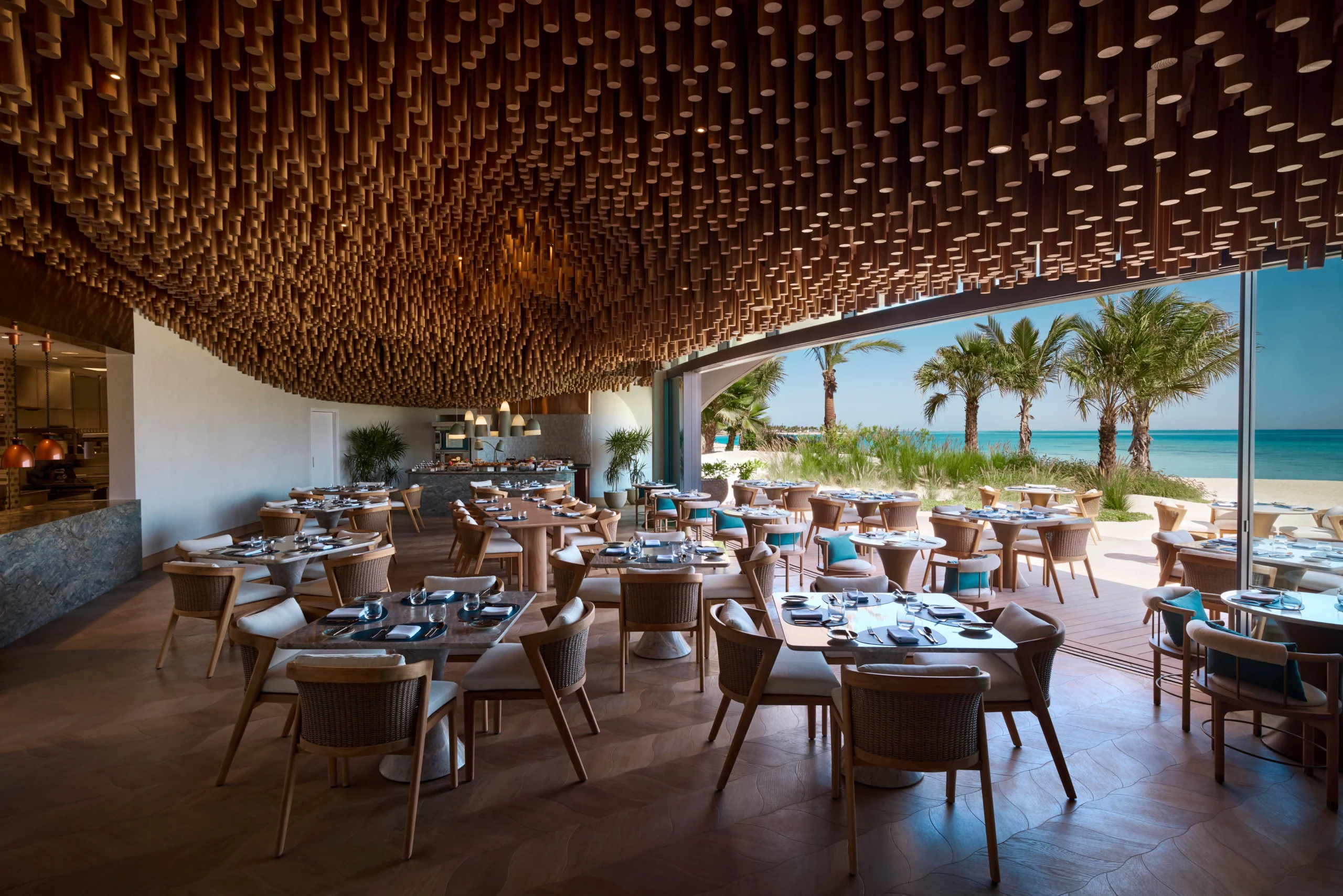
LUNARA is the breakfast brasserie, open 7 a.m. to 11 a.m. daily with a semi-buffet of pastries, cold cuts, and à la carte options alongside. Multiple reviewers describe in-villa breakfast and the Lunara experience as a high point. SARIA handles the middle of the day: a casual pool bar and grill open 9 a.m. to sunset, with interactive gelato and custom non-alcoholic drinks, DJ-driven atmosphere in the afternoon, and a family-permissive ethos throughout.
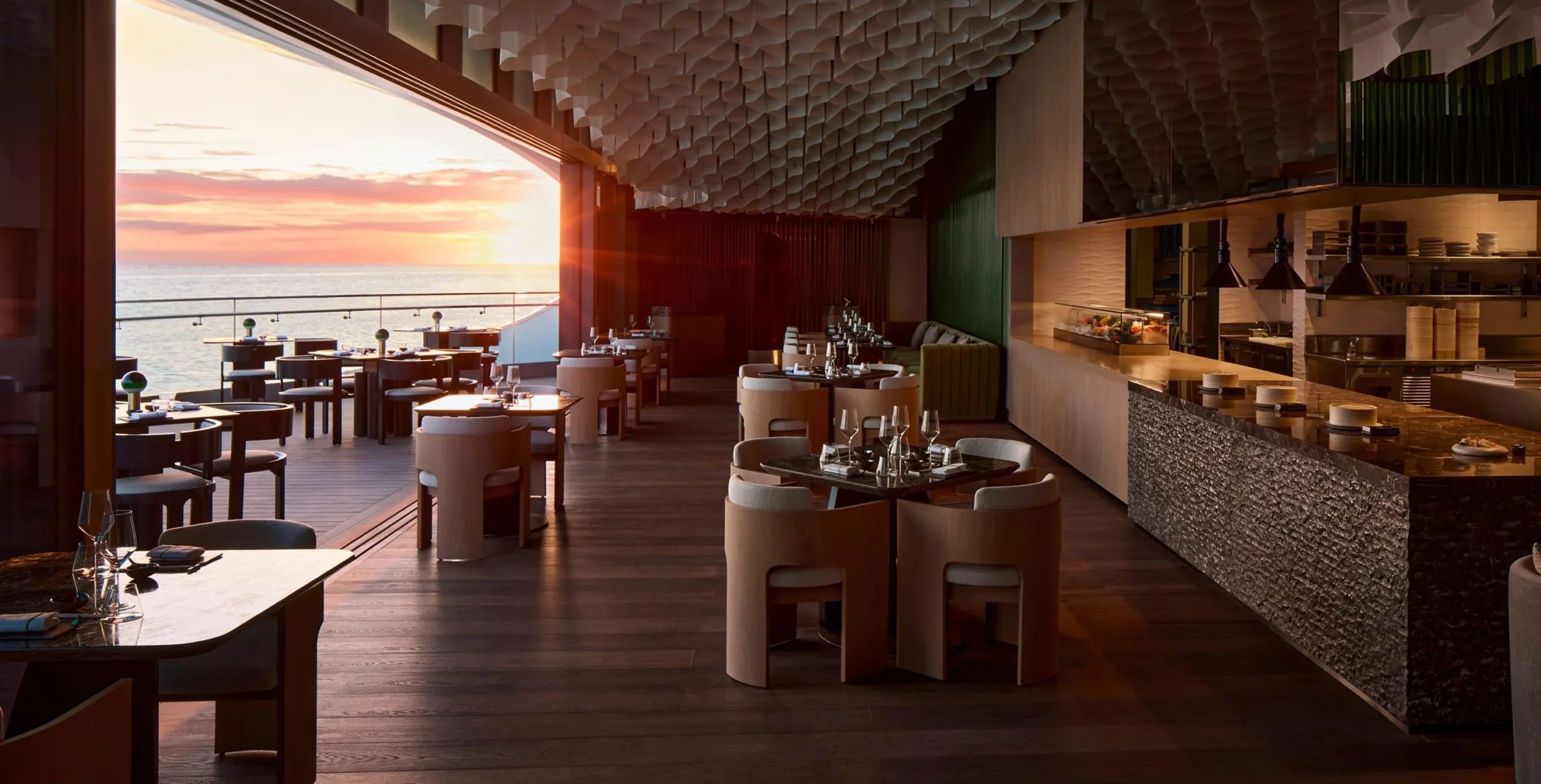
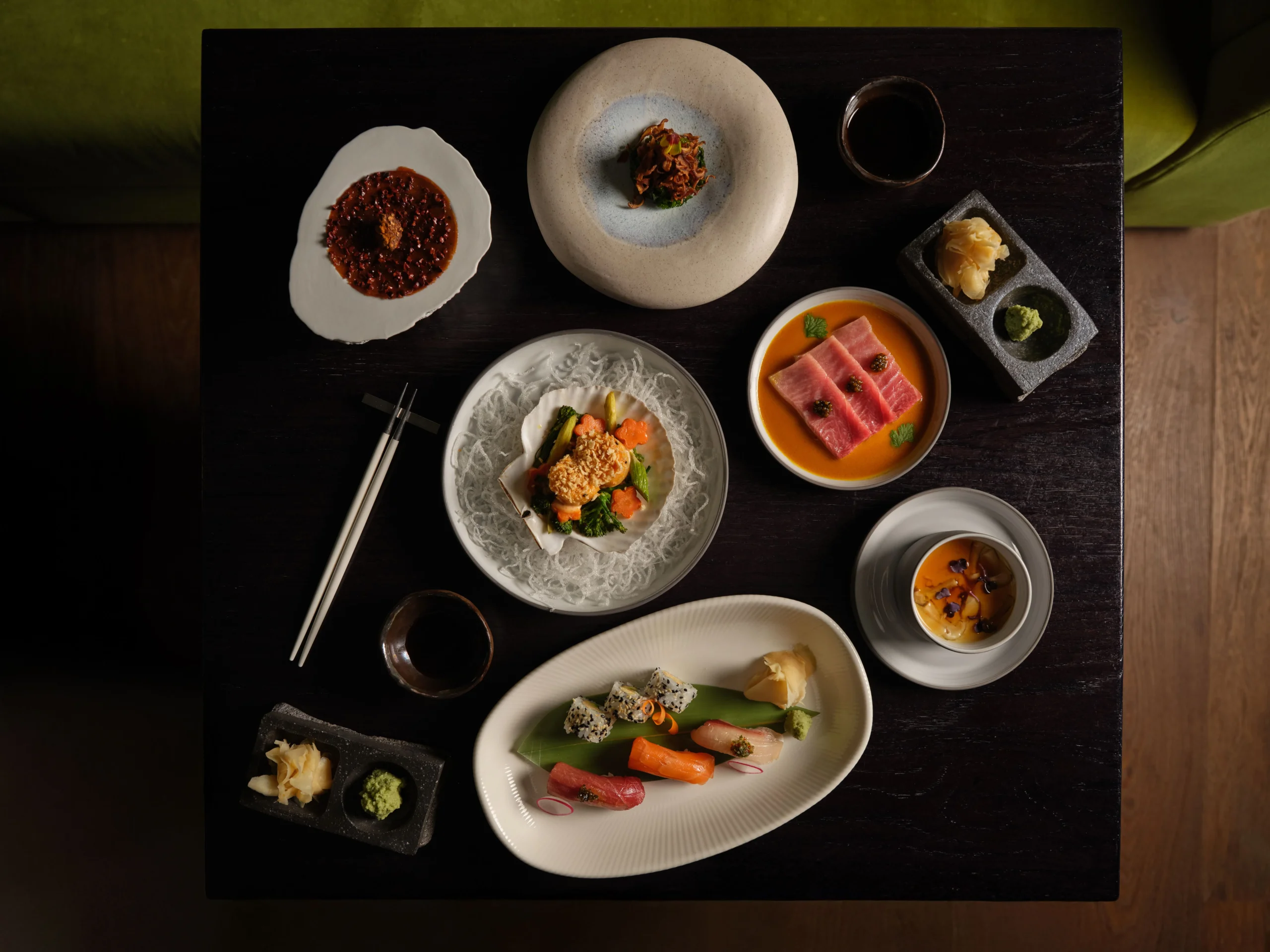
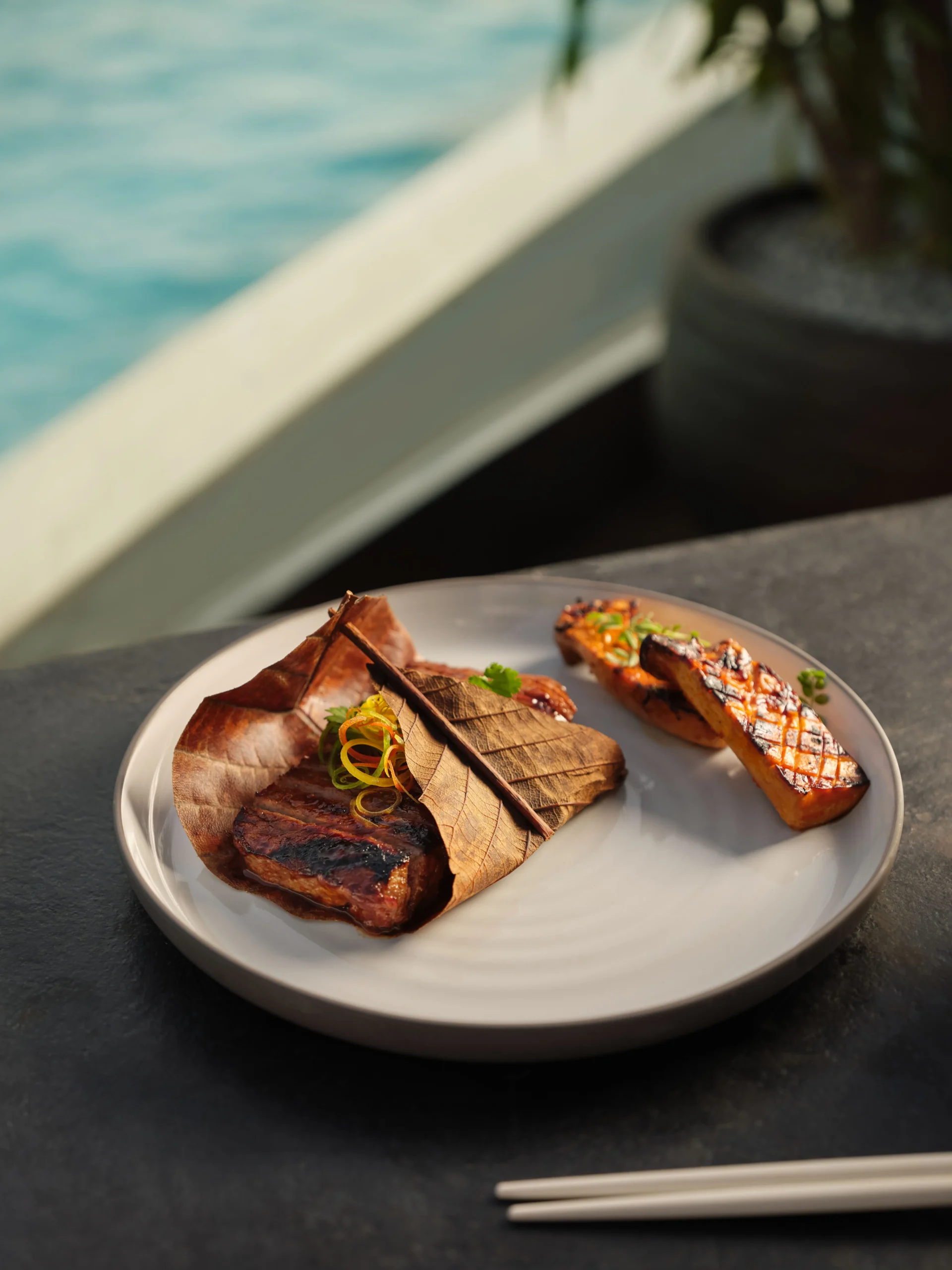
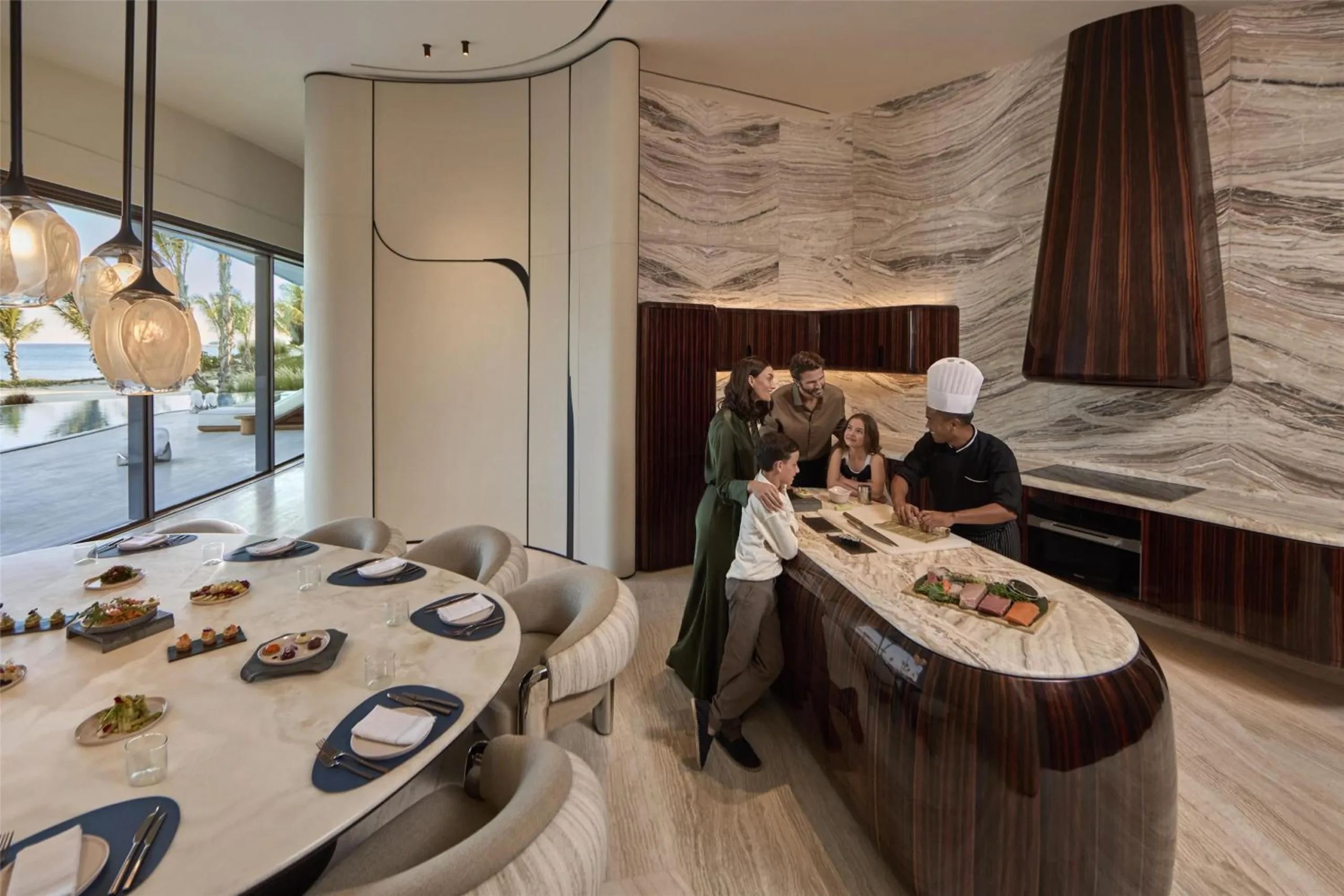
The dinner circuit is where the kitchens show their range. ARIAMARE is a Mediterranean-Italian restaurant directed by Chef Marco Garfagnini, a Michelin-starred chef who earned his star at age 29 at his restaurant Ninan in Carrara, Italy; Ariamare itself does not hold a Michelin star. The Pasta Lab and Dolce Lab dessert experience are its most distinctive elements, and the sea-facing terrace produces the kind of setting that justifies a long meal. Open Monday, Wednesday, Thursday, Friday, and Saturday, 6:30 p.m. to 11:00 p.m. IKI.ROE is the Japanese Nikkei counterpart, with an open kitchen, Truffle Teriyaki Lobster and an omakase set among the signatures, closed Mondays and Wednesdays. The National’s reviewer compared the miso black cod directly to Nobu, which is the kind of specific benchmark that is either reckless or accurate; guest reviews suggest the latter.
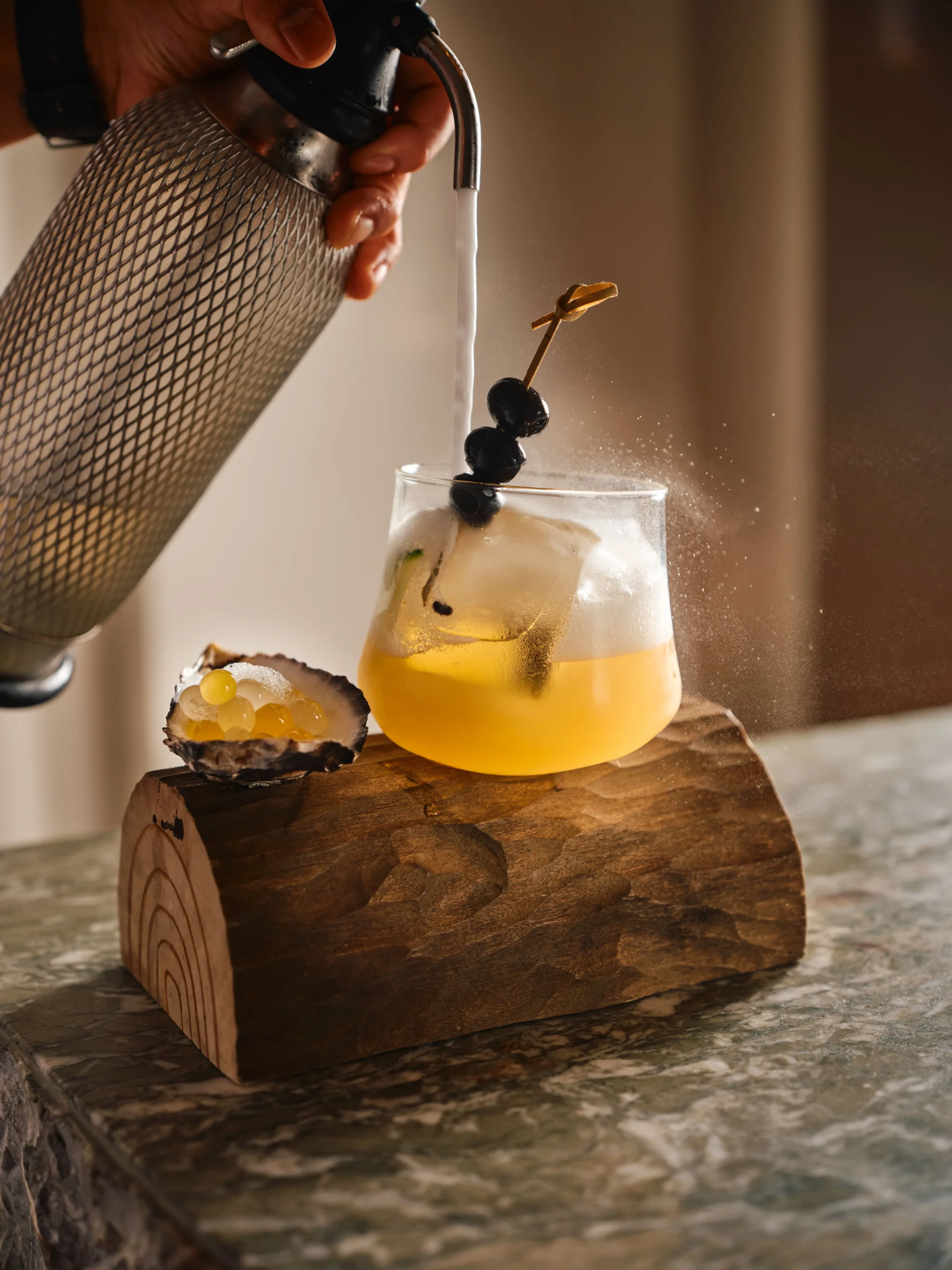
SOLERA, the adults-only pool bar, serves non-alcoholic beverages, shisha, and light bites from 10:30 a.m. to 11:30 p.m. For families who observe halal dietary standards, the kitchen operates entirely without alcohol at every venue, removing an entire category of dietary negotiation.
Pricing at the food and beverage end is significant. One reviewer cited approximately $700 for a 90-minute couples’ spa treatment, which reflects the general price register for premium extras across the property. Under-6s dine free, excluding in-villa dining. Children aged 6 to 12 receive a 50% F&B discount on adult menu pricing. Kids-eat-free does not extend to in-villa orders. Half-board and full-board arrangements are unconfirmed; verify at booking. A four-night stay for a family of four in a two-bedroom beach villa, before any premium activities, reaches approximately €15,000 for the multi-villa Royal ensemble to €16,200. That is the real planning number.
Staff & Service Quality
The picture here is more complicated than the architecture. The majority of reviewers (including multiple family guests who praised the kids’ club team, named individual staff members, and described the warmth as rare at this price point) report service that matches the surroundings. One family reviewer who had visited more than 23 countries called it the finest hotel of their travel life.
Then there are credible negative reviews that cannot be read away. One guest staying in a two-bedroom suite at over $4,000 per night in January 2026 reported WhatsApp messages going unanswered for an entire morning, a double-charge on a prepaid room, and drink preparation errors. A repeat visitor praised the architecture and activities while noting that buggy logistics and concierge responsiveness remained areas for improvement after multiple stays.
The WhatsApp-only communication model is an architectural decision rather than a staffing gap, and it has an obvious vulnerability: when the channel is not being actively monitored, there is no fallback. At standard luxury hotel pricing, a lost message is an irritant. At $3,500 to $4,000 per night, it is a material service failure. The resort is young (opened November 2024), and many of the complaints cluster in the first six months of operation. Guest feedback through late 2025 and into 2026 leans positive overall. Booking.com’s verified guest score sits at 9.3 out of 10 across 33 reviews; Expedia at 9.6 from around 20 reviews. The floor is real; so is the ceiling.
Safety & Cleanliness
Shebara runs on 100% solar power via an on-site photovoltaic farm, uses a desalination system for fresh water, and operates with zero single-use plastics across the property. It is the first fully renewable resort in Saudi Arabia. The marine environment it protects (a 2,081 km² area covering coral reefs, seagrass beds, and mangrove systems with species of global conservation importance) operates under a marine spatial planning framework designed to reconcile tourism and ecology. No formal IUCN protection status designation for this specific area has been confirmed in publicly available sources.
Cleanliness draws consistent positive scores across platforms. One reviewer raised a hygiene concern that reads as an outlier and may have involved translation context; no systemic cleanliness complaints appear across the remaining reviews. One reviewer noted no life jackets were visible near overwater structures: a detail worth raising with the resort directly before bringing children to the island. Pool and terrace safety protocols for overwater villas are not publicly documented; note also that children under 12 are not permitted in overwater villas, which mitigates the most acute toddler safety risk.
The resort’s private island status eliminates much of the standard safety concern matrix: no external foot traffic, no motor vehicles except resort buggies, no street crossings. Four dedicated ADA villas (pool lifts, beach wheelchairs, roll-in showers) signal serious infrastructure investment. Summer heat is the environmental safety issue to plan around: June to September brings temperatures above 38°C with high UV, making midday outdoor activity inadvisable for young children. Sun protection, hydration, and shade are non-negotiable planning elements in any month outside the October-to-April window.
Value & Pricing
One-bedroom beach villas start at approximately SAR 9,000 per night (roughly €2,200 at current exchange rates, around $2,400), with overwater equivalents beginning around SAR 10,000 (approximately €2,450). Two-bedroom configurations, the minimum practical unit for a family of four, run SAR 15,000 to 16,500 (approximately €3,700 to €4,050 per night). The three- and four-bedroom ensemble villas start north of $10,000 per night. All rates include breakfast. Saudi Arabia applies 15% VAT plus a 5% municipality tax on tourism services; confirm whether published rates include these at booking.
There is no useful way to make those numbers small. The comparison point most reviewers reach for is the Maldives. At equivalent per-night pricing, a comparable Maldivian overwater resort typically delivers more mature family programming and more consistent service. What Shebara delivers in return: a coral reef in materially better ecological condition than most accessible Maldives atolls, architecture that is categorically unlike anything else in luxury hospitality, 73-villa low density, and an entirely different kind of novelty. For families for whom the Saudi Red Sea is the point, the comparison is irrelevant. For families deciding between Shebara and an established Maldives property, the real question is how much the singular experience matters versus programming maturity.
The extra-cost picture matters: diving courses and e-foiling carry surcharges (pricing not published), spa treatments run approximately $700 per 90-minute couples session based on reviewer data, and children aged 12 and over occupy extra beds at SAR 1,500 plus VAT per night. In-villa dining excludes the kids’ meal discount. A four-night stay for a family of four in a two-bedroom beach villa, before any premium activities, reaches approximately €15,000 for the multi-villa Royal ensemble to €16,200. That is the real planning number.
Why We Picked It
The reef decided it. Saudi Arabia’s Red Sea coast has been largely closed to international tourism for most of the last half-century, which means the coral systems here have had decades of recovery that comparable Indo-Pacific reefs have not. Underwater visibility of 30 to 40 metres on the house reef is not a marketing claim; it is a measurable consequence of human absence over time. For children who have snorkelled on degraded reefs elsewhere and walked away unmoved, Sheybarah Island offers something that cannot be manufactured: the experience of what the ocean actually looked like before we damaged it.
The architecture is the second reason. Killa Design built something that will be in architecture books. Waking up in a mirrored sphere above the Red Sea, the reef visible through the glass floor panel before breakfast, is a sensory experience that will outlast any other memory from the trip. Families with children old enough to understand that they are somewhere extraordinary (from about age 12 upward for overwater villas; from age 8 for beachfront snorkelling) get the full effect.
The candid scope: children under 12 must book beachfront villas. Travel between October and April. Accept that this is a remote island with no outside options, limited evening entertainment beyond the resort itself, and a WhatsApp butler system that requires you to ask rather than assuming ambient service. The kids’ club team is strong and the marine access for older children is world-class. For a family ready to treat Sheybarah Island as the destination rather than a backdrop, the case is straightforward: this is Saudi Arabia’s most important new resort, built on one of the world’s last pristine reef systems, and FFH readers who move early will arrive before the crowds find the address.
Shebara Resort: Family Questions Answered
What age range does the Shebara kids' club cover, and what does it include?
The kids' club accepts children aged 3 to 12 and runs daily from 10 a.m. to 7 p.m. Children aged 1 to 2 are welcome with a parent or guardian accompanying them. Activities include arts and crafts, kite flying, cookie decorating, sand castle building, storytelling, outdoor splash pad, PlayStation, and a large screen. Multiple family reviewers describe the staff as exceptional, naming individual team members independently. The club is included in the room rate based on multiple sources, though the resort's own website does not formally confirm this: verify when booking.
Is Shebara suitable for babies and toddlers, and is babysitting available?
Cribs, nappy bins, and children's toiletries are confirmed standard villa provisions. Beachfront villas with ground-level access are the required choice for toddlers and all children under 12: overwater villas are not permitted for children under 12 on safety grounds. Babysitting is listed as available, but hourly rates, advance notice requirements, and minimum child age are not published: confirm directly with the resort before booking if babysitting is essential to your trip. Bottle warmers and sterilisers are not confirmed; request in advance. The remote island setting (no offsite medical facilities) means families with very young infants should plan their health kit carefully.
What is there for teenagers at Shebara?
Teens have access to the full adult activity menu: PADI diving courses (from Discover Scuba to Rescue Diver), e-foiling, wakeboarding, e-surfing, catamaran sailing, padel tennis, tennis, and a yoga and pilates programme that draws strong praise across reviews. Teens aged 12 and over are also eligible for overwater villas. The house reef (with 30 to 40-metre visibility and regular sightings of eagle rays, turtles, and reef sharks) is the single strongest draw for any teen with marine interest. There is no separate teen lounge, but the extraordinary architecture and marine environment generally satisfy older children without one. Diving courses and e-foiling carry a surcharge; pricing is not published.
What room configurations work for a family of four?
For families with children under 12: the two-bedroom beachfront villa (367 sqm total, king plus two queens, max 4 adults plus 2 children plus 1 infant) is the standard option: children under 12 are not permitted in overwater villas on safety grounds. For families with children aged 12 and over, the two-bedroom overwater villa (288 sqm total, king plus two queens, max 4 adults plus 2 children plus 1 infant) becomes available and offers direct reef access from the terrace. Connecting rooms are not confirmed on the official site.
Are connecting or adjoining rooms available at Shebara?
Connecting room configurations are not mentioned on the official Shebara website, and no guest review confirms them. For families requiring guaranteed connecting layouts, the multi-bedroom villa formats (two-, three-, and four-bedroom beach villas) are the confirmed alternative: all feature internal bedroom separation within a single villa unit. If connecting rooms are essential to your stay, contact the resort directly before booking.
What baby equipment does Shebara provide?
Confirmed in-villa provision: crib/cot, nappy bin, children's toiletries. Bottle warmers, sterilisers, stroller hire, and childproofing arrangements are not publicly confirmed: request all of these explicitly when making your reservation. The resort operates as a private island with no external pharmacy or baby-supply retail, so families with infants should travel with all essential items and treat any resort-provided extras as a convenience bonus rather than a guarantee.
What is Shebara's kids' dining policy, and are meals included?
All five restaurants offer children's menus. Children under 6 dine free at all restaurant venues (this does not apply to in-villa dining). Children aged 6 to 12 receive a 50% discount on all F&B based on adult menu pricing. During July to September, children under 12 dine free (excluding in-villa dining). The room rate includes breakfast. Half-board and full-board packages are not confirmed: verify at booking. No alcohol is served anywhere on the property (Saudi law applies island-wide). The breakfast brasserie LUNARA and the family pool bar SARIA are the most child-permissive venues day-to-day; ARIAMARE and IKI.ROE work well for early evening family meals.
How do you get to Shebara Resort, and how long does the transfer take?
The main gateway is Red Sea International Airport (IATA: RSI) in Tabuk Province, served by Saudia, Qatar Airways, and flydubai year-round, plus Beond with seasonal and expanding European routes (Milan year-round from Oct 2026; London, Paris, Zurich, Munich, and Moscow from Dec 2026, verify current schedule). Most European families transit Doha, Dubai, or a Saudi hub. From RSI, the standard transfer is an electric vehicle to the Turtle Bay Arrival Lounge (roughly 30 minutes, 20 km), then a speedboat to Sheybarah Island (30 to 40 minutes): total door-to-dock approximately 60 to 80 minutes. The seaplane alternative is a 30-minute direct flight from RSI to the resort. Transfer costs are not publicly published.
What does a family stay at Shebara actually cost in total?
A two-bedroom beachfront villa (the required configuration for a family of four with children under 12) starts at approximately SAR 15,000 per night (roughly €3,700 or $4,000 at current exchange rates), including breakfast. Saudi Arabia applies 15% VAT plus 5% municipality tax; confirm whether published rates include these. Extra costs to budget: diving courses and e-foiling (surcharge, pricing not published), spa treatments (approximately $700 per 90-minute couples session based on guest reports), in-villa dining (kids-eat-free policy does not apply), and children aged 12 and over on extra beds (SAR 1,500 plus taxes per night). Transfers are not confirmed as included. A four-night stay for a family of four reaches approximately €15,000 to €16,500 before premium activities.
Is Shebara Resort worth the price for families?
At $3,500 to $4,000 per night for a two-bedroom configuration, the comparison that inevitably arises is the Maldives. A comparable Maldivian overwater resort at this price tier typically offers more mature family programming and more consistent ultra-luxury service. What Shebara delivers in return: a coral reef in materially better ecological condition than most accessible Maldives atolls, architecture that is categorically unlike anything else in luxury hospitality, extremely low guest density (73 villas total), and the novelty of Saudi Arabia's Red Sea at its most pristine. For families for whom the reef and architecture are the point, it is worth the price. For families weighing it against a decade-old Maldives resort with deeper kids' programming, the honest answer depends on how much the singular experience matters. Compare with Soneva Fushi for established Maldives eco-luxury, or Cheval Blanc Randheli for ultra-luxury Maldives with stronger family infrastructure.
What are the honest drawbacks of Shebara for families?
Five material considerations: (1) Children under 12 cannot stay in overwater villas: families must book beachfront. (2) Service consistency: credible negative reviews document WhatsApp communication failures and billing errors at $4,000-per-night rates; the majority of guests report excellent service, but the floor is real at a young property. (3) Remote logistics: no pharmacy, no offsite medical facility, no activity options outside the resort. (4) No alcohol anywhere on the property: a genuine consideration for guests planning a celebration trip. (5) Seasonal heat (June to September) effectively constrains outdoor activity for children.
Which families should choose a different resort instead of Shebara?
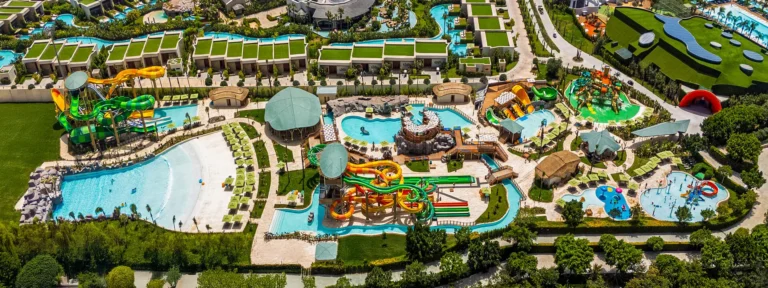
Families who should look elsewhere: (1) Those with children under 12 who want overwater villa access: Shebara's safety policy restricts under-12s to beachfront villas. (2) Those with infants and toddlers requiring immediate medical access nearby: the remote island setting is a genuine constraint. (3) Families whose children are not interested in water, marine life, or outdoor activity: Shebara's programming is reef-centred, with no theme park, waterslide complex, or urban shopping adjacency. (4) Guests for whom no-alcohol hospitality is a material drawback: Saudi regulations are absolute. (5) Families who need highly consistent ultra-luxury service at every touchpoint and have limited tolerance for a still-maturing operation. Consider Soneva Fushi for established Maldives family eco-luxury, or Jean-Michel Cousteau Resort Fiji for marine-education focus with deeper family infrastructure.
Do European and North American families need a visa for Saudi Arabia?
An online tourist e-visa is available for citizens of EU, EEA, UK, US, Canada, and most developed nations. It costs approximately SAR 300 (around €75) plus mandatory travel insurance (approximately SAR 140), allows multiple entries over one year with stays up to 90 days, and typically processes within a few days online. Minimum passport validity is 6 months from the entry date. Children require their own passports or are included in a parent's application depending on nationality. Saudi Arabia no longer denies entry based on Israeli passport stamps, though Israeli passport holders themselves are not eligible for the standard tourist e-visa and require separate arrangements. Dress code: international standards apply within the resort; conservative dress is expected during any mainland transit.
When is the best time to visit Shebara with children?
October to April is the recommended window, with November to March the optimum. Sea temperatures run 24 to 28°C, air temperatures on the coast reach 18 to 28°C, and marine life activity on the reef peaks in this period. Summer months (June to September) are strongly inadvisable for families with young children: sustained air temperatures above 38°C, UV index very high, and sea surface temperatures above 32°C combine to make extended outdoor activity impractical. The resort appears to operate year-round, but summer visits should be planned around minimal midday outdoor exposure, which defeats much of the point of the reef and the island. School-holiday periods in October, December, and February align well with the optimal seasonal window for European and North American families.