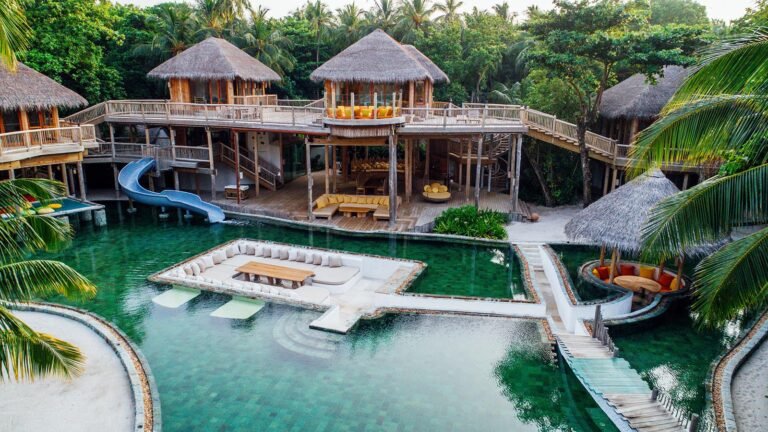
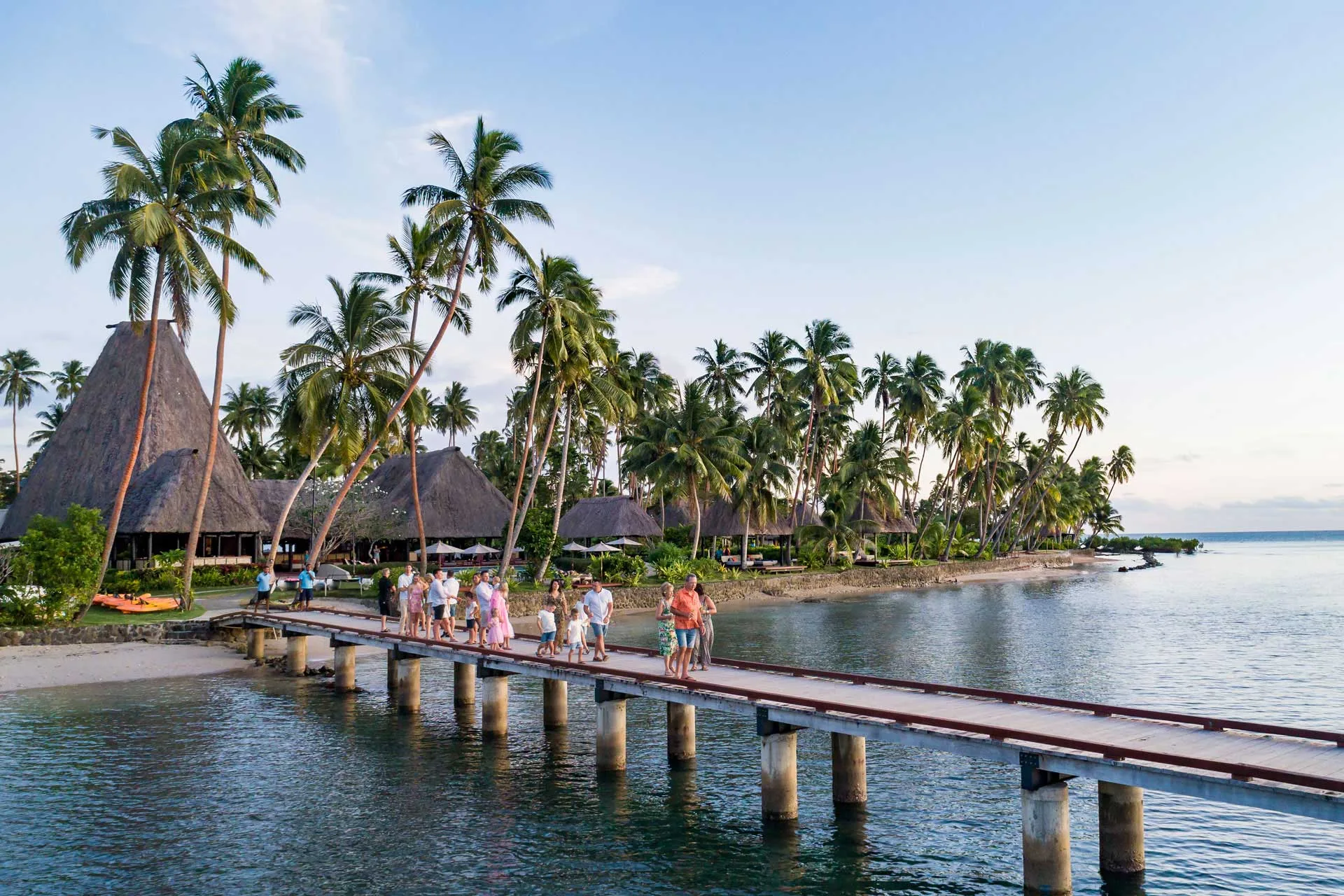


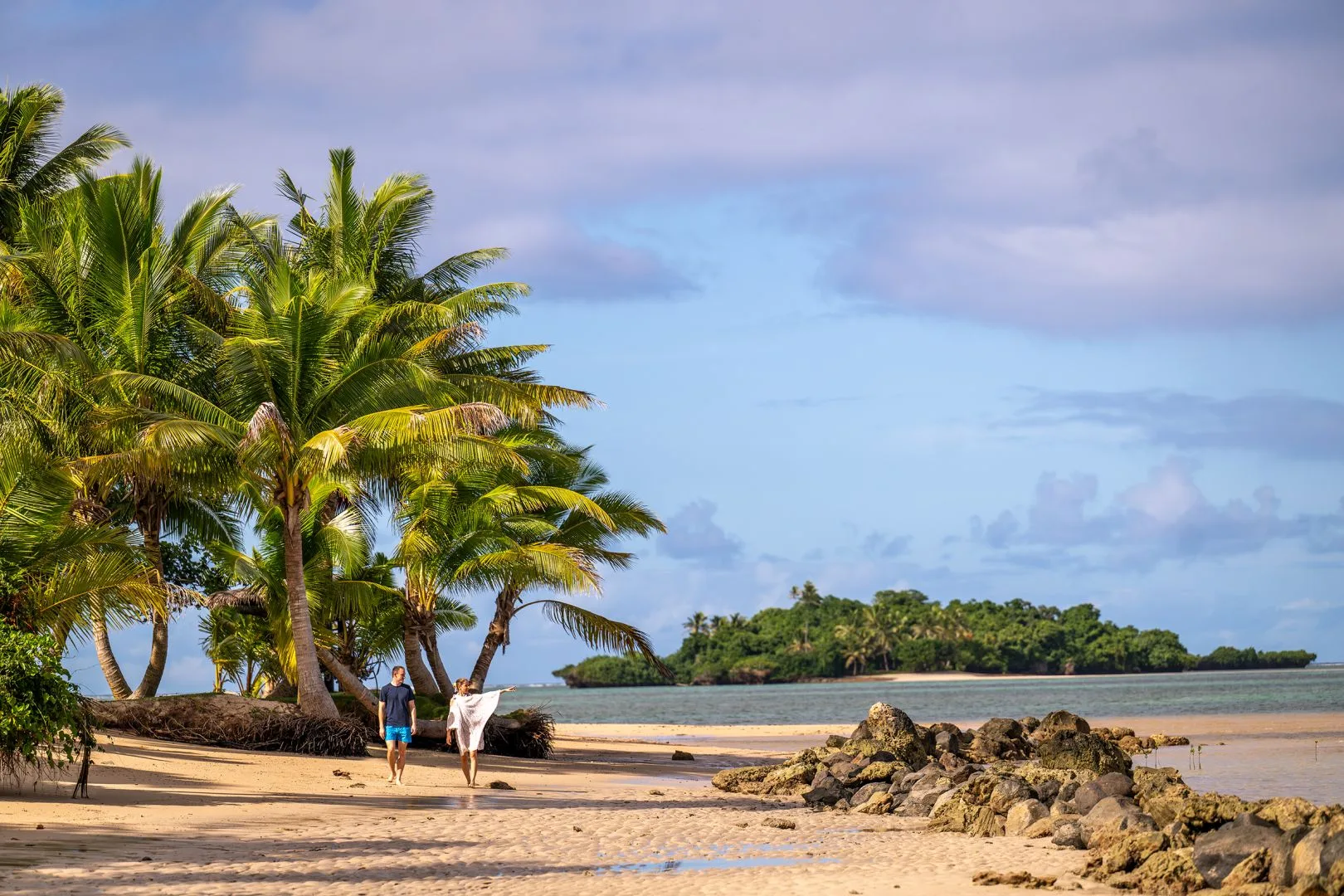
A thatched-bure eco-resort on a forgotten Fijian island where every child under six gets their own Fijian nanny from breakfast to bedtime — and where the best swimming is off the end of a pier, not the beach.
Overview
Some resorts sell you a beach. Jean-Michel Cousteau Resort sells you the ocean — which, it turns out, is a very different and far more interesting proposition. This is a 25-bure eco-retreat strung along a former coconut plantation on Vanua Levu, Fiji’s big, green, gloriously under-touristed second island, and it was conceived in 1995 by the explorer and filmmaker Jean-Michel Cousteau (yes, son of Jacques) as somewhere a family could fall properly in love with the sea. Three decades on, that founding idea still runs through everything like a watermark.
What makes it work for families is a single, almost radical piece of generosity: every child under six is assigned their own one-on-one Fijian nanny, included in the rate, from 8:30 in the morning until 6:30 in the evening — with a second nanny per bure covering the dinner hours. Let that sink in. Not a kids’ club you drop them at. A person, for your child, all day. It is the kind of thing that turns a holiday-with-small-children (an oxymoron most parents know too well) into something close to an actual rest.
The texture of the place is unhurried and deeply Fijian. Mornings open with birdsong and the smell of frangipani; the resident marine biologist gathers a small group on the pier for a snorkel into what guests reliably call a “living aquarium”; lunch is three unhurried courses under an open-sided roof with the bay shimmering beyond; and the evenings dissolve into kava, stars, and the low harmonies of staff who sing because they mean it, not because a manager told them to. It is theatrical in the way Fiji is theatrical — warm, loud with welcome, a little chaotic at the edges — and that is precisely the charm.
I’ll be clear up front, because clarity is the whole point here. This is not a glossy white-sand fantasy, and we would rather tell you so before you land: the beach is modest and tidal, the mosquitoes and sandflies mean business, room service can drift, and the all-inclusive rate is premium with alcohol and scuba bolted on as extras. The resort closed for the most extensive renovation in its history in early 2026 and reopened that April with re-thatched bures, refreshed interiors, and eco air-conditioning throughout, which should have swept away the tired-edges complaints of the pre-reno years. What it cannot change — and shouldn’t — is its essential character: this is a place for families who want their children to come home talking about turtles and coral, not water slides.
Location & Accessibility
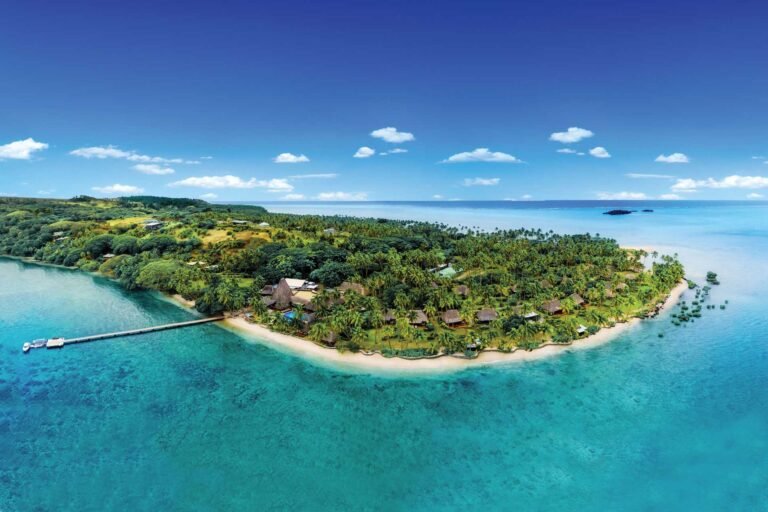
Getting here is a commitment, and the resort makes no apology for it. You fly into Nadi (NAN) on Fiji’s main island, then connect on a roughly one-hour hop to Savusavu (SVU) — either a scheduled Fiji Airways flight or a premium shared charter with Island Hoppers. From the little Savusavu airstrip it’s a short, pretty road transfer of fifteen to twenty minutes along the shoreline of Savusavu Bay to Lesiaceva Point, where the resort sits on its 17-acre slice of green. Return transfers are included, and a meet-and-greet handles you at both Nadi and Savusavu, which removes a real layer of stress when you’re shepherding overtired children through two airports.
That journey is the price of admission to somewhere most of the world hasn’t found yet. Savusavu is a working town — a copra-and-pearl port with a famously good Saturday farmers’ market — about five to eight kilometres east of the resort, and the surrounding waters hold the Namena Marine Reserve, one of the South Pacific’s great dive sites. This is the trade-off in its purest form: you give up the easy, two-hours-from-the-plane convenience of a Nadi beach resort, and in return you get reefs without crowds and an island that still feels like itself.
For families, the practical picture is mixed but mostly kind. Once you’re inside the gates, the resort is compact, flat, and easy to move a small child around. The flip side is the remoteness: there is no nipping out to a pharmacy or a different restaurant if the mood takes you, and the multi-leg journey is long for babies and toddlers — build in a buffer night on the main island at each end if you can, because asking a two-year-old to do Nadi, a connecting flight, and a road transfer in one day is a recipe for tears (theirs and yours).
One more practical note on the setting: this is a tropical eco-resort beside mangroves, and the shoreline is tidal and rocky in places rather than a broad swimming beach. The geography that makes the snorkelling extraordinary — reef close in, rich nutrient water — is the same geography that means you won’t be wading into bathtub-flat sand from your bure. Know that going in and it’s a feature; expect the Maldives and it’s a disappointment.
Accommodation (Rooms & Suites)
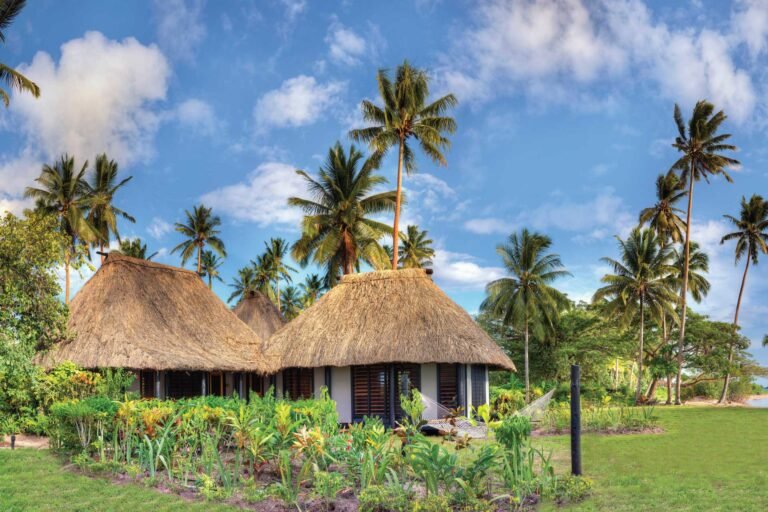
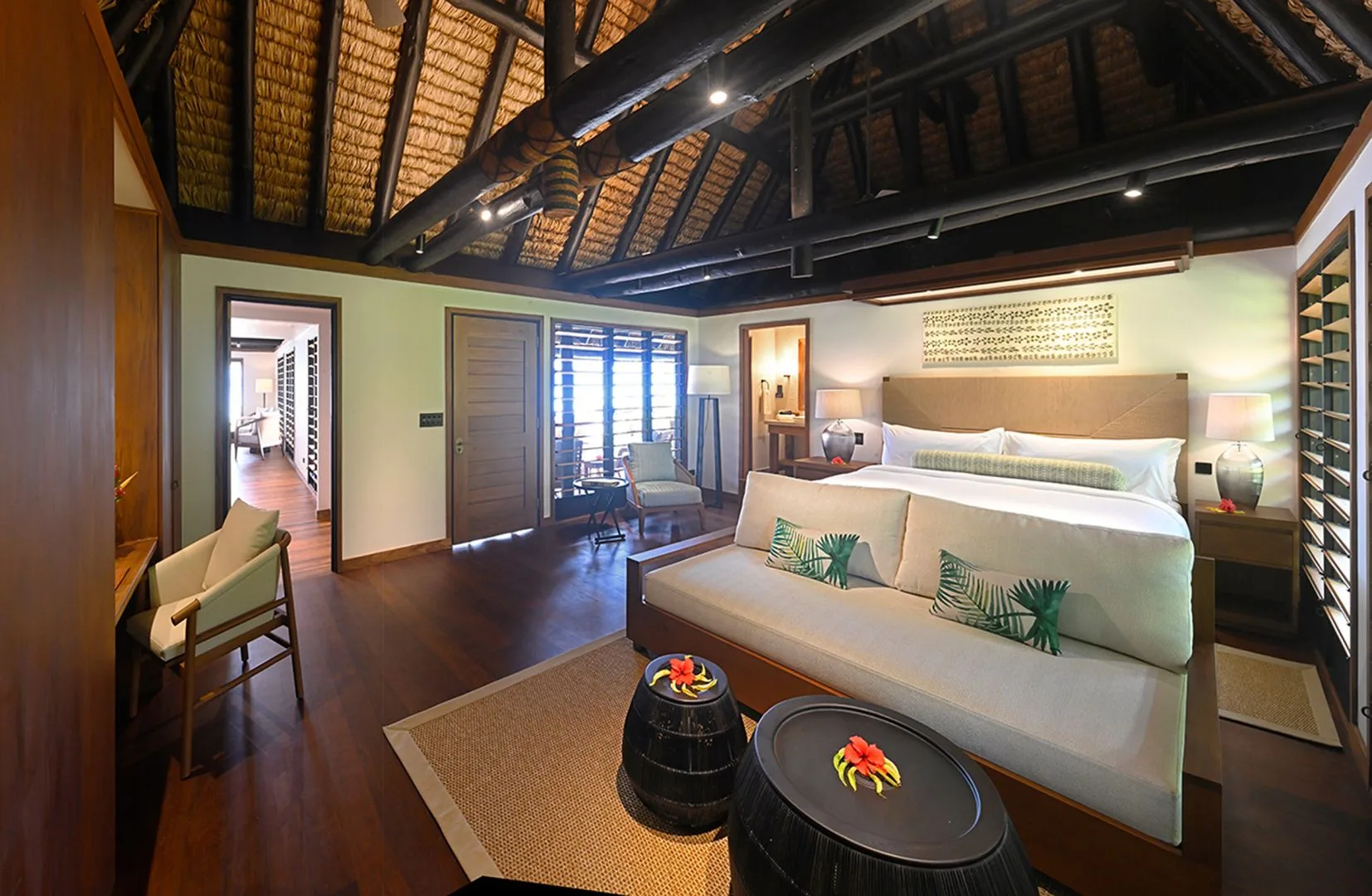
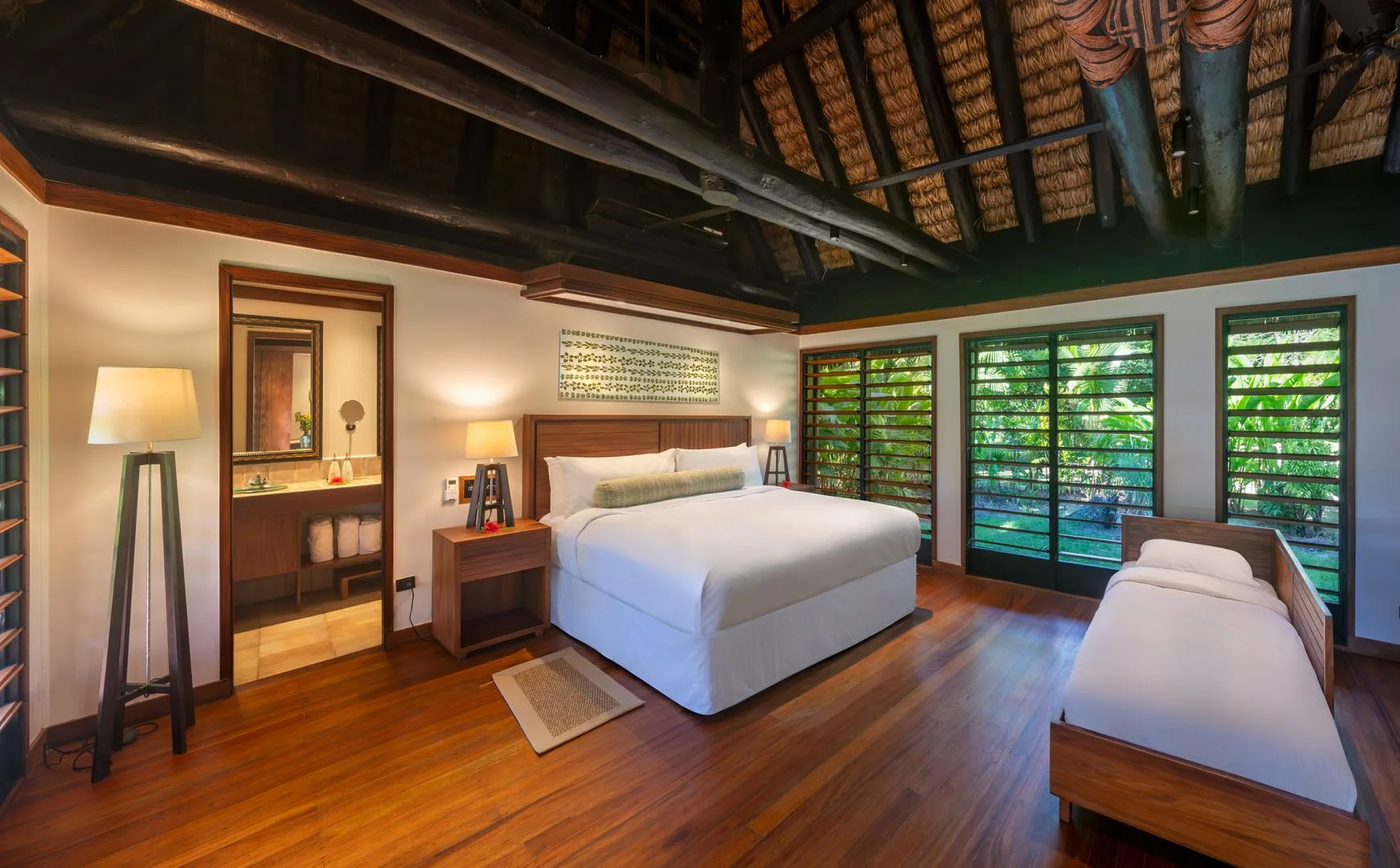
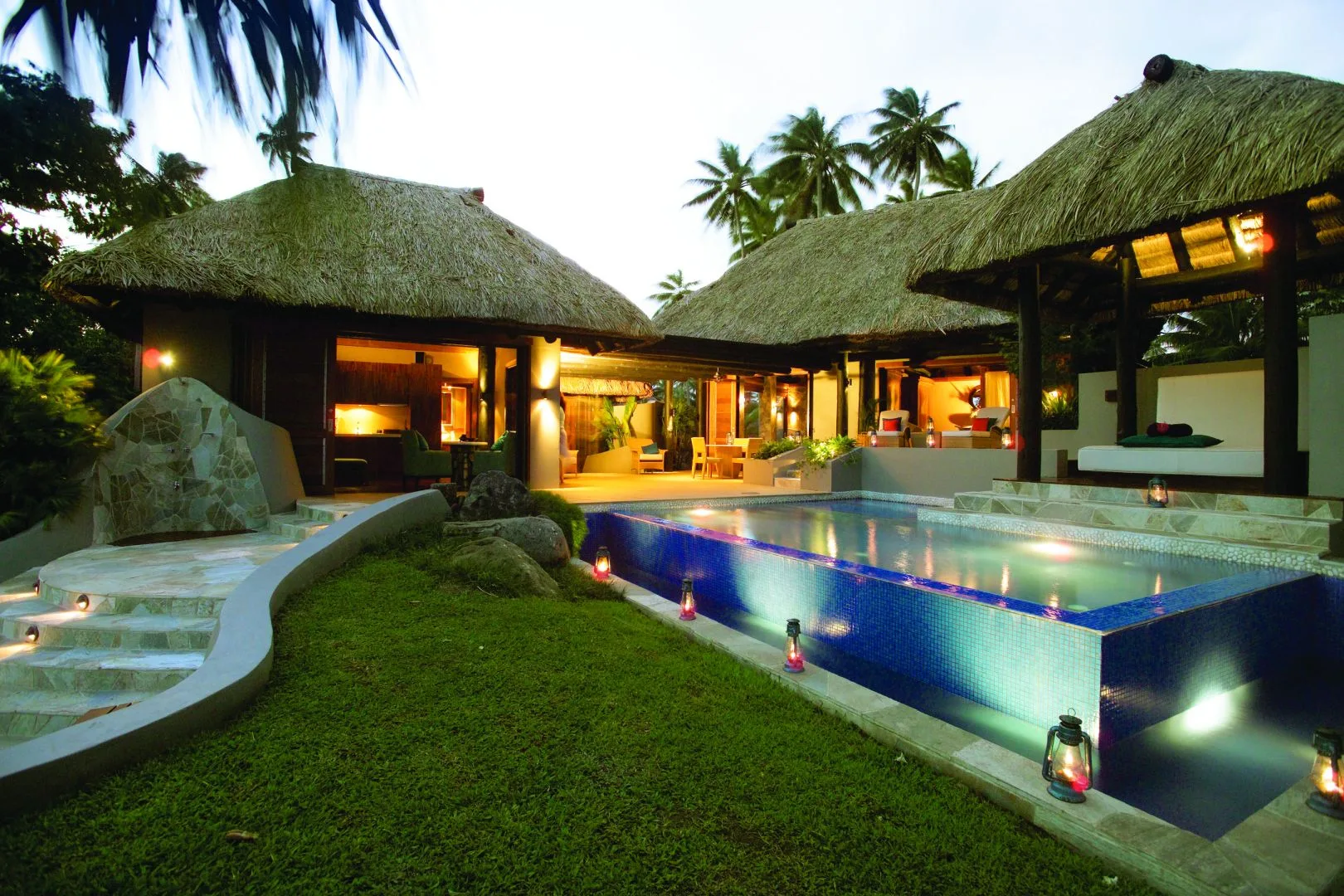
There are just 25 bures here — traditional thatched Fijian bungalows, all re-thatched and refreshed in the 2026 renovation, with new millwork, flooring, bedding, lighting, and the long-awaited addition of eco air-conditioning. Small numbers matter: this is a resort where staff learn your children’s names by lunchtime on day one, not a 400-room machine. The categories break down roughly like this:
- Garden View Bure — the entry category at around 44 square metres plus a generous deck, with a king, a day bed, an ensuite, and a hammock for the slow afternoons. Lovely for couples or a small family with one little one; cosy rather than capacious.
- Oceanfront Two-Bedroom Bure — the family workhorse. A master with a king and day bed, a second bedroom with two twins, and beach access. Around 65 square metres of interior plus a big deck. This is the room most families of four should be looking at.
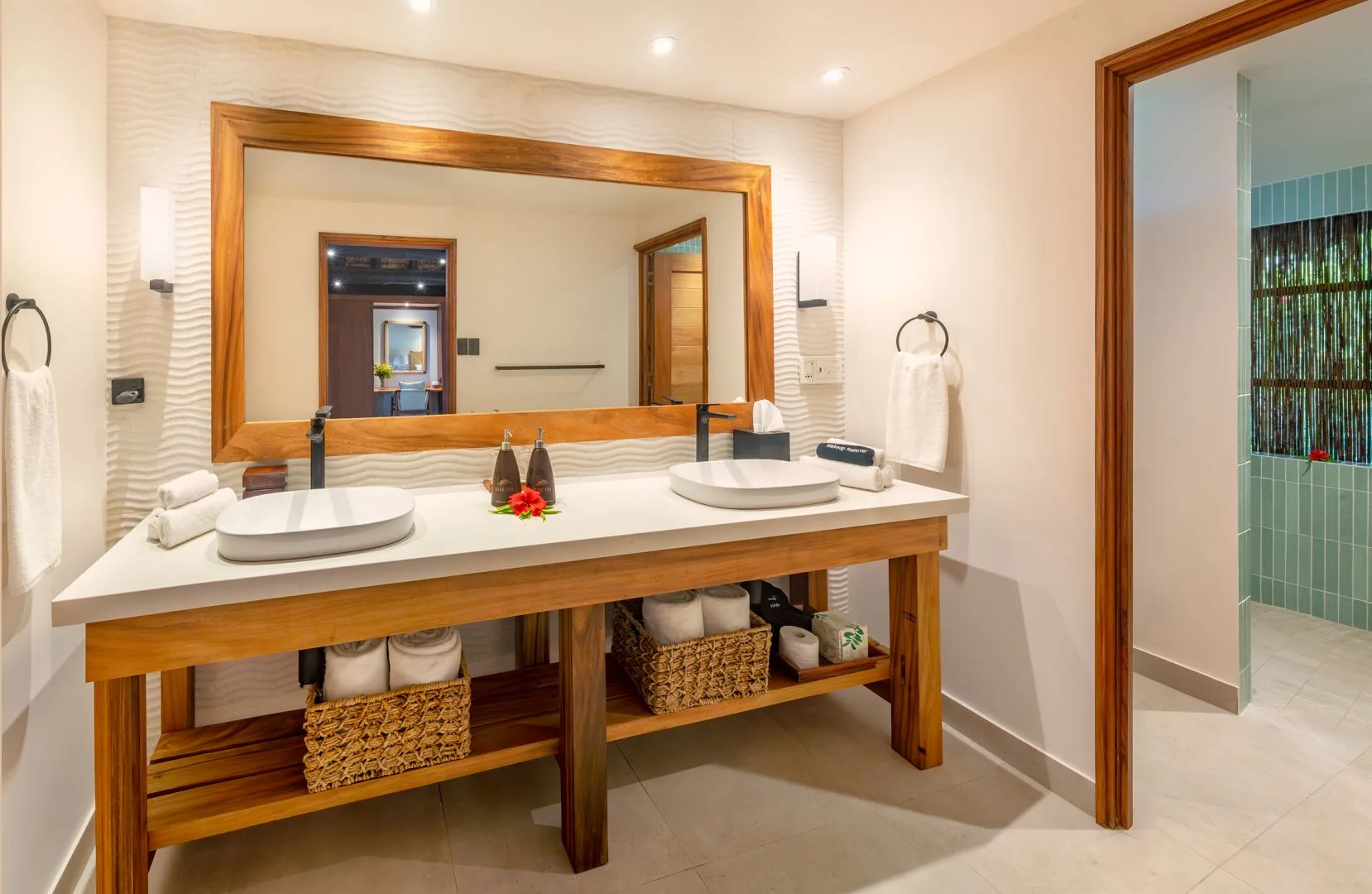
- Deluxe Oceanfront Two-Bedroom Bure — the largest two-bedroom, roughly 85 square metres, with two full ensuite bathrooms — which, once you’ve shared a single bathroom with school-age kids, you’ll understand is worth real money.
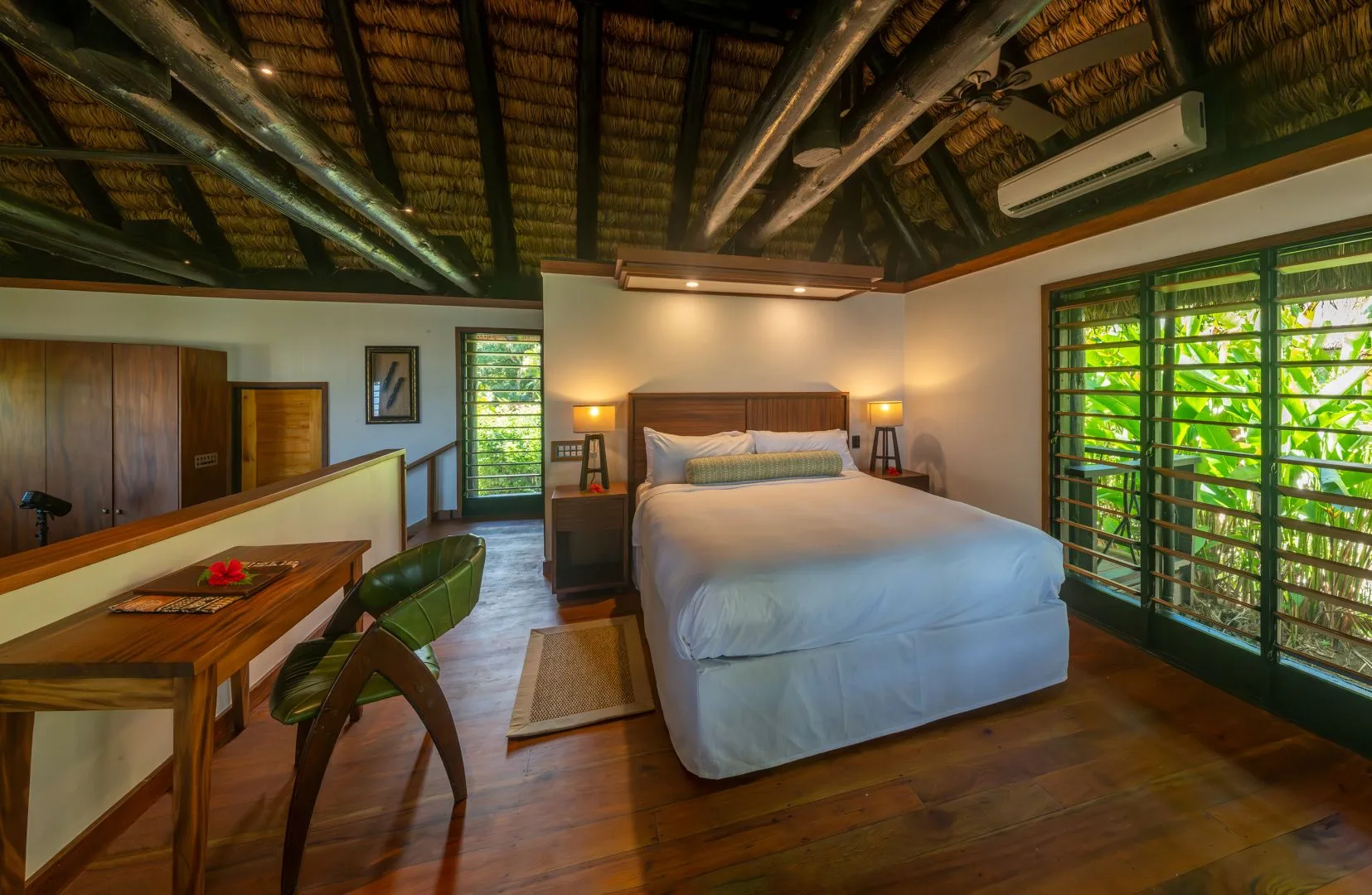
- Point Reef Bure — a split-level, king-bedded hideaway in the most private corner of the property, with an open-plan lounge. Romantic; better suited to couples or families with one older child.
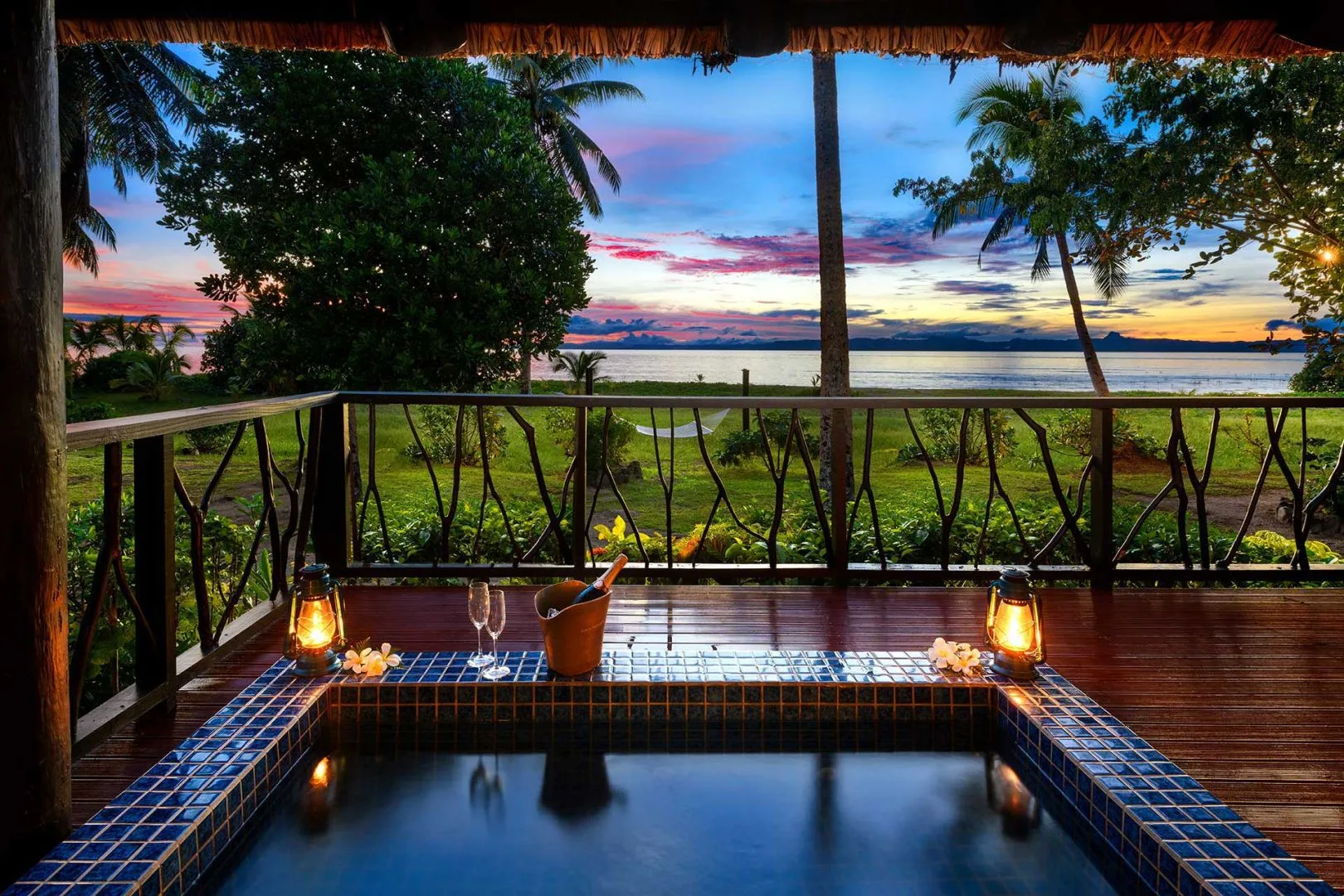
- Presidential Villa — two connecting bures, a four-poster, a sunken jacuzzi, indoor and outdoor showers, and a kitchenette. The full multi-generational splurge.
The headline of the renovation, and it’s distinctly family-minded, is that five former one-bedroom oceanfront bures were converted into proper two-bedroom, two-bathroom ocean-facing residences built for multi-generational groups — extended decks with daybeds and outdoor dining for six. That is a resort listening to how families actually travel.
A couple of practicalities. Cribs and connecting options exist but aren’t exhaustively documented, so confirm cots, extra beds, and exact configurations in writing when you book rather than assuming. And a recurring pre-renovation gripe about the entry-level bures was that the toilet and shower shared one undivided wet-room — awkward when a family is sharing one bathroom — so if that matters to you, the two-bathroom Deluxe is the answer. The summary: these are characterful thatched bures, not slick hotel rooms, and that’s the appeal — but choose the two-bedroom, two-bathroom categories if you’re a family, and you’ll want for nothing.
Family Amenities & Kids’ Activities
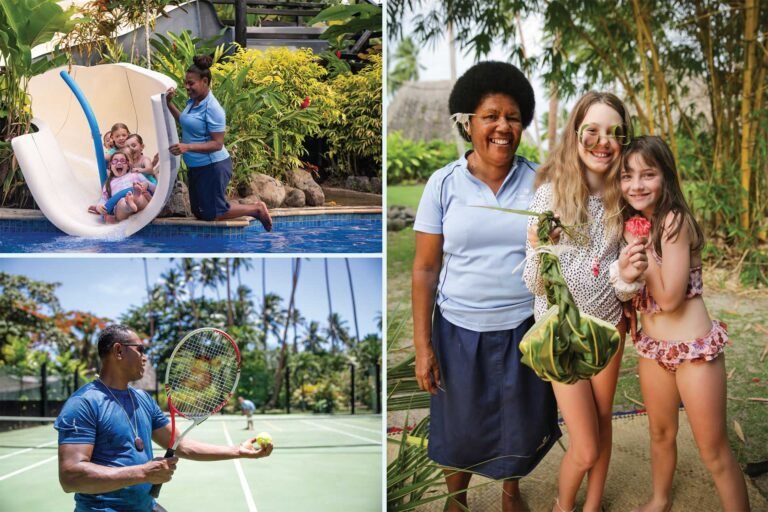
This is the reason to come, and it deserves unpacking properly, because the childcare here is in a different league from the standard kids’-club resort.
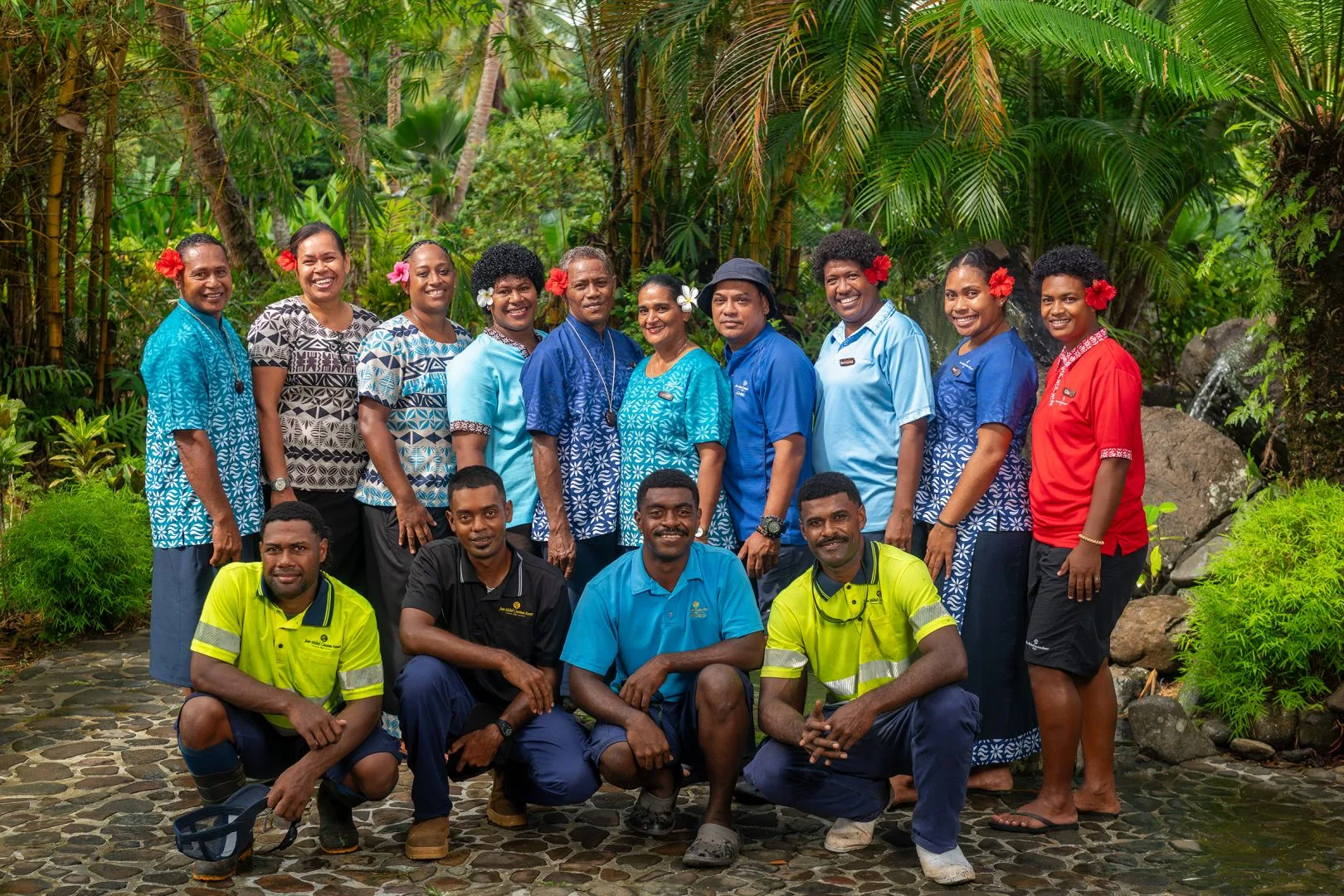
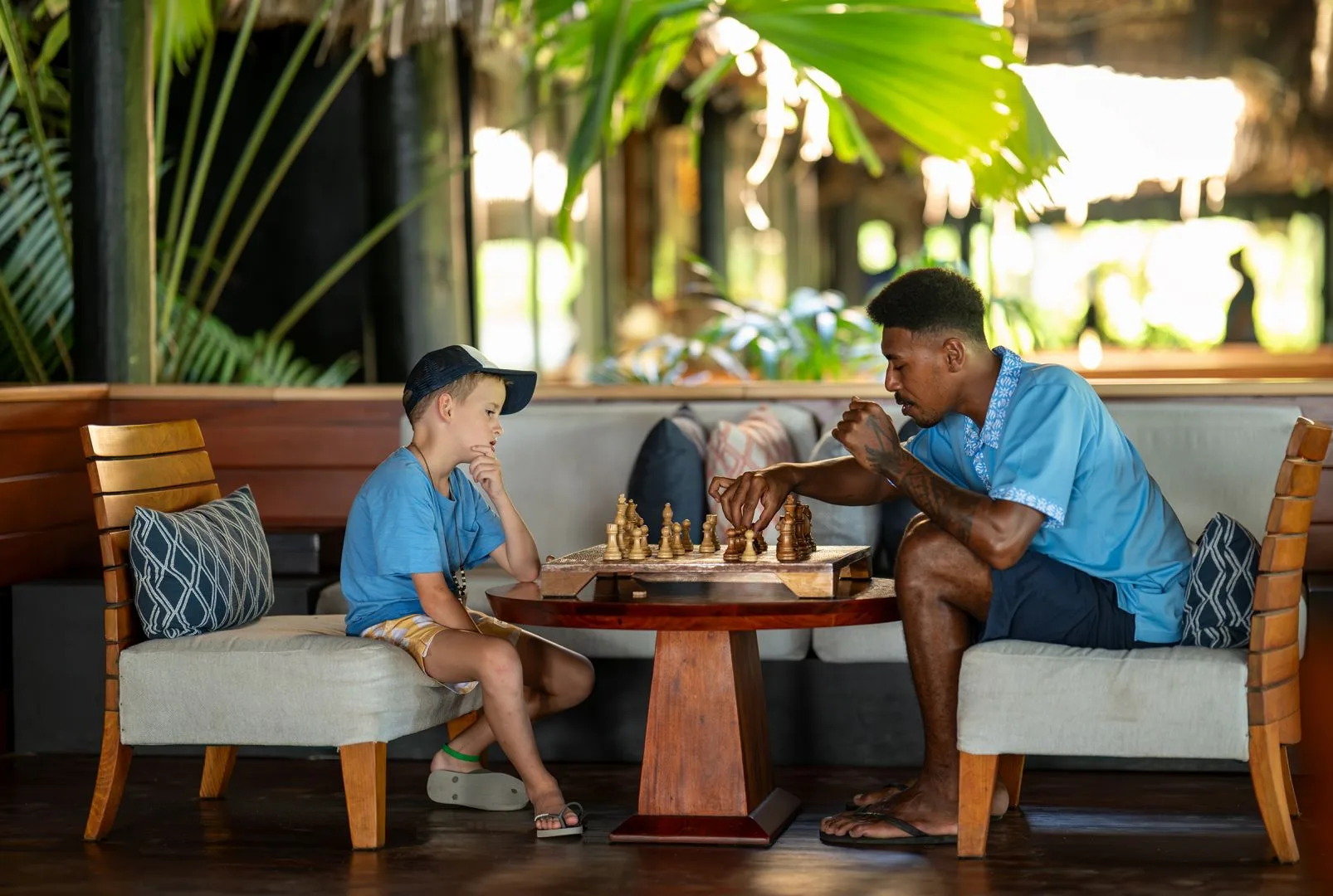
The nanny programme is the headline, and it is extraordinary. Every child under six is assigned their own dedicated Fijian nanny — one-on-one, not one-to-five — daily from 8:30am to 6:30pm, included in the rate. Then a second nanny per bure takes over the evening shift from 6:30pm to 9pm so you can actually have dinner. Parents describe this, again and again, as the single thing that transformed their trip: the freedom to dive, to read a whole chapter, to eat a hot meal with both hands, while your toddler is doted on by someone who clearly seems to adore the job. It is the most generous childcare offering I’ve come across at a family resort, full stop.
The Bula Club handles the older children, running 8:30am to 9pm, where kids aged roughly six to twelve are paired with Fijian “buddies” in small groups (sources cite a ratio of around one-to-five or one-to-six). This isn’t crafts-in-a-beige-room childcare; it’s village and school visits, reef and ecosystem education, waterfall trips, and the kind of cultural immersion that sends children home changed. Teens thirteen and up get their own dedicated programme and access to the adults-and-teens Serenity pool.
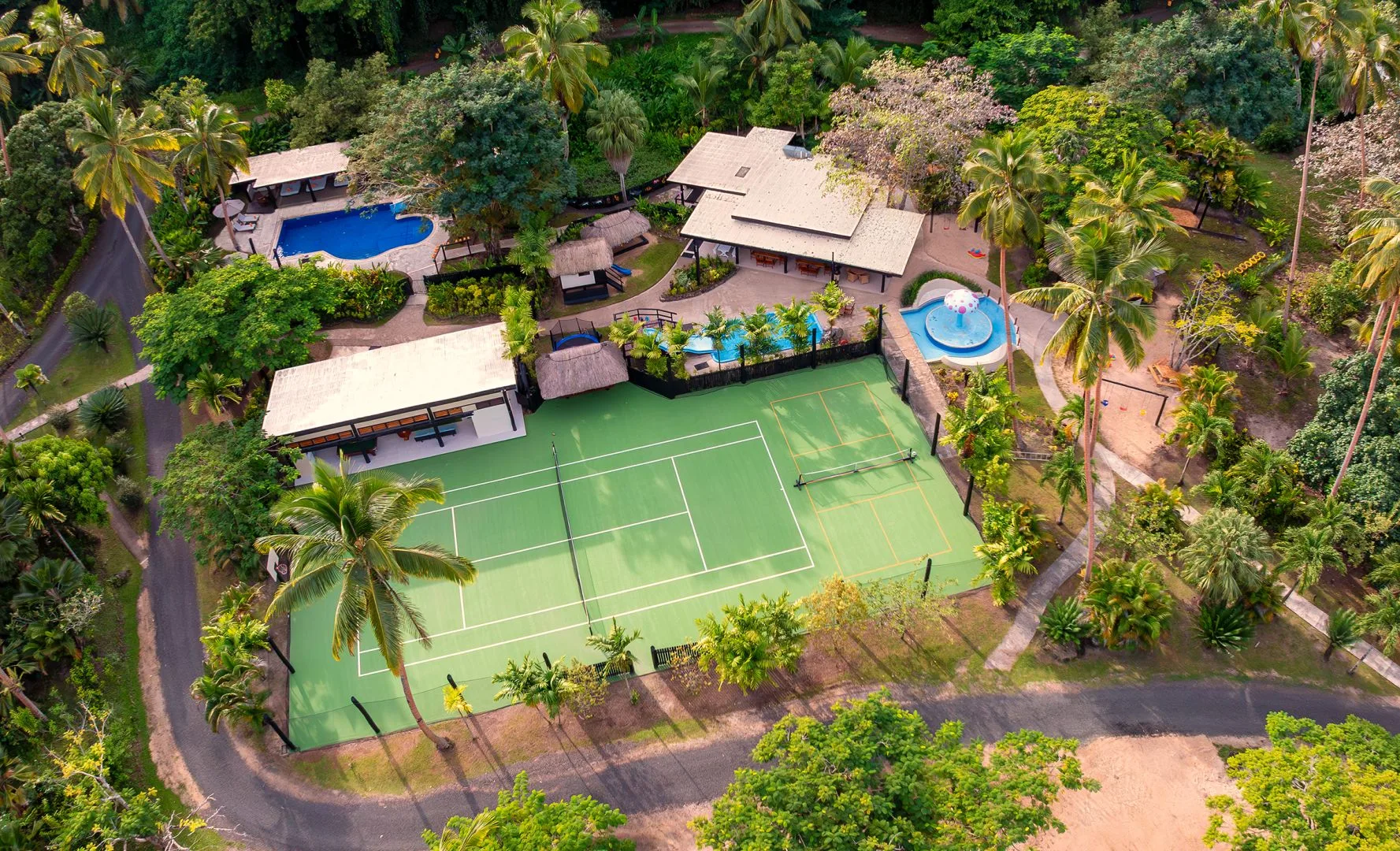
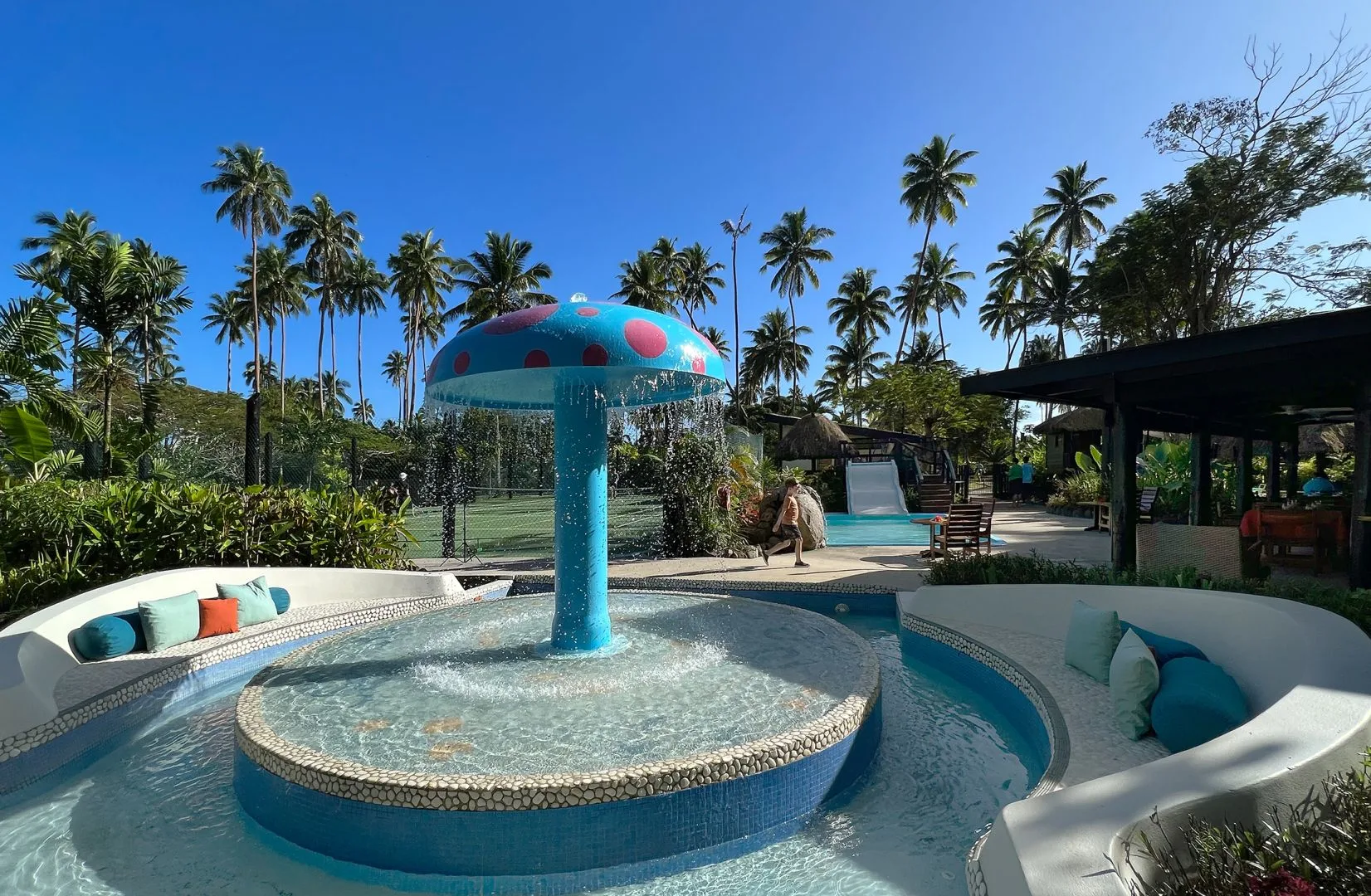
The water is built for families. The Bula Club has its own toddler pool with a slide; there’s a family pool with a roughly six-metre (20-foot) waterslide, a junior pool, and a cascading water-mushroom feature for the littlest paddlers. (An editor’s note: a “two-storey” slide gets mentioned around the traps, but the best-supported figure is that 20-foot family slide — lovely, but don’t promise your nine-year-old a theme-park drop.)
The marine programme is the soul of the place and what truly sets it apart. A full-time resident marine biologist leads day and night snorkel expeditions off the pier — straight into coral gardens busy with turtles, reef fish and the occasional manta — and accompanies guests on dives, giving presentations on Savusavu Bay’s ecology. Layered on top is the Ambassadors of the Environment programme, developed by Jean-Michel Cousteau’s Ocean Futures Society and running at only a handful of sites worldwide: hands-on coral planting, mangrove restoration at a protected “tabu” sanctuary, and marine-education sessions. For a curious child this is the trip that decides a future — I’ve rarely seen environmental education done with this much credibility.
Beyond the water there’s kayaking, stand-up paddleboarding, catamaran sailing, a glass-bottom boat, reef-flat walks, rainforest and mangrove hikes, pearl-farm tours and cultural experiences — most of it complimentary — plus a new 83-square-metre, air-conditioned, ocean-facing fitness centre from the 2026 works and property-wide WiFi for the inevitable teenage check-in.
Picture the choreography of a single day: your three-year-old is building sandcastles with a nanny who hasn’t left her side; your ten-year-old is planting coral with a marine biologist and a Fijian buddy; your fifteen-year-old has surfaced from a dive, salt-haired and quietly transformed; and you and your partner are on the pier with a cup of coffee, watching it all happen to other people’s schedules for once. That is the thing this resort sells, and on the evidence of the reviews, it delivers it more reliably than almost anywhere.
The main friction: scuba diving and some boat trips are paid extras, not part of the all-inclusive base, and the teen offering — while real and well-run — is the weakest link of the three age bands. A remote eco-resort with no swimming beach and no nightlife is heaven for under-twelves and their parents; a restless sixteen-year-old who lives for surf breaks and a buzzing beach club may find it quiet.
Dining
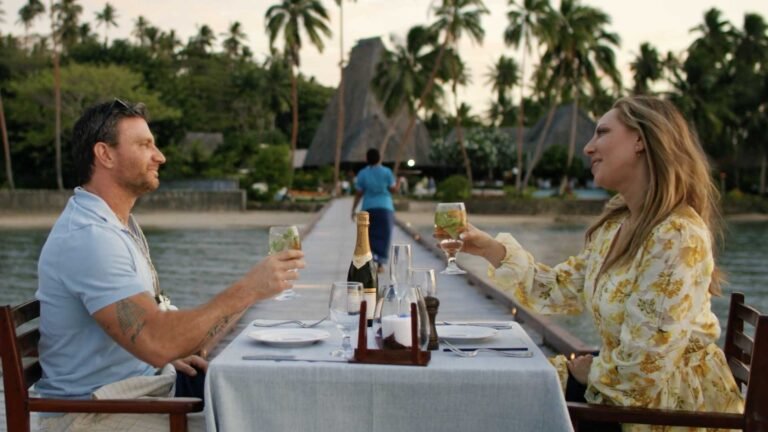
If the marine programme is the soul, the dining is the daily, three-times-a-day delight — and on the evidence it’s the single most consistently praised thing about the place. The board basis is all-inclusive, covering à la carte breakfast, lunch and dinner plus non-alcoholic drinks (proper loose-leaf tea, iced tea, coffee, soft drinks, bottled water). Crucially — and this is the caveat to bank — alcohol is not included and is charged on top, which on a premium rate can come as a mild surprise at checkout.
The main restaurant is open-air, perched over Savusavu Bay, and thoughtfully split into a family section and an adults’ section — so the couple two tables over having a quiet anniversary dinner and the family wrangling a toddler can both have the evening they came for. The cooking is contemporary Fijian with Asian inflections, much of it grown in the resort’s own gardens, and — the detail guests rave about — the menu changes every single day, with multiple options and three-course lunches and dinners. One reviewer clocked the first course arriving within ten minutes of ordering; another simply called it the best resort food they’d eaten. For families, dietary care is a real strength: gluten-free and vegan menus are available and the kitchen is happy to tweak dishes, which matters enormously if you travel with an allergy.
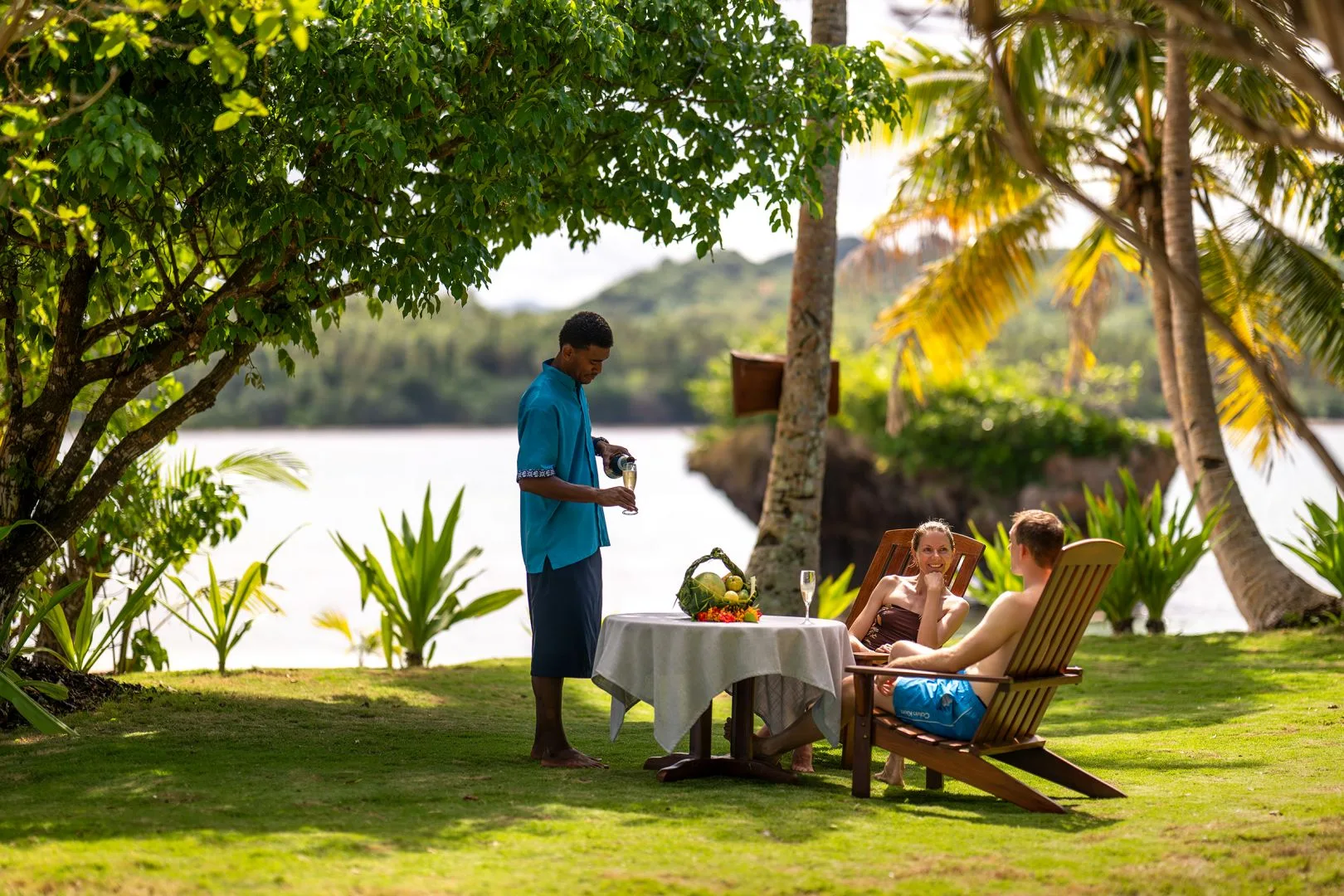
For a special night there’s private dining — a beachside bure, the end of the pier, a deck, or even “your own island” — the sort of romantic set-piece that’s easy to arrange precisely because the evening nanny has the children. It is not all unanimous: a minority of guests have rated the food merely “average,” and one strongly negative outlier panned it outright, so palates vary. But the overwhelming weight of opinion, and my own read of it, is that the kitchen here punches well above the resort’s remote location.
Staff & Service Quality
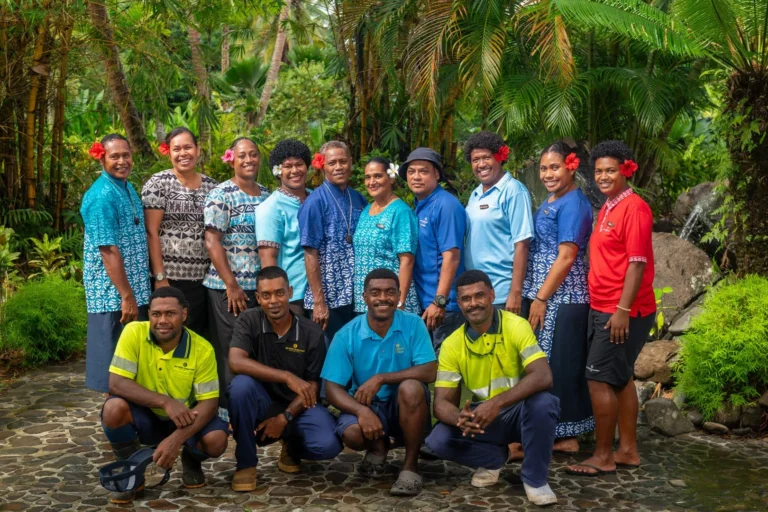
Fijian hospitality has a global reputation, and for the most part this resort earns every bit of it. The recurring word in the reviews is “phenomenal,” usually attached to the nannies and the Bula Club buddies, and there’s a warmth to the service here that you cannot train into people — the singing at dinner, the obvious delight in the children, the small unprompted kindnesses. With only 25 bures, the staff-to-guest ratio is high and personal; you are a family they get to know, not a room number they process.
It would be dishonest to call it flawless, though. Room service is reported to drift slow at times, and there are isolated but real accounts of brusque or condescending treatment at reception or the dive shop — jarring against the prevailing warmth, and worth flagging precisely because they’re the exception. The 4.0 aggregate rating reflects exactly this: a resort that is wonderful far more often than not, with the occasional human wobble that a remote operation running at full tilt will sometimes throw up. Set your expectations to “heartfelt and personal, occasionally imperfect” rather than “Swiss-watch slick” and you’ll be charmed.
Safety & Cleanliness
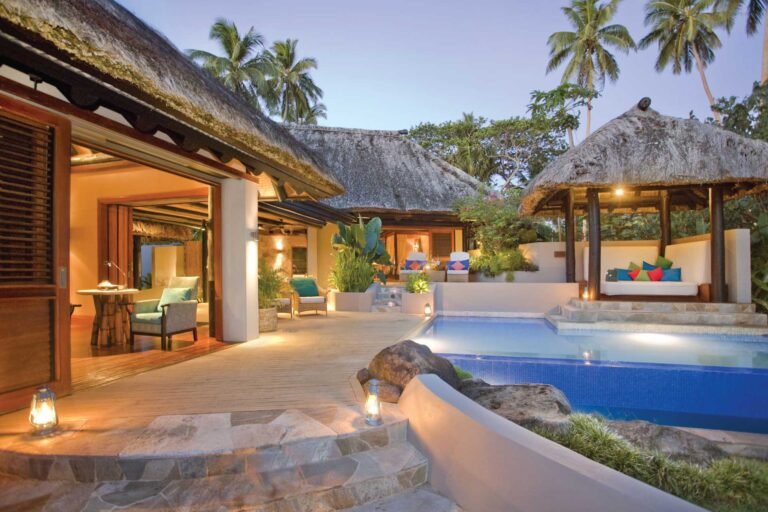
Here is where families need clear eyes, because this is a wild, tropical, marine setting rather than a managed pool complex, and that cuts both ways. Take the bugs first: mosquitoes and sandflies are a fact of life here, and we collected our share of bites despite nets, coils and repellent. The resort’s lemongrass spray helps but won’t fully solve it. Pack a serious DEET repellent, dress your children at dusk, and treat it as the cost of being somewhere this green and alive.
On the water: the swimming is off the pier and on guided trips, not from a gently shelving lifeguarded beach, and the shoreline is tidal and rocky in places. There is no classic patrolled swimming beach here, so young children near the water are your responsibility and a vigilant one — though the upside is that snorkelling happens in small, expert-led groups, which is about as safe as open-water swimming with kids gets. Cleanliness drew the occasional pre-renovation complaint (a tired pool deck, fraying thatch), but the multi-million-dollar 2026 overhaul — new thatch, refreshed interiors, rebuilt pool areas — should have addressed the bulk of that, and recent post-reno trade visits are positive. The estate is private and remote, which brings its own quiet security. The headline for parents: this is safe in the way a well-run expedition is safe — through expertise and attentiveness — not in the way a fenced, lifeguarded water park is. That suits some families perfectly and unsettles others; know which you are.
Value & Pricing
This is a premium proposition, and it doesn’t pretend otherwise. The all-inclusive rates are quoted in US or Australian dollars; converted to euros, an entry-level Garden View bure lands very roughly around €700 a night in low season and climbs toward €1,200 or more in high season, with the family two-bedroom bures higher again. Treat those euro figures as estimates and verify at booking, because the post-renovation 2026 pricing may have moved upward and the exchange is a moving target.
What you get for it is substantial: all meals; non-alcoholic drinks; the nanny and Bula Club programmes (this is where the value really lives — one-on-one childcare for under-sixes would cost a fortune anywhere else); most activities including kayaking, paddleboarding, sailing, shore snorkelling and nature walks; the airport meet-and-greet; and return transfers. What you don’t get, and should budget for, is alcohol, scuba diving, some boat trips and fishing, and the spa — the four lines on which a relaxed week quietly inflates.
The honest math: judged as a beach holiday, it would look expensive for a modest beach. Judged as what it actually is — an all-inclusive marine-education immersion with the most generous childcare in the business, on an island most people never reach — it’s defensible, even good value for the right family. The under-six nanny alone can be worth the premium for parents of toddlers. Go in understanding what you’re buying (the sea and the childcare, not the sand), budget for the alcohol and the diving, and the value case holds up. Expect a conventional five-star beach resort and you’ll feel the price.
Why We Picked It
Because nowhere else we know of gives a family this combination: a one-on-one nanny for every small child, a resident marine biologist who turns your ten-year-old into a coral-planting conservationist, and dining good enough to be the reason some guests return — all wrapped in relaxed, unforced Fijian warmth on an island that still feels undiscovered. It is emphatically not for everyone: the beach is modest and tidal, the bugs are real, the journey is long, the bar bill is extra, and a beach-club teenager may fidget. We’ve said all of that plainly, because that’s the deal at FFH. But for the families it suits — those with young children, those who’d rather their kids came home talking about turtles than touchscreens — this is something rare, quietly remarkable, and hard to replace. By our definition of “finest” — craft, authenticity, emotional resonance, and a place that truly works for families — Jean-Michel Cousteau Resort is the real thing, eyes open about its imperfections.
Jean-Michel Cousteau Resort: Family Questions Answered
Is Jean-Michel Cousteau Resort good for families?
Yes—especially for families with young children who want ocean and nature experiences, not a classic beach resort. The headline is complimentary one-on-one nannies for under-6s, plus the Bula Club for ages roughly 6–12 and a teen programme for 13+. The trade-offs are a modest, tidal shoreline (best swimming is off the pier), real mosquitoes/sandflies, and a multi-leg journey to reach Vanua Levu.
Is childcare included for under-6s—and what are the nanny hours?
Yes: every child under six is assigned a dedicated one-on-one Fijian nanny, included in the rate. The main nanny covers 8:30am–6:30pm daily, and the resort also provides a second nanny per bure for evenings from 6:30pm–9:00pm so parents can have dinner. It’s personal, 1:1 childcare rather than a standard drop-off kids’ club.
What ages is the kids’ club for, and what time does it run?
The Bula Club is aimed at kids aged roughly 6–12 and runs 8:30am–9:00pm. Older children are paired with Fijian “buddies” in small groups, with sources citing ratios around 1:5 to 1:6. The programme is outdoorsy and culture-and-nature led (think reef and ecosystem learning, village/school visits and waterfall trips) rather than indoor crafts.
Is there anything organised for teenagers?
Yes—teens aged 13+ have a dedicated programme and access to the Serenity pool shared with adults. That said, the resort describes the teen offering as the weakest of the three age bands, and the overall vibe is quiet: it’s a remote eco-resort with no classic swimming beach and no nightlife. For teens who want buzz, surf breaks or beach clubs, it may feel low-key.
Which room category works best for a family of four?
The Oceanfront Two-Bedroom Bure is the main “family workhorse” for four. It has a master bedroom with a king and day bed, plus a second bedroom with two twins, and about 65 sqm of interior space (plus a big deck). The entry-level Garden View Bure is described as cosy and better suited to couples or a small family with one little one.
Are there family rooms with two bathrooms?
Yes: the Deluxe Oceanfront Two-Bedroom Bure has two full ensuite bathrooms. It’s also the largest two-bedroom option at roughly 85 sqm, which can make a big difference for families sharing space. If bathroom logistics matter (especially with school-age kids), this is the category the review flags as “worth real money.”
Do they guarantee connecting rooms, cots or extra beds?
Not guaranteed in the information provided—confirm it in writing when you book. The resort notes that cribs and connecting options exist, and that cribs/extra-bed configurations are available on request, but it isn’t exhaustively documented by room type. To avoid surprises, get your exact configuration (cots, extra beds, and whether rooms truly connect) confirmed before arrival.
Is this a proper white-sand swimming beach resort?
No—the beach is modest and tidal, and the best swimming/snorkelling is off the end of the pier. The shoreline is described as tidal and rocky in places rather than a broad, gently shelving swimming beach. If you arrive expecting a Maldives-style beach week, you’ll likely be disappointed; if you want reefs close in and marine life, this setting is the point.
How safe is the swimming for younger kids?
Swimming here isn’t the “patrolled beach” model—parents need to be vigilant around the tidal, rocky shoreline. Snorkelling is typically done off the pier and on guided trips, and the review notes small, expert-led groups as the safer way this resort handles open water. If you want fenced, lifeguarded water-park style swimming, this may not feel as relaxing.
What pools and slides are there for children?
There are multiple family-friendly pools, including a toddler pool with a slide and a family pool with a roughly 6-metre (20-foot) waterslide. There’s also a junior pool and a cascading “water-mushroom” feature for little paddlers. Note that the article cautions against overhyping a “two-storey” slide—20 feet is the best-supported figure.
What does the all-inclusive plan include—and what costs extra?
All-inclusive covers à la carte breakfast, lunch and dinner plus non-alcoholic drinks. Non-alcoholic inclusions listed include tea, coffee, soft drinks and bottled water. The key extras to budget for are alcohol, scuba diving, some boat trips and fishing, and the spa—these are specifically flagged as add-ons that can inflate the final bill.
Can they handle allergies and special diets for kids?
They appear well set up for dietary needs, with gluten-free and vegan menus available. The kitchen is also described as happy to tweak dishes, which is helpful if you’re travelling with allergies or restrictions. Because needs vary by severity, it’s still sensible to flag allergies in advance so the team can plan around your child.
How do you get to the resort—and are transfers included?
Most families fly into Nadi (NAN), connect to Savusavu (SVU), then take a 15–20 minute road transfer—and return transfers are included. The resort also provides a meet-and-greet at both Nadi and Savusavu, which can reduce stress with kids. The article flags the journey as a commitment, especially for babies and toddlers.
What does it cost in reality—and is it good value for families?
Expect premium pricing: the entry-level Garden View Bure is estimated at roughly €700/night in low season rising toward €1,200+ in high season, with two-bedroom family bures higher. Those figures are described as rough estimates—verify at booking and remember alcohol, scuba and some boat trips are extra. Value is strongest for parents of under-6s because the 1:1 nanny (included) would be very expensive elsewhere.
What similar all-inclusive family resorts should we compare this with?
If you want a more classic beachfront all-inclusive, compare it with Ikos Dassia or Ikos Andalusia. If you want an all-suite beachfront all-inclusive with a water-wonderland angle, look at Regnum The Crown. Jean-Michel Cousteau is a remote eco resort where the draw is the ocean, marine education and the under-6 1:1 nanny—not a big, sandy beach scene.