


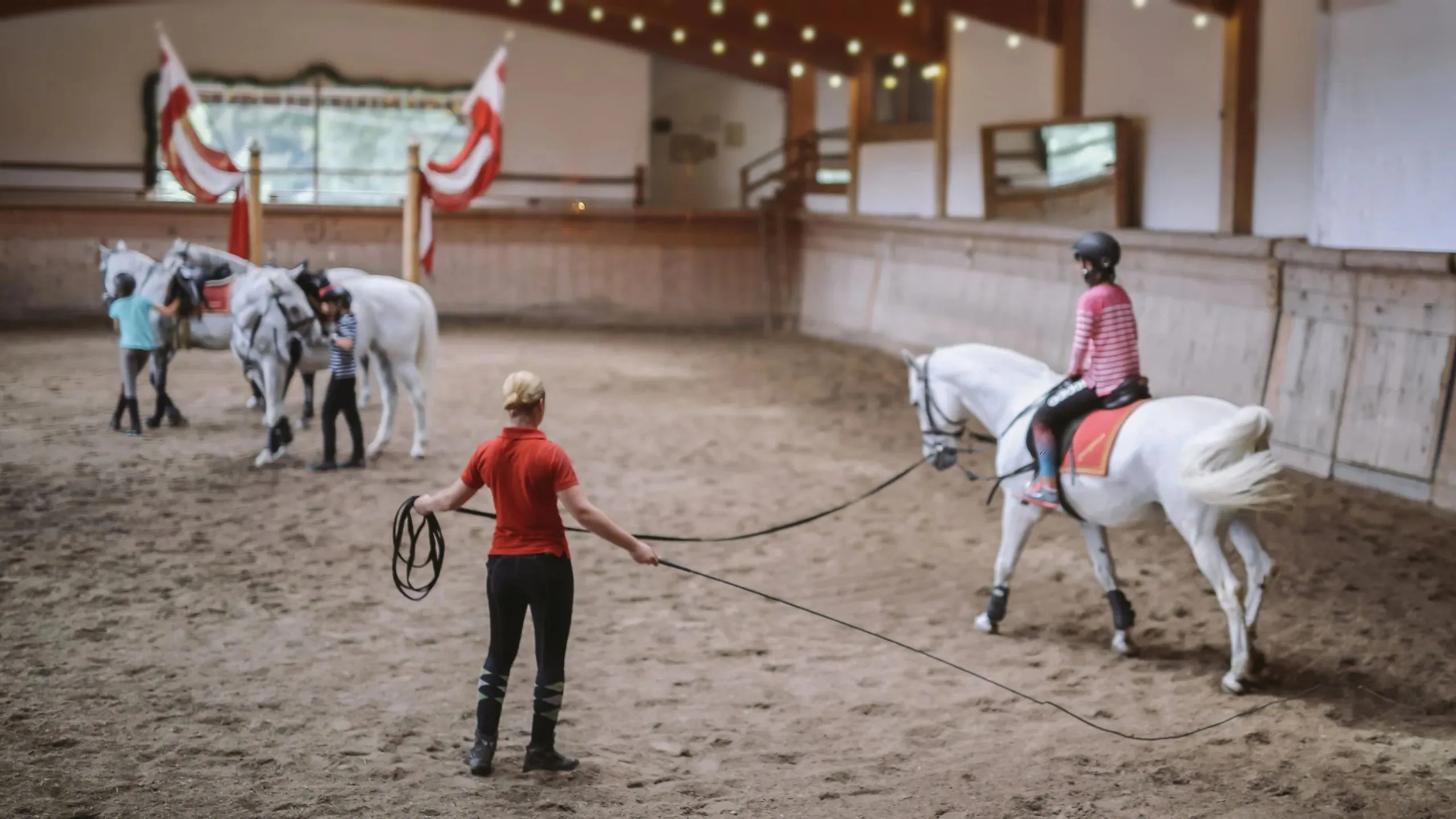
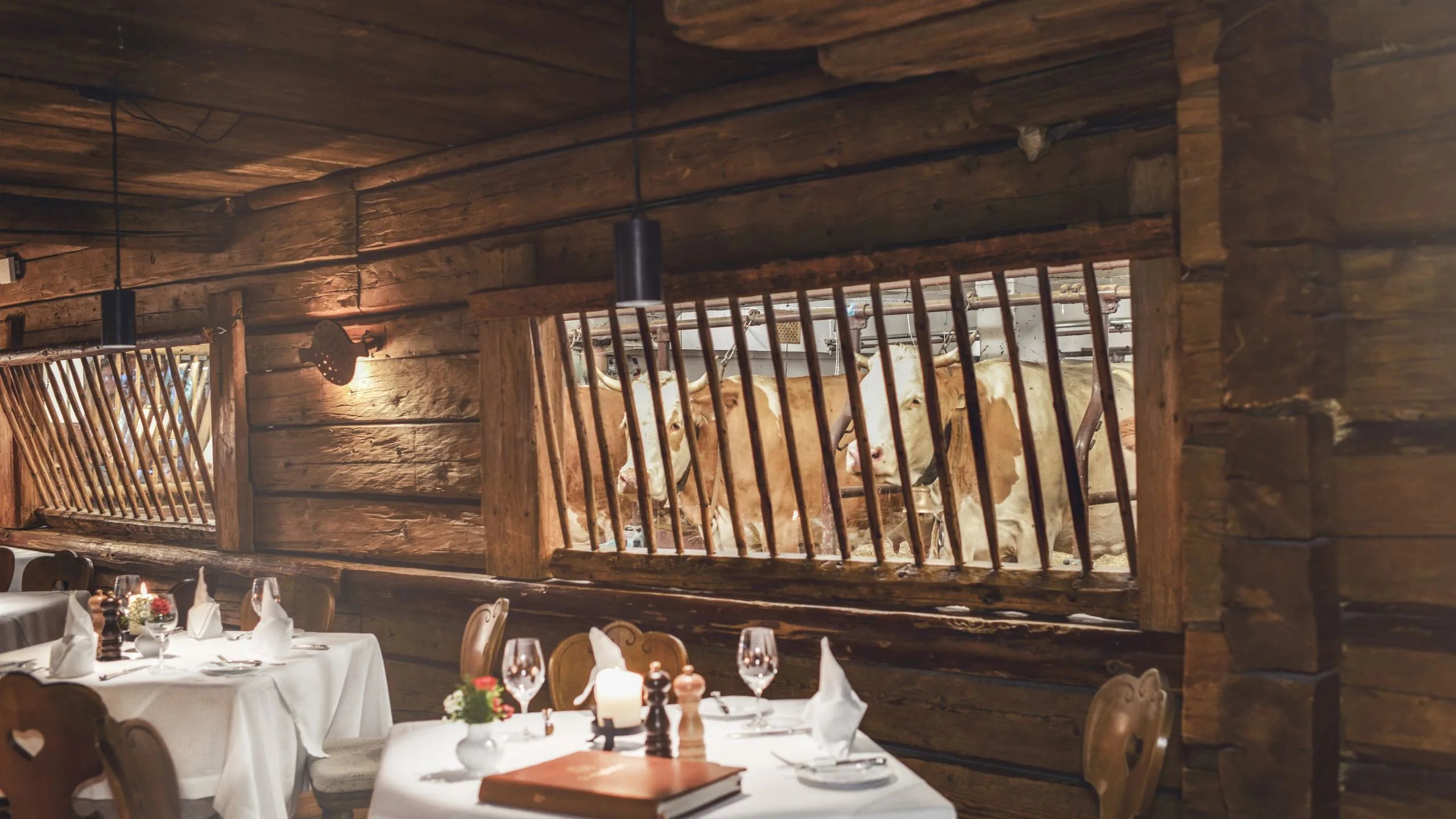




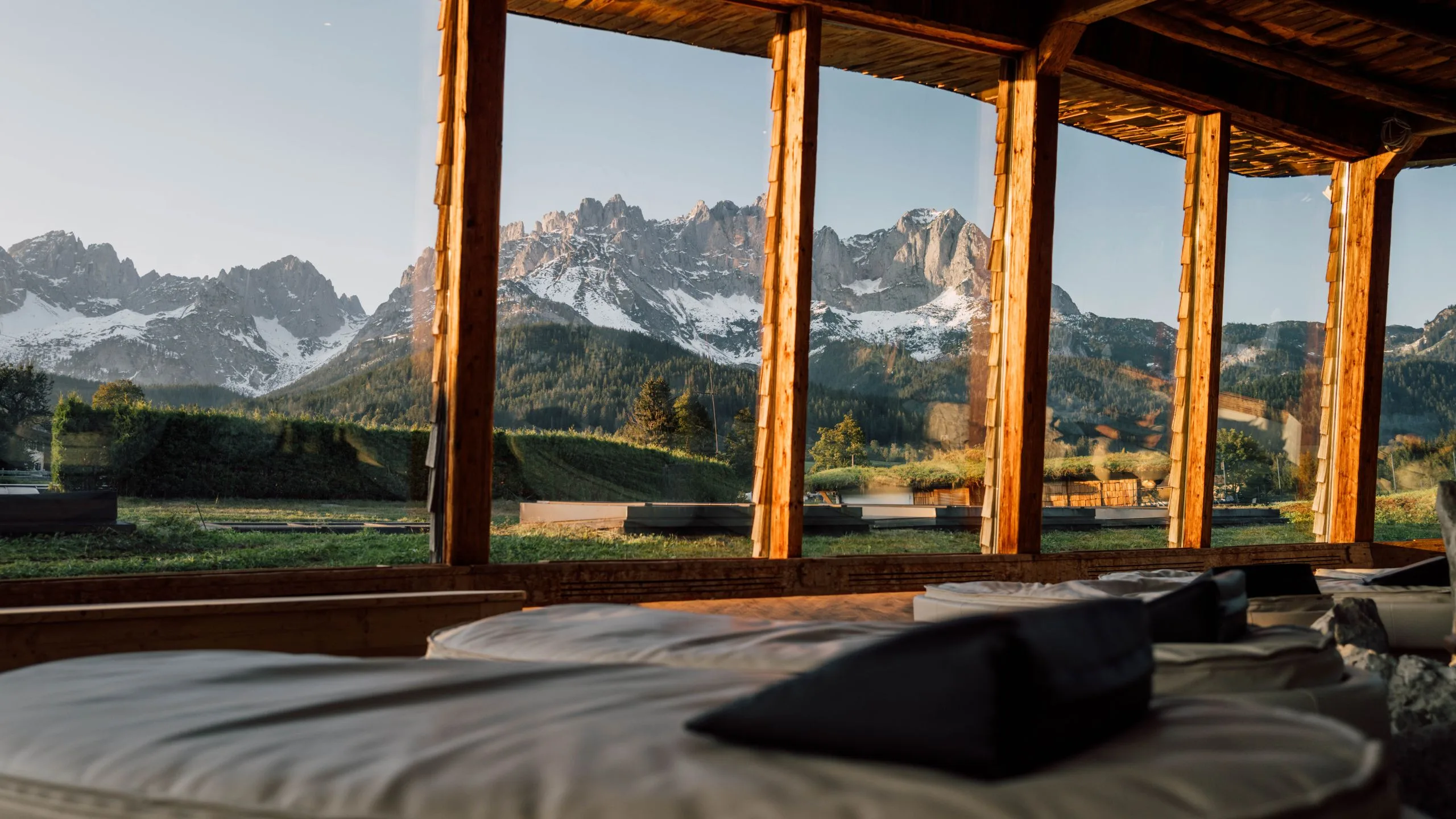
Our four-year-old found the window on the second morning and could not be moved from it. It runs along the lobby and looks straight into the riding hall. Inside, a white Lipizzaner was cantering circles on a lunge line, sand spraying from its hooves, while guests in white bathrobes and spa slippers padded past behind her towards a 36-degree brine pool without a glance. She stood with both palms flat on the glass until the horse was led out, then turned round and asked, with real concern, whether it was allowed in the pool as well.
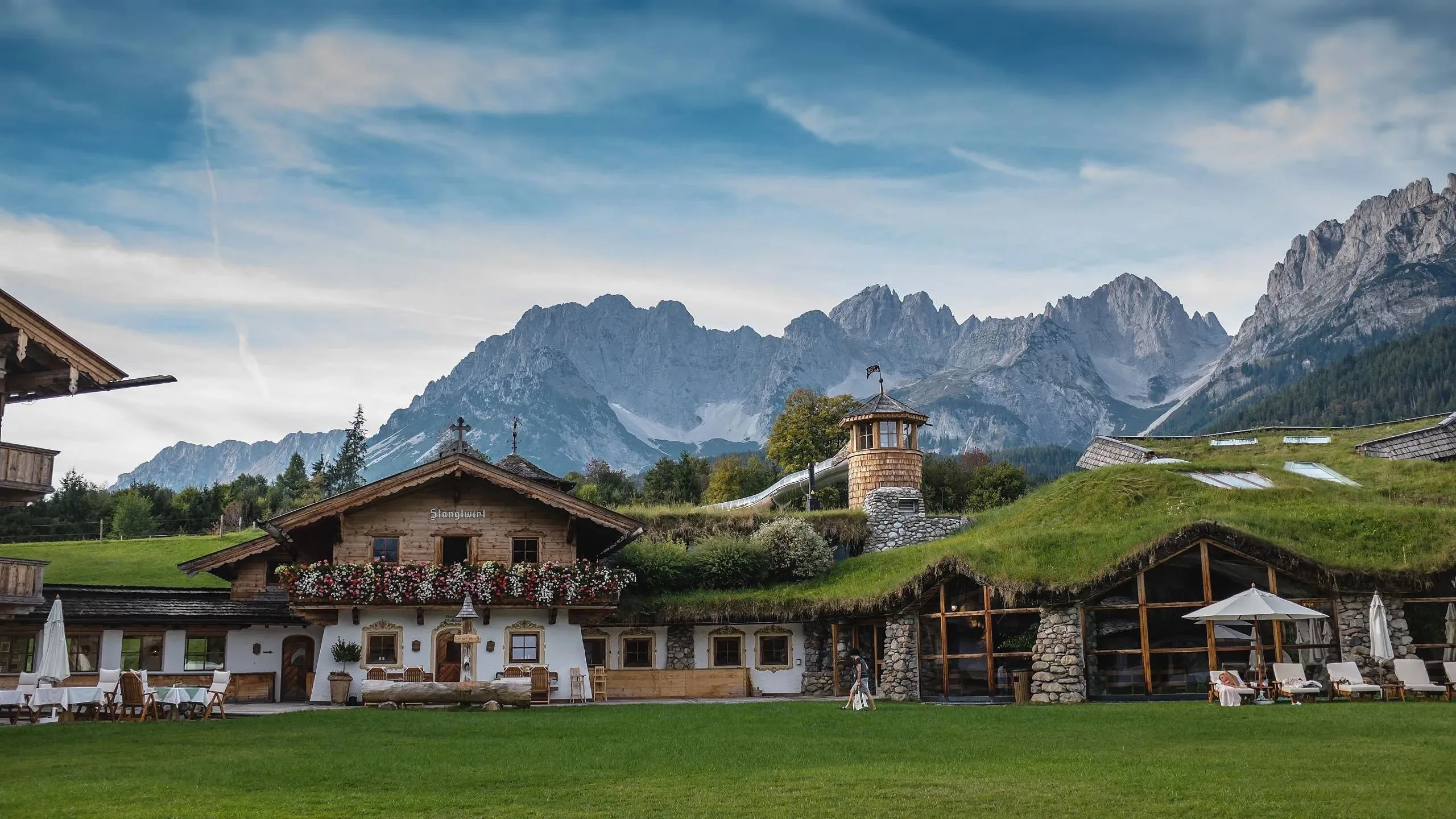
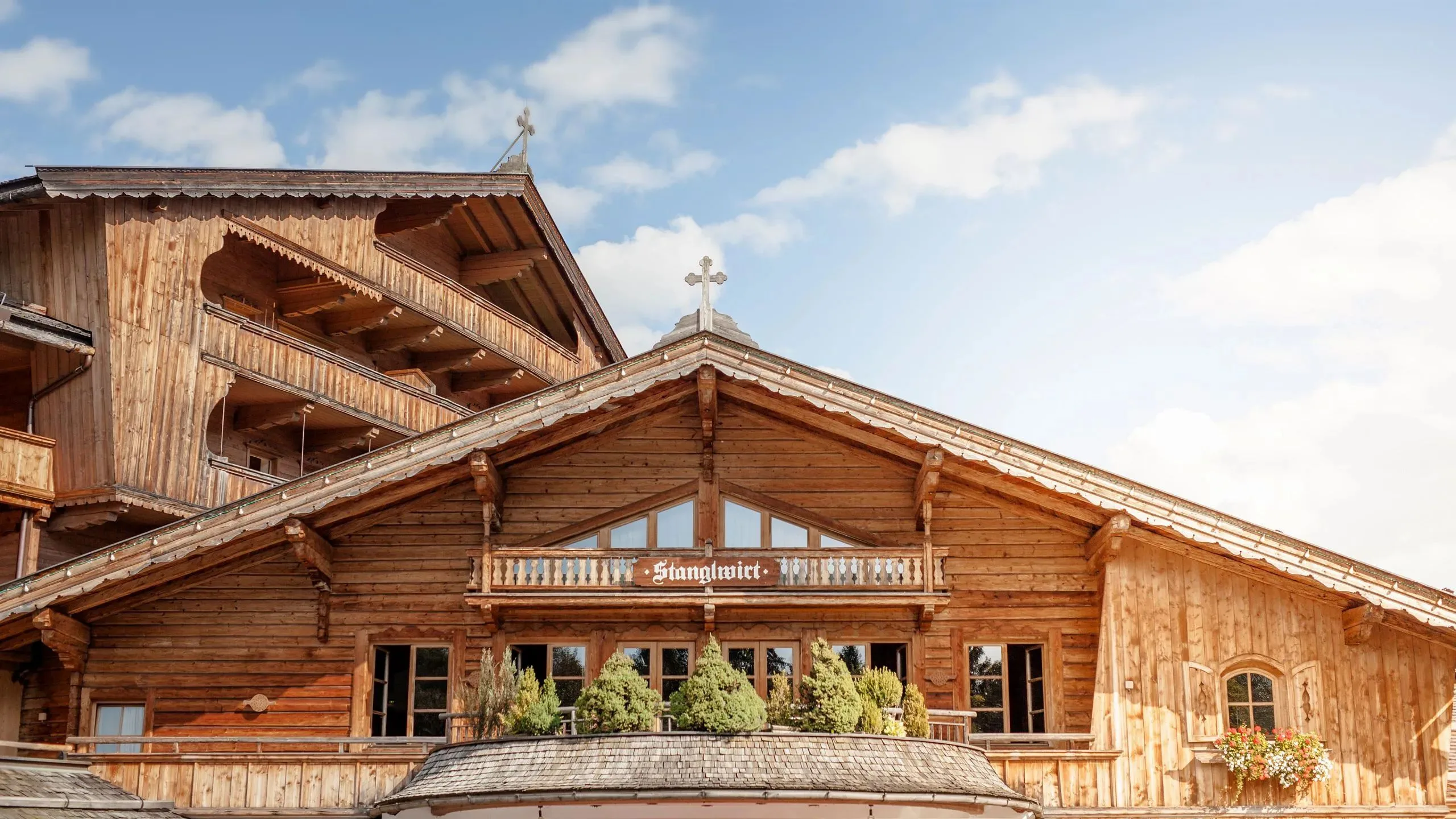
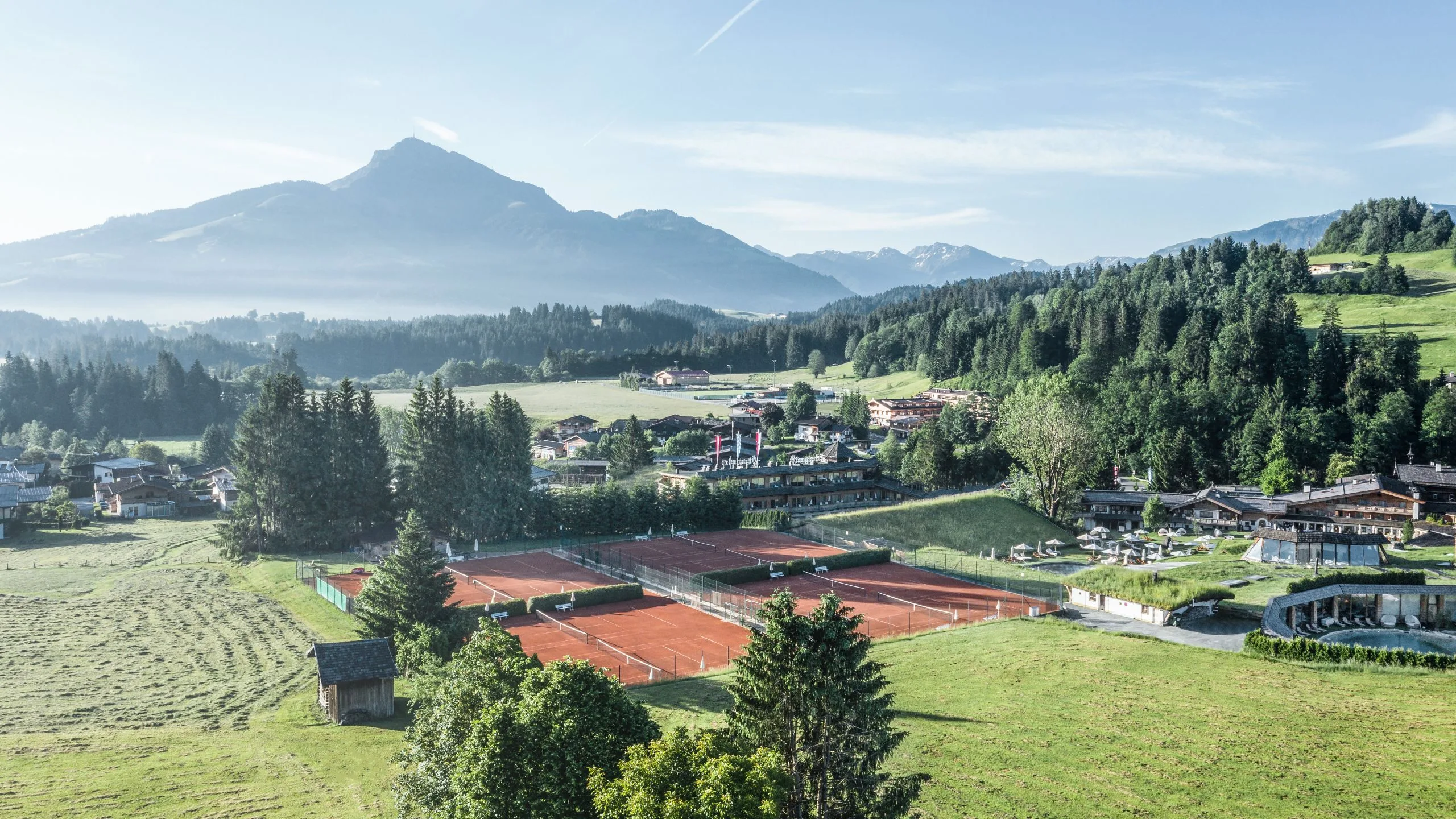
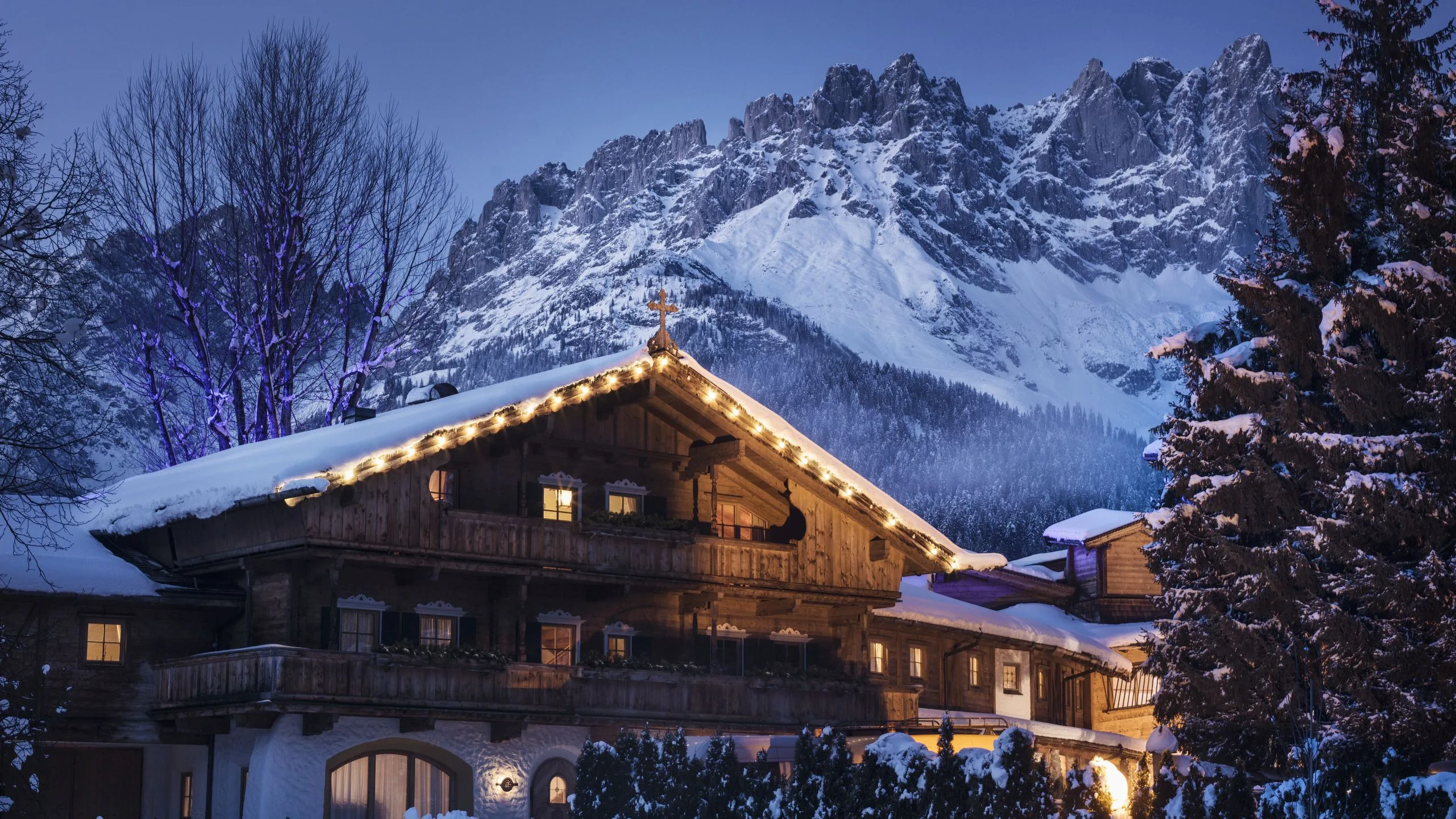
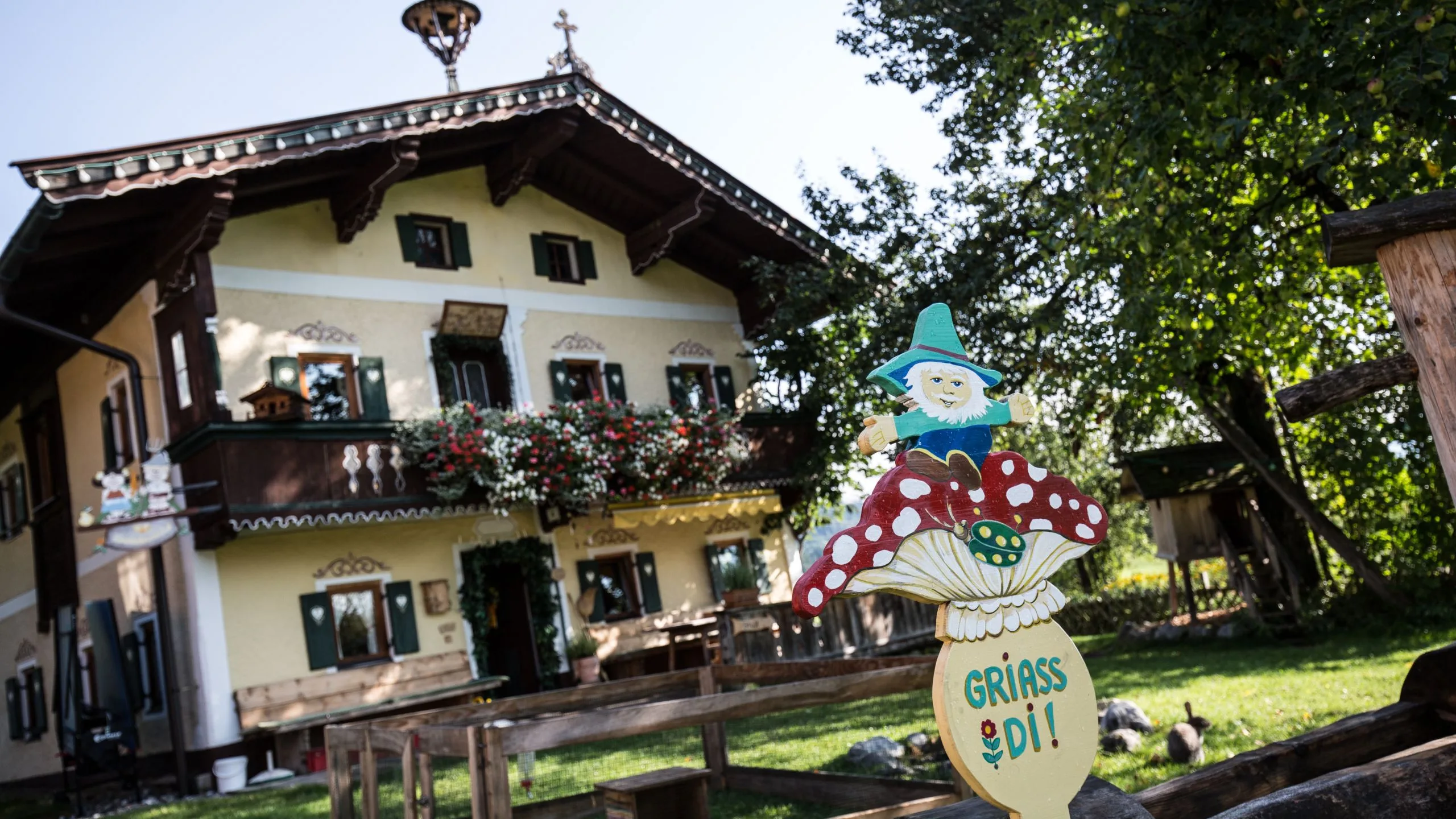
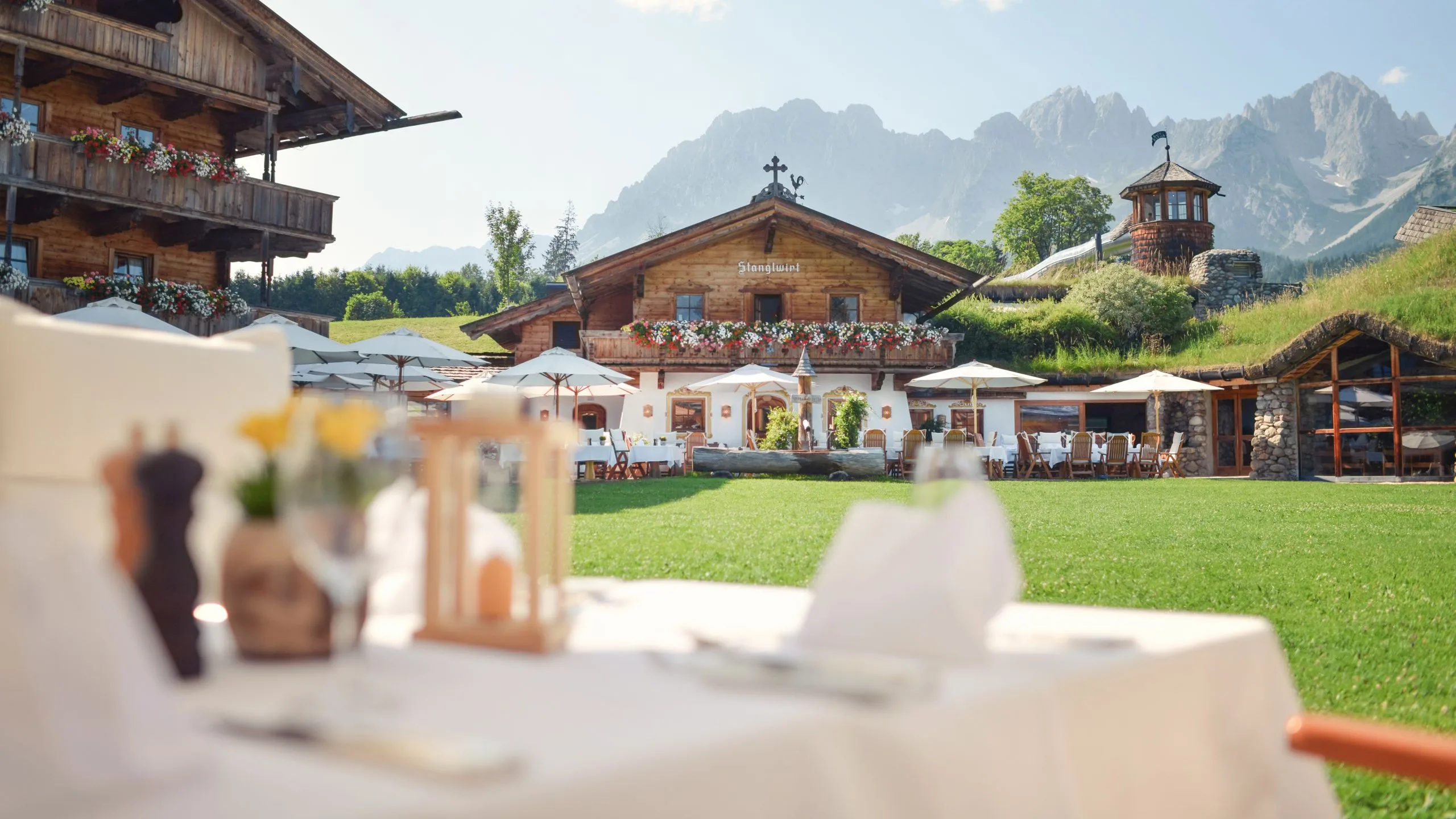
It was a fair question. The Stanglwirt is a working organic farm, a Lipizzaner stud and a five-star spa that the Hauser family has grown, wing by wing, around one old inn. It stands at the foot of the Wilder Kaiser in Going am Wilden Kaiser, Tyrol, and the cowshed, the riding hall and the brine pool all belong to the same house. Set it beside an all-inclusive Kinderhotel and the choice comes into focus: there, almost everything is included and planned for you; here, almost nothing is included and almost everything is possible.
The catch arrives with the first invoice, so here it is up front: the rate buys the room, an organic breakfast and very little else a family will use. High season runs from July into early November, and in those months a Family Nest for four costs €869 a night on a stay of four nights or more. A set dinner for two adults with children of five and nine adds €206.
The crèche for under-threes opens for three hours in the afternoon. The Stammhaus family rooms face the main road, their bathrooms show their years, and on a busy Friday the reception desk ran out of hands long before we ran out of patience. We would still go back. Most of the reasons are visible from that lobby window.
Getting to Going, and the road out front
The drive is the easy part. From Munich it is about 120 kilometres, an hour and a half on the A12 to the Kufstein Süd exit and then east towards St. Johann; Salzburg and Innsbruck airports are each about an hour away. One instruction is worth writing on the back of a hand before the satnav takes over: do not drive up to the old inn, but turn off at the riding stables and follow Kaiserweg round to reception. Coming from Munich, you need no Austrian motorway vignette as far as the Kufstein Süd exit; from Innsbruck or the south, buy one first, and the ten-day version covers a week’s holiday. Parking in the open and underground car parks is free, though on the Saturday changeover we circled twice before a space opened.
By train, St. Johann in Tirol is 7 kilometres away and Kitzbühel 10, and guests who arrive by public transport receive a Green Treatment in their room. The hotel’s chauffeur service costs €390 to €550 from Munich airport, €290 to €440 from Innsbruck and €270 to €400 from Salzburg, depending on the car. The transfer request form asks for the number of child seats, so give it when you book.
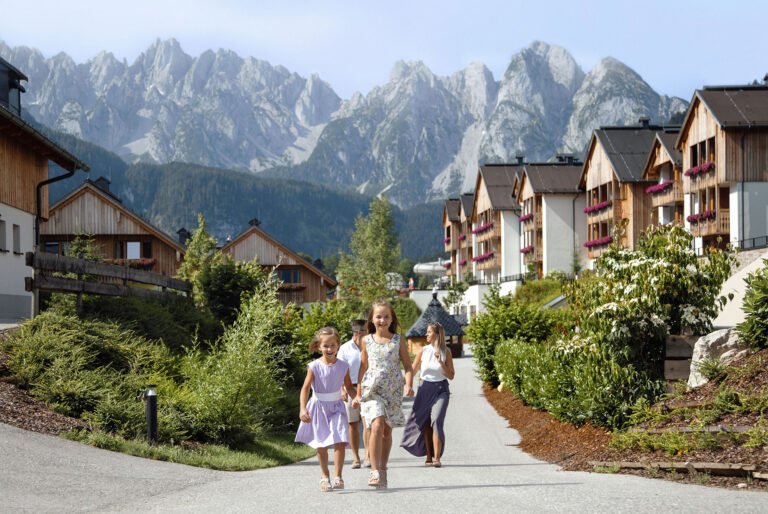
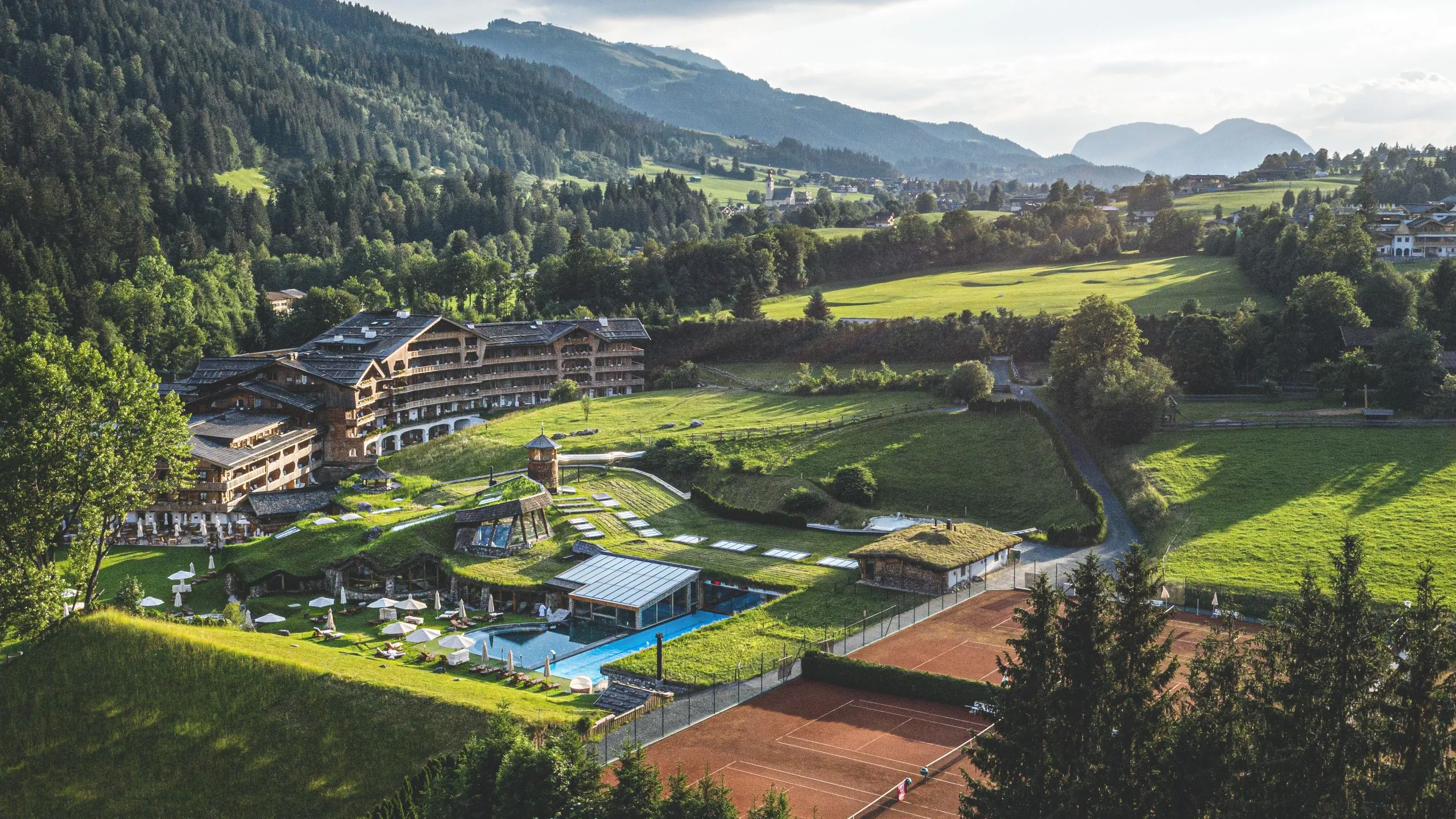
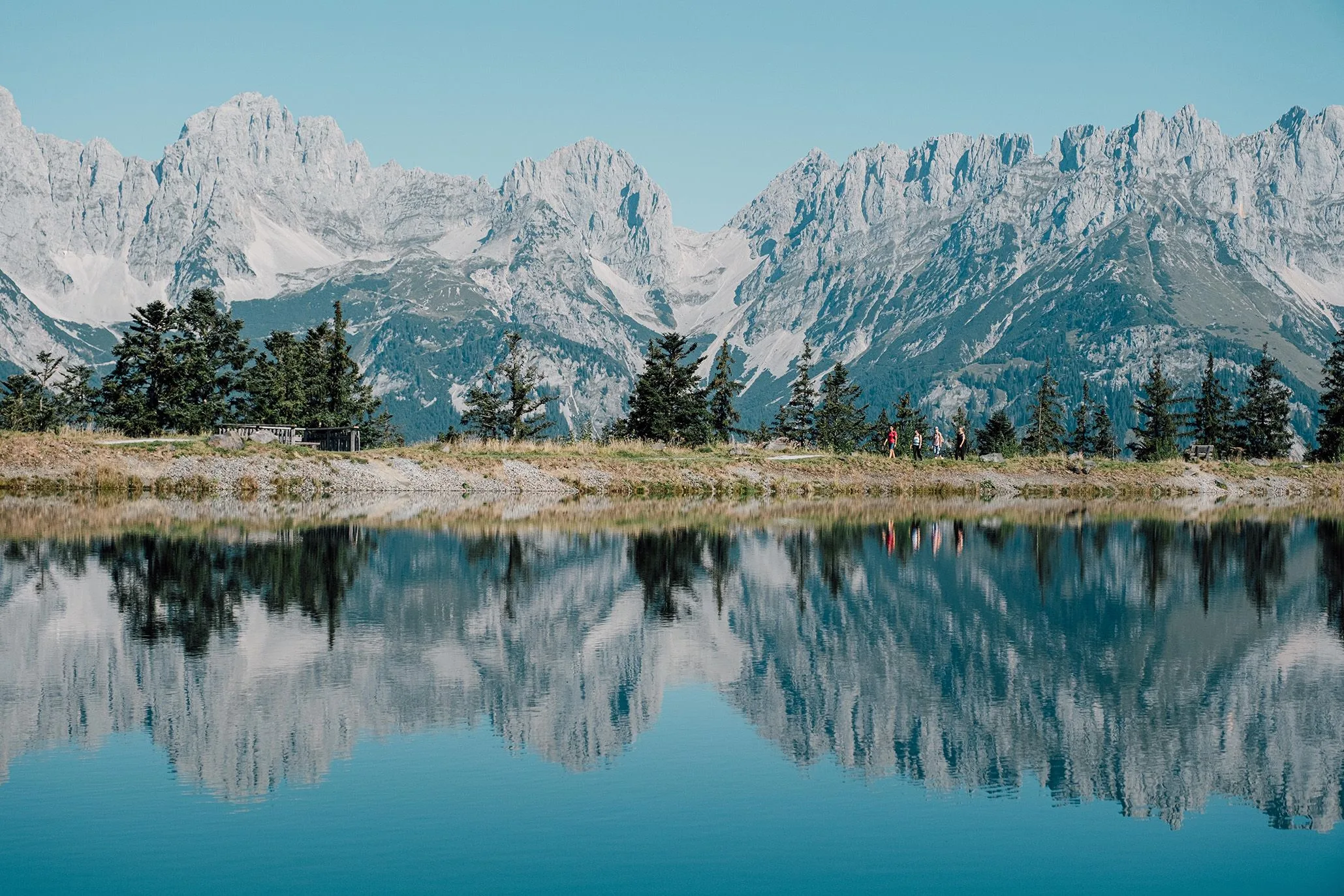
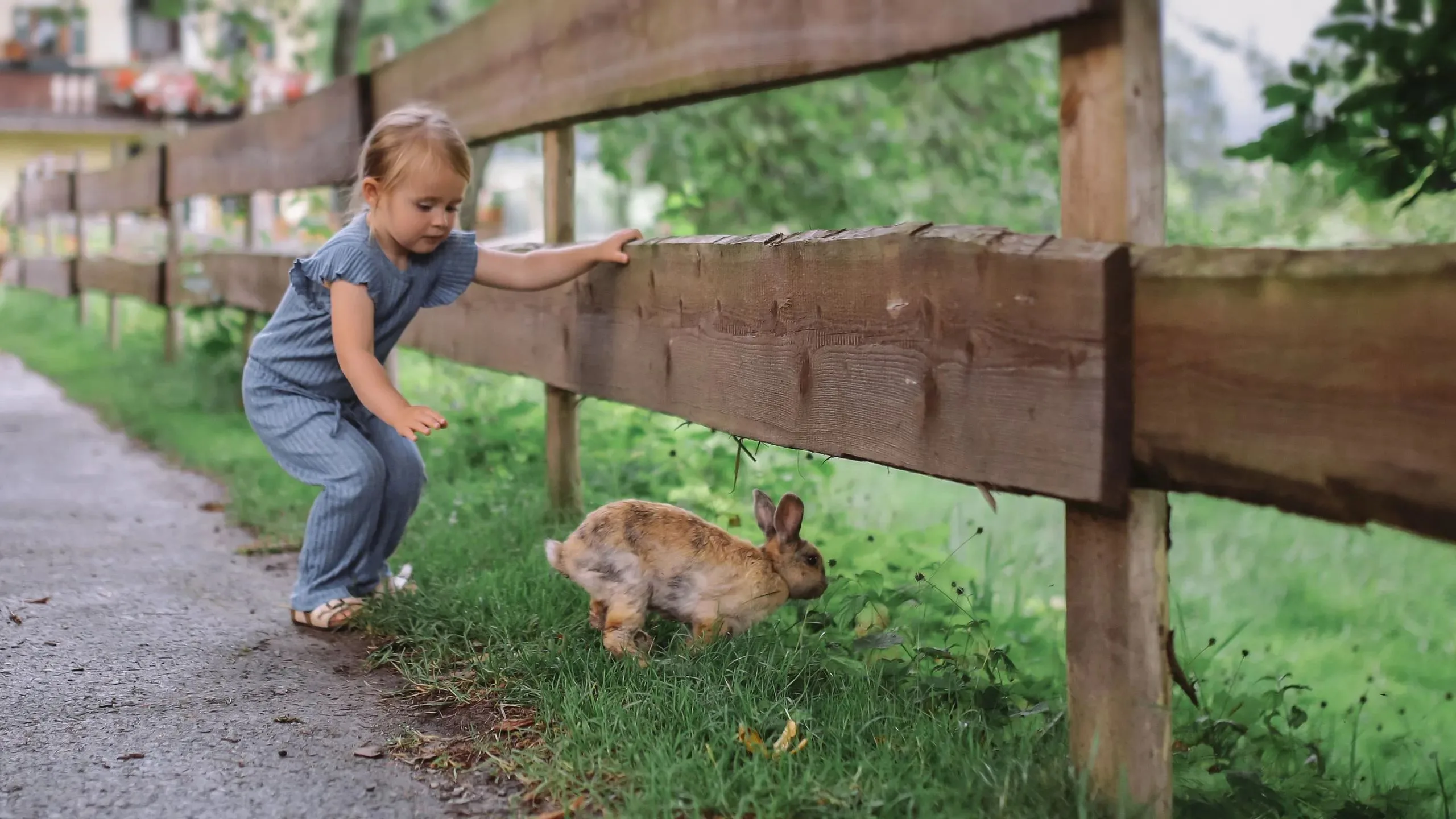
For children, the setting means space. The hotel grounds cover about 12 hectares, the farm adds 95 hectares of meadow and 52 of alpine pasture, and around 130 animals live on it. A whole week can pass without anyone being strapped into a car seat. The Wilder Kaiser fills the view from the Kaiserwiese garden, Kitzbühel is about 15 minutes away by car, and in winter a free shuttle runs to the SkiWelt lifts.
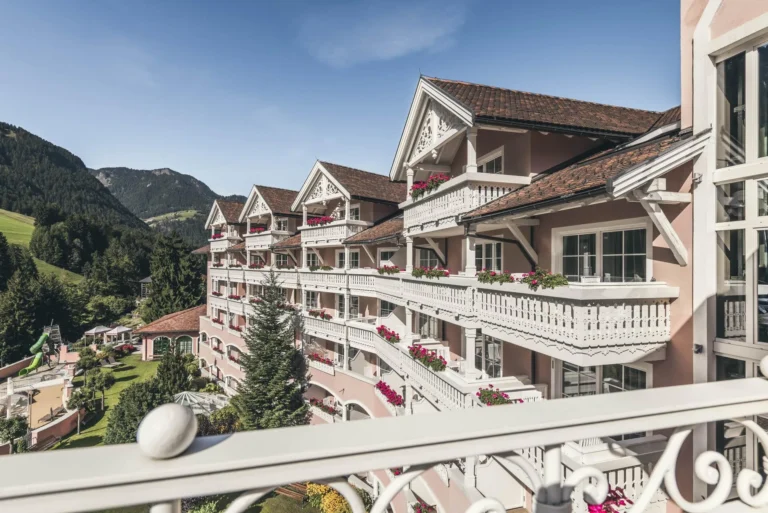
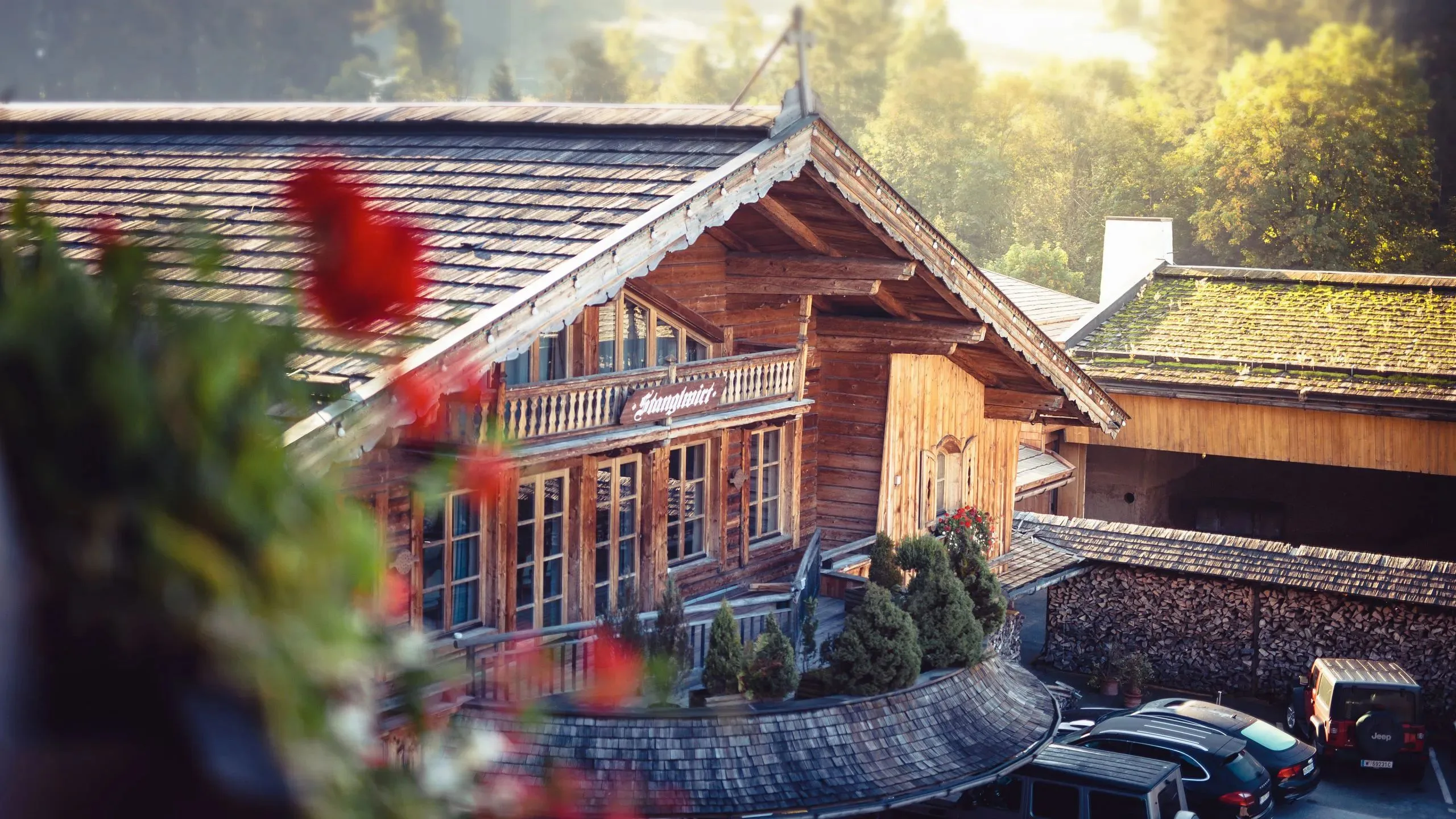
The front of the house is another matter. The old Gasthof and most of the family units line the B178, the main road between Kufstein and St. Johann. The first lorries rolled past our window before six in the morning: the detail the brochure photographs leave out.
Which family room to book, and which to skip
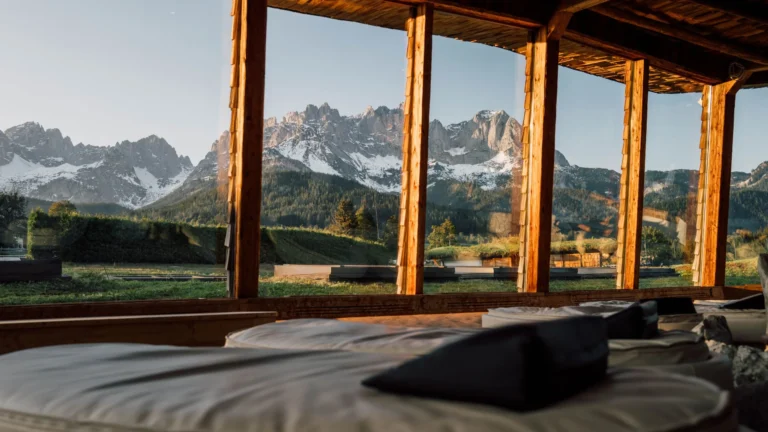
Rooms are the weakest part of the Stanglwirt. Our 7.4 for accommodation is the lowest of the five marks, so the choice of room matters more here than at most hotels at this price. Three options count for a family of four, and on paper they look closer than they are.
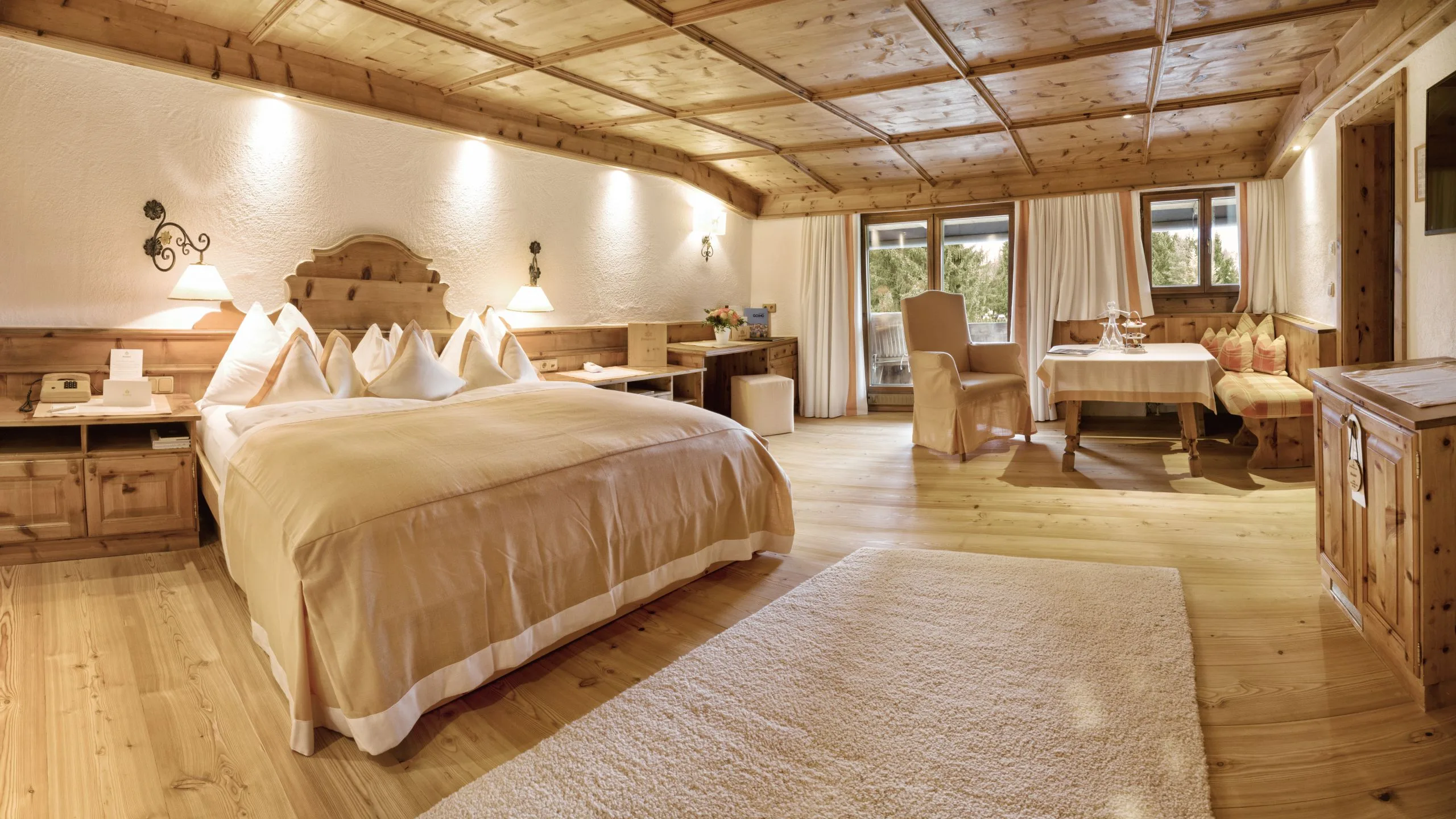
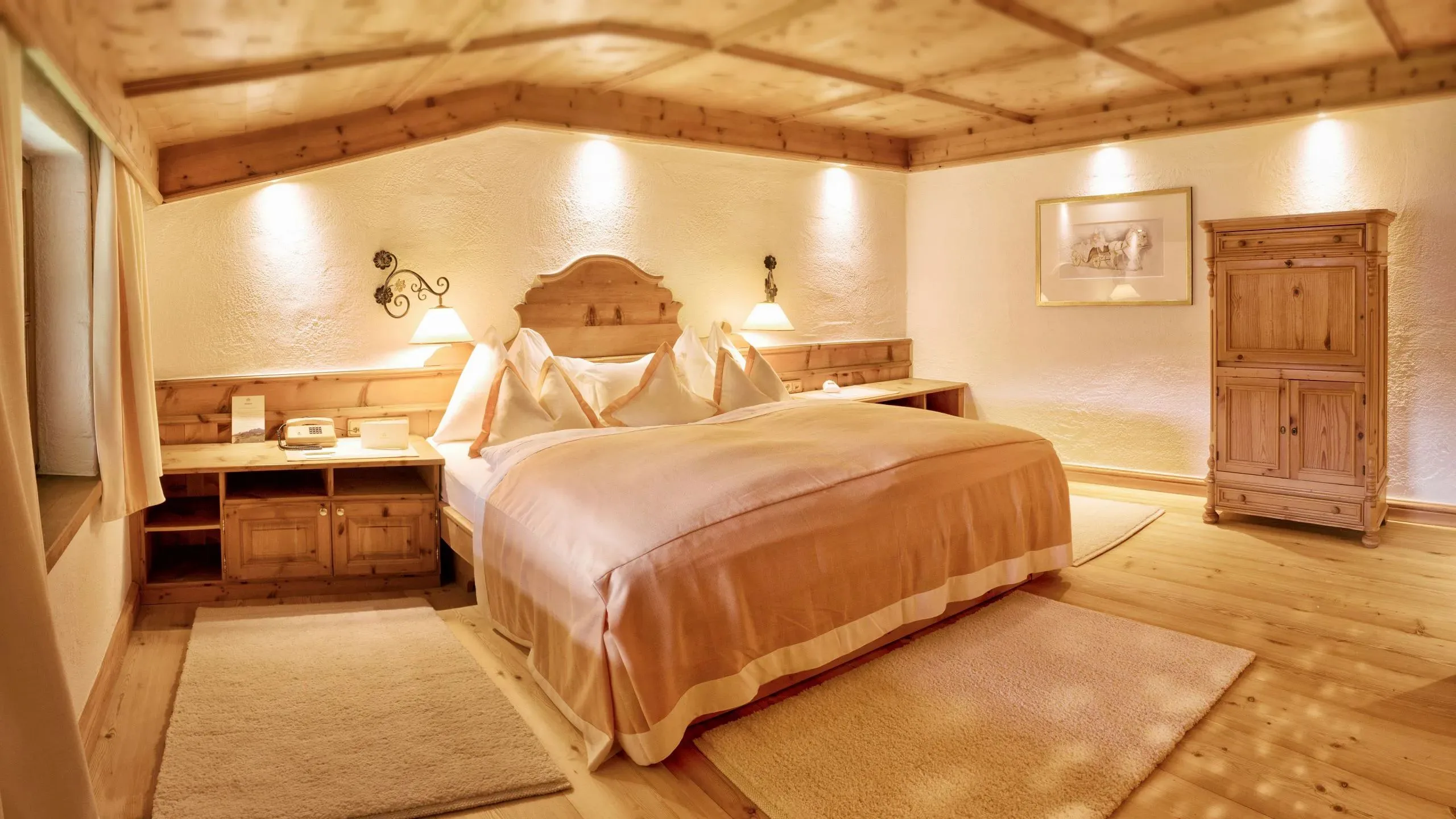
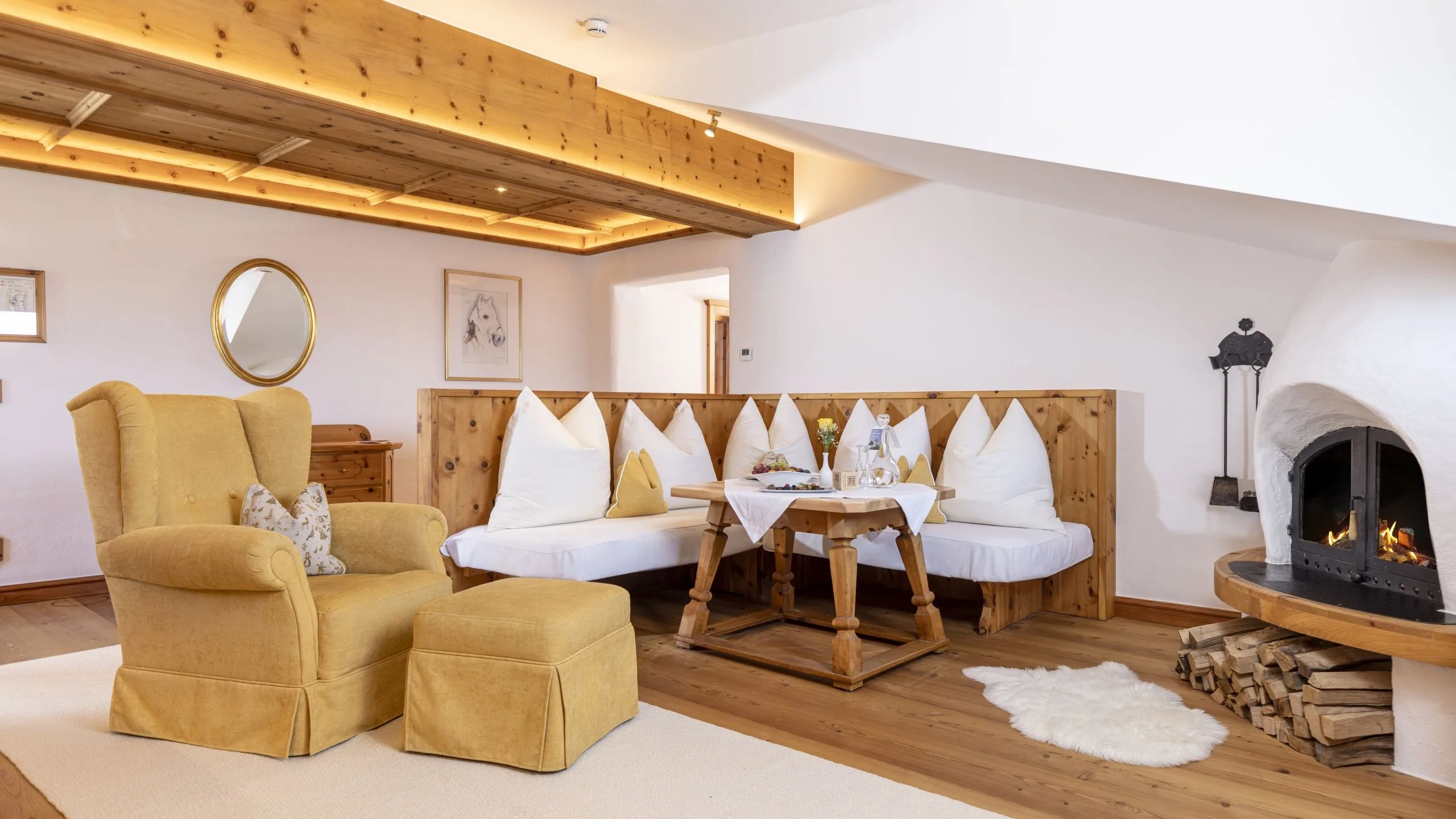
El Stammhaus Family Nest is the default, and for families with children under ten it is the right one. It has 40 square metres, a double bed for the parents, a separate children’s room with bunk beds or two singles, and a second small bathroom. That sounds like a footnote until 19:45, when a nine-year-old brushing his teeth and a parent trying to shower stop competing for the same basin. It costs €593 a night in the spring low season on a stay of four nights or more and €995 for a short stay in high season, breakfast for four included. Most Nests sit on the street side without a view of the Kaiser, and only some have a balcony; ours had neither, and the wooden bunk ladder became the main attraction of every evening.
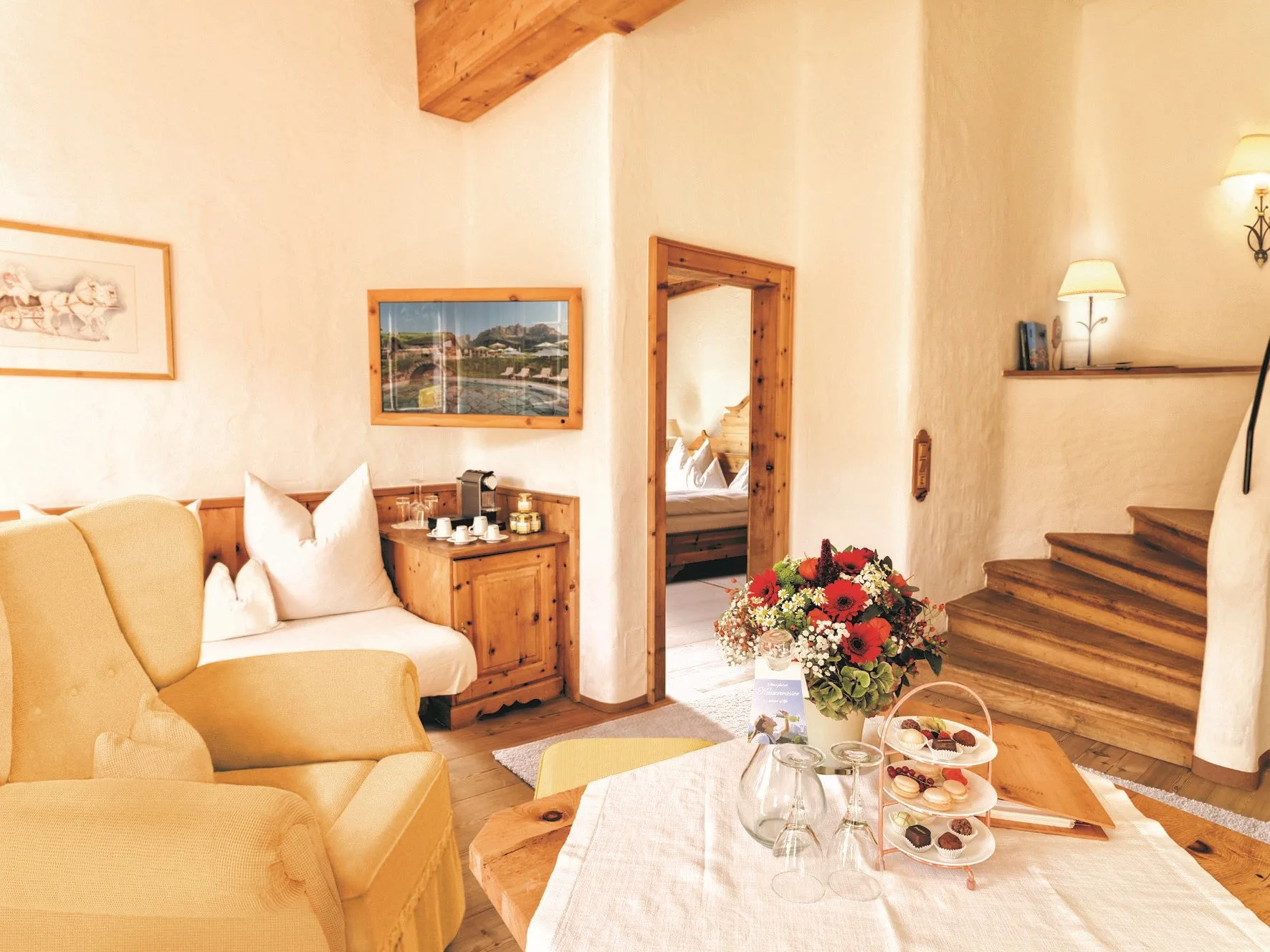
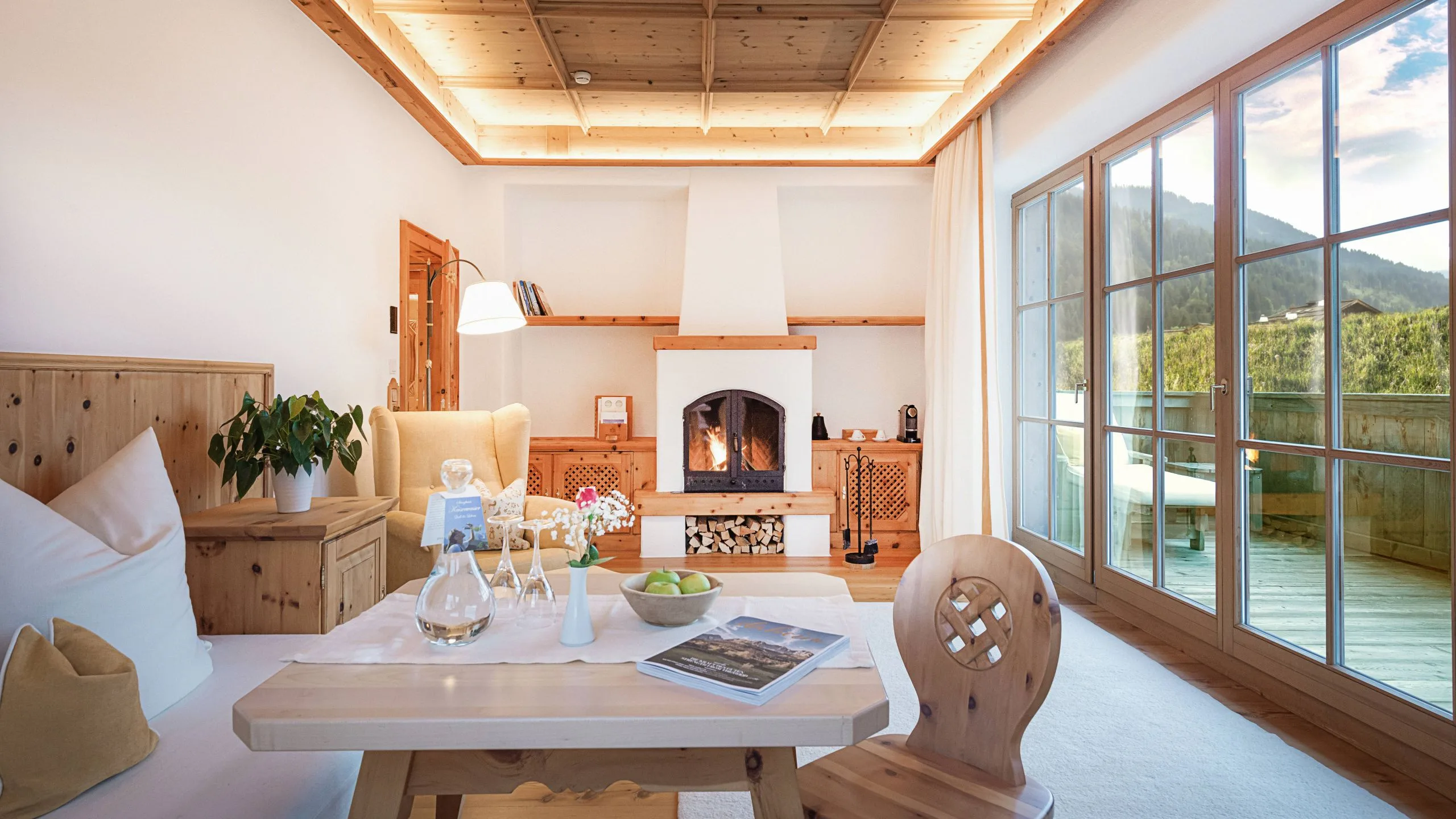
El Stammhaus Family Suite adds ten square metres, a living room, a walk-in wardrobe and a bathroom with both tub and shower, for €659 to €1,107 a night across the 2026 seasons. Its balcony looks across to the old Gasthof. With a toddler who naps after lunch, the extra door between living room and children’s room earns the difference; with two school-age children, it is a nicer version of the same street-side address.
The third option is the one we would choose for a week with three children or grandparents in tow: the hotel’s holiday homes, five minutes away. Among them is a 192-square-metre garden apartment with three double rooms and a single, in a villa by Going’s bathing lake, where hotel services are optional and a stampede at seven bothers nobody. Ask for the holiday-home rates when booking, and budget for short drives back to the farm and the spa.
Two warnings before you pay the deposit. The 70-square-metre family suites, Hollenauer Kreuz and Astberg, look out over the Lipizzaner stud from south-facing balconies, but they sleep three, not four. And the hotel will not confirm a specific room number or floor, so for a family of five, two rooms side by side are a request rather than a booking. Put it in writing, repeat it at check-in, and be ready for a corridor or two between the rooms. None of the rooms we saw had air-conditioning. In October that did not matter; in a July heatwave it would matter a great deal, so if you travel in high summer, ask for a room with air-conditioning when you book.
The family layouts are sensible and the second bathroom is a gift, but at these prices the road, the tired bathrooms and the missing air-conditioning all count against the room you are paying for. The rooms themselves smell of Arolla pine, most of the floors are larch, and the mattresses, filled with horsehair and sheep’s wool, gave us some of the deepest sleep of the trip once the road went quiet. Pack slippers for barefoot children: natural wood floors and bare feet can mean splinters. A bedtime sweet appears every evening, and when we got in, a bowl of organic apples was waiting, which the four-year-old counted, twice, before she would take her coat off.
Horses behind the bar, children in the hay
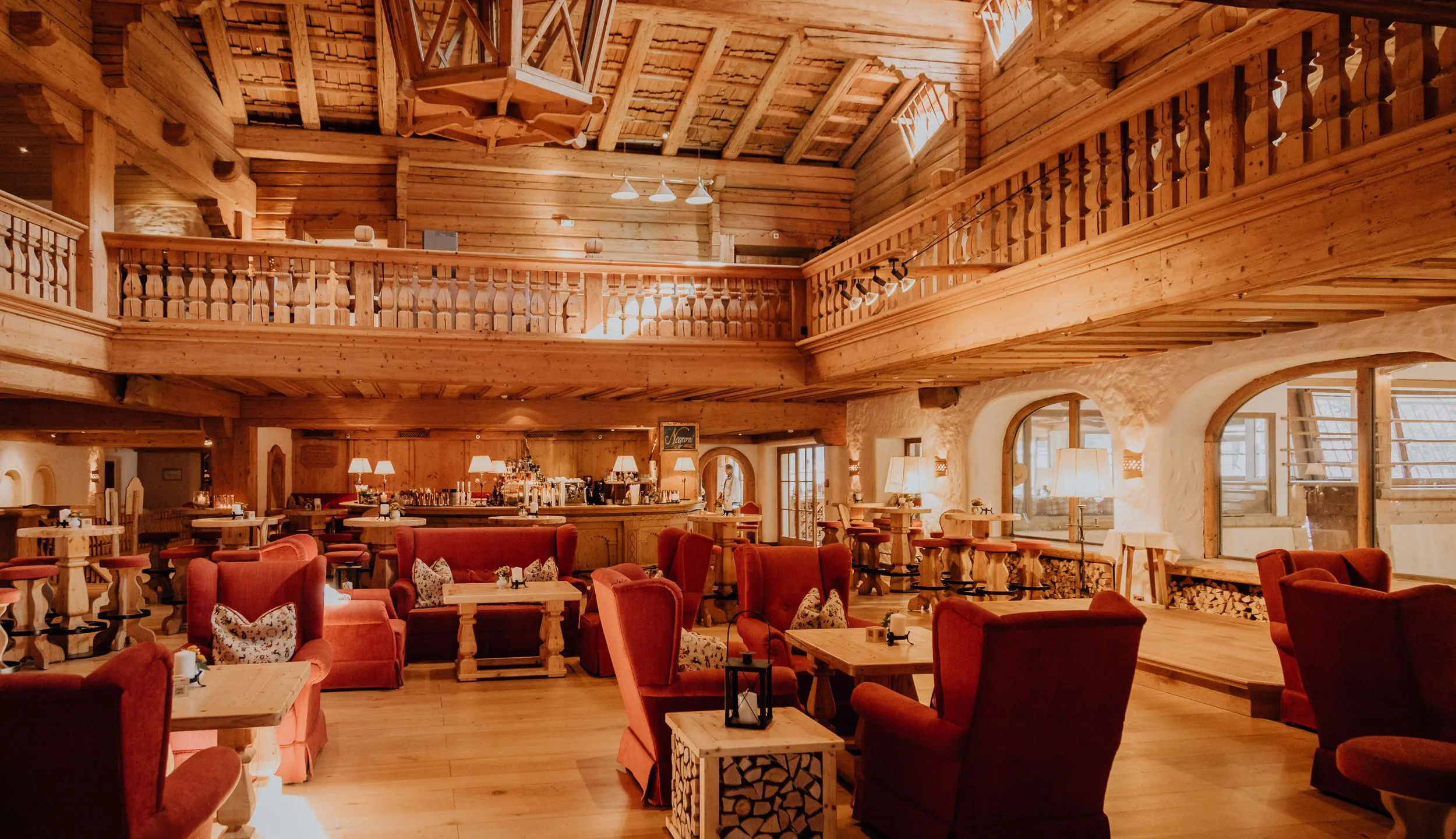
Start at the bar, oddly enough. Auf der Tenne has a window straight into the riding arena, and at six in the evening we sat there with the house cocktail, made with Arolla pine, air-dried bacon and cheese from the family’s own alpine dairy. Below, a rider schooled a grey Lipizzaner through the same circle, over and over, the hoofbeats coming through the glass like a slow drum.
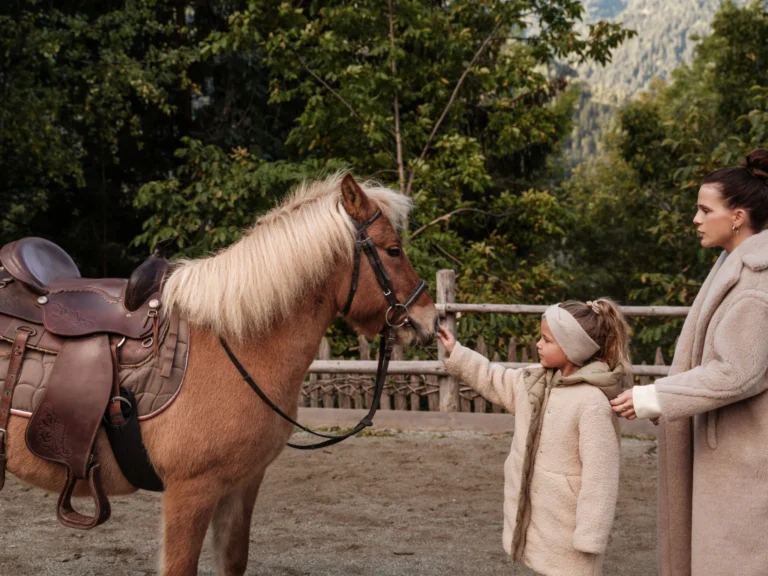
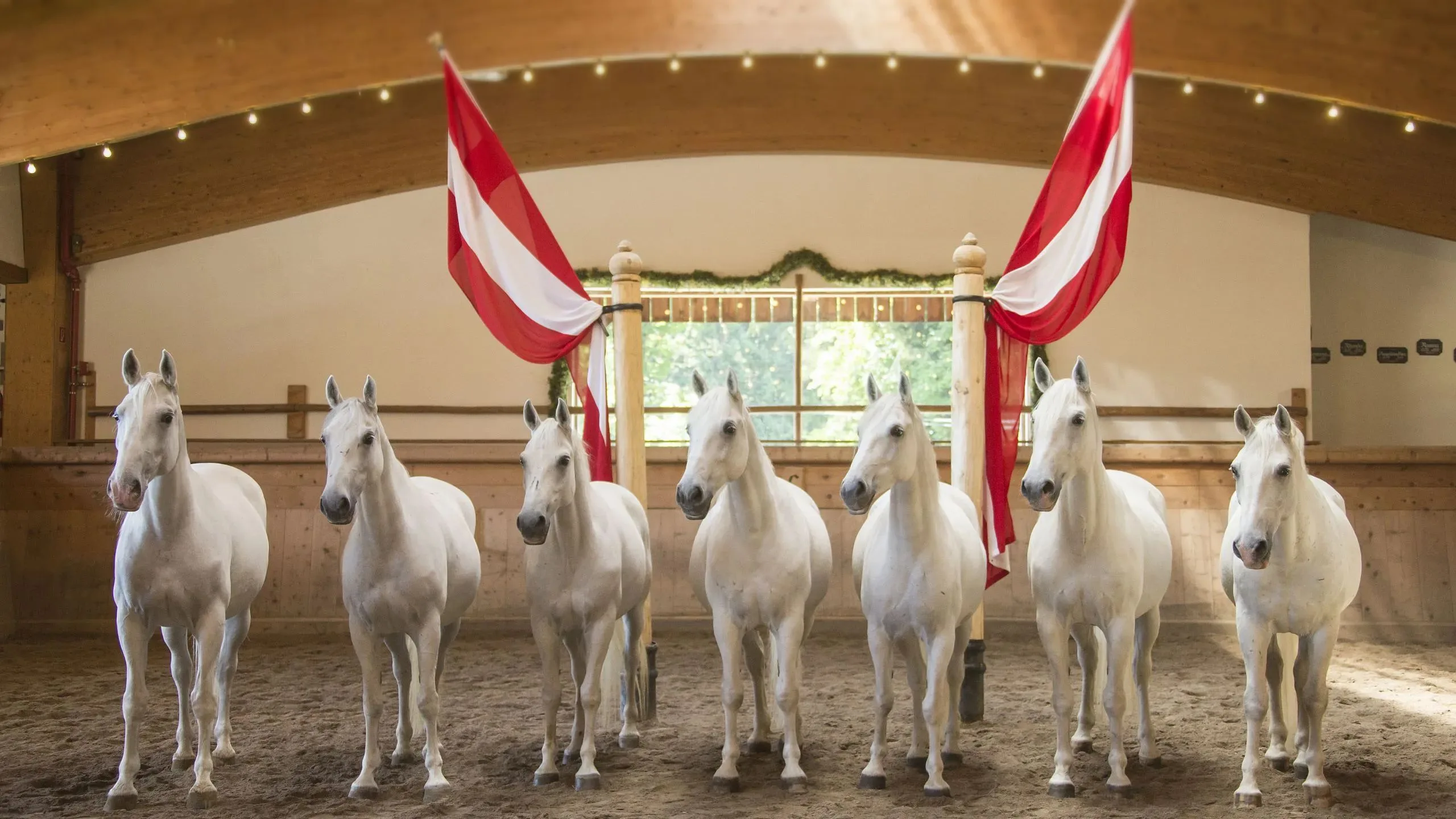
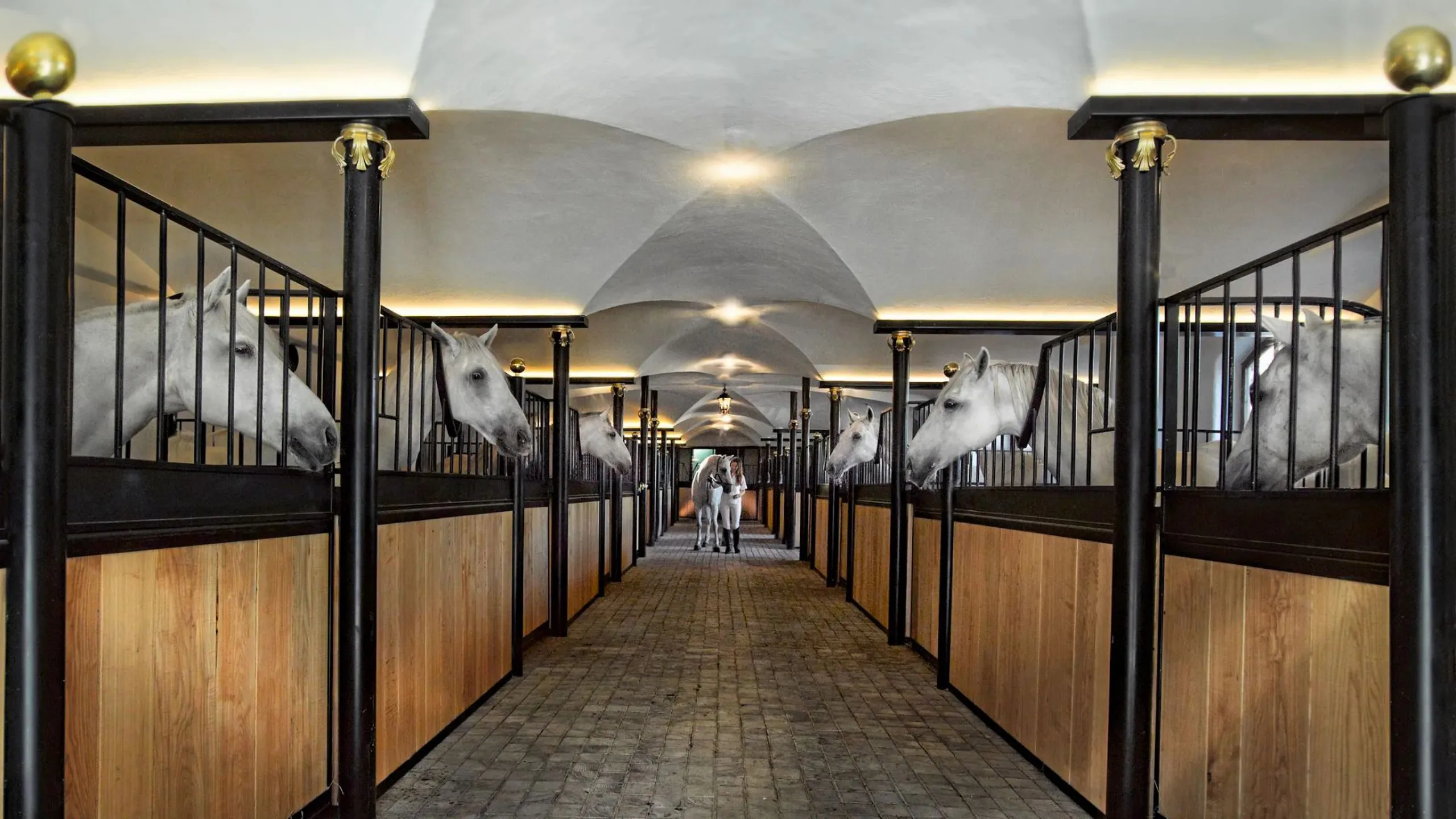
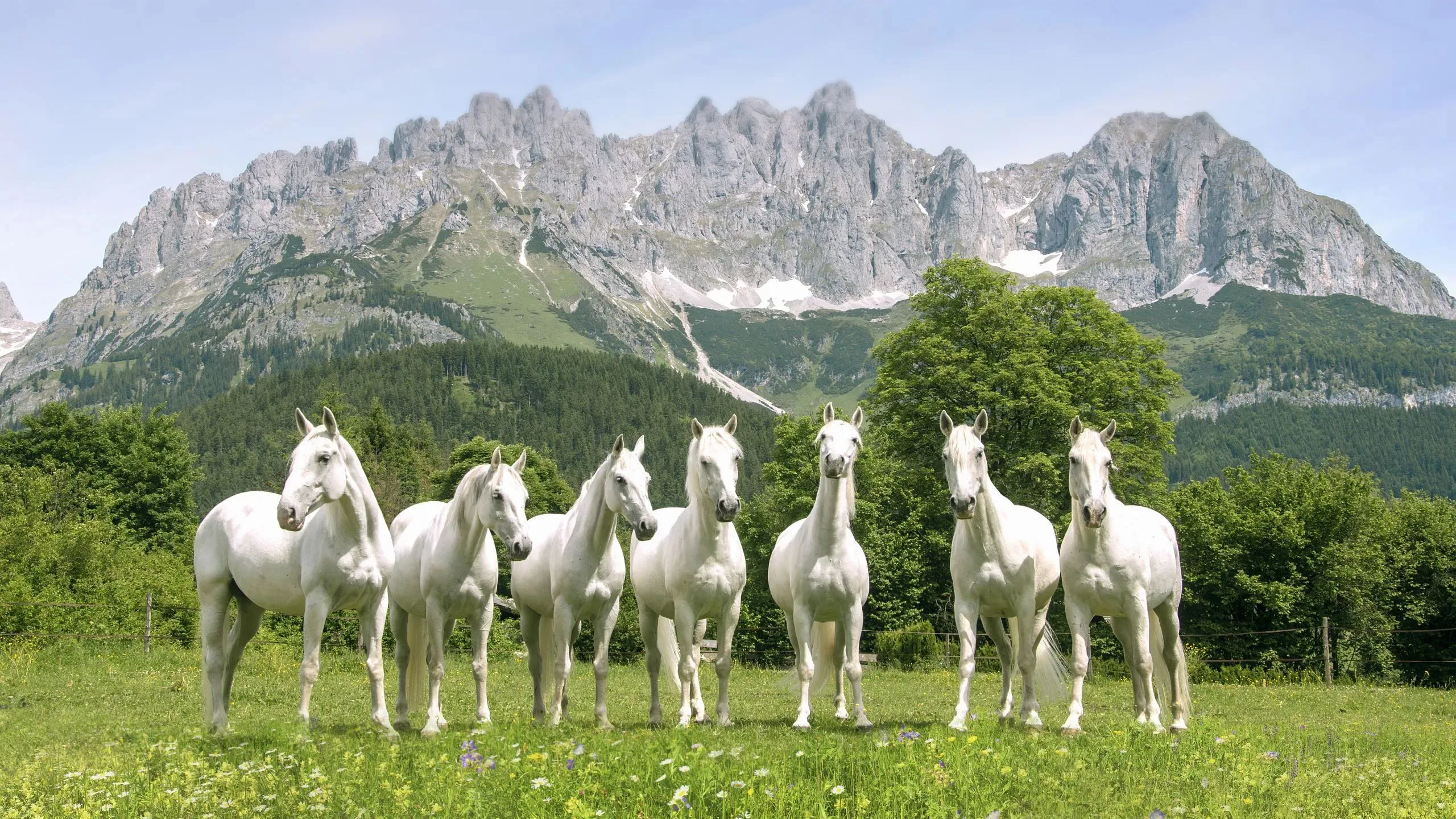
The stud has been here since 1985 and keeps 24 purebred Lipizzaners. Ponies are for children up to eight: a 20-minute ride with a parent leading costs €30, with a guide €40. From eight, children move up to the Lipizzaners, starting with a 25-minute lunge lesson for €50 or a 50-minute basic lesson for €95. Group lessons of up to five riders and trail rides start at ten. Register at the riding office between 08:30 and 09:00 or between 14:30 and 15:00, and book before you leave home, because lessons fill even outside the school holidays.
Our nine-year-old had his lunge lesson on the third afternoon, on a patient grey mare. He climbed down walking like a cowboy. The instructor adjusted his stirrups twice without being asked and spent the last five minutes letting him trot with his arms held out like wings. That half hour is the moment the trip tipped from a nice hotel into a place he still asks about.
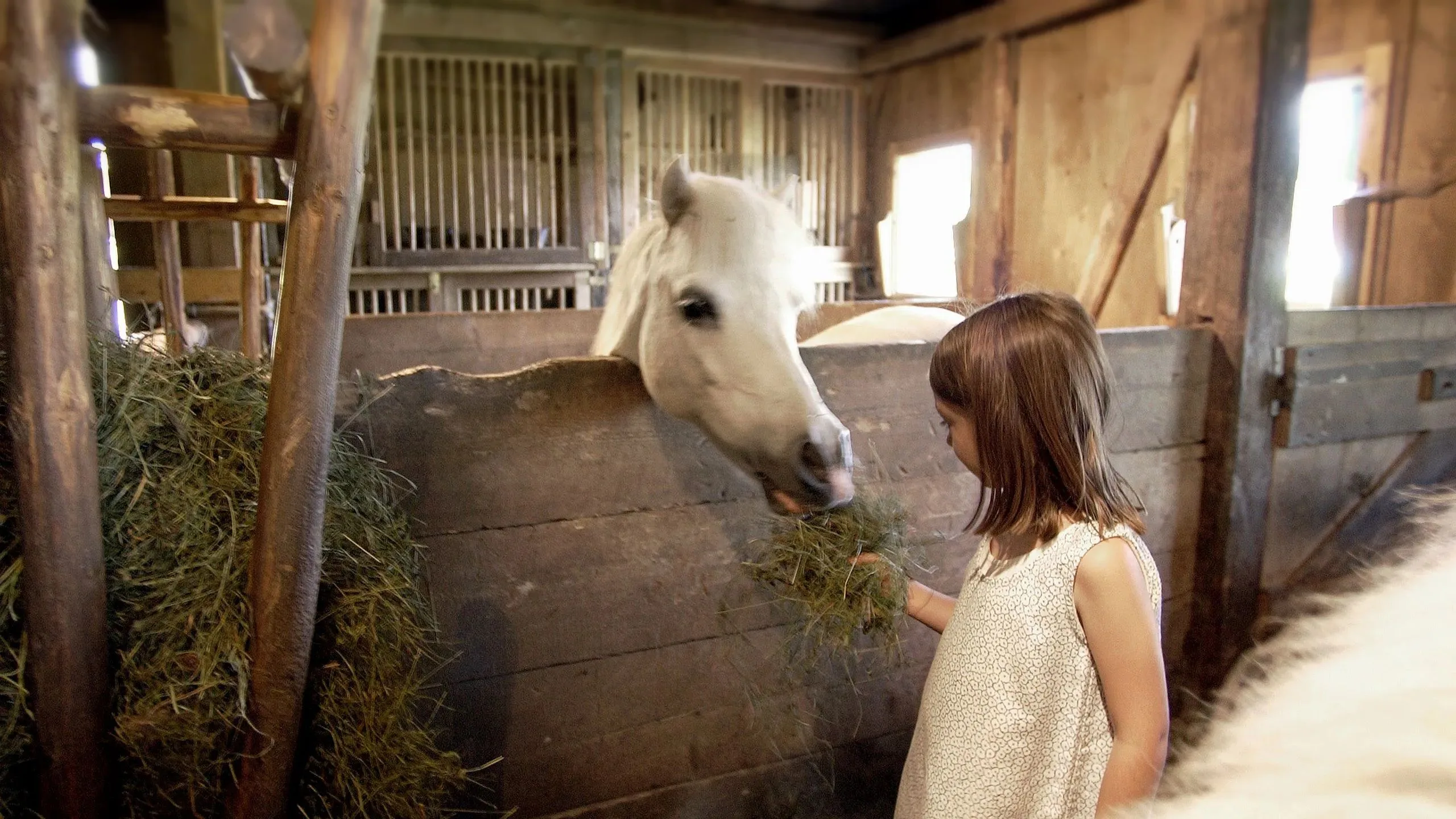
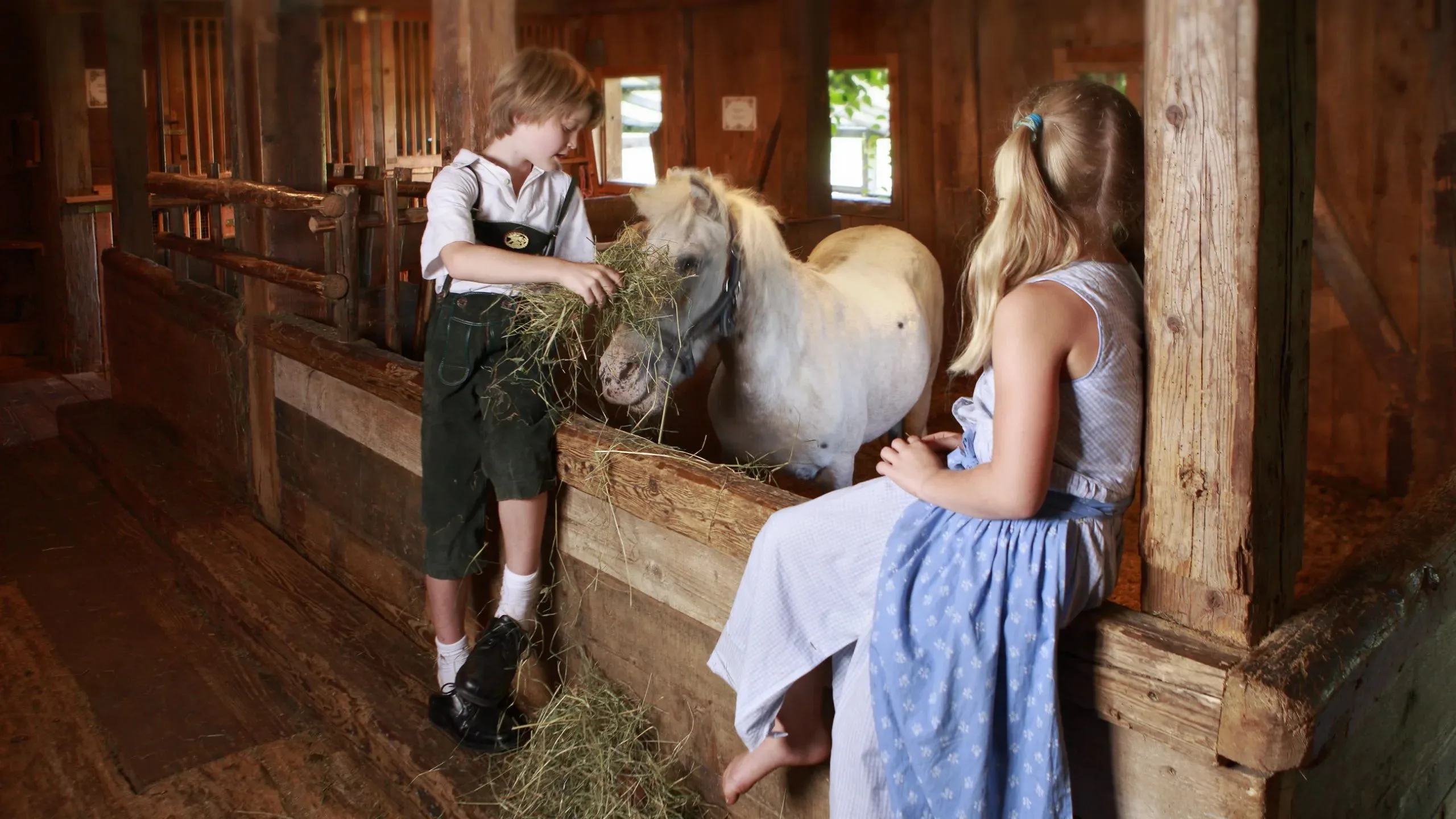
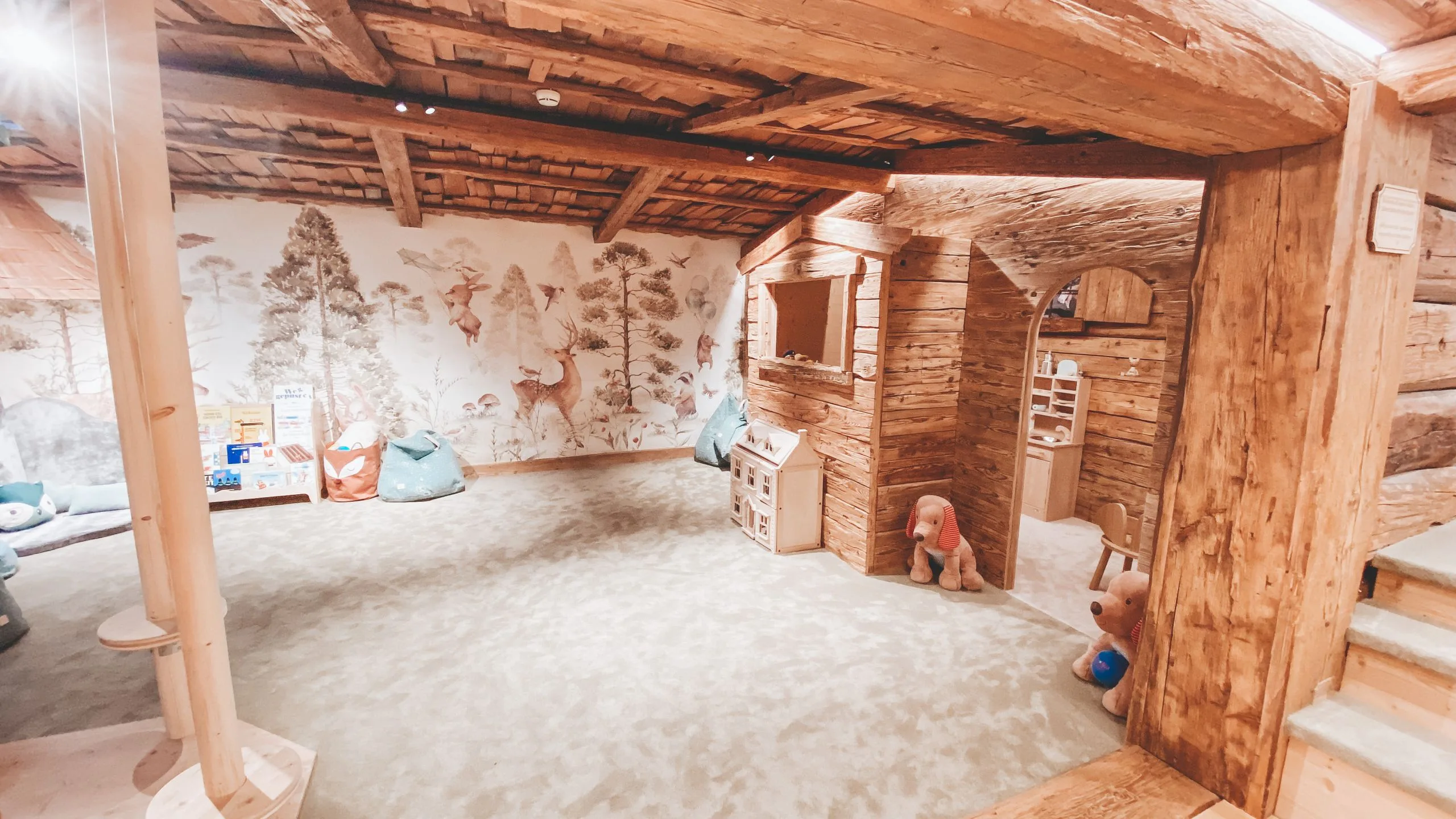
The children’s farm is the other half of the animal story, and the reason the four-to-eight bracket scores highest here. The 200-year-old farmhouse is reserved for children from three, open daily from 09:30 to 17:00, staffed by qualified kindergarten teachers and run on rules that sound strict and turn out to be the point. Places are limited, every child has to be registered with the room booking or by 17:00 the day before, sick children stay home, and parents hand over at the Kinderstube and do not go inside.
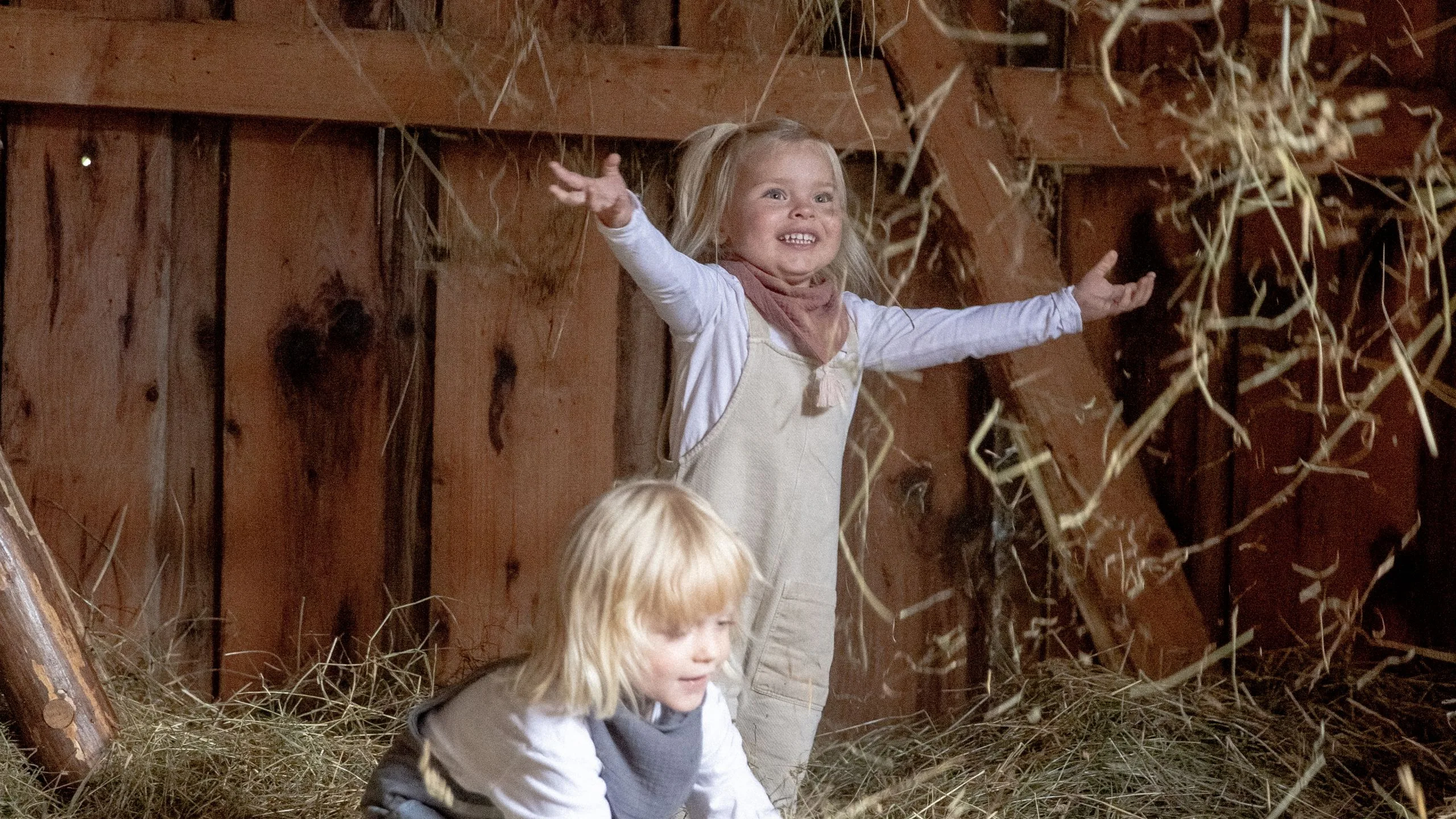
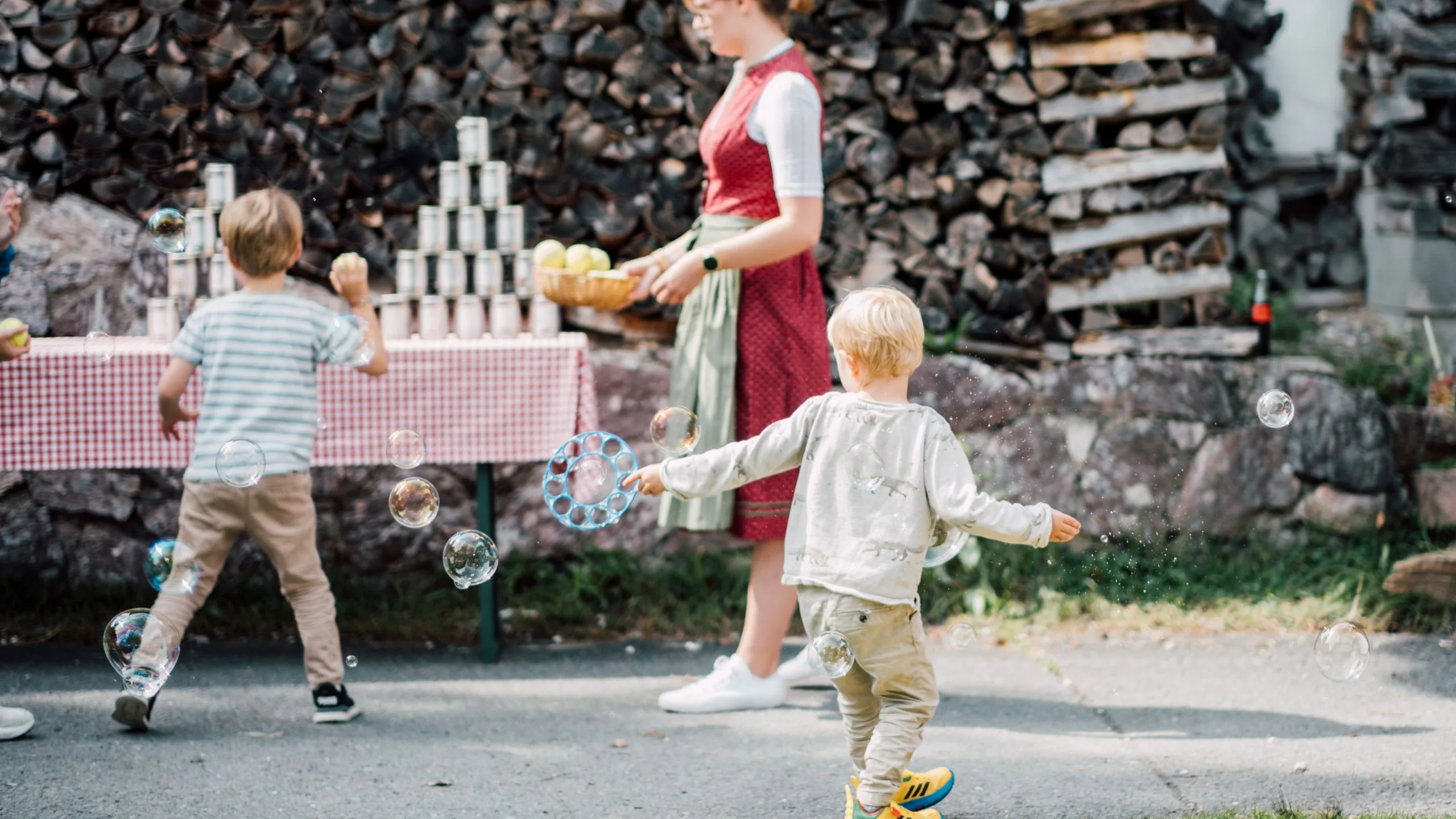
We watched from the playground as the morning group collected eggs, brushed the ponies, hurled themselves into a barn of loose hay and disappeared up the Kinder-Alm tree house, which has its own slide down the trunk. Lunch with the group is free for children in care if you register by 10:00 (€8 after that), and in the school holidays there is an evening programme with a children’s dinner, which costs extra and needs registering too.
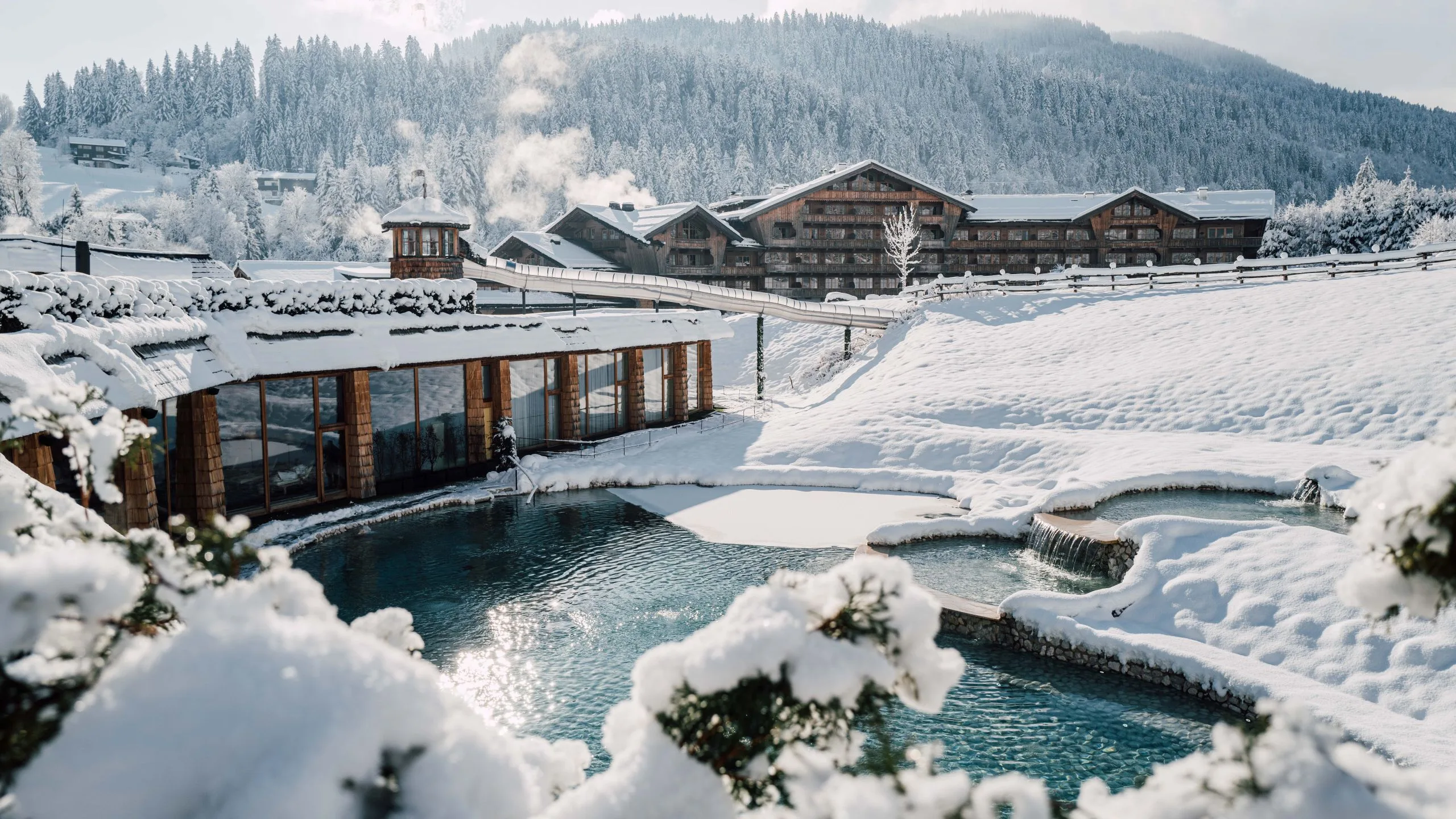
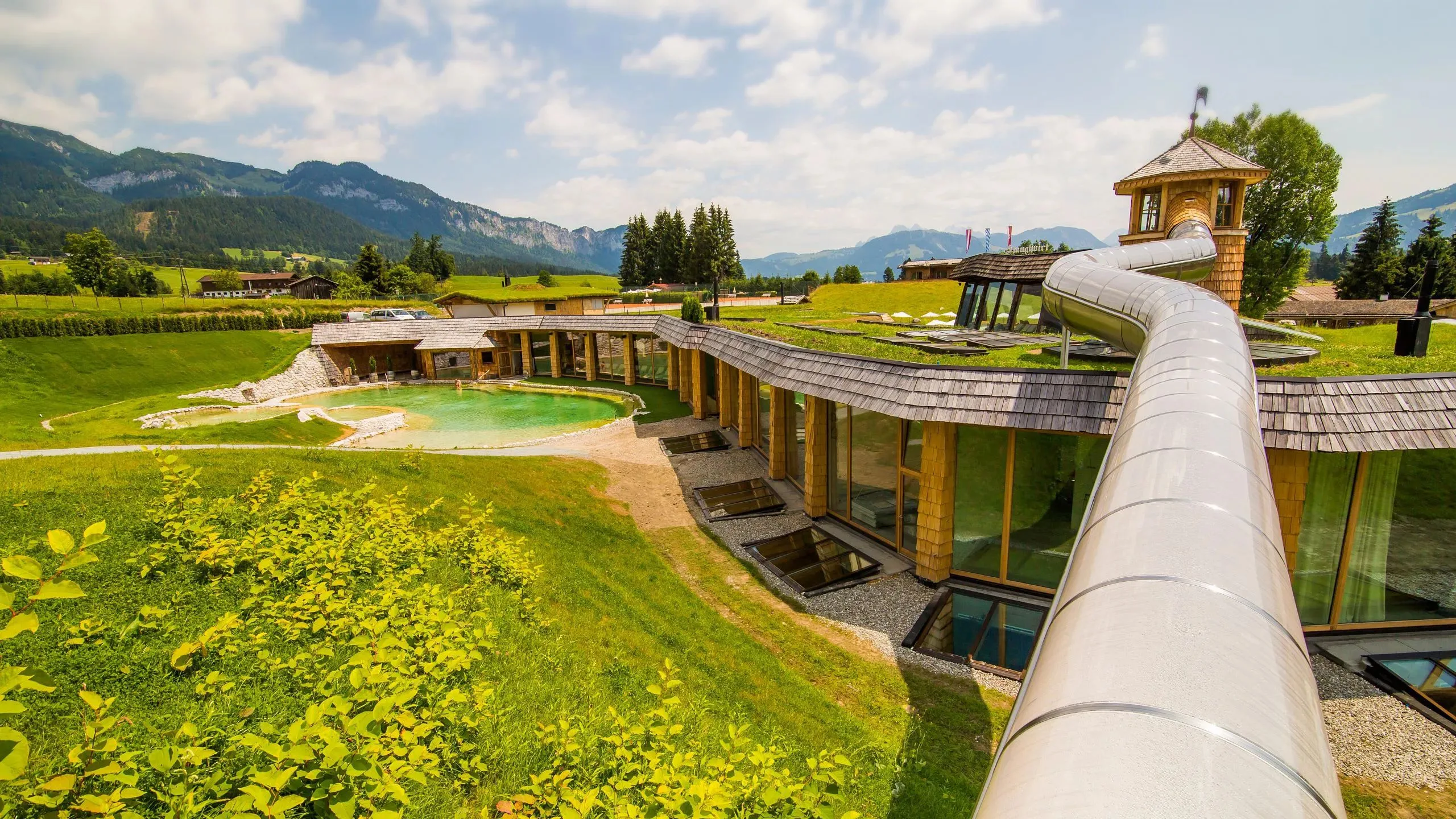
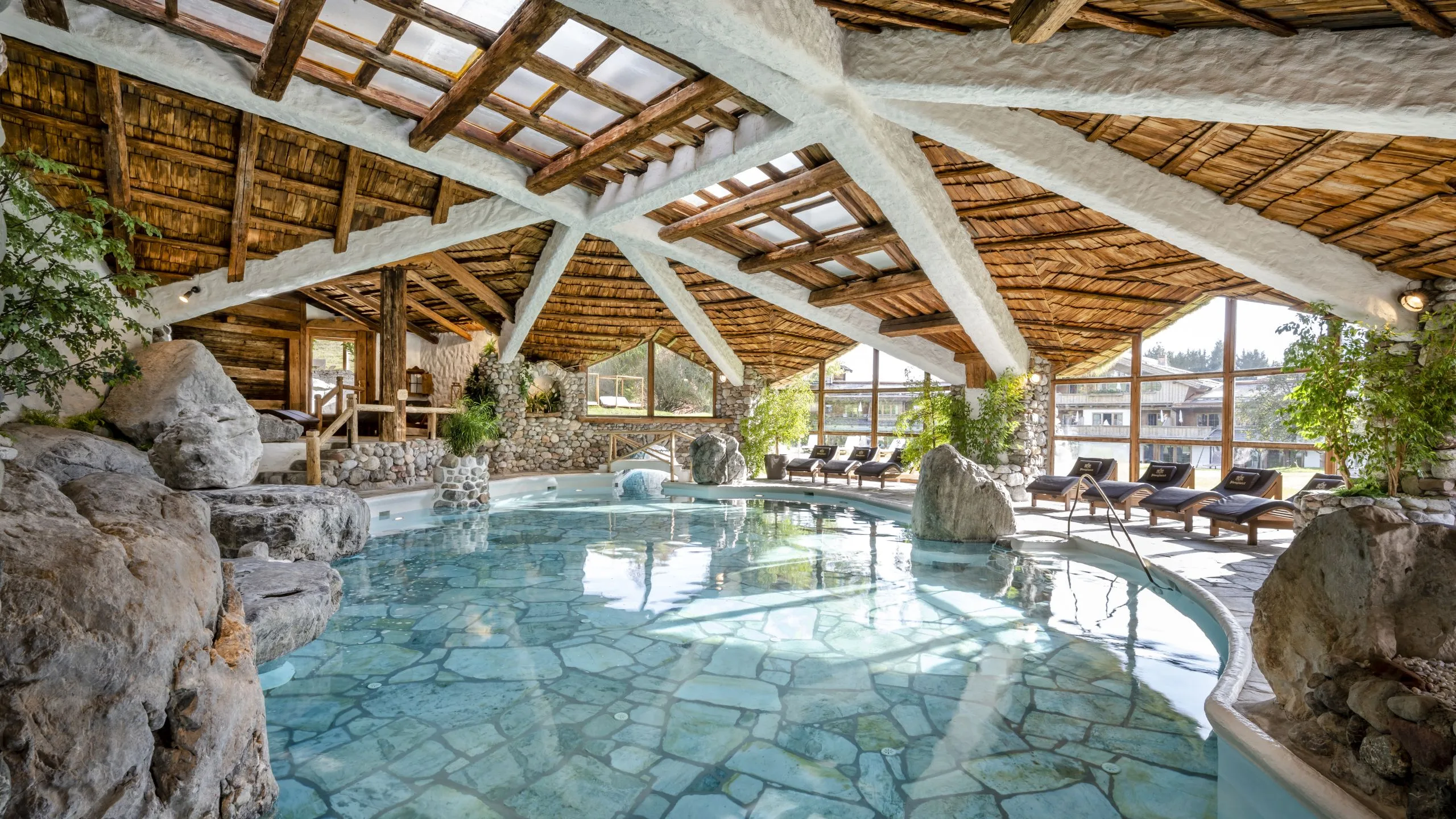
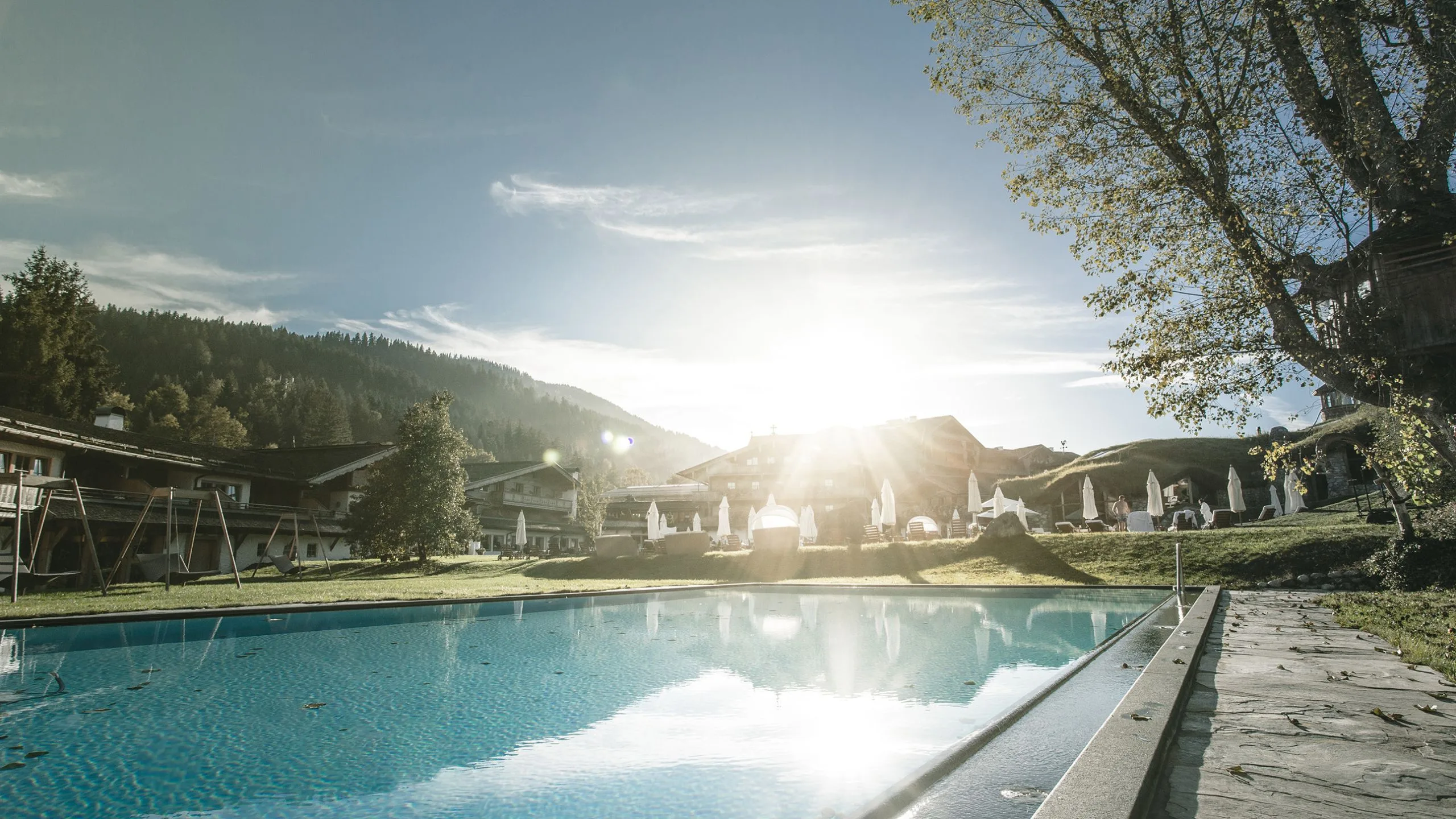
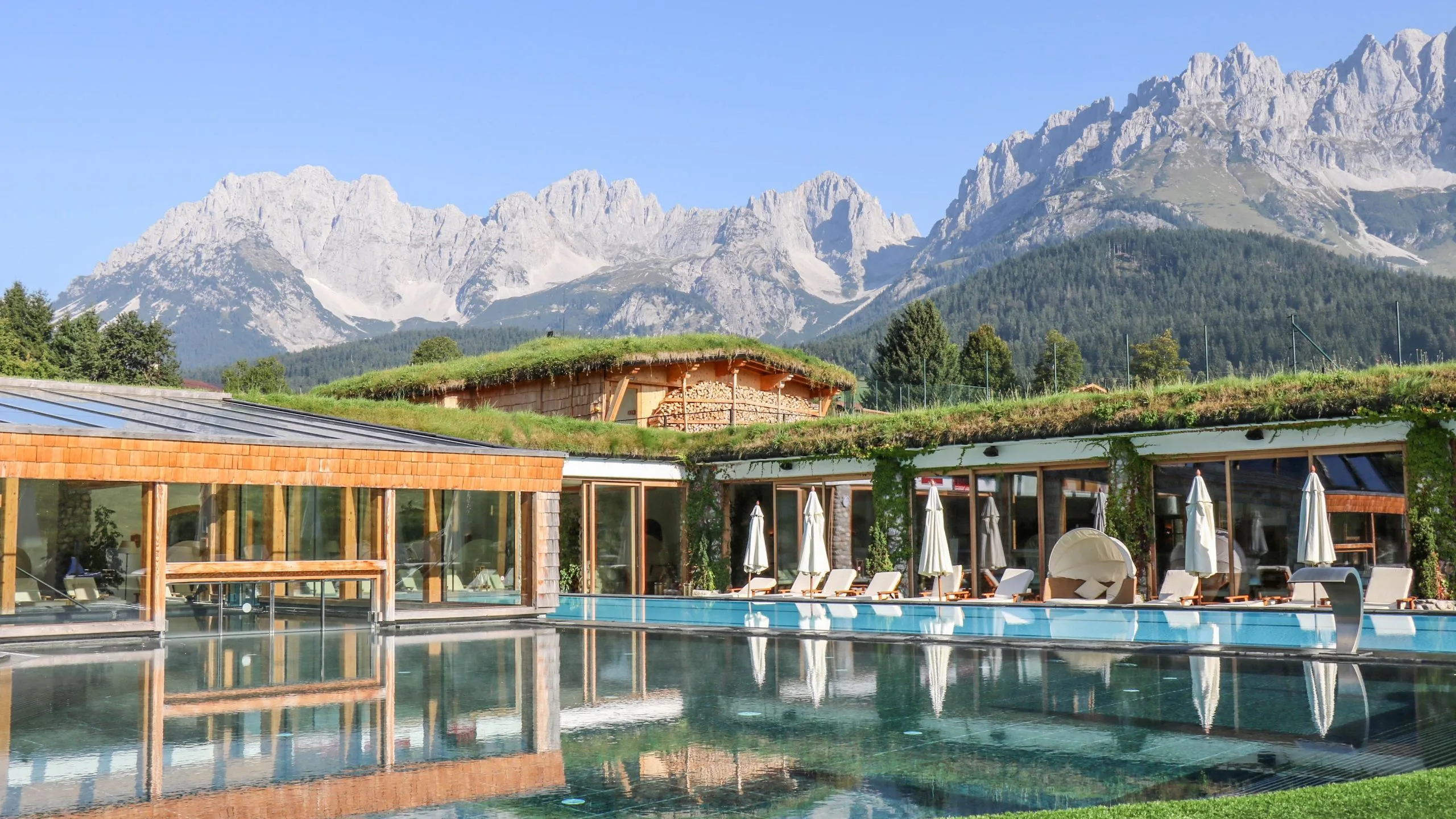
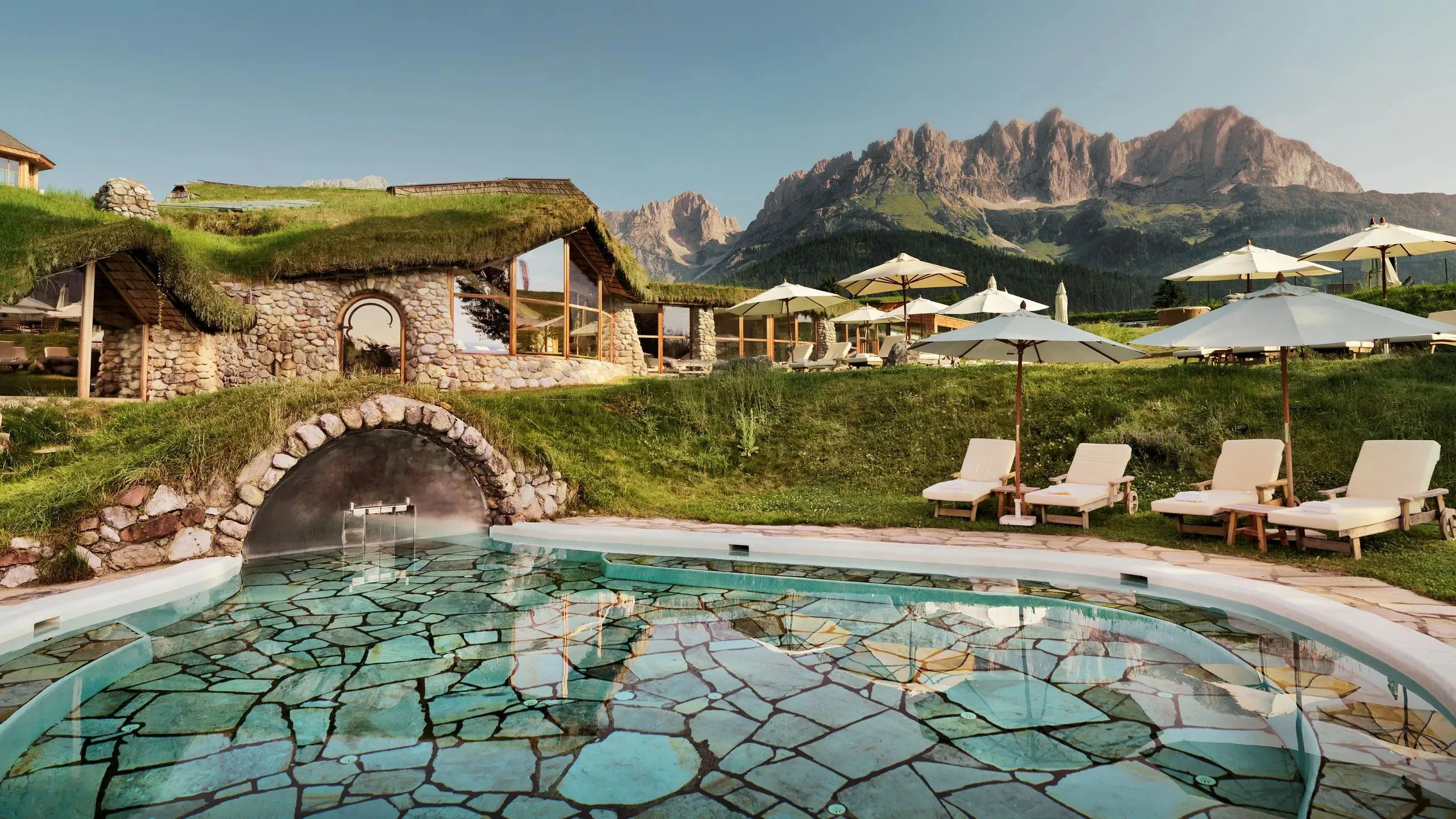
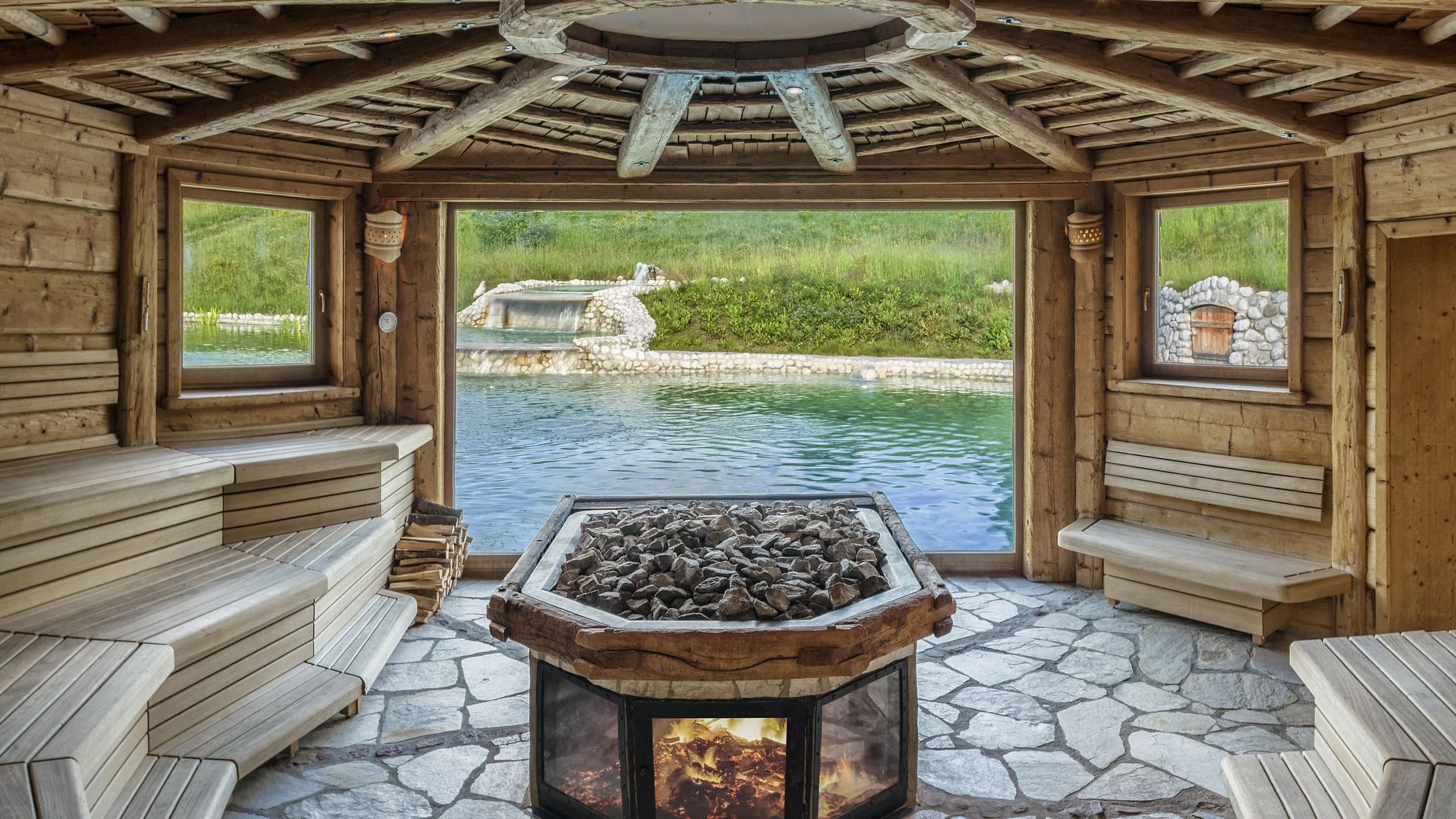
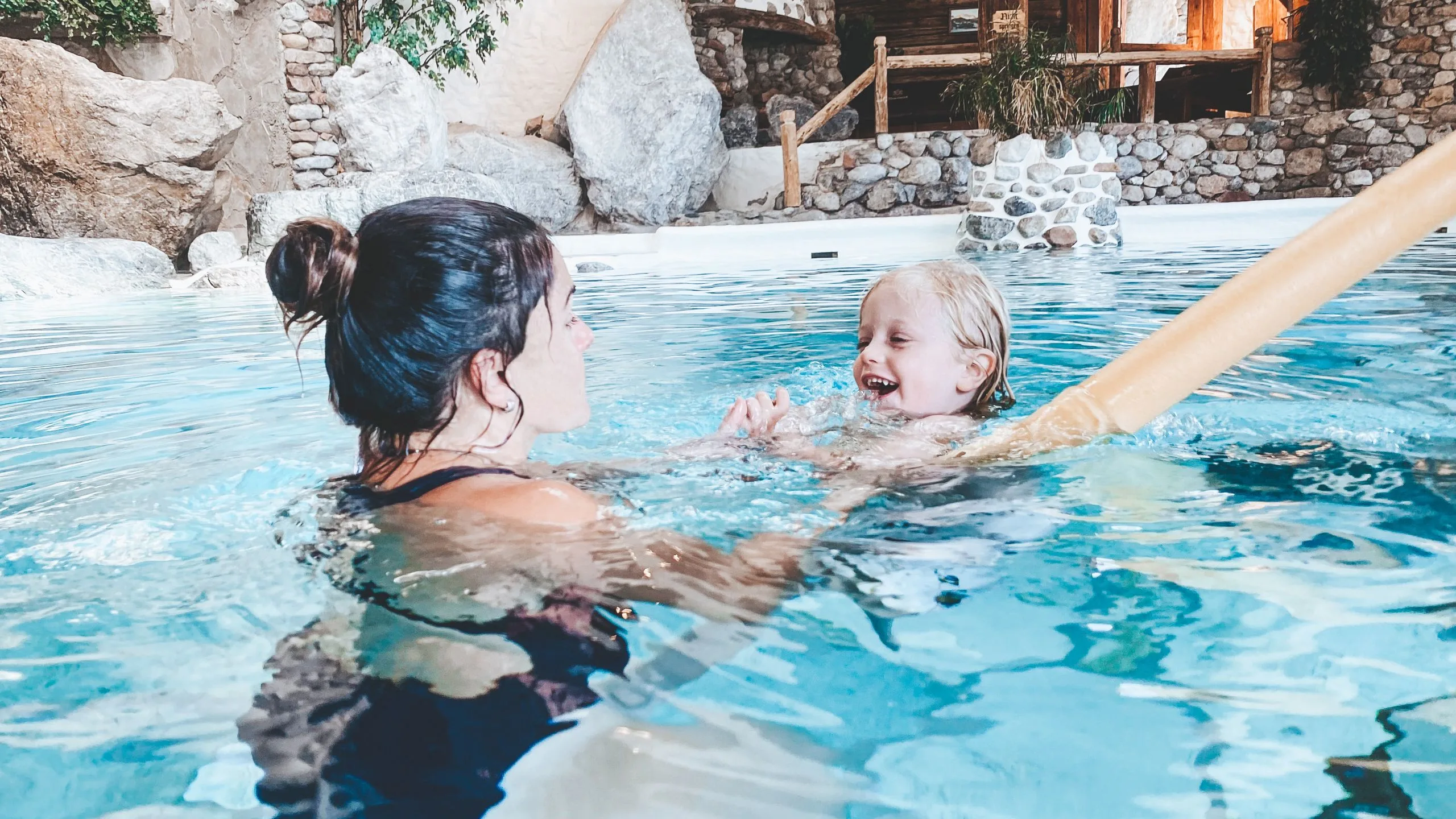
Then there is the water, and this is where the Stanglwirt pulls clear of almost every Alpine family hotel we know: some 12,000 square metres of spa. It is split with real conviction. Adults and older teenagers get 2,500 square metres of their own: a 210-square-metre brine pool at 36 degrees, a 25-metre sports pool, a marble steam bath and a waterfall grotto. Their panoramic sauna has a door that opens straight onto a 517-square-metre natural bathing lake.
Families get 3,110 square metres, and the saunas there are used in swimwear: a 50-degree salt grotto, a 60-degree spruce sauna and, for the brave, the 90-degree Wilder Kaiser sauna. That last one is a wooden cottage, and the older children in the building treated it as a dare. The family side also has a rock whirlpool facing a seawater aquarium with a coral reef.
The children’s water world adds 1,000 square metres more: a baby splash pool, a big children’s pool with a pool cinema showing classic children’s films, and a 2.5-metre slide. The one everybody talks about is the 120-metre giant slide, dropping from 12 metres, timed, lit and set to music, for children over eight. The house record is 13 seconds. Our nine-year-old’s best was 19, announced at dinner with a dignity that survived exactly one sentence from his sister.
On dry days the rest of the grounds take over. There are five indoor tennis courts, outdoor clay courts and four padel courts, a junior tennis programme for ages four to eleven, a bowling alley and, from spring to October, a driving range. Sheep graze on the grass roof of the tennis hall. In winter a free shuttle runs to the SkiWelt Wilder Kaiser-Brixental lifts, the in-house Snow Academy gives private lessons on its own beginner slope with a magic carpet, and cross-country trails start from the grounds. Summer brings guided hikes every week, one of them up to the family’s alpine dairy at 1,340 metres.
If skiing is the main event, our guide to family ski hotels in the Alps and Dolomites covers the hotels where the lift starts closer to the door. We score activities 9.1, the highest of our five marks, held back only by peak-hour crowds in the water world and by how much of the best of it (riding, ski school, the teen spa menu) is billed on top.
From toddlers to teens, age by age
Under three
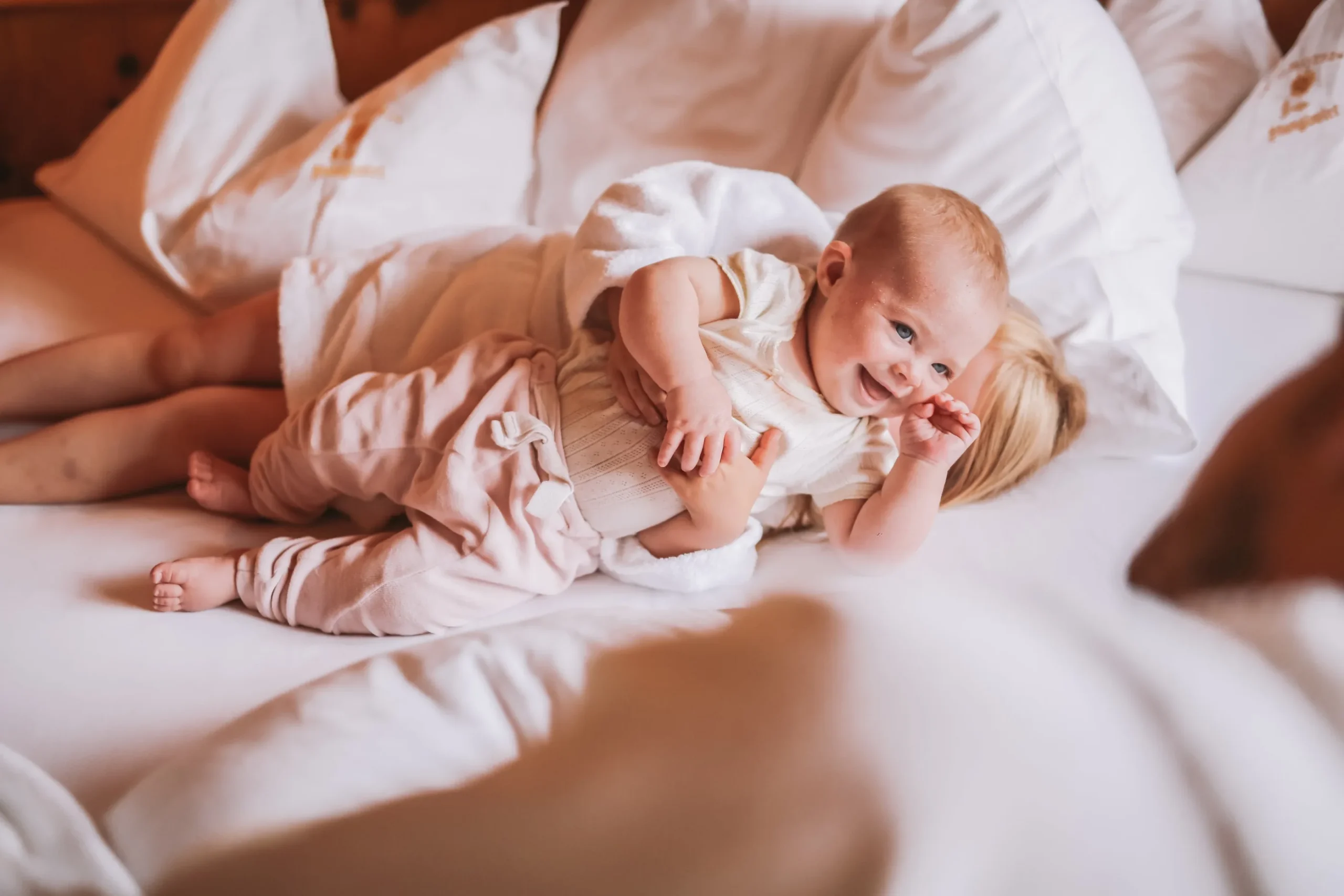
Babies are well equipped and less well minded. Everything a parent would otherwise pack arrives in the room on request, at no charge. A cot comes made up with the hotel’s own children’s linen, and with it a baby monitor, kettle, bottle warmer, steriliser, high chair, children’s bath, changing mat, potty, nappy bin, a safety gate and socket covers. Thule strollers, carriers and child seats are lent against a deposit, which is how the father at the next breakfast table, a ten-month-old on his knee, had managed to fly in with a nappy bag and nothing else.
Childcare is the gap. The Kinderstube crèche takes children from twelve months, from 14:00 to 17:00 by appointment (mornings too in the holiday seasons). A one-year-old gets three hours in a room with a slide into a ball pit, a puppet theatre and a nap corner; anything younger stays with you all day. Families who want a crèche from a few weeks old and care into the evening should look at Sonnwies or at our list of European hotels where toddlers are not an afterthought.
Four to eight
This is the bracket the house is built around, and our four-year-old knew it by the second day. There is the farm from 09:30, lunch with the group, ponies and the hay barn, then the small slide and the pool cinema in the afternoon, with junior tennis from four if the weather turns. It adds up to a day that needs no plan from any adult. The mutiny came on the fourth morning, when we proposed a cable car and a walk, and she negotiated with the gravity of a union official for one more day at the farm, citing an unfinished egg quota. She won. The one weak point for this age is supply rather than quality: farm places are limited, so register with the room booking and not on arrival.
Nine to twelve
From nine, the centre of gravity moves from the farm to the riding hall and the giant slide. Lipizzaner lessons start at eight, group lessons and trail rides at ten, junior tennis runs to eleven, and the bowling alley, the padel courts and, in winter, the Snow Academy fill the gaps. Our nine-year-old had no interest in hens and every interest in his slide times. There is plenty to do, but nothing organised especially for tweens, so the days are exactly as good as the bookings you make for them.
Thirteen to seventeen
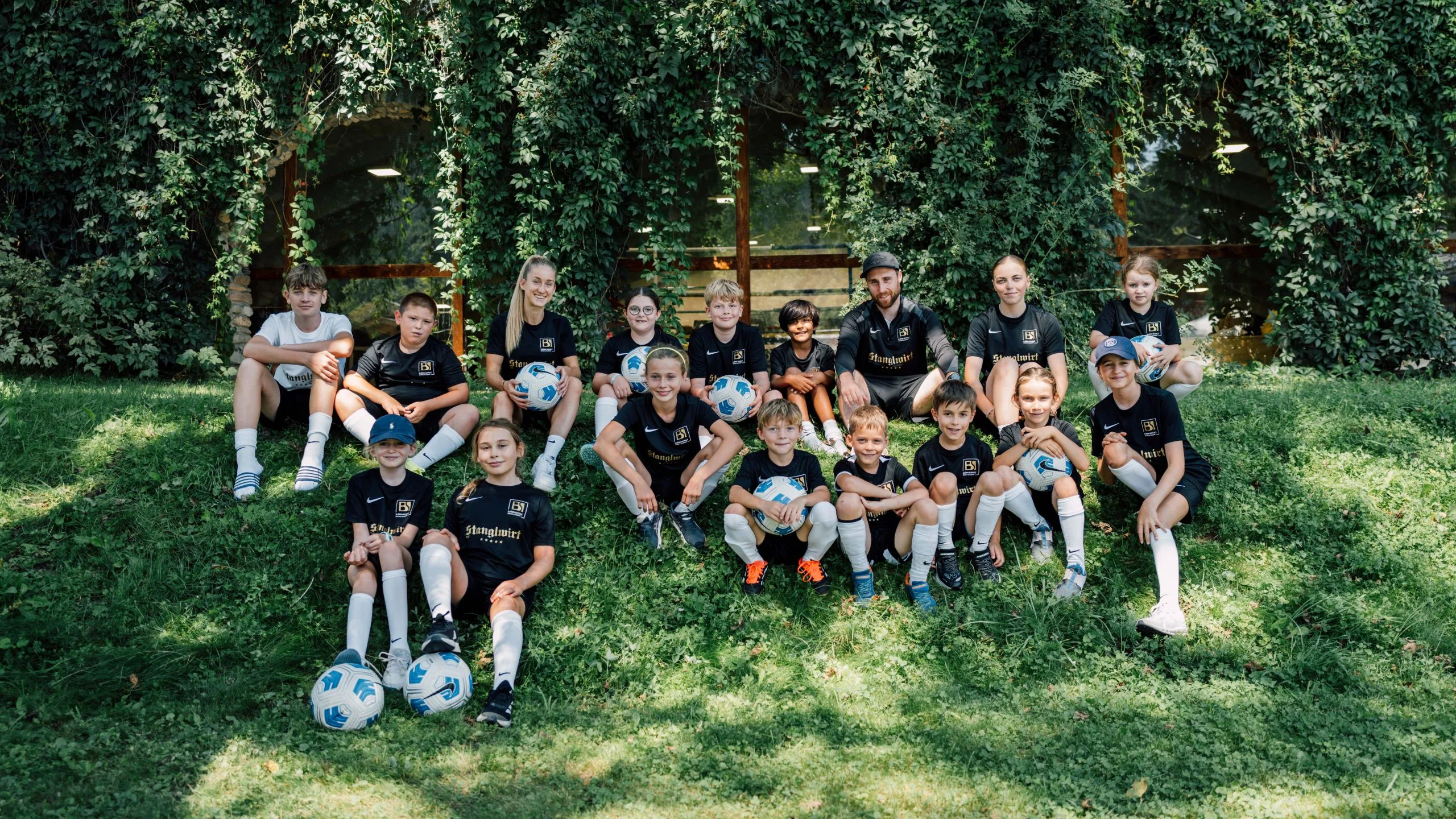
Teenagers get a youth room with a darts screen, a pool table, pinball, a driving simulator and table football, and in the school holidays a youth programme of football tournaments, boxing, styling courses and outdoor tours. Outside the holidays the room empties. On a Tuesday afternoon in October it held our thirteen-year-old, the pinball machine and nobody else. She found her own way in, through a trail ride on a Lipizzaner and a 20-minute teen massage at €45 from the spa menu for twelve- to fourteen-year-olds, while the adults’ spa stayed closed to her. If you travel with a fifteen- or sixteen-year-old, ask for the exact age limit for the adults’ area when you book. Teenagers are the weakest of the four age groups here, because a fourteen-year-old without a sibling or a riding habit will be lonely in term time.
Breakfast is included, dinner is a decision
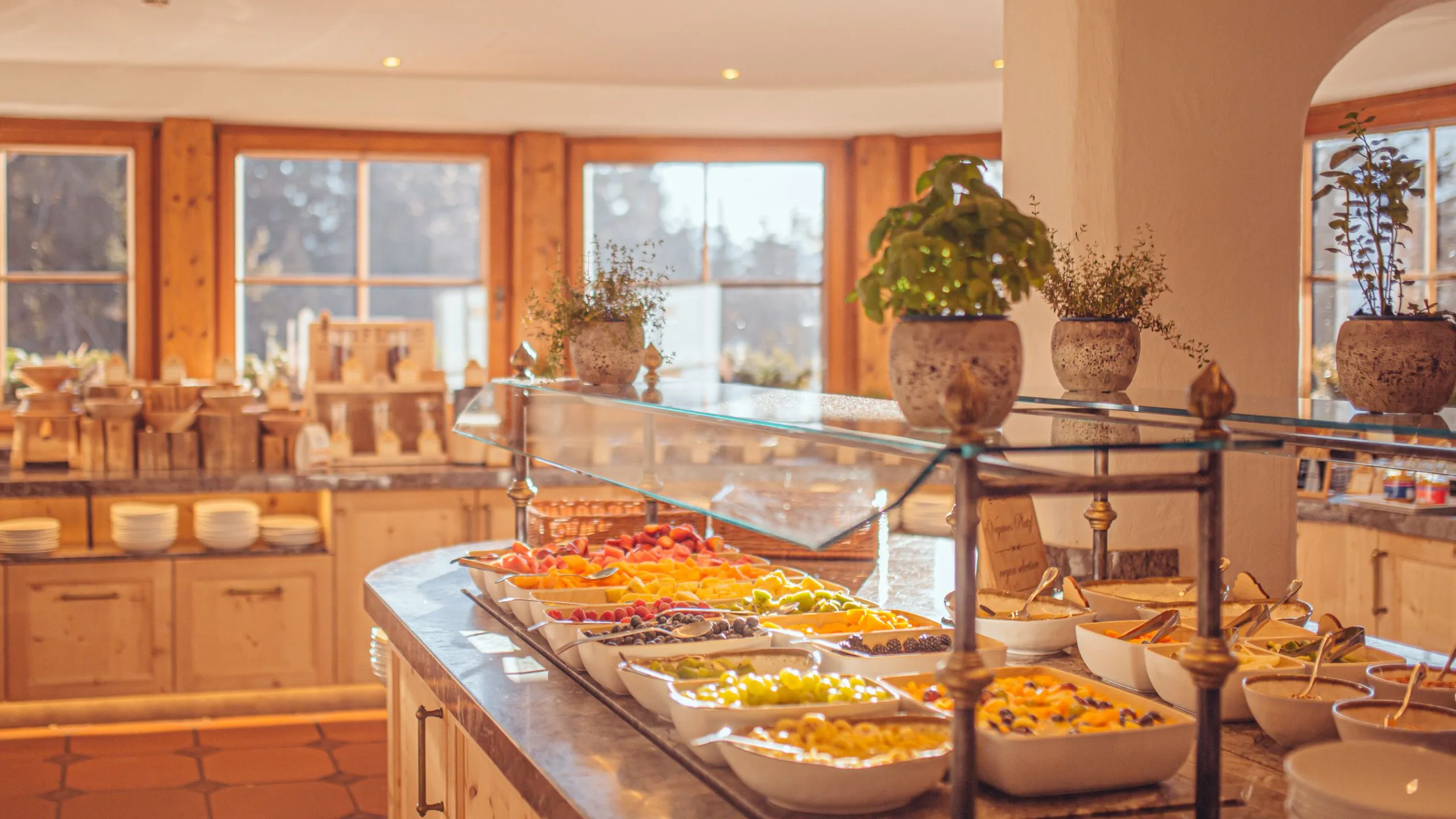
Breakfast is the one meal the rate covers. It is excellent. The organic buffet runs from 07:00 to 11:00, with milk, butter, yoghurt, curd cheese and cheese from the hotel’s own farm, bread from its own bakery, and enough choice to keep a picky nine-year-old busy for forty minutes. It is also crowded. Between 08:45 and 09:30 we queued at the egg station behind three families and a man in tennis whites. On the Sunday the room had the energy of a departure lounge; come before 08:15 or after 10:00 and it is a calmer meal altogether.
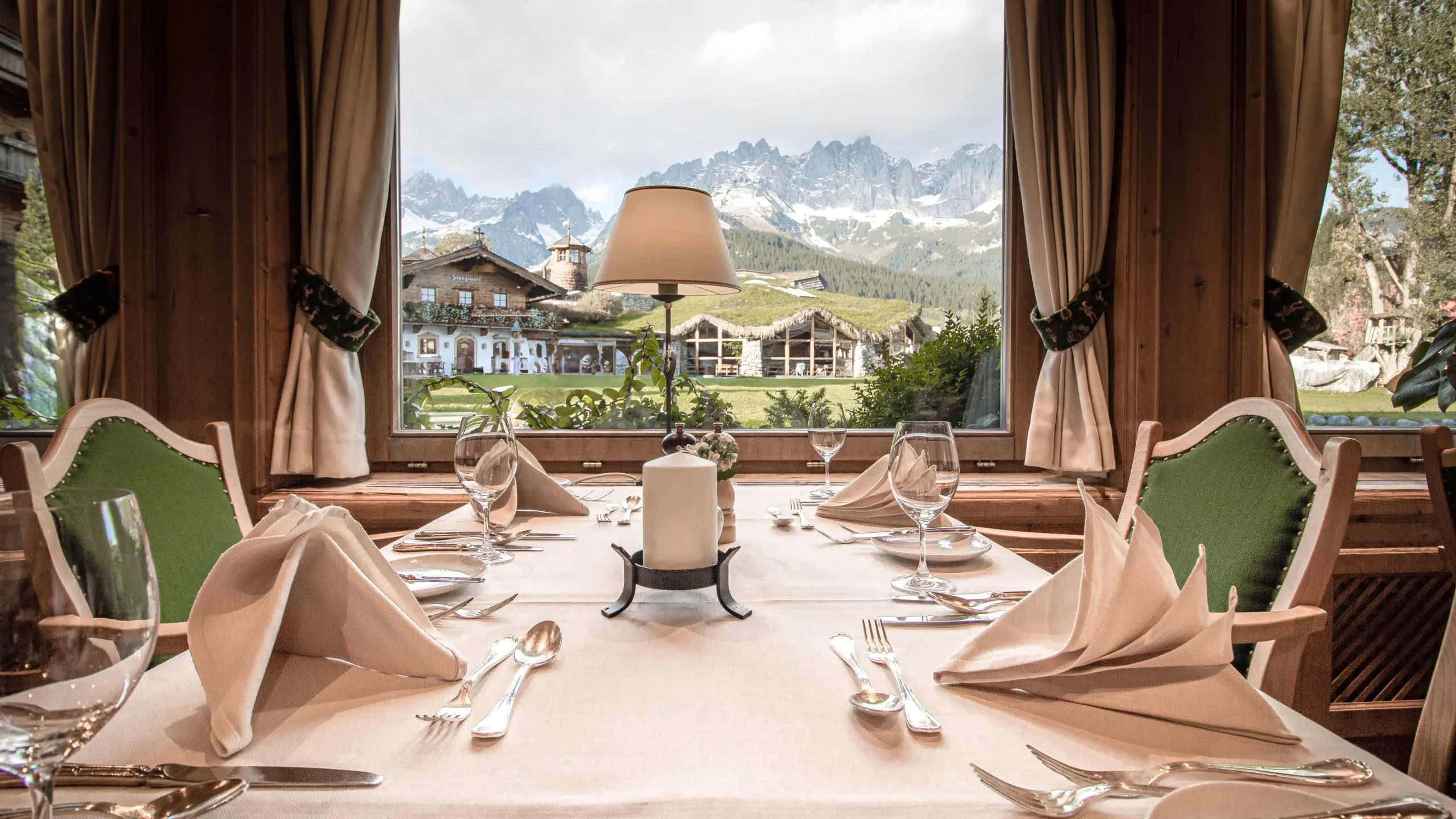
Dinner is where a family has to choose, every evening. The Dreiklang serves a daily changing set menu, with some themed buffet nights, to guests arriving between 18:00 and 20:30: good cooking in a big room. The set menu costs €70 for adults and anyone from fifteen, and €14 for children up to three, €24 up to six, €42 up to twelve and €54 up to fourteen.
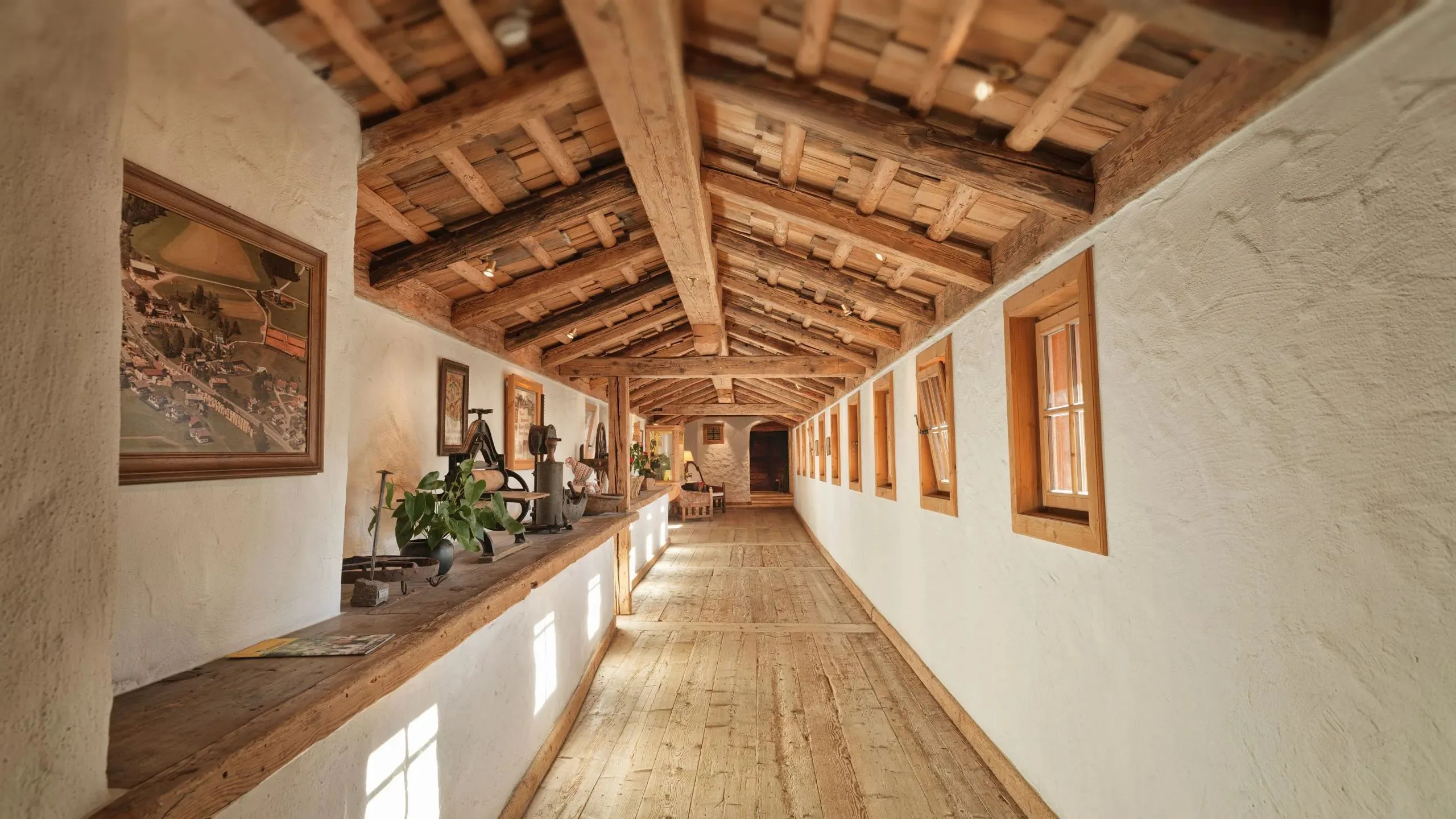
The Gasthof Stangl, the 400-year-old inn at the front, suits children who want food they recognise: it serves Tyrolean and international dishes daily from 11:30 to 21:30 and needs a table reservation. One of its rooms overlooks the cowshed, and there our four-year-old ate an entire dinner with her back to the table. Leni’s, open only to hotel guests, does pizza from noon to 21:00 and a good range of vegetarian and vegan dishes, and it became our default on the evening nobody had the energy for three courses.
Family dining gets 7.9 from us, for superb breakfasts and four restaurants to choose from. Two things cost it more. Dinner is never included, and allergies need saying twice, once when you book and again at every table, because on the buffet the labelling was thin and the answer to a gluten question depended on who we asked. The bar is worth a visit for its own sake: its Haybath, buttermilk served on straw, is exactly as Tyrolean as it sounds, and the house wine list runs to more than 850 wines.
What a family day costs, line by line
Take two adults, children of five and nine, a Family Nest and a stay of four nights or more in the high season. At the Stanglwirt that season runs from 5 July all the way to 8 November, so it covers the autumn half-term as well. One ordinary day looks like this:
- Family Nest with breakfast for four: €869
- Visitors’ tax for the two adults: €7
- Set dinner in the Dreiklang: €70 + €70 + €24 + €42 = €206
- Children’s farm, crèche, water world, spa, parking and Wi-Fi: included
- Total: about €1,080 a day, before a single drink, pony ride or massage
The same day in the spring low season, from 12 April to 22 May, comes to about €806. The extras arrive in small, steady amounts: a 20-minute pony ride at €30, a Lipizzaner lunge lesson at €50 and a teen massage at €45. A child sleeping as an extra person costs a rising share of the room price: 15 per cent under four, 30 per cent from four to six, 60 per cent up to twelve and 80 per cent from thirteen. Stays of 14 nights or more get 5 per cent off outside Christmas, Easter, Carnival and the Hahnenkamm weekend.
The best value we found sits in the dated Family Holiday weeks. In late November 2026, three nights in a studio for two adults and up to two children under seven work out at about €568 a night for the whole family. The farm, the crèche, a pony session and a children’s gift are included. Every booking is confirmed only after an advance payment, and an online booking becomes binding the moment that payment is charged, so read the cancellation schedule in your written confirmation before you pay. The 2026 rates run until 23 December; for Christmas, the ski weeks, Carnival and Easter, ask for the winter rates when booking, and ask early.
Pool rules that put parents on duty
The water worlds put supervision squarely on parents. Children under seven are admitted only with a companion aged at least 16, toddlers need a swim nappy or swim trunks in the children’s pool, and running is banned. Staff are not obliged to supervise children or non-swimmers; ask whether a lifeguard is on duty in the children’s water world for your dates, and plan as if the answer is no.
Elsewhere the picture is reassuring. The farm hands children over at a staffed point and turns away sick ones, places are capped, the in-room kit includes a safety gate and socket covers, and the spa opens only with a key card. The rooms and pools were spotless every day we looked, so safety and cleanliness earn 8.0 despite the hands-off pool rules.
Forty minutes at the desk, then a street-side room
We got to reception at twenty to four on a Friday in October with three tired children, one of them asleep across a parent’s shoulder. We joined a queue of eight parties in front of a single person at the desk, who was patiently untangling another family’s room category. Forty minutes later we had keys. Our bags came up in two instalments, the second at seven in the evening after a phone call, and the Family Nest, booked months ahead, faced the B178. That night the road went quiet around eleven and started again before six; with the windows shut it was fine, and with them open it was not.
That afternoon is most of the reason service scores 7.6 rather than something higher. All of it is fixable. At these prices, a family arriving on a Friday afternoon should meet a second person behind the counter, and a family booking two rooms should be able to pay for the guarantee that they are next to each other.
The adults’ spa has its own friction. On the Saturday we watched a father walk a boy of about ten into the brine pool, past the sign, and nobody stopped him. That is unfair on the couples who came for the quiet and on the families who keep the rule. At the weekend the crowd shifts too, towards couples, phones held up to the Kaiser and a valet line of very new cars, and the house feels busier and a good deal less like a farm. Ask for a room away from the road, accept that it may cost a category more, and pack earplugs anyway. The suites nearest the bar hear the live music in the Tenne late into the evening, and the ones by the riding arena can smell it.
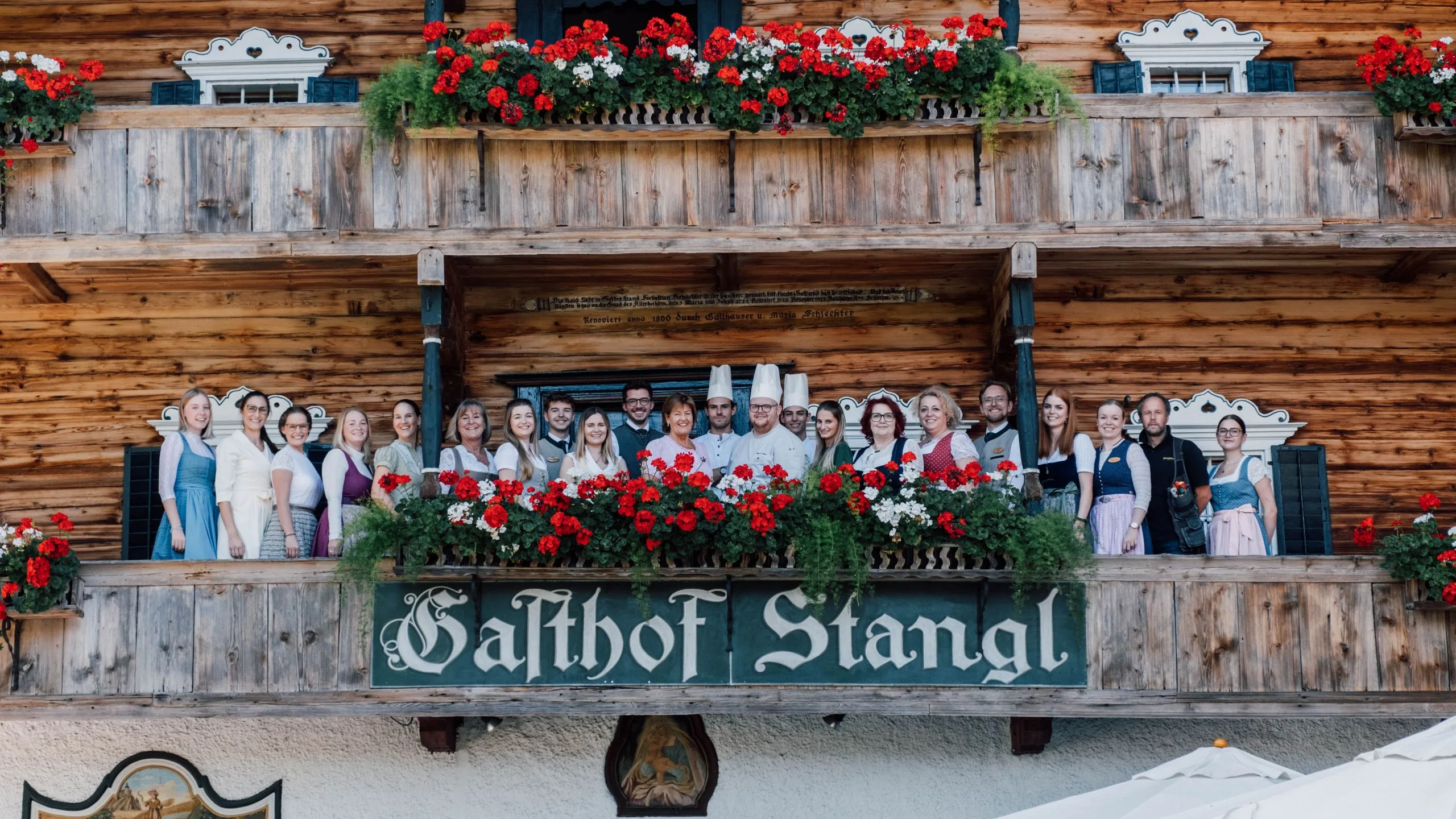
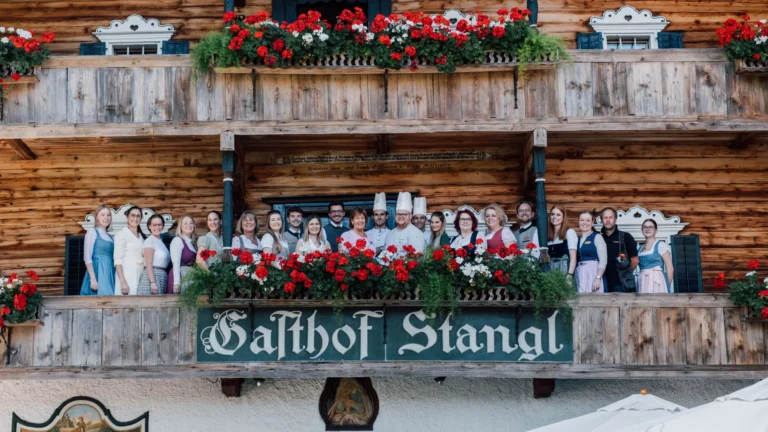
The people make up for most of it. The farm teachers knew the four-year-old’s name, and her views on hens, by lunchtime on the first day; the riding instructor rebuilt the nine-year-old’s confidence in a single lesson; the bar team remembered what we drank. On Thursday evenings at half past six the Hauser family and the heads of department host a reception for guests. We watched a member of the family work the room, shaking the hand of every child who would allow it, and understood why so many families come back year after year. Two of those families, regulars for more than a decade, spoke about the house the way people speak of a favourite aunt who has started charging for tea: fondly, and with a running total.
If we were booking tomorrow
We would take a Family Nest for four nights in the first three weeks of May, when the same room costs €593 instead of €869. We would register the children for the farm and the crèche with the booking, reserve the Lipizzaner lessons from home and plan two dinners in the Gasthof for every one in the Dreiklang. In writing, we would ask for a room away from the road, and for adjacent rooms if there were five of us. The car would stay in the garage from arrival to departure.
Our overall score is 8.0. Activities at 9.1 carry it; rooms at 7.4, service at 7.6 and a dinner bill that is never included hold it back. A front desk that buckles on busy afternoons is the reason we would not go higher.
Book the Stanglwirt if your children are between three and ten, love animals and water, and you want a serious spa of your own while they are up at the farm. If you need all-day care for a baby or a bill you can predict before you arrive, book Dachsteinkönig in Gosau or Cavallino Bianco in Ortisei instead. Families travelling with a single teenager outside the school holidays, or in a July heatwave without an air-conditioned room confirmed in writing, should look elsewhere too.
Stanglwirt: Family Questions Answered
Is the Stanglwirt a good hotel for families with young children?
Yes, and it is at its best for children aged three to ten. The children's farm takes children from three, daily from 09:30 to 17:00, ponies are for riders up to eight, and the children's water world has a pool cinema, a 2.5-metre slide and a 120-metre giant slide for over-eights. Parents get a separate adults' spa while the children are in care. The trade-offs are a rate that includes breakfast only, a crèche for one- to three-year-olds that opens from 14:00 to 17:00, and Stammhaus family rooms that face the main road.
What ages does the Stanglwirt children's farm take, and what are the hours?
The children's farm takes children from age three, every day from 09:30 to 17:00, at no extra charge. Places are limited, so register each child with the room booking or by 17:00 the day before, and keep sick children with you. Parents hand over at the Kinderstube and do not enter the farmhouse. Lunch with the group is free if you register by 10:00 and costs €8 after that. In the school holidays an evening programme with a paid children's dinner runs too; ask for the evening times for your dates when you book.
Is there a crèche or babysitting for babies at the Stanglwirt?
The Kinderstube crèche takes children from twelve months, from 14:00 to 17:00 by appointment, with morning sessions added in the holiday seasons. Register by 17:00 the day before. Babies under one have no childcare option, so plan for a parent to be with them all day. For evening babysitting, ask the concierge when you book and agree the arrangement, hours and fee in writing before you travel. Families who need care for babies from a few weeks old do better at Sonnwies or Dachsteinkönig.
Is the Stanglwirt good for teenagers?
It works for active teenagers and less well for teens who want company their own age outside the school holidays. There is a youth room with pool, pinball, darts and a driving simulator, and a holiday youth programme with football, boxing, styling courses and outdoor tours. Trail rides on the Lipizzaners start at ten, there are tennis and padel courts, and the spa has a menu for twelve- to fourteen-year-olds. The adults' spa area is closed to younger teenagers, so ask for the exact age limit when you book with a fifteen- or sixteen-year-old.
Which room should a family of four or five book at the Stanglwirt?
For four, the Stammhaus Family Nest is the best-value choice; for five, book two rooms, the Kaiser Suite or a family apartment. The Family Nest has 40 m², a separate children's room with bunks or twin beds and a second small bathroom, from €593 to €995 a night with breakfast in 2026. The 50 m² Family Suite adds a living room for €659 to €1,107. The 70 m² family suites Hollenauer Kreuz and Astberg sleep three. The Kaiser Suite has 125 m² and three bedrooms for up to six, and a 192 m² garden apartment five minutes away sleeps seven; ask for both rates when booking.
Can families get connecting or adjacent rooms at the Stanglwirt?
Adjacent rooms are a request, not a guarantee. The hotel does not confirm specific room numbers or floors for any booking, so two rooms side by side cannot be locked in when you book. Ask for adjacent rooms in writing, repeat the request at check-in, and expect a short walk between rooms if the house is full. Families of five or six who need everyone under one door should look at the three-bedroom Kaiser Suite or one of the family apartments.
What baby equipment does the Stanglwirt provide?
A full baby kit is included and delivered to the room on request. It covers a cot with children's bed linen, baby monitor, kettle, bottle warmer, steriliser, high chair, children's bath, changing mat, potty, nappy bin, a safety gate and socket covers. Thule strollers, child carriers and child seats are lent free against a deposit, and children get their own bathrobes and slippers. Order the kit with the booking so it is in place when you arrive.
Which meals are included at the Stanglwirt, and what does dinner cost for children?
Only breakfast is included; dinner is paid every evening. The organic breakfast buffet runs from 07:00 to 11:00. The Dreiklang set menu costs €70 for adults and anyone from fifteen, and €14 for children up to three, €24 up to six, €42 up to twelve and €54 up to fourteen. The Gasthof Stangl serves Tyrolean and international dishes à la carte with a reservation, and Leni's, for hotel guests only, has pizza until 21:00 and vegan dishes. Mention allergies when you book and again at every meal.
How do you get to the Stanglwirt, and is there an airport transfer?
Most families drive or take the hotel's chauffeur service from Munich, Salzburg or Innsbruck. Munich airport is about 120 km and an hour and a half away, Salzburg and Innsbruck about an hour. The chauffeur service costs €390 to €550 from Munich airport, €270 to €400 from Salzburg and €290 to €440 from Innsbruck, depending on the car. By rail, St. Johann in Tirol station is 7 km away. Parking is free, and from Munich no Austrian motorway vignette is needed as far as the Kufstein Süd exit.
How much does a day at the Stanglwirt cost for a family of four?
Plan on about €1,080 a day in high season for a Family Nest, breakfast, visitors' tax and one set dinner. That assumes two adults, children of five and nine and a stay of four nights or more between 5 July and 8 November 2026. The same day costs about €806 between 12 April and 22 May. Riding, ski school, spa treatments and drinks come on top. For Christmas, the ski season and Easter, ask for the winter rates when booking.
Is the Stanglwirt worth the money for families?
Yes for families with children of three to ten who will use the farm, the riding school and the spa; less so for everyone else. The included farm, crèche, water world and 12,000 m² spa carry real value, but dinner, riding and lessons are extra, the rooms are older than the prices suggest, and the Stammhaus family rooms face the road. We score it 8.0 overall, with activities at 9.1 and accommodation at 7.4.
What are the main drawbacks of the Stanglwirt for families?
Cost, road noise and a stretched front desk. The rate covers breakfast only, so a family of four adds about €206 for a set dinner each evening. The Stammhaus family rooms mostly face the B178, and rooms without air-conditioning get warm in high summer, so ask for an air-conditioned room when you book. Arrival queues at reception are long on busy afternoons, adjacent rooms are not guaranteed, and the crèche for under-threes opens only from 14:00 to 17:00.
Is the Stanglwirt ski-in, ski-out, and what is there for children in winter?
No, it is not ski-in, ski-out; a free shuttle takes guests to the SkiWelt Wilder Kaiser-Brixental lifts. The hotel has ski storage, sells lift passes at the concierge and runs its own Snow Academy with private lessons on a beginner slope with a magic carpet. Cross-country trails start from the grounds, and Kitzbühel is about 15 minutes by car. On non-ski days the children's farm, the water world and the riding hall all work in snow. Ask about children's group ski courses and their prices when you book.
Stanglwirt, Dachsteinkönig or Cavallino Bianco: which suits which family?
Choose the Stanglwirt for animals, riding and a serious spa with children of three to ten; choose the other two for babies and all-day care. Dachsteinkönig in Gosau is all-inclusive, takes babies from seven days old, runs around ninety hours of childcare a week and sits across the road from a lift. Cavallino Bianco in Ortisei takes babies from one month, runs care from 08:30 to 22:00 and connects to the gondola by a private bridge. The Stanglwirt includes only breakfast and cares for under-threes three hours a day, but neither of the other two matches its farm, Lipizzaner stud and split spa.