
Bose QuietComfort Ultra Headphones (2nd Gen)
Bose QuietComfort Ultra Headphones (2nd Gen), Bose
For the parent on a 12-hour flight who needs silence to survive the journey, not just enjoy it.
The specific silence that makes a long-haul flight survivable
There is a particular hour on a long-haul flight with children when what you need is not entertainment but quiet. The aircraft cabin at cruising altitude produces around 85 decibels of continuous low-frequency roar, the kind that sits behind everything else and exhausts you in ways that a bad film does not. Children asleep. Film started. Turbine noise still there, underneath all of it, at the exact frequency your ears cannot tune out.
We have been travelling with the Bose QuietComfort Ultra Headphones (2nd Gen) since their September 2025 launch, originally at €499 and now available from Coolblue.de for €345. The question they answered, on a Frankfurt-to-Singapore leg with an asleep seven-year-old and two connected devices running simultaneously, was not whether they sound good. It was whether they could make the aircraft disappear. They largely can. Independent lab measurements put average noise reduction at 32.3 decibels, with treble-frequency blocking above 40 decibels. In practice, the turbine recedes to something you have to listen for, which on a 13-hour flight shifts the experience from endurance to something closer to comfort.
That is not a cosmetic difference on a flight where you need to arrive ready to function rather than depleted.
Thirty hours is not a spec; it is a rescue plan
The rated 30-hour battery (ANC on) sounds like a marketing figure until you calculate the longest commercial route. Frankfurt to Auckland via Singapore runs roughly 23 hours of flying time. The rated figure covers it. Real-world measurement puts the ANC-on figure at 27 hours 12 minutes, which covers every route we fly without arithmetic at the gate.
The 15-minute quick charge matters more than the headline number. Fifteen minutes of USB-C charging returns 2.5 to 3 hours of playback. At a lounge power point with a departing flight in an hour, that is two films recovered. We have stood at gates having forgotten to charge the night before; this detail turns a problem into an inconvenience.
The second generation adds wired USB-C audio at 16-bit, 48 kHz, which is new and genuinely useful for anyone with a laptop and a hotel room. The separate IFE cable is the more practical travel addition: the included 3.5mm-to-2.5mm adapter (1.2 metres) connects to seatback entertainment ports on most economy-class aircraft. The result is ANC isolation combined with the aircraft’s own audio system, through the same headphone. Parents following a film while children sleep no longer have to choose between noise reduction and the seatback screen’s audio track. One limitation: the analogue connection does not carry the microphone signal back to the aircraft system, so in-flight calls via the seatback screen’s audio are not supported on most aircraft. This is an aircraft wiring fact rather than a Bose design decision, but the included cable’s packaging does not say so.

What the February 2026 firmware changed, and why Bose will not reverse it
In February 2026, Bose pushed a firmware update that removed the on-headphone shortcut for switching between connected devices. Previously, one button press toggled between, say, your phone and the tablet a child was using for the first part of a flight. Post-update, switching requires opening the Bose app, navigating to the device list, and tapping.
Bose has confirmed the shortcut will not return.
The multipoint connection itself still functions. The headphones still connect to two devices simultaneously and handle calls automatically. What is gone is the one-second shortcut. For a parent managing two Bluetooth sources through turbulence, with a sleeping child across one arm and a phone in the other hand, the difference between one second and ten is real. If you bought these before February 2026, the firmware removed a feature you paid for. If you are buying them now, budget the extra step into your mental model of how they work.
The EQ is the other honest limitation. Three bands plus four presets. The stock tuning is warm, with a bass emphasis that suits streaming audio and pop but can muddy acoustic music and spoken-word content without adjustment. We use a mild treble lift. What the app lacks is any parametric control beyond those three handles; at €345, the Sony WH-1000XM6 offers a ten-band graphic EQ. If you spend meaningful time tuning headphones by genre and listening context, that gap will cost you something.
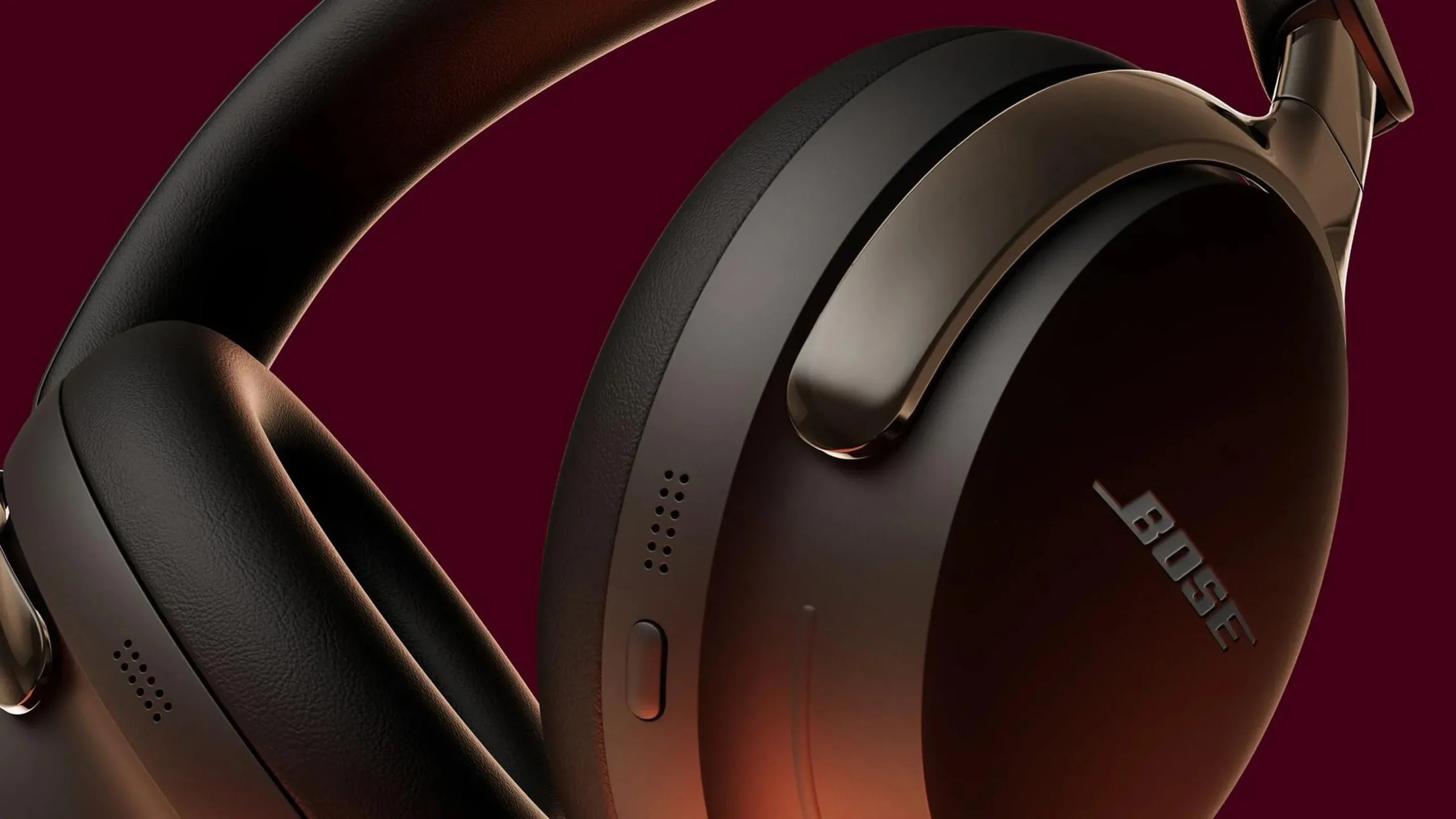
The specs that make a difference on a real journey
- Weight: 250 g headphones only; 481 g complete with carry case. Among the lightest premium ANC over-ears available.
- Battery: 30h ANC on (27.2h measured); 45h ANC off; 23h in Immersive Audio mode. Quick charge: 15 min = 2.5–3h. Full charge: approximately 3 hours. Charges via USB-C while wearing.
- Bluetooth: version 5.4; codecs SBC, AAC and aptX Adaptive; multipoint for 2 devices simultaneously.
- Wired: 2.5mm jack on headphones; 3.5mm-to-2.5mm adapter cable (1.2m) included for aircraft IFE ports.
- Foldable: swivel earcups, folded dimensions 45 × 160 × 205mm; hard carry case included.
- ANC modes: Quiet (maximum), Aware (passthrough for cabin conversation), Cinema Mode (dialogue lift for films).
- Auto-standby: rotate earcups flat and the headphone sleeps, preserving battery overnight in a bag or case.
- No IP rating: no splash, sweat or water resistance.
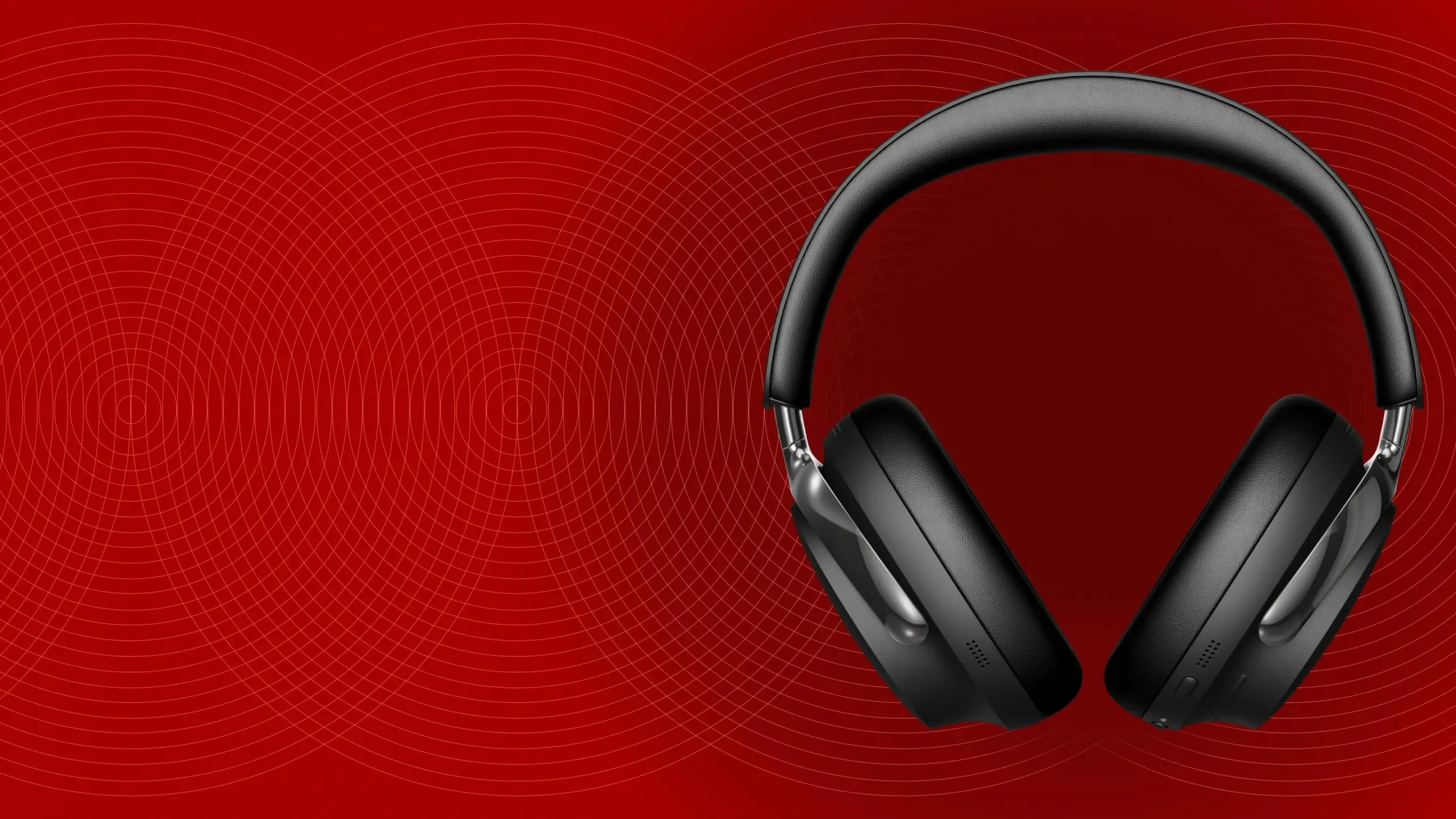
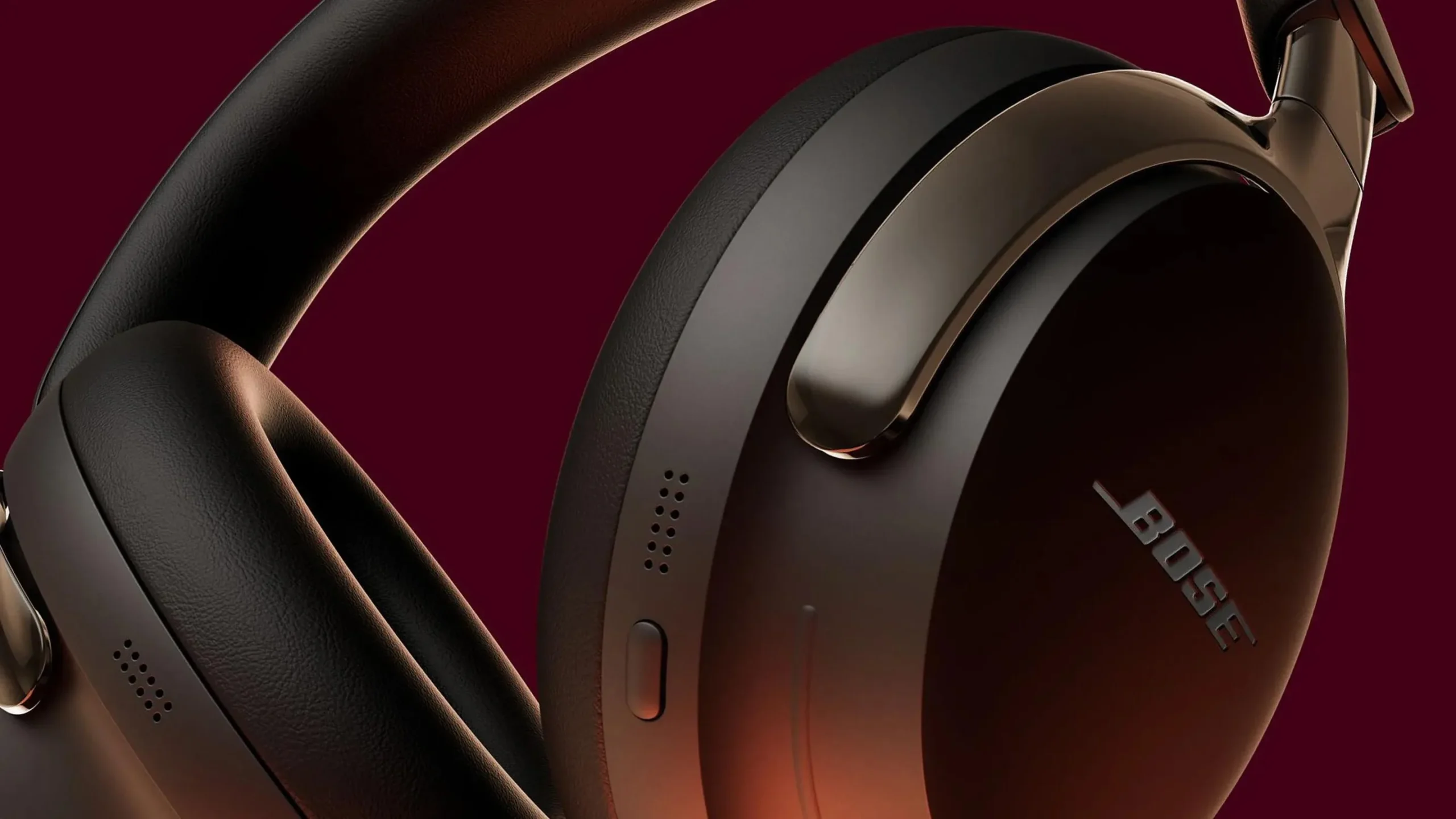
- Ear cushions: protein leather (faux), replaceable. Headband: pleather. Chassis: plastic and aluminium.
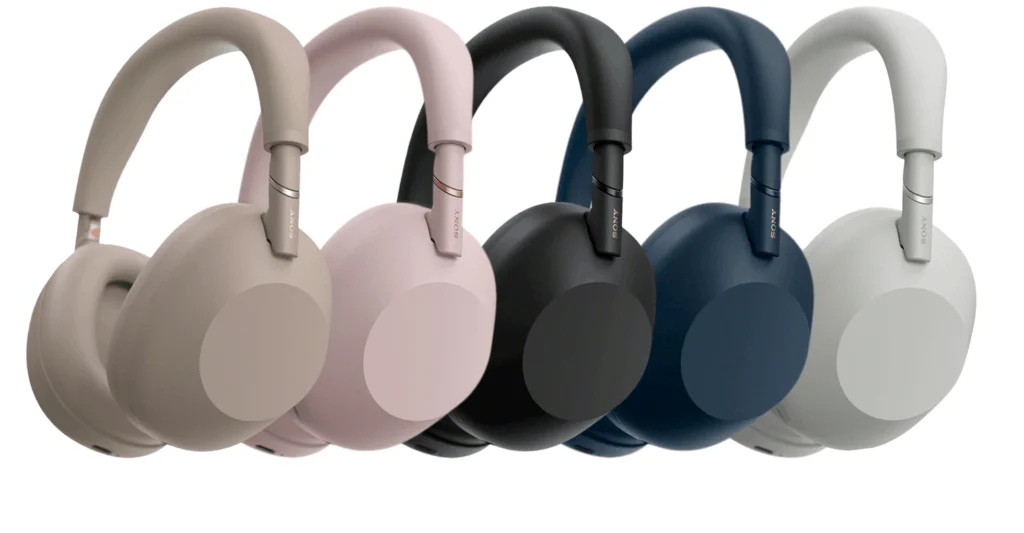
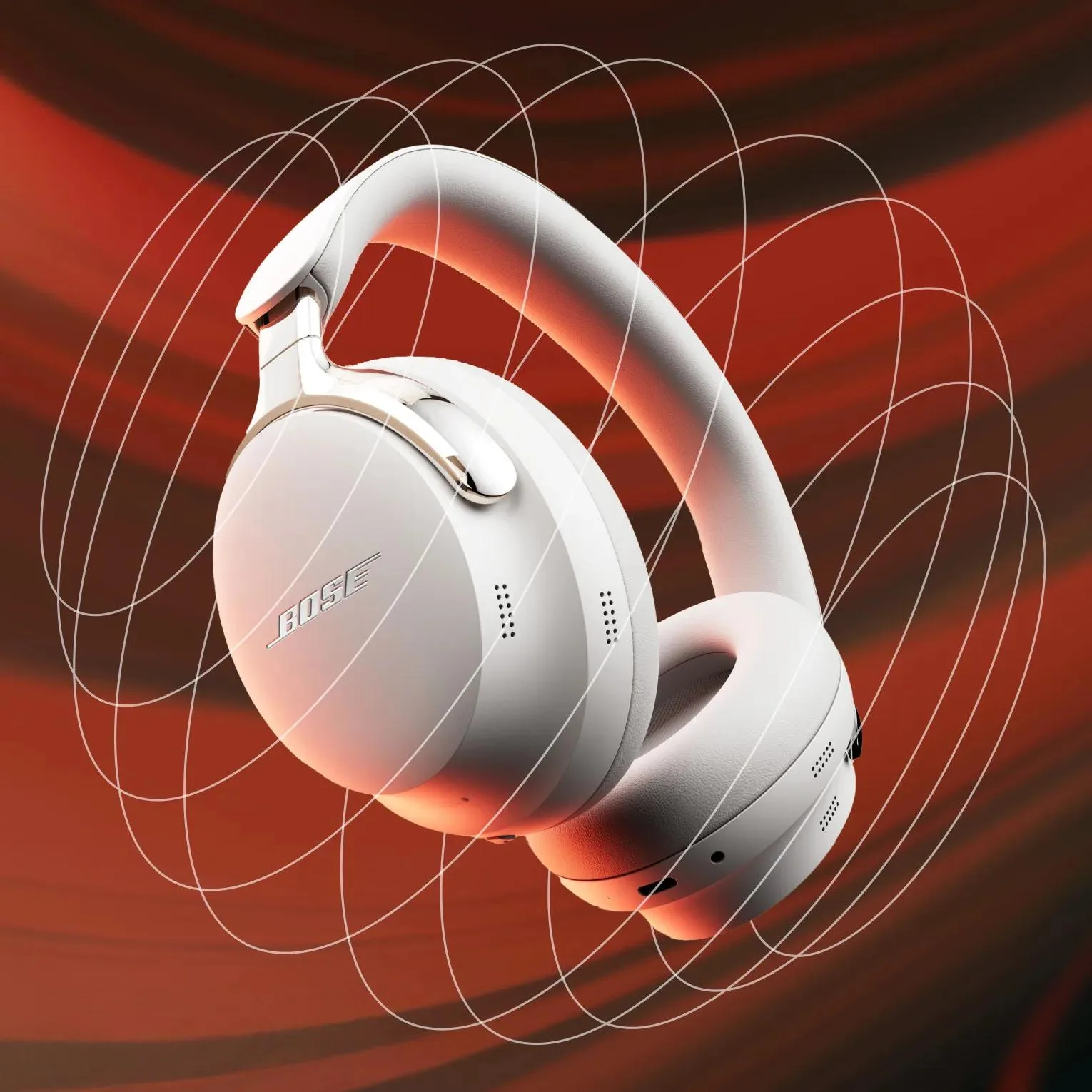
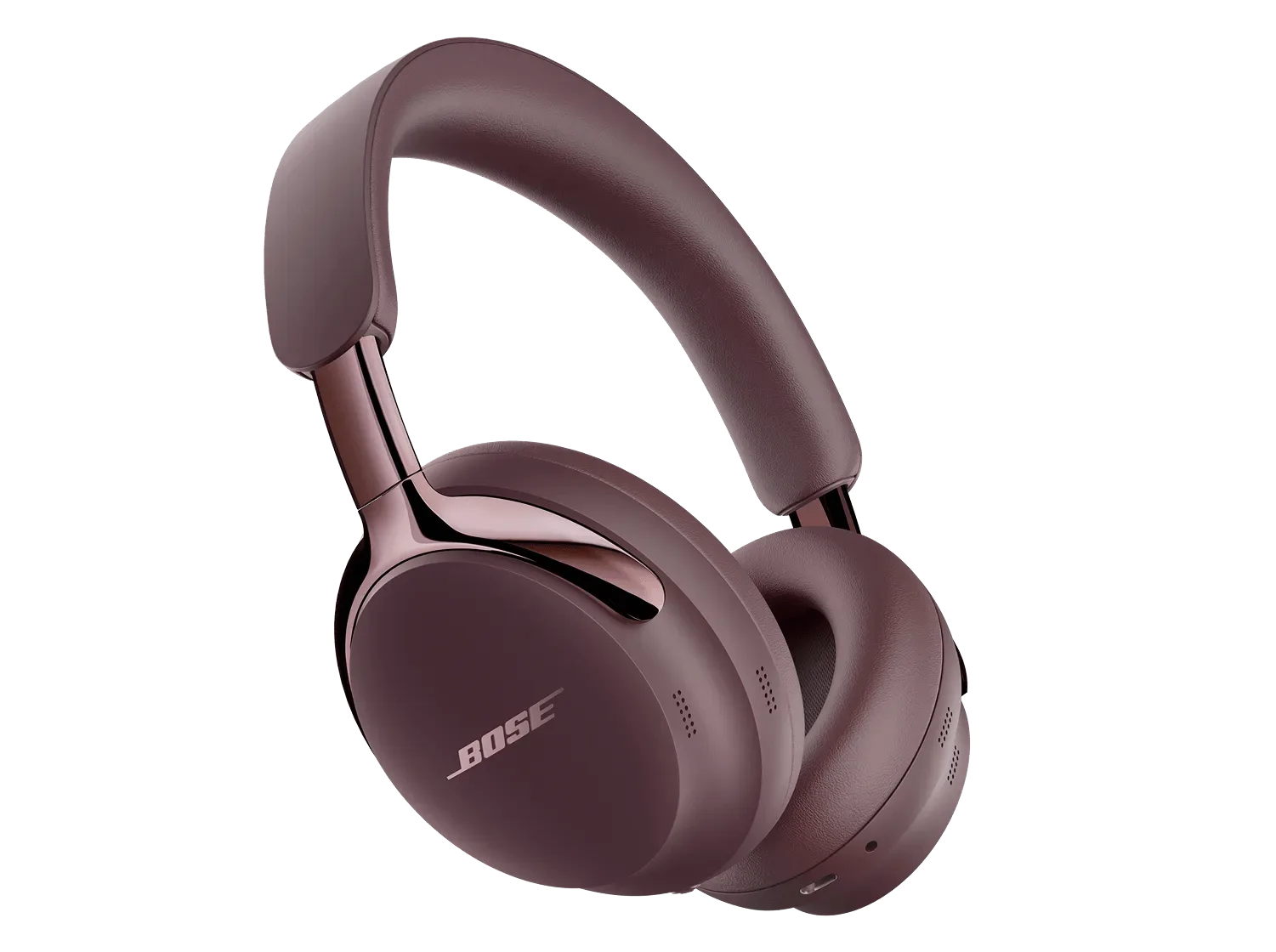
- Colours: Black, Smoke White, Driftwood Sand, Midnight Violet, Desert Gold, Cherry Chocolate.
- Warranty: 1-year Bose limited; 2-year EU statutory minimum.

The build question at €345
The chassis is plastic with aluminium accents and protein-leather earcup pads. At the current street price of €345, still a significant purchase, you notice this relative to the price. The Sony WH-1000XM6 uses similar construction. The Apple AirPods Max at €499 uses aluminium throughout. Bose’s choice is a known trade-off: plastic keeps the headphone lighter and cheaper to produce, and at 250 g the weight argument is real.
What the build record shows over twelve months of daily use by multiple owners is the absence of structural failure. No widespread reports of broken hinges, failed swivels, or cracked headbands. The faux-leather pads are replaceable, which matters for anyone planning five or more years of use. No IP rating means no confidence at the beach, no poolside placement, and a winced breath every time a child’s drink approaches the case. We keep these in the case whenever the trip involves water, which in practice means beach days, pool afternoons, and any day with active children and open drinks in proximity.
One group needs this information before purchase: a minority of wearers, and in some cases children who trial a parent’s pair at altitude, report a pressure or suction sensation from the ANC that causes discomfort or dizziness. This is documented across owner experience, is not a defect, and does not affect most users. If pressure sensitivity is a factor for anyone in your family, test on the ground before a long flight, using the EU return window (typically 14 days at most retailers) as your safety net before committing to a long-haul journey.

FFH Gear Score
- Functionality: 9.0 / 10.
- Build Quality & Durability: 7.0 / 10.
- Ease of Use: 8.0 / 10.
- Family Practicality: 8.5 / 10.
- Pricing: $$$$ of $$$$$.
- FFH Gear Score: 8.1 / 10.
Worth €345: who buys it, who waits, and who it is not for
Buy it if you are the adult on 10-hour-plus flights who needs the aircraft roar to disappear. The ANC is the best we have used at this price and weight, the 30-hour battery covers every commercial route without anxiety, and the folded case fits inside a personal item bag. At €345, down from €499 at launch, the premium over its competition has shrunk to the point where the ANC-and-comfort combination justifies the price on its own terms.
Wait, or choose elsewhere, if any of the following apply: you need a ten-band EQ and tune frequently by genre; your trips are primarily beach and pool resorts with no flight longer than four hours; you bought these before February 2026 and the missing multipoint shortcut breaks your workflow; or you want the structural confidence of a fully aluminium chassis. The Sony WH-1000XM6 at €350–€400 is the clearest alternative, closes the EQ gap, and matches the 30-hour battery.
Do not buy these as a headphone for children. The adult-sized ear cups, the absence of volume limiting, the ANC pressure sensitivity risk in a small segment of users, and the €345 replacement cost all argue against it. For children on flights, a volume-limited pair under €100 is the right decision. The Bose earns its place on the parent’s side of the seat armrest, not the child’s.
If we were booking tomorrow: on the Frankfurt-to-Singapore route, we take the Bose. On a 10-day Maldives holiday with 90-minute connecting hops and a beach-and-pool schedule, we leave them at home and pack something cheaper and waterproof.
Gallery
Bose QuietComfort Ultra 2nd Gen: Questions Answered
Who are the Bose QuietComfort Ultra Headphones (2nd Gen) best for?
These headphones are built for the travelling parent on flights of 10 hours or more. The active noise cancellation reduces low-frequency aircraft noise to a background presence, the 30-hour battery covers the longest commercial routes, and the foldable case fits into a personal item bag. They are not designed for children: no volume limiting, adult-only sizing, and a reported ANC pressure sensitivity risk in a minority of users. The ideal buyer is the adult who treats long-haul flights as the primary use case.
Can children use the Bose QuietComfort Ultra Headphones (2nd Gen)?
No, and we advise against it. The headphones have no volume limiting, which is a hearing safety concern for children. The adult ear cup sizing fits poorly on smaller heads. A minority of wearers, including children who trialled a parent’s pair at altitude, report pressure discomfort or dizziness from the ANC. At €345, the replacement cost of a child-damaged pair is significant. For children’s in-flight audio, a volume-limited model under €100 is the right choice.
How heavy are they, and do they fold small enough for carry-on?
The headphones weigh 250 g alone and 481 g complete with the hard carry case. Folded dimensions are 45 × 160 × 205mm. The case fits inside a standard airline personal item bag alongside a water bottle and a book; it does not require overhead bin space. The earcups rotate flat for compact storage and auto-standby, so the headphone does not drain in transit.
Did a firmware update affect multipoint Bluetooth on the 2nd Gen?
Yes. A February 2026 firmware update removed the on-headphone shortcut for switching between connected Bluetooth devices. Bose has confirmed the shortcut will not return. Multipoint itself, connecting to two devices simultaneously, still functions correctly. The change means switching from, for example, a phone to a laptop now requires opening the Bose app rather than a single button press. For parents toggling between two audio sources on a flight, the firmware adds 5 to 10 seconds to a previously one-second action.
Can I use the Bose QC Ultra 2nd Gen with seatback entertainment systems on aircraft?
Yes. The box includes a 3.5mm-to-2.5mm adapter cable (1.2m) for aircraft IFE ports. Connect this to the headphone’s 2.5mm jack and to the seat’s 3.5mm socket to combine ANC noise reduction with the seatback audio system. One limitation: the analogue cable connection does not carry the microphone signal back to the aircraft system, so in-flight calls via the seatback screen audio are not supported on most aircraft. For audio from films and music, the cable works without restriction.
What is the real-world battery life with ANC active?
Independent testing measured 27 hours 12 minutes of ANC-on playback, against Bose’s rated 30 hours. That 10% gap reflects real listening conditions including variable volume and automatic sensing. The 30-hour rating is confirmed in multiple tests under controlled conditions. Immersive Audio mode (spatial audio) reduces battery to 23 hours. Without ANC, rated battery extends to 45 hours. Fast charge: 15 minutes via USB-C returns 2.5 to 3 hours of playback.
Do the Bose QC Ultra 2nd Gen have a water resistance or IP rating?
No. The Bose QuietComfort Ultra 2nd Gen carry no IP rating, which means no certified splash, sweat or water resistance. At €345, this is a meaningful gap for family holidays involving beach, pool or high-humidity environments. Keep them in the included hard case near water. If your trips are primarily resort-based rather than flight-heavy, a headphone with IPX4 or better certification is worth considering alongside the ANC trade-off.
How do the Bose QC Ultra 2nd Gen compare with the Yoto Player for family travel audio?
They serve entirely different purposes and both earn a place on a family trip. The Bose QC Ultra 2nd Gen is an adult headphone: ANC for the parent, €345, no volume limiting, adult sizing. The Yoto Player is a screen-free children’s audio device for ages 3 and up: no headphone required, plays stories, podcasts and music from physical cards, and is straightforwardly portable. The overlap is zero; they address different family members and different problems on the same journey.