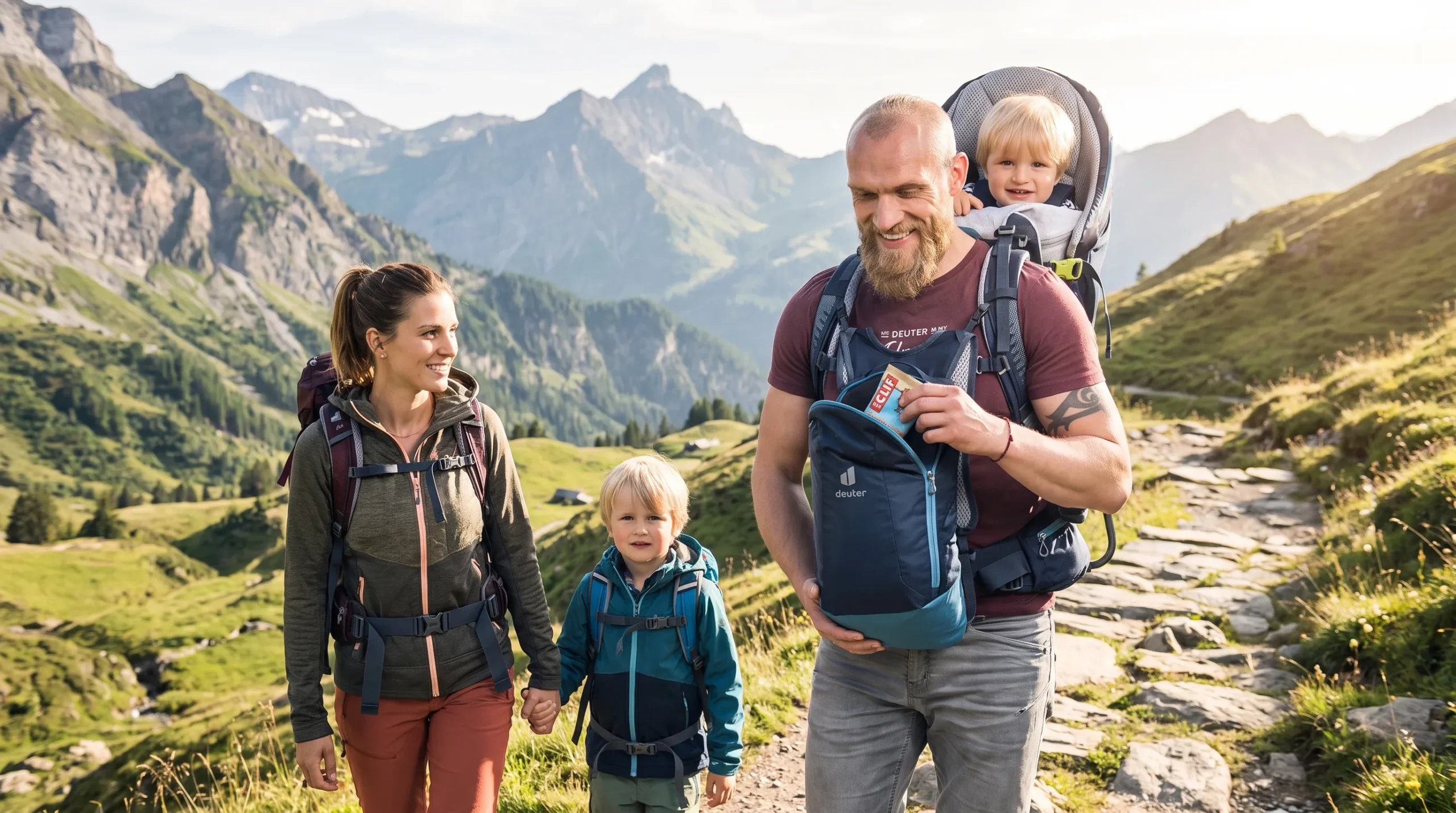
Deuter Kid Comfort Pro Child Carrier, Deuter (Kid Comfort Pro)
Deuter Kid Comfort Pro by Deuter
For the family that refuses to retire from the trail when the stroller years end: a pro-grade hiking carrier built around the radical idea that the child should be more comfortable than the parent.
Overview
We carried our son up a Dolomites switchback in this thing (he was two at the time, long before he outgrew carriers altogether), and somewhere around the third hairpin, with calves burning, sun overhead and twenty-odd kilos of toddler-plus-frame riding our hips, he fell asleep. Just like that. Head lolled into the padded chin cushion, mouth open, gone. That is the whole story of the Deuter Kid Comfort Pro in one moment: it is a carrier engineered so completely around the passenger’s comfort that the passenger keeps nodding off on terrain where you, the engine, are working hardest.
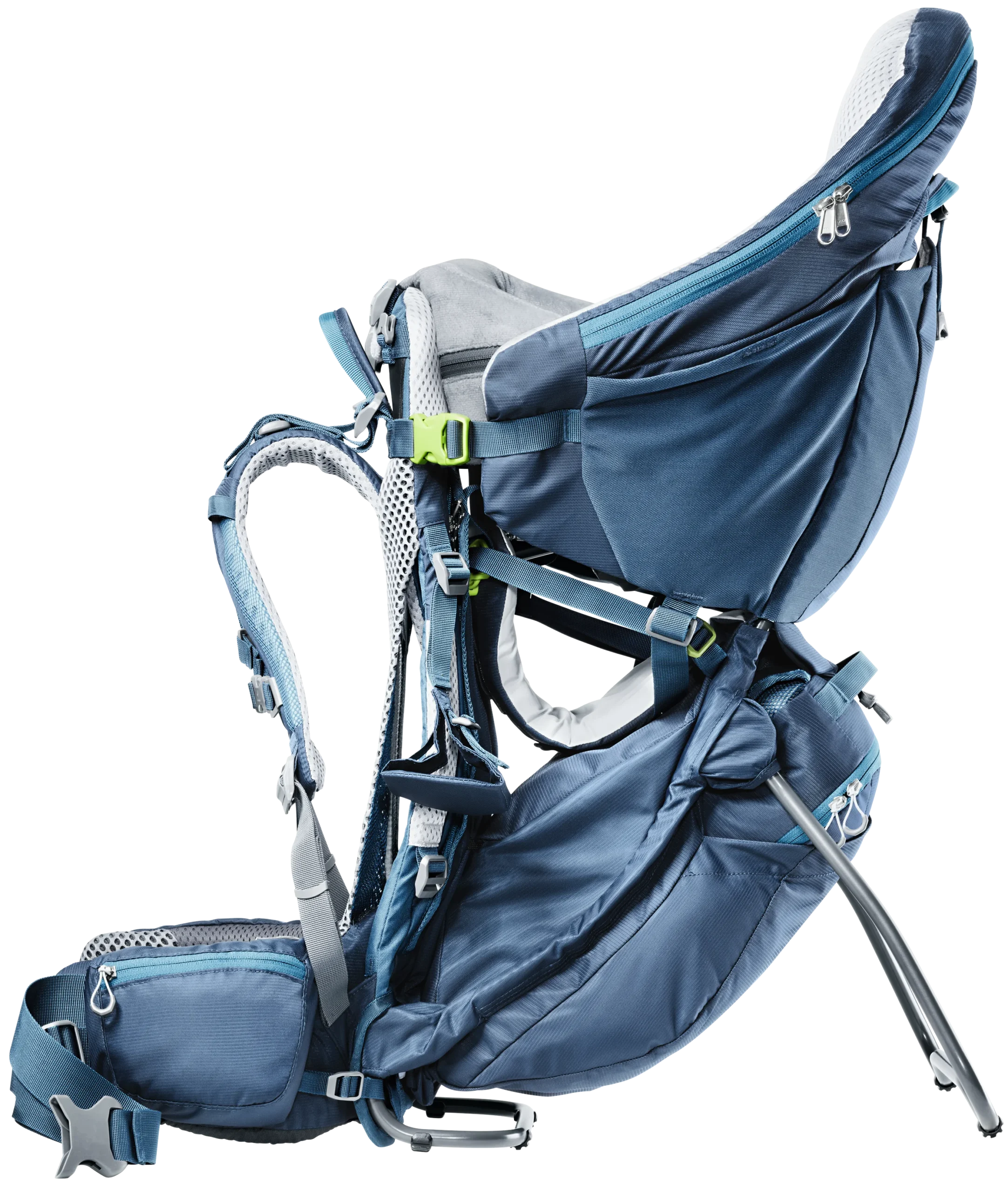
This is the top of Deuter’s child-carrier line: a framed, aluminium-spined hiking Kraxe with a ventilated mesh back, an integrated sun canopy that no rival in this price bracket quite matches, and a detachable 10 litre daypack that turns the whole rig into a genuine day-out system. It is not cheap, it is not light, and it will not fold into your cabin bag, and that’s part of the trade-off. But for affluent parents who keep climbing, walking and exploring well past the pushchair era, it is about as good as a child carrier gets.
Why It’s Great for Family Travel
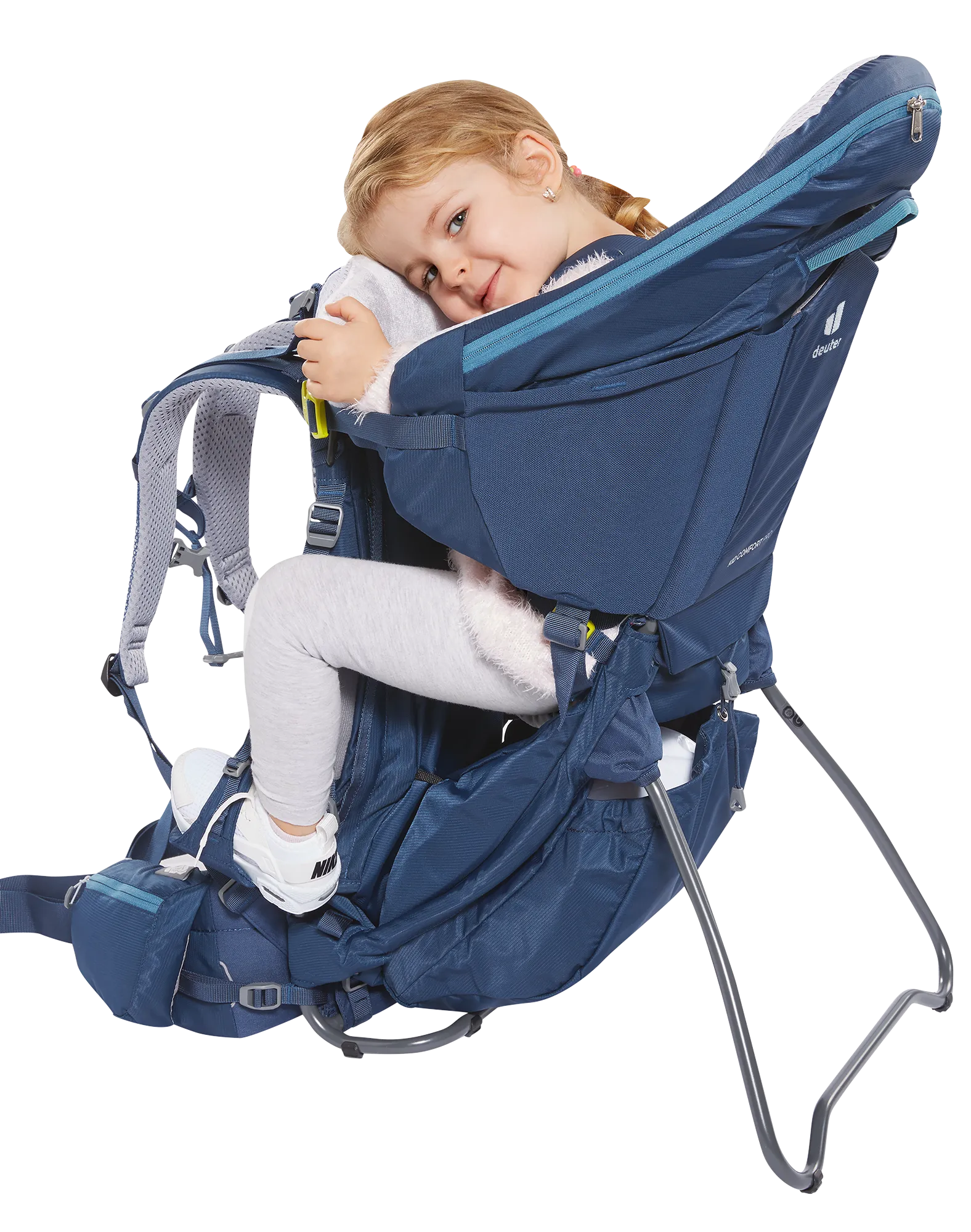
The case for this carrier is built on a single, unglamorous virtue: comfort over distance, for everyone strapped to it. Start with the child. The cockpit is deep and plush, with sides that draw in so a sleepy toddler is held rather than free to slump, and a thick, washable headrest with a soft chin and forehead pad that makes naps far more secure and comfortable. We’ve hiked with carriers where every time the kid dozed off we spent the next mile craning around in low-grade panic about their neck. Here you stop worrying. The seat looks, frankly, more comfortable than the one in our car, and on hot days the child sleeps in it anyway.
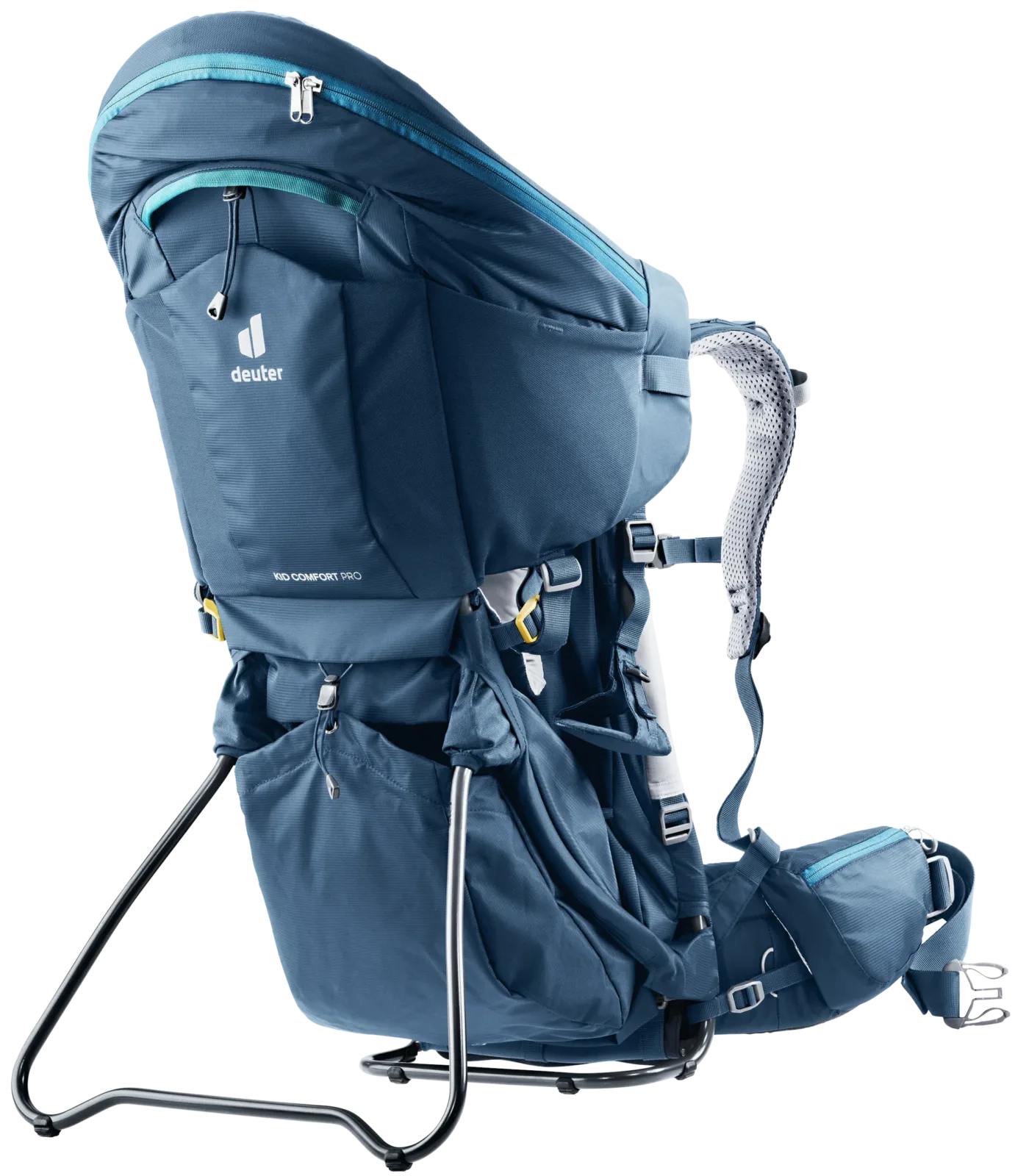
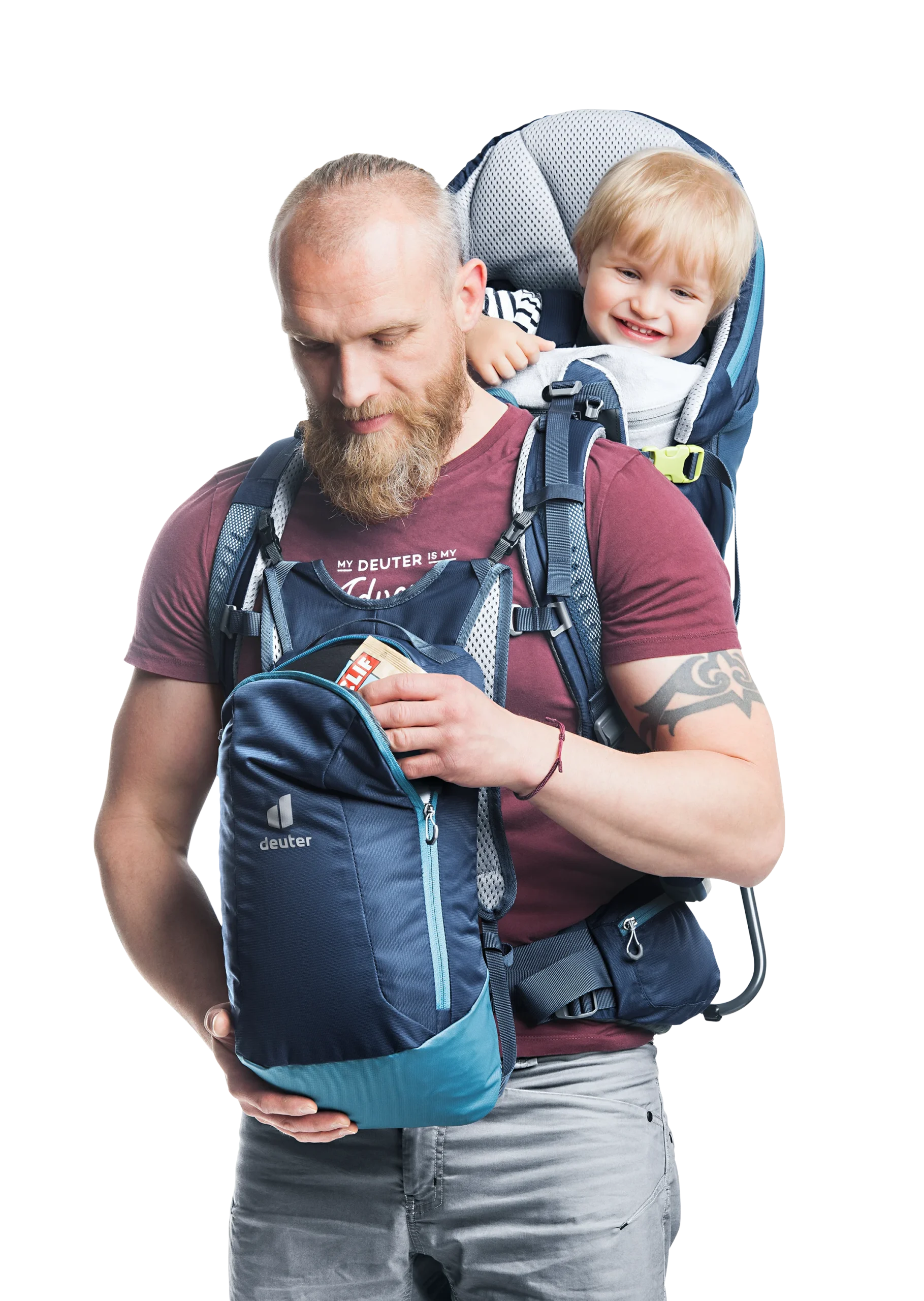
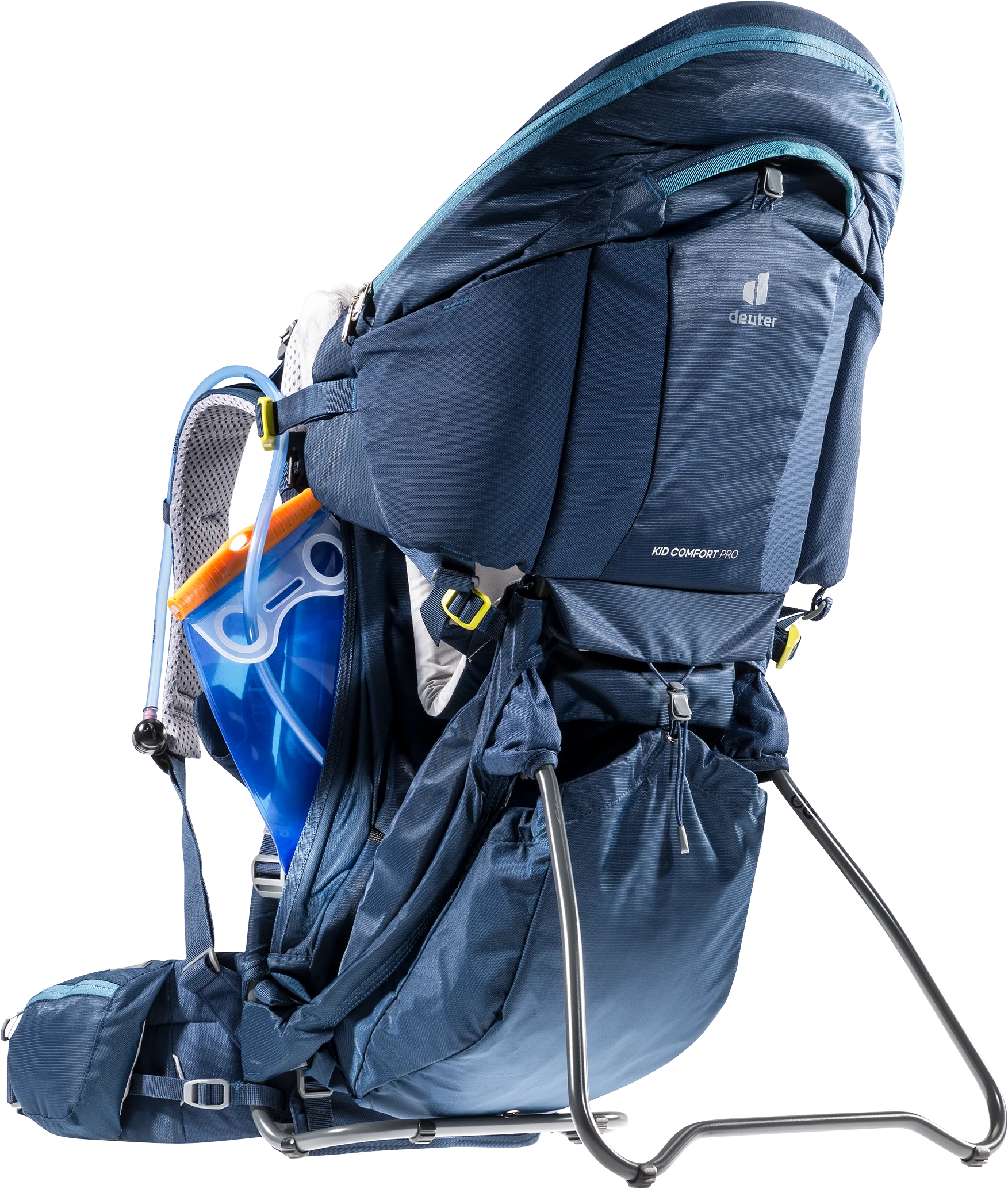
Now the parent. The back panel (Deuter calls it Aircomfort Sensic Vario) is a tensioned 3D AirMesh affair that holds the load a few millimetres off your spine and lets air move through. On a humid afternoon with a small human acting as a personal space heater pressed against you, that ventilation is the difference between a pleasant walk and a swamp. The hip belt does the real carrying, transferring the weight onto your hips the way a proper trekking pack does, and over multi-hour days that’s what saves your shoulders. Add the fixed sun canopy that concertinas out and clips in with almost no fuss, plus the detachable 10 litre daypack for the snacks, layers and the inevitable bag of pinecones, and you have a carrier that handles a full day on the mountain rather than a quick lap of the park.
Real-World Use (Trail / Car / Hotel)
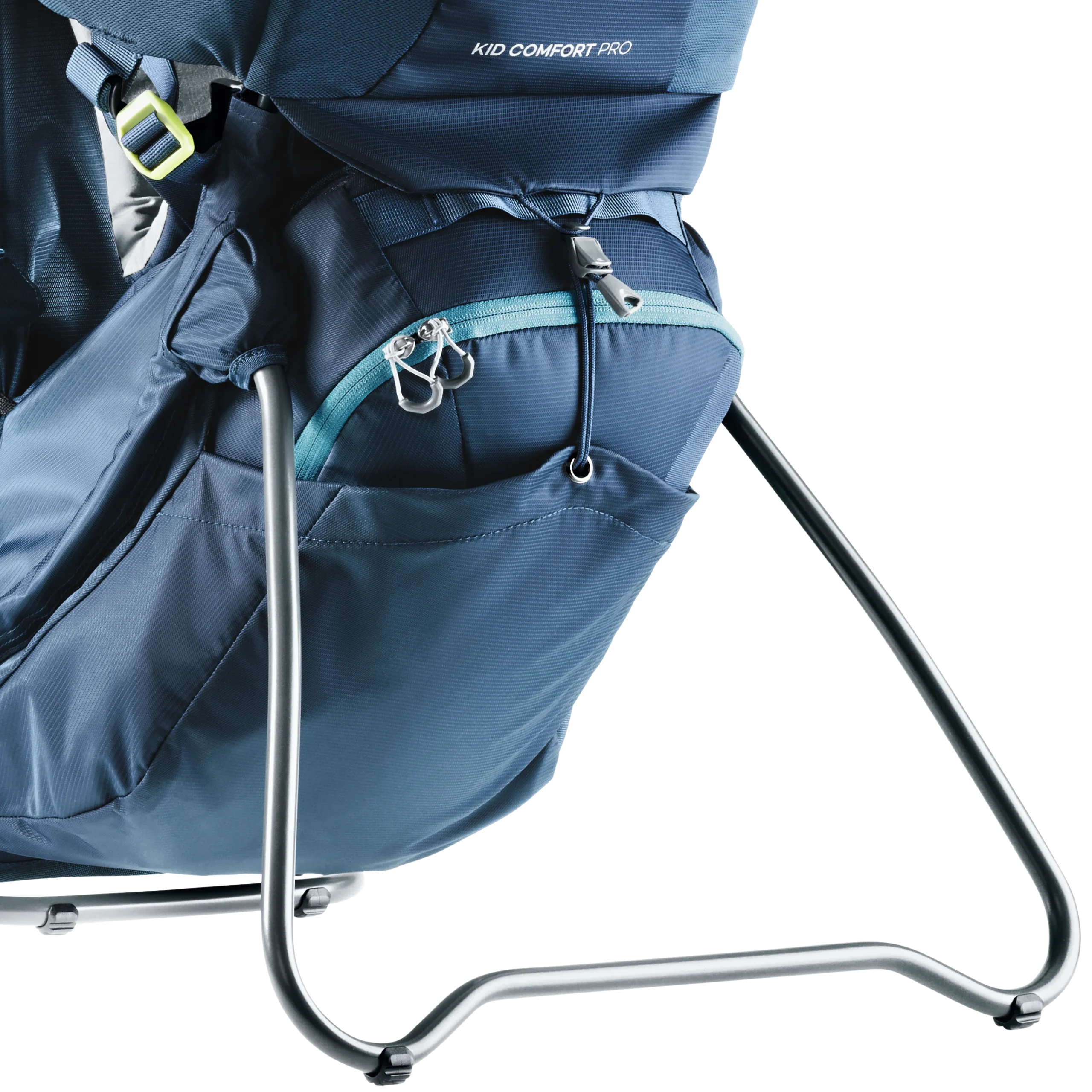
Trail: this is its native habitat and it shows. We took it across rocky singletrack and steep, loose switchbacks, and once it’s dialled in the load sits stable and high, tracking with you rather than fighting you. The stiff kickstand is the unsung hero of solo loading: pop it out, set the carrier down, and it holds the rig upright while you load a child without a second person (note the recall caveat below on this exact part). Side-entry loading means you slide a wriggling toddler in without a wrestling match. One caveat: getting the torso length right the first time is fiddly. The VariSlide adjustment that sets the back length to your height takes nimble fingers and ideally a second pair of hands, and the main storage compartment is awkward to reach into while you’re actually wearing the pack. Set it up at home, not at the trailhead in the rain.
Car: the frame collapses flat (no rigid horizontal struts sticking out), so it slides into a boot corner without eating the whole load space. Flat, yes. Small, no. It is still a large object, and you plan the boot around it. Hotel: at an active alpine or lakeside resort it earns its keep, standing tidily in a corner of the room on that kickstand rather than slumping against a wall. What it will not do is travel light. At over three and a half kilos empty and 80 cm tall, it does not fold to suitcase size and will never see the inside of an overhead bin: if you’re flying, this goes in the hold or gets shipped ahead. It is a mountain tool, not an airport one.
One safety note you should know about. In May 2025 Deuter issued a recall (US CPSC recall 25-256) covering the Kid Comfort, Kid Comfort Pro and Kid Comfort Active carriers, because the hinges on the foldable rear kickstand support leg can crack or break: a fall hazard when the carrier is set down with a child in it. It is narrow in scope: it affects Pro units (model 3621321) with production codes ending 0123, 1223 or 0423, sold roughly March 2023 to March 2025, and Deuter received 13 reports of broken hinges with no injuries. The fix is a free replacement carrier direct from Deuter. The carrier is reported safe while worn; the issue is specifically the stand. If you buy used or already own one, check the production code against Deuter’s recall page before you load a child in and stand it down, and given that the kickstand is one of this carrier’s signature conveniences, it is a caveat worth taking seriously rather than waving away.
Specs That Actually Matter
- Weight: 3.55 kg empty (around 3.86 kg as supplied with the daypack and accessories), among the heaviest carriers in its class.
- Dimensions: 80 × 43 × 34 cm. The frame folds flat for a car boot; it does not pack to cabin-bag size.
- Child range: from approximately 9 months (once the child sits upright unaided) up to a child weight of 18 kg, plus around 4 kg of gear.
- Capacity: 12 litres in the body plus a detachable 10 litre daypack (22 litres total).
- Back system: Aircomfort Sensic Vario ventilated 3D AirMesh; aluminium internal frame.
- Materials: 210D polyamide main fabric, tightly woven and water-resistant; washable, removable headrest and chin pad.
- Safety: 5-point child harness, height-adjustable foot loops, removable chin and forehead pad, side-entry loading, free-standing kickstand; Deuter states the carrier is TÜV/GS-tested (manufacturer claim, no EN number cited). Subject to a 2025 kickstand-hinge recall (US CPSC 25-256) on specific production codes: check the code before buying used.
- Canopy: integrated, fixed sun canopy that folds out and clips into the pack.
- Warranty: 2-year warranty (Deuter de-de page), backed by Deuter’s long-standing repair service.
- Care: spot-clean with mild soap and water, wash the removable pads separately, air-dry fully; do not machine-wash the frame.
Pros & Cons
Pros
- Best-in-class child comfort: deep cushioned cockpit and a soft chin pad that makes trail naps genuinely safe and easy.
- Ventilated Aircomfort back keeps the wearer cool over multi-hour, multi-day hikes, even in heat.
- Excellent stability: the stiff kickstand stands firm for solo loading and won’t roll over.
- Premium build: abrasion-resistant 210D fabric and flawless workmanship that shrugs off rough, repeated use.
- Integrated sun canopy and detachable 10 litre daypack make full days out genuinely workable.
Cons
- Heavy and bulky: 3.55 kg empty, and it will not fit a suitcase or cabin bag.
- Premium price; for casual walkers the cheaper standard Kid Comfort makes more sense.
- The VariSlide torso adjustment is fiddly and really wants a second pair of hands.
- Single-purpose: a brilliant trail carrier, useless as everyday town transport.
- Lifespan is capped at an 18 kg child, and 12 litres of body storage is tight for very long days.
- A 2025 recall (US CPSC 25-256) covers the kickstand-hinge on certain production codes: check the code on any unit you buy.
FFH Gear Score
A premium hiking carrier earns its score on the trail, not on paper, and this one earns most of it. It loses ground where it should: on weight, portability and price (the price of admission for a genuinely pro-grade Kraxe), and we have trimmed its durability and practicality marks for the 2025 kickstand-hinge recall, which touches one of its signature features.
- Functionality: 9.2 / 10
- Build Quality & Durability: 8.4 / 10
- Ease of Use: 7.8 / 10
- Family Practicality: 7.4 / 10
- Pricing: $$$$ of $$$$$
- FFH Gear Score: 8.2 / 10
Final Verdict
If your family’s idea of a holiday involves switchbacks, forest paths and the kind of views you can only earn on foot, the Kid Comfort Pro is close to the end of the conversation. It is the carrier that makes the child want to be carried: the cockpit so plush, the chin pad so well-judged, that naps happen on terrain where you’d least expect them, and the ventilated back means you arrive at the summit warm rather than soaked. The trade-offs are real: it is heavy, it is bulky, it costs the better part of €440, the torso adjustment will test your patience, and its useful life runs out at 18 kg. If you hike a handful of times a year, the cheaper standard Kid Comfort will serve you better and save you a few hundred euros. But if you keep heading for the hills with a small passenger aboard (if the trail is where your family is happiest), this is the one we’d strap on again tomorrow, and we’d do it without a second thought.
Gallery
Deuter Kid Comfort Pro Child Carrier: Family Questions Answered
Who is the Deuter Kid Comfort Pro best for?
It’s best for families who hike proper trails and want maximum child comfort over distance. FFH found it excels on steep, rocky terrain thanks to its stable high carry, deep plush child “cockpit”, and nap-friendly headrest with chin/forehead padding. It’s a specialist mountain tool rather than an everyday urban carrier, and its weight and bulk make most sense if you’ll use it frequently on longer walks.
What age and size child can use the Deuter Kid Comfort Pro?
It’s for children from about 9 months (once they can sit upright unaided) up to 18kg. Deuter’s stated child range is approximately 9 months to a maximum child weight of 18kg. The carrier is designed for seated carrying with a 5-point harness and height-adjustable foot loops, but it’s not suitable for younger babies who can’t sit independently.
How heavy and big is the Deuter Kid Comfort Pro carrier?
It’s heavy and tall: 3.55kg empty and 80 × 43 × 34cm. FFH notes it’s among the heaviest carriers in its class, and it stays a large object even when the frame collapses flat for storage. As supplied with the daypack and accessories, the weight is around 3.86kg.
Can I take the Deuter Kid Comfort Pro as carry-on luggage?
No. FFH says it will never fit in an overhead bin and doesn’t fold to cabin-bag size. At 80cm tall and over 3.5kg empty, it’s not designed for light airport travel. If you fly, the article advises it goes in the hold (checked luggage) or is shipped ahead, rather than being treated like a carry-on item.
Will the Deuter Kid Comfort Pro fit in a car boot?
It can fit, because the frame collapses flat, but it’s still bulky. FFH reports the frame folds flat without rigid horizontal struts sticking out, so it can slide into a boot corner. However, it remains a large item and you’ll likely plan your boot space around it rather than expecting it to disappear alongside other luggage.
Is it comfortable for both the child and the parent on long hikes?
Yes. Comfort is the core selling point for both passenger and wearer. For the child, FFH highlights a deep, cushioned seat with supportive sides plus a thick, washable headrest with soft chin/forehead padding that makes naps feel secure. For the adult, the Aircomfort Sensic Vario ventilated 3D AirMesh back keeps the load slightly off your spine, and the hip belt transfers weight onto your hips on multi-hour days.
How much storage does the Deuter Kid Comfort Pro have?
It offers 22 litres total: 12L in the main body plus a detachable 10L daypack. FFH found the detachable daypack especially useful for a full day out (snacks, layers and extras). One practical limitation: the main storage compartment is described as awkward to reach while you’re wearing the carrier, so it’s easier to organise and pack it before you set off.
Is there a recall or safety issue I should know about?
Yes. There was a May 2025 Deuter recall (US CPSC 25-256) affecting certain units due to kickstand-hinge cracking. The article says it covers Kid Comfort, Kid Comfort Pro and Kid Comfort Active carriers; for the Pro, it applies to model 3621321 with production codes ending 0123, 1223 or 0423 (sold roughly March 2023 to March 2025). Deuter received 13 reports of broken hinges with no injuries, and the fix is a free replacement carrier direct from Deuter; the issue is specifically when the carrier is set down on the stand with a child in it.
What are good alternatives if I don’t need a pro hiking child carrier?
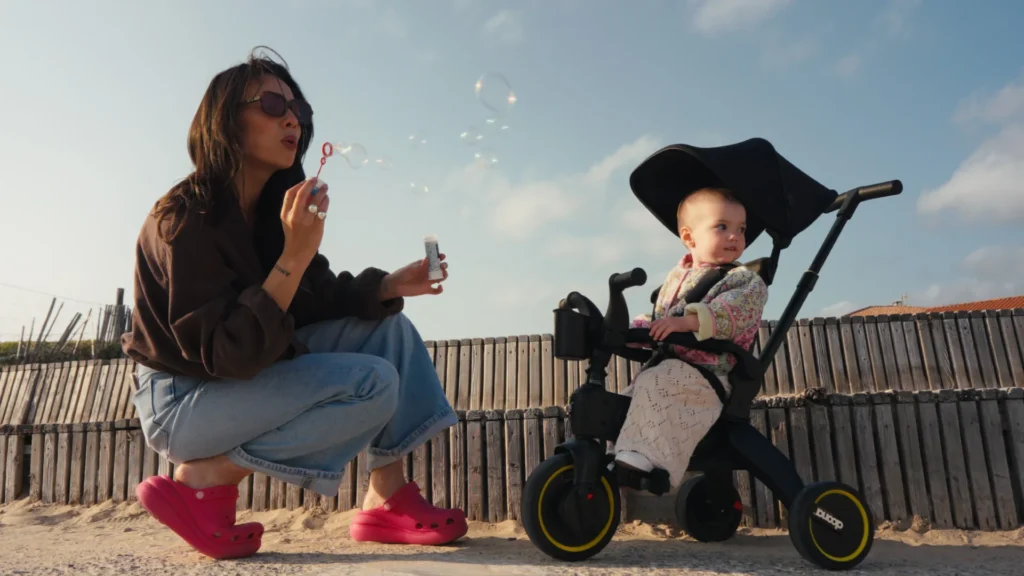
If you want something lighter-duty for travel and day trips, consider a ride-on or travel backpack instead. The Doona Liki Trike S5 (pricing tier 3) is a compact ride-on/trike-style option for outings where you’re not carrying a child on your back. For parent travel packing rather than child-carrying, the Peak Design Travel Backpack 45L (pricing tier 4) is a premium luggage-style backpack: useful for flights, but it’s not a child carrier.