

Overview
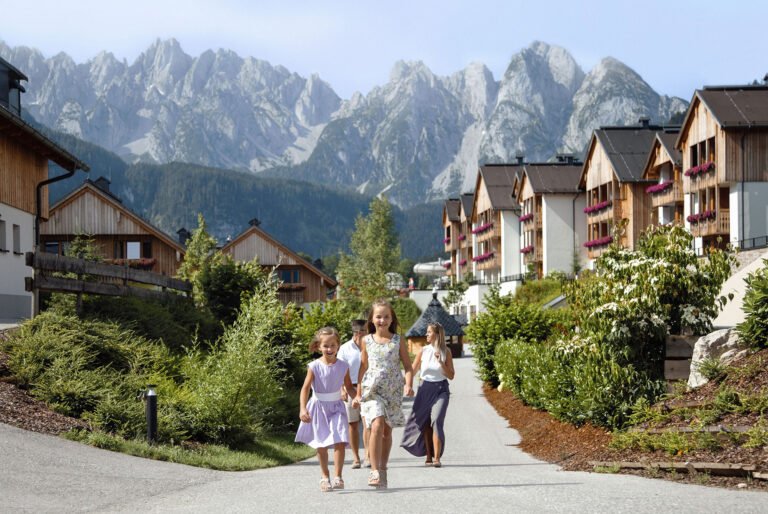
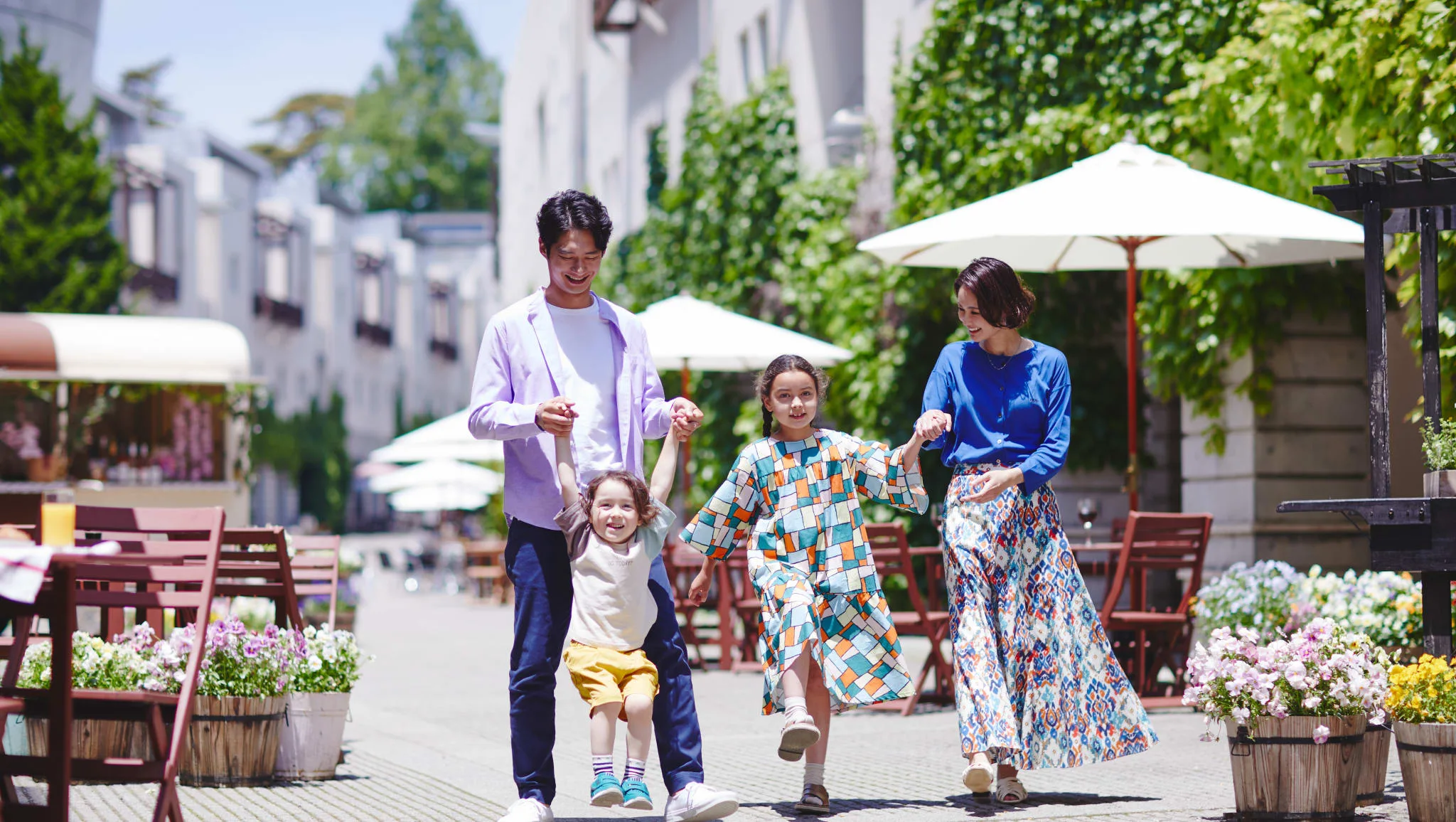
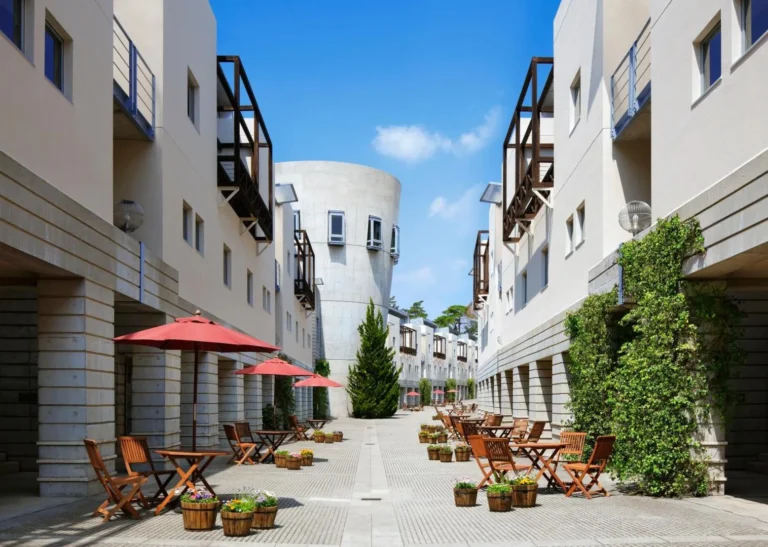
We arrived at RISONARE Yatsugatake expecting a mountain hotel and found, instead, a small Italian village dropped into the highlands of Yamanashi. Piment Street runs for 160 metres between ochre façades, café tables and wine shops; beyond it, the forest closes in and the ridgeline of the Yatsugatake mountains sharpens the horizon. The conceit could have felt theatrical. Mario Bellini’s architecture, now softened by three decades of weather and family life, gives it enough conviction to work.
The real surprise sat behind a much less romantic name: Il Mare. At eight in the morning, the indoor pool was already warm, bright and busy. A wave rolled through the main basin at half past the hour, small children squealed in the shallow forest play zone, and older ones waited for the slides with the grave concentration of athletes. Our nine-year-old abandoned all discussion of sightseeing. Our six-year-old agreed. This was now a pool holiday, whatever the mountains might think about it — a judgment that held firm for the rest of the stay.
That tension explains the resort. RISONARE Yatsugatake is part alpine playground, part wine retreat and part intensely practical family machine. Its 172 rooms include proper five-person layouts, a kitchenette category with bunk beds, broad terraces and duplex suites. The programme ranges from pastry-making and balance bikes to ropes courses, horse care, kayaking, mountain biking and skiing. Parents get local wine, an ambitious Italian tasting menu, forest bathing and enough coffee shops to stage a minor literary festival.
It is not seamless. Some bathrooms and corridors show their age, stairs complicate several room categories, and the public bath requires an exposed walk that felt particularly uninviting after dark. Activities and meals accumulate quickly on the bill. Childcare is narrow rather than comprehensive: the playroom requires a parent, while the evening nursery exists only for parents dining at OTTO SETTE or using the spa. English support is available, though Japanese remains the working language for several children’s sessions.
Still, few resorts make bad-weather family time this absorbing. We could spend a wet morning in the wave pool, turn lunch into a wander along Piment Street, send a child into a chef’s jacket at Kids Studio, then watch the sky clear over the forest. The hotel has rough edges, but it also has a distinct point of view. Children are not accommodated at the edge of an adult resort here. Their curiosity supplies the plot.
Location & Accessibility
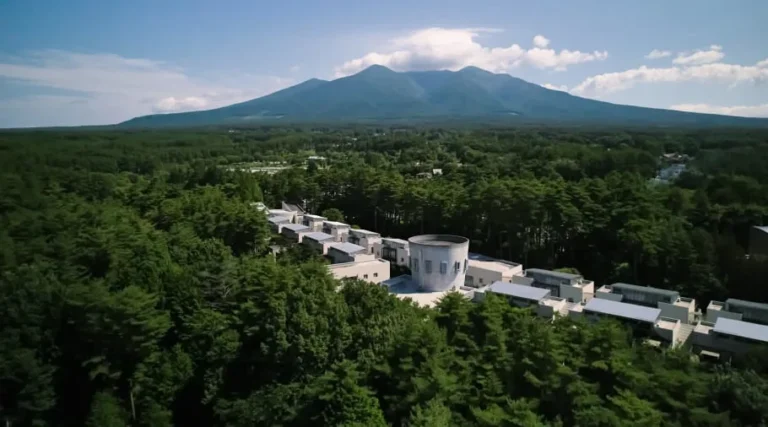
RISONARE Yatsugatake stands in Kobuchisawa, within the city of Hokuto in Yamanashi Prefecture. Tokyo felt far enough away to change the pace, yet the rail journey remained straightforward: the Limited Express Azusa runs from Shinjuku to JR Kobuchizawa Station in about two hours. From the station, the hotel’s complimentary shuttle took roughly five minutes. It cannot be reserved, so families need to work with the published departure pattern rather than arrange a private pickup.
By car, the resort is five minutes from Kobuchizawa interchange. There are 500 complimentary self-parking spaces and four 200V, 6kW EV charging points, with charging arranged after a room booking. Families driving in winter should take the warnings about snow and ice seriously; winter tyres or anti-skid equipment belong on the checklist, even when Tokyo is dry.
Shinshu-Matsumoto Airport is the nearest commercial airport, around 58 kilometres away and about 50 minutes by road. The hotel does not run a confirmed airport shuttle. For international families arriving through Tokyo, rail remains the cleanest route unless the stay forms part of a wider self-drive journey through central Japan. Luggage forwarding is worth considering, especially with skis, a pushchair or several small suitcases.
Once inside the resort, Piment Street creates a pleasant car-free centre. Breakfast coffee, bakery stops, gelato, lunch and a bottle of Yamanashi wine all sit within an easy promenade. The broader region is different. Wineries, shrines, mountain viewpoints and ski areas are dispersed, and a car or arranged transfer opens far more of the landscape than walking does. Philia Museum lies close enough for a stroll; most other excursions need wheels.
The estate itself is not uniformly easy with a pushchair. Buildings step down the site, maisonettes contain internal stairs, and routes between a room, Il Mare and Moku Moku Yu involve changes of level. We learned to leave time rather than dash. In rain, the outdoor sections between facilities become more consequential; in winter, the walk to the public bath is cold enough to discourage all but the committed.
For families whose main plan is pool, food and scheduled activity, the resort works as a self-contained village. Those hoping to explore Yamanashi should hire a car or plan transport before arrival. The landscape rewards it: forest, farms, mountain air and the vineyards of Japan’s leading wine prefecture give this resort a setting no generic leisure complex could manufacture.
Accommodation (Rooms & Suites)

Space is the first advantage. The smallest Superior rooms measure 35 to 44 square metres and sleep up to three; the largest Mario Bellini Suite spreads across 135 square metres for four. Between them sits a useful collection of four- and five-person options, many far larger than an urban Japanese hotel room. Families should resist booking by the word suite alone and study the actual floor plan, because stairs, sofa beds and building location influence the stay as much as square metres.
Our preferred all-round choices are the 55 to 70 square metre Deluxe rooms and the 67 square metre Family Stay on Piment Street. The latter sleeps five and separates the bedroom from a living area, with mat space and a terrace giving children room to settle without colonising every adult surface. Deluxe Five is larger again at 90 square metres, sleeps five and has a southern position with mountain views. It is a compelling answer for families with three children who need predictable territory without a room upgrade to a full suite.
The Family Stay with Simple Kitchen is the most practical long-stay layout. Its 70 square metres include two bunk beds and a kitchenette, and the fixed child beds remove the nightly sofa-bed reshuffle. We would choose it for siblings who need predictable sleeping territory, or for parents who want to prepare an early snack without crossing the resort in pyjamas. The kitchenette is simple, not an apartment kitchen, but even modest food-preparation space changes the rhythm with small children.
Piment Street’s 70 square metre Terrace rooms provide a separate bedroom and living room, mat space and a large terrace. The 70 square metre Maisonette has a duplex arrangement and its own terrace; it looks dramatic, though repeated stair patrol does not improve anyone’s holiday with a newly mobile toddler. The 62 to 66 square metre Maisonette with Open-air Bath adds a private outdoor bathing experience, while the 100 square metre Wine Suite Maisonette sleeps five amid deep wine-red tones and deliberately adult design.
Then there is the Mario Bellini Suite, an expansive piece of Italian design history with substantial living space and furniture worthy of attention. It suits a family seeking architectural character, though it is not the most efficient value proposition. Superior Modern, at 55 square metres for four, balances space and a broad sofa area without climbing into the top suite categories.
Bed planning needs precision. Many categories combine twin beds with sofas, sofa beds or hotel-supplied bedding, and published wording differs between direct and third-party channels. Ask which beds will be made up for each child and keep the response in writing. Interconnecting rooms are not confirmed, so larger families should book one category whose registered capacity covers the whole party rather than rely on adjacent rooms.
Cots occupy similarly uncertain ground. One booking channel says neither cots nor extra beds are available, while the hotel has supplied a baby bed on request and its own information allows additional bedding within a room’s registered capacity. We would treat a cot as request-only until reservations confirms it. No arrangement permits families to exceed the stated occupancy, and the documentation from the hotel leaves this boundary entirely clear.
The family equipment is thoughtful. Children’s nightwear begins at 90 centimetres; baby soap and diaper-disposal bins are available, alongside reservable items such as a toilet-seat reducer, step stool and simple toys. Shoes come off at the room entrance, which made the floor feel more useful for play and crawling. Every guestroom is non-smoking, a policy applied throughout the building including terraces and balconies.
Age has left visible marks. The hotel opened in 1992, and although guestrooms and the buffet restaurant received a major renovation in 2017, condition varies. We found generous proportions and orderly housekeeping, but several bathrooms and finishes felt behind the room rates. Stairs and changes of level are integral to older parts of the property. Occasional air-conditioning, damp or insect issues have also affected rooms, so raise any problem promptly rather than endure it. Book for the layout, the resort and the activity programme, not for flawless new-build polish.
Family Amenities & Kids’ Activities

Il Mare is the anchor. The year-round indoor aquatic complex contains a main wave pool that runs from zero to 140 centimetres deep, with waves reaching up to 1.2 metres for about ten minutes at half past each hour. Water stays between 28 and 30°C and the air between 26 and 32°C. Those numbers mattered on a cool mountain morning: nobody hovered at the edge bargaining with themselves.
Smaller children have a forest-themed water-play area with seven structures and ten play elements, plus a 40-centimetre-deep ball pool. The three-lane Dekoboko slide has an 80-centimetre minimum height. The faster 13-metre Dokidoki slide requires 110 centimetres and has a 70-kilogram maximum weight. An outdoor jet bath extends the water experience beyond the hall, and Marina Blu supplies poolside snacks and drinks.
The wave cycle gave our children a clock they respected. Quiet water meant slides and exploration; the first change in the pool’s sound sent them back towards the deepening basin. Lifeguards monitor the facility and may restrict use. Children aged 12 and under need an adult of at least 18 in swimwear and in the water, with no more than three children per adult. That rule reduces the freedom some parents expect for confident tweens, but it is explicit and consistently enforced.
Swim diapers are accepted beneath a swimsuit, and packs of four cost ¥800. Towels are complimentary. Pool hours run from 08:00 to 18:00, with last admission at 17:00, so this is an early rather than evening attraction. A Pool Free Pass covers use before check-in, throughout the stay and after checkout. Without one, admission costs ¥1,600 per adult and ¥800 for children aged four to 11; children three and under enter free. Check the rate plan carefully because a family of four feels that distinction immediately.
For an extra ¥2,500 per board, families can try stand-up paddleboarding inside the pool. Registration is on the day and instruction is not included. There is no beach and no separate outdoor waterpark. Off-site kayaking introduces real landscape and open water, with paid sessions from age three and a participating adult required for children under 12.
The playroom is useful, but its identity needs spelling out: it is not an all-day drop-off kids’ club. Designed for babies through preschoolers, it opens from 09:00 to 18:00, shifting to 08:30 to 17:30 in winter. A parent stays throughout. Shoes, food and drinks remain outside, while a nursing room and diaper-changing area take much of the friction out of a wet-weather visit. We watched toddlers move between soft play and toys while parents sat close enough to intervene without directing every minute.
Childcare is limited to a particular evening nursery. It accepts children from six months to preschool age between 17:15 and 21:00, at no charge, but only while parents dine at OTTO SETTE or receive a hotel spa treatment. Reservations close at 17:00 three days before use. The service is hosted in Japanese; children with a temperature above 37.5°C cannot attend, and allergy meals are not provided. No separate in-room babysitting or general paid nanny service exists as a bookable option, though a direct enquiry to the concierge before arrival is worth making.
For four- to ten-year-olds, RISONARE Kids Studio delivers the most recognisable supervised children’s session. The 50-minute programme costs ¥2,000, runs around five times daily and needs a reservation. Children put on miniature chef whites and work through a food activity; Japanese is the operating language. Our six-year-old did not need fluent vocabulary to understand the pleasures of an apron and a task, though parents of a hesitant child should discuss language support before paying.
The broader programme is where Yatsugatake pulls away from an ordinary family resort. Parent-Child Forest Explorers serves ages one to six. Forest Expedition narrows the focus to four- to six-year-olds. Forest Aerial Walk KIDS accepts children from three to seven who are at least 90 centimetres tall, with the course held a manageable 1.5 metres above ground. Older children move to aerial routes suspended five to seven metres high, while the forest climbing wall starts at age five.
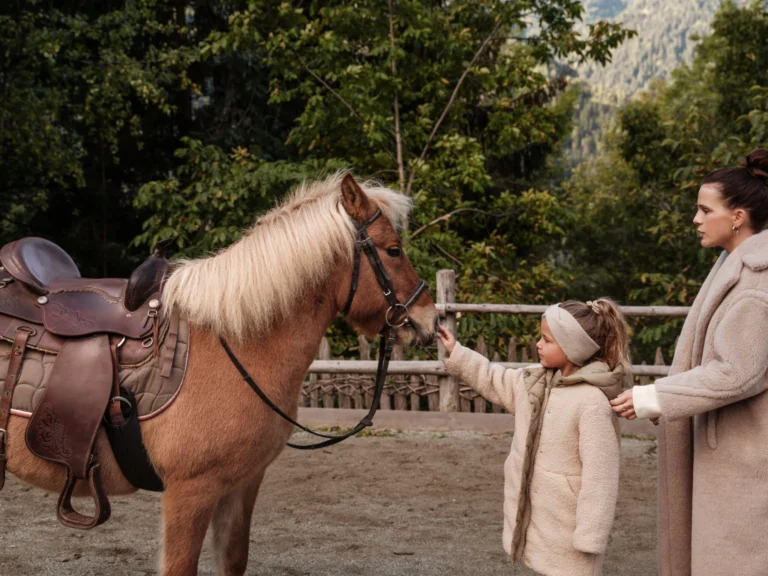
At ground level, two- to five-year-olds use complimentary balance bikes in Forest Strider. Mountain-bike challenges start from five or six, depending on the course. Horse experiences range from a care session for ages three and above, priced at ¥13,000 for two people plus ¥6,500 for each additional participant, to a summer Horse Academy for eight- to 12-year-olds. Private stargazing accepts all ages. Seasonal Night Adventure sessions for four- to ten-year-olds run at ¥3,800 per child and require advance booking through the activity desk.
This variety makes pre-arrival planning worthwhile. More than 50 seasonal and year-round experiences move through the calendar, many with age, height, weather and reservation conditions. Cancellation charges are strict on numerous paid activities. We would reserve one priority experience per child, then leave open space around the pool and forest rather than turn the stay into a clipboard exercise.
Winter changes the mood rather than closing the operation. Ski lessons, equipment arrangements, transfers and access to nearby slopes make a first family ski trip manageable, while the indoor pool absorbs the hours when fingers have had enough. Snow play adds another layer for younger children. The hotel is not ski-in, ski-out, and families should confirm the current transport and lesson arrangements for their dates.
Tweens fare well. Ropes, climbing, riding, mountain biking, kayaking, pool time and winter sports offer real progression rather than enlarged preschool craft. Our nine-year-old could choose challenge without entering an adult activity by stealth. Teenagers are the weak spot. Advanced outdoor options and the pool remain available, yet there is no teen club, social lounge or age-specific evening programme. A sporty 14-year-old with engaged parents has material to work with; a teen seeking peers and independence will find the structure thin.
Adults have the appointment-based RISONARE Yatsugatake Spa, with treatments centred on the afternoon and evening. Moku Moku Yu opens from 06:00 to 10:00 and again from 15:00 to 23:00, combining indoor and open-air bathing. The bath itself brings welcome stillness. Reaching it is the problem: the route is long, partly exposed and dispiriting in rain or winter cold, especially with a tired child. A separate forest sauna operates off site on limited weekdays, with public sessions restricted to elementary-age children and older. No conventional gym is listed.
Dining

RISONARE Yatsugatake has six restaurants and nine cafés or lounges, a scale that makes the resort feel more village than hotel. Most room rates do not include a broad half-board arrangement, and there is no resort-wide dine-around plan. Individual packages include meals, but families booking room-only should budget and reserve before arrival.
YYgrill is the workhorse. Breakfast runs from 06:30 to 09:30; dinner opens at 17:00, with last orders at 19:45. The room has the easy clatter of a family buffet, high chairs and children’s cutlery, and local vegetables give the spread a sense of place. Porridge, purées and toppings are available for babies, although English-language information about prepared baby food conflicts. Parents who need a particular texture or allergy-safe product should bring a fallback and confirm directly.
Dinner costs ¥6,200 for adults, ¥4,340 for ages seven to 11 and ¥3,100 for ages four to six; children three and under eat free. Breakfast is ¥2,800, ¥1,960 and ¥1,400 across the same paid age bands, again free through age three. The tiering is transparent, yet four family dinners make a noticeable addition to the stay.
OTTO SETTE is the occasion restaurant, serving an Italian Vino e Verdura tasting menu built around wine and vegetables. Dinner begins at 17:30 and takes reservations through a last seating or order point at 20:15. Adults pay ¥18,000; the seven-to-11 menu is ¥8,470 and the four-to-six menu ¥6,050. Three retail baby-food options begin at ¥500. Children are welcome, and the linked evening nursery gives parents with babies or preschoolers a narrow but valuable route to a longer dinner.
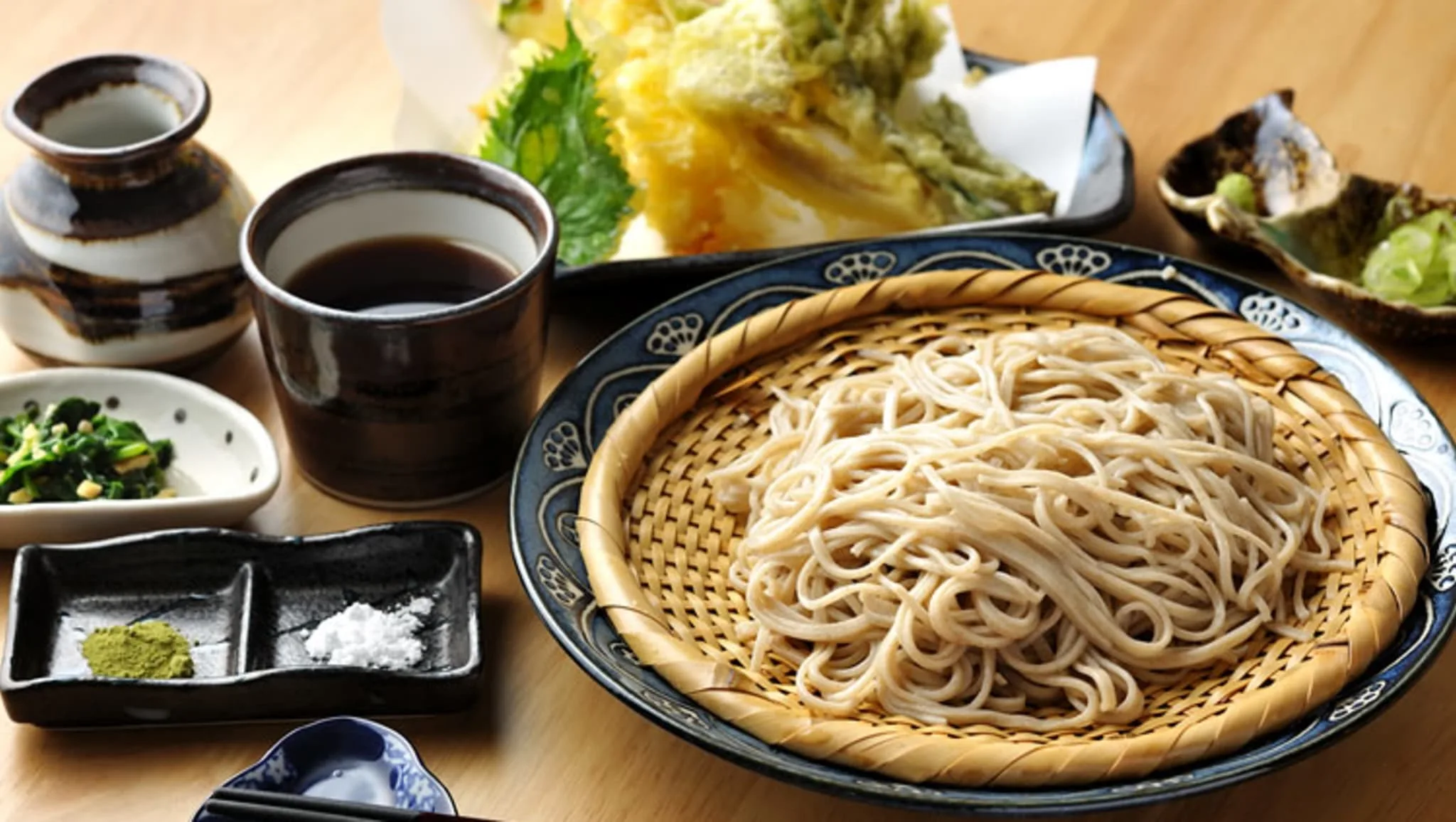
Piment Street handles less formal appetites. Atelier de Fromage serves cheese pizza, fondue, churros and desserts. B-Pono covers burgers, salmon and vegetable dishes. Tokiwa-shirazuni cooks seasonal Japanese food and charcoal-grilled fish; VINOTECA is an Italian osteria; SOBAROKU deals in soba and tempura. HARE terrace supplies gelato, Boulangerie NODA starts the morning with bakery goods, and Maruyama Coffee takes coffee seriously. BOOKS & CAFE stays open until 22:00 for sandwiches, bagels, drinks and browsing.
Wine is not decorative branding here. Yatsugatake Wine House pours 24 Yamanashi and Nagano wines through self-service dispensers, and the Yamanashi Sparkling Lounge offers complimentary local sparkling wine from 19:00 to 22:00. VINO BOX packages a takeaway wine-and-snack pairing for ¥2,800, though it is not offered to children. These adult moments coexist easily with family life, which is a finer trick than hiding every bottle until bedtime.
Opening times require attention. Several street outlets close in the late afternoon or sell out, children’s choices vary, and an unplanned dinner can become frustrating once smaller places stop serving. We chose our evening restaurant before lunch and kept bakery supplies in reserve. That small piece of administration prevented the familiar 18:30 family spiral, when everyone is hungry and every attractive table has already disappeared.
Staff & Service Quality

Service at RISONARE Yatsugatake is energetic and family-aware rather than ceremonially polished, and the style suits the resort’s operational scale.
Station-shuttle drivers, reception staff, pool attendants and restaurant teams move a large number of guests through a complex resort. We found the strongest interactions around practical needs: locating child equipment, explaining pool rules and untangling activity times.
Families should expect Japanese to dominate. English support exists at hotel level, but several children’s activities and the nursery explicitly operate in Japanese. A child who follows visual instruction will manage many craft or physical sessions; medical detail, allergies and childcare handover deserve a slower conversation. We would send requests in writing before arrival and carry translated notes for anything safety-critical.
The activity system rewards organised parents more than spontaneous ones, and the gap between the two approaches is measurable.
Staff can explain age and height bands, but popular sessions still require timely reservations, and some cancellation schedules reach 100 per cent from two days before. Front desk hours continue late enough for arrivals through 23:00, while the noon checkout is notably civilised. Pool-pass plans that permit use before check-in and after checkout help convert travel days into resort days.
Consistency is not absolute. During busy periods, help has sometimes fallen below the level families needed, including in a distressing child-illness situation connected with the shuttle. We also noticed how quickly an ageing-room problem changes the experience if it is not handled promptly. Photograph the issue, call straight away and ask for a specific remedy. The operation is capable of warm, attentive service, but the physical scale means parents should not assume a concern will follow them automatically between departments.
Safety & Cleanliness
The pool has the clearest safety framework of any area on the property, with written rules applied consistently by the team.
Lifeguards supervise, slides carry height and weight limits, and every child aged 12 or under needs an adult of at least 18 in the water. One adult may supervise no more than three children. Waves run on a known cycle rather than continuously, and staff retain the right to restrict entry or an activity. Parents still need to remain active; the shallow-to-deep profile reaches 140 centimetres and the largest waves reach 1.2 metres.
For babies, the combination of swim diapers, nursing areas, changing tables and a shallow play zone works well. Pool towels remove one item from the bag. The hotel’s fever threshold of 37.5°C for nursery admission is precise, and the no-allergy-meal rule makes the boundary of that childcare offer equally clear.
Guestroom cleanliness was good during our stay, and removing shoes at the entrance kept living floors pleasant for children who spent time at floor level.
The resort’s weakest points are physical age and circulation. Worn bathrooms, damp, mould, insects and air-conditioning faults have arisen in individual rooms. None should be dismissed as rustic charm. Ask housekeeping or reception to inspect and correct the problem, or request a move if the response does not resolve it.
Steps deserve special attention. Duplex rooms put an internal staircase into daily family life, other buildings change level, and the external bath route becomes slippery or cold in poor weather. Families with toddlers, reduced mobility or a pushchair should request the simplest route between room, restaurant and pool, then avoid booking a maisonette for its photographs alone.
All guestrooms are non-smoking. Winter drivers need appropriate tyres or anti-skid equipment, and off-site kayaking, skiing, riding and aerial courses each impose their own participation rules. The resort is safest when treated as an active mountain base, not a sealed theme park: read the conditions, respect the weather and match the activity to the child’s actual confidence rather than the birthday printed on the form.
Value & Pricing
RISONARE Yatsugatake sits in FFH’s price band 4 of 5. A sampled late-October date started at about ¥31,500 per person for two sharing, equivalent to ¥63,000 or roughly €339 per room. A September holiday date reached about ¥81,000 per person, or ¥162,000 and roughly €871 for two. These were dynamic room-only examples; family-room occupancy, the children’s ages and the selected plan will change the result.
The lower figure looks attractive beside the room sizes and facilities. The upper one demands scrutiny, particularly in an older room with sofa beds. Value improves when the family uses Il Mare repeatedly, joins the forest programme and stays within the resort. It deteriorates for travellers who pay peak rates but spend each day touring by car.
Meals are the next calculation, and the numbers compound faster than the resort’s relaxed atmosphere suggests they will.
Two adults and two school-age children at YYgrill can add a substantial nightly sum before drinks, while OTTO SETTE is a deliberate splurge. Paid riding, cooking, kayaking and adventure sessions accumulate faster than their cheerful booking cards suggest. Set an activity allowance per child before arrival and decide which meals matter. The bakery, casual Piment Street outlets and a kitchenette room help control both cost and scheduling.
Rate-plan details deserve equal attention and repay careful reading before any deposit is placed.
A Pool Free Pass carries real value because it covers arrival day, the full stay and time after checkout; without it, a family pays each time. Advance-purchase and multi-night discounts may reduce the room price, but cancellation terms become part of the cost. Pet owners face a separate ¥5,093 nightly charge per dog in designated domestic-market rooms, subject to documentation and behavioural rules.
At its best, the resort replaces several holiday purchases at once: large accommodation, a dependable wet-weather pool, seasonal mountain infrastructure and enough food outlets to avoid daily driving. It is not an inclusive bubble, and the final bill rewards planning. Shoulder season is the sweet spot, when room rates ease but Il Mare remains weatherproof and the forest still supplies the sense of escape.
Why We Picked It
What stayed with us was the range of childhood it could hold in one day. A preschooler could move from a shallow pool to a parent-accompanied playroom and a low forest course. A nine-year-old could cook, climb, ride or chase waves. Adults could drink Yamanashi wine without pretending they had booked an adults-only retreat. These strands meet naturally rather than being stacked as amenities on a brochure.
The design helps. Piment Street gives children a legible centre and parents the small pleasure of choosing a café rather than returning to one vast buffet room for every need. The forest changes with the weather. Wine culture keeps the property rooted in Yamanashi, while Bellini’s architecture lends a slightly eccentric European frame. There are newer mountain resorts, but few with this mixture of Japanese family logistics and Italian-village theatre.
We also value the honesty of its strongest age fit. Children from four to 12 receive the deepest experience. Infants are well supported by equipment, nursing spaces and pool infrastructure, though the drop-off nursery is restricted. Teenagers need an appetite for outdoor activity because no dedicated social programme waits for them. That clarity lets families choose it for the right trip.
The flaws are material. Bathrooms and circulation do not always match the price, the walk to Moku Moku Yu is awkward, English-led childcare is not the norm, and a week of paid activities plus restaurant dinners changes the budget. Families who want an immaculate new room, full-day childcare from babyhood or a teen club should book elsewhere.
For an energetic family comfortable doing part of the day together, RISONARE Yatsugatake has uncommon depth. On our final morning the children voted for one more wave cycle before the station shuttle. We had mountains outside, coffee waiting on Piment Street and a train back to Tokyo after lunch. The pool won. At this resort, it frequently will.
Hoshino Resorts RISONARE Yatsugatake: Family Questions Answered
Is Hoshino Resorts RISONARE Yatsugatake genuinely good for families?
Yes—especially for active families who want a weatherproof pool and lots of structured activities. Il Mare’s warm indoor wave pool and the forest programmes make it easy to fill days without leaving the resort. The trade-offs are that childcare is limited (the main playroom is parent-supervised) and paid meals/activities can build a big final bill.
What’s the Il Mare pool like for kids, and is it warm year-round?
It’s a year-round indoor aquatic complex with waves, slides and a shallow play zone, and it stays properly warm. Water temperature is 28–30°C and air temperature 26–32°C. The main pool runs from 0 to 140cm deep, with waves up to 1.2m for about ten minutes at half past each hour. Towels are complimentary.
Can kids use the pool independently, or do parents have to be in the water?
Parents must be in the water with children aged 12 and under. The rule is explicit: an adult aged 18+ must be in swimwear and in the water, supervising no more than three children. Lifeguards monitor Il Mare and may restrict use, and slides have specific height/weight limits.
Do the waterslides have minimum heights or weight limits?
Yes—slide access is controlled by height (and one slide by weight). The Dekoboko slide has an 80cm minimum height. The faster 13m Dokidoki slide requires 110cm and has a 70kg maximum weight. For smaller children, there’s also a forest-themed water-play area and a separate 40cm-deep ball pool.
What are Il Mare pool hours, and is it included in the room rate?
The pool runs 08:00–18:00 (last entry 17:00), and inclusion depends on your plan. A Pool Free Pass covers use before check-in, throughout the stay and after checkout. Without it, admission is ¥1,600 per adult and ¥800 for children aged 4–11; ages 3 and under are free. Check your rate plan carefully.
Is there a kids’ club with drop-off childcare during the day?
No—the main playroom is not a drop-off kids’ club. The playroom (for babies through preschoolers) is open 09:00–18:00, shifting to 08:30–17:30 in winter, and a parent stays throughout. It has a nursing room and diaper-changing area, and it keeps shoes, food and drinks outside.
Is there any nursery or babysitting for babies and toddlers?
There’s a limited evening nursery for 6 months to preschool age, but only in specific situations. It runs 17:15–21:00 at no charge, only while parents dine at OTTO SETTE or use the hotel spa. Reservations close 17:00 three days before. It’s hosted in Japanese, no allergy meals are provided, and children with a temperature above 37.5°C can’t attend.
Can the hotel arrange in-room babysitting or a nanny service?
No general in-room babysitting or paid nanny service is listed as a bookable option. The only confirmed childcare described is the restricted evening nursery (linked to OTTO SETTE dining or spa use). If you need babysitting beyond that, the article recommends enquiring directly with the concierge before arrival.
Are there family rooms that sleep five without squeezing into a tiny suite?
Yes—there are several proper five-person layouts, not just one premium suite. The resort’s 172 rooms include five-person options like the 67sqm Family Stay (sleeps five) and the larger Deluxe Five at 90sqm (also sleeps five). There’s also a Family Stay with Simple Kitchen (70sqm) with bunk beds and a kitchenette.
Can you book guaranteed connecting rooms?
Interconnecting rooms are not confirmed. The article advises larger families to book a single room category whose registered capacity covers the whole party, rather than relying on adjacent rooms. Because bed setups vary by category and channel, it’s also recommended to confirm in writing which beds will be made up for each child.
What baby equipment is available, and can you get a cot?
Some baby/toddler items are available, but a cot should be treated as request-only until confirmed. The hotel has supplied a baby bed on request, yet one channel states cots aren’t available—so get written confirmation. Confirmed family items include baby soap, diaper-disposal bins, children’s nightwear from 90cm, plus reservable items like a toilet-seat reducer and step stool.
How expensive is dining for families, and do young kids eat free anywhere?
Dining can add up quickly, but some venues price transparently and children 3 and under eat free at YYgrill. At the YYgrill buffet, dinner is ¥6,200 per adult, ¥4,340 (ages 7–11) and ¥3,100 (ages 4–6), with ages 3 and under free; breakfast is ¥2,800/¥1,960/¥1,400 with the same free-under-3 rule. OTTO SETTE is a bigger splurge.
How do you get to RISONARE Yatsugatake from Tokyo, and is there a shuttle?
From Tokyo, the straightforward route is train to JR Kobuchizawa Station, then the hotel’s free shuttle (about 5 minutes). The Limited Express Azusa runs from Shinjuku to JR Kobuchizawa in about two hours. The shuttle can’t be reserved, so families need to work with the published departure pattern rather than arranging a private pickup.
What are the best FFH alternatives if we want a different style of family resort?
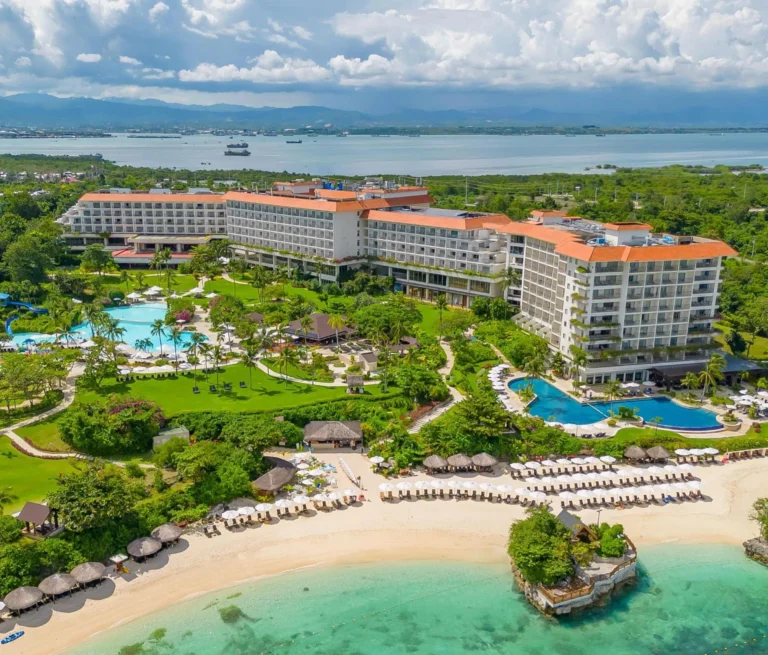
If you want a more classic family-resort model or a beach setting, consider these FFH alternatives. Dachsteinkönig Familux Resort and Sonnwies Dolomites are price-band 3 family resorts in nature/ski/waterpark-style categories, versus RISONARE’s price band 4 mountain “activity machine” with limited childcare. For a beach-and-water focus instead, Shangri-La Mactan, Cebu is a price-band 3 beachfront resort.