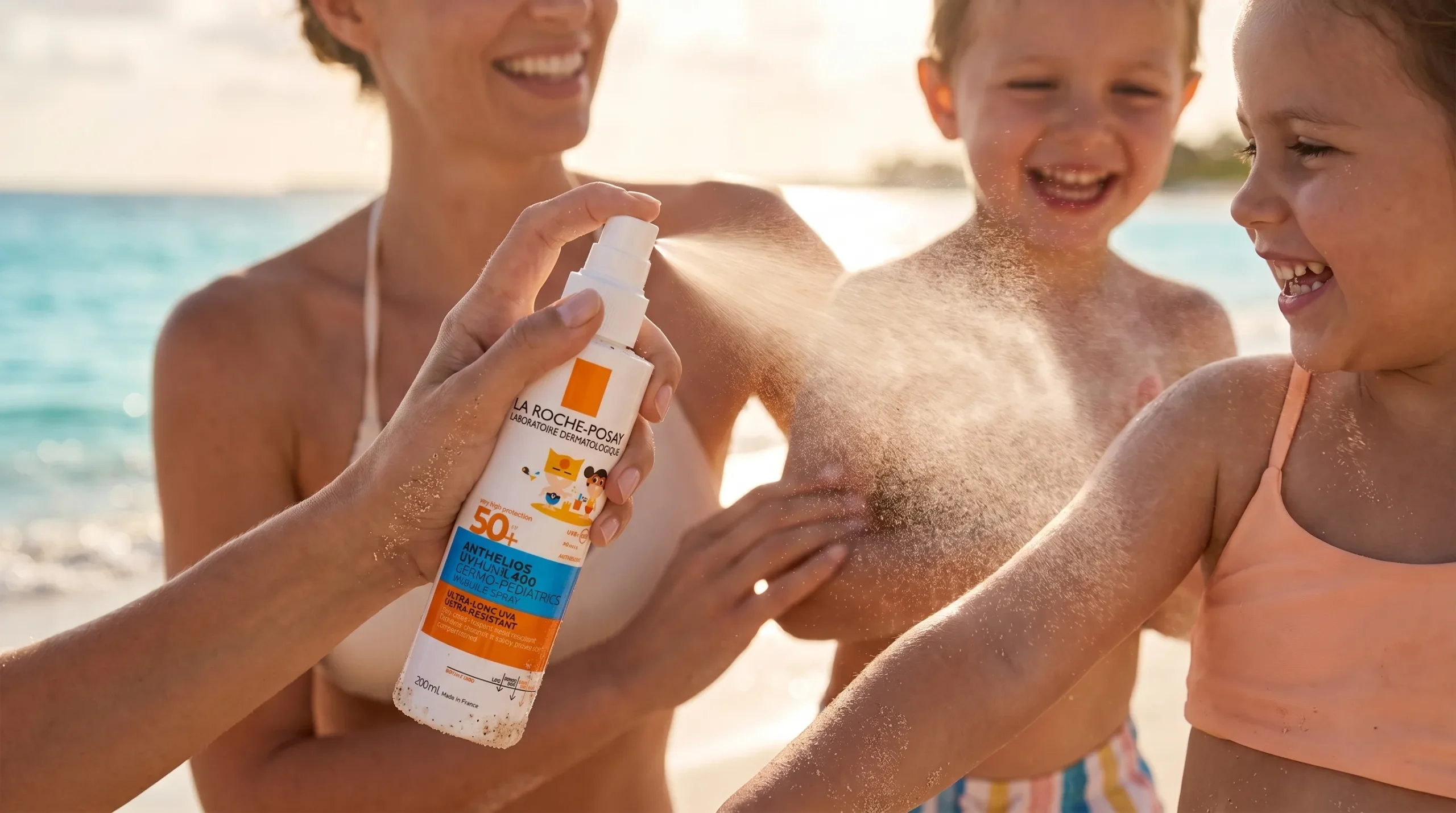
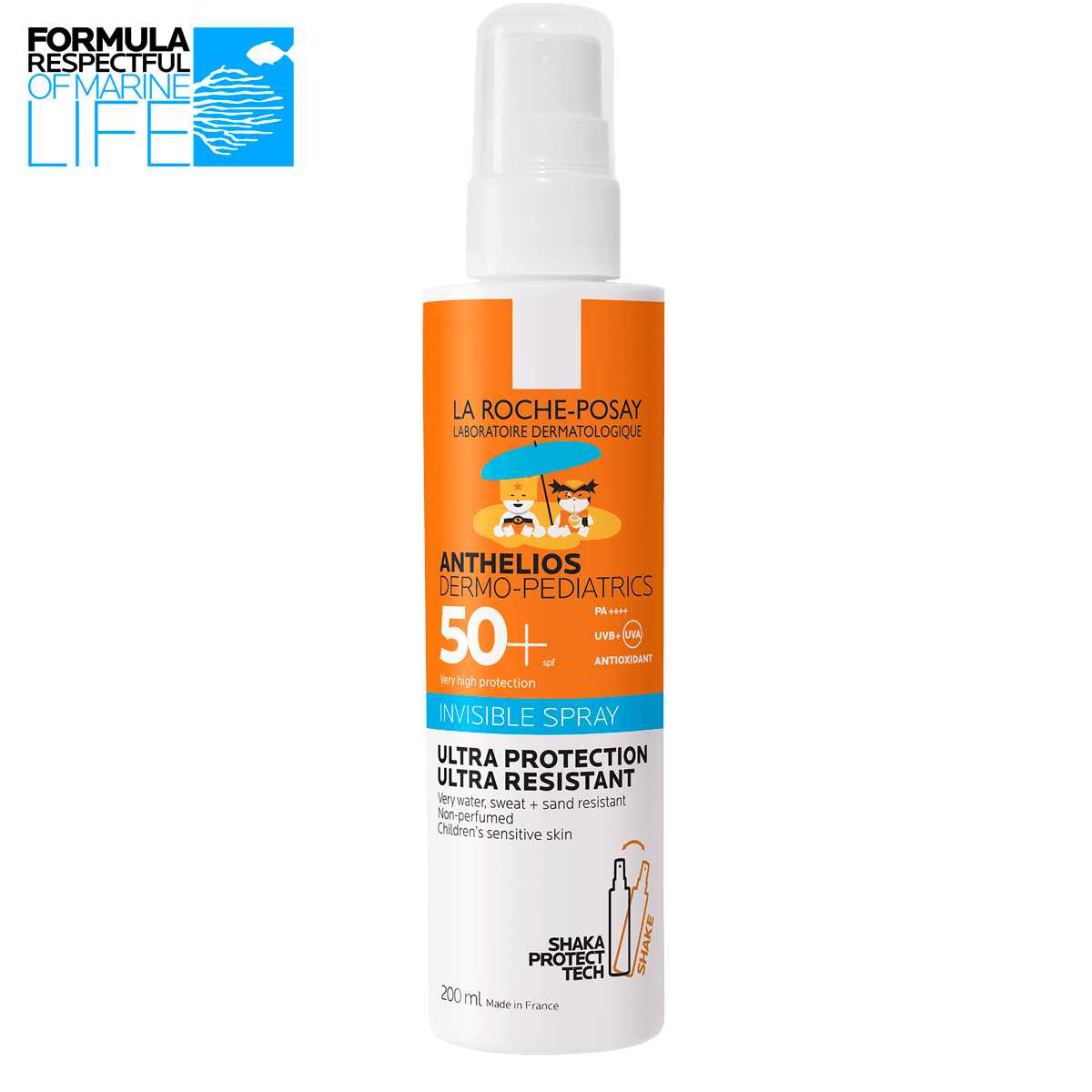
La Roche-Posay Anthelios Dermo-Pediatrics Invisible Spray SPF 50+ (200 ml), La Roche-Posay (Anthelios Dermo-Pediatrics)
La Roche-Posay Anthelios Dermo-Pediatrics Invisible Spray SPF 50+ – La Roche-Posay
For the family with a fair-skinned, eczema-prone, perpetually-wriggling toddler and a beach holiday already booked — the SPF you reach for first and trust without a second thought.
Overview
There is a moment, every summer, that separates the families who packed properly from the ones who didn’t: noon on day one, full sun, two children who would rather be doing literally anything than standing still to be coated in sunscreen. We have spent that moment many times — on a Mallorca beach with the sand already too hot to stand on, by a pool in Marrakech, halfway up a glacier in salopettes. The La Roche-Posay Anthelios Dermo-Pediatrics Invisible Spray SPF 50+ is the can we now reach for first, and it has earned that spot the hard way: by going on fast, disappearing into the skin without the chalky white film that turns kids feral, and — the part that actually matters when you’ve got a child with reactive, atopy-prone skin — never once leaving a red, angry patch behind.
It is the children’s arm of La Roche-Posay’s Anthelios line, the dermo-cosmetic sunscreen that French and German pharmacists have quietly recommended for years. SPF 50+, broad-spectrum UVA and UVB, very water-resistant, fragrance-free, and built around the brand’s Mexoryl filter system (the current cans wear the UVMune 400 badge; the formula underneath is the same children’s spray). It is not perfect — we will be candid about the one fault that genuinely cost us some clothing — but as a piece of family-travel kit it does the single most important job almost flawlessly: it keeps sensitive little skin from burning, even in punishing sun.

Why It’s Great for Family Travel
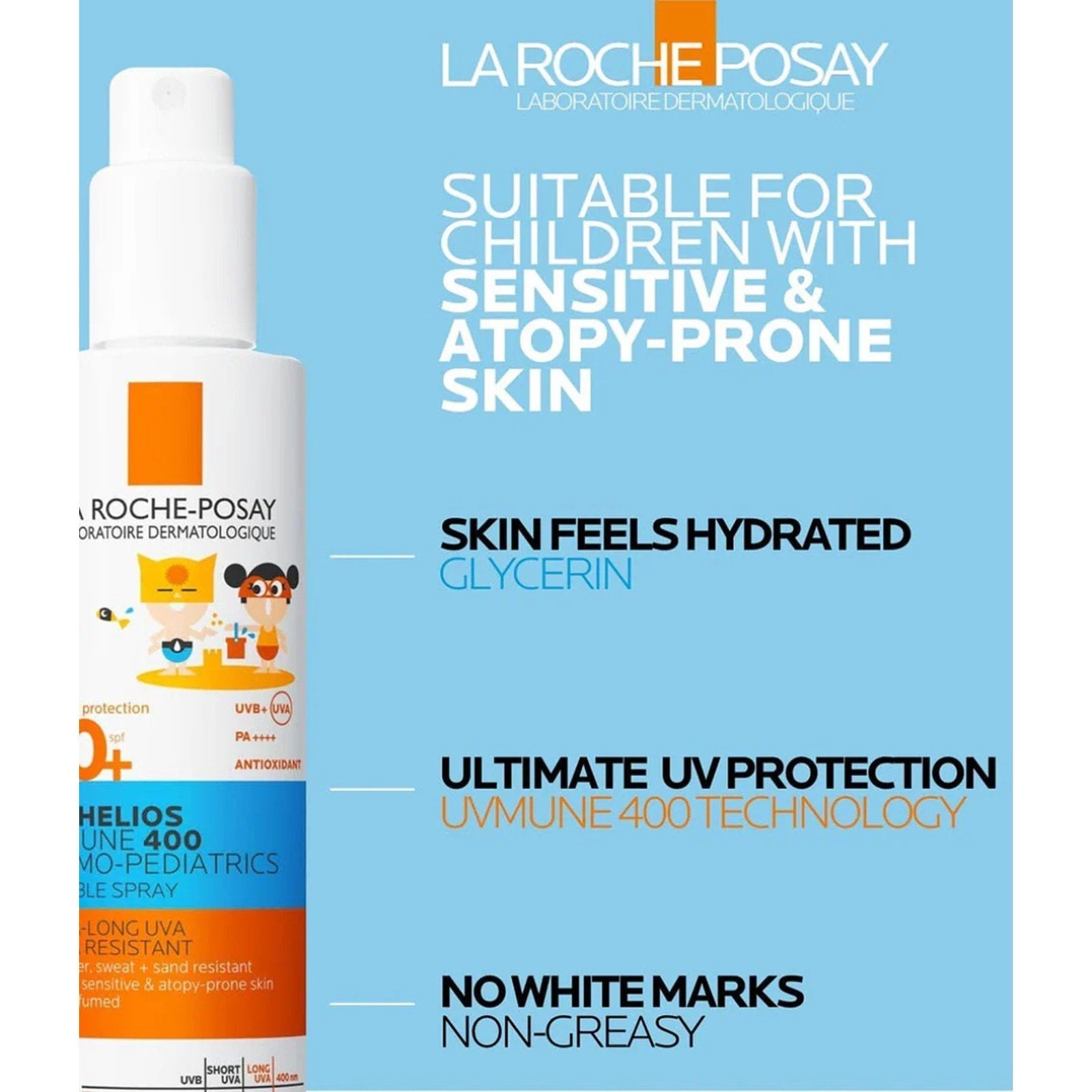
Start with the thing parents of sensitive-skinned children actually lose sleep over: tolerance. Our eldest is pale to the point of translucent and reacts to half the sunscreens on the shelf — the scented ones, the ones with a dozen botanicals, the supermarket own-brands that promise “natural” and deliver a rash. This one she simply doesn’t react to. It is fragrance-free, formulated for skin that flares at the slightest provocation, and after a fortnight of twice-daily applications we have never seen the redness or stinging that sends a holiday sideways. That is the whole reason it lives in our beach bag.
Then there is the finish. “Invisible” is a word sunscreen brands throw around freely, and most of them are lying. This one mostly isn’t: sprayed into the palm and worked in, it sinks away with no greasy film and no ghostly white cast, which is precisely why a four-year-old will tolerate it. (A note on honesty: we can vouch that it leaves no white marks on our family’s skin; we can’t speak to how it behaves on darker skin tones, because we haven’t tested it that way — so we won’t pretend to.) It does not sting eyes, either — the one mercy that turns the daily face-and-ears battle from a screaming match into something survivable.
And it holds. This is a very water-resistant formula, and it earns the description. Through repeated pool sessions, through the sweat of a hot city day, through sand ground into every crease, the protection stayed put — our children came home from a week of relentless sun without a single burn. For the FFH family chasing the sun across Europe and beyond, that reliability is the entire point of a premium SPF: you pay for the confidence that it will actually work when it matters.
Real-World Use (Beach / Pool / Hotel)
Beach: this is where it shines and where its one flaw shows its teeth. The mist goes on fast — you can do a squirming toddler in well under a minute, which on a windy beach with sand blowing is no small mercy. Spray into your hands, work it over face and ears, then mist the limbs and rub in. It survives the in-and-out-of-the-sea routine far better than the cheaper stuff. The catch, and we learned this the expensive way: keep it off fabric. It stains. White cotton in particular goes yellow — we lost a child’s good white linen top and the corner of a hotel towel to it before we wised up. The brand’s own guidance is to avoid textile contact, and they mean it. On a beach club lounger, in premium kidswear, around white hotel linens, this is the thing to plan around: apply it before they dress, let it dry down, and accept that the cover-up that goes over the top is now sunscreen-rated, not white-party-rated.
Pool: the water resistance is genuinely excellent — it does not slick off in the first ten minutes the way many sprays do. The trade-off arrives at bath time: this stuff clings to skin as stubbornly as it clings to its job, and it takes a proper soapy wash to get off. A quick rinse won’t do it; budget a real scrub at the end of a pool day.
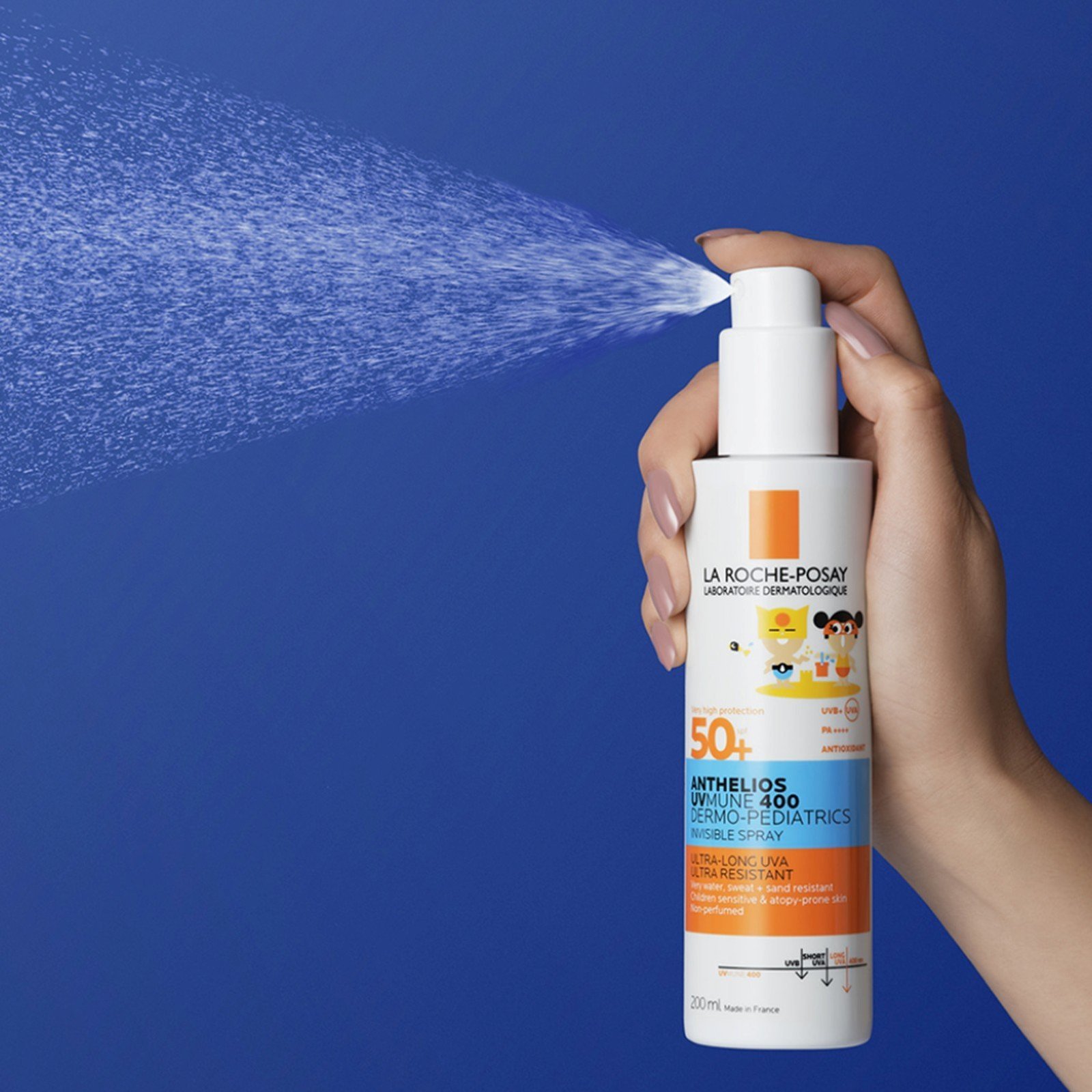
Hotel & piste: the practical headache here is the can itself. It is a 200 ml pressurised aerosol, which means it cannot fly in your cabin bag — it busts the 100 ml liquids rule twice over and carries the extra restrictions aerosols always do, so it goes in the hold or it doesn’t go at all. Pack it in the checked case, and once you’re there, keep it out of a baking car or a sun-blasted balcony — pressurised cans and 50°C-plus heat do not mix. On the piste it works exactly as well as at sea level, which is to say very — high-altitude glare is brutal on small faces, and this held.
One more practicality worth flagging before you pack: a 200 ml can does not last a two-week beach holiday for a whole family. Applied at the generous dose a sunscreen actually needs to deliver its SPF, it empties fast — reckon on a single can covering roughly a week for one adult and one child in strong sun. For a longer trip or a bigger brood, buy two. The sticker price is reasonable; the real per-trip cost is higher than it looks.
Specs That Actually Matter
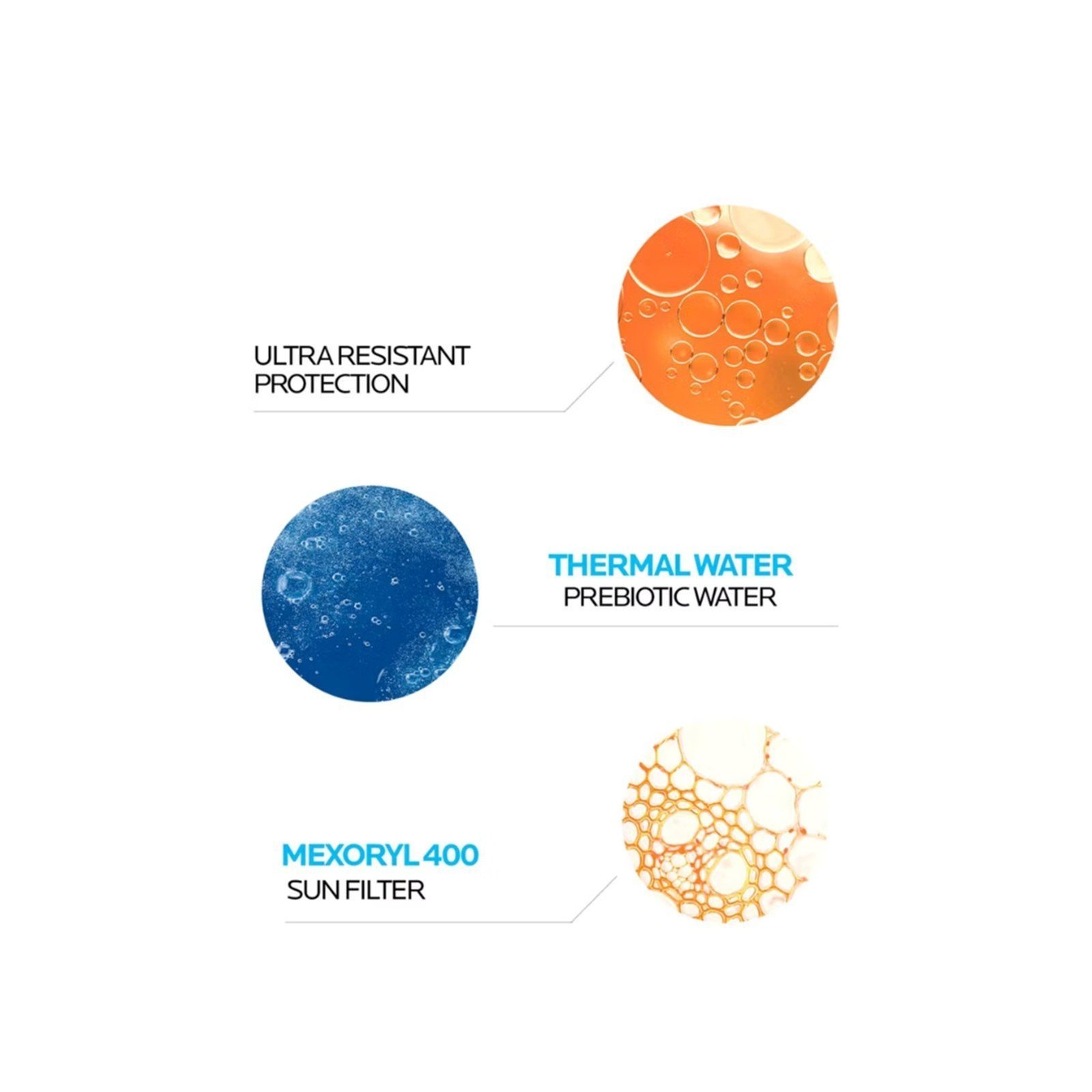
- Protection: SPF 50+ (EU “very high” band), broad-spectrum UVA + UVB via the La Roche-Posay Mexoryl / UVMune 400 filter system.
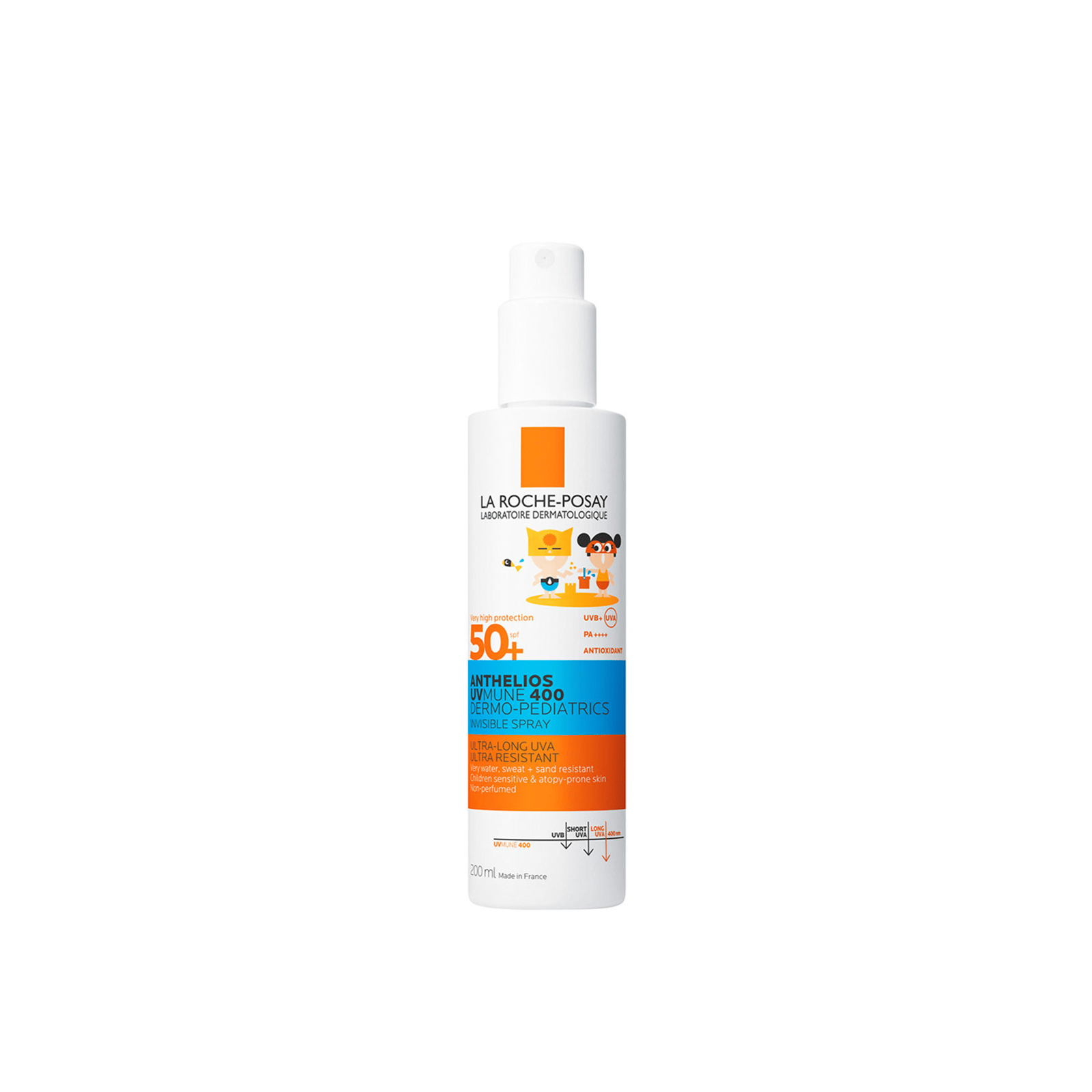
- Size: 200 ml pressurised invisible-mist spray.
- Skin: formulated for children’s sensitive, sun-allergy- and atopy-prone skin; fragrance-free; allergy tested; tested under dermatological and paediatric control.
- Water resistance: very water-resistant — holds through swimming and sweating; reapply after towelling.
- Finish: transparent, no white cast on application, non-sticky dry-down once worked in.
- Age: for children over 6 months; consult a doctor before use on infants under 6 months, and keep babies under 6 months out of direct sun altogether.
- How to apply: shake well; apply generously ~20 minutes before sun; do NOT spray directly on the face — spray into hands and apply, avoiding eyes; reapply frequently, especially after water.
- After opening: use within 12 months (PAO 12M). It is a cosmetic, so no warranty applies.
- Travel: 200 ml aerosol — HOLD luggage only (over the 100 ml cabin limit). Keep out of direct sun / heat above 50°C; do not pierce or burn, even empty.
Pros & Cons
Pros
- Exceptional tolerance on sensitive, atopy-prone and very pale children — no irritation, no eye-sting.
- Genuinely invisible on application; no greasy film, no white marks on the skin we tested.
- Very water- and sweat-resistant — protection held through pool, sea and strong sun with no burns.
- Fast fine-mist application that even a wriggling toddler will tolerate.
- Market-reference children’s SPF from a trusted dermo-cosmetic brand; reasonable sticker price for 200 ml.
Cons
- Stains fabric — white cotton in particular yellows; keep it well clear of premium kidswear and hotel linens.
- 200 ml aerosol must travel in the hold, never the cabin.
- Not a true touchless mist — you spray into your hands and rub it in, and it can feel slow to absorb.
- Empties fast at the correct generous dose — one can is roughly a week for two; buy two for a longer trip.
- Very water-resistant means it needs a proper soapy wash-off at night.
FFH Gear Score
A note on the one fault before the numbers, because for our readers it is the deciding detail: the clothing-staining is real, repeated, and — on premium white kidswear and hotel linen — potentially costly. It does not touch the protection, which is excellent, but it is the reason this can does not score higher on practicality. Plan around it and you have a near-ideal children’s travel SPF; ignore it and you will be paying for ruined clothes.
- Functionality: 9.2 / 10
- Build Quality & Durability: 8.3 / 10
- Ease of Use: 8.6 / 10
- Family Practicality: 7.9 / 10
- Pricing: $ of $$$$$
- FFH Gear Score: 8.5 / 10
Final Verdict
If you travel with a child whose skin burns easily or reacts to everything, this is close to a default buy. We have put it through real beaches, real pools, a real glacier and a great many real tantrums, and on the one job that counts — keeping sensitive little skin from burning in serious sun — it simply does not let you down. It goes on fast, it disappears into the skin, it doesn’t sting eyes, and it holds through water and sweat without drama. Buy it for the fair, the freckled and the eczema-prone; apply it before they dress and keep it off the white linen; pack it in the hold and pack a second can for anything longer than a week. Do that, and the only thing you’ll think about it is that you stopped worrying about sunburn — which, for the FFH family, is exactly what a premium sunscreen is for.
Gallery
La Roche-Posay Anthelios Dermo-Pediatrics Invisible Spray SPF 50+ (200 ml): Family Questions Answered
Who is this SPF spray actually best for on a family holiday?
It’s best for families with fair, sensitive or eczema-/atopy-prone kids who hate standing still for sunscreen. The fine mist applies quickly, dries down non-sticky once worked in, and (in our testing) didn’t sting eyes or trigger irritation. It’s designed as a children’s sunscreen and is positioned as a reliable “beach bag default” for strong sun.
What age can babies and children use La Roche-Posay Anthelios Dermo-Pediatrics SPF 50+?
It’s for children over 6 months. For infants under 6 months, the product guidance is to consult a doctor before use, and to keep babies under 6 months out of direct sun altogether. If you’re travelling with a young baby, plan sun avoidance and shade first, with sunscreen only as medically advised.
Does it offer broad-spectrum protection, and what SPF is it?
Yes—this is SPF 50+ with broad-spectrum UVA and UVB protection. It’s described as using La Roche-Posay’s Mexoryl / UVMune 400 filter system and sits in the EU “very high” protection band. As always with SPF, it still needs generous application and frequent reapplication to deliver its rated protection.
Is it genuinely water-resistant for pools and the sea?
It’s “very water-resistant” and held up well through swimming, sweat and repeated in-and-out-of-water days. The guidance is to reapply frequently and especially after towelling. In real use, the trade-off of that cling is that it can take a proper soapy wash to remove at night—quick rinsing isn’t enough.
Can you spray it straight onto a child’s face?
No—don’t spray it directly onto the face. The directions are to shake well, apply generously about 20 minutes before sun exposure, and spray into your hands first to apply to face and ears while avoiding the eyes. For limbs you can mist and then rub in—this isn’t a truly “touchless” spray application.
Does it leave a white cast or greasy feeling on kids’ skin?
In our testing, it dried down without a greasy film and left no white cast on our family’s skin. It’s marketed as “invisible” and was described as mostly living up to that claim when sprayed into the palm and worked in. We can’t confirm how it behaves on darker skin tones because it wasn’t tested that way in the article.
Will it stain swimsuits or clothes?
Yes—staining fabric is the big downside, especially on white cotton which can turn yellow. The article notes real clothing (and even a hotel towel) being stained, and flags the brand guidance to avoid textile contact. Practical workaround: apply before kids get dressed, let it dry down, and assume any cover-up over it is “sunscreen-rated,” not white-linen-safe.
Can I take this 200 ml aerosol in cabin baggage?
No—this 200 ml pressurised aerosol must go in hold luggage. It’s over the 100 ml cabin liquids limit, and aerosols can face extra restrictions, so plan to pack it checked or buy at your destination. Also keep it out of direct sun and away from heat above 50°C, and don’t pierce or burn the can even when empty.
How long will one 200 ml can last on a beach holiday?
Not as long as you’d hope—roughly about a week for one adult and one child in strong sun, when applied properly. The article notes it “empties fast” at the generous dose needed to reach the stated SPF, so for a two-week trip or a bigger family it suggests buying two cans. The sticker price may look reasonable, but per-trip cost can add up.
What are good FFH-reviewed alternatives if I’m choosing family travel essentials?
If your priority is sun protection for children, this is a specialist pick—whereas other FFH gear solves different travel problems. For sleep and peace of mind in the room, consider the Nanit Pro Smart Baby Monitor (higher pricing tier). For on-the-go emergencies with toddlers, the OXO Tot 2-in-1 Go Travel Potty is a different kind of “must-pack” (mid pricing tier) and doesn’t have the hold-luggage aerosol restriction or fabric-staining risk.