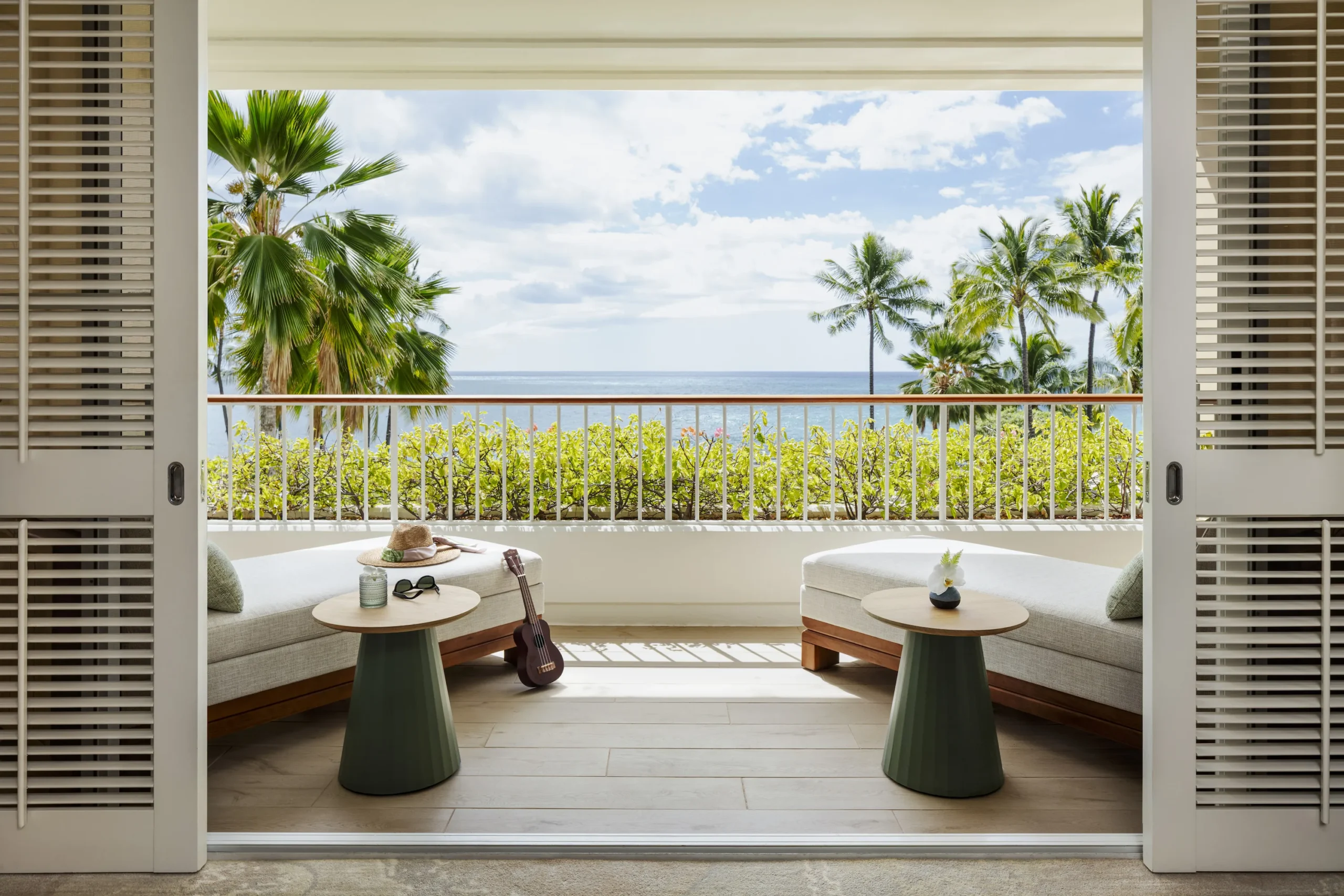
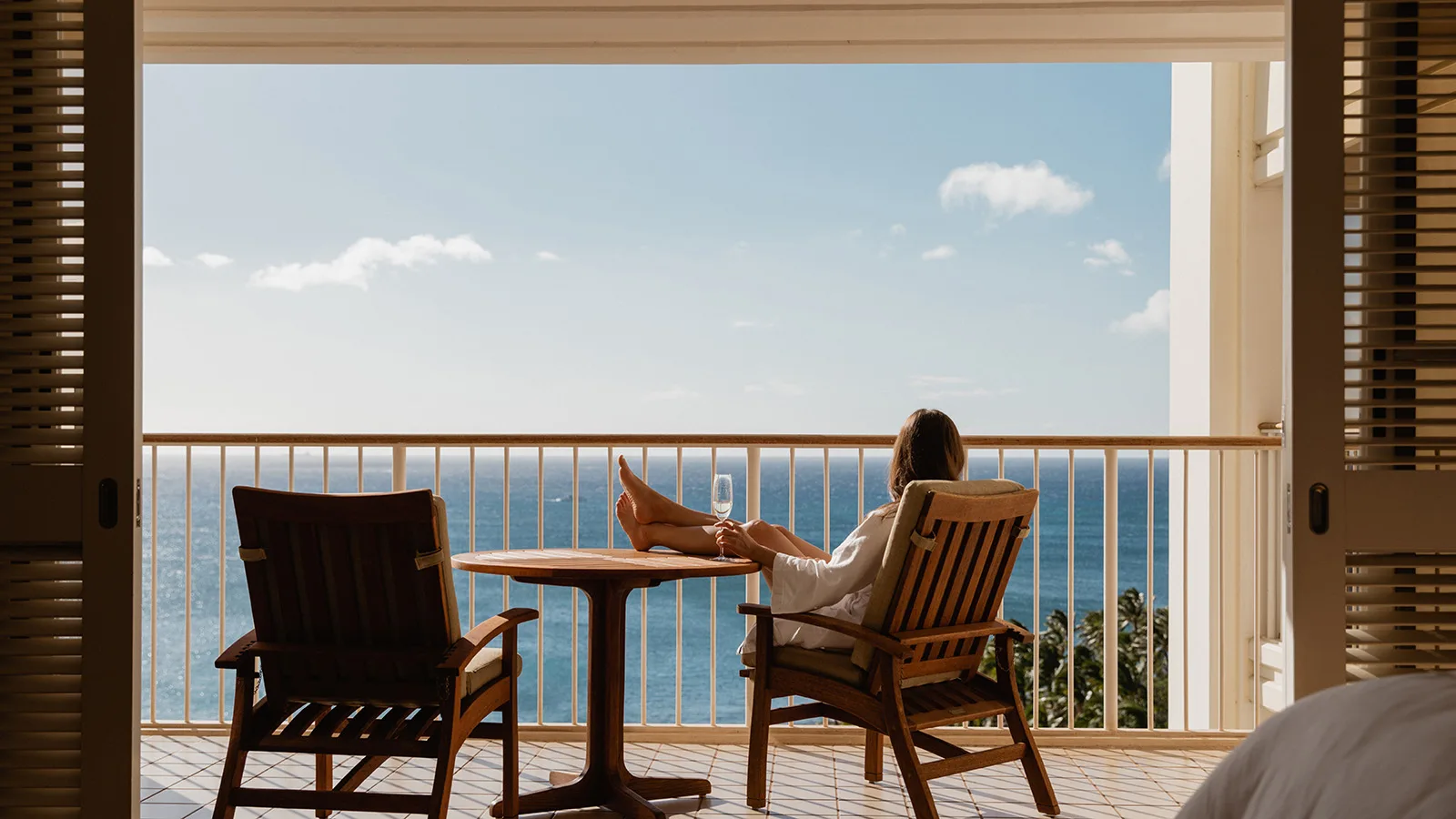
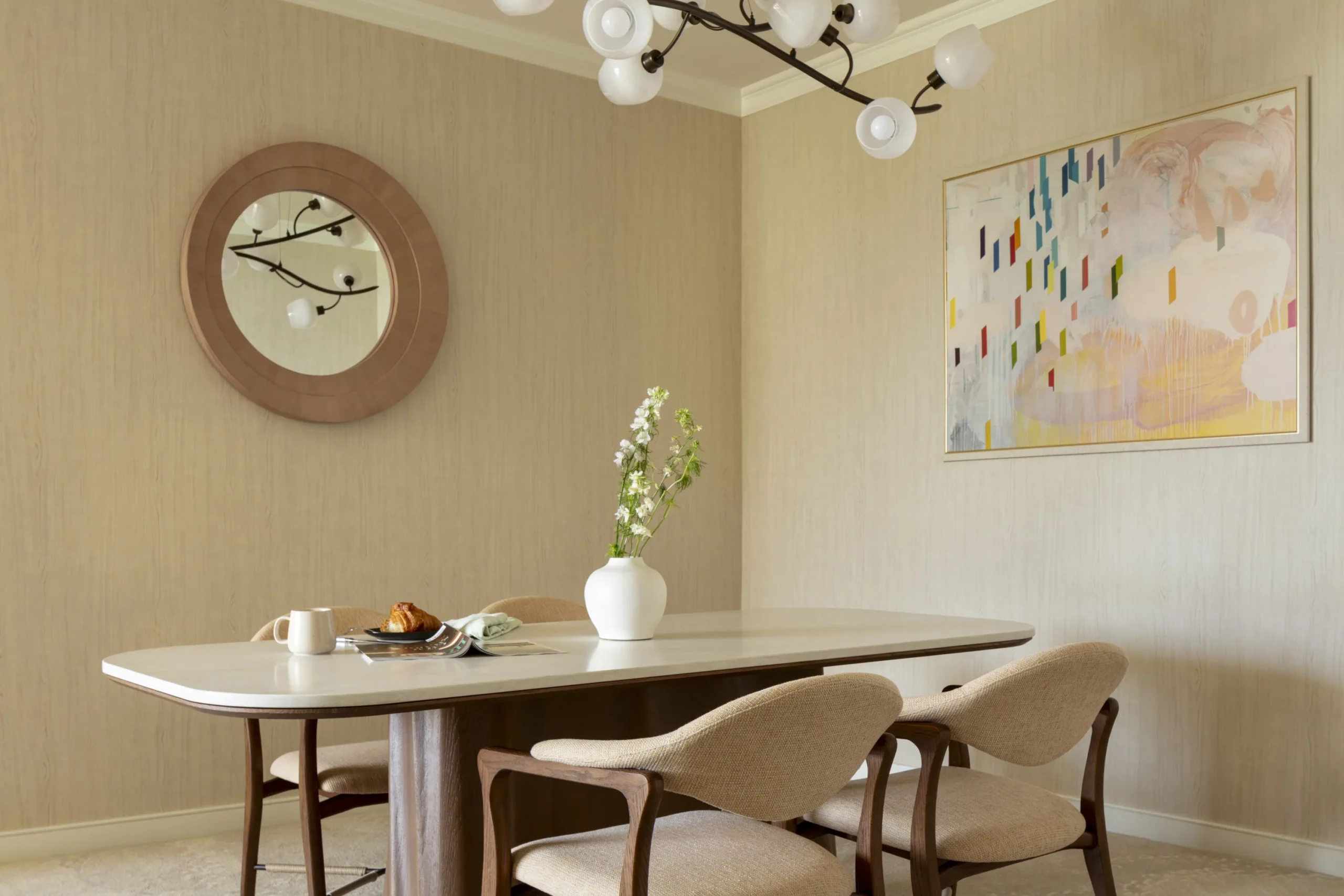
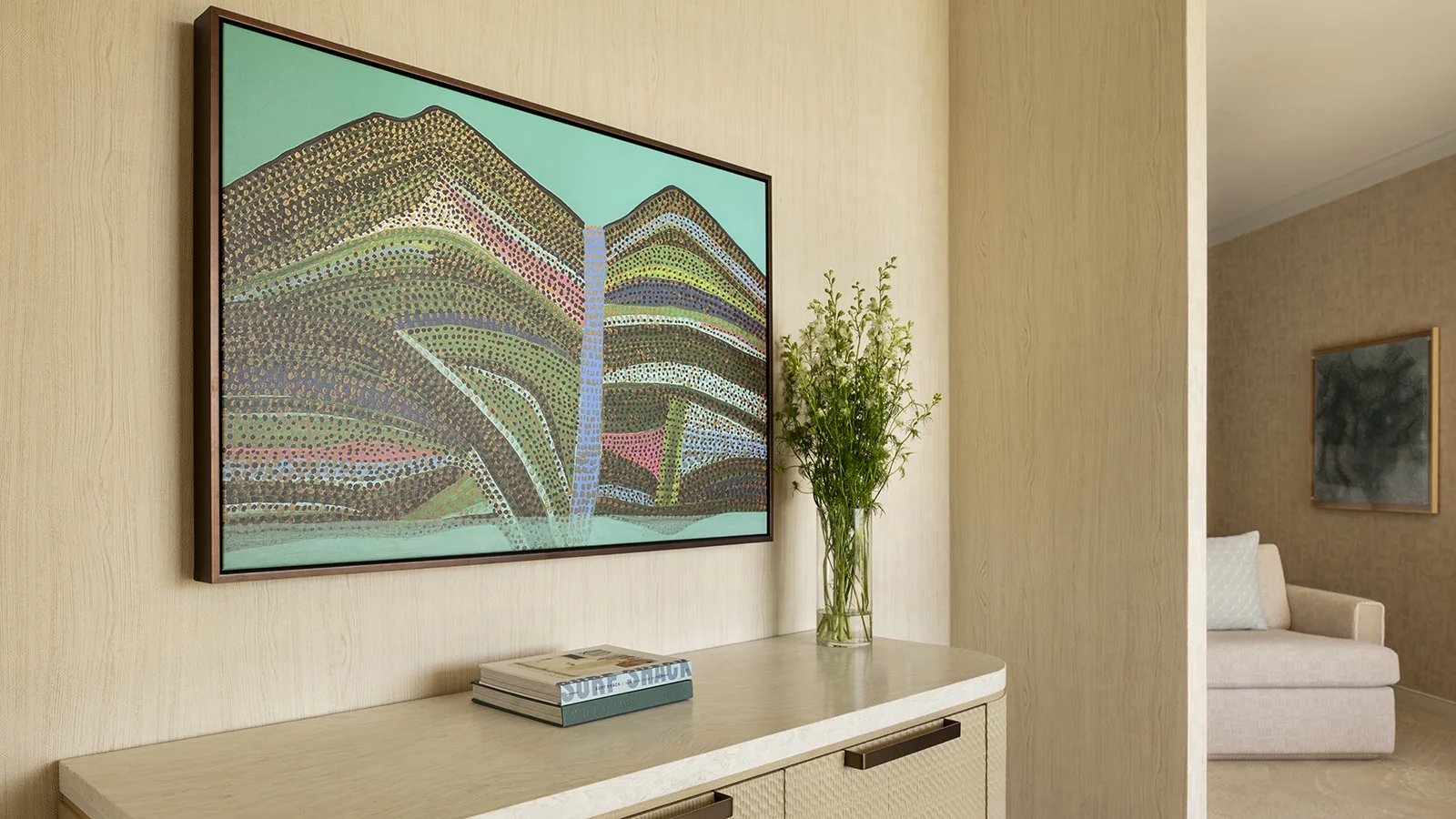
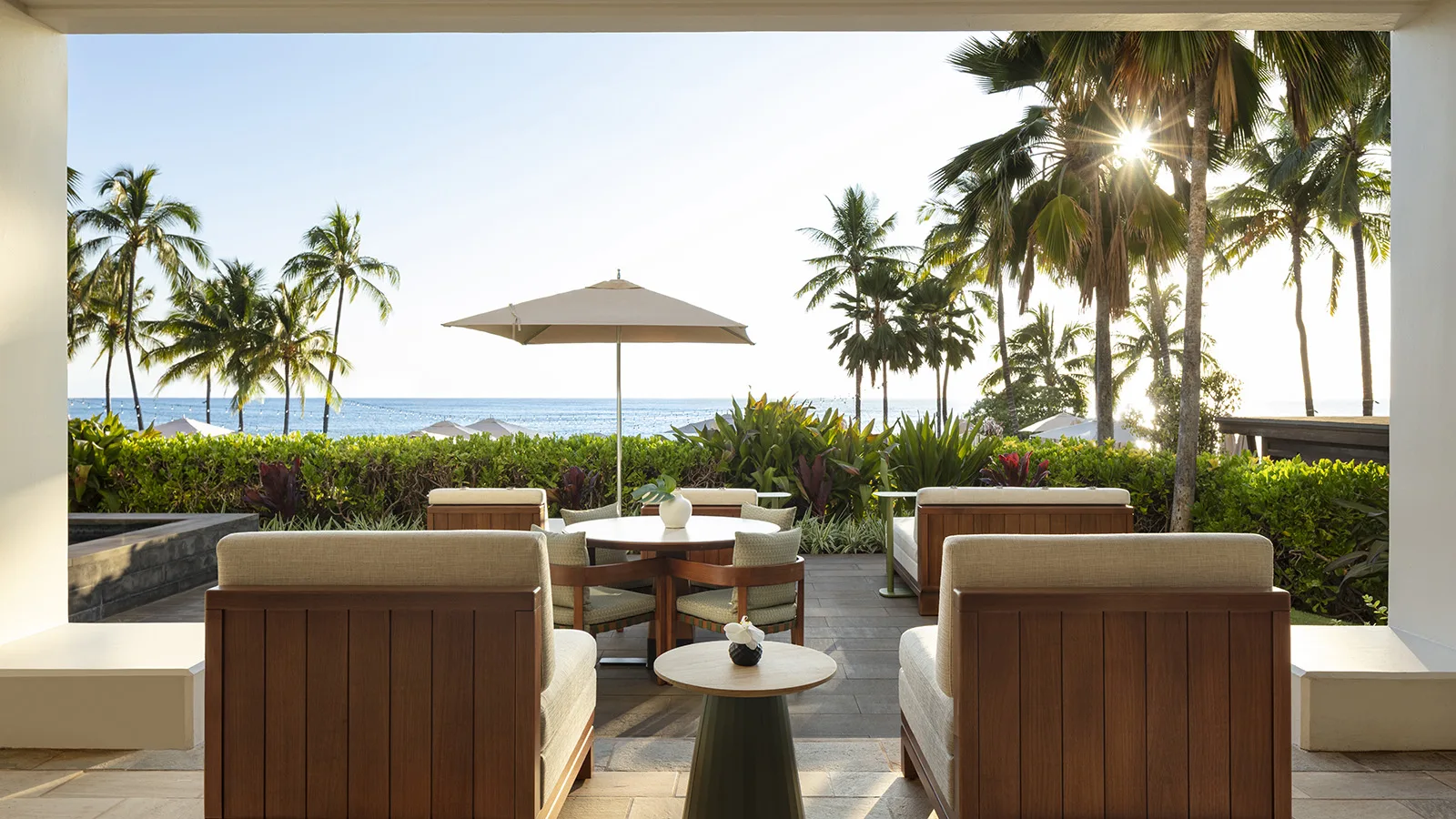
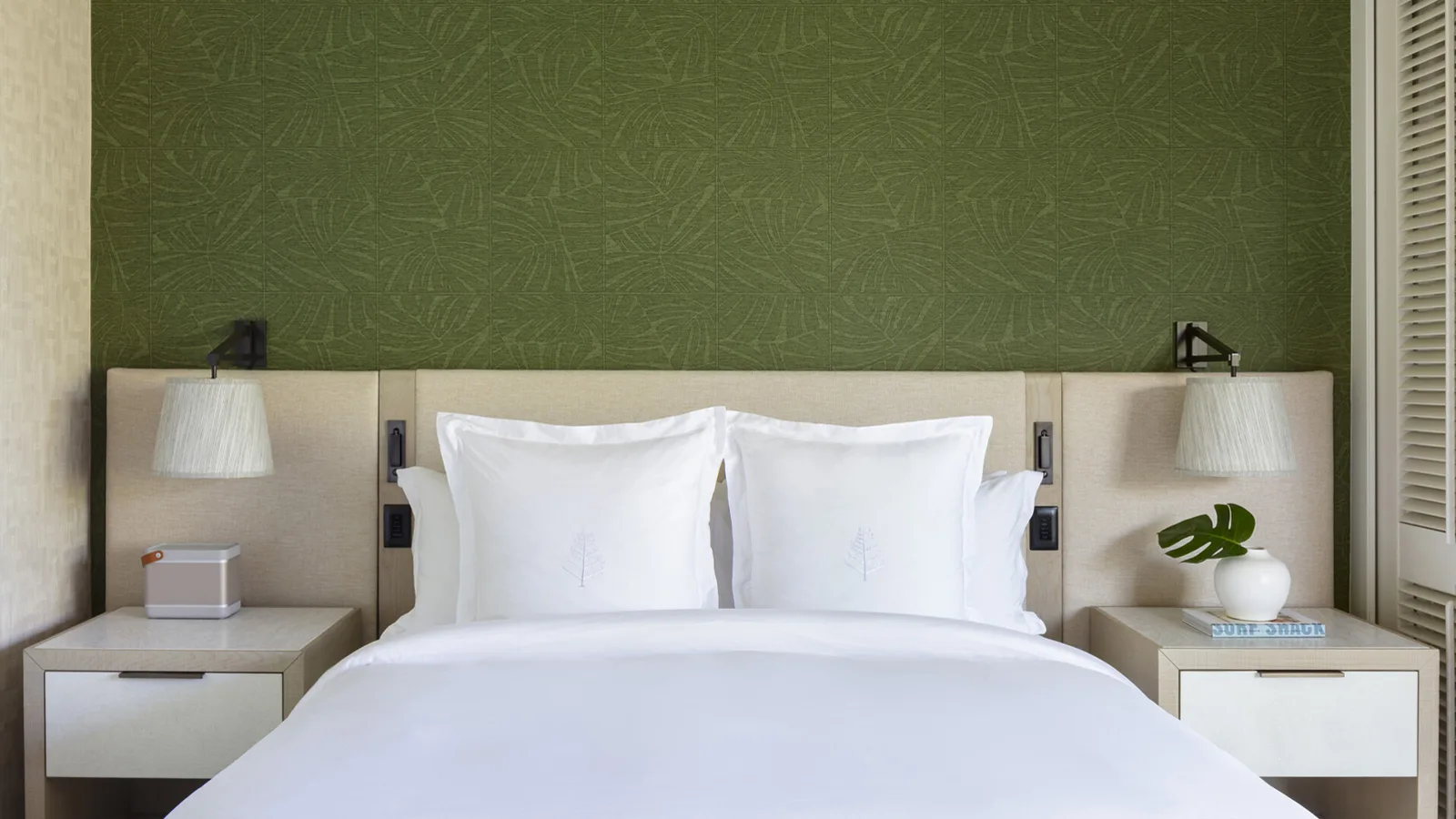


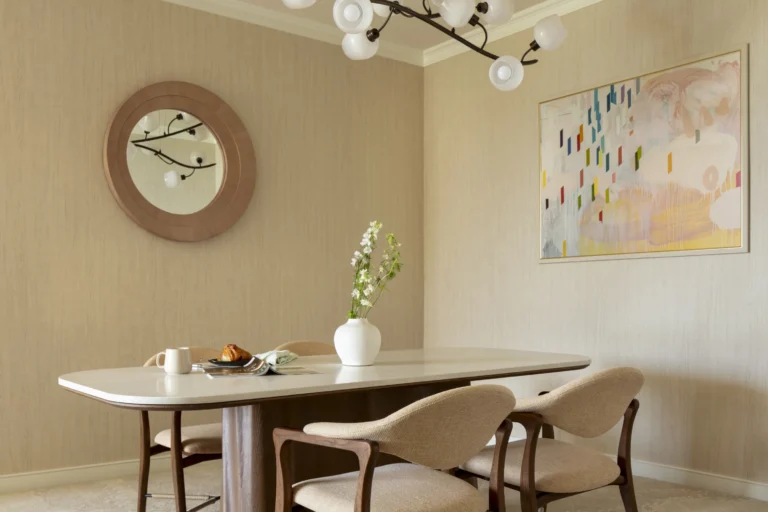
Fifty-nine square metres is how large a standard entry room is at the Four Seasons Resort Oahu at Ko Olina, before the private lanai. At most five-star hotels in Hawaii, that floor plan would be a junior suite; here it is the baseline, and the difference is enough to change the entire calculus of a family week. A toddler’s travel cot fits without any furniture negotiation. Siblings sharing a two-double-bed configuration have room to breathe on the morning they wake up fighting. The lanai, roughly eight square metres of private outdoor space, handles every breakfast and every pre-dinner drink you do not want to eat in a restaurant. These things sound minor until you have spent a week in 35 square metres with two children who both need morning quiet.
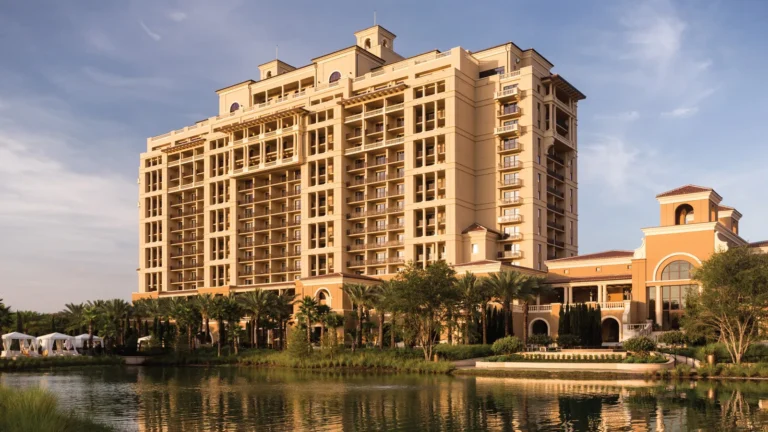
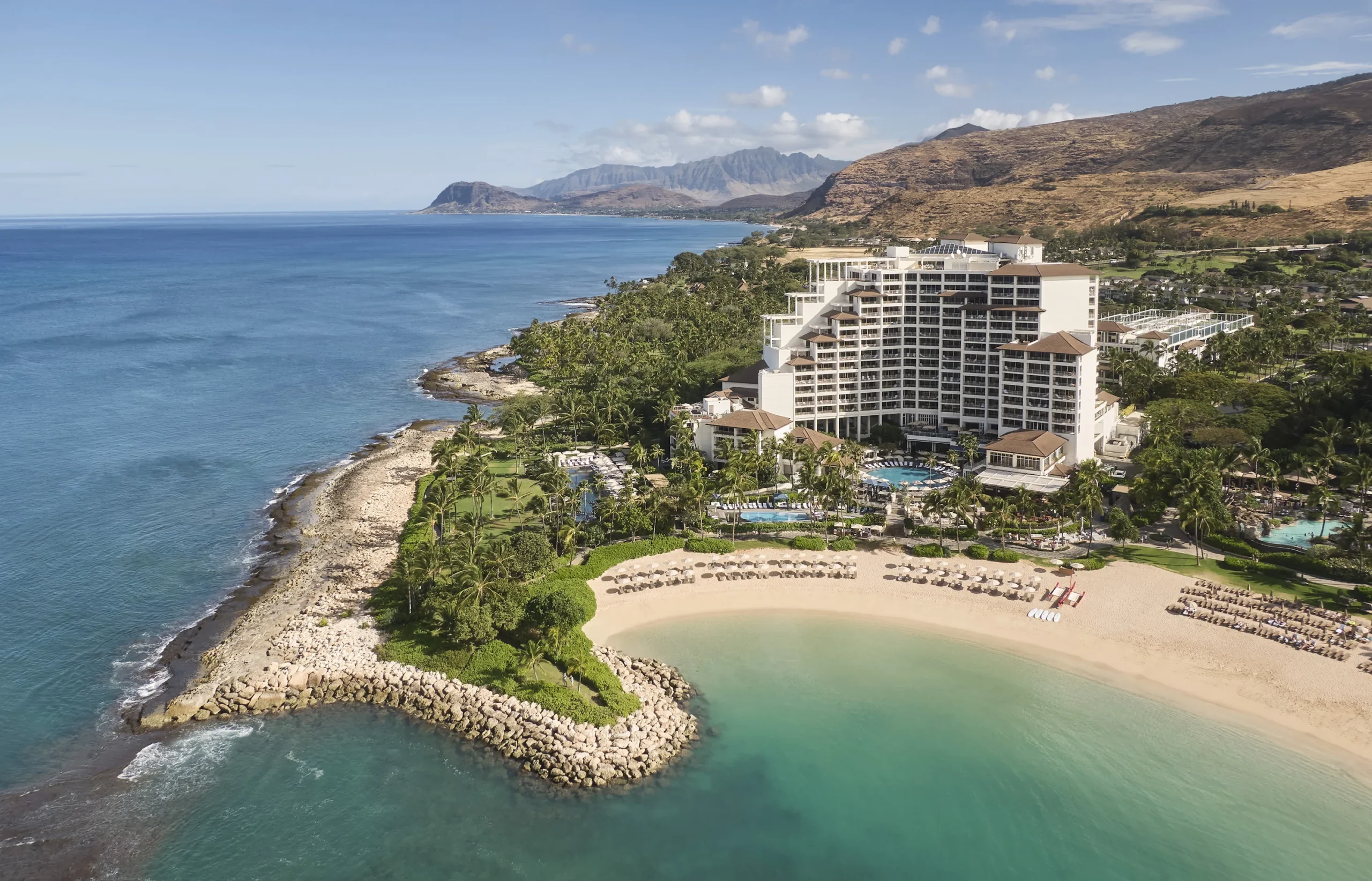
The resort opened in 2016 on Oahu’s leeward coast, inside the Ko Olina resort community roughly 32 kilometres from Honolulu airport, on the site of a 1998 building designed by architect Edward Killingsworth. What Four Seasons inherited was a sound physical base; what they built on top of it is one of the most coherent family propositions in the Pacific. Four pools, a complimentary daily kids’ programme for ages five to twelve, six dining venues plus 24-hour room service, and a 3,252-square-metre spa: the infrastructure is substantial and well matched to what families with school-age children actually need.
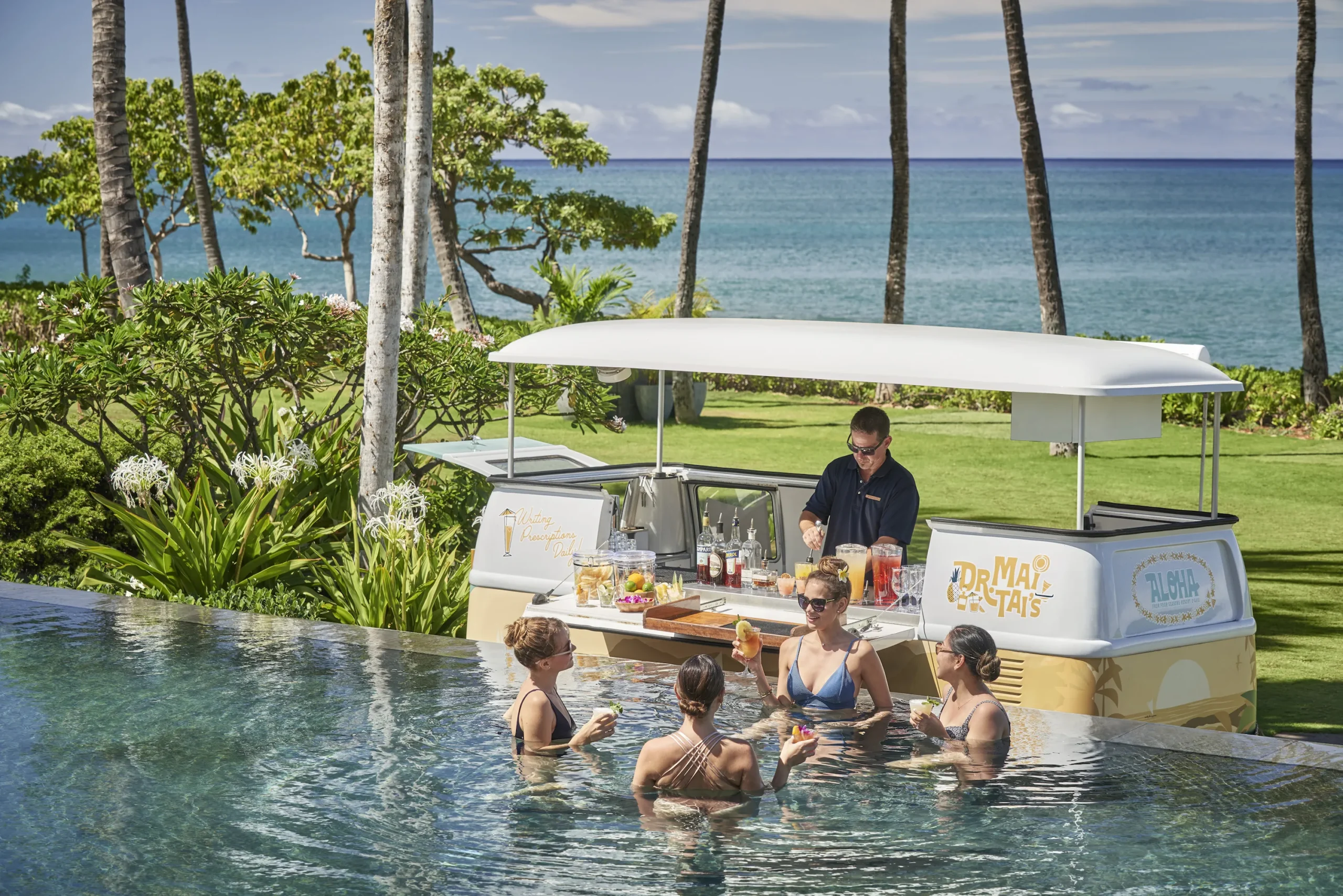
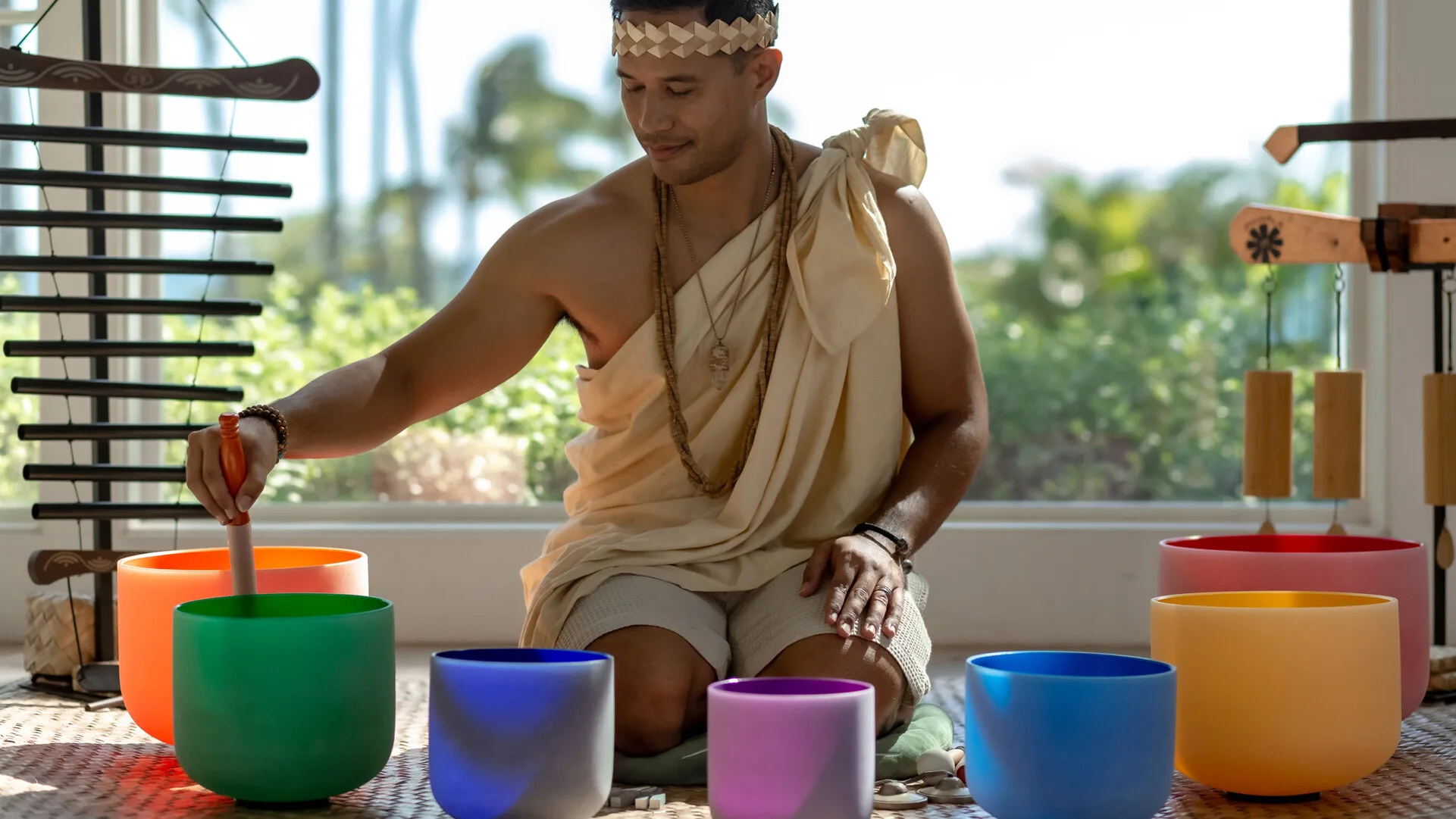
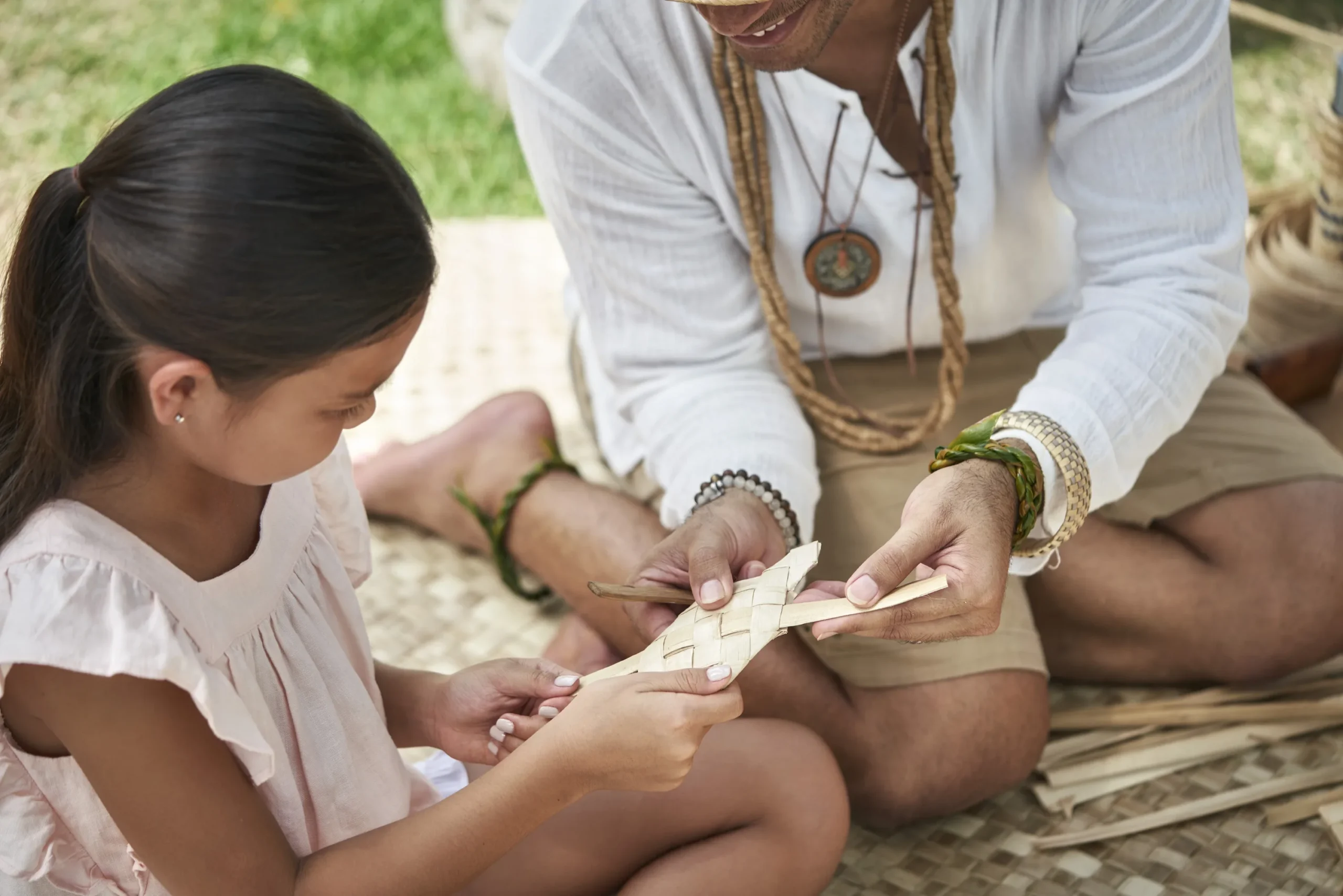
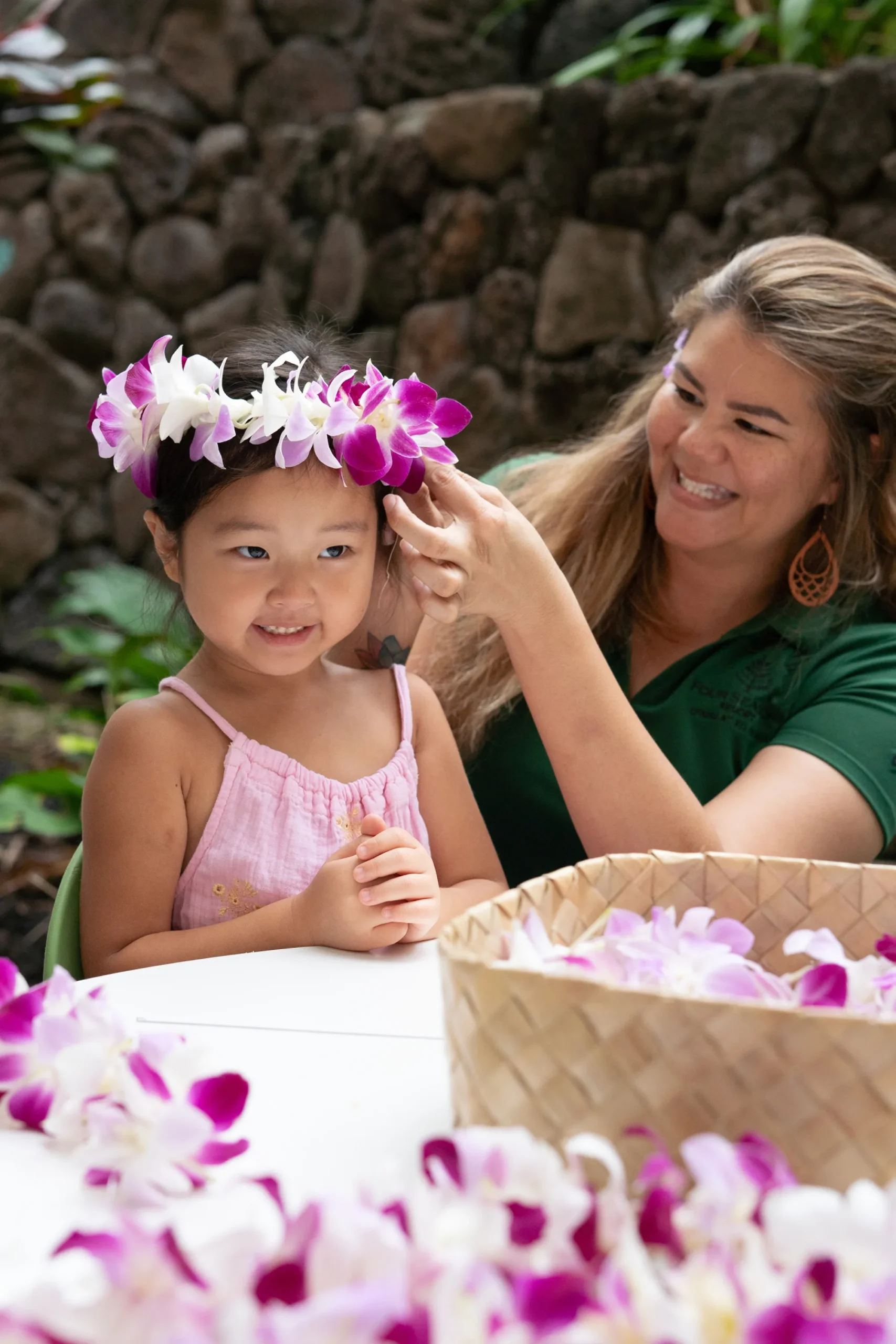
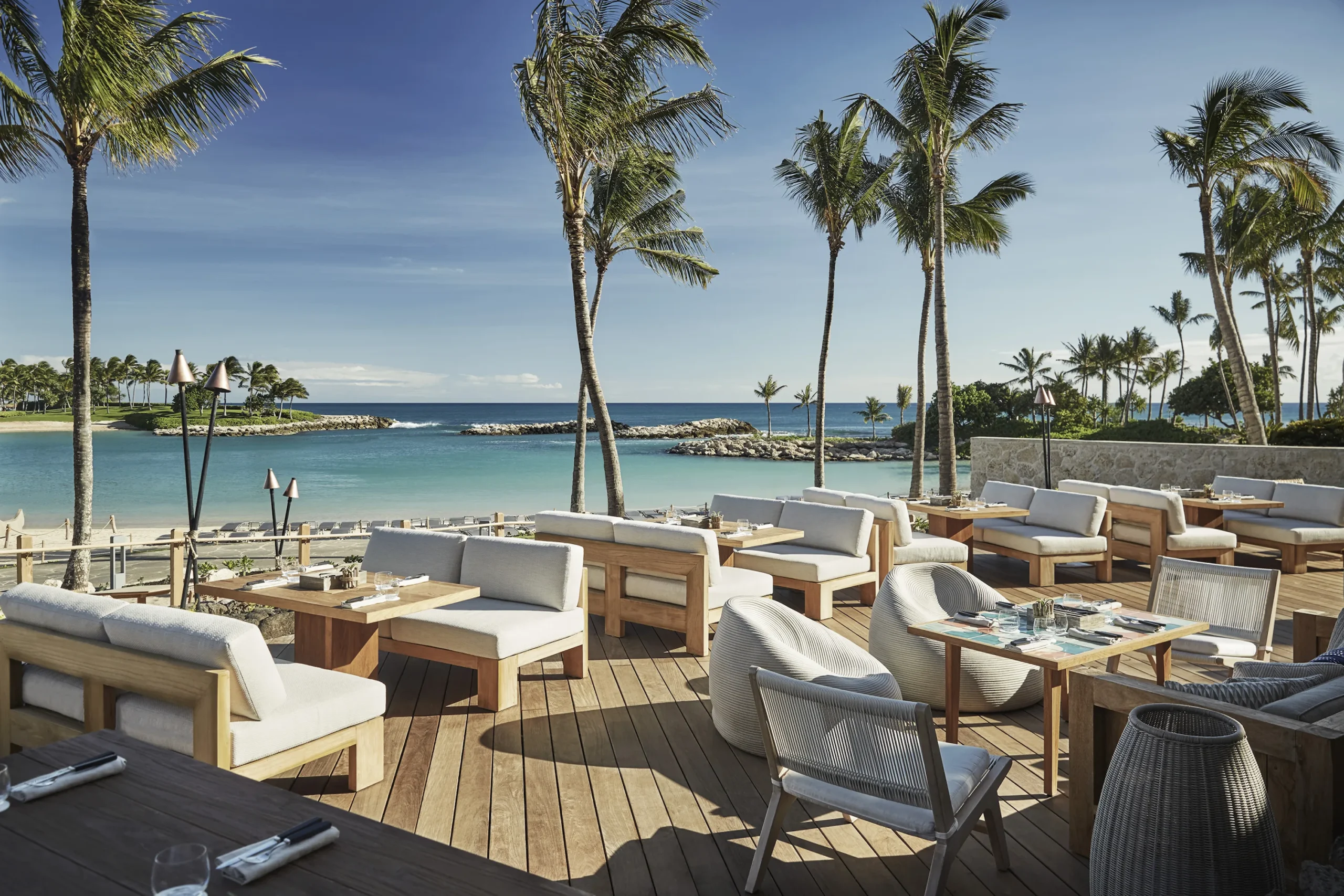
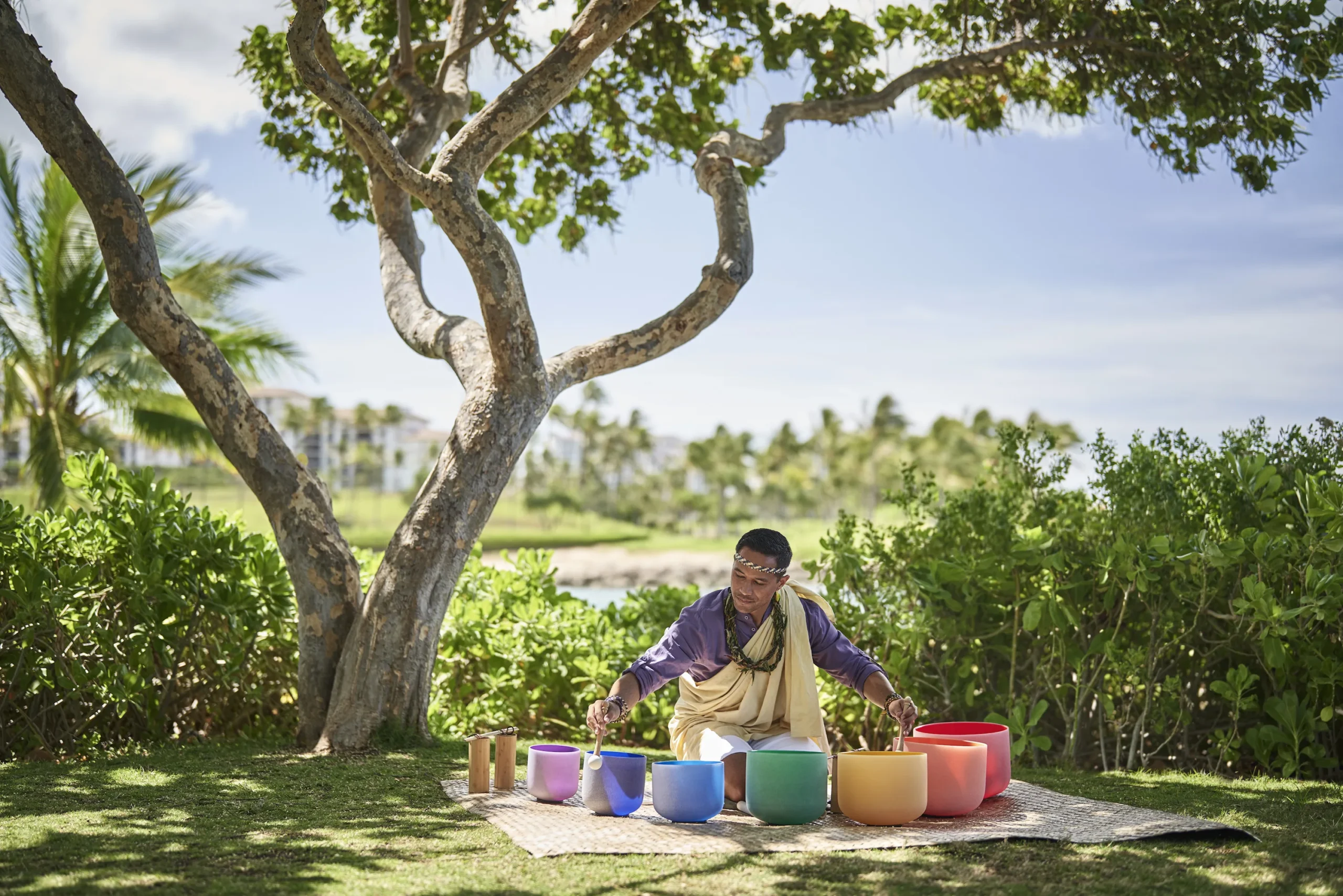
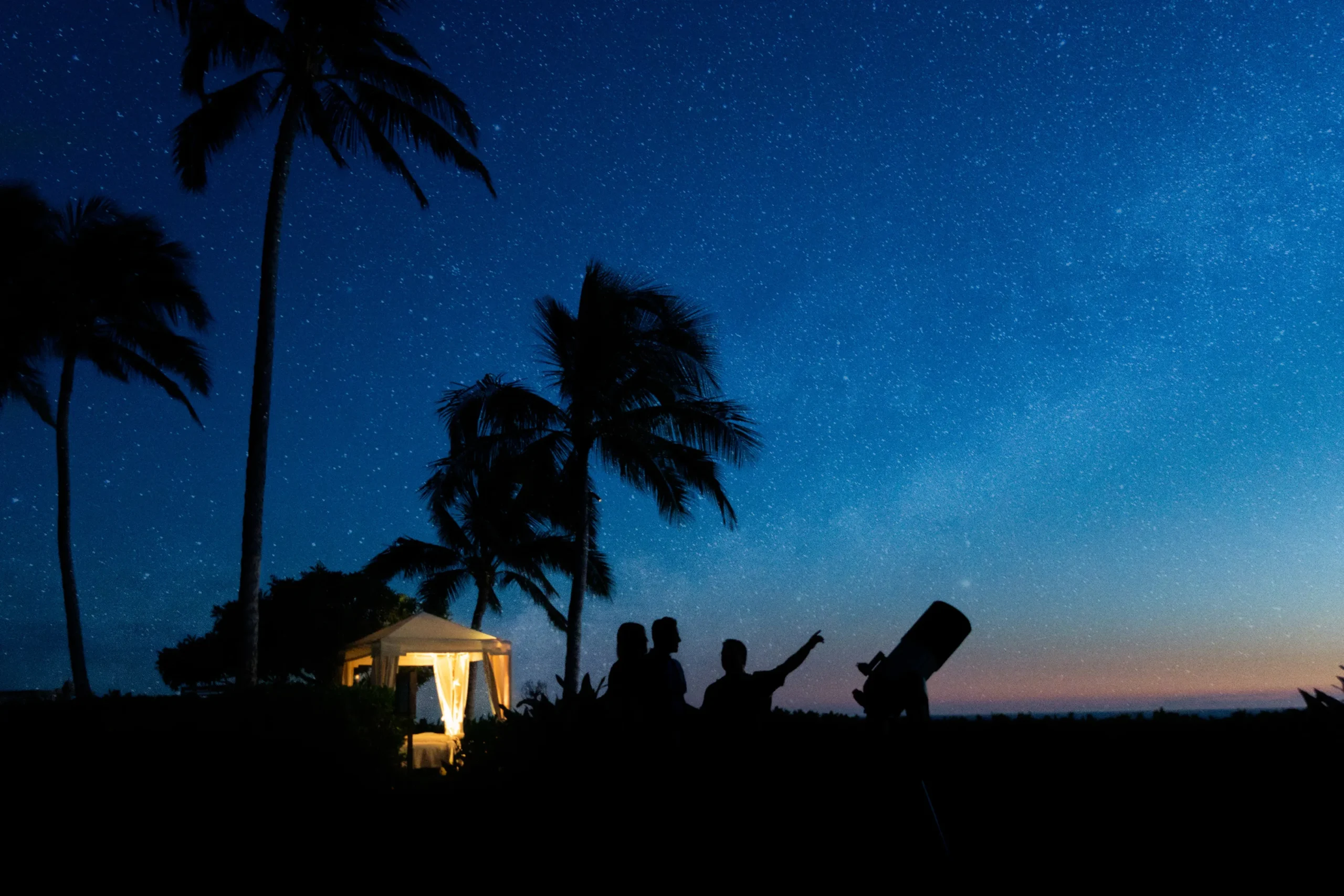
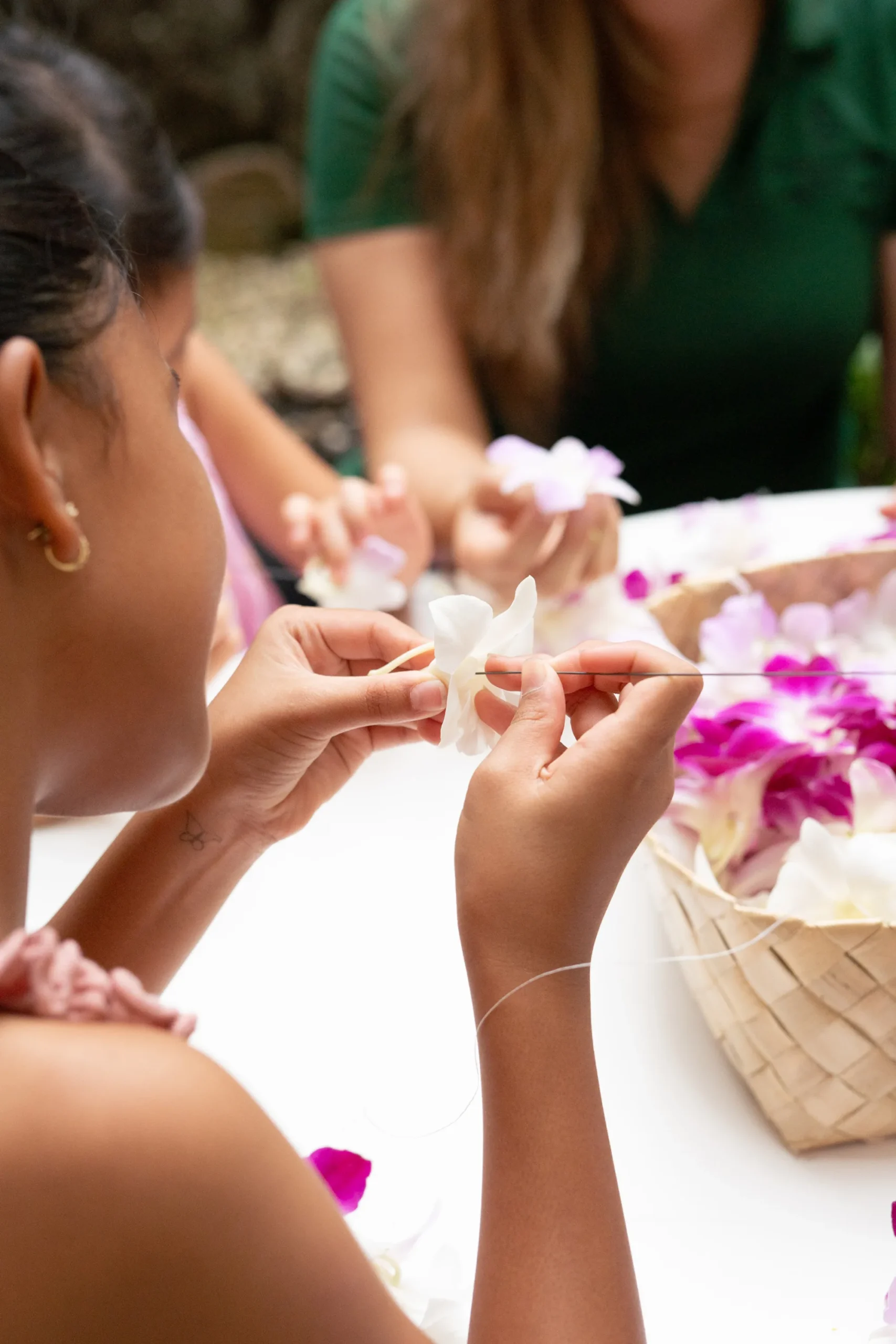
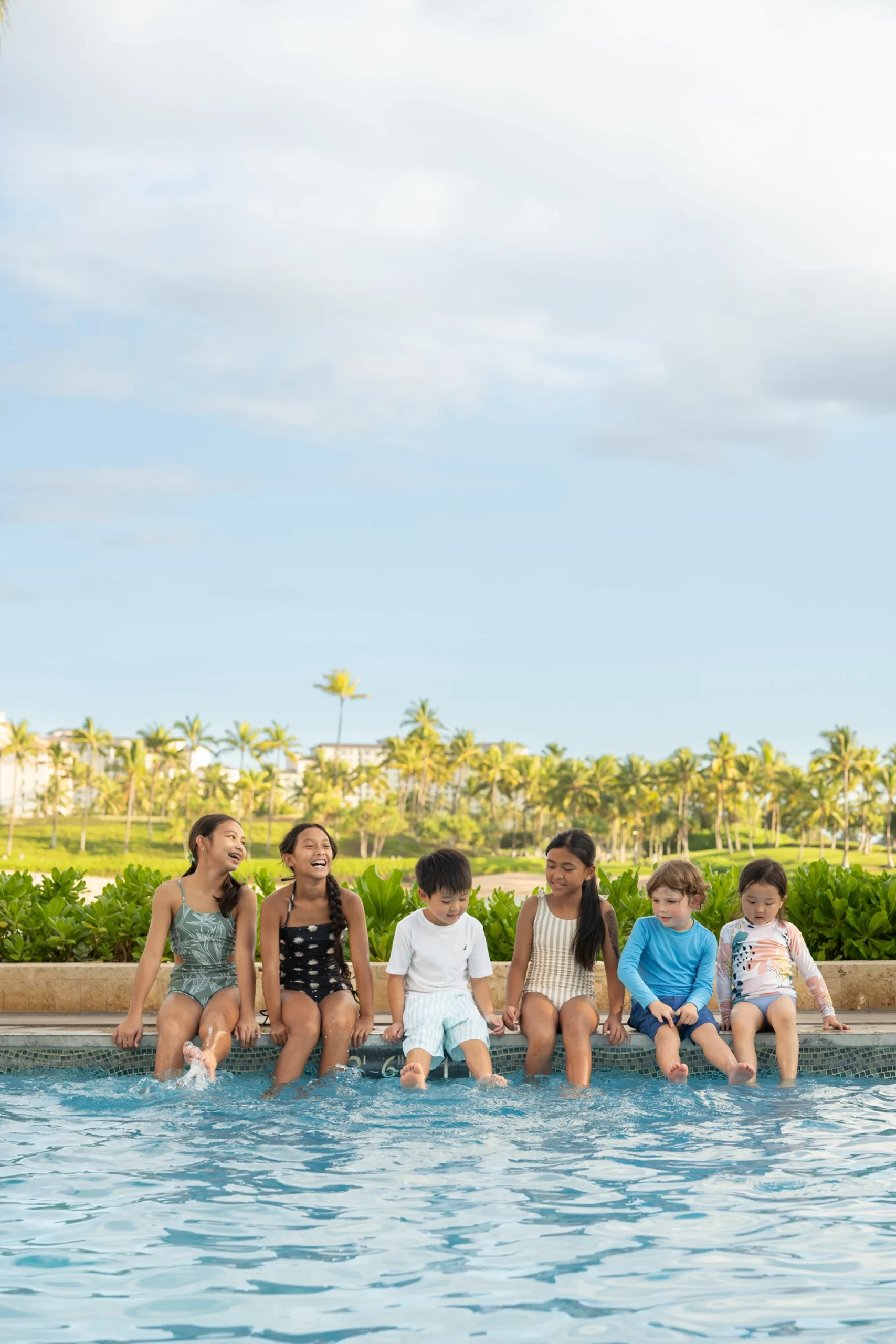
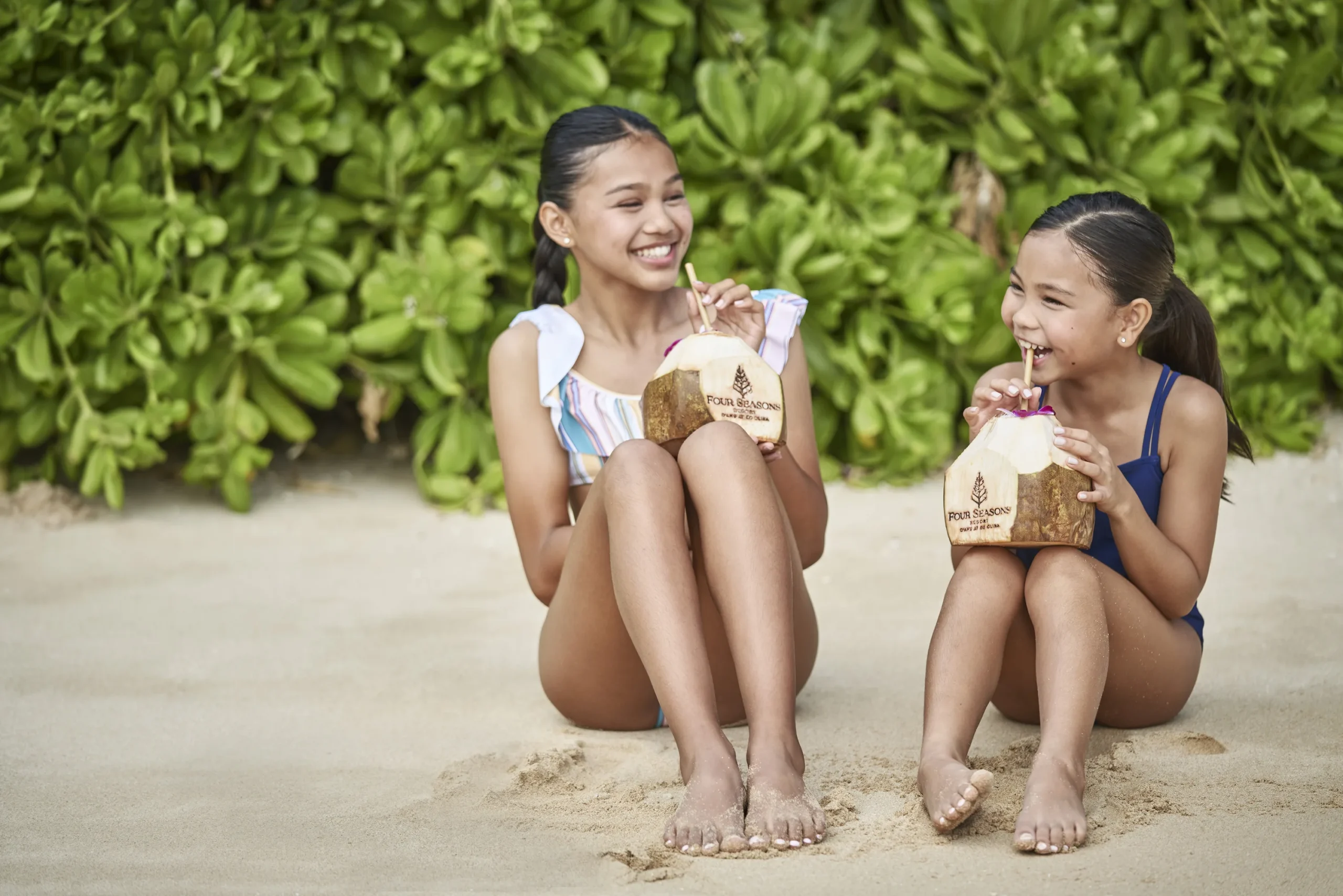
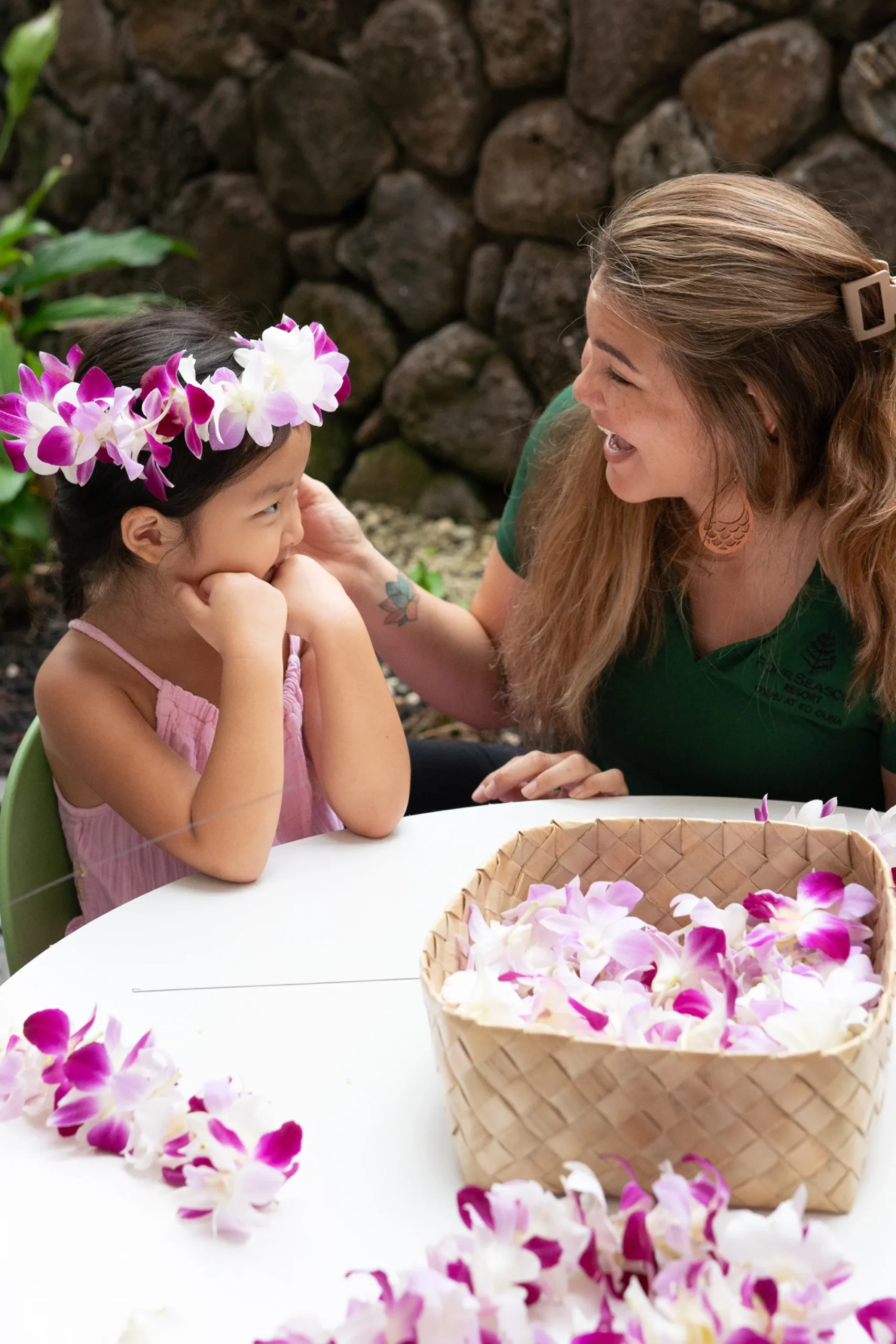
The lagoon out front is man-made, which for families with young children is a feature rather than a compromise. Ko Olina’s coves are sheltered from open-ocean swells, the water is shallow along a gently sloping entry, and a three-year-old can stand at the edge while a seven-year-old is already swimming at depth. The resort’s 370 accommodations span 28 categories, from standard rooms to the 378-square-metre, three-bedroom Residence. Camp Kohola, the complimentary kids’ club, runs daily. The cultural programming (lei making, lauhala weaving, resin-surfboard art, stargazing) is a cut above what the Pacific resort circuit delivers as standard.
Three things work against it, and we will not bury them. There is no supervised crèche or nursery for children under five, which leaves infant and toddler families relying on paid babysitting rather than a structured programme. Dining is expensive even by luxury resort standards, and several recent reviewers pushed back on food quality at the headline prices. At peak times, pool lounger competition is real: at least one 2026 guest described the chair situation as a significant problem. None of these undercuts the fundamental case, but each is worth pricing into the decision before you book.
Location & Accessibility
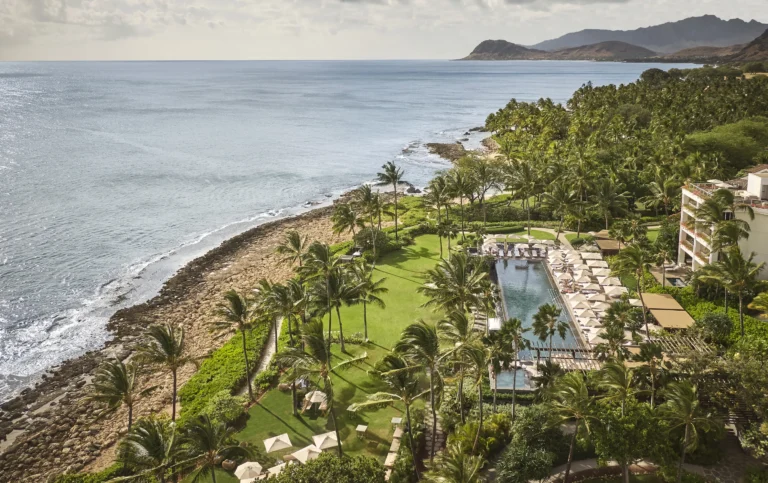
Ko Olina sits on Oahu’s leeward (western) coast, 32 kilometres and approximately 30 to 50 minutes from Daniel K. Inouye International Airport in Honolulu. Four Seasons quotes the drive at around 30 minutes; with children, luggage and any friction on the H-1 freeway, 40 to 50 minutes is a more realistic planning figure. Private luxury car and SUV transfers can be arranged through the resort. An Enterprise car-rental desk operates on site. Taxis and rideshares are available from arrivals; there is no confirmed complimentary shuttle from HNL.
The wider Ko Olina development is structured around four man-made lagoons, with the resort community anchored by a retail and dining hub, a golf course and several large hotel properties. The Four Seasons occupies its own lagoon, with neighbouring resorts including the Aulani Disney complex sharing adjacent coves along the same protected shoreline. The lagoon is not a strictly private beach; it forms part of a semi-public coastal zone. The water is calm, protected from open-ocean surf, and well suited to young swimmers. The surrounding area is otherwise sparse: this is not a walkable town environment. The cultural and geographic highlights of Oahu (the North Shore, the National Memorial Cemetery of the Pacific, the food energy of Chinatown Honolulu) are 45 minutes to an hour by car in either direction. Families committed to exploring the island will want a rental car. Those who plan to stay put and let the resort be the holiday will find everything they need within the property.
The resort campus is self-contained and flat, with pools, restaurants, the spa, the kids’ club and the beach within easy walking distance. The leeward coast averages less rainfall than windward Oahu, which matters for a beach holiday built around pool and lagoon days. Valet parking runs USD 55 per night for families arriving by rental car or personal vehicle.
Accommodation (Rooms & Suites)
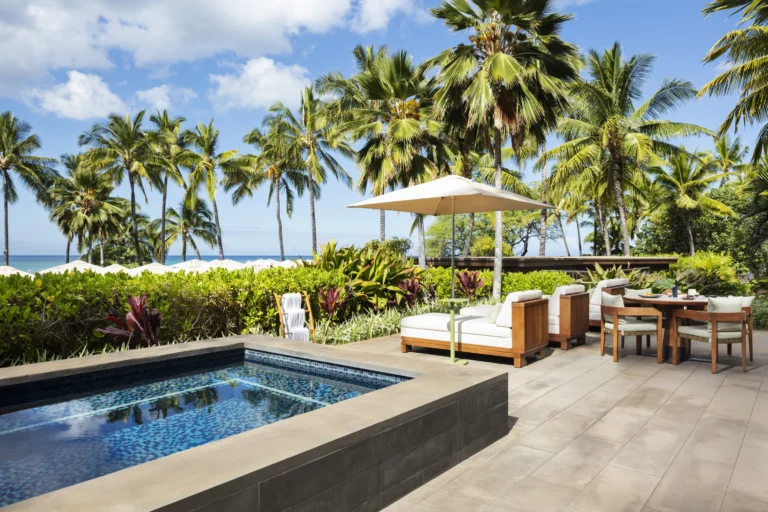
The entry category (a 59-square-metre room with an approximately eight-square-metre private lanai) is the most consequential thing about this property for families. Four categories share this footprint: Oceanfront, Partial Ocean-View, Resort and Garden. The key variables are view and orientation; floor area is constant. A two-double-bed configuration comfortably accommodates two adults and two children; a king bed allows a crib and rollaway combination for a family of three or four. Published maximum occupancy across these categories is two adults plus two children. Standard features include private lanai, mini-fridge, blackout curtains and hypoallergenic room options.
The upgrade sequence for families with more space needs:
- Oceanfront Studio Suite (92 m²): The first category that meaningfully expands a single-room family footprint. Sofa-bed and rollaway options both available; maximum two adults plus two children. The practical single-room upgrade for parents who want children asleep before the adults stay up.
- One-Bedroom Suites (approximately 111 to 190 m², multiple category names): Separate bedroom plus living area with sofa-bed and rollaway options. The Oceanfront One-Bedroom Suite reaches approximately 130 to 190 m² with a 14-square-metre lanai, comfortably fitting two adults plus two children with genuine separation between sleeping zones.
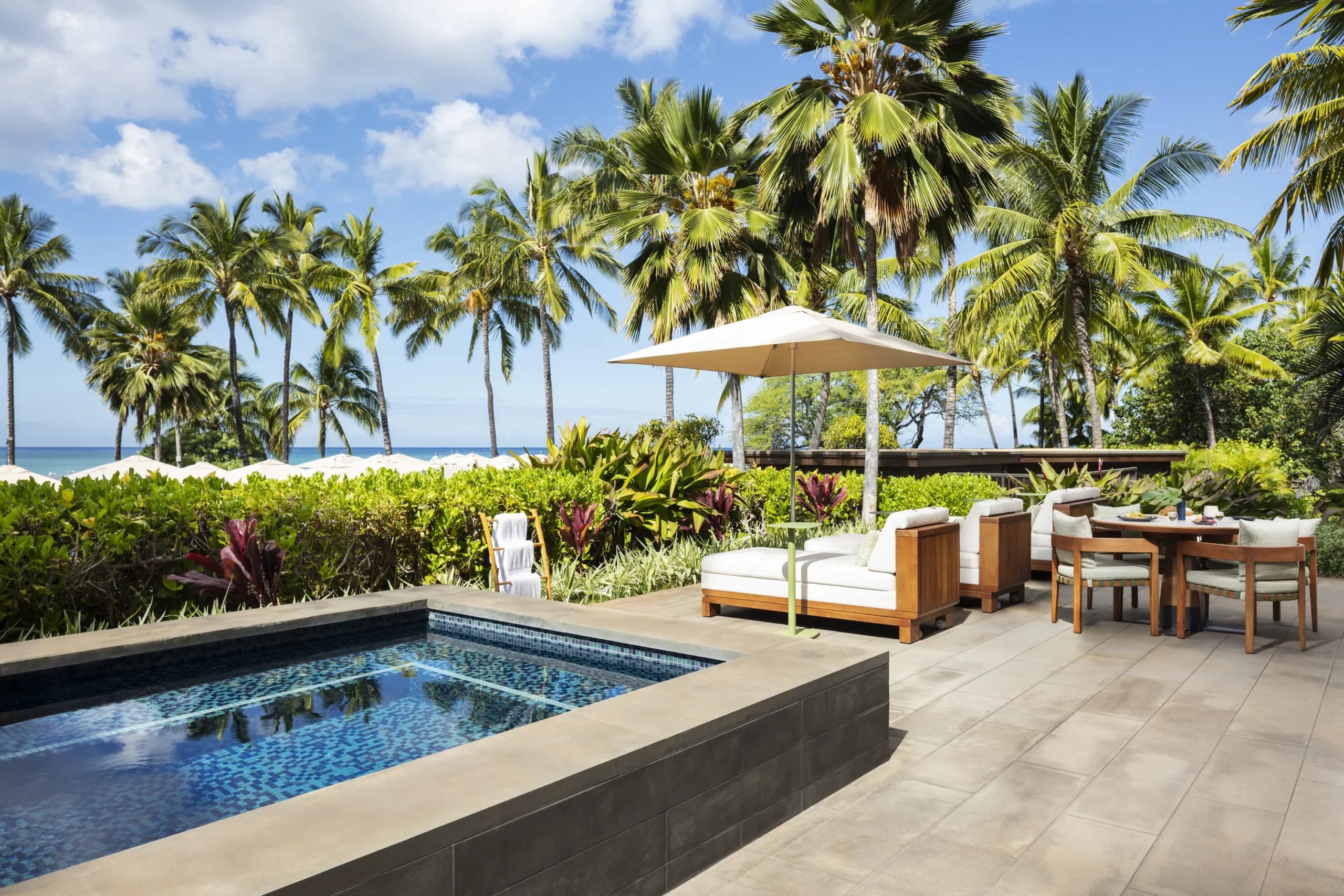
- Pacific Suite (approximately 130 m²): Includes a private plunge pool and terrace. Published maximum: two adults plus two children.
- Sunset Suite (one, two or three-bedroom configurations): The most flexible option for larger families or multigenerational travel. Dimensions depend on the chosen configuration.
- Penthouse Suite (approximately 297 m² plus 74 m² outdoor area): Two king bedrooms; published capacity up to six adults plus four children depending on configuration.
- The Residence (approximately 378 m², three king bedrooms): Up to six adults plus two children. Expansive living, dining and pantry space.
Club-level categories add access to the Club Lounge, a 203-square-metre space opened on 4 July 2025 with dedicated concierge service, breakfast, daytime refreshments and evening cocktails. For families staying five or more nights, Club access meaningfully reduces the daily dining spend, particularly useful when teenagers keep irregular hours.
A few practical notes on the room inventory: connecting rooms are available but must be requested and confirmed in advance; specific combinations are not guaranteed, and they fill early in peak periods. There is no bunk-room concept or family-specific room with a built-in separate children’s sleeping zone. Some recent guests described room décor as slightly dated in parts, suggesting the 2025 Club Lounge refresh did not extend to a full property renovation. Baby equipment available on request includes cribs, rollaway beds, bottle warmers, play pens, swim diapers, child-size bathrobes and children’s bath amenities; Expedia currently lists cribs and rollaways as complimentary, subject to availability. Microwaves are reported available on request per third-party listings, though the official Four Seasons site does not specifically confirm this.
Family Amenities & Kids’ Activities
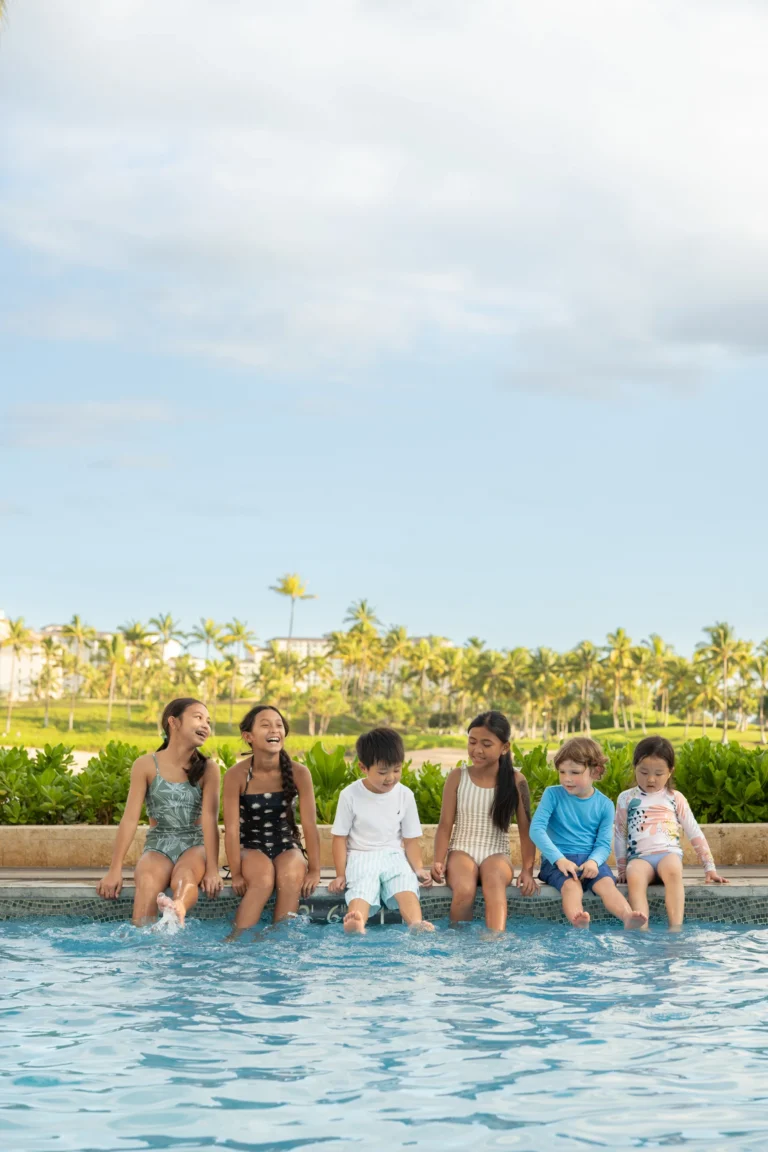
Camp Kohola at The Hideaway runs daily from 9:00am to 5:00pm and is complimentary for registered resort guests aged five to twelve. That complimentary qualifier matters here, because the resort’s activity pricing on cultural and excursion programming can be substantial, and Camp Kohola provides a six-hour daily structure that absorbs an enormous amount of a child’s energy without the family spending another dollar on it. Five-year-olds must show proof of age; the club does not accept children under five.
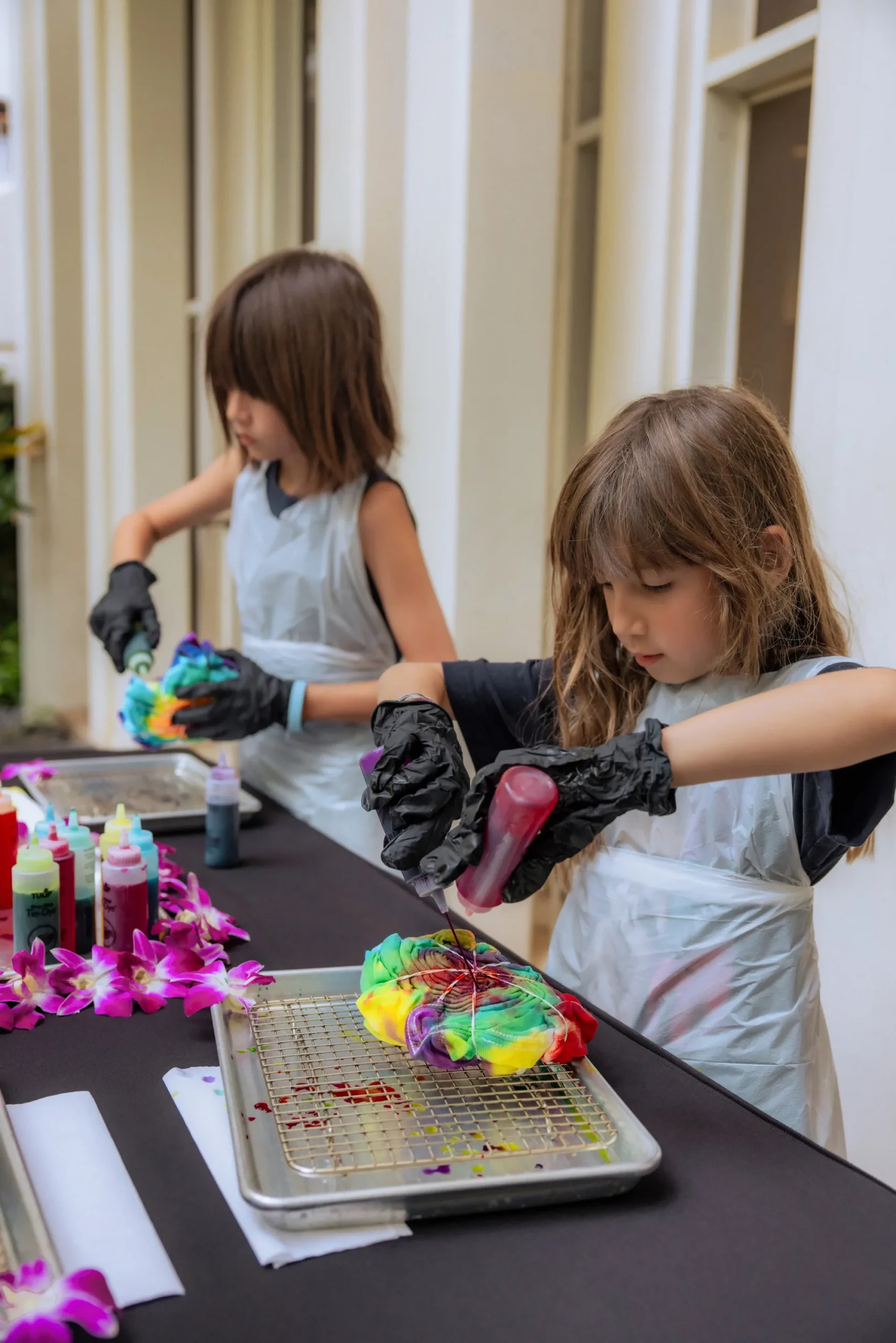
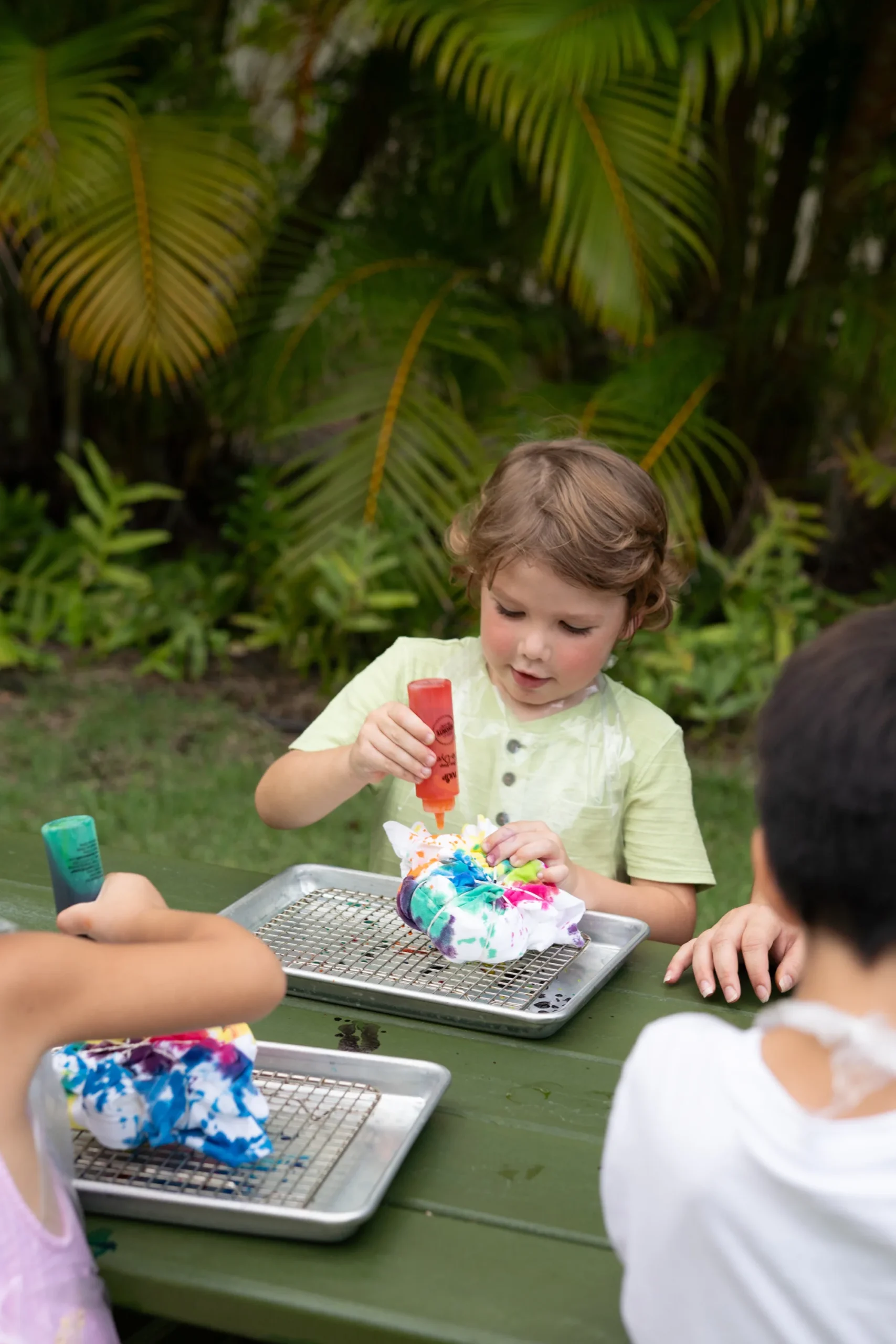
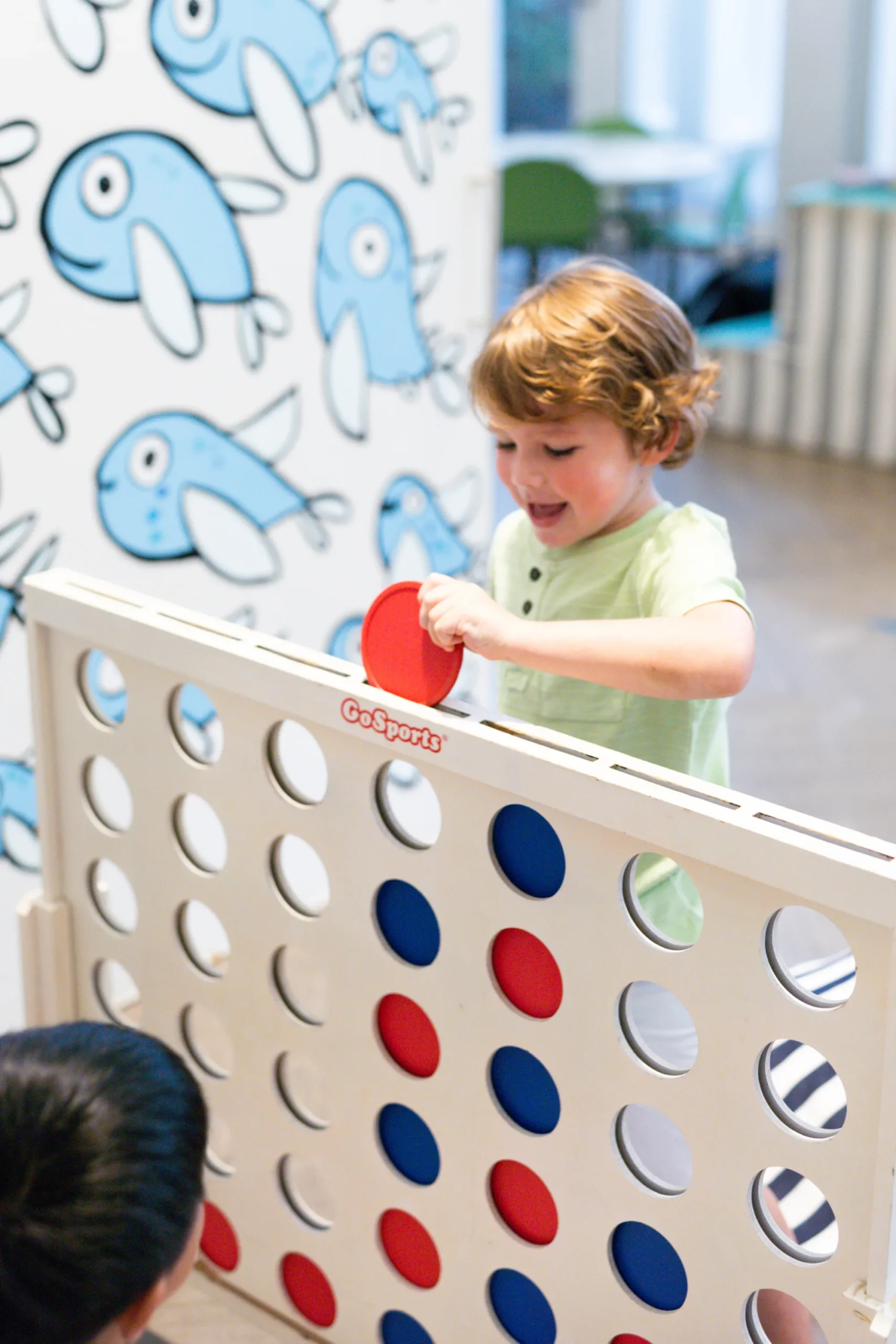
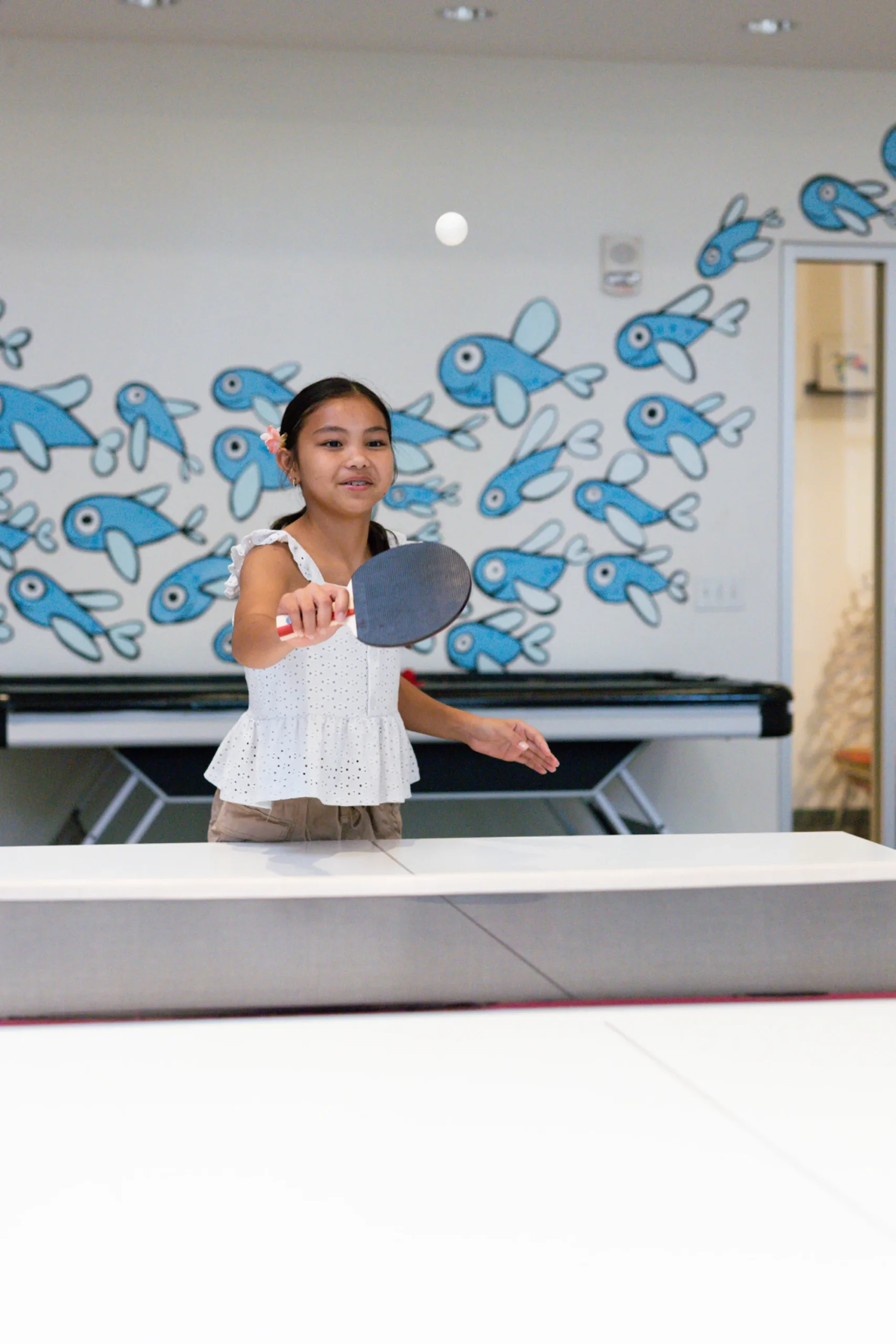
Programming includes arts and crafts, lei making, tie-dye, outdoor sports, swimming and rotating themed sessions. The physical space includes a media room with motion-activated floor projection, a reading lounge, a recreation room with video games and court access. Across a week’s stay, this variety holds most children aged six to ten well. The cultural angle (lei making and lauhala weaving as structured activities rather than optional extras) is not common at this tier of Pacific resort, and it gives the club a sense of place that purely water-and-games programmes do not replicate.
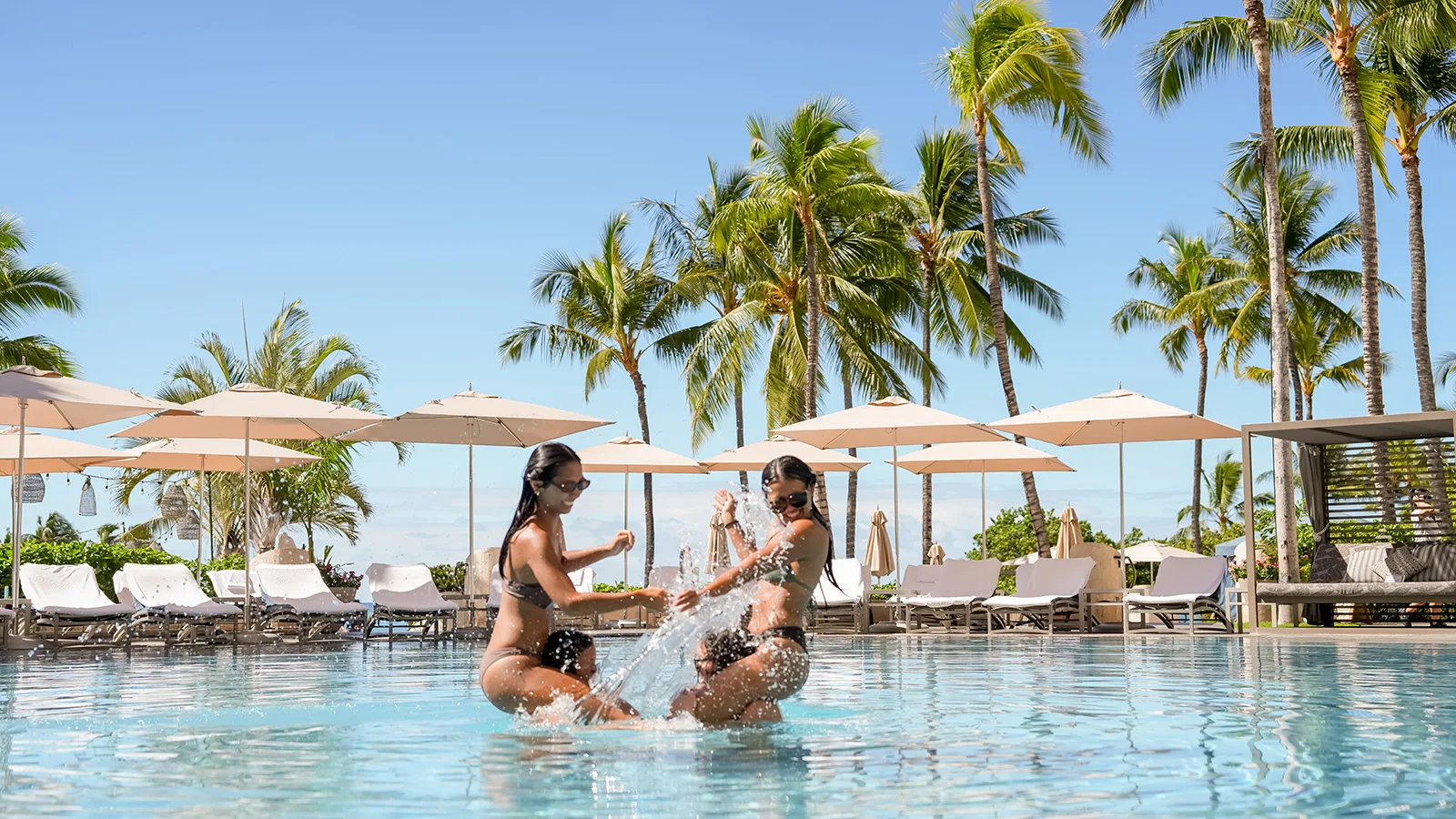
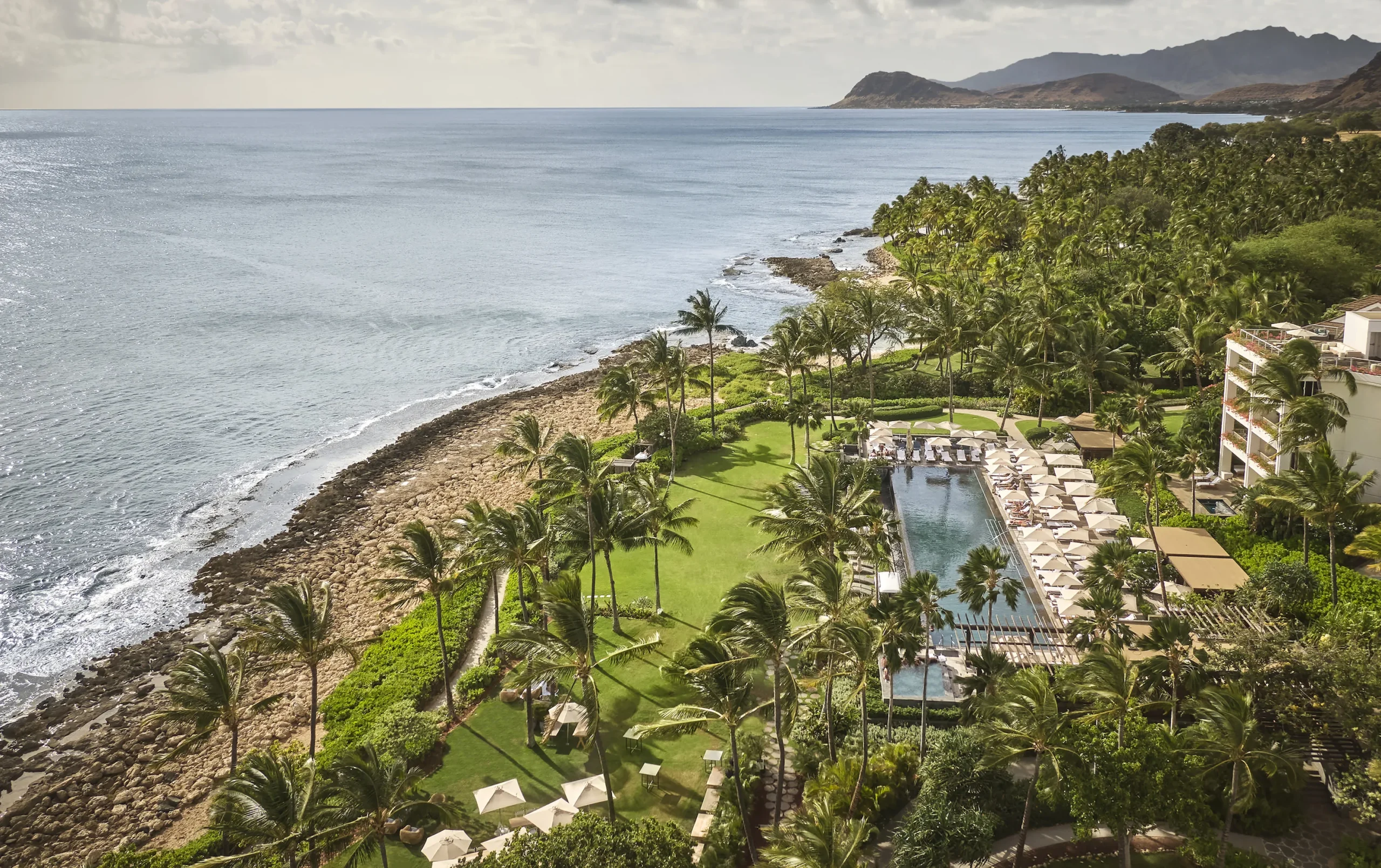
The four pools divide into distinct functional zones:
- Keiki Pool: Child-focused, with a warm sand-style beach entry that visually blurs the line between pool and lagoon. Seasonal hours approximately 8:00am to 9:00pm. Maximum depth is not publicly stated; parents seeking precise figures for safety planning should confirm with the resort. The shallow entry makes this the practical base for families with young children from around age two upward.
- Ohana Pool: The larger family-oriented main pool, hours approximately 8:00am to 7:00pm. Guest feedback documents lounger competition at peak periods; one April 2026 reviewer noted chairs fill quickly. Arriving before 8:30am on busy days is the practical mitigation.
- Infinity Pool: Adults-only. This pool exists for parents: when childcare is arranged, it provides a child-free zone that the resort has not wholly sacrificed to family functionality.
- Spa and Wellness Pool at Naupaka: A 62-foot lap pool with adjacent whirlpool, part of the 3,252-square-metre Naupaka Spa complex, open approximately 8:00am to 6:30pm.
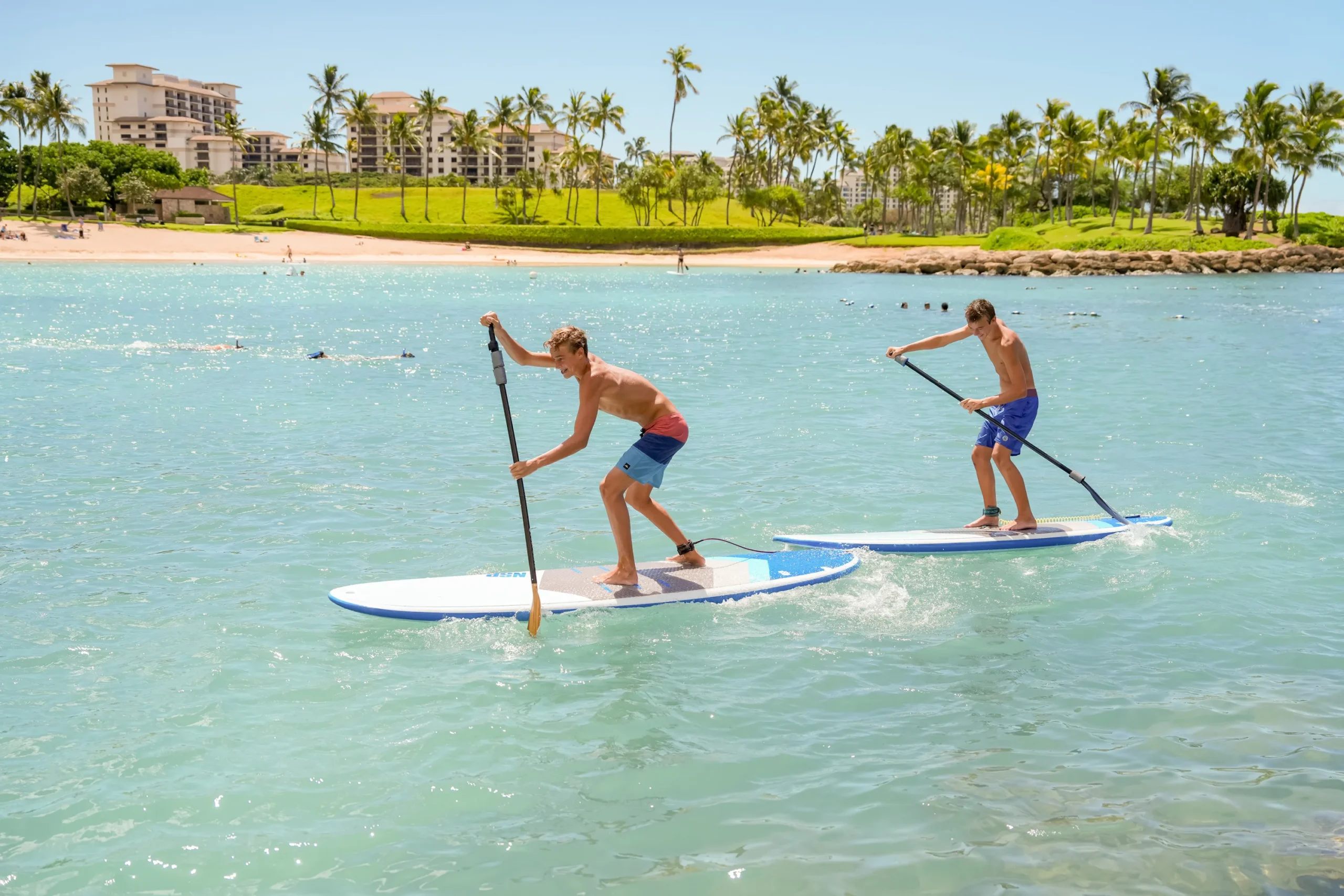
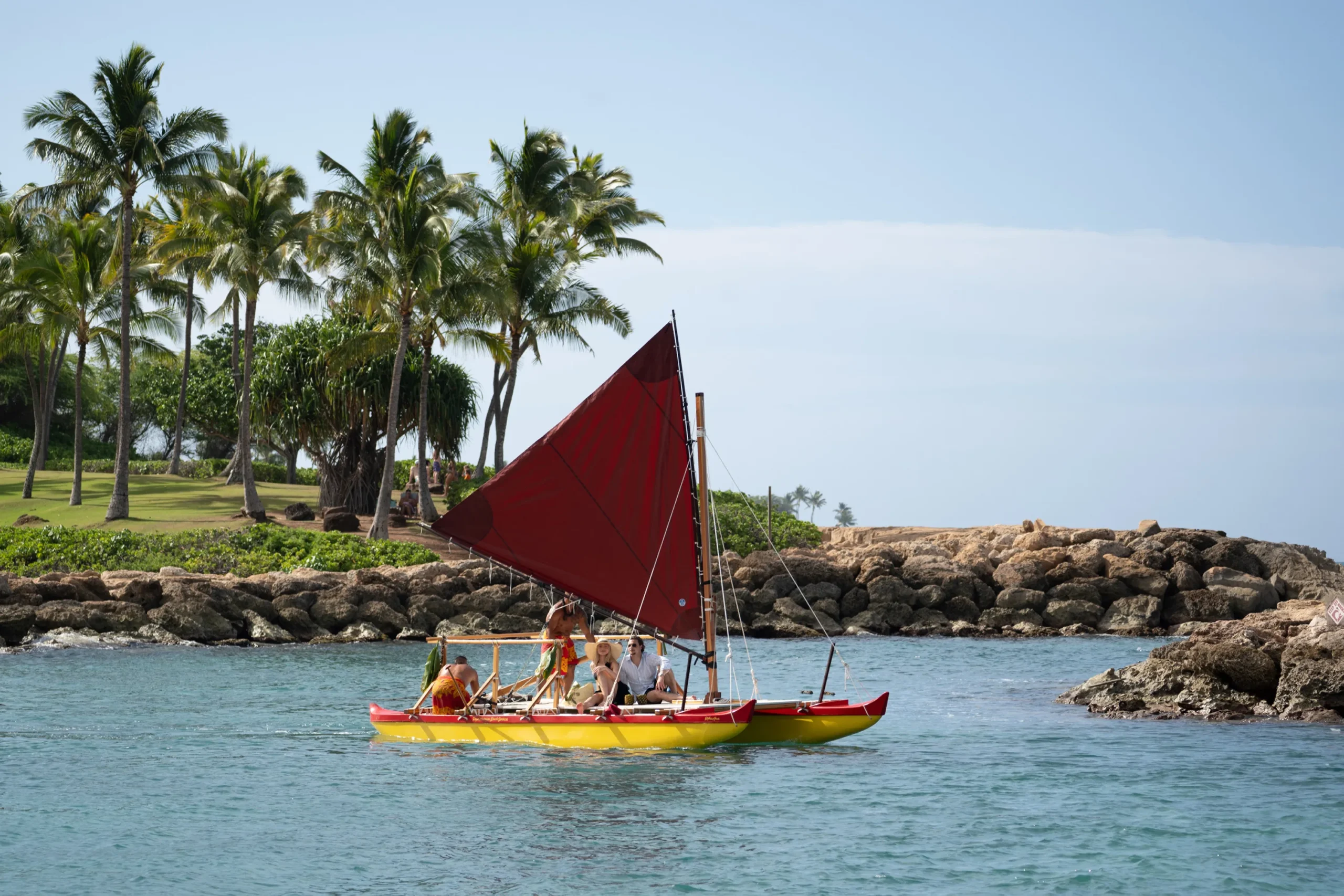
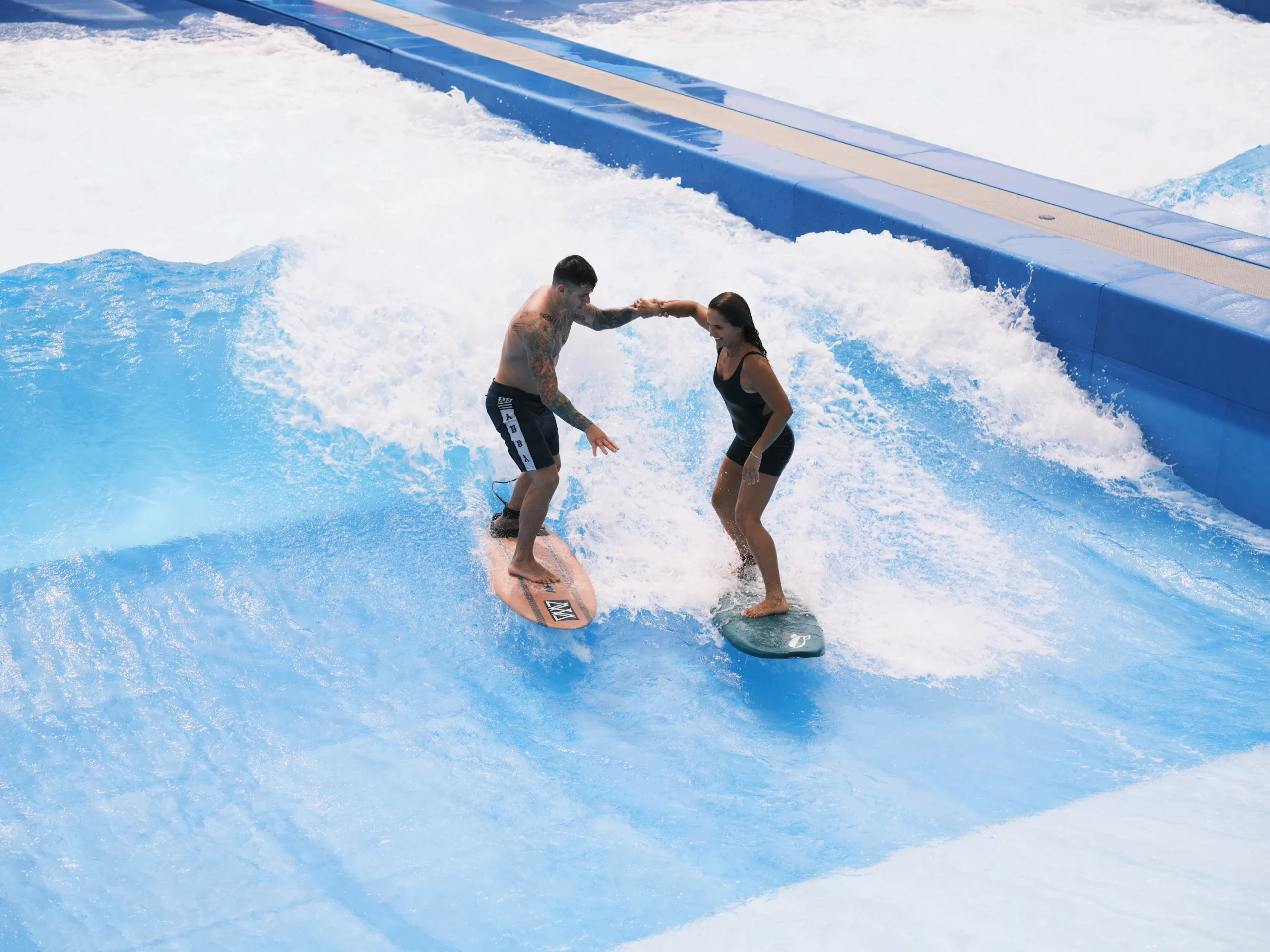
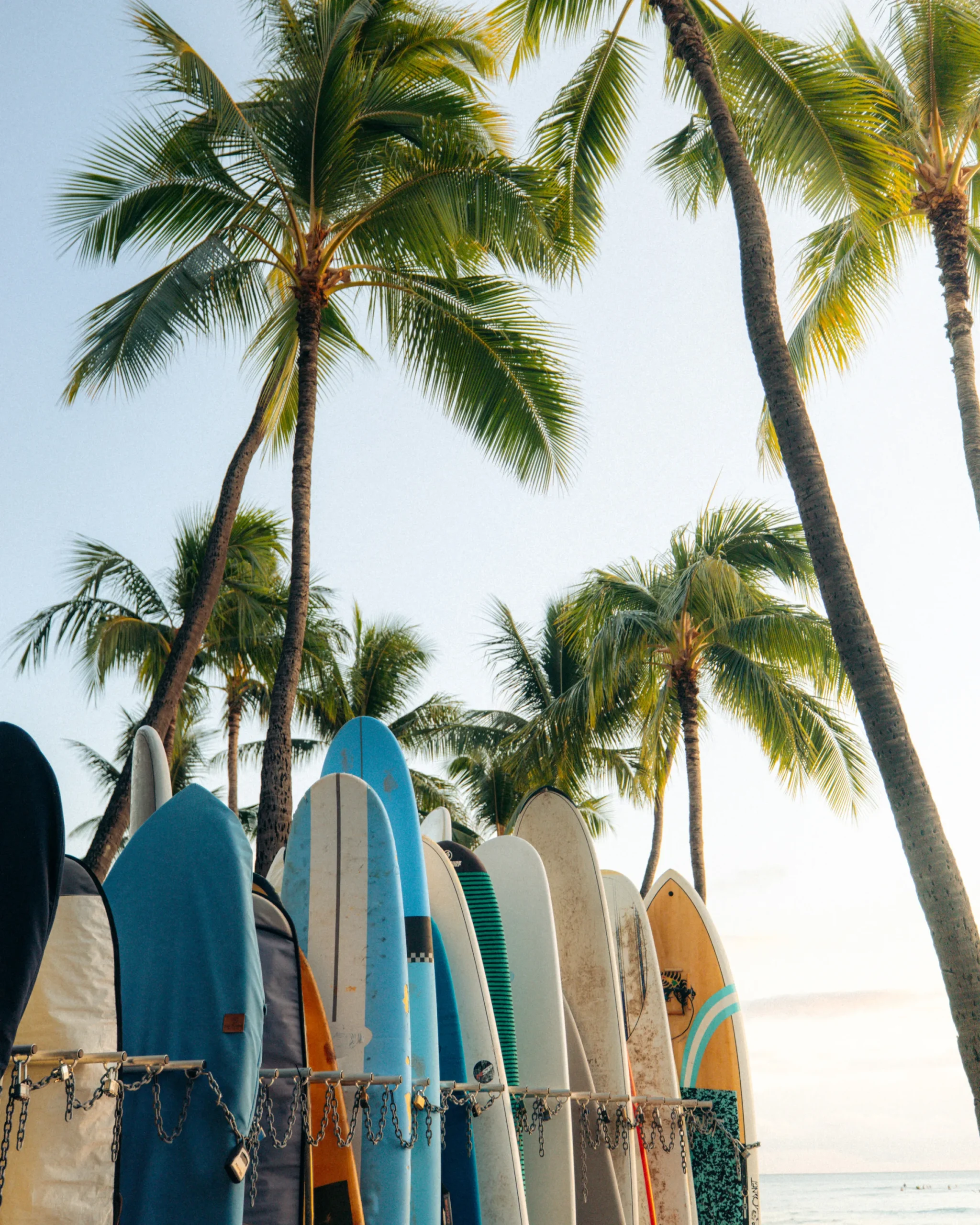
Complimentary at the lagoon: stand-up paddleboards, kayaks and snorkelling equipment. These three items, free and accessible throughout the day, constitute a daily entertainment layer that costs nothing beyond the room rate. Guided catamaran excursions, private surfing instruction and other activity upgrades are charged separately, at rates that add up quickly for a family with multiple children.
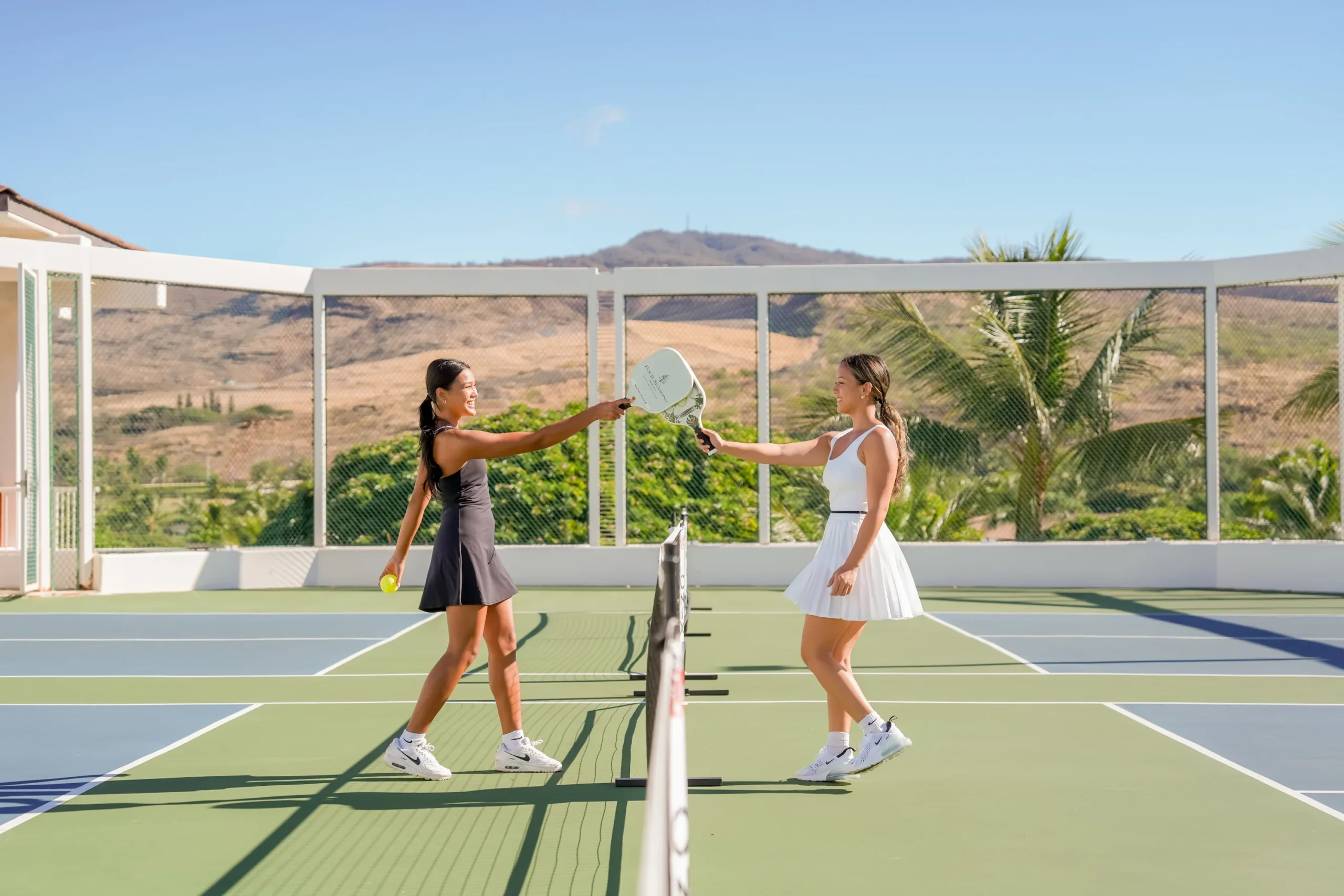
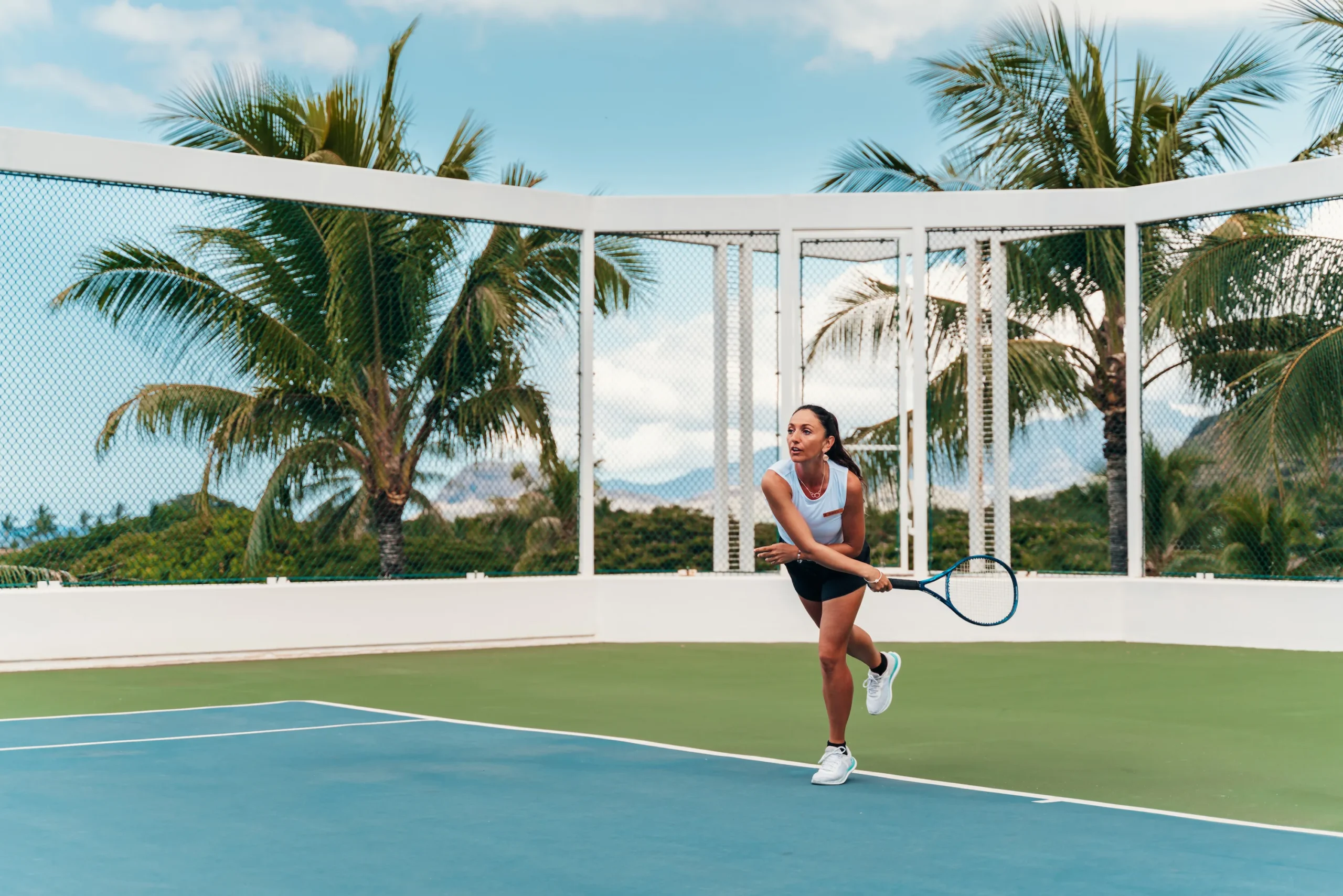
Teen programming runs through Camp Manitou, which current research found described as a seasonal offering tied to school holidays rather than a permanent year-round teen lounge. The independent activity portfolio for teenagers is strong regardless: surfing, stand-up paddleboarding, snorkelling, tennis, pickleball, the fitness centre and Naupaka Spa treatments from age twelve (guardian waiver required). Keiki nail services start at USD 35 for a 25-minute manicure or pedicure. The roster of cultural programming (private stargazing, resin-surfboard art, flower-crown making) also draws in teenagers who engage with it.
For babies and children under five, the planning reality is simple: Camp Kohola is not available to them, so paid babysitting is the only supervised childcare option on site. Four Seasons does not publish current babysitting rates, minimum hours or advance-notice requirements on the public-facing site. Families with infants or toddlers should contact the resort directly and confirm those details before finalising a booking, not after arrival.
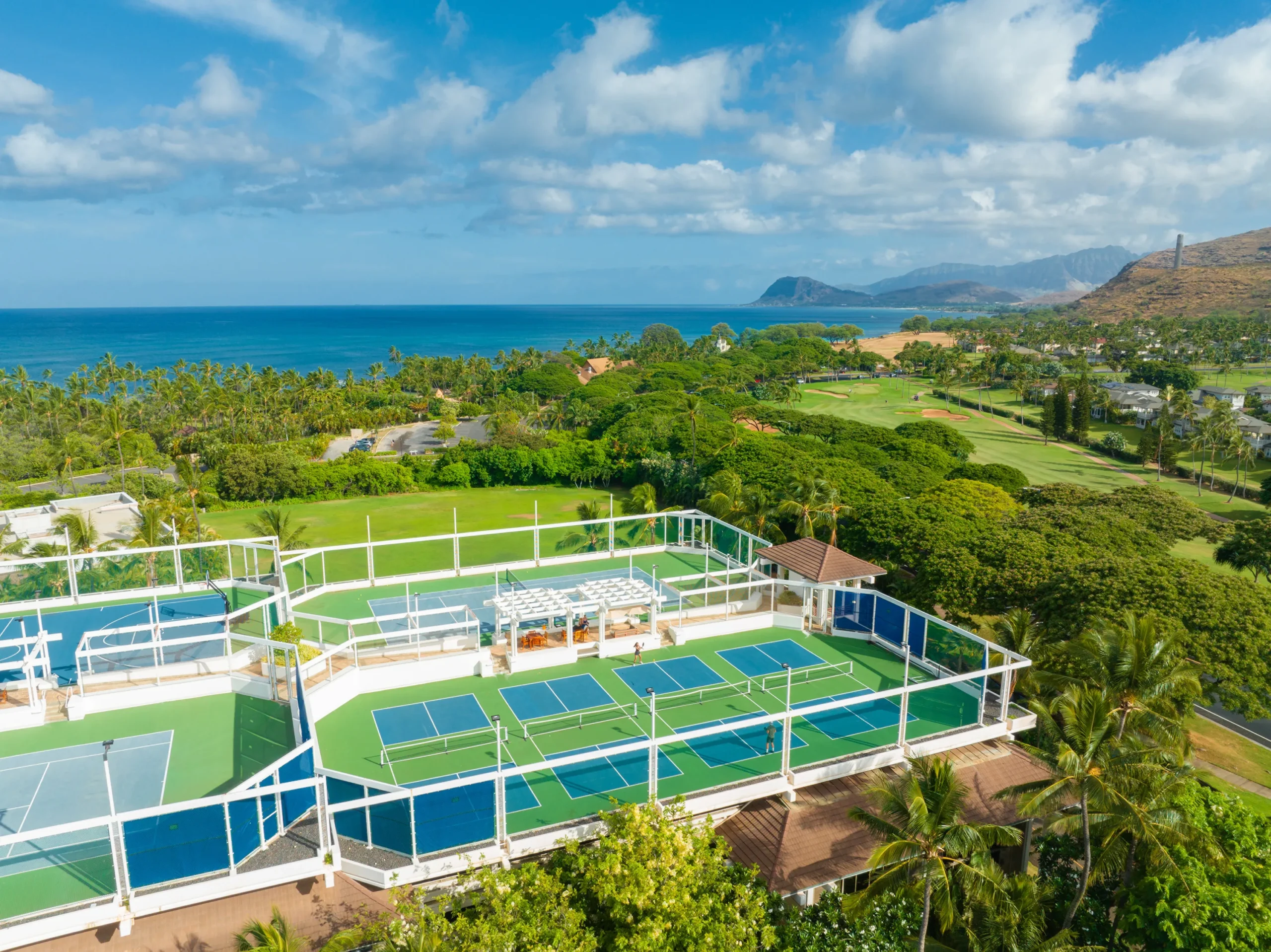
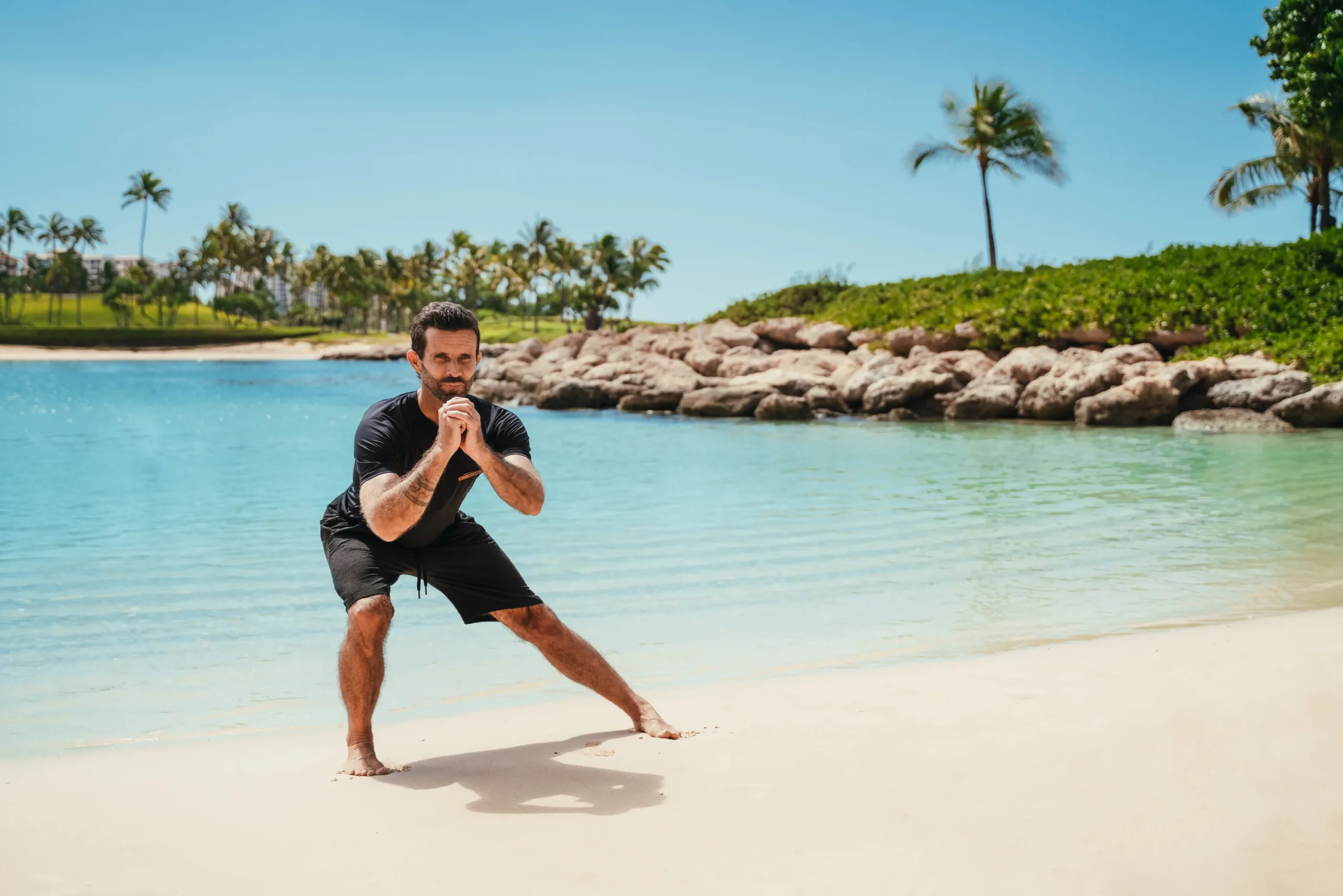
The fitness centre is open 24 hours, equipped with Peloton bikes, yoga and meditation programming, personal training and wet facilities including sauna, steam room and whirlpool. Tennis and pickleball courts are on site; Booking.com additionally lists basketball, table tennis, billiards and hiking. An arrival and departure lounge provides luggage handling and changing facilities for families with early arrivals or late departures, turning a potentially frustrating airport-noon check-in-at-3pm gap into a manageable two hours by the pool.
Dining
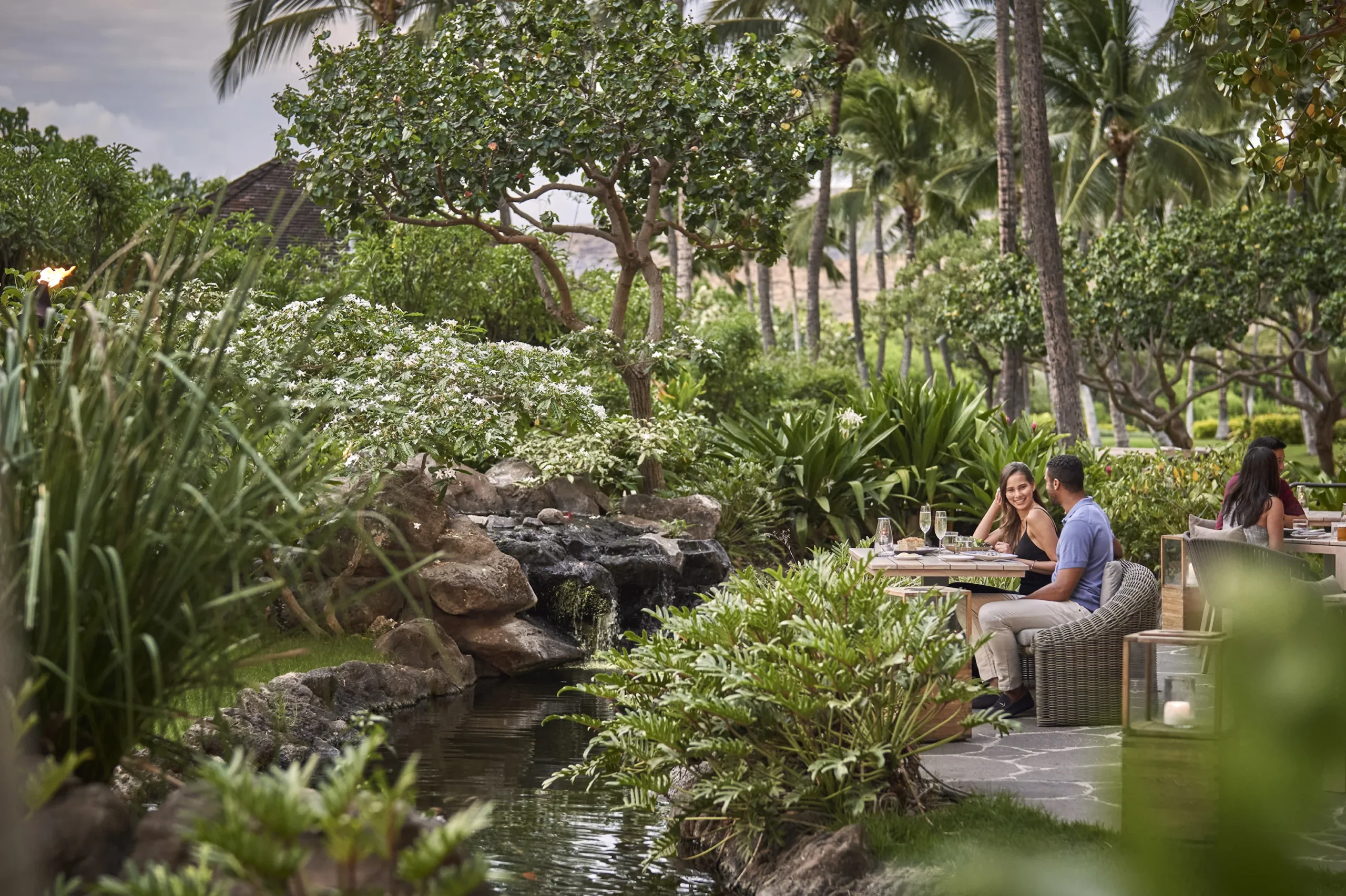
Six principal venues serve the resort, plus 24-hour in-room dining. Every family-facing restaurant publishes a Keiki or children’s menu. The pricing, however, is a recurring theme in guest feedback that we rate as a real concern rather than a minor cavil: one 2026 Expedia reviewer awarded 6/10 specifically on food quality and value grounds; another described dining costs as “extremely overpriced.” A family eating three meals per day entirely on site will reliably spend USD 300 to 500 or more daily before beverages, on top of an already significant room rate.
The venues in brief:
- La Hiki: The everyday family anchor. Buffet breakfast daily 6:00am to 10:30am, à-la-carte breakfast until 11:00am, lunch Monday to Saturday 11:00am to 3:00pm, Sunday brunch 11:00am to 3:00pm. Dedicated children’s breakfast options published.
- Waterman Bar: Poolside and beach, beverages from 10:00am, bar menu and lunch from 11:00am to 5:00pm. Dedicated kids’ menu. The midday option for families stationed at the pool or lagoon.
- Noe: Southern Italian, dinner daily 5:00pm to 9:00pm. Dedicated kids’ menu published; children welcome throughout service. A practical middle-ground dinner for families who want something beyond poolside without the formality of the seafood restaurant.
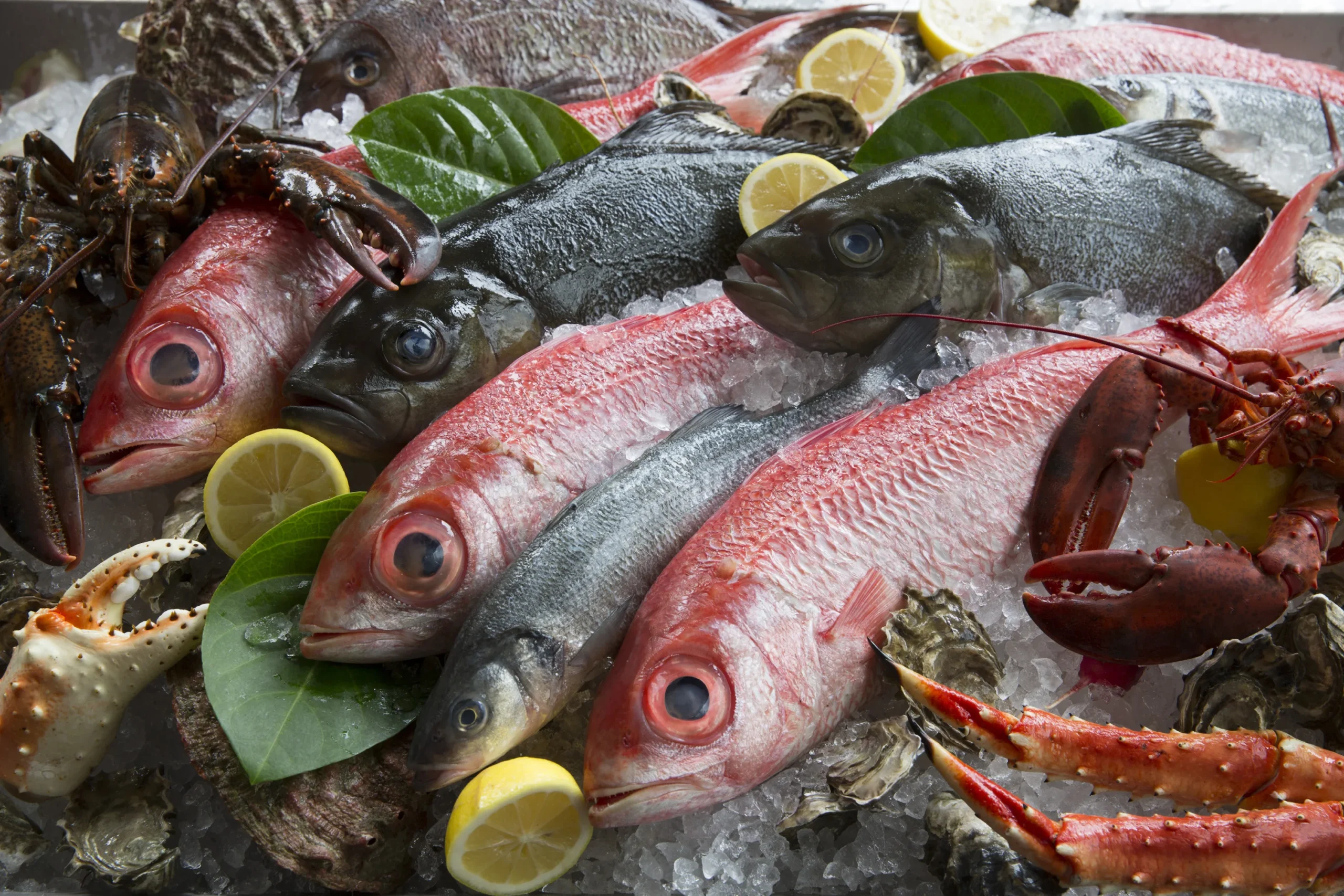
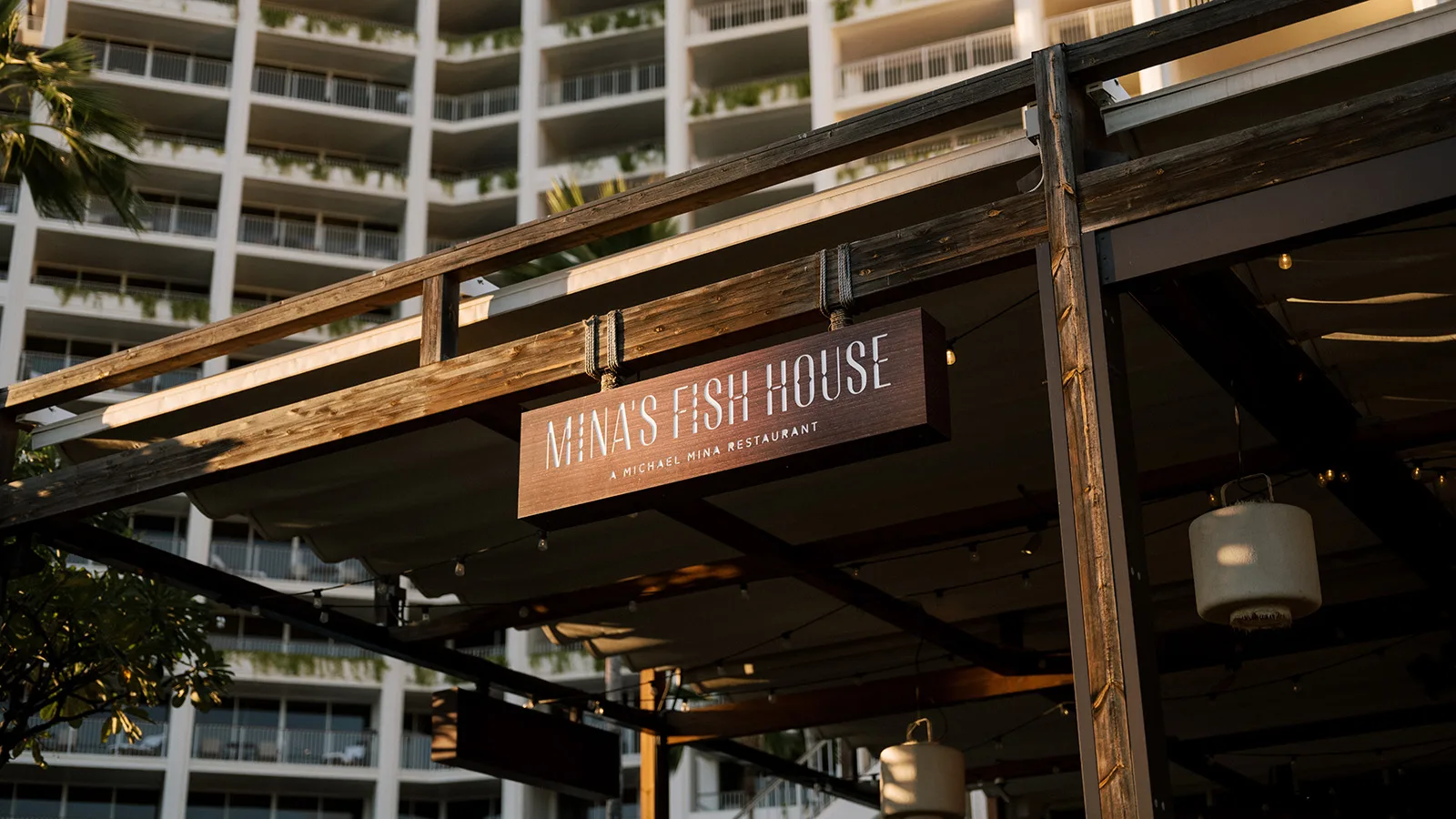
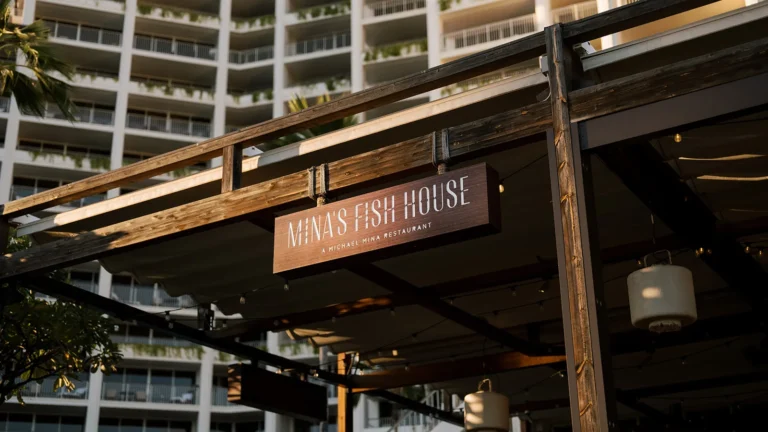
- Mina’s Fish House: The resort’s most considered dinner venue, built around line-to-table seafood. Dinner 4:00pm to 9:00pm, bar to 11:00pm. Dedicated Keiki menu published. Best suited to families with older children comfortable in a more structured setting.
- Mānalo Lounge: Waterfront Asian-fusion and sushi, food service approximately 5:00pm to 9:00pm. Four Seasons positions it for family gatherings; a separate Keiki menu was not confirmed at time of research.
- Hokulea: Lobby café, coffee, pastries and lighter food, approximately 6:00am to 5:00pm. Useful for early risers and for assembling beach-day provisions. Hours should be reconfirmed directly.
In-room dining operates around the clock, with a Keiki breakfast and all-day children’s menu available. For families with very early-rising children or late adult appetites after a long beach day, this is the quiet resort convenience that earns its place on day one.
Allergen handling is well organised. Current restaurant menus carry markers for gluten-free, vegan, vegetarian, dairy, nuts, shellfish and soy; guests are asked to flag allergies at check-in. Published sources indicate children typically eat free with a paying adult at selected venues up to around age four or five, though the exact current age cutoff and participating restaurants should be confirmed directly, as this kind of policy shifts seasonally.
Staff & Service Quality
The dominant pattern across 30 reviews spanning Tripadvisor, Expedia, Google and Hotels.com is warm, child-aware service delivered with Four Seasons consistency. Multiple reviewers named individual staff members. A guest travelling with a two-year-old described being welcomed “without hesitation.” Another cited small thoughtful touches as the trip’s standout. The 9.3/10 Booking.com score from 114 reviews and the 4.6/5 Tripadvisor average from more than 2,200 reflect a service operation that performs at a high level across the full range of guest encounters.
Two lower-scoring reviews in the 2025 to 2026 window raised concerns that go beyond minor inconvenience: one Hotels.com reviewer (March 2026, 2/10) described the pool situation as unusable; one Expedia reviewer (June 2026, 6/10) cited a persistent pest issue. These are not representative of the dominant pattern, but they indicate the service is not yet perfectly uniform across all circumstances. For families with specific operational needs (a particular baby-equipment configuration, a dietary allergy requiring pre-arrival communication, a room-ready request for late arrivals), the pre-arrival notes function of the Four Seasons reservation system is the most effective tool. This property responds well when expectations are set in advance rather than managed at the front desk.
Camp Kohola staff and the cultural programming team receive consistent positive mentions in guest reviews, independent of the general service commentary. The concierge team is described as useful rather than decorative, which matters when booking surf lessons, arranging off-site day trips, or coordinating logistics for a multigenerational group.
Safety & Cleanliness
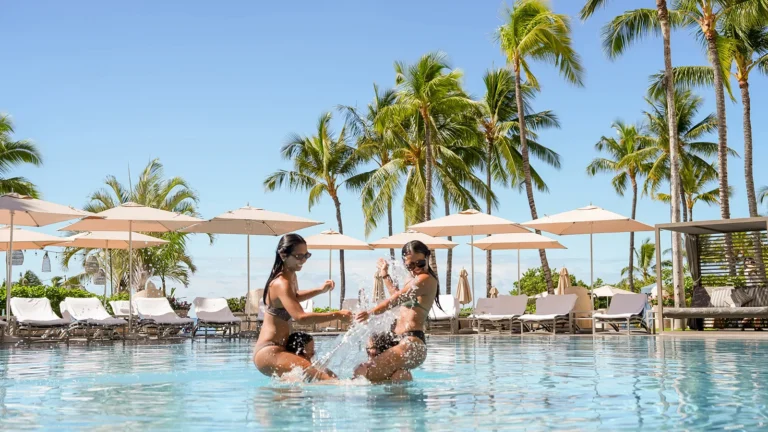
The Ko Olina lagoon’s primary safety advantage is structural: its man-made geometry shelters the water from open-ocean swells, the shoreline slopes gradually, and the entry is accessible to young children from wading depth. The Keiki Pool’s sand-style beach entry extends that accessible quality to the pool. Current published material does not clearly specify lifeguard hours or coverage arrangements for each pool or the lagoon; parents should confirm coverage details directly and should not assume continuous supervision at any water feature.
Cleanliness scores well across major review aggregators. “Rooms were immaculate” is a direct April 2026 guest quote; “clean and very well organised” is a December 2025 Hotels.com review. Against that consensus: a June 2026 Expedia reviewer reported a bug issue severe enough to lower their overall score; an April 2026 reviewer specifically cited gnats and mosquitoes as rampant during outdoor evening time. An isolated reference to bathroom residue and caulking issues appears in one recent review. These are not the norm in the record, but they are specific and recent enough to document.
The property is smoke-free throughout. Accessible rooms, lifts and step-free routes through key public areas are confirmed across multiple booking-platform listings. The resort campus is flat and navigable with a stroller, which saves more parental energy across a long beach day than it might initially sound.
Value & Pricing

Entry-room rates at the Four Seasons Oahu: approximately €839 per night in the September 2026 lower season, based on live Booking.com sampling at time of research. Shoulder-season pricing around January 2027 ran near €910. Late December peak pricing reached approximately €1,266 per night for the same entry category. Suites begin substantially higher; Christmas and New Year rates can exceed those December figures significantly.
Price band: $$$ at the entry level, with peak-season nights routinely crossing into $$$$ territory.
The total-stay cost picture for a family of four differs substantially from the room rate alone. Valet parking at USD 55 per night accumulates across a week. Resort dining for a family eating three meals daily on site runs USD 300 to 500+ per day before beverages, a figure reinforced by the pricing complaints in the review record. Excursion charges for surfing, catamaran tours and guided cultural experiences further expand the actual daily cost. On the other side of the ledger: Camp Kohola (ages five to twelve) is complimentary, non-motorised water sports at the lagoon are complimentary, and the cultural programming carries no per-session surcharge. Those three complimentary layers represent meaningful daily value for families whose children qualify and will use them.
The sharpest value comparison is with other Hawaii five-star resort properties at similar room price levels. The 59-square-metre entry room is a material quality advantage over competitors charging similar rates for 35 to 40 square metres. If the family will use Camp Kohola daily and lean on the complimentary water sports, the effective per-day family entertainment cost approaches zero. If the family has children primarily under five and plans to eat every meal on-site without a food budget, the cost case weakens considerably. The resort is not engineered for cost efficiency; it is engineered for quality, and the pricing reflects that without apology.
Why We Picked It
The entry-room floor area drove the selection more than any single amenity. A 59-square-metre room changes what a family week actually feels like across five or six nights, from the first morning when no one has to climb over anyone to reach the bathroom, to the last evening when two sleeping children do not require adults to sit in the dark. That spatial logic compounds with Camp Kohola’s complimentary daily structure for ages five to twelve, the complimentary lagoon water sports, and a service culture that the review record confirms as consistently child-aware.
The strongest version of the right guest for this property: a family with children aged five to twelve who will use Camp Kohola every morning, spend afternoons split between the lagoon and the Ohana Pool, and treat the resort’s cultural programming as a part of what Hawaii is rather than just a distraction. That family will leave with a strong sense of value for money despite the significant room rate. Tweens aged nine to twelve are the bracket this property serves best of all, with full Camp Kohola eligibility, water sports maturity, and enough independent activity options to make the stay feel like their holiday rather than their parents’.
The clearest version of the wrong guest: a family whose youngest children are primarily under five, for whom the crèche gap is a structural limitation that warm service and a beautiful pool do not resolve. Also: families planning to eat most meals on-site on a tight per-day food budget, or those who need open-ocean surf culture and urban Honolulu accessible in ten minutes rather than forty-five.
FFH rates this property at 8.8 out of 10. Four of five scoring dimensions come back strong; the score is trimmed by the nursery gap, the seasonality of teen programming, and the dining value gap that real reviewers identified. The Four Seasons Oahu is not the most comprehensive family resort in the Pacific. It is, in its lane: calm lagoon, generous rooms, excellent school-age programming, Four Seasons service delivery, and about as well-executed as the category gets.
Four Seasons Oahu at Ko Olina: Family Questions Answered
What ages does Camp Kohola accept, and does it cost extra?
Camp Kohola (also marketed as Kids For All Seasons at The Hideaway) accepts children aged 5 to 12, running daily from 9:00am to 5:00pm. It is complimentary for registered resort guests with no additional fee. Five-year-olds must present proof of age. There is no equivalent supervised programme for children under five.
Is there a crèche or babysitting service for babies and toddlers?
There is no supervised crèche or nursery for children under five at the Four Seasons Oahu. Paid babysitting is available on request, but Four Seasons does not publish current hourly rates, minimum booking duration or advance-notice requirements online. Families with infants or toddlers should contact the resort directly to confirm pricing and availability for their specific dates before booking. Treating paid babysitting as the primary childcare solution for the under-five bracket is the accurate planning assumption.
What is available for teenagers at the resort?
Teen programming runs through Camp Manitou, which current research found operating seasonally during school holidays rather than as a permanent year-round teen lounge. Independently of the club, the resort offers surfing lessons, stand-up paddleboarding, snorkelling, tennis, pickleball, the 24-hour fitness centre and Naupaka Spa treatments from age 12 (guardian waiver required). The cultural programming (stargazing, resin-surfboard art, flower-crown making) also draws in teenagers who engage with it. Families travelling with teens outside peak summer or school-holiday periods should confirm Camp Manitou availability directly with the resort.
Which room works best for a family of four, and how large is the entry room?
Standard entry rooms measure 59 m² plus an 8 m² lanai, unusually large for Hawaii. Two adults plus two children are the published maximum occupancy; a two-double-bed configuration is the most comfortable family layout, or a king bed plus crib and rollaway for younger families. For families wanting a separate bedroom, the Oceanfront Studio Suite at 92 m² is the practical single-room upgrade. One-bedroom suites range from approximately 111 to 190 m² with a separate living area. Connecting rooms are available but must be confirmed in advance.
Does the resort guarantee connecting rooms for families?
Connecting rooms are offered but not guaranteed. Requests should be made at the time of booking and reconfirmed shortly before arrival. Specific category combinations vary, and availability diminishes during peak travel periods. As at most resort properties of this scale, early booking is the most effective strategy for securing a connecting configuration.
What baby and toddler equipment can families request?
Based on published sources and verified guest reports, equipment available on request includes cribs, rollaway beds, bottle warmers, play pens, swim diapers, child-size bathrobes and children's bath amenities. Expedia currently lists both cribs and rollaways as complimentary, subject to availability. A bottle steriliser has not been confirmed. Strollers are reported as available through the concierge. All items should be requested in advance to ensure availability for the specific room category.
Do children eat free, and which venues have kids' menus?
Published sources indicate young children typically eat free with a paying adult at selected venues, with an age cutoff around four or five. The exact current cutoff and participating restaurants should be confirmed directly, as this policy can shift seasonally. Dedicated Keiki menus are available at Mina's Fish House, La Hiki, Noe, Waterman Bar and through 24-hour in-room dining. The resort is not all-inclusive; standard room rates do not include meals. Allergen coding (gluten-free, vegan, dairy, nuts, shellfish, soy) is used across current menus.
How do families travel from Honolulu Airport to the resort?
Honolulu Airport (HNL) is approximately 32 km away. Four Seasons can arrange private luxury car or SUV transfers at an additional cost. Taxis and rideshare services are alternatives. An Enterprise car-rental desk operates on site. There is no confirmed complimentary scheduled shuttle. Allow 35 to 50 minutes door to door with children and luggage; rush-hour traffic on the H-1 can add further time. The resort also has an arrival and departure lounge with luggage handling and changing facilities for families arriving outside room-ready hours.
What does a family stay actually cost beyond the room rate?
Entry-room rates run approximately €839 per night (lower season, September 2026 live research) to €1,266 per night (late December peak). On top of the room: valet parking at USD 55 per night; resort-venue dining for a family of four can run USD 300 to 500+ per day before drinks; excursion and activity charges for surfing, catamaran tours and guided experiences; babysitting fees if required. Camp Kohola (ages 5–12) and non-motorised water sports (stand-up paddleboards, kayaks, snorkelling gear) are complimentary, representing meaningful daily value for families whose children qualify and will use them.
Is the Four Seasons Oahu worth the price for a family holiday?
For families with children aged 5 to 12 who will use Camp Kohola daily, the value case is strong: a complimentary kids' club, complimentary water sports and a 59 m² entry room are a better infrastructure package than most Hawaii five-star competitors at comparable prices. For families with children primarily under five, or those planning to eat most meals on-site without a food budget, the costs stack quickly and the value case is thinner. FFH rates this property at 8.8/10. Price band: $$$, reaching $$$$ at peak dates.
What are the main drawbacks families should know before booking?
Five honest drawbacks: (1) No supervised crèche for children under five: paid babysitting is the only childcare option for that bracket. (2) Teen programming through Camp Manitou appears seasonal rather than year-round. (3) Pool chairs fill quickly at peak times; at least one 2026 reviewer described this as a significant problem. (4) Dining is expensive, and multiple recent reviews questioned food value at the prices charged. (5) The Ko Olina lagoon is man-made and shared with neighbouring resorts; one July 2026 reviewer described the lagoon water as murky.
Which families would be better served by a different resort?
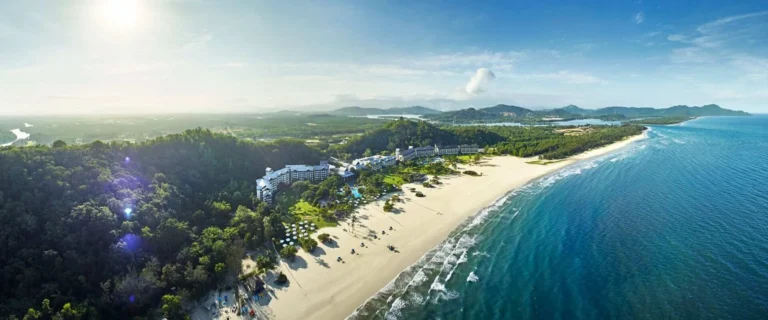
Families with the majority of their children under five will find the crèche gap significant. The Four Seasons Oahu does not operate a supervised nursery for that bracket, making it structurally less supportive than properties like Sani Beach, which accepts children from four months in its crèche, or Jean-Michel Cousteau Resort, where infant and toddler infrastructure is a central programme pillar. Families seeking all-inclusive pricing will also find the open-cost dining model a poor structural fit.
How does the Four Seasons Oahu compare to similar family beach resorts?
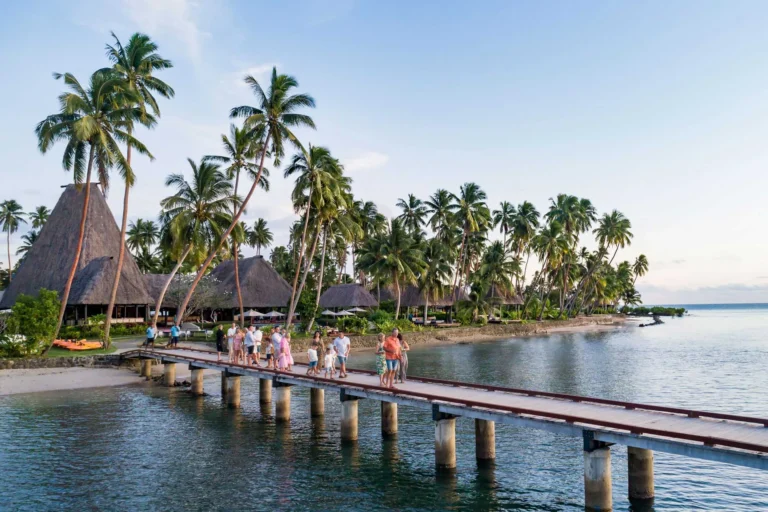
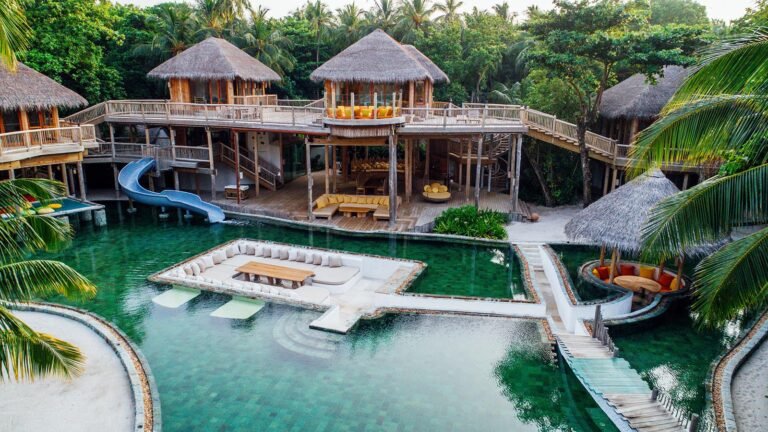
Against Jean-Michel Cousteau Resort in Fiji, the Four Seasons Oahu offers a larger pool infrastructure, stronger dining variety and Four Seasons service consistency, but lacks the all-inclusive eco-lodge intimacy and infant programming depth of the Cousteau property. Against Soneva Fushi in the Maldives, the Oahu property is considerably more accessible from the continental US and offers a larger kids' club, but trades the Maldivian overwater privacy and complete seclusion for a more resort-community setting. The Four Seasons Oahu is the stronger choice for families prioritising proximity to a major Pacific hub, generous room sizes and a proven US-based travel context.
Is the Ko Olina lagoon safe and suitable for young children?
The Ko Olina lagoon is man-made and sheltered from open-ocean swells, making it unusually calm and manageable for young swimmers compared with most Oahu beach alternatives. The shoreline slopes gently, allowing young children to wade at the edge while older children swim at depth. The lagoon is not an exclusively private resort beach; it forms part of a wider Ko Olina coastal zone shared with neighbouring hotels. One July 2026 reviewer described the water as murky. Lifeguard coverage details are not clearly published; confirm specifics directly with the resort and do not assume continuous supervision.
What is the minimum check-in age, and can teenage children check in independently?
Multiple booking platforms and the TripAdvisor FAQ for this property consistently list the minimum check-in age as 21. An earlier Expedia listing cited 19, which appears to be outdated. Families booking for a primary guest under 21 should confirm the current policy directly with the resort before finalising a reservation. Children aged 18 and under may stay in their parents' room without an additional room charge, subject to the published occupancy limits of the room category booked.