


















Overview
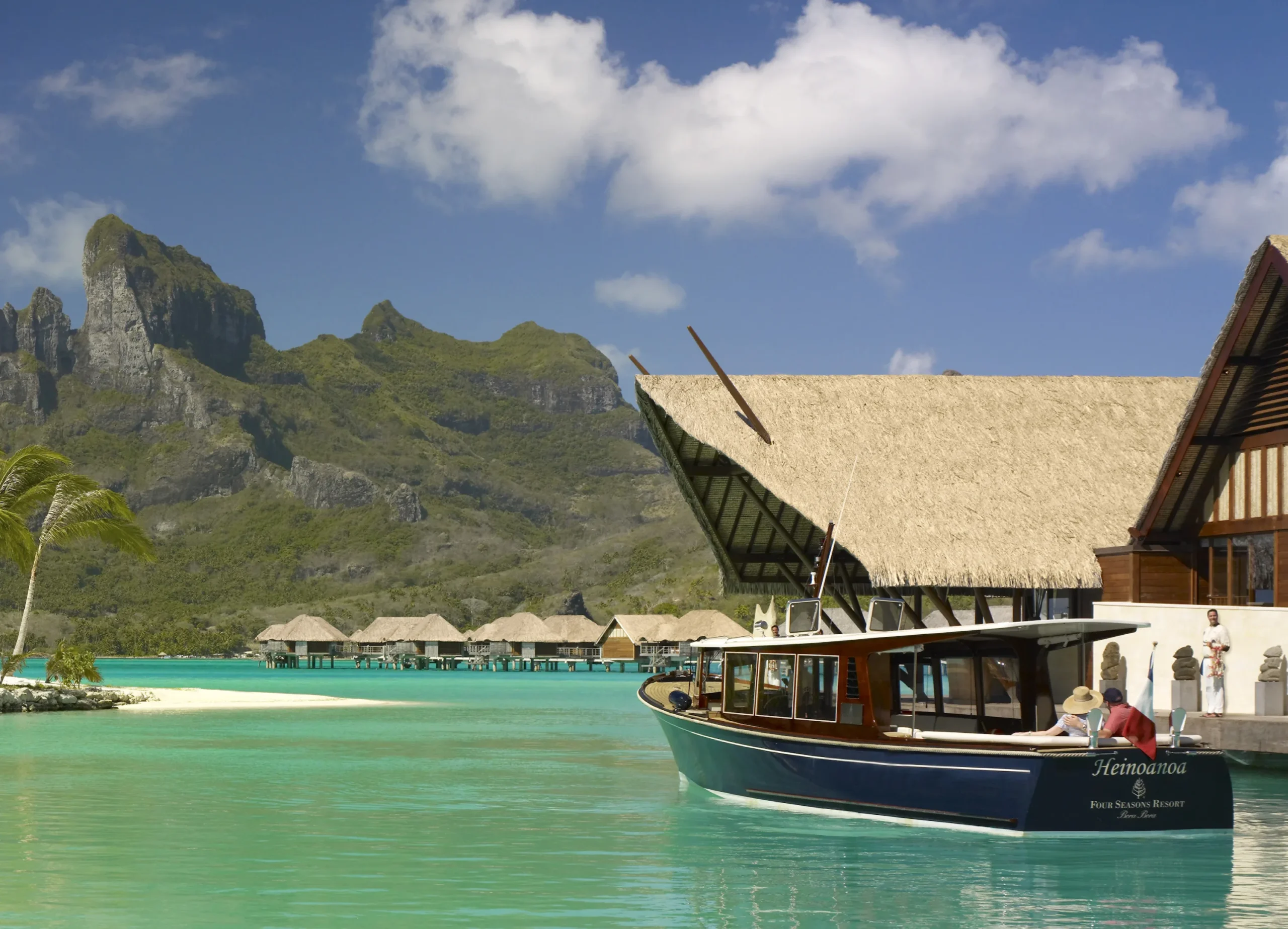
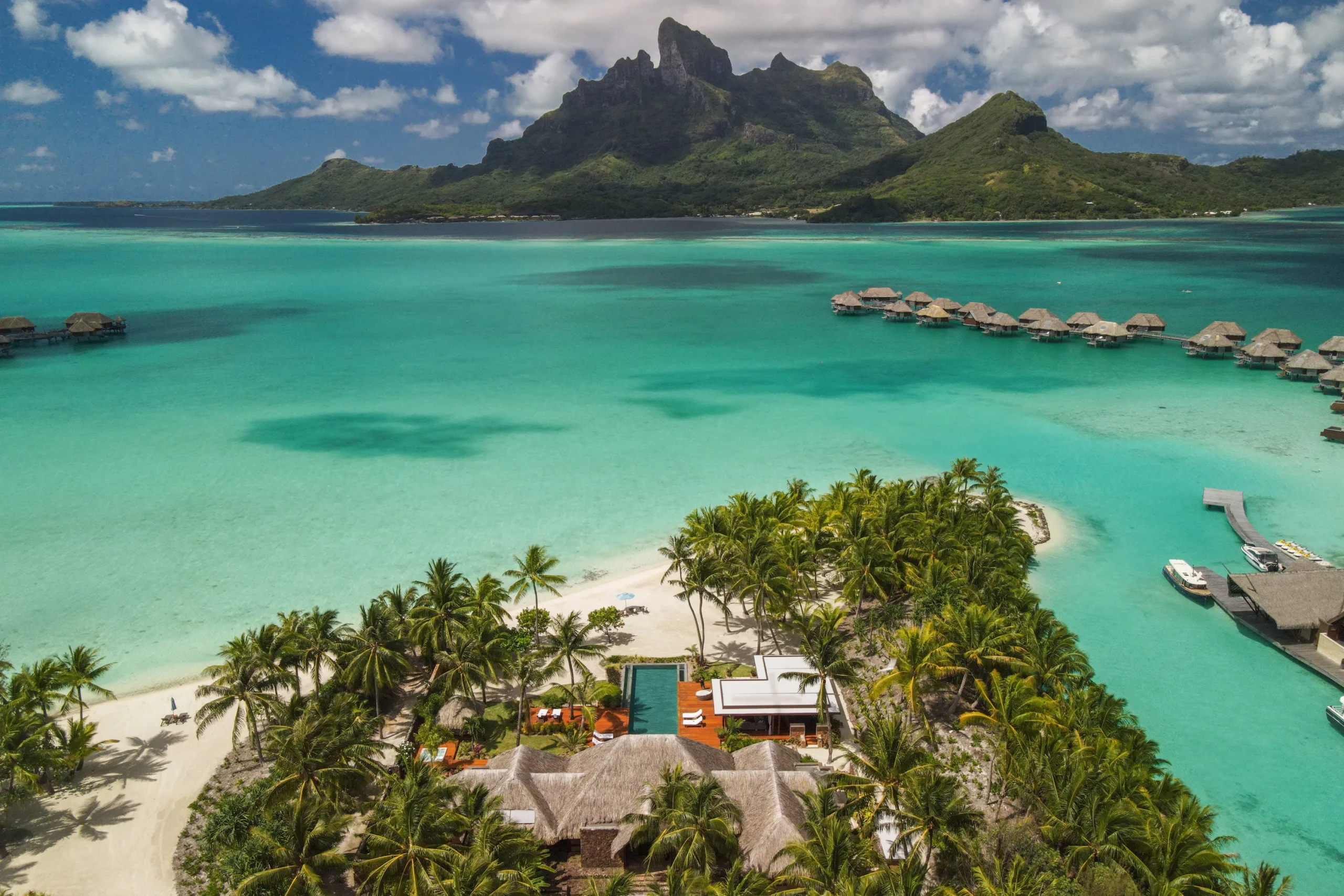
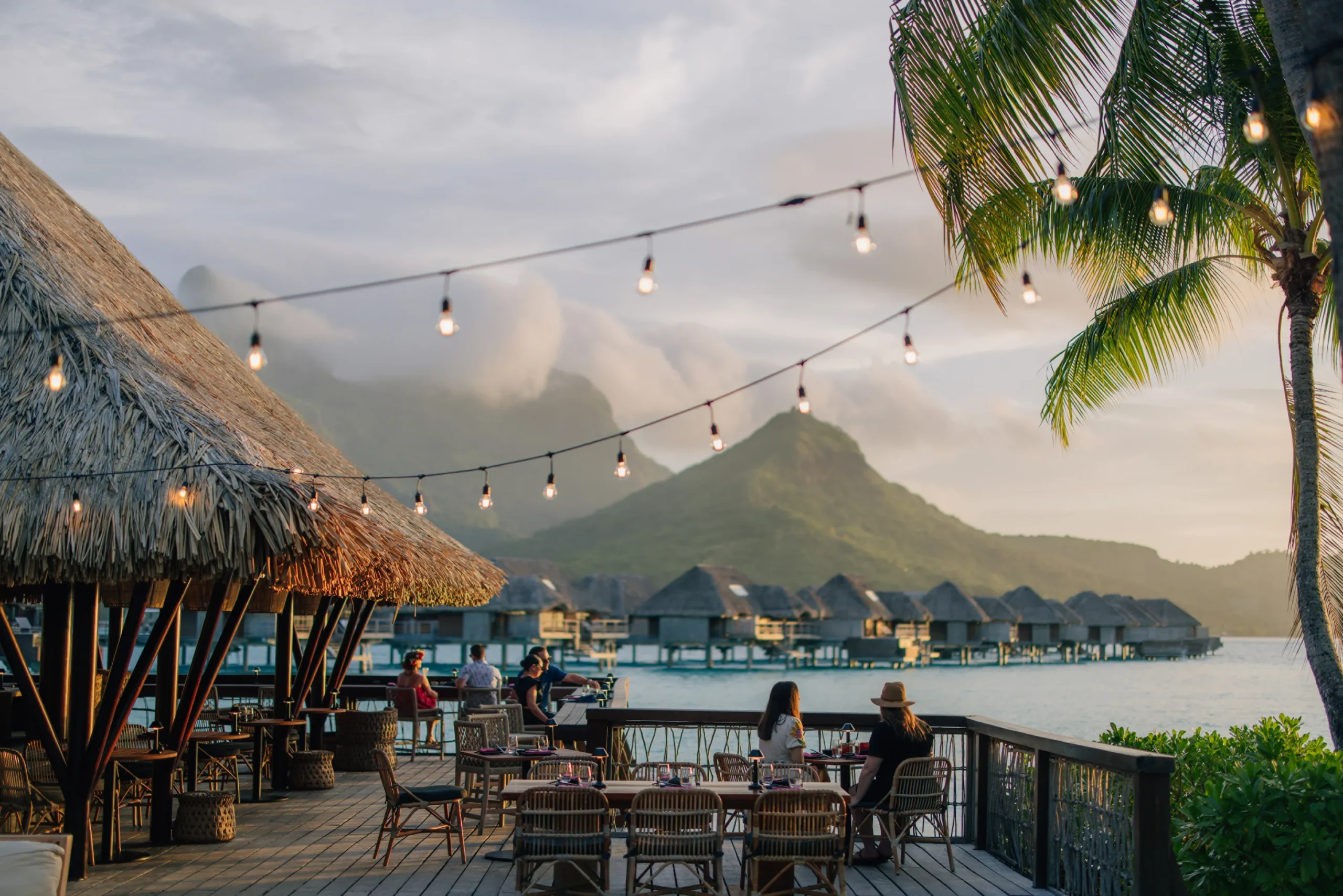
Fifteen minutes after the airport boat pulls away, the children in our party are leaning over the rail to count the blues in the lagoon. The island appears low and green beneath Mount Otemanu, then the overwater roofs come into focus. Four Seasons Resort Bora Bora is a place built around that arrival: water first, schedules second, shoes largely optional.
We came for the classic Bora Bora image, yet the family proposition is more practical than the photographs suggest. A 100 m² bungalow gives everyone a place to retreat. The lagoon provides a whole day without a shuttle, queue or elaborate plan. Breakfast is included at Tere Nui, and the Tamarii Club has enough structure for parents to reclaim an hour or two.
The cost changes the mood. Rates vary materially by date and accommodation, while lunches and dinners sit outside the daily-breakfast inclusion. This is not the resort for a casual long weekend. It rewards a proper stay, an early booking and a family that deeply wants island time.
Our verdict is clear. The setting and rooms are extraordinary, while dining and consistency do not always rise to the bill. Choose the right bungalow, understand the club calendar, and Bora Bora becomes remarkably easy with children.
Location & Accessibility
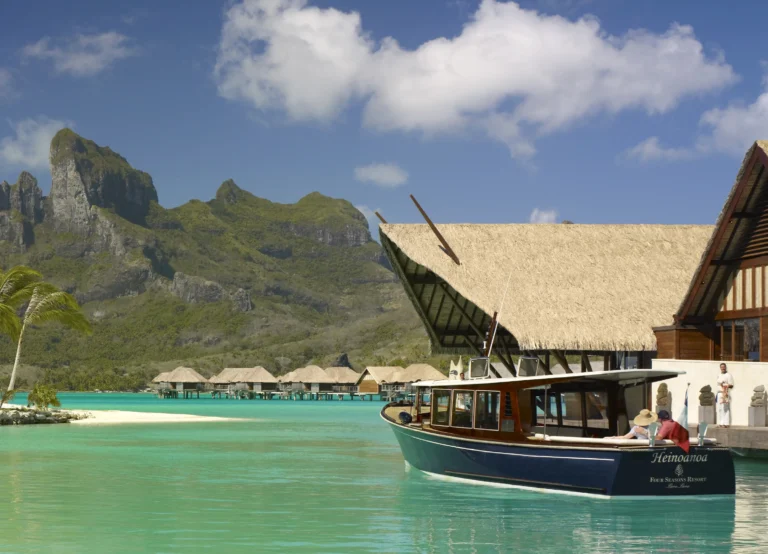
Motu Tehotu is reached from Bora Bora Motu Mute Airport by boat in about 15 minutes. We found that transfer part of the holiday rather than a hurdle: bags disappear, the children get a first blast of salt air, and the island removes the usual arrival traffic. Flights, boat timing and weather still deserve a generous buffer, especially on the day you connect from Papeete.
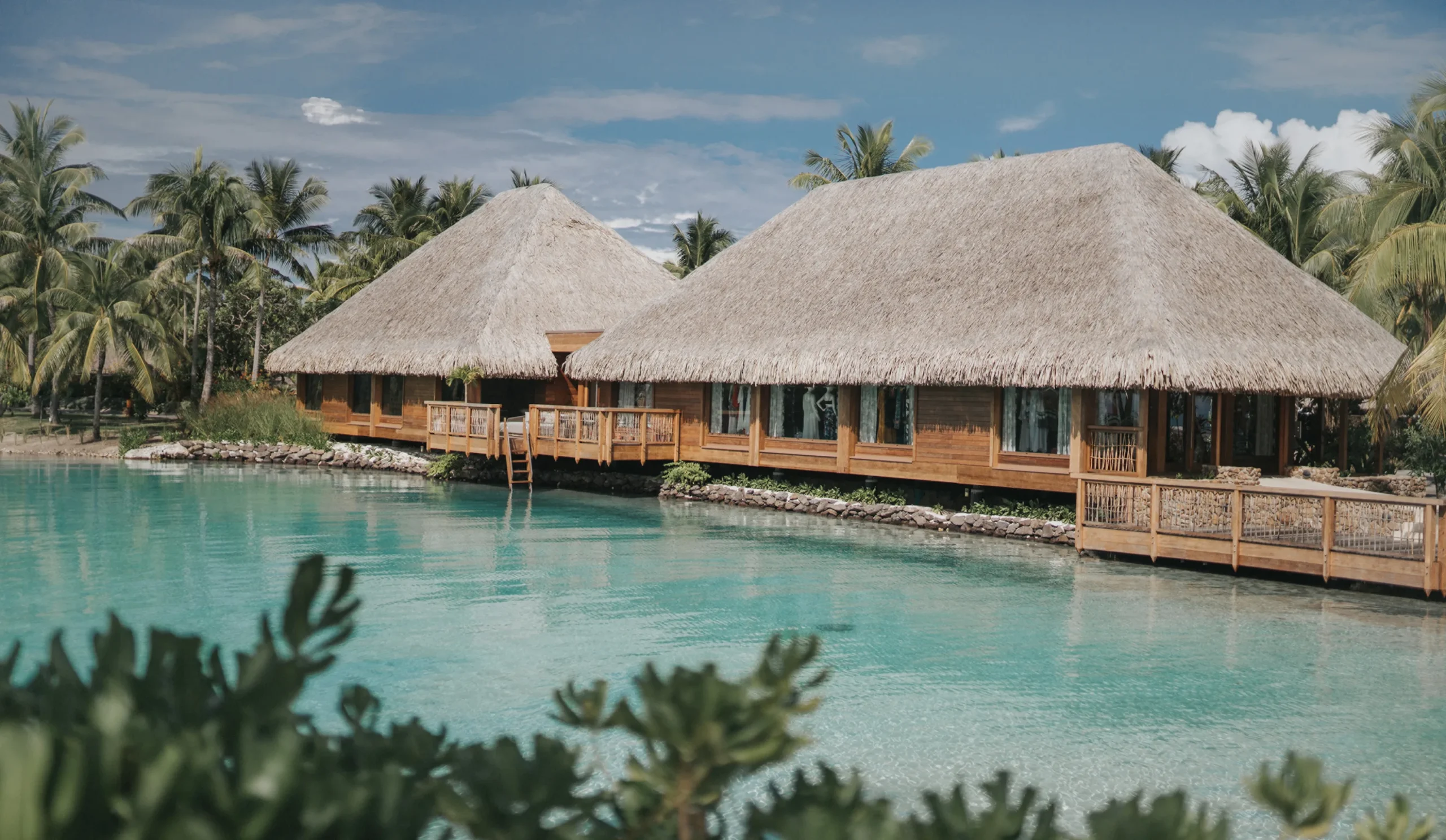
This is a resort island, not a walkable town base. We liked the freedom that gives a young family, especially after a long-haul journey. Everything happens within a compact lagoon-world of paths, beaches, restaurants and watersports. Families hoping to eat elsewhere every evening or wander shops on foot should choose a mainland-style destination instead.
The Air Tahiti flight from Papeete to Bora Bora takes about 45 minutes, so most long-haul families connect through Papeete and often add a night there. Season matters too: November to April is warmer, more humid and wetter, with a small cyclone risk, while May to October is drier, breezier and more expensive.
Early arrivals need managing. Bags can be stored and the fitness facilities remain available, but access to a room before the booked time is not assured unless an extra night is booked. We would pack swimsuits, dry clothes and medication in the hand luggage, then start at lunch rather than waiting beside the reception desk.
The practical prize is quiet. There are no road crossings between a toddler and the beach, no taxi calculations after dinner, and no pressure to fill a day. The island creates its own rhythm, with each meal and swim close enough that nobody needs a timetable in a pocket.
Accommodation (Rooms & Suites)

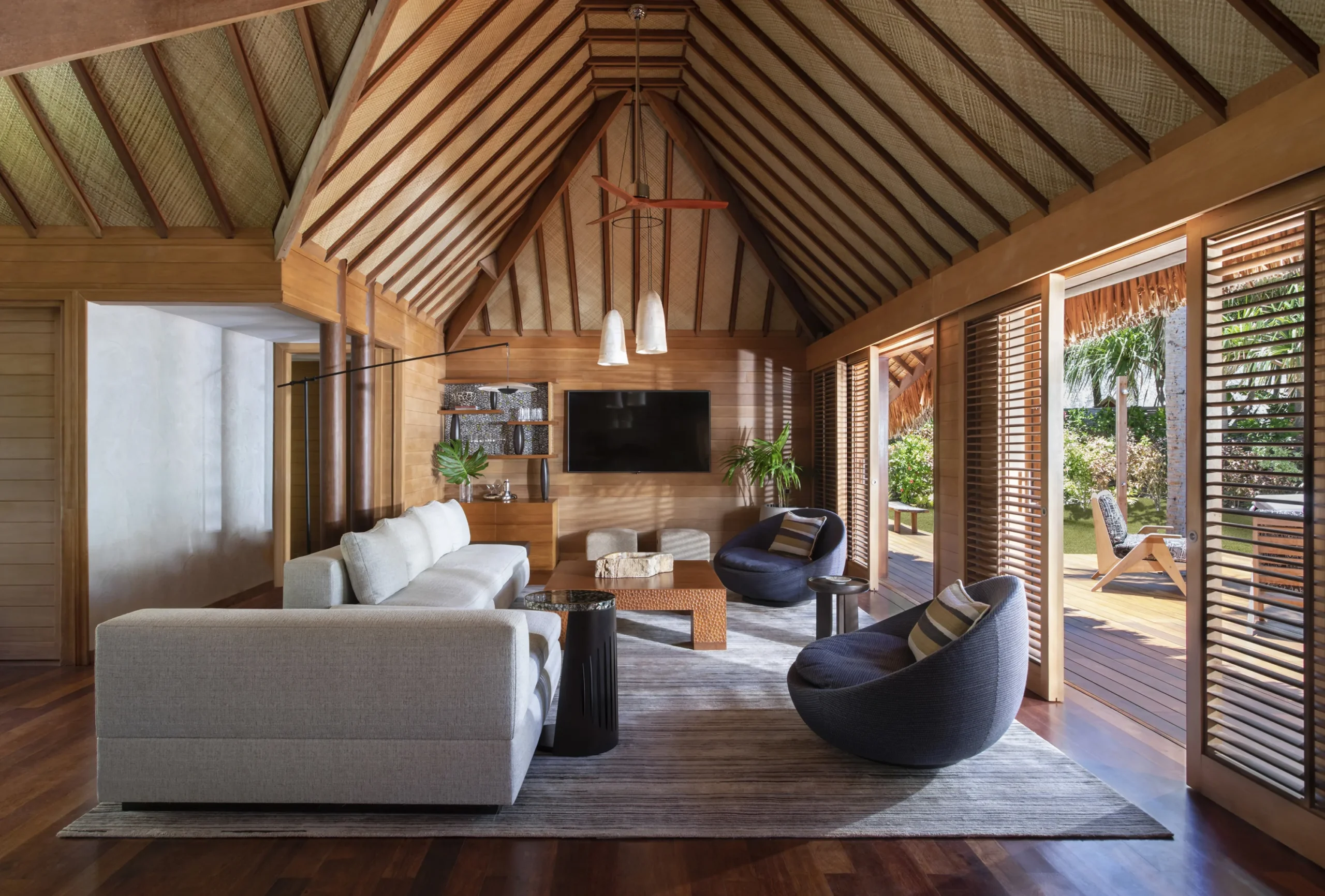
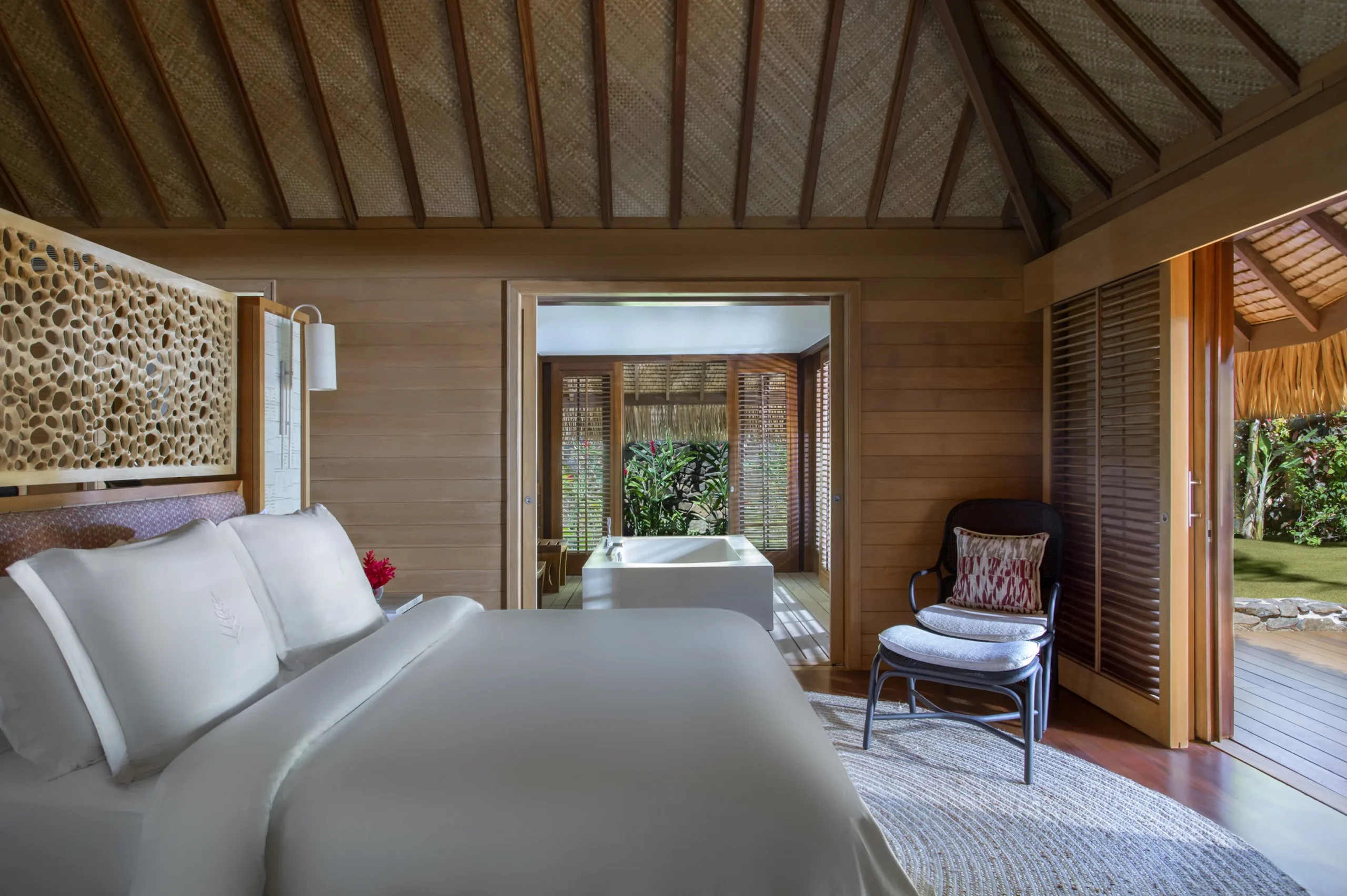
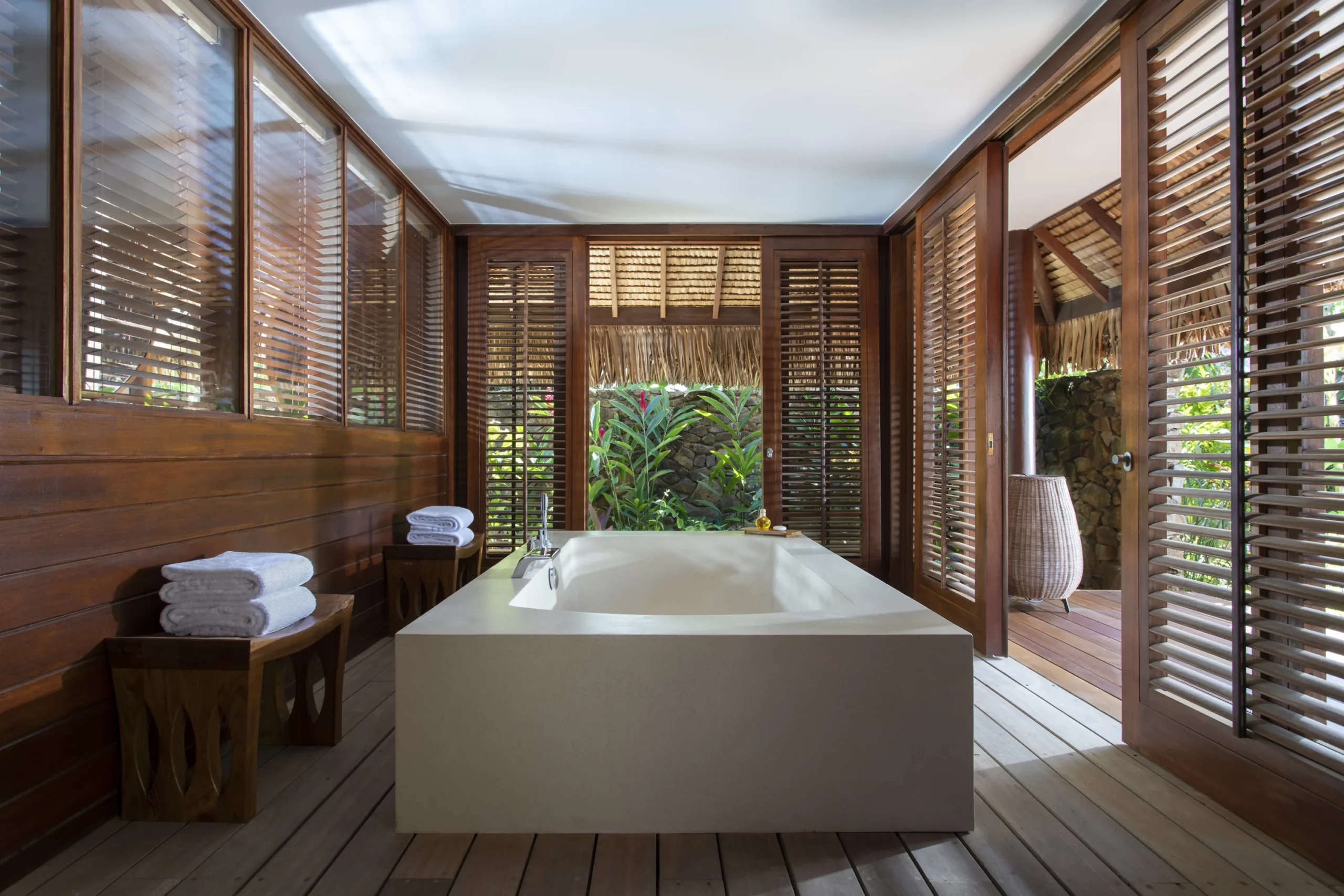
Overwater Bungalow Suites are the heart of the resort. Standard categories are about 100 m² and can be set with one king or two queens, plus a sofa bed. For two adults and two children, that layout solves the bedtime problem more gracefully than many supposedly family-focused resorts: children can settle without turning the adults’ bed into the only seating area.
Check the occupancy cap before you pick a category. The standard overwater suites sleep two adults and two children aged up to 12, or three adults, so a 13-year-old counts as an adult and a family with two teenagers or five people needs a Beachfront Villa Estate or a second room, so ask reservations to confirm the limit for your exact category in writing.
We would choose the view deliberately. Lagoon and mountain orientations change the feeling of a stay, and the broad sightline to Otemanu is the one that lingers after breakfast. The water access is immediate, which is glorious with confident swimmers and demands firm rules with smaller children. Each overwater deck has a ladder straight down into the lagoon, so we would ask before booking whether it can be gated or locked and whether the deck can be child-proofed, and request the cot before arrival. Railings and ladders help, but they are no substitute for an adult watching every minute a child is on the deck.
Specialty bungalows range from 104 to 207 m² and add a private freshwater plunge pool measuring about 3.4 by 2.4 metres. That pool gives an early-rising child somewhere to splash before the sun gets serious. It also offers a contained alternative when the lagoon feels like too much adventure, particularly during the bright middle hours when parents want everyone close by.
Multi-generation groups should skip compromises and book a Beachfront Villa Estate. The four-bedroom example combines 600 m² inside with 2,000 m² of outdoor space and two infinity pools. Baby cots are available on request. Ask for the exact sleeping plan in writing, because bungalow and villa capacities differ.
The rooms are beautiful, but not invulnerable. In our bungalow a door rattled in the wind and toiletries were slow to be restocked. Mention any maintenance issue early. At this price, a calm, prompt repair is a reasonable expectation.
Family Amenities & Kids’ Activities

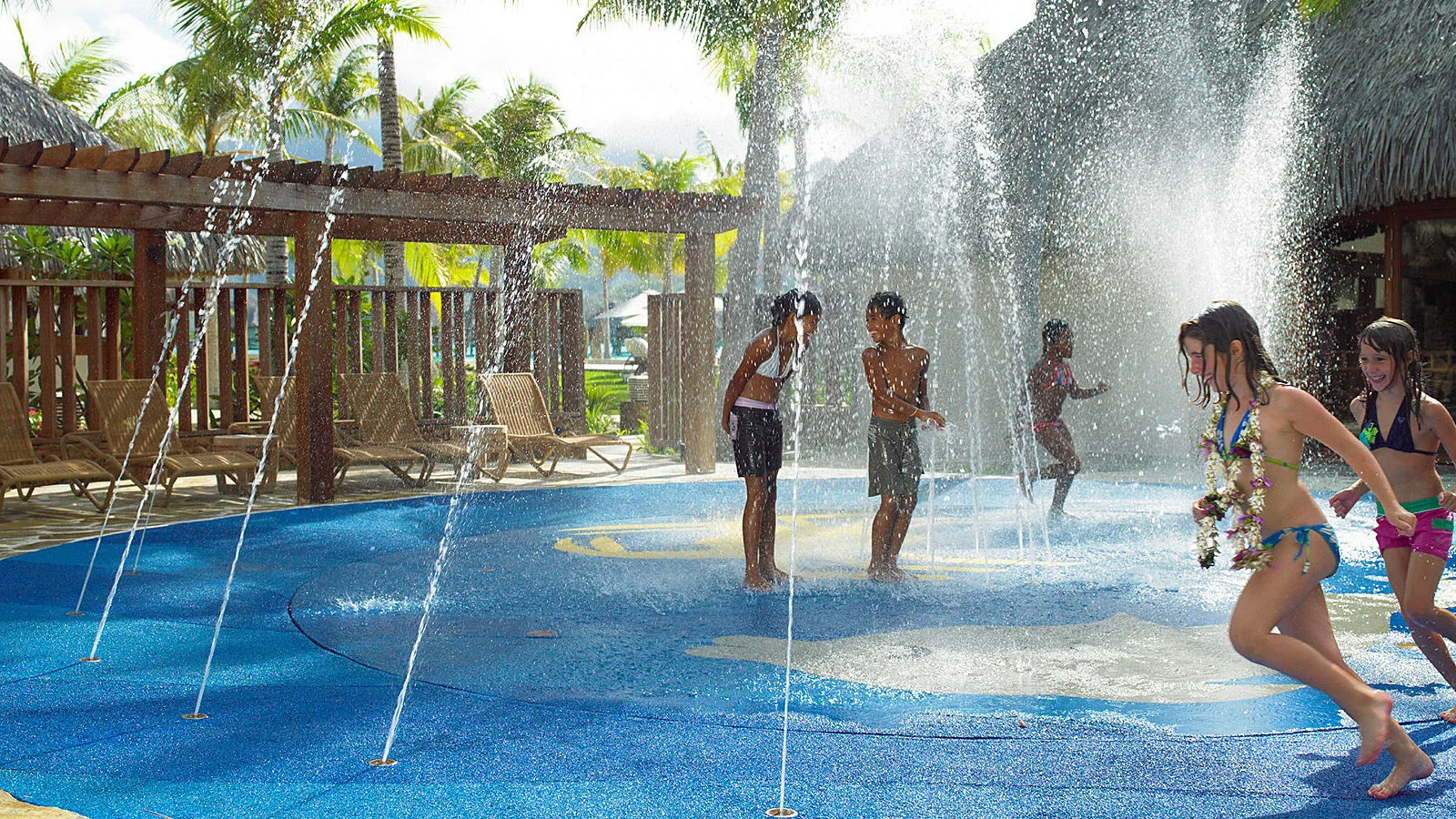
Tamarii Club, also called Kids For All Seasons, is for children aged five to twelve. The programme runs on weekends and holidays, with crafts, games, outdoor play and splash time. We loved the scale: it feels like a proper island programme rather than a token room of colouring sheets.
The strongest club days are the ones that use the setting. The children in our party came back talking about hermit-crab races, making things and being recognised by name. The staff’s habit of sharing photos lets parents relax without wondering whether everyone has vanished into a timetable. Confirm the exact programme for travel dates before booking, especially outside school holidays.
Ask the resort directly about babysitting arrangements, availability and cost before relying on it for a quiet dinner or spa appointment. Children under five need parents to build the day around the lagoon, beach and bungalow rather than relying on the club.
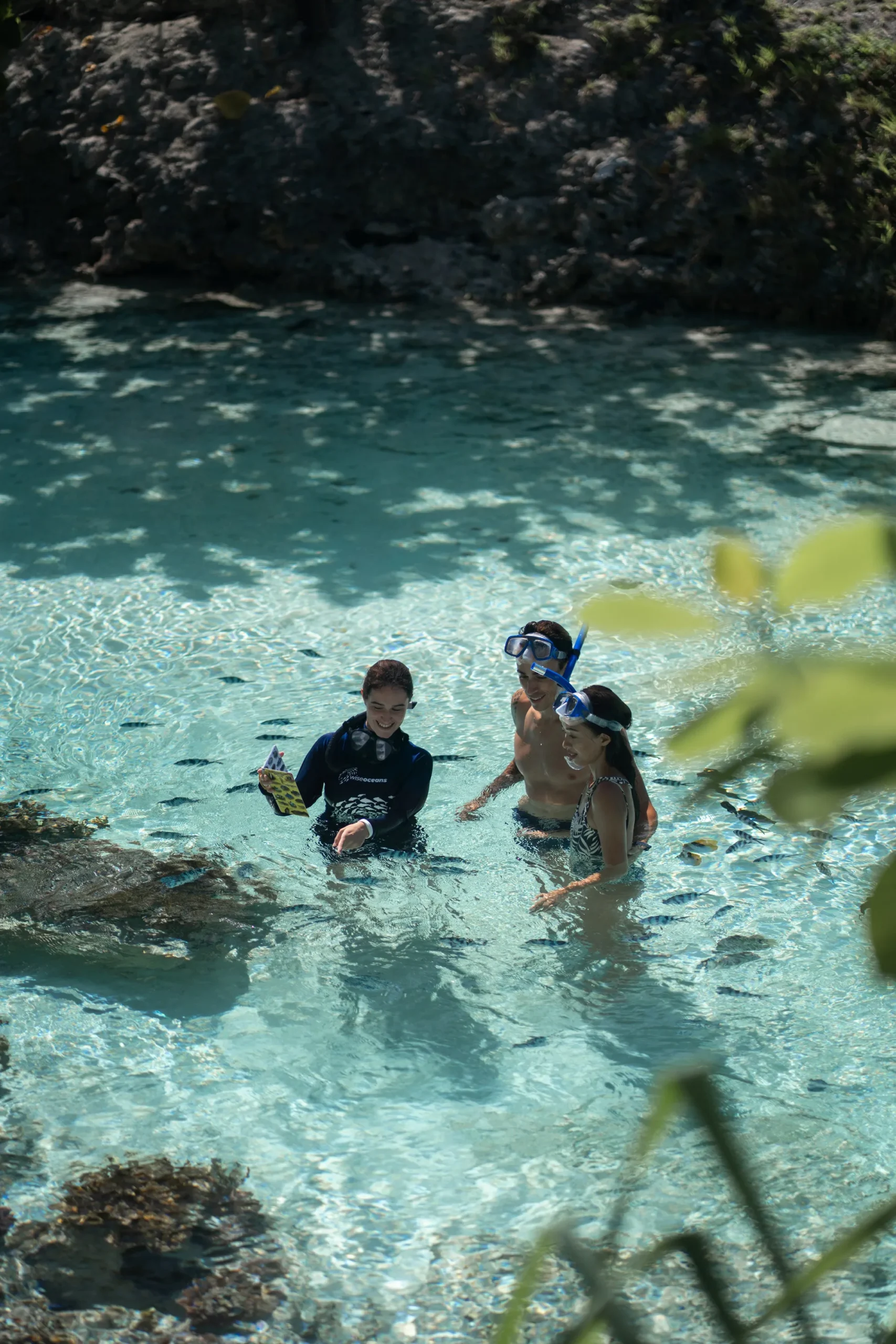
For tweens, the water is the activity sheet. Snorkelling gear, kayaks and stand-up paddleboards are included, while introductory diving is offered from age eight in high season. Teenagers can fill days with tennis, ping-pong and water time, but there is no dedicated teen lounge. Social teens who want a nightly peer programme may find the island too quiet after dark.
The outdoor pools are not heated. On a warm day we barely noticed, but families travelling in cooler or windier conditions should plan around the lagoon and ask which pool best suits their children’s confidence.
Dining
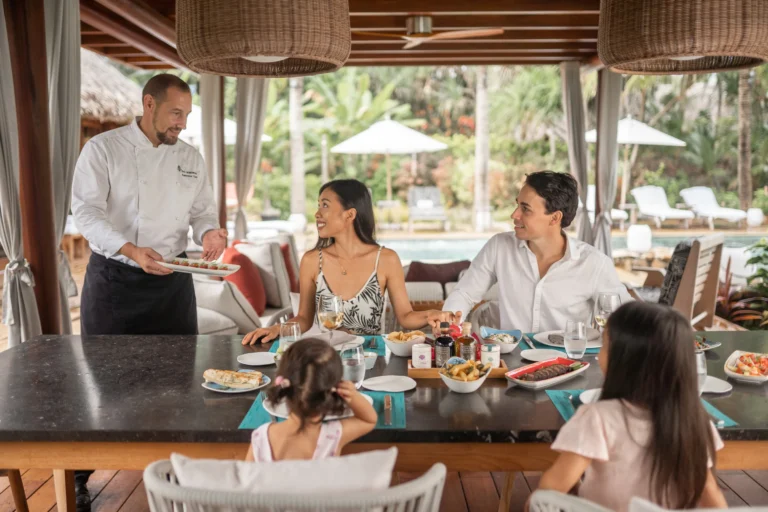
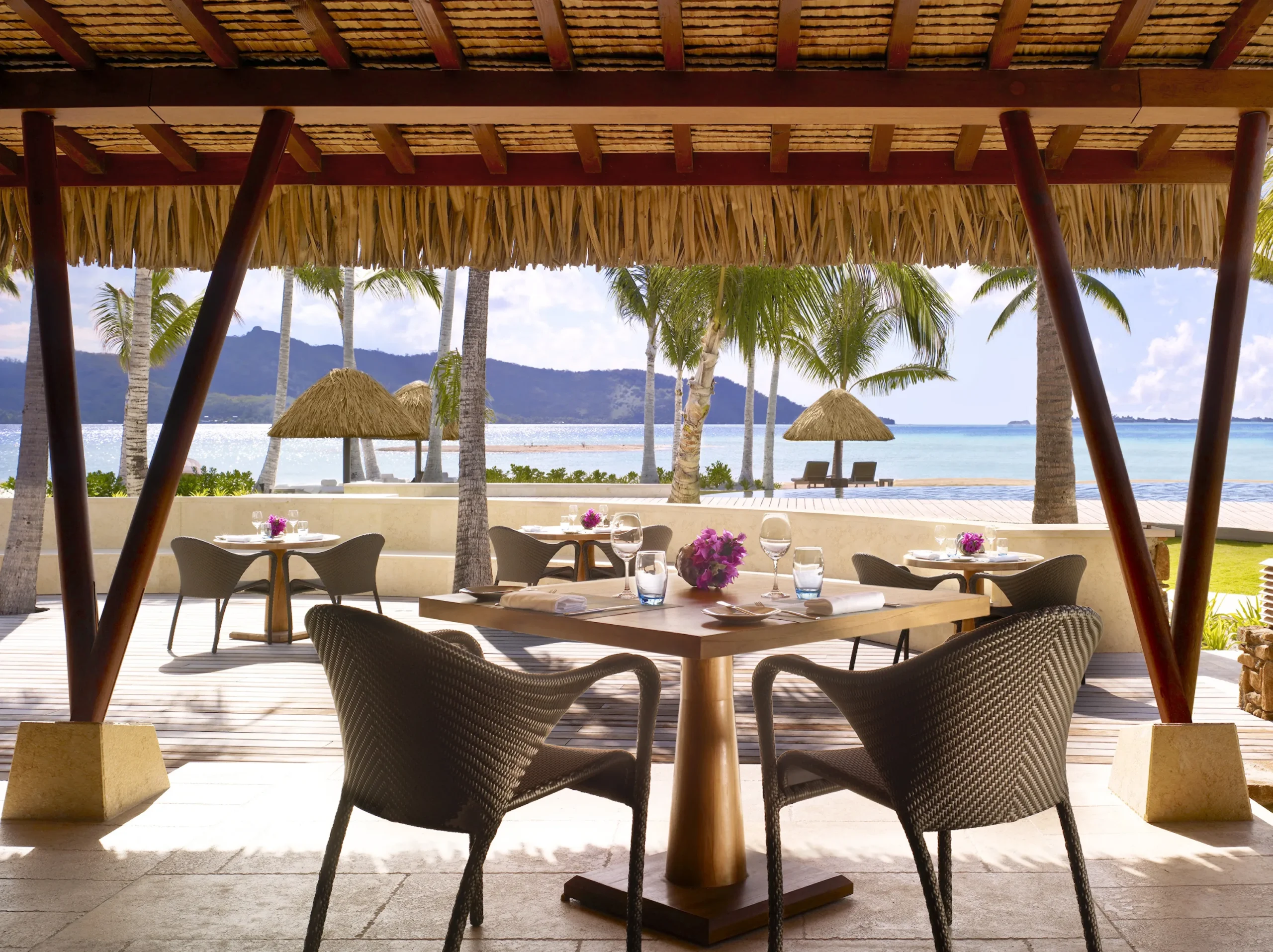
Breakfast at Tere Nui is included, and that detail matters at this price. We could start the morning without doing a mental calculation over coffee, while the children had enough choice to avoid a negotiation before the first swim. Children under five eat free and kids’ menus are available.
Lunch and dinner move to à la carte pricing. Fare Hoa, Arii Moana and Sunset Bar & Lounge give the week some variety, with Polynesian, French and Asian influences in the mix. We found the practical rhythm was a substantial breakfast, an easy lunch near the water, then a booked dinner when everyone still had enough energy for it.
Food is the clearest caveat in an otherwise exceptional stay. Over several days, lunch and dinner can feel repetitive, and the quality does not always meet the price. That is not a reason to avoid the resort, but it is a reason to reserve expectations and budget with open eyes.
Twenty-four-hour in-room dining helps when a child falls asleep before the reservation. High chairs and children’s menus take some friction out of family meals. Families managing allergies should speak with the restaurant team before the first meal and repeat the request at each venue, particularly where the selection is narrower.
Staff & Service Quality
Warm service is easy to notice here. A poolside drink arrives without much ceremony, the boat team sets a gentle tone on arrival, and the children’s staff make an adult hour feel deeply free. Those moments explain why families remember the resort so fondly.
Consistency is the issue. We encountered a difference between the polished welcome and the occasional slower response once a request moved through several teams. Cleaning, communication and early-room readiness have all produced frustration. A simple request works best when it is specific, timed and followed up in person.
We would not let that caveat dominate the trip. The people-facing parts of the stay can be excellent, particularly around the club and water. Still, this is not a resort where the Four Seasons name removes the need to state what your family needs.
Multilingual staff and concierge support make planning easier, especially for transfers, water activities and restaurant timing. We would ask the concierge to arrange the first two days before arrival, then leave the rest open for the lagoon.
Safety & Cleanliness

The lagoon is the resort’s great family asset. In the shallows, the water is calm enough for a child to stand near the edge while an adult stays close. Direct access from bungalows and villas makes a quick morning swim wonderfully simple, yet it also means families need a water rule before anyone opens the door.
We kept younger children within arm’s reach around the lagoon, plunge pools and jetties. The resort does not replace parent supervision, and we would ask about lifeguard coverage and pool depths when booking if those details guide your decision. Confident swimmers gain real freedom here, while little ones need a clear boundary around the deck and the water.
Cleanliness is usually a strength, although occasional room-maintenance and replenishment issues are worth raising fast. The controlled island environment feels orderly, and the beach-to-bungalow route avoids the dusty logistics of a larger resort town.
For babies, the important detail is not a grand facility list. It is shade, a cot arranged before arrival, dry clothes after the boat, and a bungalow plan that keeps curious hands away from the water steps. We would request those specifics ahead of the flight.
Value & Pricing
Four Seasons Resort Bora Bora costs what its setting suggests. Use the live booking page for the exact rate for your dates and accommodation. Daily breakfast is included; confirm the cost of lunch, dinner, babysitting and special experiences before booking.
As a guide, when we priced it in November 2026, the entry-level overwater suite for two adults cost from about €1,700 a night for February dates to about €3,000 for August, taxes included. Villa estates cost several times that, and lunch, dinner and most experiences come on top.
The better question is what the rate removes. There is no daily transport bill, no paid beach club, no need to invent entertainment between meals, and complimentary snorkelling gear, kayaks and paddleboards cover the part of Bora Bora most children want. A family that spends its days in the lagoon uses the resort well.
Dining is where the equation weakens. We would budget generously and avoid assuming every expensive meal will feel memorable. A short stay can absorb that frustration. On a longer stay, it becomes a real part of the total cost.
Value improves sharply for families who need space and privacy, then make full use of it. It is weaker for parents seeking a food-led holiday, a lively teen scene or a busy itinerary beyond the resort island.
Plan on three nights at the very least, because the transfer, room orientation and time change swallow the first day; four or five nights let the family settle. Pack reef shoes, a familiar float aid for any child who uses one, a light layer for the boat and essential medication in hand luggage.
Why We Picked It
By mid-afternoon, the children had turned the bungalow steps into a launch point and the adults had stopped looking at the time. That small surrender is the point of this hotel. Bora Bora can be logistically intimidating with children, yet this island makes the daily pattern legible: breakfast, water, shade, a nap or club session, then another swim.
We picked Four Seasons Resort Bora Bora for families who want the full overwater dream without consigning children to the margins. The rooms are properly useful, the club has substance for five- to twelve-year-olds, and the lagoon supplies the kind of shared memory no indoor playroom can imitate.
Book elsewhere if your holiday depends on an all-day club for preschoolers, a dedicated teen lounge, consistently exceptional dining or a modest total spend. Book here when the family can live happily in and around the water, and when you are prepared to plan the expensive parts well.
Choose the room orientation with care, confirm the club dates, arrange baby equipment ahead of time and reserve key dinners early. Then leave several afternoons unplanned. The lagoon will fill them, slowly and without asking anyone to invent another activity.
Four Seasons Resort Bora Bora: Family Questions Answered
Is Four Seasons Resort Bora Bora good for families?
Yes, for families who want a water-led island holiday. Large overwater suites, villa estates, breakfast and included non-motorised water equipment make the day easy. The biggest limits are the high total cost, the scheduled five-to-twelve club and no dedicated teen lounge.
What ages does the kids’ club accept?
Tamarii Club accepts children aged five to twelve. It runs on weekends and holidays, with crafts, games, outdoor play and splash activities. Confirm the schedule for your exact travel dates before relying on it for a meal or spa booking.
Is there childcare for babies and under-fives?
The supervised club starts at age five. Ask the resort directly about babysitting arrangements, availability, booking lead time and cost. Baby cots are available on request, so ask for the exact bungalow setup before paying the deposit.
Will teenagers enjoy Four Seasons Resort Bora Bora?
Active teenagers can thrive here, but there is no dedicated teen lounge. Snorkelling, kayaks, paddleboards, tennis and lagoon time are the main draw. Families seeking a nightly peer programme should look for a larger resort with an organised teen space.
Which rooms work for a family of four or more?
Many 100 m² Overwater Bungalow Suites work for two adults and two children. They offer a king or two queens plus a sofa bed, subject to the selected category. Larger families should move to a Beachfront Villa Estate and obtain written confirmation of beds and maximum occupancy.
Does the resort guarantee connecting rooms?
Do not assume connecting rooms are guaranteed. The resort’s family strength lies in bungalow and villa layouts rather than guaranteed connecting rooms. Ask reservations to confirm the exact arrangement in writing before booking flights for a larger group.
What is included for children at meals?
Breakfast at Tere Nui is included, and children under five eat free. Kids’ menus are available, while lunch and dinner are generally à la carte. Families managing allergies should flag requirements before the first meal and repeat them with each restaurant team.
How do families reach the resort from Bora Bora Airport?
The resort is about fifteen minutes by boat from Bora Bora Motu Mute Airport. Keep swimwear, a dry change and essential medication in hand luggage, especially if arriving before room access. Confirm transfer inclusions with the rate you book.
Is the beach and lagoon safe for young children?
The shallow lagoon edge is appealing for children, but it still requires close adult supervision. Bungalows, jetties and plunge pools place water at the doorstep. Ask about lifeguard coverage and pool depths when booking, then set clear water rules on arrival.
What does a family stay really cost?
Use the live booking page for the exact rate for your dates and accommodation. Daily breakfast is included, while lunch, dinner, babysitting and special experiences should be confirmed before booking. Villa estates cost far more, so price the entire stay rather than the headline room rate.
Is Four Seasons Resort Bora Bora worth the price?
It is worth it when your family will use the lagoon, space and included water equipment every day. The room design and island setting carry much of the value. Families who prioritise food above all else should temper expectations, because lunch and dinner can disappoint for the price.
What are the main drawbacks?
The dining, service consistency and club limits are the real trade-offs. Lunch and dinner can feel repetitive, requests may need follow-up, pools are unheated, and Tamarii Club is scheduled for ages five to twelve. There is no dedicated teen lounge.
Which FFH alternatives suit a different kind of Maldives-style family holiday?
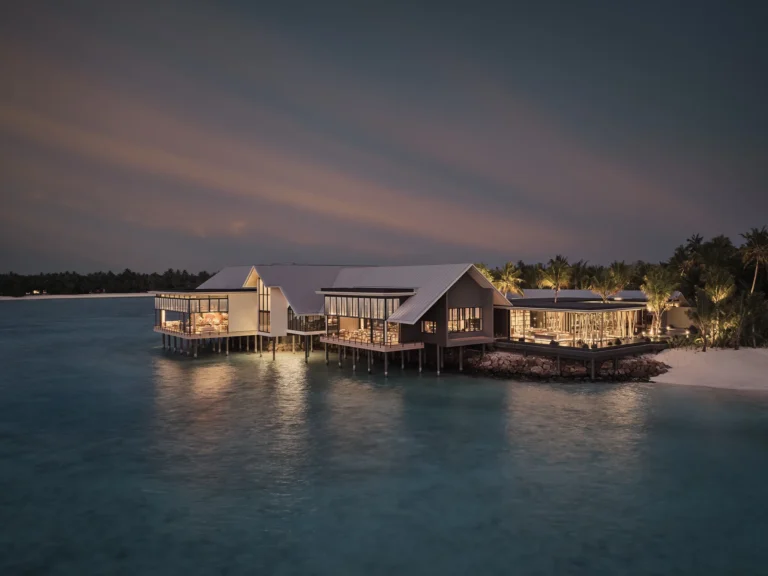
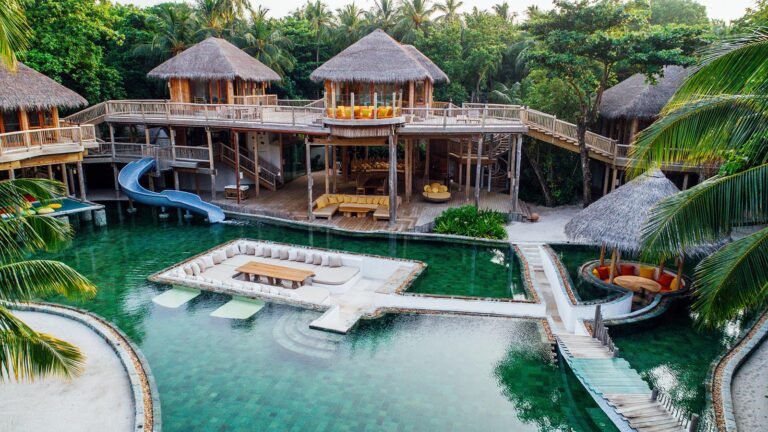
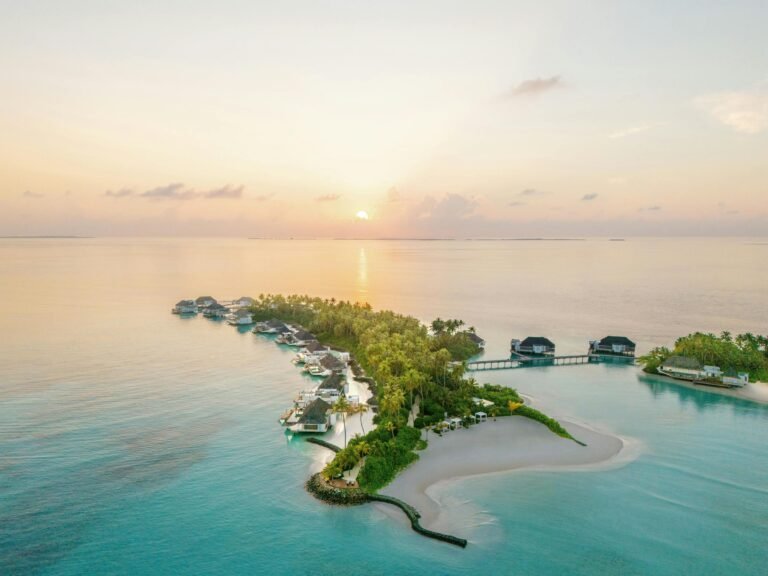
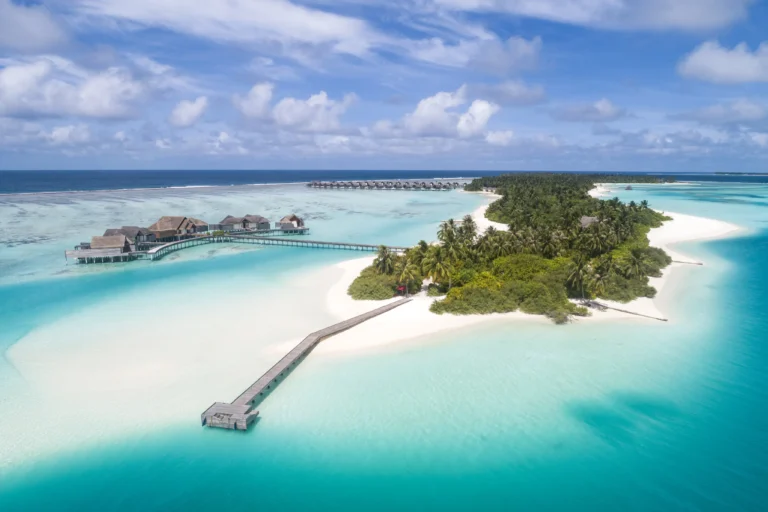
Choose One&Only Reethi Rah for a larger island rhythm, Soneva Fushi for barefoot play and imaginative family space, or Cheval Blanc Randheli for a more intimate Maldivian villa stay. Bora Bora wins when Mount Otemanu and its lagoon are the non-negotiable dream.