Key Takeaways
- For babies and children under four, we would keep one Marrakech base and organise the days around sleep, meals and swimming.
- With children aged four to ten, Marrakech plus two nights in the Atlas is our preferred first circuit, provided the uphill arrival suits everyone.
- We reserve the Sahara extension for school-age children with road stamina, ideally eight and upwards, on a longer trip. This is our planning threshold, not an activity admission rule.
- Agafay gives us a shorter desert-style escape from Marrakech. It is not the Sahara, and Scarabeo’s pools are unheated.
- We favour autumn for the full route; in winter we keep mountain transfers flexible and avoid driving after dark.
Practical Checklist
- The exact room or riad configuration, cot or extra beds, stairs and access to water.
- Children’s club eligibility for every sibling, operating hours and separate babysitting arrangements.
- Pool heating for the booked dates, tent bedding where relevant and a workable early meal.
- Named transfer endpoints, child restraints, daylight arrivals and the mountain weather alternative.
- For the Sahara, the complete outward and return route, camp arrangements, activity limits and emergency access.
How much Morocco can we fit into a family holiday before the journey eats the holiday? With small children we choose Marrakech, a dependable pool and time to return to the same breakfast table; the Atlas and Sahara have to earn their places.
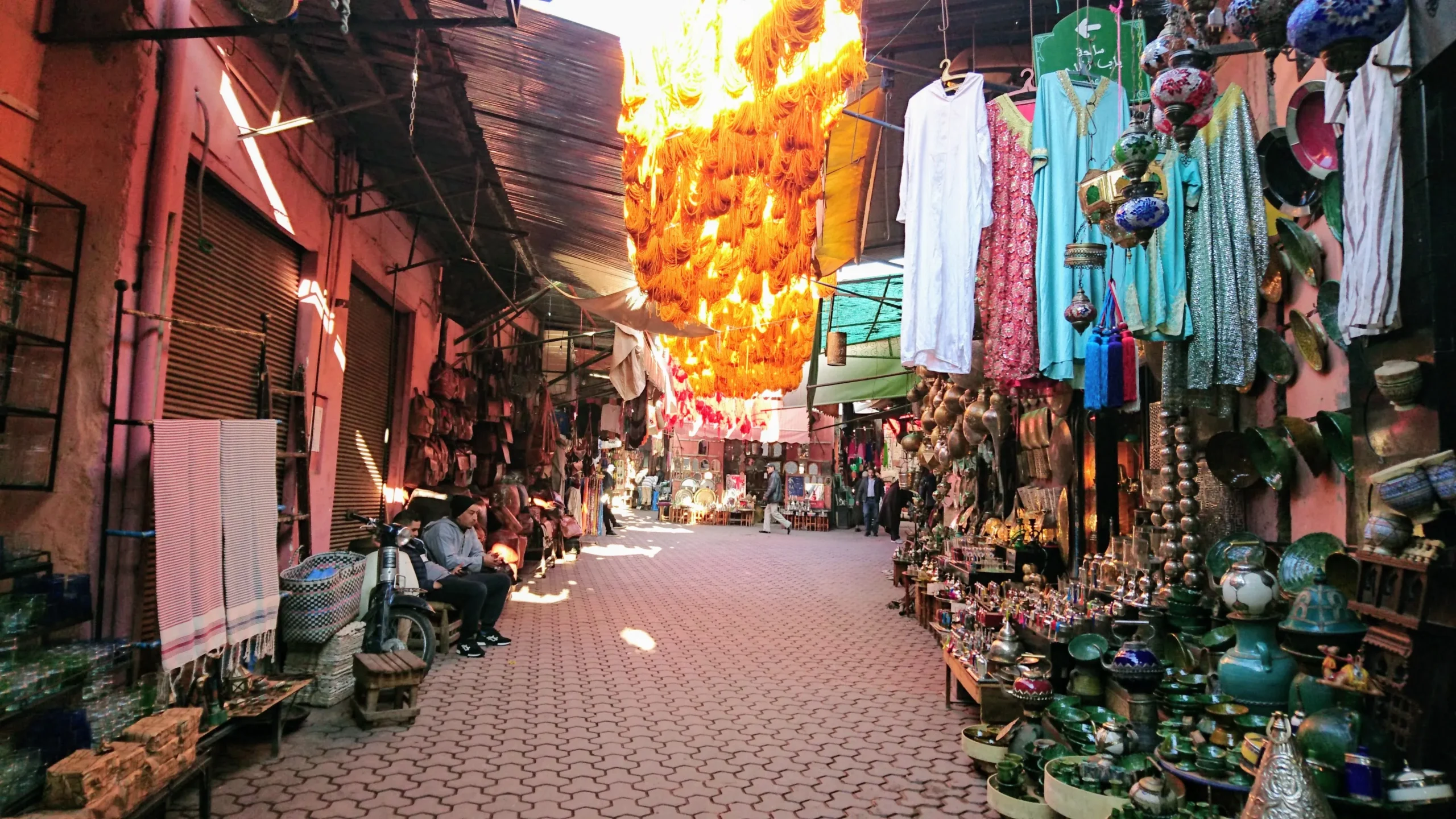
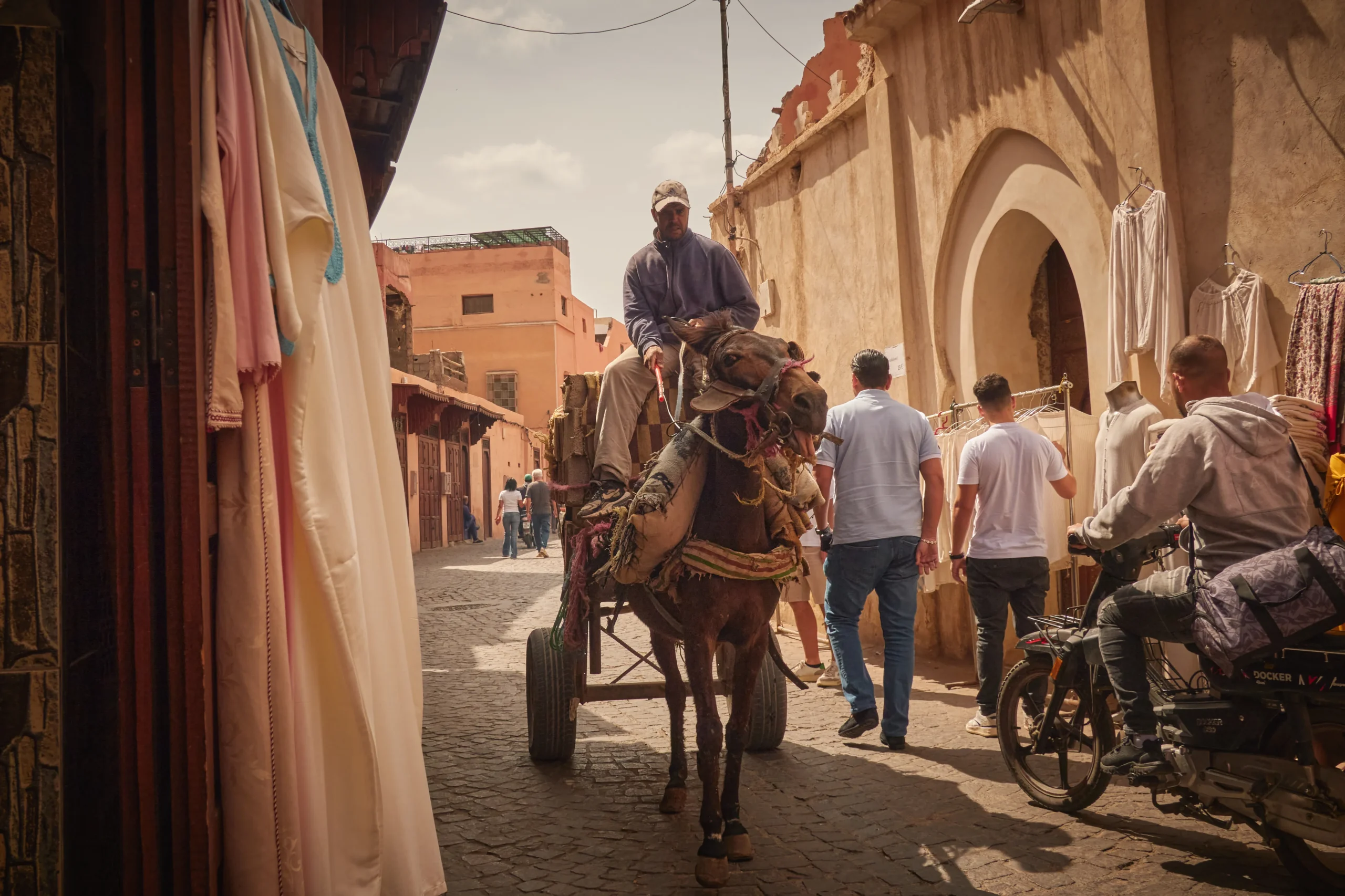
The bargaining stops when a small hand finds a wooden animal and refuses to put it down. We have come into the Marrakech medina with a modest ambition, one walk before lunch, and already the afternoon’s elaborate plan feels excessive. We like Morocco best at this scale: something curious around a corner, then enough time to sit with it. The catch comes when we try to collect every version of the country in a week. A beautiful riad does nothing to shorten the road to the dunes.
The quick version
- For babies and children under four, we would keep one Marrakech base and organise the days around sleep, meals and swimming.
- With children aged four to ten, Marrakech plus two nights in the Atlas is our preferred first circuit, provided the uphill arrival suits everyone.
- We reserve the Sahara extension for school-age children with road stamina, ideally eight and upwards, on a longer trip. This is our planning threshold, not an activity admission rule.
- Agafay gives us a shorter desert-style escape from Marrakech. It is not the Sahara, and Scarabeo’s pools are unheated.
- We favour autumn for the full route; in winter we keep mountain transfers flexible and avoid driving after dark.
Marrakech: four nights before we add anything
Our starting point is four nights in Marrakech, a suggested pace rather than a compulsory circuit. The first afternoon belongs to unpacking and finding the things that otherwise become emergencies: the spare clothes, the familiar snack, the sleep toy that has disappeared inside a shoe. We leave the city outing until everyone has slept. With a baby or toddler, we would happily extend this single base across the whole break.
On the first full day we put the medina before lunch and leave the afternoon empty. A guide with an official badge and local authorisation is worth arranging through the hotel. We ask for a short route with a clear meeting point for the return transfer, rather than surrendering the morning to a catalogue of stops. The children disagree. The wooden animal gets more attention than anything we had circled on the map.
Lunch is the hinge of our day. We ask for an early meal, agree how a child’s food should be prepared and carry something familiar for the interval between hunger and the plate arriving. Mint tea and a long adult lunch sound lovely until someone has been awake since dawn. On another morning we linger over breakfast and go nowhere until later; repeating a comfortable day gives the next excursion a better chance.
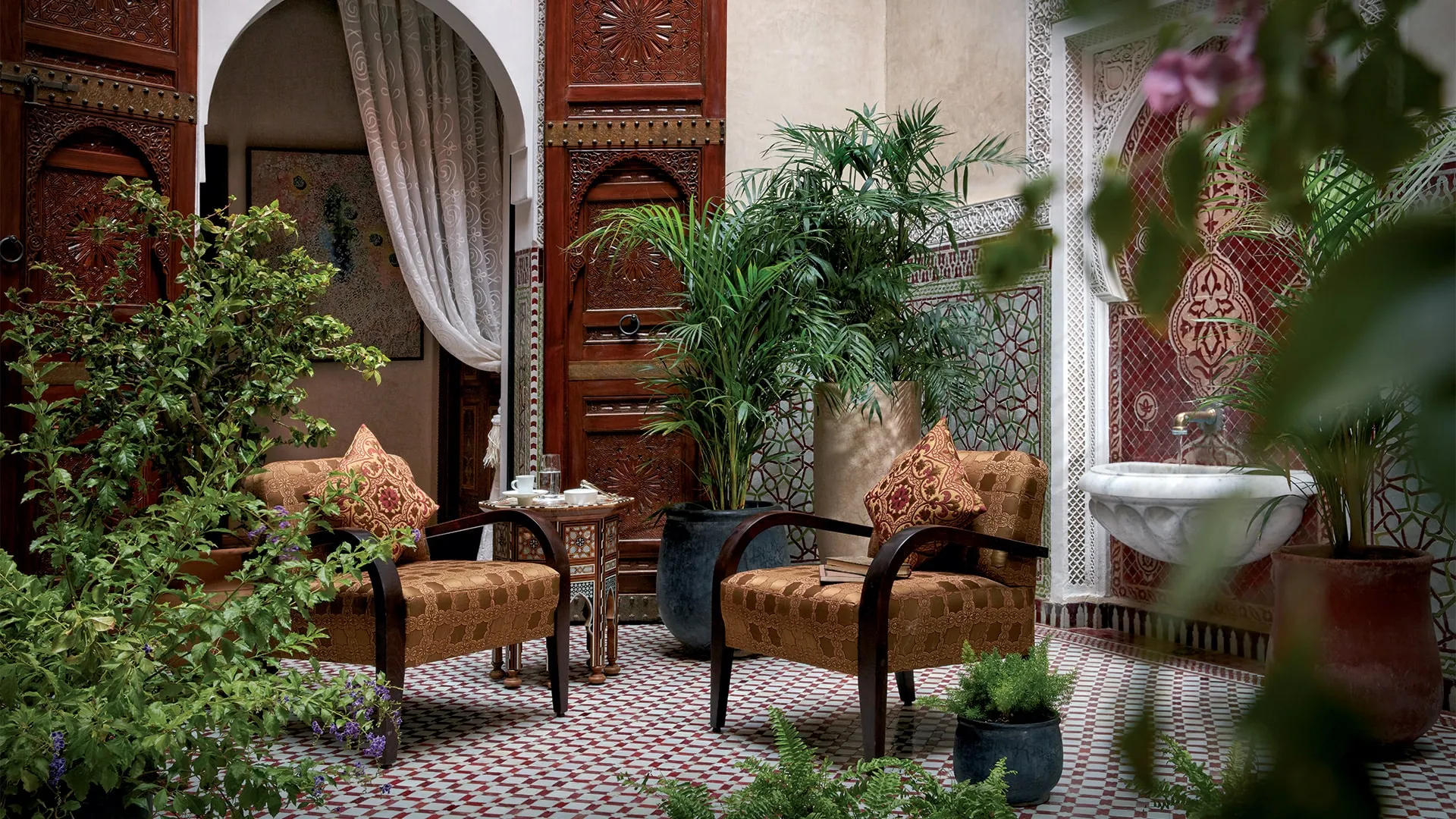
A riad needs a closer look than its courtyard photograph. Before committing, we ask where the sleeping spaces sit in relation to the living area, whether stairs separate them, how roof terraces are secured and what stands between a small child and any pool. These are questions for the particular address and room category. We would not infer a safe layout from carved doors, a high room rate or the word private.
Then there is the car. How close does it get? Carrying a sleeping child and pulling luggage are different jobs, and we want to know who handles each before arrival. For a stroller-age family, reliable access and an agreed bedtime arrangement matter more to us than the most photogenic doorway. We spend the accommodation budget on the space and service that remove those jobs, then keep the daily programme light.
Four nights first. Then we consider moving. Our first choice is two nights in the Atlas, followed by a return night in Marrakech before flying home, subject to the flight schedule. That makes a seven-night outline with room to settle twice. We would remove an excursion before removing the final buffer, especially in winter, when a delayed mountain departure should not become a race to the airport.
Four Seasons Resort Marrakech: our mixed-age choice
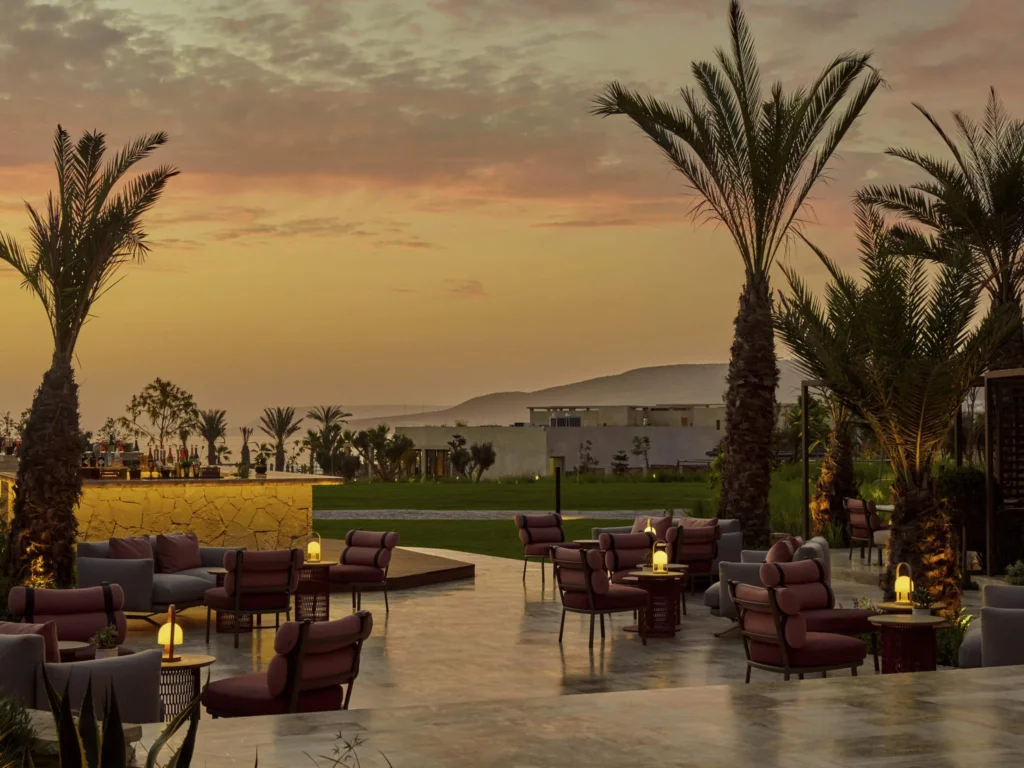
Four Seasons Resort Marrakech is where we would begin with siblings whose needs have stopped overlapping. Kids For All Seasons covers ages 4–12, from 09:00 to 17:00, while the Young Adult Centre serves ages 13–17, from 10:00 to 19:00. A thirteen-year-old has somewhere other than a younger sibling’s activity table to go. We would still ask about the programme during our dates before presenting it as the answer to a reluctant teenager.
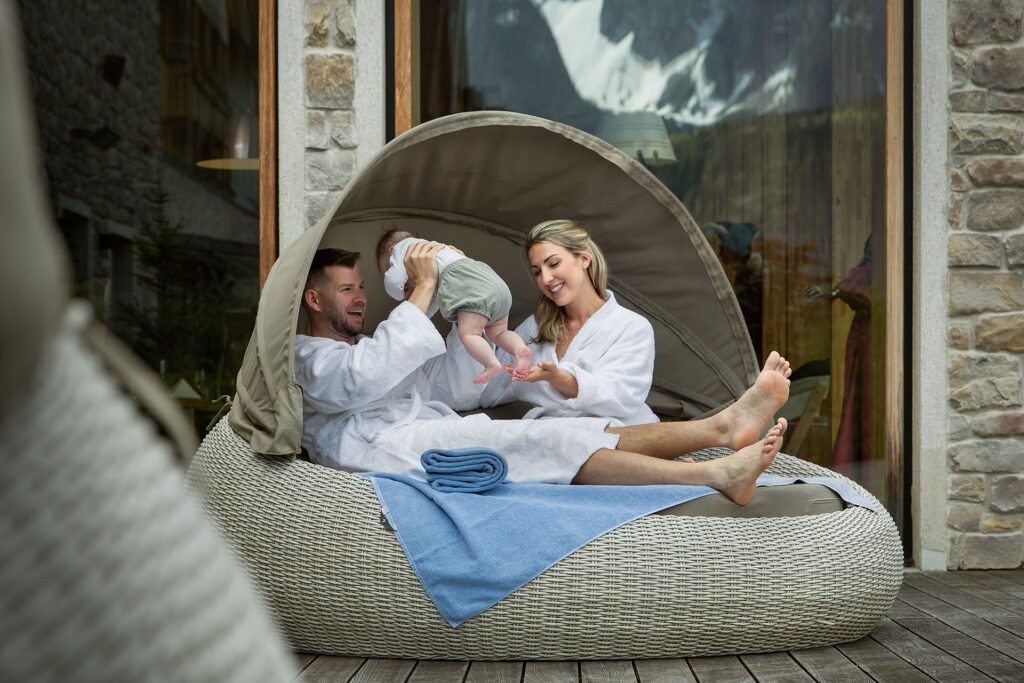
For the smallest passengers, the useful inventory includes cots, infant baths, high chairs, baby and child toiletries, childproofing items and babysitting. We send the equipment request before arrival. Babysitting gets a separate conversation. The family pool gives us an afternoon around which to organise the day; for winter dates, we ask which pools will be heated.
Our choice here rests on continuity. We can give one child a busy morning and another a nap without making every adult abandon the day. We would spend on the right sleeping configuration before adding another private excursion, then let the family services carry some of the holiday’s administrative weight.
Royal Mansour Marrakech: riads with a four-to-ten advantage
At Royal Mansour Marrakech, the private-riads proposition answers the adult wish for a place with character and retreat. The more decisive detail for a family with primary-school children is Le Jardin de Lila: ages 4–10, daily from 09:30 to 17:30. We like a day in which an adult can finish a conversation without one eye on an increasingly restless child.
We would choose it for a family whose youngest is already four and whose oldest still enjoys that age group’s company. Eleven changes the decision. We need a separate plan, since the appeal of the building does not widen the club’s age range. Before booking, we ask for the exact riad layout and discuss stairs, sleeping arrangements and access to any private water.
Our reservation request would put those questions ahead of dinner bookings. We would also price babysitting for the hours we actually need, rather than assume a family package covers the evenings. For this age band, the combination of a private retreat and a defined children’s day earns its place on our Marrakech shortlist.
Amanjena: the case for staying put with a toddler
Amanjena makes us reconsider the reflex to leave the hotel every morning. Interconnecting Pavilions and Maisons accommodating up to two extra beds give us different ways to arrange a family, while cots, high chairs and baby baths address the luggage that small children generate. Which configuration, exactly? We want that and the agreed occupancy on the reservation before paying.
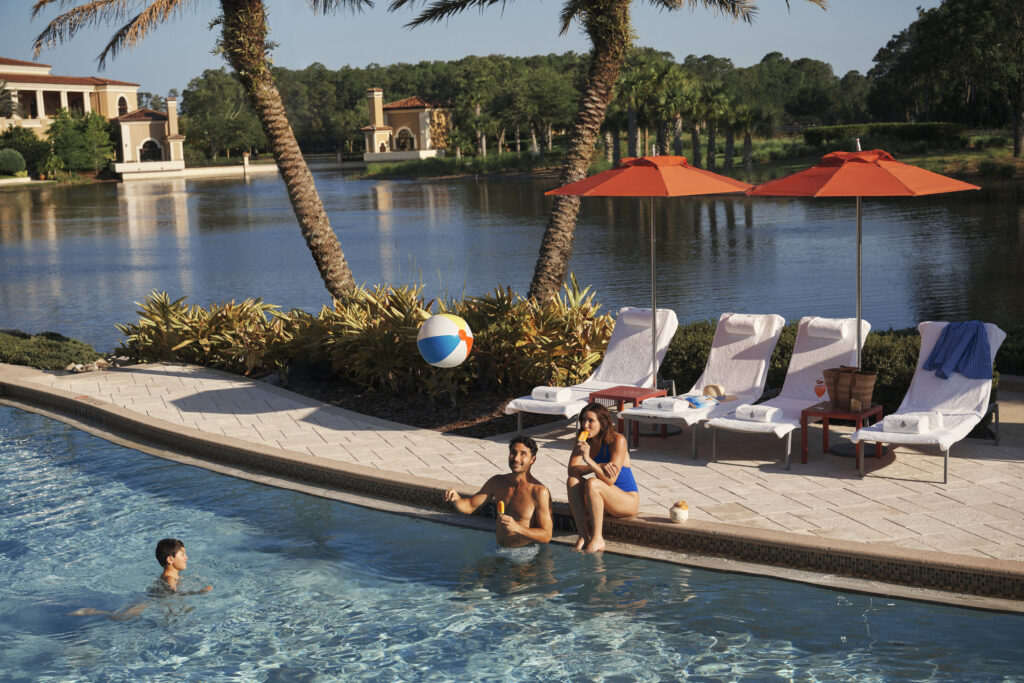
The heated pool for smaller children and toddlers is the detail we would build a cooler-season afternoon around. It gives the swimming plan a firmer starting point, although we still check its operating arrangements for our dates.
With a toddler, we would choose a short city outing and a long return to familiar surroundings. An extra night here interests us more than moving everyone’s possessions into a tent for the sake of completing a circuit.
Kasbah du Toubkal: two nights, and an uphill arrival
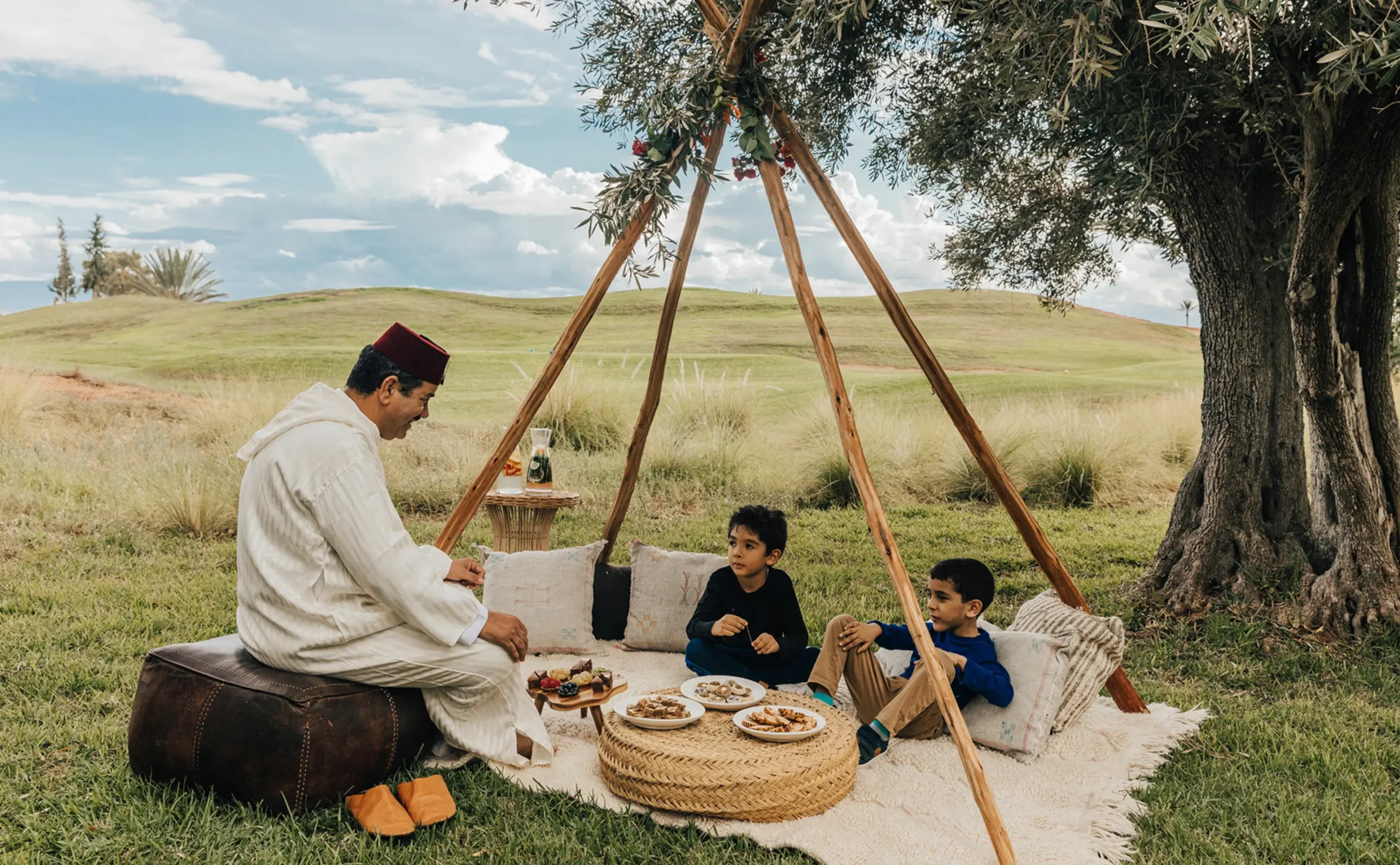
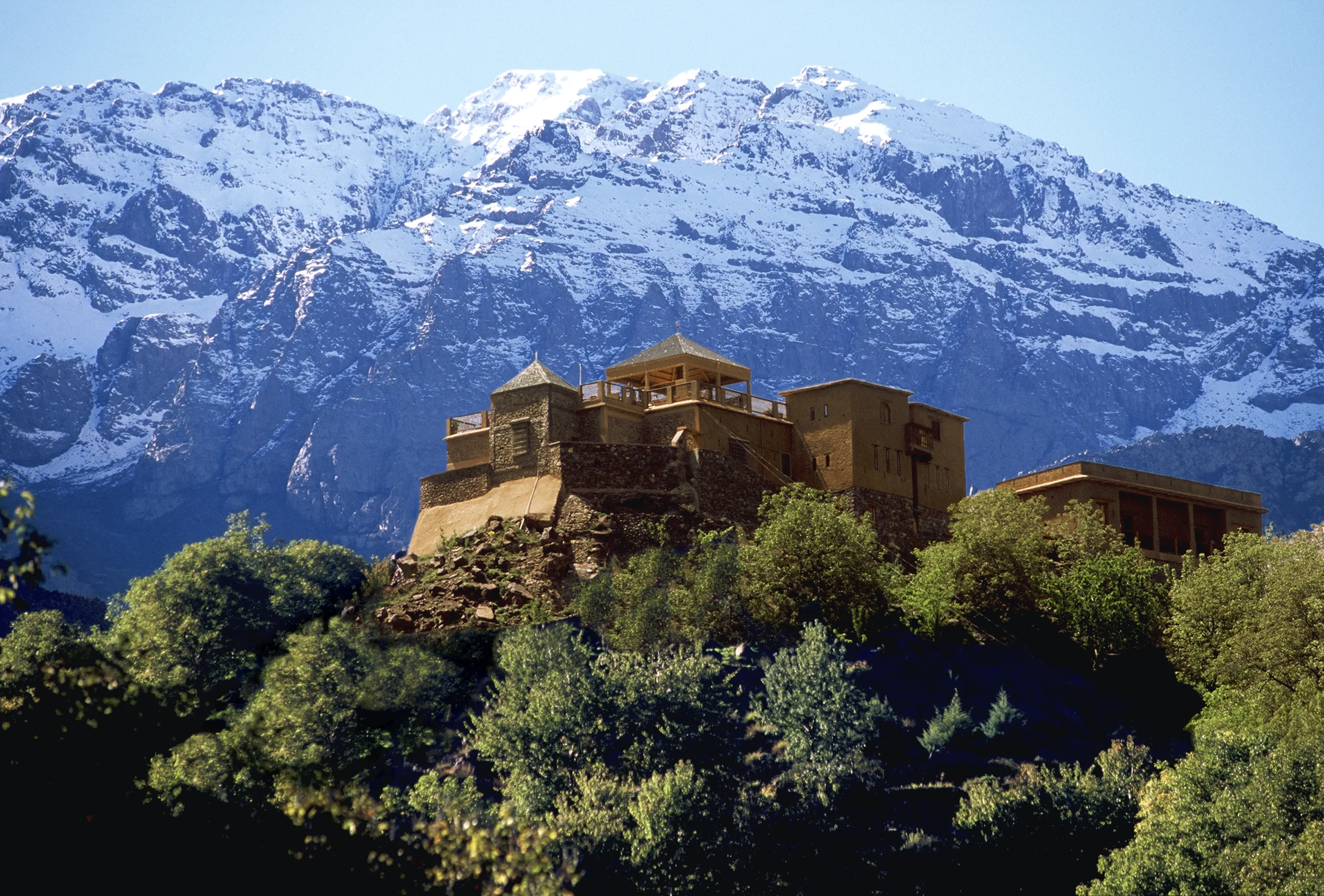
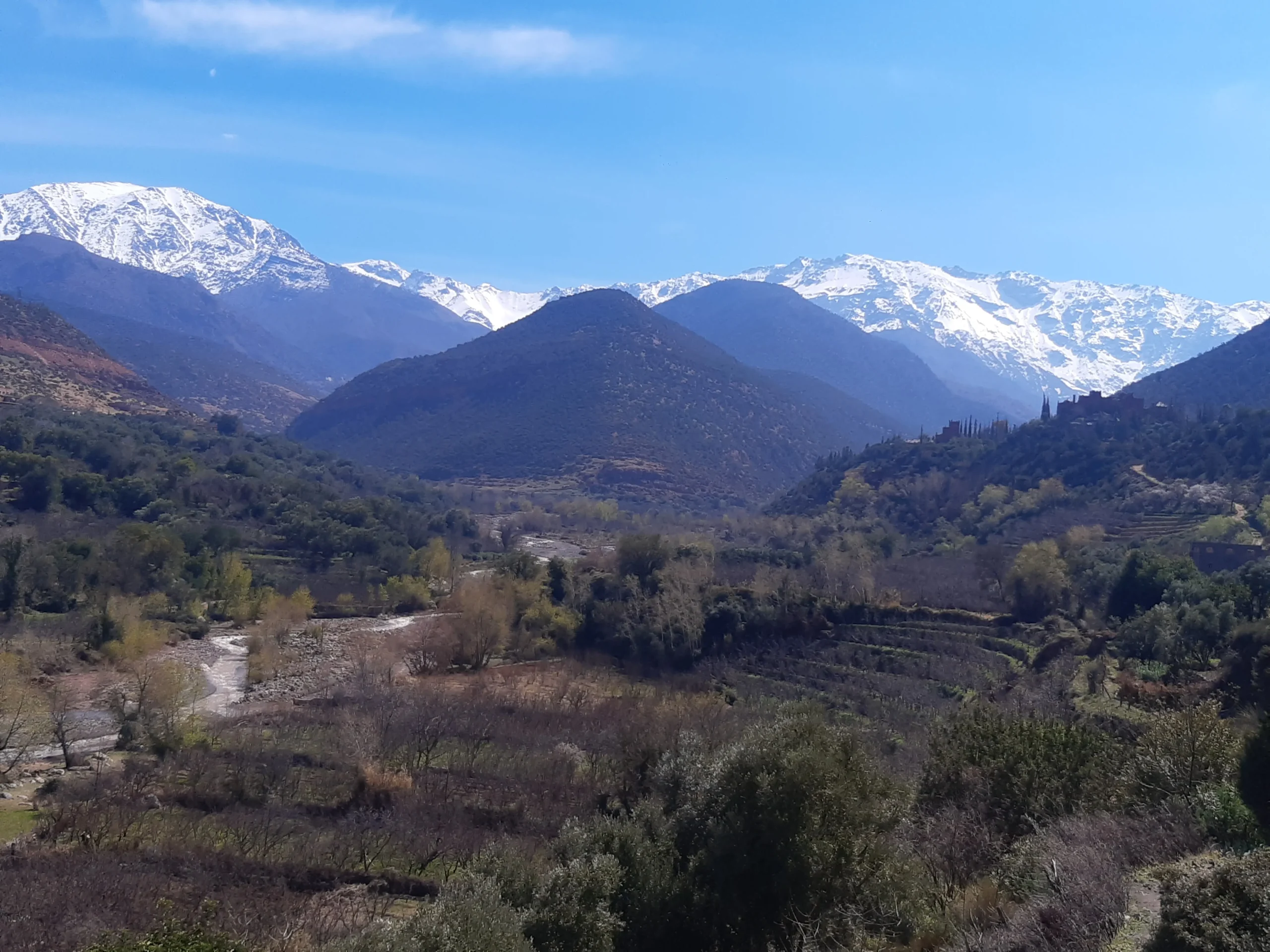
At Imlil, the change of pace reaches our feet before it reaches the itinerary. Kasbah du Toubkal involves an approximately 75-minute drive from Marrakech to the village, followed by a 15-minute uphill walk; luggage goes up by mule. We picture the child who bounds ahead, then remember the younger sibling asking to be carried. We settle the approach before allowing ourselves to fall for a room photograph.
Two nights appeal. We would take them with children happy to walk, so that the middle day stays free of packing. The Garden House Junior Suite sleeps two to four, with two extra beds made from the Berber salon. For a family of four, we would ask how that conversion changes the evening sitting space and whether its arrangement suits an early bedtime.
Our mountain day would be a gentle valley outing with a professional guide, chosen around the youngest walker and that day’s conditions. A stay near Toubkal is no reason to turn a family holiday into a summit attempt. We want time to stop, examine a stone, drink something warm and return while everyone still has an appetite for dinner.
For anyone using a pushchair or needing step-free access, we would settle the arrival question before considering the room. In winter we also require an agreed weather alternative and flexibility to stay in Marrakech if the route is unsuitable.
Merzouga and Erg Chebbi: the Sahara needs more days
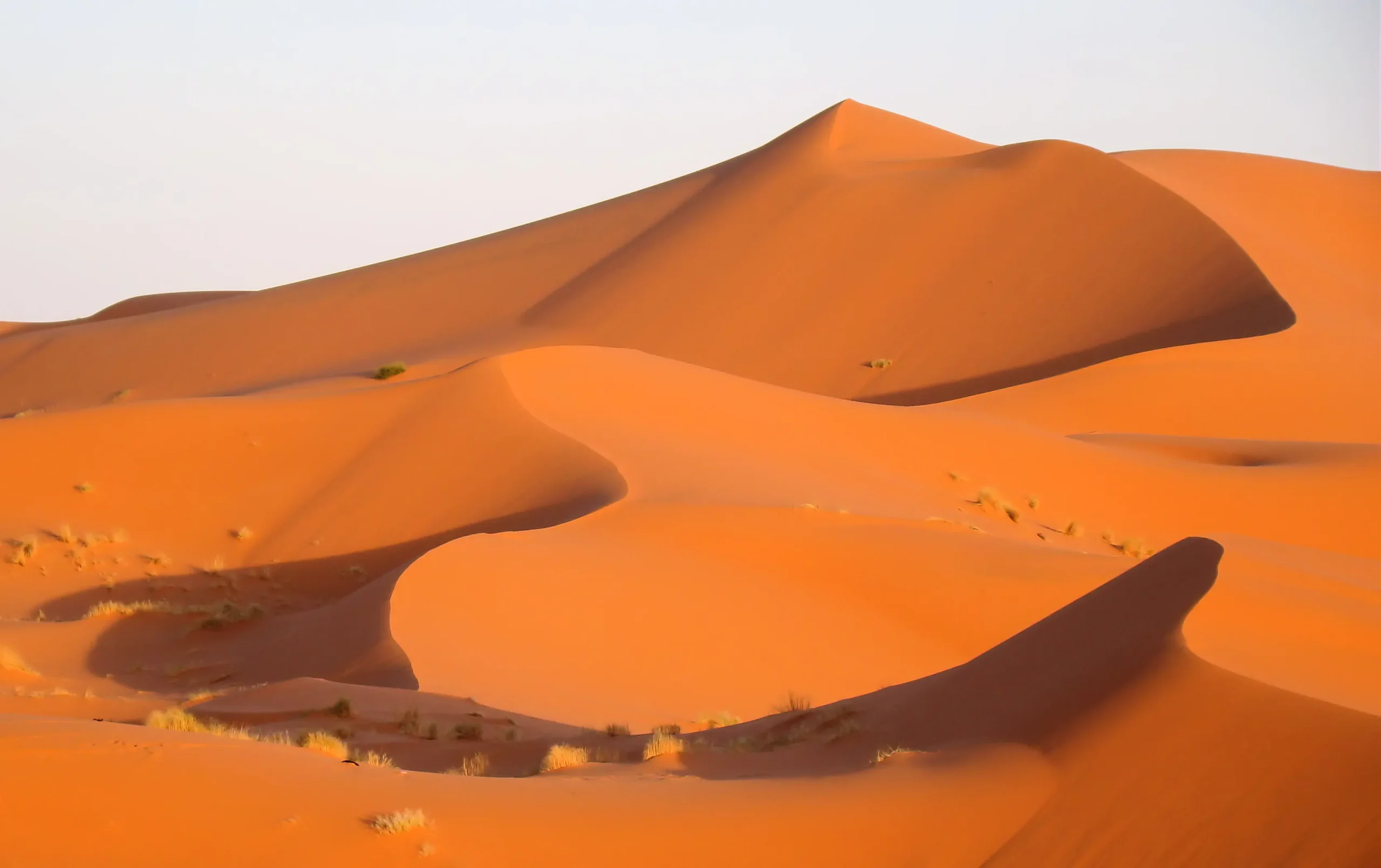
The Sahara is where we refuse to let an attractive photograph set the timetable. Merzouga and the dunes of Erg Chebbi belong to a distant extension, with substantial overland travel. They do not fit between breakfast at a Marrakech riad and an unhurried dinner back in the city.
We start the conversation at eight. Road stamina matters too. A patient seven-year-old and a car-sick twelve-year-old need different decisions. We would choose this extension with school-age children who want the journey itself, and with teenagers who have helped decide what to give up elsewhere to make space for it.
We start with a longer holiday and ask a licensed operator to work backwards from the dunes: every overnight stop named, each driving day described, daylight arrival protected and the return route included. We would not approve an itinerary containing a vague promise to stop whenever necessary. We want realistic meal and toilet breaks, suitable child restraints and a weather contingency before choosing a camp.
The reward we have in mind is simple: shoes filling with sand, a child trying to keep a ridge intact underfoot, the last light holding everyone’s attention without a screen. We want energy left. Enough to enjoy the evening, rather than hurry everyone towards bed. If the route consumes all the spare days, we would save the Sahara for another trip.
Before booking, we ask the camp about family sleeping arrangements, bathrooms, overnight warmth and emergency access. Any camel outing or other activity needs its own age, safety and insurance check; our suggested planning age is no assurance of suitability. We would never add an adventure merely because it is included in a package.
Scarabeo Camp: Agafay without the Sahara road journey
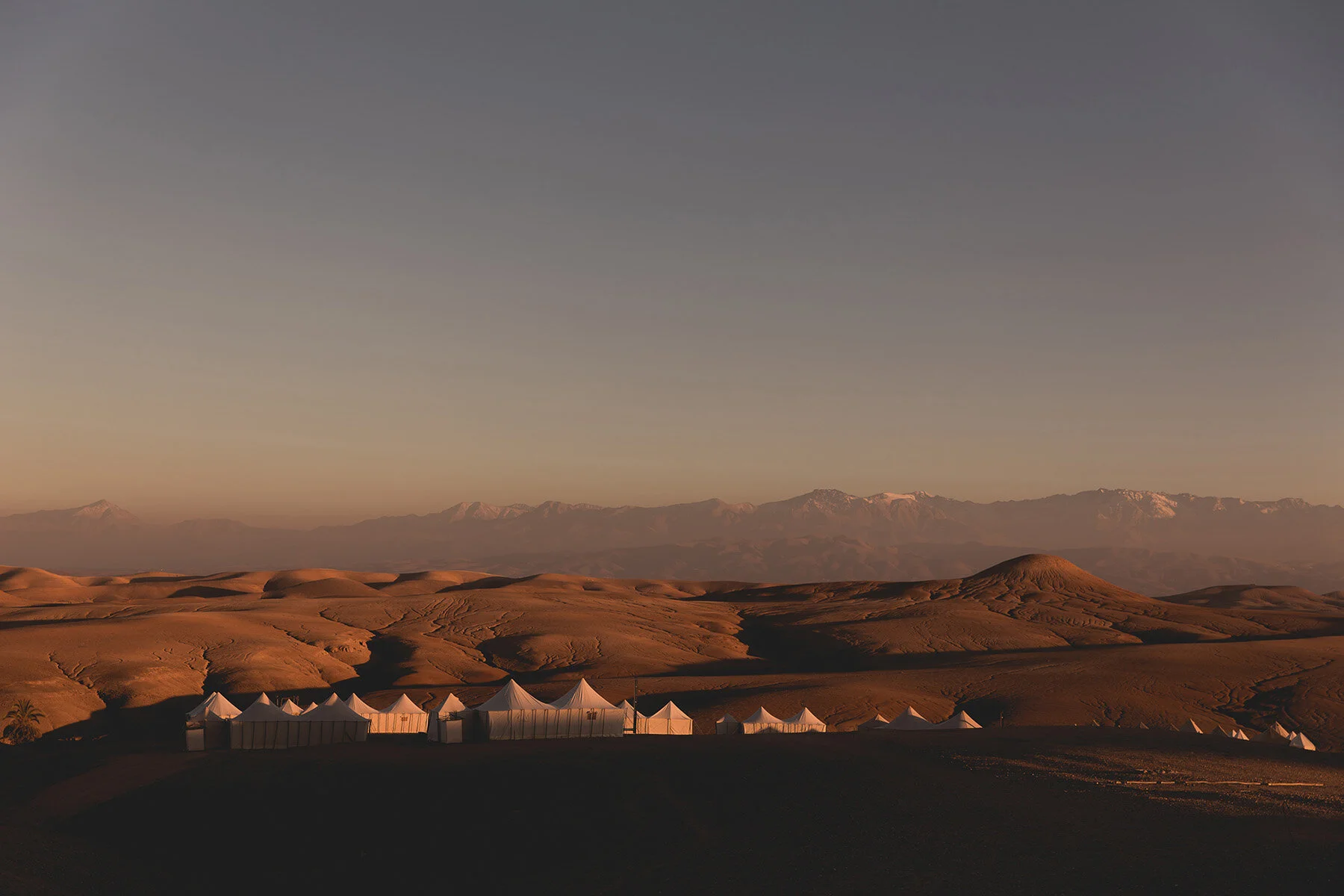
Scarabeo Camp is our shorter-transfer alternative when older children want a tented night and the family does not want the Sahara road commitment. Agafay is a stone desert near Marrakech. We keep that distinction clear before showing the children pictures of dunes they will not find here.
Allow approximately 45 minutes from Marrakech airport or one hour from the medina for The Stone Camp; Les Roches Noires adds about ten minutes. We confirm the selected camp on the transfer booking, because Scarabeo is not one interchangeable arrival point.
We would skip it with a baby: thin tent walls make infant sleep a poor fit. We would also leave the swimming expectation behind for a winter stay. The pools are unheated, with swimming presented as a warm-weather feature from April to October. For older children we would consider one night for the tented experience, after asking about bedding, warmth and the evening atmosphere at the particular camp.
Autumn and winter: leave the mountain timetable loose
Autumn is our first choice for a trip that includes the Sahara; spring is the other preferred desert season. A winter journey needs a different wardrobe and more give in the schedule. We pack for cold mountain conditions and the desert’s day-to-night temperature change, rather than let the Marrakech forecast stand in for the whole country.
Heavy winter rain brings flash-flood risk, especially around mountains and rivers, and poor conditions make mountain and secondary roads hazardous. No night driving for us. The practical consequence is a cancellable mountain segment and a return buffer, agreed while the holiday is still a set of bookings rather than a car full of tired people.
We check current travel advice, passport and entry rules for every traveller’s nationality, and insurance covering the planned activities. For hiking, we use a professional guide. We would rather change the outing over breakfast than spend the afternoon defending a plan made months earlier.
Fairmont Taghazout Bay: choose the coast instead
Sometimes the decision happens over a half-packed bag: nobody wants another transfer. If the family’s real wish is a coastal resort holiday, we would compare our Fairmont Taghazout Bay review before booking the inland circuit. This is a different Morocco trip, not an extra stop to squeeze after the Atlas and Sahara. Our broader Africa hotel collection is useful when the destination is still open and the family’s priorities are clearer than its route.

What we would book: Marrakech first, Sahara only with time
With a baby or toddler we would book one Marrakech base, confirm the sleeping arrangement and pool plan, and keep the week free of compulsory departures. With children aged four to ten, our first outline is four Marrakech nights, two at Kasbah du Toubkal if the approach suits everyone, and a final Marrakech buffer. We would add the Sahara only to a longer holiday with willing, road-tolerant school-age children.
Before paying, we would settle these details:
- The exact room or riad configuration, cot or extra beds, stairs and access to water.
- Children’s club eligibility for every sibling, operating hours and separate babysitting arrangements.
- Pool heating for the booked dates, tent bedding where relevant and a workable early meal.
- Named transfer endpoints, child restraints, daylight arrivals and the mountain weather alternative.
- For the Sahara, the complete outward and return route, camp arrangements, activity limits and emergency access.
We would leave something out. For younger children that means the Sahara; for a family intent on the dunes, it means finding more days or reducing the Marrakech programme. We want to return to the breakfast table with a child still talking about yesterday, rather than already negotiating how long remains in the car.