36% is the share of luxury travel executives who now call multigenerational travel a major demand segment, and that catches a change that is easy to see once a family tries to book three generations into one hotel: the old room plan no longer works. We see it in the questions that arrive before a reservation is even made: which bedroom has a real door, how far is breakfast, where can a teenager retreat, and can a grandparent sit by the pool without spending the afternoon beside a waterslide?
The quick version
- Multigenerational demand is pushing premium hotels toward connecting rooms, proper multi-bedroom suites, residential kitchens and spaces that let grandparents opt in rather than endure the whole programme.
- The useful design test is not whether a hotel has a kids’ club. It is whether a toddler, a teenager, two parents and a grandparent with a quiet morning can all have a good day without a negotiation meeting.
- Private villas solve privacy but can add staffing, distance and dining friction. A well-planned resort suite can be the smarter buy for a mixed-age group.
- Book the room configuration first. Pool access, restaurant reservations and transfers are secondary once you are travelling with more than one household.
The statistic is a signal, not a universal booking share
One 2026 survey of luxury travel executives found that 36% now name multigenerational travel as a major demand segment, up from a niche concern only a few years ago. That figure does not mean one in three rooms at every luxury hotel is occupied by a family of twelve. It does show where the expensive decisions are being made: suites, villas, connecting-room inventory and private-use space.
We would read the number as a demand signal, then look for physical proof. Hilton’s 2026 trends work has almost half of its global team members reporting they see more families travelling with three or more generations. In Asia Pacific, 48% of multigenerational families say interconnecting rooms or family suites matter to their booking decision, and 42% prioritise senior-friendly facilities and services. Architects and operators should treat that as a commercial requirement with consequences for inventory, circulation and service.
The change is not sentimental. Grandparents often fund part of the trip; parents need a hand with children; teenagers need room to disappear without leaving the property.
A luxury hotel that only offers a handsome king room plus a sofa bed has missed the commercial logic.

The suite is becoming a small house, not a large bedroom
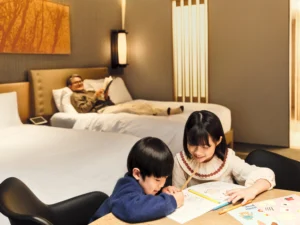
Moon Palace The Grand, Punta Cana has gone to the loud end of the spectrum with a Grand Four-Bedroom Rooftop Villa of 10,946 square feet for up to 12 guests. Few families need that much square footage, but the idea is instructive. A shared living room and dining table can bring a group together without forcing every person to sleep, dress and recover from jet lag in the same space.
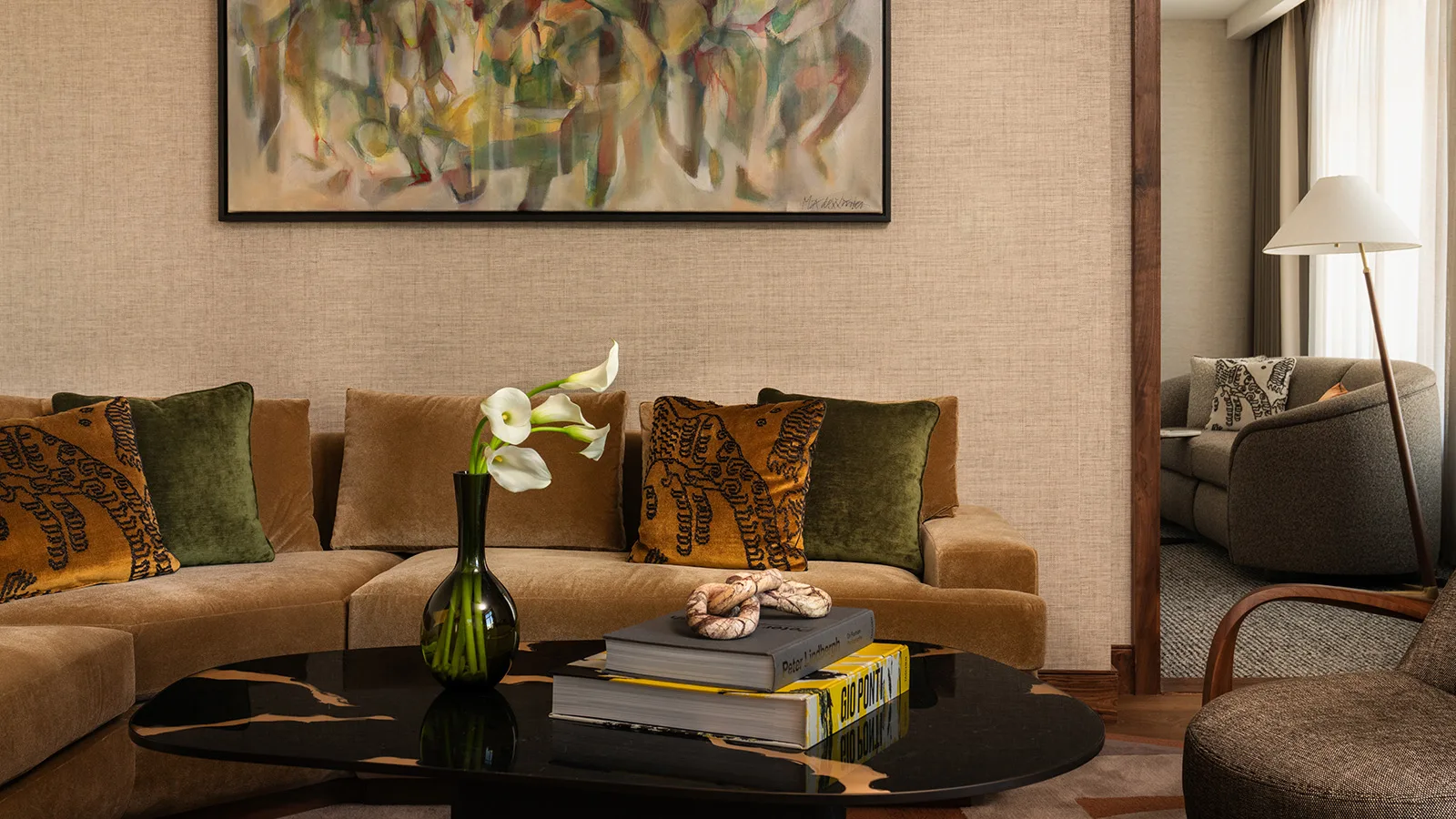
Urban hotels are moving in the same direction, only with tighter footprints. Four Seasons Hotel New York Downtown introduced its Greenwich and Trinity Collections as two-bedroom suites with full kitchens and residential-style living. The useful detail is the kitchen. For a baby, an early-rising child or a grandparent who wants tea before the city wakes, it changes the rhythm of a stay far more than another marble bathroom.
We would pay for bedrooms with doors before paying for a larger open-plan suite.
Ask for the exact floor plan, not the marketing label. A so-called family suite can still mean one main room and an exposed sleeping alcove. For three generations, privacy is the amenity that protects everyone else’s holiday.
Finest Riviera Cancun shows the new zoning
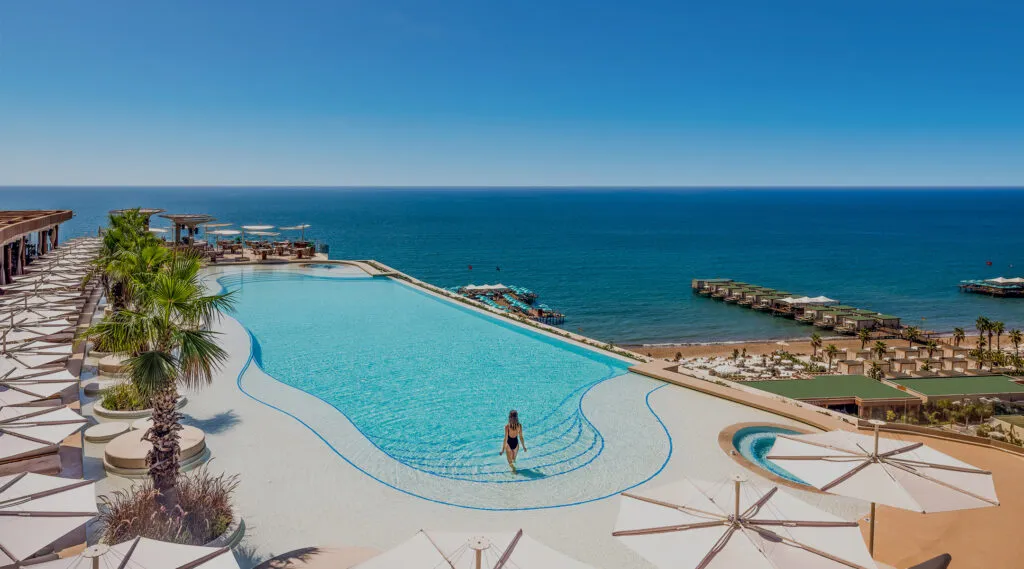
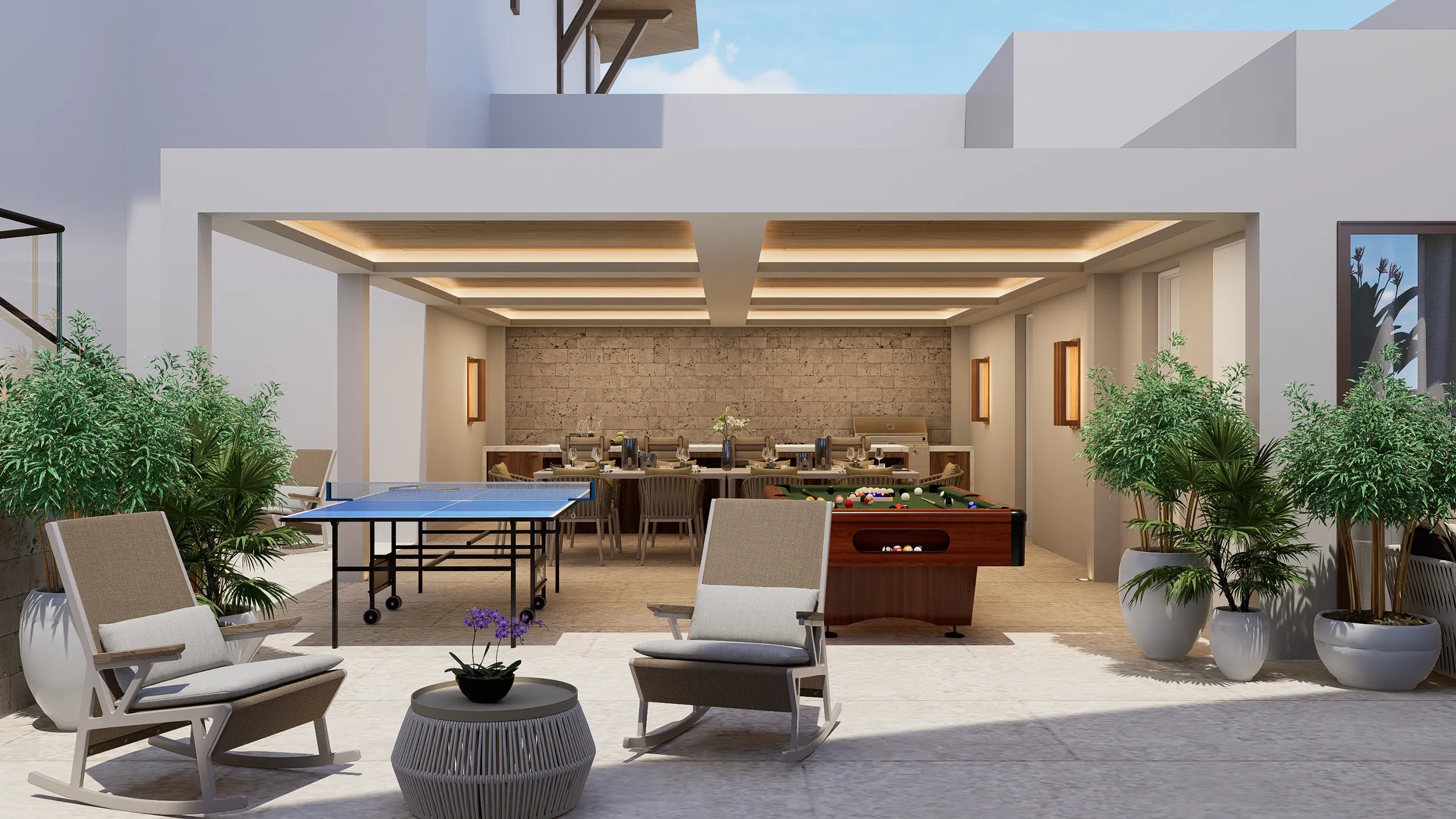
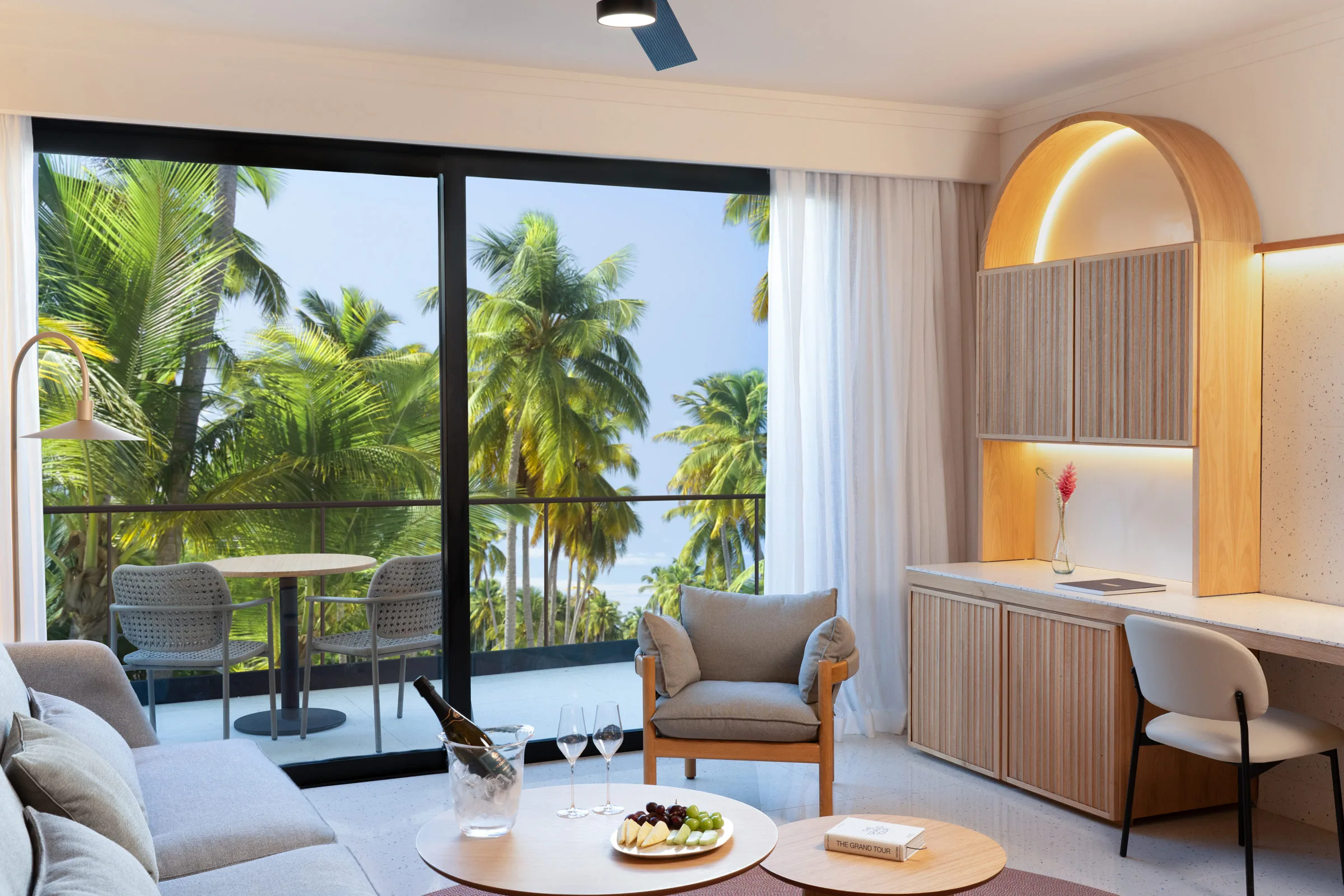
Finest Riviera Cancun, planned with 435 suites, allocates 78 Family Suites, 19 Family Swim-Up Terrace Suites and 20 Family Suites with plunge pools. Alongside them sits Excellence Club, an adults-only offer within the same property. The arrangement is more interesting than a large kids’ pool because it accepts the obvious: a multigenerational group needs common ground and escape routes. The property also plans child-care lounges near restaurants and practical baby equipment on request, including sterilisers, warmers, cots and high chairs. These are not glamorous details. They are the details that decide whether dinner becomes a two-hour operation or a normal evening. Design has to include the route from room to restaurant, the waiting time around a table, and the place where a parent can step out without abandoning the group.
Adult-only zones deserve a defence here. They are not a rejection of children; they make a shared holiday more sustainable. Grandparents can read by a quiet pool, parents can have a drink after bedtime, and the children still get the part of the hotel built for them. The weaker version is an adults-only enclave so distant that it splits the group into camps.
Ritz-Carlton Laguna Niguel makes the smaller correction
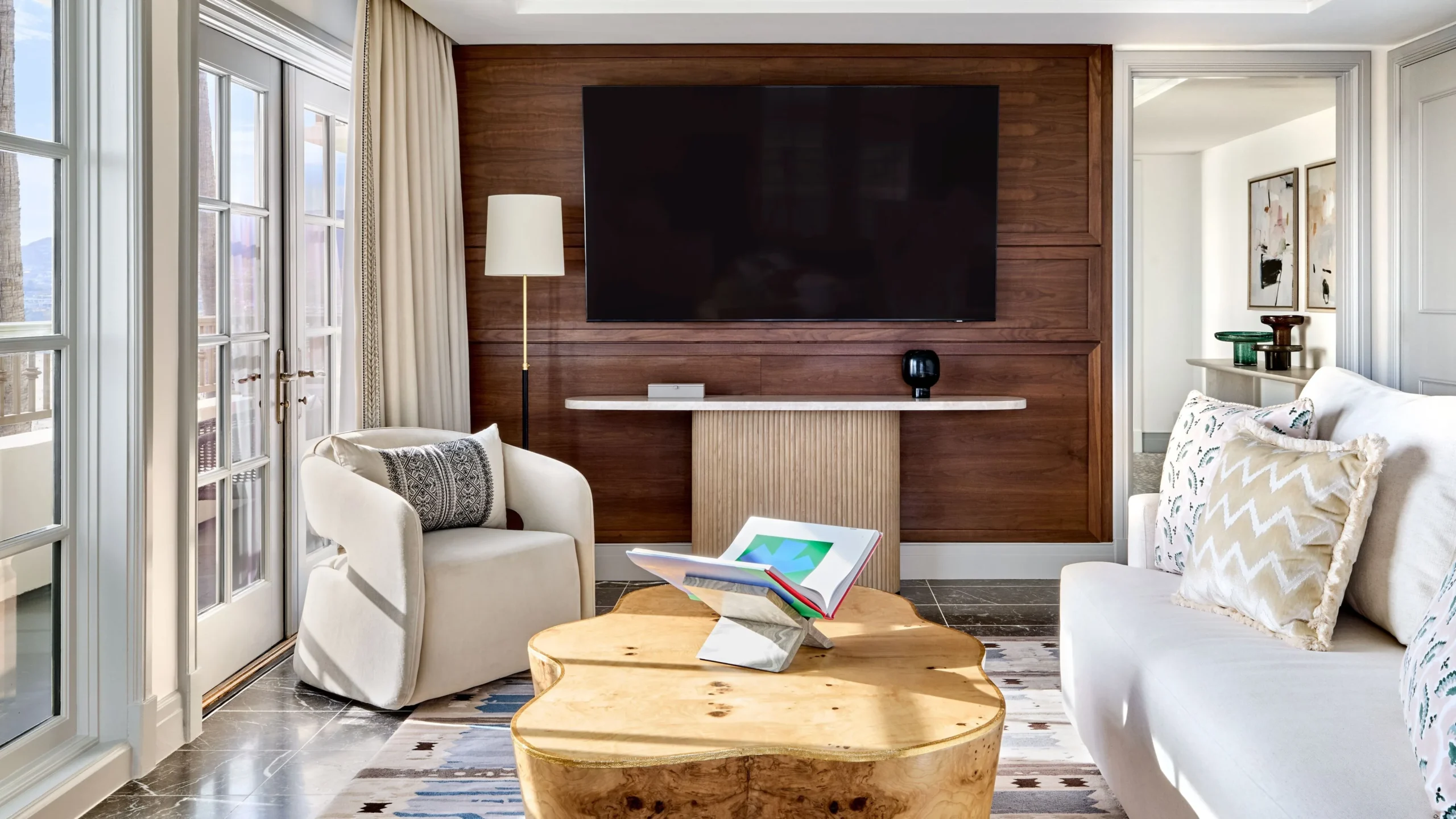
A redesign does not need a rooftop villa to recognise the market. The Ritz-Carlton Laguna Niguel added ten two-bedroom suites in its 2025 redesign, expanded bathrooms and enlarged its club lounge with a children’s area for games and books. The Strands Suite combines two bedrooms, two living areas and a dining room. That is a more believable template for an established luxury resort than a new-build compound. What matters is the allocation of rooms and time. Two living areas let a child watch a film while adults finish supper. An enlarged bathroom relieves the morning queue. A club lounge that acknowledges children lets a family use it without performing an apology. None of this photographs as dramatically as an infinity pool, yet each detail removes a small collision from a day shared by several households.
When we compare room types, we now look for a second sitting area, more than one bathroom and a route to breakfast that does not require a long march from an outer villa. These are the checks that make a premium rate defensible. A beautiful room at the far end of a sprawling resort can be a poor deal for a grandmother with reduced mobility or a child who needs a nap.
Programming has to split by age without splitting the family
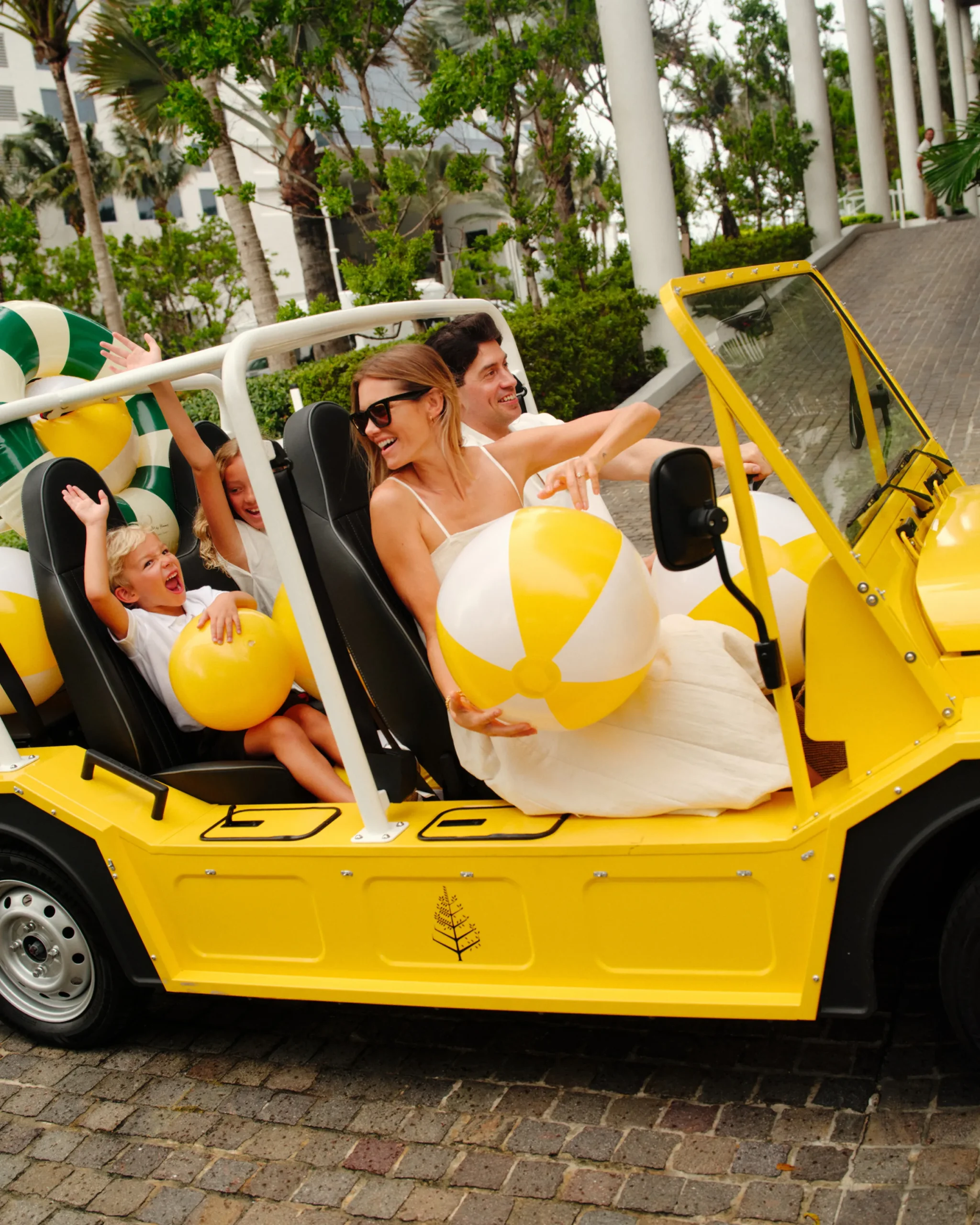
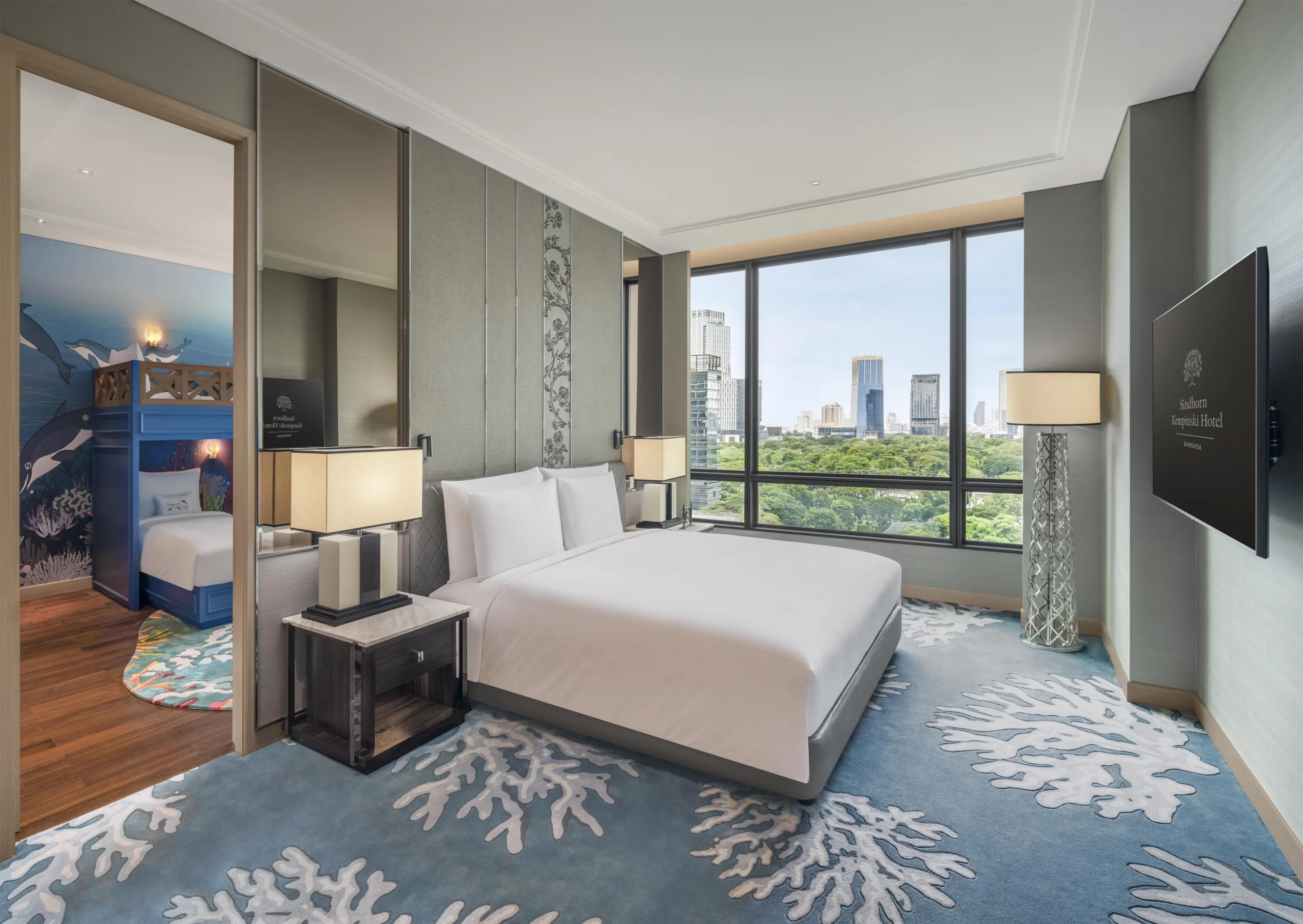
Hotels once treated family programming as a kids’ club problem. The better operators are arranging a sequence of invitations. Four Seasons Fort Lauderdale pairs its Kids For All Seasons programme, for children aged four to 12, with Mini & Me, whose shared spa treatments and oceanfront yoga make space for an adult and child to choose each other. Sindhorn Kempinski Bangkok’s Sealife Family Suites pair play-oriented décor with generous living space. At Island Shangri-La Hong Kong, family-floor suites are organised around a shared pantry and communal living, dining and play areas.
We like the direction, with one reservation. Themed suites and cheerful mascots do not solve a teenager’s boredom or a grandparent’s need for a calm, accessible route through a large hotel. Good multigenerational programming does not make every person do the same thing. It makes it easy to meet again at lunch, then leave again without drama.
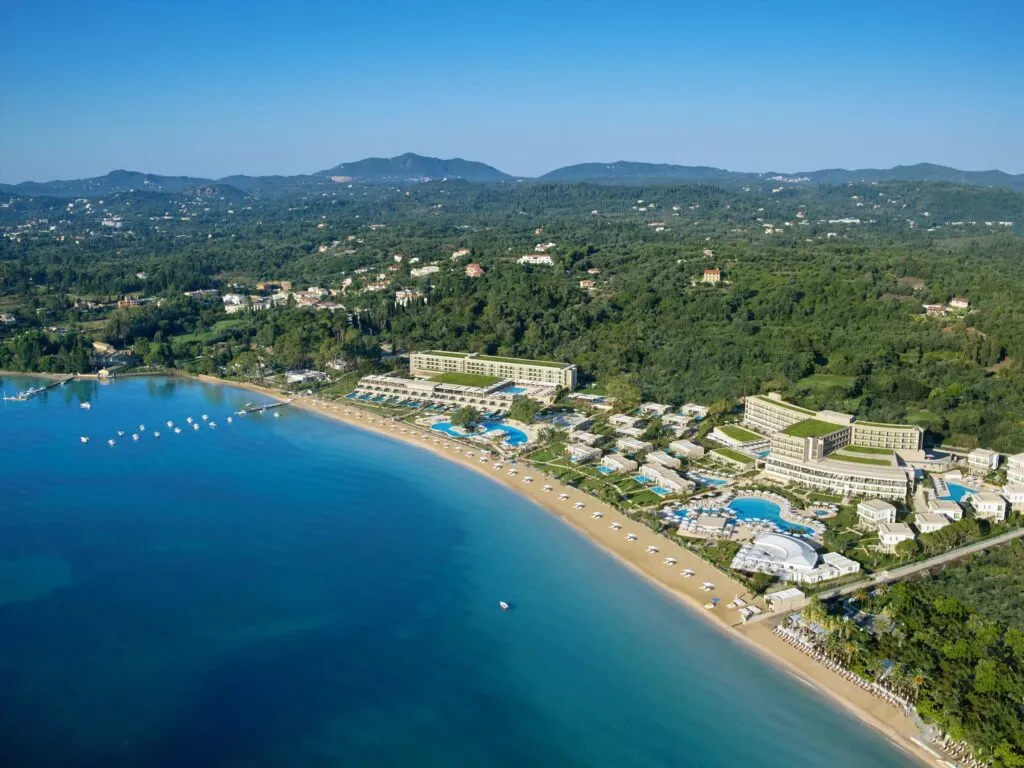
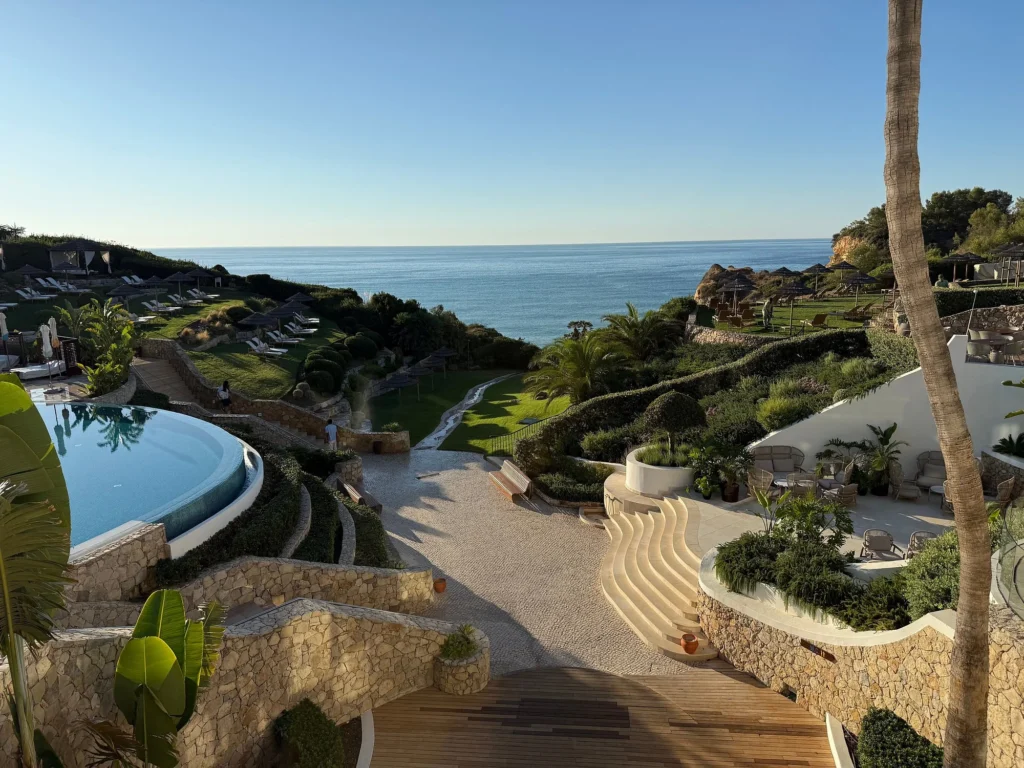
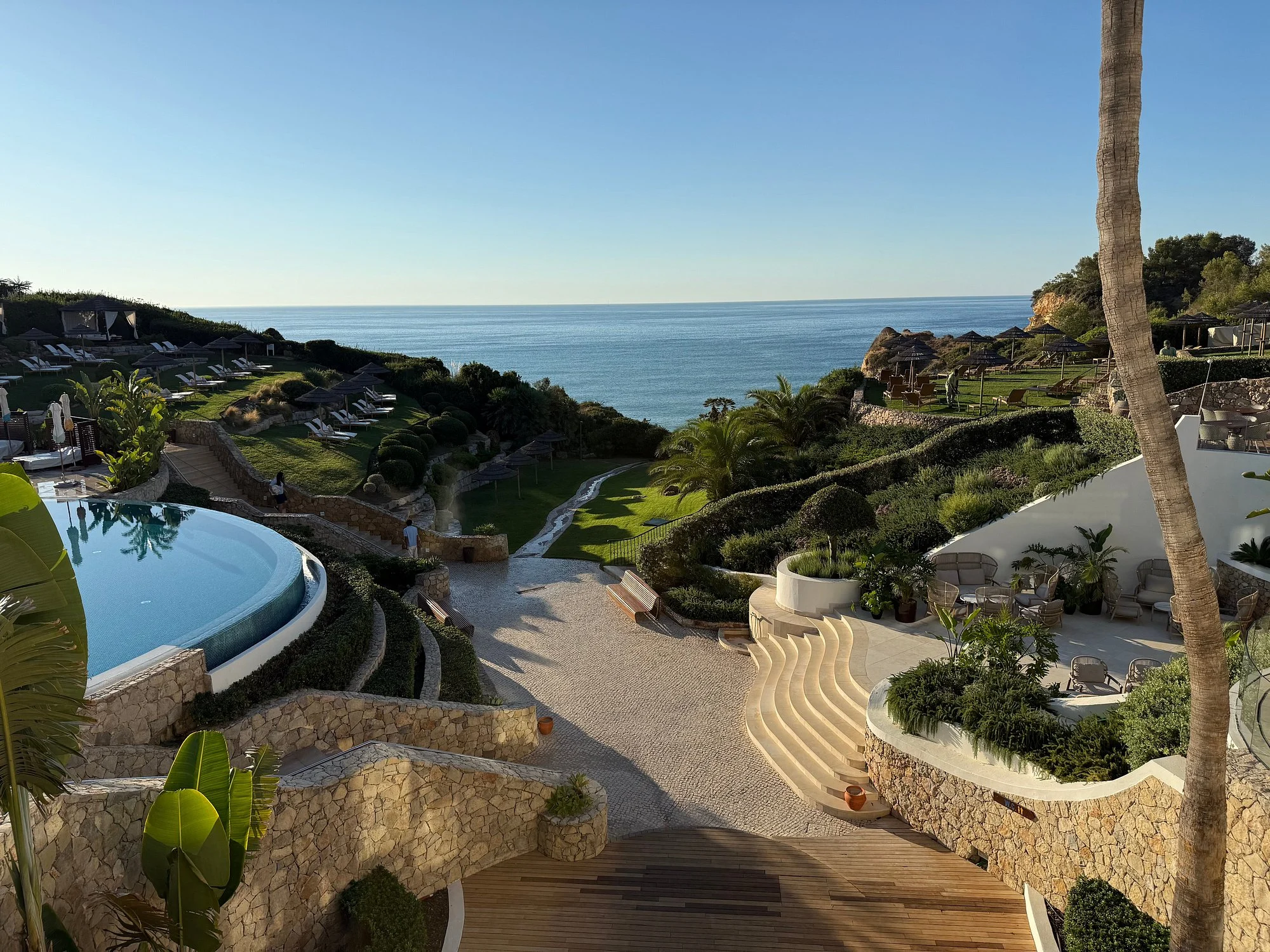
For that reason, a resort such as Ikos Dassia remains useful as a family benchmark: layered pools, dining choices and a crèche create options across the day. A different group may prefer the smaller-scale rhythm of Vila Vita Parc, where the question is less about a vast activity grid and more about keeping rooms, beach and dinner within a manageable orbit.
Senior-friendly design cannot be a footnote
Luxury family travel has been very good at designing for the energetic five-year-old and the photo-ready parent. It has been less consistent about a grandparent who needs a lift, handrail, shade, a short route and a restaurant chair that is comfortable after ninety minutes. The Asia-Pacific preference for senior-friendly design is therefore one of the more consequential findings in the current demand data.
Ask the hotel direct questions before committing: how far is the room from breakfast; are there steps between pool and lunch; does the buggy service run after dinner; can the restaurant seat a group of eight without putting a wheelchair at the end of a corridor? A generic accessibility page rarely answers the family version of those questions. Resorts also need to resist placing every family room at the furthest, noisiest edge of the site. A good multi-generation floor plan brings different energy levels into proximity without forcing them into one room. That can mean interconnecting rooms near a lift, a shaded pool with a shallow entry, or a small lounge that is neither a bar nor a playroom.
The expensive part is often the scarcity, not the villa
A survey cited in Accor’s New Quality of Time report found that more than two thirds of respondents in multigenerational groups see planning as a pain point. The source of that irritation is familiar. Multi-bedroom suites, connecting rooms and private villas are limited, then priced as rare inventory. Hotels have learned to charge for the configuration that removes friction, and the price can rise faster than the difference in square metres suggests.
A private villa is not automatically the answer. It may create transfer dependence, require a chef or babysitter to be arranged separately, and place the family away from the pool, kids’ club and restaurants. For a group with toddlers, a teenage cousin and grandparents, a connected suite near the centre of a resort can be more valuable than an isolated house with a better view.
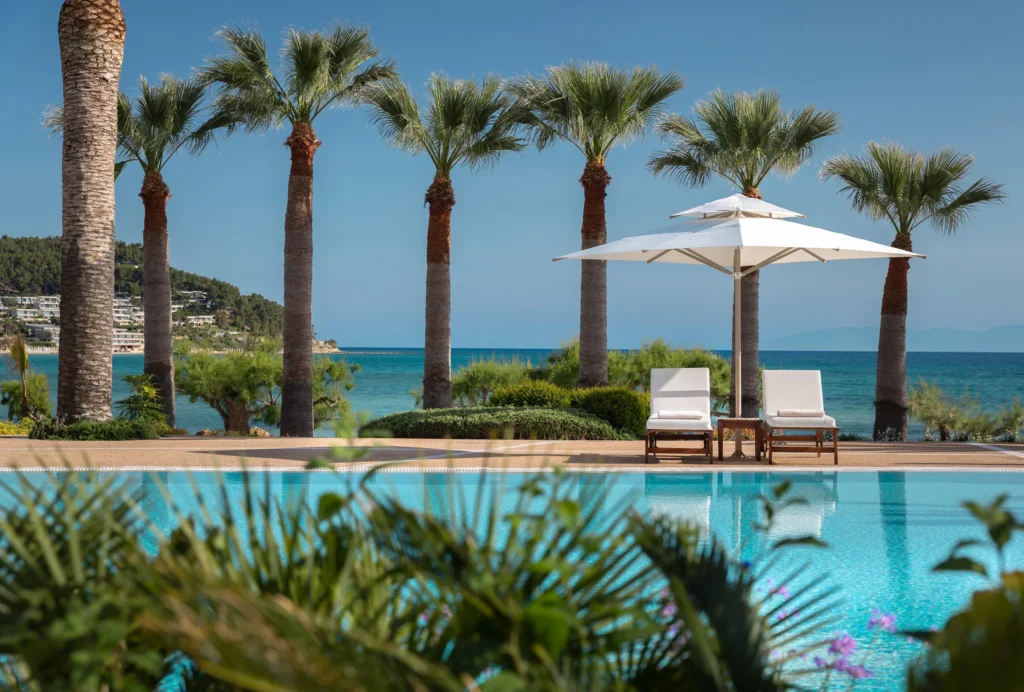
We would choose a villa when the group wants long shared meals, private pool time and a slower, self-contained rhythm. Choose a resort suite when the holiday needs childcare, several dining options and the freedom for each generation to peel away. Sani Beach is a useful reminder that resort scale can work when paths, activities and dining are arranged to reduce rather than multiply decisions.

What we would book, and what we would refuse
For a first three-generation beach trip, we would book connecting rooms or a two-bedroom suite before chasing a private pool. We would ask for one bathroom per adult couple, a lift or near-level route, a table reservation that works for the full party and a written confirmation of room adjacency. If the hotel cannot confirm those basics, spend less or choose elsewhere.
For a city break, a two-bedroom suite with a kitchen has more practical value than a grand lobby and a lavish breakfast. For a resort stay, seek a place with enough zones that a teenager can leave the kids’ activity programme, a grandparent can avoid the loudest pool, and the adults can still meet for dinner without arranging a convoy.
The luxury takeaway is straightforward.
The winning hotel is no longer the one that treats a family as two adults with smaller luggage. It is the one that gives every generation a little autonomy, then makes reunion easy. Hotels that get there will win repeat business because they have solved the part of a big family holiday nobody puts in the brochure: the accumulated effort of sharing space, meals and time across different bodies, bedtimes and appetites for company.