
Lanzarote sits at 27°C in October. Turkey’s Turquoise Coast is still swimmable at 24 to 26°C. Hurghada is still touching 30°C. This is the month affluent families keep flying past on the way to a more expensive one, because half term looks like a fixed cost rather than a choice. It isn’t. Where you book inside that one week changes both the temperature and the bill, and the two aren’t as connected as the brochures imply.
The week itself is not the same week everywhere
England’s October half term runs Monday 26 to Friday 30 October 2026 for most local authorities. Scotland breaks earlier, 12 to 16 October. In Germany, North Rhine-Westphalia, the country’s most populous state, takes Herbstferien from 17 to 31 October, just over two weeks. Bavaria does not: its autumn break falls 2 to 6 November, tied to All Saints’ Day rather than half term, which means a family working off a generic “German school holidays in October” assumption is planning against the wrong calendar entirely. The practical effect is a staggered demand curve across the month rather than one single spike, which is exactly the kind of detail that makes late October, after the England/NRW peak has passed and before the Bavarian one begins, worth a specific look rather than a general one.

Why the weather actually holds up
The instinct to treat October as a consolation prize for missing summer is the wrong instinct. On Turkey’s Turquoise Coast around Belek, October still averages 21 to 26°C in the air with the sea sitting at 24 to 26°C, warm enough that guests are in the water most days. The Algarve runs a cooler but still reliably swimmable profile: air highs around 26°C early in the month easing to 23°C by the end of it, sea around 20°C. Spain’s Costa del Sol sits close behind, 20 to 24°C in the day with a similar sea temperature. None of this is a heatwave. It is, in every one of these places, a normal, pleasant, swim-and-sit-outside October, mid-20s rather than the mid-30s Turkey’s Mediterranean coast averages in August, or the high-20s to low-30s the Algarve and Costa del Sol see at the same time of year.
The price side is real but regional rather than a single number you can quote for every hotel. Turkey’s peak-season premium runs 20 to 30% above the rest of the year by one direct market estimate, and hotels along that coast start pulling back availability and closing outdoor amenities as October ends, which is itself evidence that demand, and price, is easing. The Algarve’s shoulder season, September and October together, is more explicitly documented: one detailed regional cost breakdown puts the saving at 25 to 40% against high-summer rates. Spain’s Costa del Sol is the most conservative case of the three: one detailed cost breakdown puts July and August at 50 to 100% above the true low season, but treats September itself as still “high season”, 30 to 50% above the low, which means the real relief there lands more in late October than it does at the start of the month. We looked for a hotel-specific rate comparison to make this more concrete and couldn’t get one that held up. Booking engines don’t retroactively quote a month that has already passed, so an August-2026-versus-October-2026 figure for a named property isn’t something we could stand behind. What we can verify is the regional pattern above, and it is consistent enough across three different Mediterranean-adjacent markets to trust.
Three hotels, three different reasons to go
We picked these because FFH has actually reviewed all three, which matters more than it sounds: a hotel we can send you to with a real, scored review is worth more than a headline about a region we haven’t yet vetted a property in.
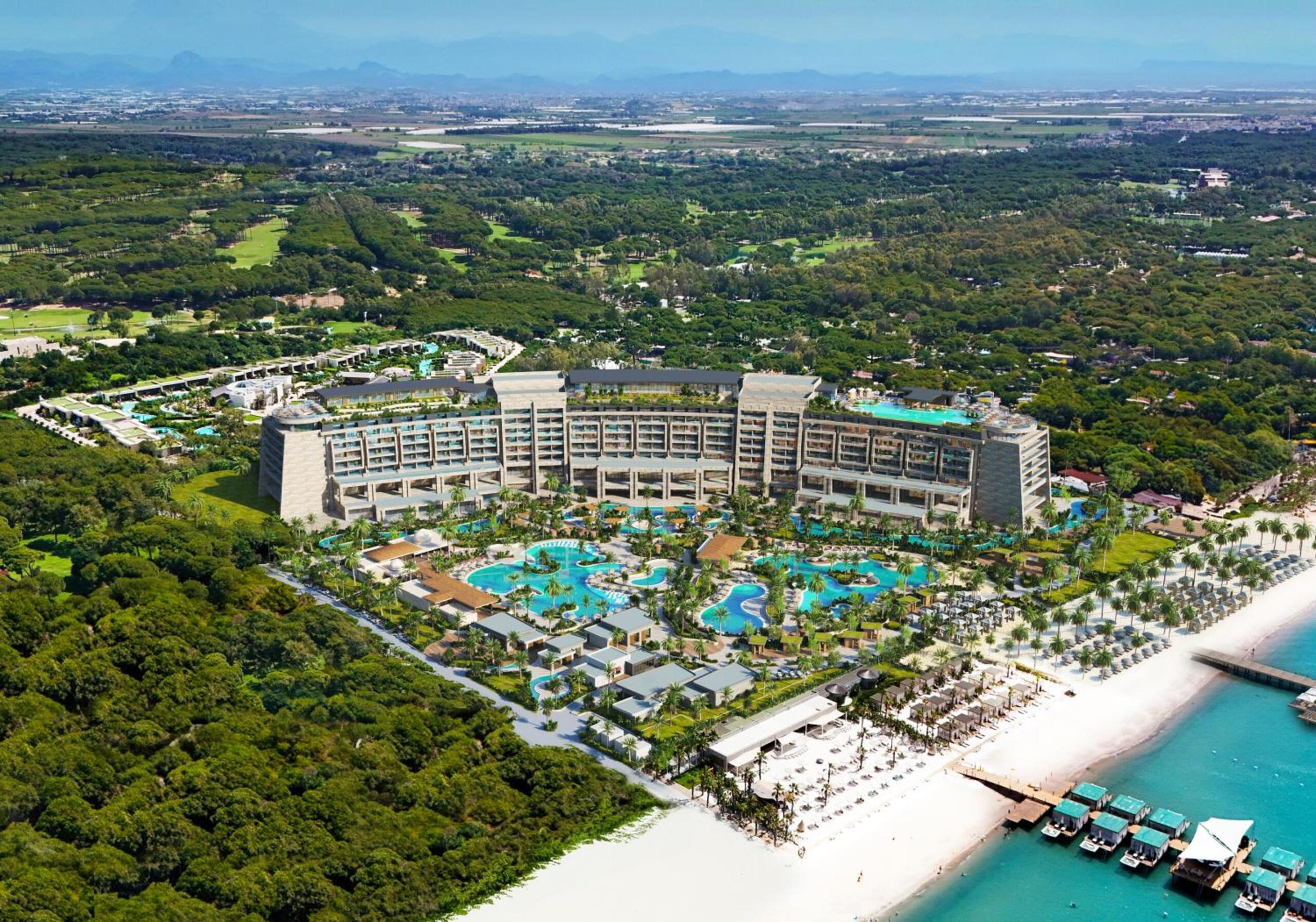
Regnum The Crown, Belek: the one built for every age at once
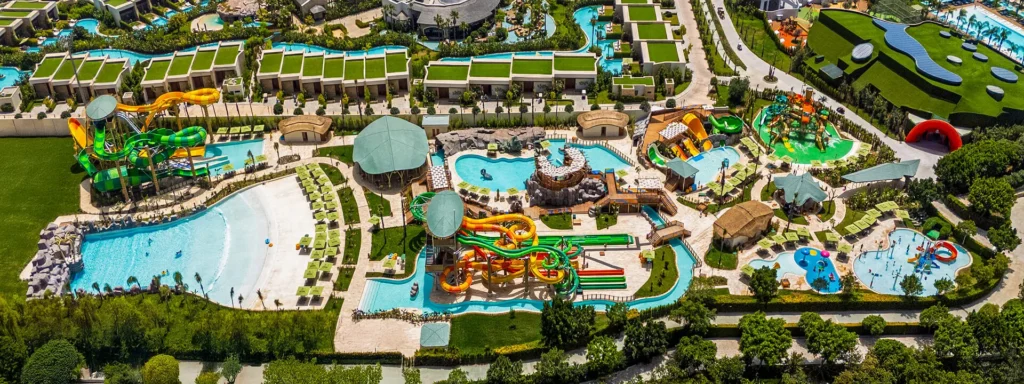
Regnum The Crown is an all-suite megaresort that opened in summer 2025, and our review scores it 9.2 for infants, 9.8 for four-to-eight-year-olds, 9.7 for tweens and 9.4 for teenagers, a spread that almost never happens because most family hotels are strong in one band and thin everywhere else. The Aqualantis waterpark and nine pools cover the younger end; Chuckles Kids Club runs 9am to 2am split into baby, mini and junior groups; and there’s a real Teen Club, 11am to 11pm with its own DJ booth, rather than the usual arcade corner with a beanbag. Stay three nights or more in a suite or villa category and entry and a shuttle to the neighbouring Land of Legends theme park is included, though the resort notes this can shift seasonally and is worth confirming at booking. One honest catch: it only opened last year, so service consistency at full peak occupancy is, in the hotel’s own words, still bedding in. The lead booking guest must be 18 or over, though children of any age are welcome once you’re checked in.

Ikos Andalusia, Costa del Sol: the balanced all-inclusive with somewhere to go afterwards
Ikos Andalusia in Estepona scores 8.6, 9.3, 9.0 and 8.3 across the same four age bands, the most even spread of the three, which suits a family with a wide age gap between children better than a hotel that peaks hard for one group. A paid crèche takes babies from six months; the free Heroes Village runs supervised sessions for four-to-twelves; and Just4Teens gives twelve-and-up their own lounge and arcade space, with pool-zone access opening up from that age too. What makes this one specifically an October pick rather than a generic Spain pick is what sits nearby: Marbella’s old town is a short coastal drive away, and Ronda and the Andalusian hill villages are about an hour inland, giving older children something beyond the pool to do, which is exactly the age group (nine and up) where a beach-only week starts to feel thin. We should flag one gap plainly: FFH’s own records don’t have a confirmed kids-stay-free or child-dining policy for this property at the time of writing, so don’t assume one and do check at booking.

Vila Vita Parc, Algarve: the grown-up resort with excellent childcare, and a real limit
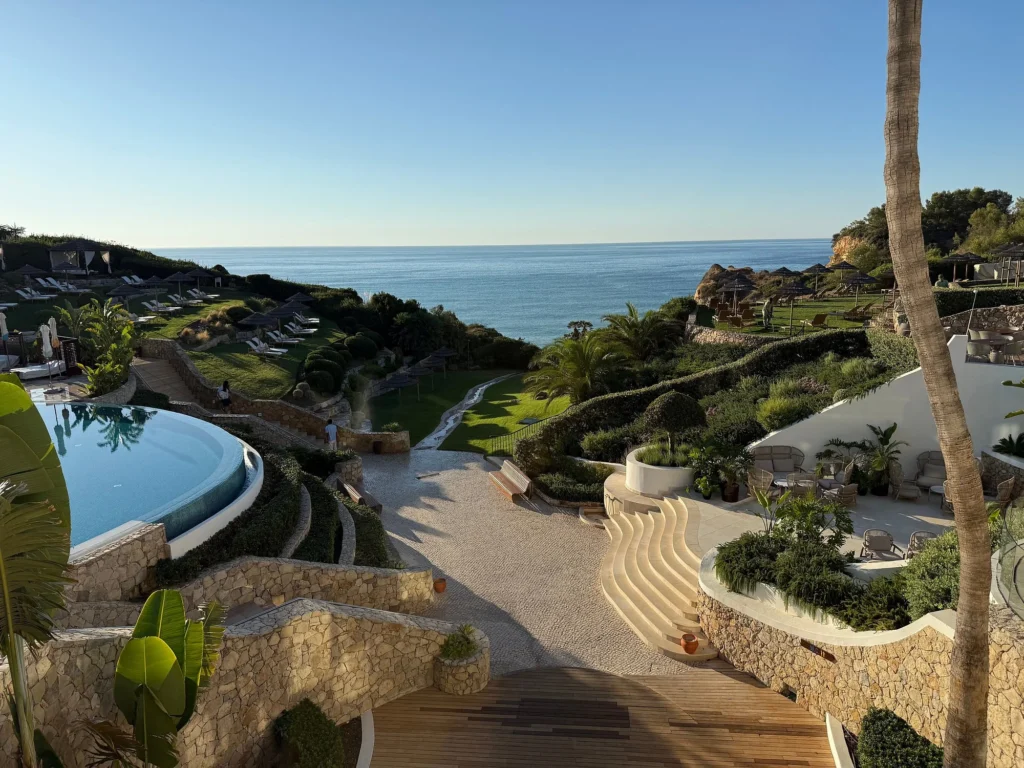
Vila Vita Parc is a 22-hectare clifftop estate above the Atlantic, with a two-Michelin-star restaurant and a Sisley spa sitting alongside a properly run three-tier childcare operation: Natalie’s Crèche from six months, and Annabella’s Kids’ Park for four-to-elevens, which our review rates as the standout. The age scores tell the real story though: 8.8 for infants and 9.2 for four-to-eight-year-olds, then a drop to 8.0 for tweens and 7.0 for teenagers. The clifftop infinity pool, the single most photographed thing on the property, is adults-and-over-12s-only, which lands right when a nine or ten-year-old starts wanting exactly that pool. The teen programme itself skews younger, roughly 10 to 15, leaving 16 and 17-year-olds with facilities and watersports but little structured activity of their own. Book this one for a family with children under nine and you get something close to the best version of the Algarve. Book it for a family with two teenagers and you’re paying for adult spaces your teenagers can’t use.

What actually erodes the saving
Four things quietly work against the value case above, and none of them are marketing fine print exactly, more a matter of reading the calendar correctly.
- Late October brings closures as well as savings. Several Belek-area resorts scale back outdoor pools and beach-club service as the month ends, ahead of a full winter close on some amenities, so a booking for the last week of October should confirm what’s actually open on your dates rather than assuming a summer-brochure list of facilities still applies.
- Within the month, half-term week itself is the expensive part of October, not the cheap part. As with most family-driven demand, softer rates in these Mediterranean and Atlantic markets typically cluster in the weeks either side of school holidays rather than inside them, so booking exactly the half-term dates gets you the better weather but usually only part of the price relief; the fuller saving tends to sit in the “shoulder” weeks either side, a different trip for a family without that flexibility.
- Regional pricing data isn’t property pricing. The 20 to 40% figures above describe markets, not any specific hotel’s rate card on any specific date, and an unusually strong, newly opened or heavily reviewed property can hold its price against the regional trend.
- Two of the three hotels here don’t have a confirmed kids-stay-free offer, and the third’s is explicitly seasonal and shifts. None of this is the “kids eat free” category of deal. It’s a weather-and-price argument, not a headline-discount one.

Who should actually book what
With a mixed-age family, especially one spanning toddler to teenager, Regnum The Crown is the safest single booking of the three: nothing in its age-band scores drops below 9.2, which is unusual and worth paying for. With a family whose children are nine and up and who’d get real value from a half-day out of the resort, Ikos Andalusia’s position near Ronda and Marbella’s old town makes it the more interesting pick, not just the cheaper one. With a young family, under-nine specifically, wanting the single best version of a clifftop Algarve week and hands-on, well-staffed childcare while the parents get a Michelin-starred night out, Vila Vita Parc is the strongest hotel of the three, provided nobody in the group is old enough to mind being kept out of that infinity pool.
The broader point holds regardless of which of these three you book, or whether you look instead at the Canary Islands or Egypt’s Red Sea coast, both still comfortably warm through October by every source we checked, even though FFH doesn’t yet have a reviewed property in either to send you to directly. For further reading on the same shoulder-season logic applied to a different month, see The September Reset; for more options specifically in the Algarve, our guide to the region’s best family boutique hotels sits alongside Vila Vita Parc’s own review. Half term will book itself regardless of what you do. The value window around it will not wait for you to notice it.