
Six minutes and twenty-two seconds. That is how long Luxor stays dark on Monday 2 August 2027, close to the longest totality anywhere along a path that crosses Spain, Gibraltar, Morocco and Egypt in a single day. For families with children, the gap between that number and the question of whether Luxor in August actually suits your trip is the whole story.
The quick version
- The total solar eclipse of 2 August 2027 is total along the Costa de la Luz (about 3.5 minutes at Sancti Petri, more than 4 minutes from Conil to Tarifa), around Gibraltar (about 4.5 minutes), in Tangier (about 4.8 minutes) and in Luxor (about 6.4 minutes).
- Totality falls at about 10:45 local time in Andalusia and Gibraltar, at about 09:44 in Tangier and at about 13:05 in Luxor, where the average afternoon high in early August is around 42 °C.
- On weather, the long-term records favour Cádiz and Luxor. Gibraltar and the Strait are less reliable, and Tangier’s coast is prone to morning haze.
- For families with children under 10 from Central Europe, the Costa de la Luz is our pick: long totality on the southern stretch, good odds, short flights and a beach holiday that works even if the sky does not cooperate.
- Only glasses certified to ISO 12312-2 are safe. Sunglasses are not. Glasses come off only when the sun is completely covered.
- Demand for rooms in the path is already strong. Book refundable rates now and commit later.
Andalusia and the Cádiz Coast
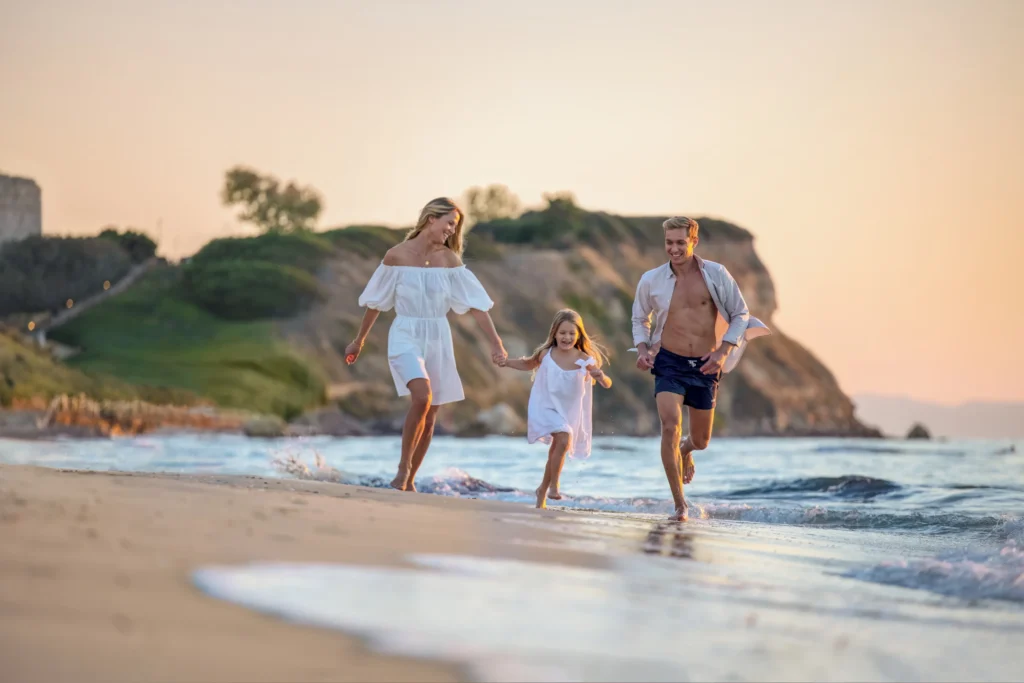
Totality reaches the Costa de la Luz at about 10:45 on a Monday morning in August. Breakfast is done, the sea is warm, and for three to four and a half minutes, depending on where you stand, the sun goes out.
Where you stand matters more than most families realise. Cádiz city sits near the edge of the shadow and gets just under three minutes. Move south and the numbers climb. Chiclana, home to the Sancti Petri and La Barrosa beaches, gets about three and a half minutes. Conil de la Frontera gets just over four, Barbate about four minutes twenty and Tarifa more than four and a half. For a beach holiday built around the eclipse, the stretch from Conil to Tarifa is where we would look first. Málaga is also inside the path, but close to its northern edge, and gets less than two minutes, so we would not choose it as an eclipse base.
The weather record is the reason this coast leads our list. The climatologist Jay Anderson, whose eclipse weather analyses are the reference work for eclipse chasers, rates Cádiz as the best of the Spanish sites. The sun is visible on 88 percent of days in his records for the date. The southern sites around Tarifa average lower, at 74 percent. An Atlantic marine layer can sit over the coast on summer mornings, so a hotel with an open view to the south-east is worth more than one right at the water.
Two family bases stand out in Chiclana. Aldiana Club Andalusia sits directly on Playa de La Barrosa and offers free childcare for ages two to six, with programmes for seven to 17-year-olds during German school holidays. Its 2027 season runs from 14 March to 8 November, so it is open on the day. The Palacio de Sancti Petri Gran Meliá has RedLevel two-bedroom family suites, which solves the familiar problem of small children asleep at 20:30 while the adults are not. Ask the hotel directly about its kids’ club ages for 2027.

Gibraltar and Sotogrande
About four and a half minutes. Gibraltar sits well inside the path and gets roughly one and a half minutes more than Cádiz city, which is a real difference once you are standing in it.
The trade-off is weather. Anderson’s records give Gibraltar a 74 percent chance of a sunny view, noticeably lower than Cádiz, because the Strait and the Rock itself attract cloud. Space is the other constraint: a small territory with limited rooms, so availability is already tight.
The Rock Hotel is the practical family choice inside Gibraltar. It offers free cots for children up to two, a family suite for up to six and an outdoor pool that opens from April to October. Ask before booking whether guests can use the terrace or garden on eclipse morning. On the Spanish side, Oku Andalusia at La Alcaidesa near Sotogrande, about 25 minutes from Gibraltar airport, is a 255-room resort with three infinity pools, a shallow children’s pool and a kids’ club. The surrounding area gets a little over four minutes of totality. Ask what is running before you rely on its splash zone and adventure playground, which may not be open yet.
For families already planning August in southern Spain who want more totality without the logistics of Morocco or Egypt, this corner is the logical step up. A ten-year-old will remember the Rock against the African coastline long after the eclipse itself.

Tangier, Morocco
Tangier’s totality starts at about 09:44 local time and lasts about four minutes fifty seconds. The sun stands only 38 degrees above the horizon, which is low enough that a building or a hill to the south-east can block it, so the viewing spot matters.
The weather picture here is better than its reputation, but harder to read. Anderson describes Tangier’s coast as prone to morning mist, with low stratus often held back by Cape Spartel, and does not give a percentage. Other long-term datasets rate the city’s average cloud lower than Cádiz’s. Our reading is that Tangier is a reasonable bet, but one that depends on a hazy morning burning off in time.
The Fairmont Tazi Palace Tangier is the strongest family base we found. Its kids’ club takes children aged four to ten, open from 10:00 to 13:00 and 14:00 to 18:00, babysitting is available on request and the hotel has connecting rooms. It sits in forested hills inland near the Royal Country Club, not on the Strait. Plan a short drive to a viewing point with an open south-eastern horizon, or ask the hotel what it is organising for the morning. The ferry from Tarifa takes roughly an hour, which makes Tangier easy to combine with a few days on the Spanish side.
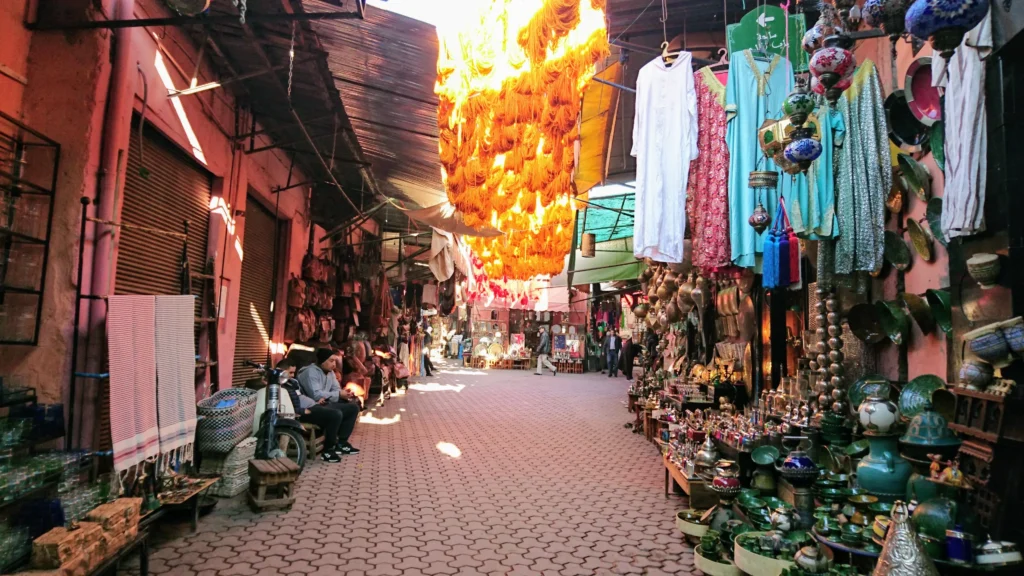
Tangier makes most sense for families already drawn to Morocco. If Morocco is on your list, our guide to Morocco with children covers Marrakech, the Atlas and the desert by age. An eclipse morning in the north is a worthwhile addition to that trip.

Luxor, Egypt
Luxor’s totality runs from about 13:02 to 13:08 local time, roughly six minutes twenty-two seconds. The maximum of six minutes twenty-three seconds falls in the desert about 60 kilometres south-east of the city. The sun will be about 82 degrees above the horizon, almost directly overhead, and the long-term average high for the date is around 42 °C.
The case for Luxor is easy to make. Six-plus minutes is a different experience from three: there is time to look, to let the children look, and to look again. The weather record is the best on the whole path, with cloud close to zero; the only concern Anderson raises is high, thin cirrus. Karnak and Luxor Temple give the trip a context that children of about nine and older can absorb.
The case against it, for families with young children, is the heat at midday. An afternoon outdoors at more than 40 °C with the sun overhead, once the excitement of the eclipse has passed, is a real welfare question for children under eight. Sunscreen does not solve it. Build the whole stay around temple visits before 09:00, the pool by 11:00 and nothing outdoors until after 16:00. On eclipse day you will be outside around 13:00 for perhaps half an hour; plan shade, water and cooling towels for that window. The Hilton Luxor Resort & Spa lists a kids’ corner, childcare on request and a children’s menu, but has no dedicated kids’ club or children’s pool. We would confirm the details for August before booking.

Eclipse Eye Safety
Glasses certified to ISO 12312-2 are the only safe way to look at the sun before and after totality. Ordinary sunglasses, however dark, do not protect the eye, and damage from looking at the sun can be permanent. Buy from a reputable supplier, check that the standard and a CE mark are printed on the glasses, and buy spares, because children lose things. Spanish authorities have already warned about counterfeit eclipse glasses.
The rule NASA gives is simple. Keep the glasses on until the sun is completely covered, take them off only during totality, and put them back on at the first sliver of returning sunlight. Never look through a camera, binoculars or a phone lens at the sun without a solar filter fitted to the front of the lens. Eclipse glasses do not protect you when you look through optics. Brief older children on the rule a few days ahead, not on the morning. With toddlers, we have found it easiest when one adult watches the sky and the other keeps the child busy with something else until the dark arrives.
Booking Now
Demand for eclipse destinations is already visible. easyJet has reported a 70 percent rise in bookings to places on the path, with Spain and Gibraltar among the strongest, and rooms in Gibraltar are scarce. We would not assume hotel prices in Tangier or Luxor are still cheap.
Our approach: book the best refundable rate you can find now, set a reminder for three or four months before the date. Then switch to a cheaper non-refundable rate only once your destination is fixed. Arrive at least a day before. Choose a hotel inside the path with its own outdoor space, so that the eclipse morning needs no driving at all, and pack glasses, spares and water the evening before.
How We Would Plan It
For families with children aged five to ten from Central Europe, we would choose the Costa de la Luz, ideally between Conil and Tarifa, where totality passes four minutes. The weather record is the best in Europe for this eclipse, flights from the German-speaking countries are short, and August on that coast is a very good beach holiday whether or not the sky cooperates.
The Gibraltar and Sotogrande corner earns serious thought for children of ten to 14 with an appetite for place. It offers more totality and a setting that turns the morning into an event, at the price of slightly worse weather odds. Tangier, a short ferry ride away, works well as an add-on for families who want Morocco in the same trip.
For families who want the longest totality and whose children cope with heat, Luxor is the choice, but only with children over eight and a schedule built around shade, the pool and early-morning temples. The eclipse is one midday moment, and every other day of the trip should be planned around the heat.
Whichever you choose, the long flight home is easier with a plan; our family logistics guide covers what we pack and arrange before every longer trip.