
A woman of about seventy stood over our six-year-old at the shower stools, held up two fingers and said nothing. Wash the hair twice, rinse the stool, then the water. The child who negotiates every bath at home did exactly that, and a minute later she was sitting in the steaming outdoor pool with a folded towel on her head, copying every other bather.
That small scene is the argument of this itinerary. Japan in winter works for families when the etiquette is learned before the first soak and the snow is booked around the child’s age. Our route is three nights in Tokyo and seven in Niseko on Hokkaido, with as little transit as the map allows. It is not cheap. One day of group ski lessons for a three-to-six-year-old costs ¥32,000 to ¥37,000 (€184 to €212 at ¥174.35 to the euro on 20 November 2026). Then there is the coach from the airport in Chitose, which takes up to 3.5 hours.
The quick version
- The route. Three nights in Tokyo, a flight of about an hour and 40 minutes from Haneda to New Chitose, then seven nights in Niseko. Add a Tokyo night at the end if your flight home leaves in the morning.
- The dates. Niseko’s lifts open on 28 November 2026. We would go between 4 January and 5 February 2027, after the New Year crush and before the peak week of 6 to 12 February, when Hanazono’s group lessons cost ¥5,000 (€29) more per child and day.
- The base. Park Hyatt Niseko Hanazono for children who are learning to ski. Higashiyama Niseko Village, a Ritz-Carlton Reserve, if the adults’ baths matter as much as the children’s lessons.
- The bath rule. No swimwear, no tattoos at most baths, and from about age seven children bathe with their own sex only. A private bath, booked by the hour, solves all three.
- Under three, skip Niseko. Group lessons start at three, and before that the trip is a childcare bill of ¥28,000 a day (€161).
- Entry. German, Austrian and Swiss passport holders need no visa for stays of up to 90 days. The electronic authorisation JESTA is planned for fiscal 2028, not for this winter.
Tokyo first, because the clock is cheaper to reset there
Japan runs eight hours ahead of Central Europe in winter, and a three-year-old ignores that arithmetic at 3 a.m. We give the clocks three nights somewhere with a deep bath and nothing to catch. We also load a Toniebox with stories at home for the flight and the first grey hour in the taxi. Its 32 GB of memory keeps the stories on the box, so once it is set up at home it needs no hotel Wi-Fi.
Palace Hotel Tokyo, facing the Imperial Palace Plaza from Marunouchi, is our base. Children’s pyjamas, bathrobes, slippers and toothbrushes are standard; cribs, baby shampoo and a washtub come on request, and you should tell the hotel in advance that children are travelling. Read the occupancy rule before you book. A child under 12 on an extra bed counts as an adult, and a room holds three adults at most. We would ask for the Palace Suite (210 to 250 square metres, two to four guests, view over the Wadakura Fountain) together with the adjoining Club Deluxe King. That pairing gives a family of four two bedrooms, and we confirm the bedding when we book.
Day two belongs to teamLab Planets in Toyosu, which you reach from Shin-Toyosu station on the Yurikamome line. Children under three are free, strollers stay outside while baby carriers are welcome, everyone walks barefoot, and in the water rooms the level climbs to an adult’s knee. The six-year-old stood in it up to her thighs for four minutes without a word. Bring dry clothes for the small ones; the house rule is one adult for every three children.
Since 1 July 2026 the departure tax has been ¥3,000 (€17) per person, with children under two exempt, and airlines normally add it to the ticket price.

Onsen with children: five rules and one workaround
The onsen is written for adults and then extended to children, so the rules are worth learning as a family before the first bath. Wash first: sit on the small stool, scrub, rinse until no soap is left, then rinse the stool and basin for the next bather. Swimwear is not allowed. Nudity is the rule at almost every hot spring, and the baths are separated by sex. The towel stays out of the water, on the edge or on your head, and long hair goes up so it never touches the bath. Nobody jumps in, nobody brings alcohol, and phones and cameras stay out of the bathing area.
Tattoos are the second trap. Most hot springs still turn tattooed guests away, small ones can sometimes be hidden under skin-coloured seals bought beforehand, and the question belongs in an email to the hotel, not at the changing-room door. Age is the third: national guidance has put the limit for bathing in the other sex’s bath at about seven since December 2020 (it was ten before). Hokkaido lowered its own rule for public baths to seven in April 2023. Each facility draws its own line, so a father with an eight-year-old daughter should not plan on a shared soak.
The workaround is the private bath. Some ryokan and hotels rent one, called kashikiri, in blocks of 45 to 60 minutes, and a family bathes together with no tattoo question, no age line and no audience for the stool routine. In Niseko a few hotels go one step further and put the bath in the suite or keep a private onsen to book; the next sections say which ones.
Our rule is short. A parent and child of the same sex use the shared bath, a mixed pair aged seven or older books the private one. Every family books the private one at least once, because that is where children learn the stool routine without an audience.

From Haneda to the snow in one day
The flight is the easy part, about an hour and 40 minutes from Haneda to New Chitose. After that Niseko is 110 kilometres away and the coach is the long part. The direct Niseko Snow Express to Hanazono takes about 2.5 hours and stops at no other hotel. The Hokkaido Resort Liner takes up to 3.5 hours, with a rest stop at Bifue Pass. Last winter the departures that serve Hanazono left the airport at 13:50 and 15:50 and reached the Park Hyatt at 17:10 and 19:10. We reserve seats on either one before we leave home. Last winter’s fares were ¥6,000 for adults and ¥5,000 for children (€34 and €29), so ask for the 2026/27 price when you reserve seats.
A private car is the better answer for a child who falls asleep in transit. The Niseko-based KS Limousine drives from Chitose, and the Reserve, which runs no shuttle of its own, points its guests to private transfers. Driving yourself means about two hours on Route 276 over snow-covered roads, and we would not start that after a long-haul day. The train works through Sapporo and Otaru to Kutchan, where Niseko Village lists a shuttle for guests (check its winter timetable), but with luggage and a pushchair it costs more effort than it saves. The Hokkaido Shinkansen is not due to reach Sapporo before the end of fiscal 2038, which means March 2039, so the airport stays the front door.
We took the afternoon coach once and would not repeat it with a child under five. The Bifue Pass stop rested nobody.

Where to sleep: three bases, one pick
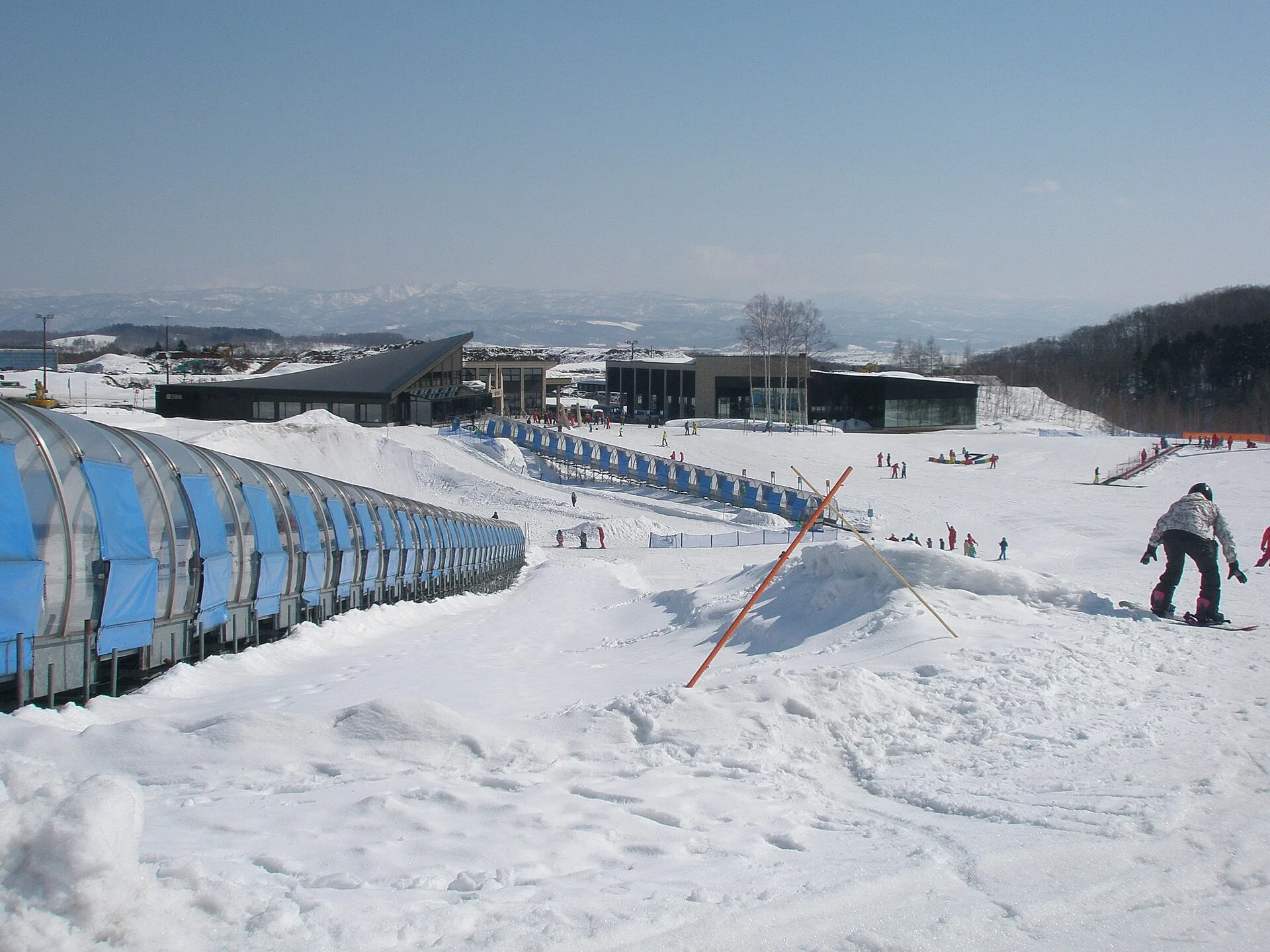
Our pick for children under ten is the Park Hyatt Niseko Hanazono, because everything a small skier needs sits within minutes of its door. The hotel is ski-in, ski-out. The ski school’s meeting point in Hanazono 308, the magic carpets and the tube park sit at the Hanazono base. The resort’s Kids Club takes children from 12 months, so ask the hotel for the walking time from your room to Hanazono 308 when you book. Hanazono’s free shuttle to Hirafu runs every 20 minutes from 28 November 2026 to 11 April 2027. Several suites have a private onsen bath, so the first soak in one of them needs no booking, no stool and no audience. Reserve one of those suites by name, because the standard rooms and some suites have no onsen bath.
Hilton Niseko Village is the practical middle. It stands beside the Niseko Gondola, has a playground for children, and an onsen that is either indoors with a panorama of the shifting seasons or outdoors by a carp pond. Children from 1.5 to 9 go to the Niseko Village Kids Club, which the next section prices.
Higashiyama Niseko Village, a Ritz-Carlton Reserve, is the grown-ups’ answer: 50 rooms and suites, unlimited complimentary indoor and outdoor onsen for guests, and a private onsen on top. The catch is logistics, because there is no hotel shuttle, and the shared baths deserve a question about which hours and ages apply to children when you book.
For a family with a six-year-old and a nine-year-old we would choose Hanazono, and keep the Reserve for the second trip, when the children ski all day and the adults want the baths.

Ski school and childcare, age by age
Under three, Hanazono’s group lessons are closed to your child and childcare takes over. Hanazono’s Niseko Kids Club takes children from 12 months to 4 years, from 9:00 to 16:30, for ¥28,000 (€161), or ¥31,000 (€178) between 20 December 2026 and 28 February 2027. A first-aid-certified babysitter comes to your accommodation in the resort area at ¥6,600 an hour (€38) with a three-hour minimum, from newborn to 15 years.
Three is the first ski age, with conditions: the child must have turned three by the start date and be toilet-trained without help. Hanazono’s Tic Tac group (ages 3 to 6, four children at most) runs from 10:00 to 15:30 with lunch in the restaurant reserved for kids’ lessons. The price is ¥32,000 (€184) in regular weeks and ¥37,000 (€212) in peak weeks, 14 December to 3 January and 6 to 12 February. Be at the activity desk in Hanazono 308 between 9:15 and 9:45, because a late child cannot join. Lessons are in English, a GPS tracker follows each child through the lesson, and three-year-olds ride free on a ticket issued at the counter.
From four, the Niseko Village Kids Club offers a Premium package: a supervised day from 8:15 to 16:15 with lunch and a 1.5-hour ski lesson (snowboard from age 5) for ¥70,000 (€401). It runs from 1 December 2026 to 28 February 2027, takes 20 children a day at most, gives 10 percent off three or more days in a row and charges ¥4,000 (€23) for each extra half hour. Lifts and rentals cost extra, and you book by email. That is roughly twice the Tic Tac price for one lesson instead of a day on the snow, so we use the Kids Club for the child who does not want to ski and Tic Tac for the one who does.
From seven, Hanazono’s Yuki group (ages 7 to 14, same hours and prices) takes over, and the adult groups start at 15 and cover Levels 1 to 4 only. Niseko United lift tickets for ages 4 to 12 cost ¥8,100 a day (€46) in the peak season from 24 December to 28 February, against ¥13,500 (€77) for adults and ¥11,500 (€66) for ages 13 to 15. Preschool rental skis start at boot size 15.5 cm, which suits a child of about 100 centimetres. We packed a Helly Hansen Rider 2 bib and a POC POCito Skull helmet for ski school, and the neon colours made the six-year-old easy to find on the first morning.
Three lesson days, one day off and an early dinner
We plan three lesson days, one day off and a soft first evening. The first evening is for a private bath and an early dinner, and the early dinner matters more than the bath. Niseko United’s four resorts share 2,191 acres of terrain, more than 47 kilometres of groomed slopes and nine gates to the backcountry. The gates are for adults who know the terrain, ideally with a guide, and with children we stay inside the marked courses, powder or not.
On the day off, Hanazono’s tube park takes children from three and comes with its own magic carpet. Silver Dream, a 3,300-metre beginner course, and the free magic carpet at Hanazono Bowl give the family a first run together. A snowmobile tour takes passengers from six years and 120 centimetres, snowshoe tours from 12.
If you sleep at Niseko Village, dinner is easy with tired children: Goshiki serves a buffet three times a day under a vaulted ceiling with mountain views, and Baby Crosta sells pizza by the slice from 11:00 to 20:00. By the third lesson day the six-year-old was skiing the beginner slope with her tongue out, and the nine-year-old had stopped asking about the gondola.

When we would not do this
Not with a child under three. Group lessons start at three, so the trip becomes a childcare bill of ¥28,000 a day (€161) while the adults ski in turns. At that age we would swap Niseko for Risonare Yatsugatake, two hours from Shinjuku on the Azusa limited express, where the Il Mare wave pool stands in for a ski school. The playroom there takes babies through preschoolers, opens from 08:30 to 17:30 in winter and keeps a parent in the room. The walk to the Moku Moku Yu baths is long and cold, and the hotel is not ski-in, ski-out.
Skip Christmas if you can. Niseko United’s peak lift prices run from 24 December to 28 February, Hanazono’s lesson peaks are 14 December to 3 January and 6 to 12 February, and the second falls in Lunar New Year week, which starts on 6 February 2027. Not in March either if you want the Niseko Village Kids Club, which closes on 28 February.
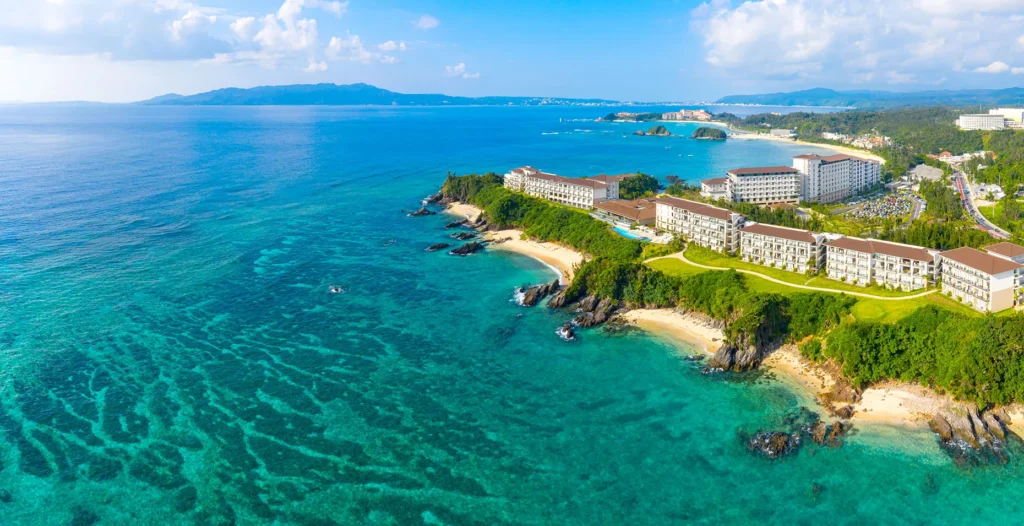
Not with a beach week tacked on. Winter is the wrong season for Okinawa: at Halekulani Okinawa the outdoor pools and the beach close early and for much of the winter, and we rate that resort for the warm months only. If the flight is the dealbreaker, our guide to family ski hotels in the Alps and Dolomites covers snow that is nearer.

If we were booking tomorrow
We would book the dates first, because the Kids Club takes 20 children a day and a Tic Tac class holds four. Then we would stage the trip by age, and our Japan collection lists the hotels we have reviewed there.
Three to six: Park Hyatt Niseko Hanazono, Tic Tac lessons between 4 January and 5 February, the direct coach or a private car, and one private soak on the first evening.
Seven to twelve: Hanazono’s Yuki group, a day of tube park and snowmobile, and a private bath for every father-daughter or mother-son pair. The Reserve if the budget allows.
Thirteen to seventeen: adult group lessons from 15, private lessons beyond Level 4, teamLab Planets on the way out, and no Kids Club at all.
Under three: Tokyo and Yatsugatake, and Niseko on the next trip.
Book Niseko if your youngest is three or older and toilet-trained, and your only free weeks sit between early January and early February. Go elsewhere if the youngest is under three or the calendar offers nothing but Christmas and Lunar New Year week.