

On the morning of a flight to the Maldives, our six-year-old asked whether this year’s Christmas presents could be the kind that come on holiday. It was the best brief we have been given, and it became the rule for this list: every gift has to remove one specific piece of friction from a family trip, at a price we would pay with our own money.
We chose the fifteen in three passes. First, what is new, newly improved or simply still the best at its job, and on sale in Germany, Austria and Switzerland before Christmas. Six of the fifteen launched in 2026, and a seventh, the Kodak, arrived in a new 2026 edition; the others are older products that we still rate above anything newer. Then, what the families we travel with keep asking us about. Last, whether each thing still earns its space in a suitcase once the wrapping paper is gone, and what its catch is, because every pick here has one and we name it. Where we have already published a full FFH review, we link it; the newest launches are still in our review queue. Prices run from about €19 to €845, and the list covers babies, teenagers and the adults who carry the passports.
The 15 picks at a glance
- Apple AirTag (2nd generation) 4-Pack, €119 list, from about €80 in the shops: one tag per checked bag, for families on iPhones.
- Oura Ring 5, from €429 plus a membership: for the parent who absorbs the jet lag, adults only.
- Carl Friedrik Carry-on (Aluminium), €845: for the traveller who loves patina and can live with 4.9 kg empty.
- Dyson Supersonic Travel, €299: for the adult who has given up on hotel hair dryers.
- Bose QuietComfort Ultra Headphones (2nd gen), €449.95 list, seen from €315: long-haul silence for teenagers and parents.
- DJI Osmo Pocket 4, from €479: for the teenager who films the holiday, kept well away from water.
- Loop Quiet 2, €19.95: for adults sleeping next to a connecting door.
- Stokke JetKids BedBox, €199: a bed on the plane for ages 2 to 7, airline permitting.
- UPPAbaby Minu V3, €399.95: for families with an under-four who fly several times a year.
- Magna-Tiles microMAGS Travel, about €19: the restaurant-table builder, ages 3 and up.
- Yoto Mini (4th generation), €99.99: screen-free stories for ages 3 and up.
- Kodak Charmera, €39.99: lo-fi keyring photos for teenagers, sold as a blind box.
- Fujifilm instax mini Link 3, €129.99 list: prints from the family phone, film extra.
- Nintendo Switch 2, €499.99: for siblings and teenagers, with games and online play extra.
- Twelve South AirFly SE, €49.95: wireless headphones on a seat-back screen, one pair at a time.
1. Apple AirTag (2nd generation) 4-Pack
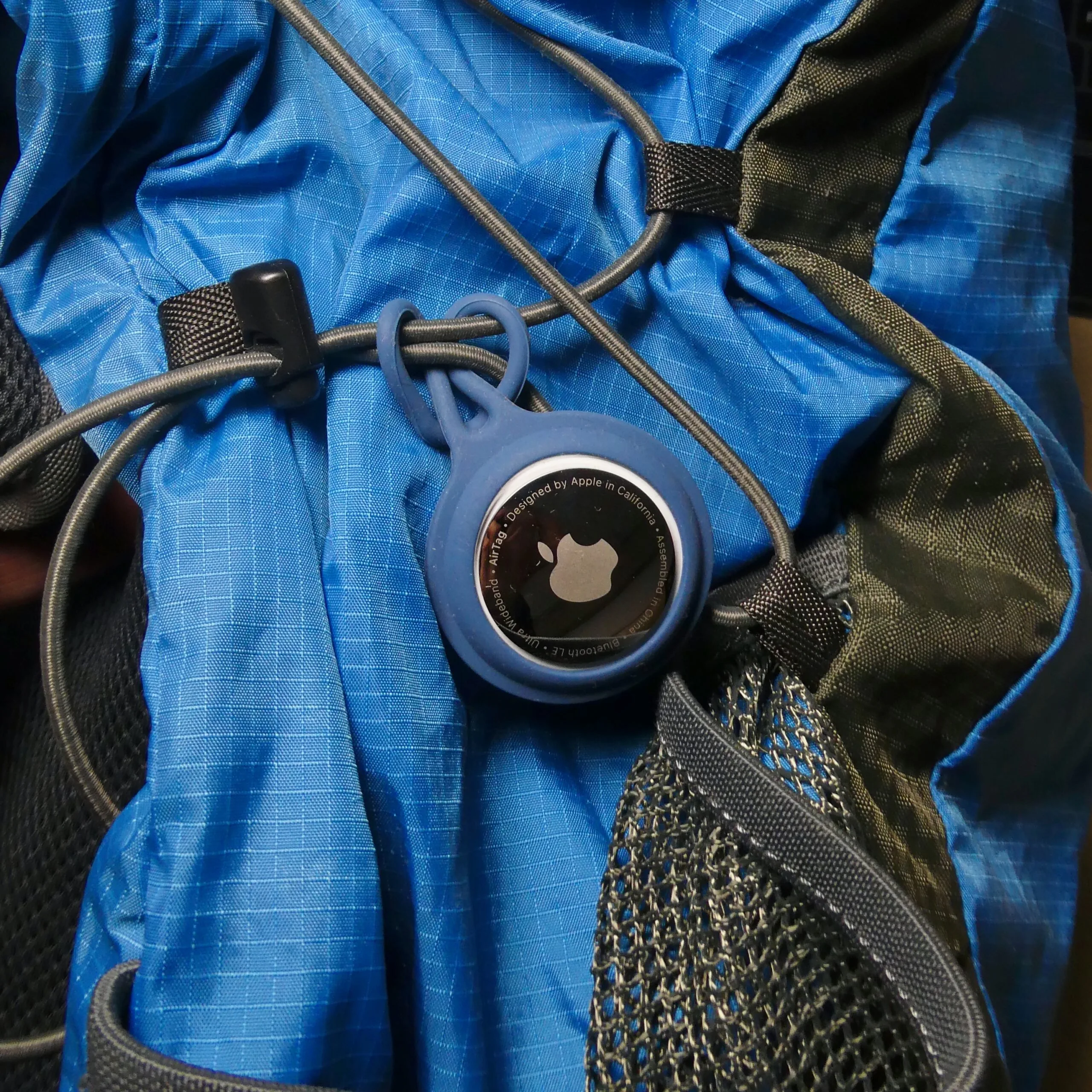
This is the least surprising gift on the list, and we put it first anyway, because nothing else at this price prevents as much misery. At the baggage belt in Zürich last February our fourth suitcase never came round, and the AirTag inside it was already showing on a map in Frankfurt, which spared us forty minutes at a claims desk with two tired children. The second-generation hardware arrived in January 2026 with more powerful Precision Finding over a second-generation ultra-wideband chip, a longer Bluetooth range and a louder speaker. Each tag weighs 11.8 g, is rated IP67 and runs for more than a year on a CR2032 cell.
Apple asks €119 for the four-pack, while the big German electronics chains and online shops have been selling it from about €80 in early November 2026, enough for a family of four’s checked bags. The catch is the ecosystem. AirTags need an iPhone on iOS 26.2.1 or later, or an iPad on iPadOS 26.1 or later, so a household where one parent carries Android gets half the benefit. They are built for luggage, never for keeping track of children, and Apple’s anti-stalking design makes that deliberate.
Pack two spare CR2032 cells in the carry-on, and read our AirTag 2nd generation review for precision finding at a busy carousel and the more than 50 airlines that accept a shared tag location.
2. Oura Ring 5

On the second morning in Mauritius, after a night flight and a toddler who considered four o’clock a fine hour to start the day, one of us opened the Oura app over breakfast and saw in a single number why everything felt like wading through porridge. That is the gift: a sleep and recovery tracker discreet enough to vanish on a finger, for the parent who absorbs a family’s jet lag first. Oura announced the Ring 5 on 28 May 2026 and made it 40 per cent smaller than the Ring 4. It is 6.09 mm wide and 2.28 mm thick, weighs from 2 g, has a titanium shell and is waterproof to 100 m. A charge lasts 6 to 9 days depending on ring size and use, and a full top-up takes about 80 minutes.
Silver and Black cost €429 in Oura’s German store, and the Gold, Deep Rose, Stealth and Brushed Silver finishes €529; we saw Silver at €393.90 in early November 2026. The ring is only half the bill. Full insights need an Oura membership at €5.99 a month or €69.99 a year after a free first month, and without it the app shows far less. Order a sizing kit first, because a guessed size ends in a return. The charging case costs extra, and the ring works with iPhone and Android, with the app in German.
The ring is not intended for anyone under 18, so this is a present for a parent or grandparent and never for a teenager, and it belongs out of reach of small children, who treat anything small and shiny as a snack.
3. Carl Friedrik Carry-on (Aluminium)

Aluminium cases age like a good leather bag, and that is both the pleasure and the problem. Carl Friedrik launched its first aluminium collection in March 2026, and the Carry-on is its opening piece: 55 x 38 x 23 cm, 41 litres, an anodised shell with steel rivets, vegetable-tanned leather details, TSA combination locks, a compression pad, a zipped pocket, an any-stop telescopic handle and Japanese Hinomoto spinner wheels. On the long walk to a far gate in Munich it rolled over the terminal stone with barely a whisper, the one bag in our group nobody offered to carry for anyone else.
It costs €845 in all three colourways, Silver/Black, Silver/Chocolate and Silver/Cognac, with free shipping and 60-day returns, and delivery was promised for 9 to 10 November when we checked in early November 2026. The weight is the trade: 4.9 kg empty. Against Lufthansa’s 8 kg cabin allowance for a 55 x 40 x 23 cm bag, that leaves about 3.1 kg for everything else, which is not much for a parent who also carries the children’s spare clothes. The lifetime warranty covers functional damage to wheels, handle, locks, leather handles, zip pullers and lining, and it explicitly excludes cosmetic wear such as scratches, dents and abrasions from regular use.
Expect marks after the first gate check, and decide in advance whether you love patina. For a lighter, cheaper case from the same brand, the polycarbonate Carry-on Core costs €425 and weighs 3.15 kg; it belongs to an older range and is no novelty, yet it is the smarter choice for a parent who rarely boards without a child on one hip.
4. Dyson Supersonic Travel

Hotel hair dryers come in two kinds: the wall-mounted hose with the strength of a sigh, and the one in the drawer that smells faintly of burning. The Dyson Supersonic Travel, on sale in Germany since 21 April 2026, is for the parent who has given up on both. It weighs 331 g, measures 222 x 68 x 71 mm, runs on 100 to 240 V at 1,000 to 1,220 W with a 2 m cable, and has three heat and two speed settings. Dyson made it 32 per cent smaller and 25 per cent lighter than the standard Supersonic, and ours slid into the side pocket of a cabin case beside the swimming things.
The list price is €299, and we saw it at €258 in early November 2026. Two compromises showed up on the first evening. Airflow is deliberately lower than on the full-size machine, so after a pool afternoon, drying a ten-year-old’s long, thick hair took us noticeably longer than at home, and it has no scalp-protection mode. The box also holds just the dryer and one styling nozzle: the diffuser, comb, smoothing nozzle, flyaway and gentle air attachments cost extra. Compatibility covers only the Supersonic and the Supersonic Nural, whose owners can use the attachments they already have.
Universal voltage only helps with the right plug, so pack an adapter for trips outside Europe, and give this to the adult who already owns a Supersonic at home and will notice the difference on every morning of the holiday.
5. Bose QuietComfort Ultra Headphones (2nd gen)
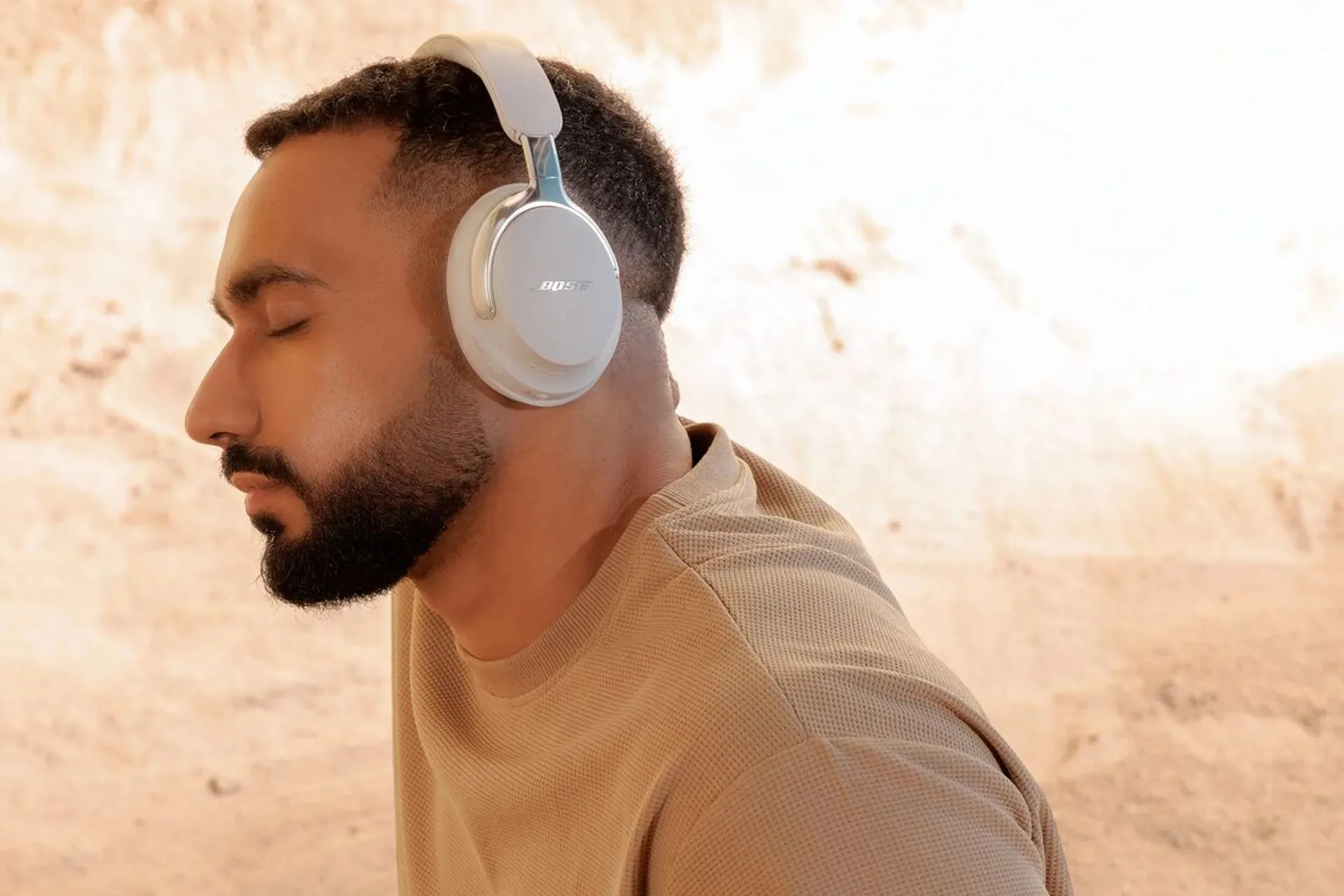
On a night flight to Singapore, with the engines at full drone and a baby two rows back working through every register it had, we watched our teenager fall asleep in these within twenty minutes. Bose launched the second-generation QuietComfort Ultra in September 2025, and it is still the current model: 260 g, Bluetooth 5.4, up to 30 hours of playback in Quiet and Aware modes (23 hours with 360-degree sound), and a full charge in three hours, with listening possible while charging over USB. Lossless audio works over the USB-C cable from a compatible source, and the audio cable for the seat-back screen comes in the box.
Bose lists them at €449.95, and in early November 2026 we found them from about €315 in the shops, depending on the colour, which changes the maths considerably. The power adapter is not included, only the cable, and switching on 360-degree sound costs seven hours of battery. We have lived with Sony’s flagship too, and our Sony WH-1000XM6 review covers the closest rival; if the recipient already owns a recent pair of either, this is a nice present and not a necessary one.
For teenagers, a conversation about listening levels belongs with the wrapping paper; noise cancelling makes it easier to keep the volume low on a plane, and that is the argument we would make to any fourteen-year-old.
6. DJI Osmo Pocket 4

The best family footage we own was filmed by a child who was trusted with the camera. That is the case for the Osmo Pocket 4, a 1-inch-sensor camera on a tiny stabilising gimbal that DJI announced on 16 April 2026 and shipped from 22 April. On a dhow off Muscat at sunset our thirteen-year-old filmed the whole crossing one-handed, and the horizon never tilted once. It weighs 190.5 g, measures 144.2 x 44.4 x 33.5 mm, records 4K at up to 240 frames per second through an f/2.0 lens, and saves to 107 GB of built-in storage or a microSD card. The 1,545 mAh battery manages up to 240 minutes of 1080p recording and reaches 80 per cent in 18 minutes on DJI’s 65 W charger, which is sold separately.
The Standard Combo lists at €499. The Creator Combo, at €619, adds a wide-angle lens, a DJI Mic 3 transmitter, a fill light, a mini tripod and a bag, and an Essential Combo starts at €479. In early November 2026 we saw the Standard at €439 and the Creator at €509. A dual-camera Pocket 4P has joined the range since July 2026 at a higher price, and for a family the single-camera Pocket 4 is the better buy.
The catches are physical. It is not waterproof, so it stays off the snorkelling boat and out of the pool bag. Wireless microphones pair directly from DJI’s own range (Mic 3, Mic 2 and Mic Mini), and lossless zoom stops at 2x. Give it to a teenager who already edits on a phone, or to the parent who wants the holiday film to look like more than a shaky clip.
7. Loop Quiet 2

Hotel walls, connecting doors and a partner who snores after a long-haul: the €19.95 gift on this list may get more nights of use than anything else here. Loop Quiet 2 earplugs are soft, reusable silicone, rated at up to 24 dB of noise reduction, and the box holds one pair, four sets of tips from XS to L and a carry bag. They came out in May 2024 with redesigned tips that fit small ears.
In a connecting family room in Vienna, where the children’s door opened at 6:10 every morning, the parent wearing them slept through the first two rounds of negotiations. At up to 24 dB they are not the strongest earplugs, so a loud snorer still gets through, and one night a plug worked loose and needed pushing back in. Loop sells them for €19.95 in its own shop with a two-year warranty and 100-day returns; elsewhere we saw €24.95 in early November 2026.
This is an adult product, and Loop makes a separate kids’ range from age six, so buy the grown-ups a pair each and slip them into the stocking with a note about the connecting door.
8. Stokke JetKids BedBox
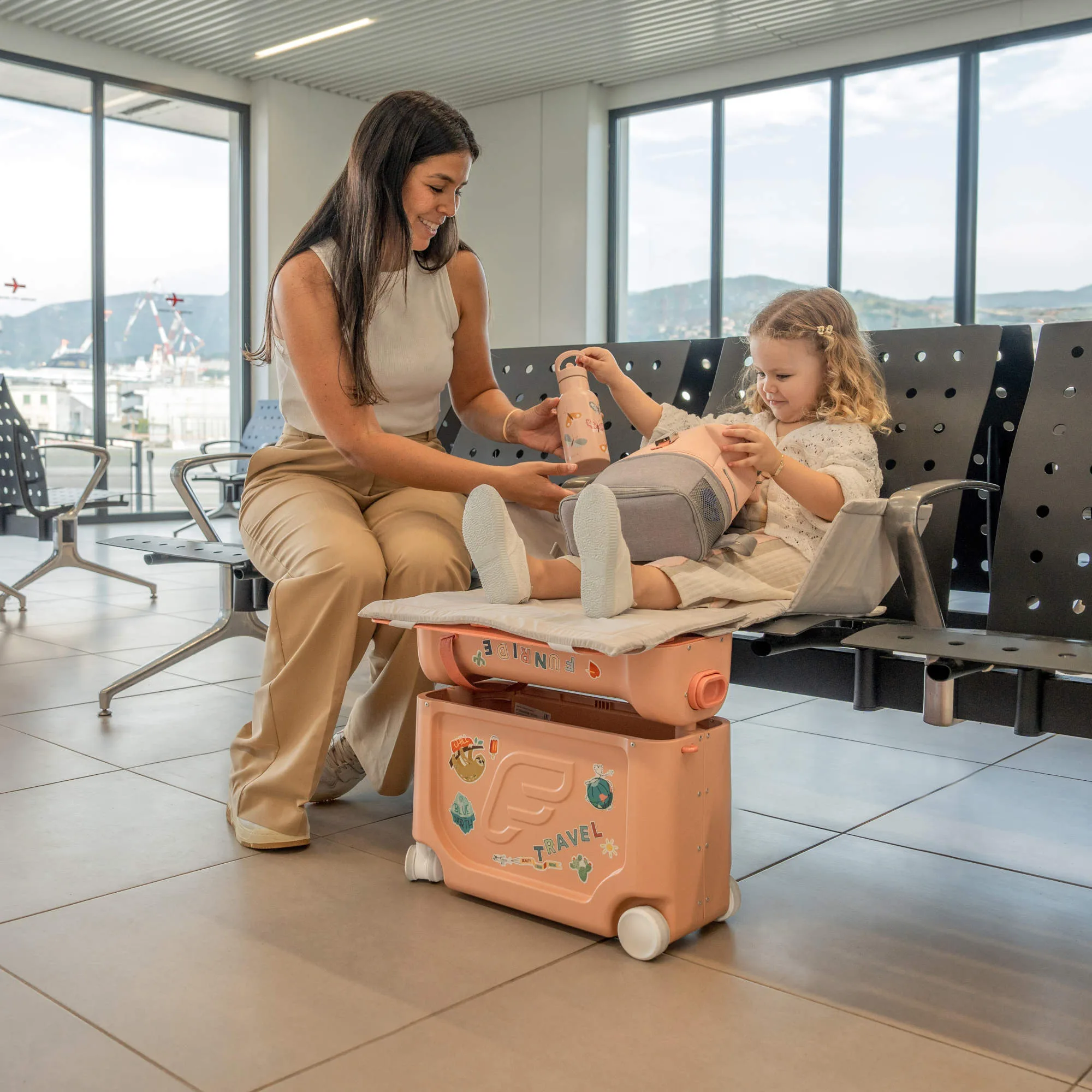
A four-year-old on an overnight flight has nowhere to put their legs. The BedBox solves that in three acts: through the terminal it is the child’s own ride-on carry-on (3 kg, 47 x 20 x 39 cm, 19 litres inside), under the seat it is luggage, and after dinner service its lid extends the seat surface to turn a window seat into a flat little bunk with a mattress and soft side panels. On the long run out to Jean-Michel Cousteau Resort in Fiji it was the difference between a child who slept six hours and a child who watched cartoons until landing.
At €199 it is excellent value for a narrow window: ages 2 to 7, a window or middle seat (never an aisle or exit-row seat), and the right airline. The bed function is for the cruise phase only, the box is stowed for taxi, take-off, landing and turbulence, and it is not a child restraint, so the seat belt stays on. Children under 36 months should not use it as a ride-on suitcase, so for a two-year-old it is a bed first. The approved-airline list includes British Airways, and crew still decide on the day. Lufthansa, Austrian and Condor were not on that list on 5 November 2026, although SWISS was, and airlines without a written policy often still allow it. So check that list and the airline’s own rules for the carrier the recipient flies most before wrapping it, and expect the BedBox to retire on the child’s eighth birthday.
The airline-by-airline detail, and how the leg-rest behaves on different seat pitches, is in our Stokke JetKids BedBox review.
9. UPPAbaby Minu V3

Every travel stroller promises the overhead bin. The Minu V3 is the one we would give a family that flies and then walks: it weighs 7.6 kg, folds one-handed to 25.4 x 45 x 54.6 cm, and still has suspension on all four wheels, a seat that reclines steplessly to lying flat, a three-position footrest, a five-point harness, a UPF 50+ canopy with a mesh window and a basket rated to 9.1 kg. On the cobbles of Lisbon’s old town it rode like a full-size pushchair, and at the aircraft door it folded with a sleeping two-year-old on one shoulder. The seat takes a child to about 22 kg, roughly four to five years old.
It is IATA-compliant, and most airlines should accept it as cabin baggage, which is a statement about most carriers and never about yours, so measure it against your airline’s limit before the first flight. From birth it works with a compatible infant car seat such as UPPAbaby’s Mesa i-Size, or with the separate bassinet, and adapters for Maxi-Cosi, Cybex and BeSafe seats are sold separately.
It costs €399.95 in UPPAbaby’s German shop with a three-year warranty and the rain cover in the box. The bumper bar, cup holder, snack tray, car-seat adapters and travel bag are all extra. Give it to a family with a child under four and three or more flights a year, or to anyone whose old stroller has spent one holiday too many in an aircraft hold.
10. Magna-Tiles microMAGS Travel

Twenty minutes is a long time at a restaurant table in Seville when dinner starts at nine. The microMAGS Travel Set bought us those twenty minutes on three evenings in a row, with a seven-year-old building a magnetic house on the lid of its own tin. The set holds 26 pieces (12 squares, six equilateral triangles, four right-angled and four isosceles triangles), and the metal tin is both the storage box and a magnetic building base. The tiles are 75 per cent smaller than classic Magna-Tiles and connect to any existing set, and the tin measures about 19 x 8.5 x 2.5 cm and weighs about 320 g.
It costs about €19 from independent sellers in German online shops, since the brand’s own store ships only within the US, and a 55-piece Deluxe version costs €35.95. At this price it is the most useful stocking filler we know for a long dinner or a delayed gate.
Two warnings belong with this gift. The pieces contain small magnets and are not for children under three: swallowed magnets can attract each other inside the gut and cause serious injury, so anyone who suspects a swallowed piece needs a doctor at once. Buy the original set from a named maker, because it carries the EU safety warnings, and count the pieces back into the tin before leaving the table, because small tiles vanish under restaurant banquettes.
11. Yoto Mini (4th generation)

Yoto announced its fourth generation on 10 September 2026, and for travel the small one is the one to buy. The Yoto Mini 4th generation was due to dispatch from 30 September 2026: a 7.5 x 7 x 5 cm speaker that weighs about 185 g, is rated IP67 against dust and water, and plays stories and music from cards a child slots in alone, with no screen and no phone in sight. In a dim hotel room after lunch, with a three-year-old who refused to nap, it bought us the quietest hour of the holiday.
It costs €99.99. The new Yoto Player 4th generation, at €129.99 and due to dispatch from 15 October, is the home and bedroom version: 763 g, 64 GB, up to 16 hours of battery, a full-panel night light and a new Green Button that plays up to 20 favourites without a card. Interactive Yoto cards do not yet work on either 4th-generation player, a gap that is meant to be temporary, so leave interactive cards off the shopping list for now. Both are for ages three and up, and the charging cable belongs to the adults.
Budget for content: single cards cost roughly €7 to €15 each in Yoto’s EU shop, and each one needs Wi-Fi once to download before it plays offline, so load them at home the week before the trip. If price matters more than the newest hardware, the Mini 2024 Edition costs €74.99 and is the subject of our Yoto Mini review, while the 3rd-generation big player still sells for about €99 and appears in our Yoto Player review.
12. Kodak Charmera
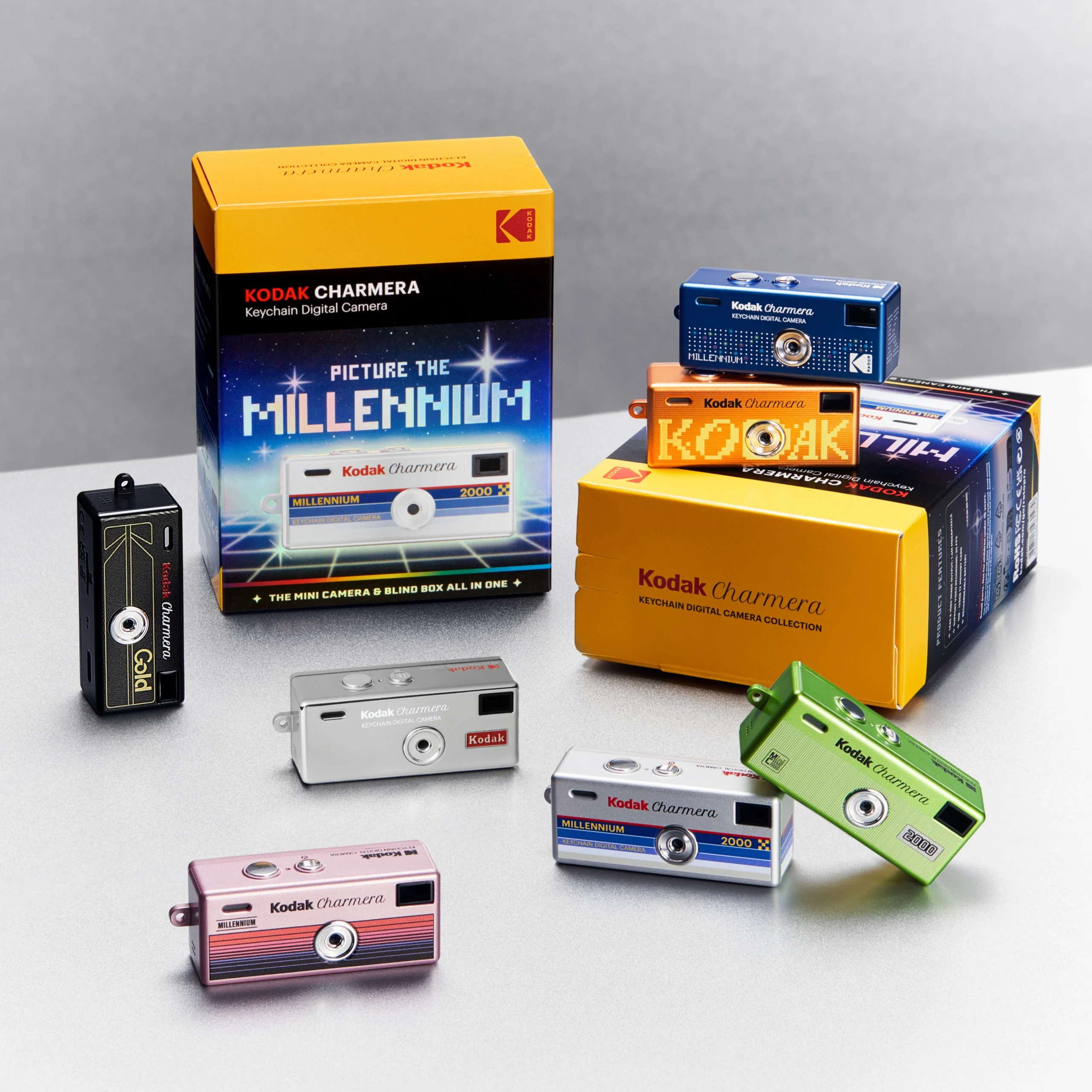
The smallest camera in our bags this year cost less than a hotel club sandwich and produced the photos our nine-year-old later pinned to her bedroom wall. The Kodak Charmera is a keyring digital camera, about 30 g and 58 x 24.5 x 20 mm, with a 1.6-megapixel sensor, a 35 mm-equivalent f/2.4 lens, 1440 x 1080 video, a date stamp, four frames and seven filters. It looks like a toy, and that is the appeal: a child can hang it off a backpack zip and photograph the breakfast buffet, the lift buttons and the cat on the hotel wall without anyone worrying about a phone.
Each box costs €39.99 and contains one camera, a keyring and a USB-C cable, with no microSD card, so buy one alongside. The catches are part of the design. It is sold as a blind box with seven designs, one of them secret, so a child cannot choose the colour, and the odds on the secret Millennium Edition design are 1 in 48. Pictures are soft and weak in low light, and the camera is not waterproof. The Millennium Edition that arrived in July 2026 brings new finishes, frames and filters on the same hardware.
The recommended user age is 15 and up, so we would give it to a teenager, or to a younger child only with a parent in charge of the battery and the small parts, as lo-fi fun beside the family’s real camera.
13. Fujifilm instax mini Link 3
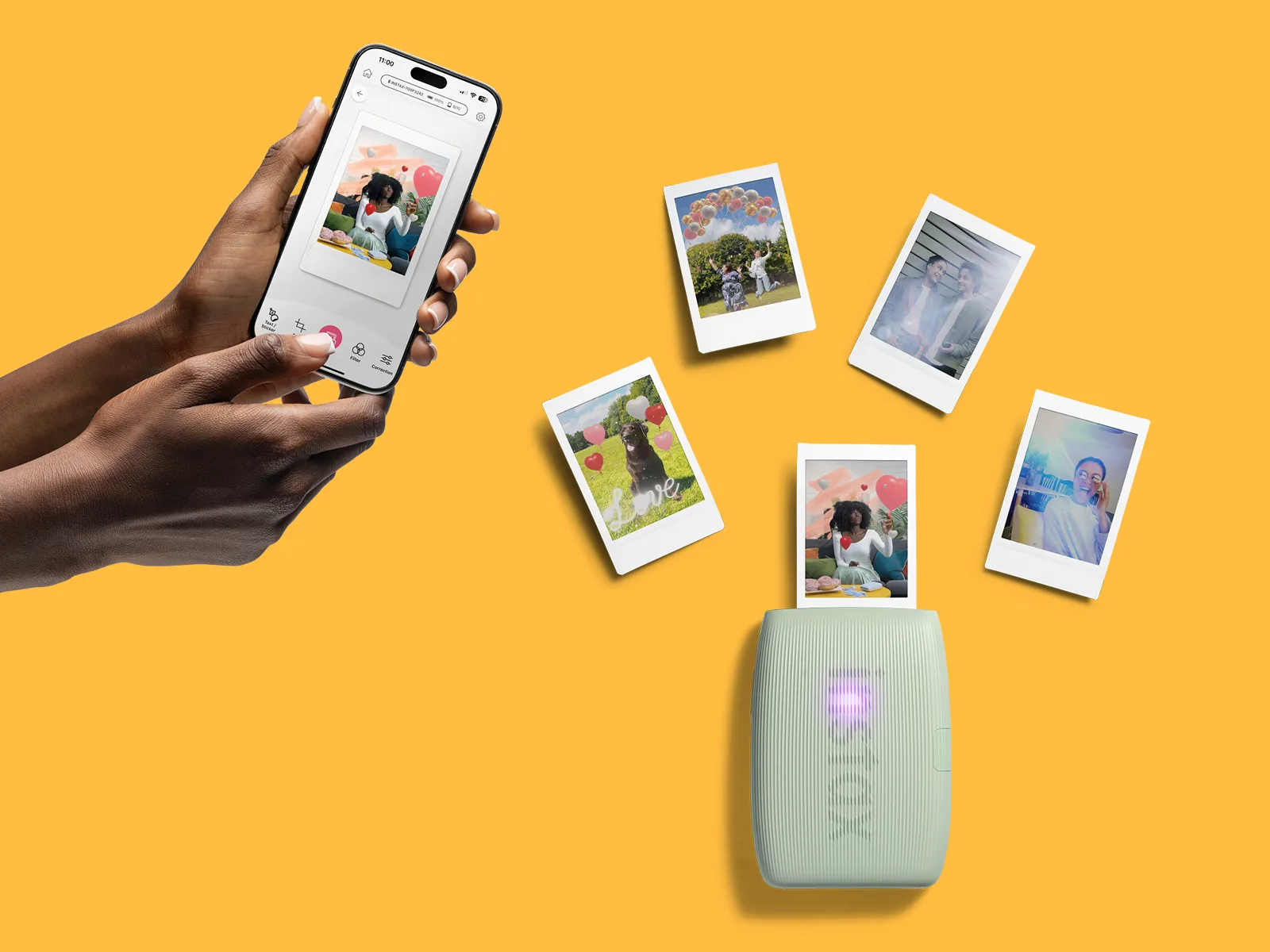
Our phones hold eleven thousand holiday photos and our fridge holds nine. The instax mini Link 3 closes that gap: a pocket printer, 210 g and 90 x 37.3 x 125 mm, that prints from a phone over Bluetooth onto instax mini film in about 15 seconds, with the image developing in about 90. Prints are 62 x 46 mm at 800 x 600 dots, and the free app adds collages, AR effects and a six-shot photo-booth series, while the power button doubles as a remote shutter for the group shot on the terrace. The built-in battery manages about 100 prints per charge and refills over USB-C in 1.5 to 2 hours.
It lists at €129.99 in Sage Green, Clay White or Rose Pink, and we saw it at €100.90 in early November 2026. Film is not included and is the running cost, roughly €1.10 to €1.20 a print, so wrap two packs with it. There is no printing without a phone and the app. On a rainy afternoon in the Dolomites our children printed the whole week and taped it to the wardrobe door, and every print came home in a coat pocket.
Our Instax Mini 12 review covers the camera route (the Mini 12 at €69.99, since succeeded by the Mini 13 at about €83); the Link 3 suits children who already shoot on a family phone or tablet, and parents who would rather print the good one than all of them.
14. Nintendo Switch 2

A games console on a family-travel list needs a reason, and ours arrived during a nine-hour delay in Doha, when two siblings who had agreed on nothing since breakfast sat shoulder to shoulder over one screen for three hours. The Switch 2 launched on 5 June 2025 and has a 7.9-inch 1080p touchscreen at up to 120 Hz, 256 GB of storage and a dock that outputs 4K to a hotel television. It weighs about 534 g with the Joy-Con 2 controllers attached, or about 548 g in the newer version with a user-replaceable battery, and buyers cannot always choose which of the two they get.
The price went up. Nintendo’s German store has charged €499.99 for the standalone console since 1 September 2026, against a launch price of €469.99, and we saw it at €483.97 in early November; the Mario Kart World bundle, with the game as a download and three months of Switch Online, costs €549.99. No game comes in the standalone box, and online play needs a paid Nintendo Switch Online membership. Handheld battery life runs from 2 to 6.5 hours and a full charge takes about three, so a long-haul flight needs a seat with a socket or a plan.
Set up the parental controls before Christmas morning. Under-16s need a parent’s permission before every GameChat session and can talk only with parent-approved friends, all handled in the Nintendo Switch Parental Controls app. With that done, it is the best answer we know to a 40-minute ferry queue in August.
15. Twelve South AirFly SE

The cheapest fix on this list solves a problem every family with wireless headphones meets in row 34: the screen has a 3.5 mm socket and nobody packed a cable. The AirFly SE is a Bluetooth transmitter of about 15 g and roughly 45 x 32 x 10 mm that plugs into the socket and sends the film to one pair of wireless headphones or earbuds for up to 20 hours, with its own volume buttons and a double-tap mute. It has been around since 2022, and it is still the smallest answer we know.
The first pairing tested our patience: AirPods have to sit in their open case, and the link took close to 90 seconds in a dark cabin. After that it reconnected every time we needed it. It handles one pair only, so two children watching need two units or the €69.95 AirFly Pro 2. It comes with a USB-C charging cable and no two-prong airline adapter, and it is useless on aircraft whose screens have no 3.5 mm socket.
It costs €49.95 from Twelve South with a two-year warranty, and we saw it at €44.80 in early November 2026, with prices swinging a lot around sales. Pair it with the Bose or a child’s Bluetooth headphones, and keep it in the same zip pocket as the passports.
How to choose
Start with the child, because several of these have hard limits. For babies and toddlers: the UPPAbaby Minu V3 from birth with a car seat or bassinet, the JetKids BedBox from two, and the Yoto Mini and the microMAGS from three, the tiles only with a grown-up counting magnets. For primary-school children, roughly six to eleven: the Yoto Mini, the microMAGS, the instax mini Link 3 and, with the parental controls set, the Switch 2. For teenagers: the Switch 2, the DJI Osmo Pocket 4, the Kodak Charmera, the Bose headphones and the AirFly SE. For parents and grandparents: the Oura Ring 5 (18 and over only), the Carl Friedrik case, the Dyson, the Loop Quiet 2 and the AirTags.
Then the budget, with the prices we found in early November 2026. Under €50: the Loop Quiet 2 at €19.95, the microMAGS Travel at about €19, the Kodak Charmera at €39.99 and the AirFly SE at €49.95. From €50 to €150: the AirTag 4-Pack from about €80 in the shops (€119 list), the Yoto Mini at €99.99 and the instax mini Link 3 at €129.99, seen at €100.90. From €150 to €500: the JetKids BedBox at €199, the Dyson at €299 (seen at €258), the UPPAbaby Minu V3 at €399.95, the Oura Ring 5 at €429 before the membership, the Bose at €449.95 (seen from €315), the DJI Standard Combo at €499 and the Switch 2 at €499.99. Above €500: the DJI Creator Combo at €619 and the Carl Friedrik Carry-on at €845.
Last, match the gift to the trip the family actually takes. A stroller for a family whose youngest is six, a BedBox for an airline that does not allow it, or a smart ring for a fifteen-year-old is money wasted, no matter how good the product is. Above €300 we ask one question first: do they already own something that does the same job? A perfectly good stroller or a recent pair of noise-cancelling headphones moves the present further down this list.
How we shop for travelling families
We pick for friction: each product here had to fix a moment we recognise from our own family trips, and keep its place in the luggage after the novelty fades. No brand paid to appear, and none can buy a place, a ranking or a score. Some links on this page are affiliate links, which help fund our reviews without changing a verdict. Prices are the ones we found in early November 2026 and move quickly before Black Friday and Christmas, so check the price on the day you order, and order by mid-December if the gift has to arrive in time.