Where to point a family at the snow in 2026: the resorts built for small legs and short tempers, the months that won’t bankrupt you, and the one Olympic-sized crowd to dodge.
The quick version
- The best family ski resorts win on logistics, not vertical: car-free or ski-in/ski-out, childcare from months (not just age 3), and a nursery slope you can see from breakfast.
- Best value-and-calm windows for families: mid-January to early February, and after 20 March. Avoid Christmas/New Year and the mid-February European half-term spike.
- 2026 only: the Milan-Cortina Winter Olympics (6-22 Feb) make Cortina crowded, pricey and partly restricted – choose quieter family resorts instead.
- Dolomites/South Tyrol have Europe’s strongest family-hotel infrastructure (Cavallino Bianco the benchmark); Austria’s Serfaus-Fiss-Ladis is the leading purpose-built family resort.
- Switzerland is the car-free, snow-sure splurge (Arosa, Saas-Fee); France is value-and-scale with bundled ski-school-plus-childcare (Avoriaz, La Plagne, Les Gets).
- Mountain-hut food is a family superpower – build the day around an early, long lunch in the sun and keep afternoons short.
What this guide is (and the 2026 catch)
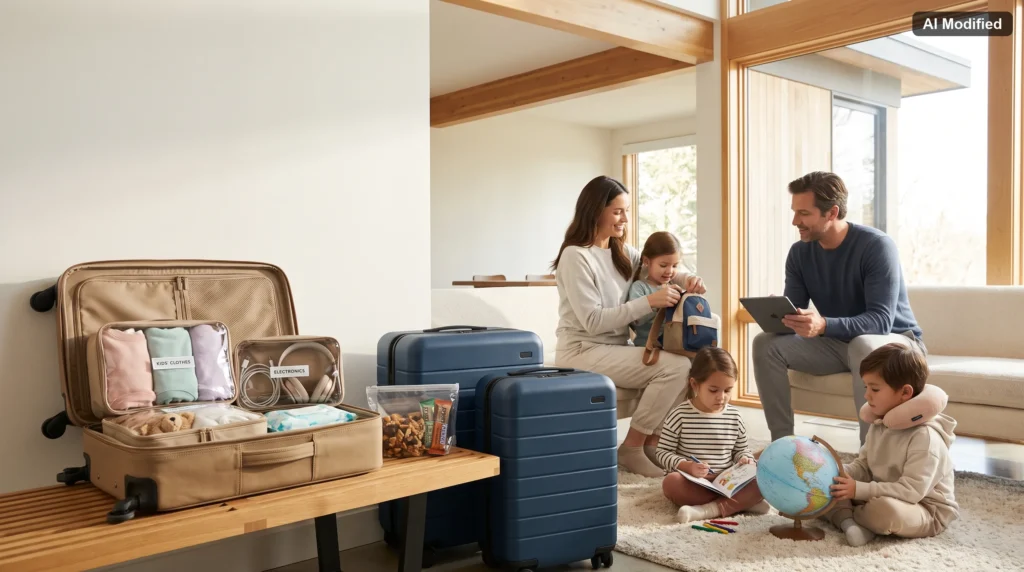
Family skiing is a logistics sport before it is a snow sport. The skiing is the easy part. The hard part is the eight-thirty scramble: boots, gloves, the second glove, the lift pass that vanished, the toddler who has decided, definitively, that today she is a cat. The resorts that make family skiing joyful aren’t the ones with the most vertical. They’re the ones that shave friction off that morning: childcare that starts before the lifts do, a nursery slope you can see from the breakfast table, and a village you can cross without a car.
This is our shortlist of the places that get that right across the Alps and the Dolomites, plus when to go and how to think about it. One 2026 note for context: the Winter Olympics came to Milan and Cortina d’Ampezzo in February 2026, and Cortina and its immediate slopes were busy, pricey, and partly restricted around the Games. Good news for families: you didn’t want the Cortina circus anyway. The quietly brilliant family resorts sit elsewhere, and that’s exactly where we’re sending you.
When to go: the family sweet spots
Get the timing right and you change the entire trip: the price, the queues, the temper of the lift queue. Three windows matter for families.
- Mid-January to the start of February. The single best family window. The Christmas-New Year peak has cleared by the 6th, prices drop, the slopes empty out, and the snow is deep and cold. The trade-off is proper cold and short-ish days, but for under-tens who ski for two hours and hot-chocolate for four, that’s no loss.
- March, especially after the 20th. Our quiet favourite for little ones. Longer days, real sun on the terraces, softer afternoon snow that’s kinder to nervous beginners, and prices well off their peak. Stay high (Val Gardena, Kronplatz, Obergurgl, Saas-Fee) and the snow holds beautifully.
- What to dodge. Christmas and New Year (peak everything), and the European half-term wave from roughly the second week of February, when the big Italian and French resorts fill and rates spike. And in 2026, Cortina during the 6–22 February Olympics.
One more lever most families miss: altitude versus warmth. In deep January, go high: the snow is guaranteed and the cold is the point. But a shivering four-year-old learns nothing, so if you’re travelling with the very young, a lower, sheltered, sun-trap village (Les Gets, the Alpe di Siusi plateau) in March is often kinder than a glacier in January. Match the mountain to the child, not the other way round.
The Dolomites & South Tyrol
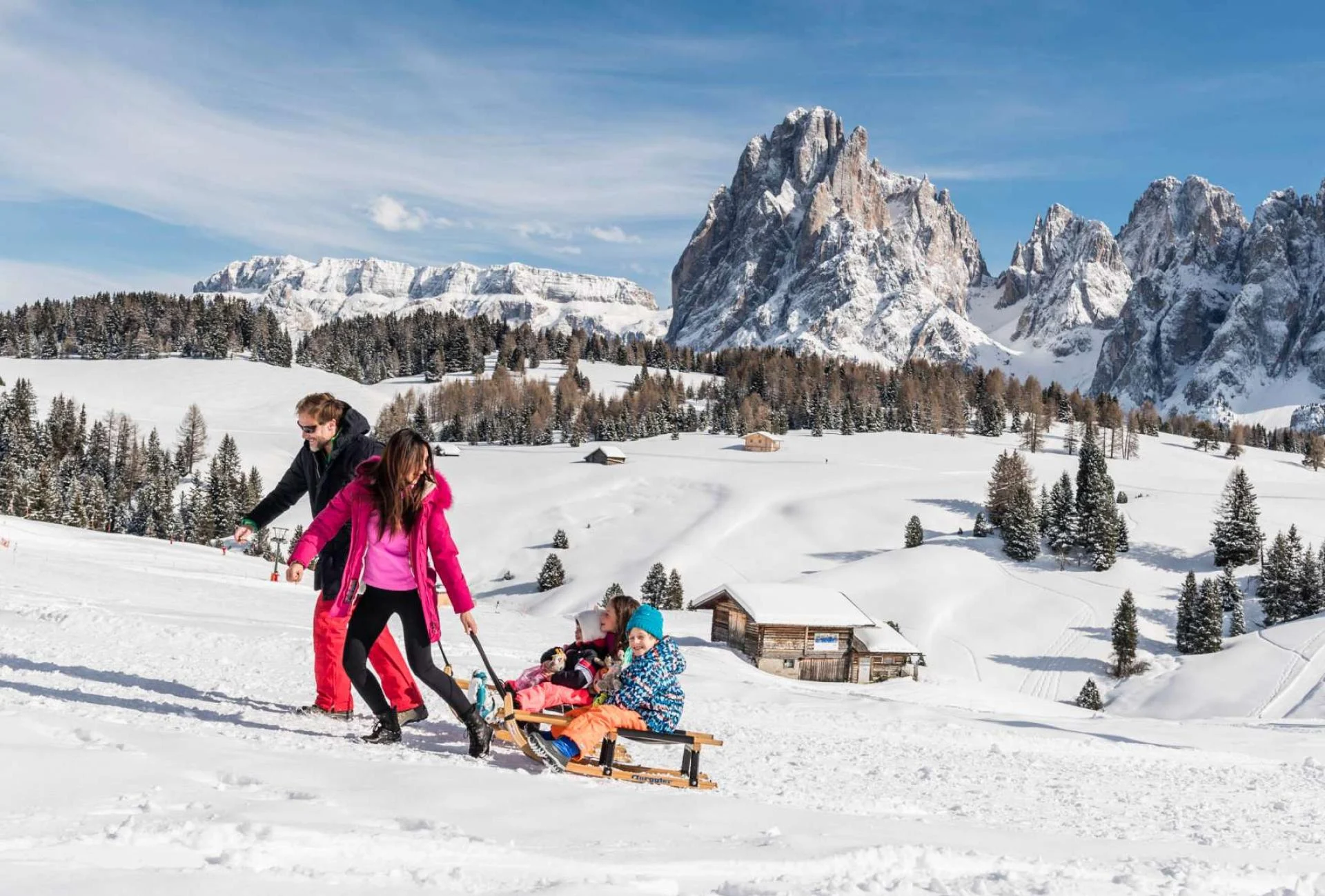
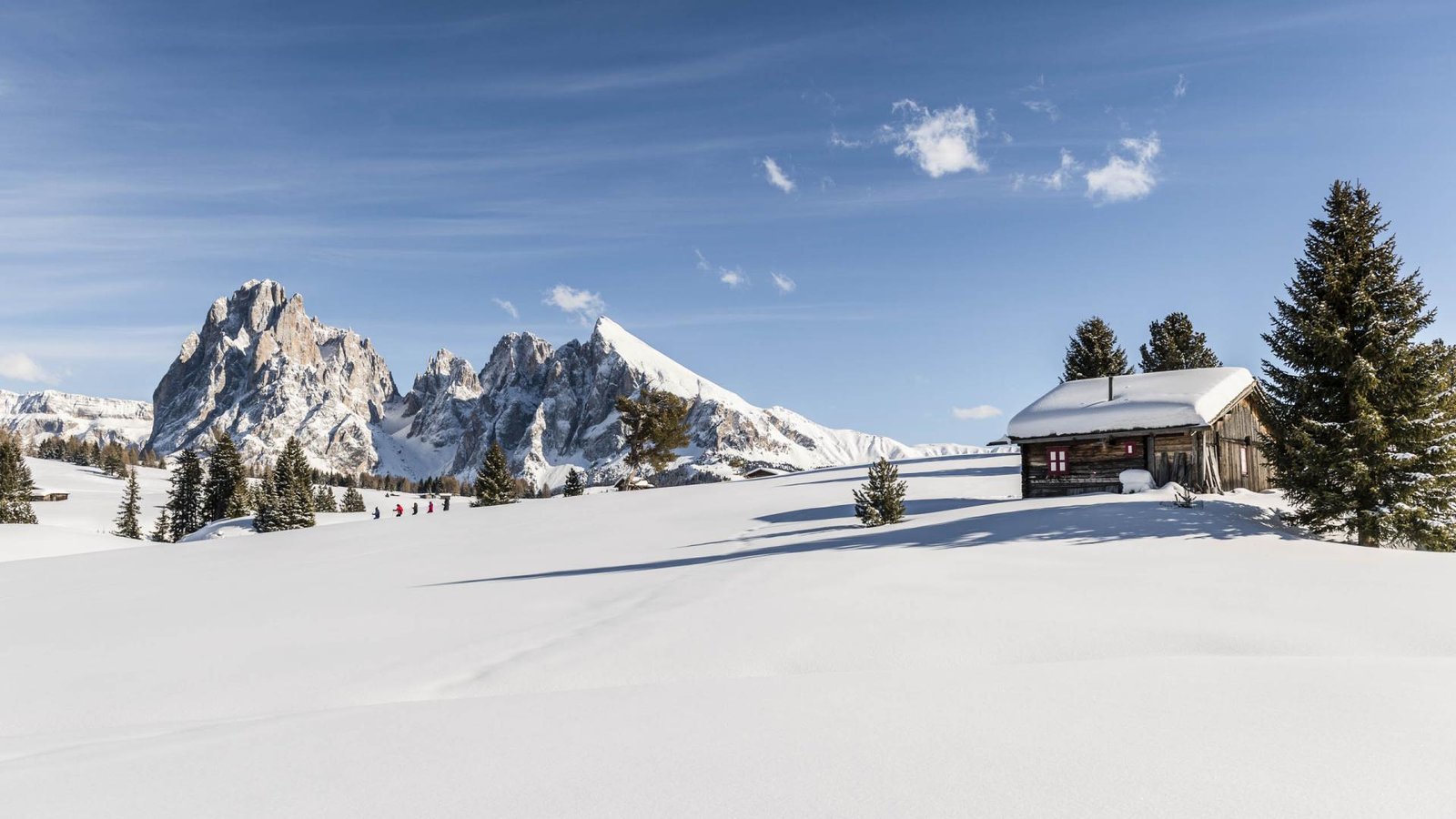
If you want the postcard (pink-grey peaks, espresso that means it, mountain huts serving things a child will actually eat), this is the region. The skiing is gentle and sun-soaked, the family infrastructure is the best in Europe, and South Tyrol’s bilingual, almost obsessively organised hospitality is tailor-made for the eight-thirty scramble.
- Val Gardena / Ortisei. Home to the property other family hotels are measured against: the Cavallino Bianco Family Spa Grand Hotel, where childcare runs thirteen hours a day from one month old across a 1,250 m² kids’ world, the wellness area sprawls over 2,900 m² with six pools, and you can ski back to the door off the gentle Alpe di Siusi plateau. Six-time winner of “best family hotel in the world” in guest votes, and the reviews are unusually unanimous: parents describe actually resting. The beginner terrain on Alpe di Siusi is some of the friendliest in the Alps.
- Alta Badia. Wide, forgiving, sunny pistes and the Dolomites’ celebrated gourmet huts. This is the rare place a long lunch is a highlight rather than a hostage situation. Strong ski schools, lots of blue terrain.
- Kronplatz (Plan de Corones). The region’s snow-reliability champion, with broad rolling family runs and fast lifts that don’t leave small skiers dangling in the cold.
- Lüsen & the Plose, near Brixen. Quieter, more local, and the home of one of our favourite design-led family stays: read our review of Sonnwies in the Dolomites, which pairs a proper snow garden and crèche with the kind of architecture that doesn’t insult the grown-ups.
Austria
Austria does family skiing with a kind of warm efficiency: hut culture the kids adore (Kaiserschmarrn and Germknödel solve most meltdowns), gentle blues for days, and resorts that have been refining their kids’ programmes for decades.
- Serfaus-Fiss-Ladis. Widely regarded as Austria’s leading family resort, and it feels designed by parents. Two vast children’s snow worlds (the Kinderschneealm in Serfaus and Berta’s Kinderland in Fiss) come stuffed with igloos, play equipment and a snow disco; professional childcare runs from birth; and Serfaus is car-free, with a little underground railway that becomes part of the holiday for every five-year-old. English-speaking instructors are plentiful.
- Gosau / Dachstein West. Our anchor in the Salzkammergut: read the FFH review of Kinderhotel Dachsteinkönig, whose complimentary one-to-one nanny for every under-six is close to unmatched, sitting above the gentle, uncrowded Dachstein West slopes.
- Saalbach-Hinterglemm. Generous beginner zones and slope-side family hotels, with a big linked ski circus waiting for the day your eight-year-old suddenly out-skis you.
- Obergurgl. High, snow-sure and compact: everything walkable, which for a family with short legs and a pram is worth more than any number of black runs.
Switzerland
Switzerland is the splurge, and it earns it with car-free villages, glacier-grade snow security and a calm that suits anxious first-timers, parents included.
- Arosa. Switzerland without the fuss: easy to navigate, excellent beginner and improver terrain, and a link to Lenzerheide for stronger skiers. A friendly, unintimidating place to learn.
- Saas-Fee. A car-free glacier village where the snow holds deep into spring and the nursery slopes are right in the resort: ideal for a late-March trip with little ones.
France
France is the value-and-scale option: huge linked areas, purpose-built convenience, and ski-school-plus-childcare bundles that take the admin off your plate.
- Avoriaz. Completely car-free, perched at 1,800 m so the snow is reliable early and late, and home to the Village des Enfants, which folds lessons, play and care into one place for ages three to sixteen. About as low-friction as family skiing gets.
- La Plagne. A family institution: wide, forgiving pistes across several linked villages and sixteen nurseries (book ahead). Generations of British and European families have learned to ski here for good reason.
- Les Gets. A pretty, sheltered Savoyard village in the Portes du Soleil that runs a few degrees warmer than the high-altitude giants (gentler for toddlers), with a highly-rated children’s ski school, an ice rink and good sledging.
- The all-inclusive shortcut: Club Med. If the admin is the enemy, Club Med’s ski villages (Avoriaz, La Plagne, Val Thorens and more) bundle lift pass, ski school, childcare, all meals and wine into one price: the closest thing to a beach-resort experience on snow, and a genuine sanity-saver for first-timers who don’t want to assemble a trip from twelve separate bookings.
Skiing with different ages
The “best” resort changes completely with the age of the smallest passenger, so be honest about who you’re really travelling for.
- Babies and toddlers (0–3). You’re booking childcare, not skiing. Prioritise a hotel crèche that takes them from months old (the South Tyrol family hotels and the Kinderhotel-style Austrian properties), a warm sheltered village, and a room you can reach without a hike. Nobody under three needs a lift pass.
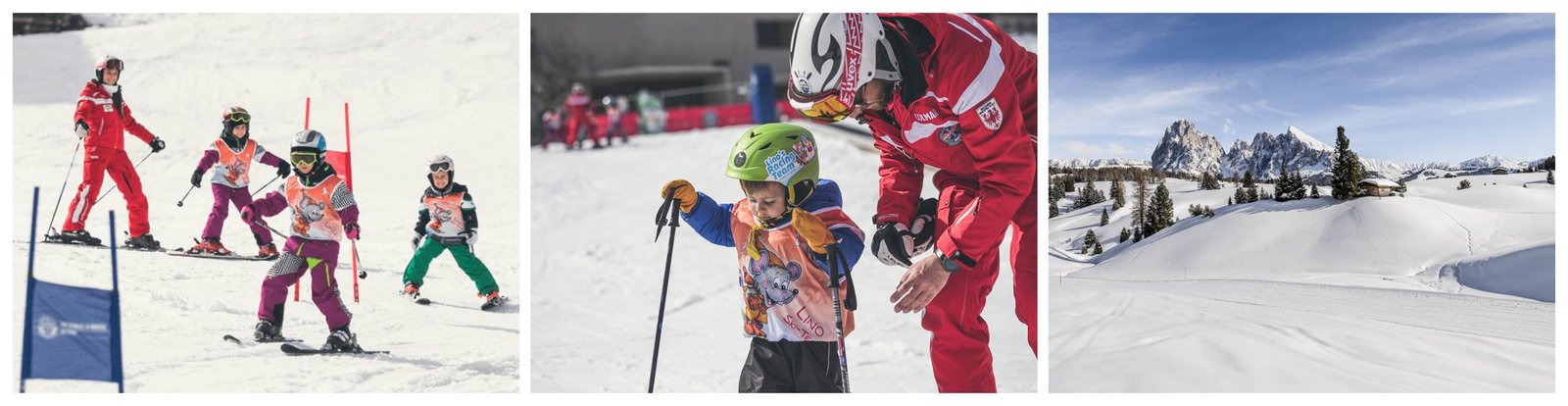
- Young kids (4–8). The magic window. Look for a snow garden with a magic carpet, ski kindergarten from age three to four, and English-speaking instructors. Half-day lessons plus an afternoon of hot chocolate and sledging is the right shape of day; resist the urge to make them ski like you.
- Tweens (9–12). Now the linked ski areas earn their keep (Saalbach, La Plagne, Serfaus-Fiss-Ladis), with enough terrain to keep an improving skier hungry. Group lessons turn into the social highlight of the week.
- Teens (13–17). Give them somewhere to be that isn’t with you: a snow park, a freeride zone, an evening scene that’s lively but safe. The big French and Austrian circuses do this best; the cosy toddler resorts will bore them rigid.
Eating on the mountain with kids
Mountain food is a secret weapon of Alpine family skiing, because the kids are nearly always hungry and the huts nearly always deliver. In the Dolomites the rifugi are an event in themselves: sunny terraces, hearty pasta and dumplings, apple strudel that buys you another hour. Alta Badia’s gourmet huts are worth a planned lunch. In Austria, hut culture revolves around Kaiserschmarrn (shredded sugared pancake) and Germknödel: order one “for the table” and watch peace break out. The practical rule: build the day around a long, early hut lunch rather than a late one, eat before the noon rush, and let the afternoon be short. A child who has had strudel in the sun will forgive almost any morning.
Beyond the slopes
The best family resorts are the ones where a non-ski day is still a good day, because at least one will be. Look for tobogganing and sledging runs (often floodlit for early-evening laps), an ice rink, indoor pools and wellness for the inevitable cold afternoon, snowshoe or horse-drawn-sleigh outings, and snow parks once you have a teenager who finds you embarrassing. Serfaus’s underground railway is pure novelty; Saas-Fee and Saalbach run excellent indoor play and pools; and almost every South Tyrol and Austrian family hotel has its own pool and kids’ programme to absorb a grey day. The test of a family resort isn’t its hardest run. It’s what you do when nobody wants to ski.
Map it: where to point the family
Every resort on this guide, plotted: tap a marker for what it’s best at, and follow the link where we’ve already reviewed the hotel. Pan from the Dolomites across Austria and Switzerland to the French Alps.
Your family-ski planning checklist
- Pick the timing first (mid-Jan or late March), then the resort – dates move price more than anything.
- Confirm the minimum age and opening hours of both ski school AND non-ski childcare before booking.
- Prioritise car-free or true ski-in/ski-out to kill the morning gear-carry.
- Book nurseries/childcare and ski-school slots in advance – the good ones sell out (La Plagne, Serfaus).
- Request connecting or family rooms early; check for a snow garden / magic carpet for first-timers.
- Have a non-ski plan: pool, ice rink, sledging, indoor play – at least one day will need it.
- If skiing the Dolomites in Feb 2026, steer clear of Cortina during the Olympics.
How to choose, and what we’d book
Strip it back to three questions. First, can you reach the snow without becoming a pack mule: is it car-free or genuinely ski-in, ski-out? (Avoriaz, Serfaus, Saas-Fee, Obergurgl all pass.) Second, does the childcare start young enough and early enough: from months, not just from three, and before the lifts open? (The big South Tyrol and Kinderhotel-style Austrian properties win here.) Third, is there a real plan for the day nobody wants to ski?
If we were booking a first family ski trip with a toddler and a nervous six-year-old tomorrow, we’d put the Dolomites top (Val Gardena or the quieter Lüsen and Plose around Sonnwies) for the gentle plateaus, the sun and the unmatched family hotels, then Austria’s Kinderhotel Dachsteinkönig and Serfaus-Fiss-Ladis a close second for sheer childcare depth. Go mid-January or after the 20th of March, and build every day around a long lunch in the sun. The rest, frankly, is just skiing. Browse the growing list of family stays in our hotel reviews as we add the rest of this shortlist.
Key Takeaways
- The Dolomites (Italy's South Tyrol) is the best family-ski region in Europe for 2026: ski-in/ski-out, English-speaking ski schools from age 3, and 50%+ sunny days.
- The Alpe di Siusi plateau is the best beginner zone: long, wide, blue runs and the Cavallino Bianco family hotel.
- Skip the school holidays (Feb half-term, Easter) and target mid-January or early March for empty slopes and lower prices.
- For teens, the Dolomiti Superski pass covers 12 ski areas and 1,200km of piste with one skipass.
- Most resorts offer free ski-school for under-6s if both parents ski in the same week.
Practical Checklist
- Book ski school 6+ weeks in advance (Cavallino Bianco, Kinderhotel Dachsteinkönig fill by Christmas)
- Reserve equipment hire (Helly Hansen or Burton in Ortisei/Alta Badia) before arrival
- Pack: neck warmer, two pairs of mittens, handwarmers, glacier cream SPF50
- Get to resort by 4pm on day 1 for kit fitting and slope orientation
- Book the family photo session at sunset (most hotels offer this)
- Reserve all mountain-hut lunches before 11am, most are full by 12
- Confirm the kids' ski school pickup point and phone number
- Pre-book dinner for kids before 7pm (most hotel restaurants don't take walk-ins)