Maxi-Cosi Pebble 360 Pro² Infant Car Seat
Siège auto bébé rotatif Maxi-Cosi Pebble 360 Pro² par Maxi-Cosi (Pebble 360 Pro²)
Pour le premier vol d’un nouveau-né et tous les transferts aéroport qui suivront, lorsque l’essentiel est un siège homologué et allongé, bien plus qu’un petit prix.
Présentation
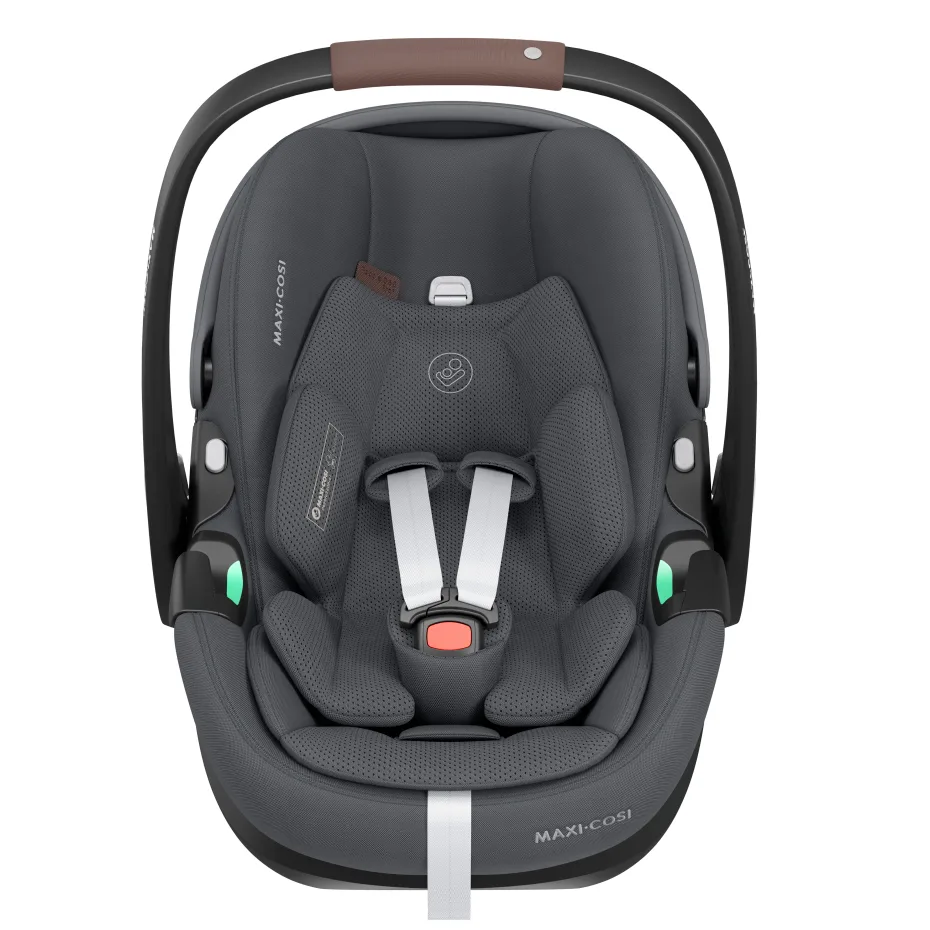
Le Pebble 360 Pro² est la coque rotative et coulissante de Maxi-Cosi. Avant toute chose, un chiffre compte : €259.99 pour la coque seule sur le site allemand de Maxi-Cosi en septembre 2026, tandis que la base rotative FamilyFix 360 Pro est vendue séparément €269.99. Une somme conséquente pour un siège utilisé environ dix-huit mois. Pour certaines familles, elle se justifie pleinement. Ce n’est toutefois plus le Pebble le plus récent : Maxi-Cosi propose désormais aussi le Pebble Slide Pro à €269.99, compatible avec une autre base, la FamilyFix Slide Pro.
ADAC and Stiftung Warentest published their grades for it in May 2024: 2.2 overall on the German school scale, where lower is better, with a strong 1.5 safety sub-score on the vehicle’s own belt and 1.7 with the FamilyFix 360 Pro base fitted. The crash and handling grades are inherited from the original Pebble 360 Pro, which ADAC failed in October 2023 over naphthalene in its cover; the Pro² got a new cover, and it passed. The seat is also TÜV-approved for use on aircraft, in every recline position, which is the detail that actually changes how a family plans a long-haul trip with a two-week-old.
Nous l’avons examiné comme la plupart des parents l’achètent : d’abord le siège, puis la base, seconde facture plus douloureuse quelques semaines plus tard, une fois les premières dépenses liées à la naissance passées.

Pourquoi c’est idéal pour les familles
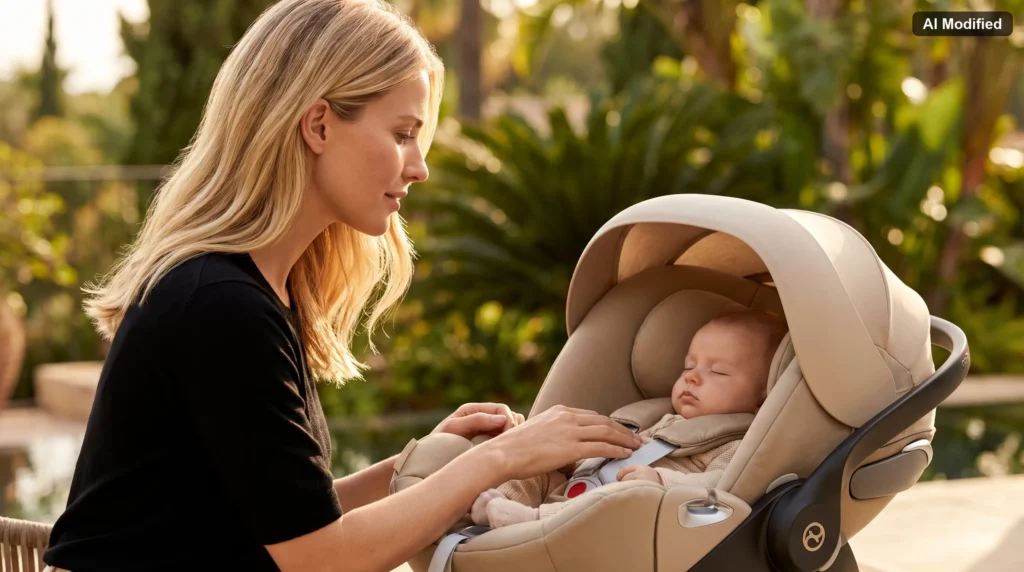
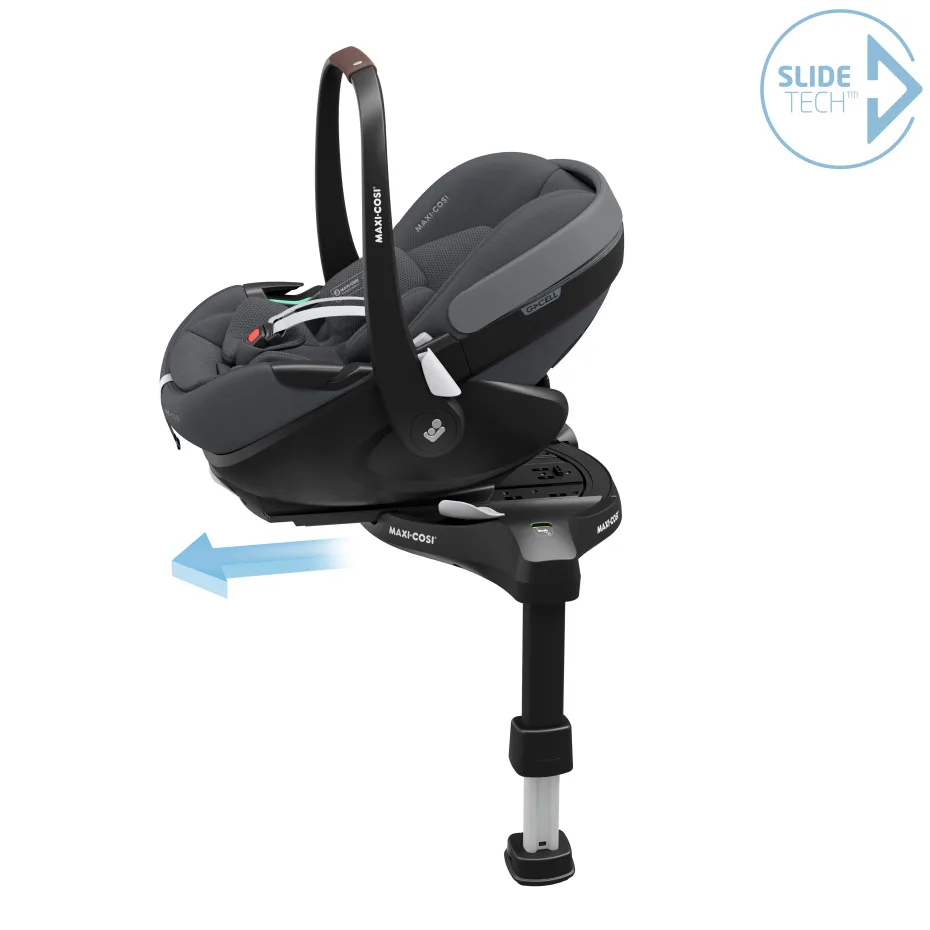
SLIDETECH est la fonction que Maxi-Cosi met en avant, à juste titre. Une fois le siège installé sur la base FamilyFix 360 Pro, un seul geste le fait pivoter vers la portière et glisser de 17cm vers le parent. Installer un nouveau-né ne signifie plus s’agenouiller à moitié dans la voiture, une sangle enfoncée dans le genou. La Base T de Cybex propose la partie rotative de cette même idée, et les deux marques ont raison : cela compte davantage que bien des arguments de fiche technique. Avant de prendre la route, le siège doit être reverrouillé dos à la route ; le manuel Maxi-Cosi exclut tout trajet face à la portière.
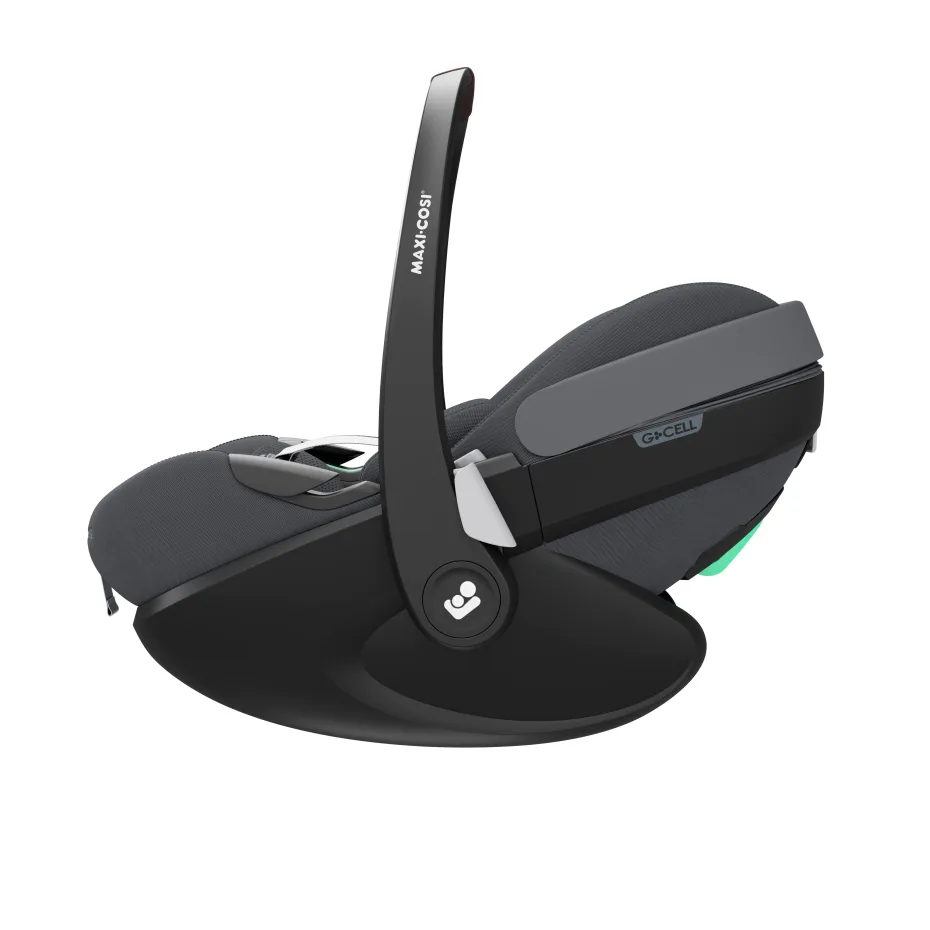
G-CELL is Maxi-Cosi’s side-impact protection, designed to channel crash forces away from the child, and the independent evidence sits beside the design: ADAC rated the side-impact injury risk very low with the seat on the vehicle belt and low on the base, inside safety grades of 1.5 and 1.7, and on ADAC’s scale 1.5 is still the last step of ‘very good’.
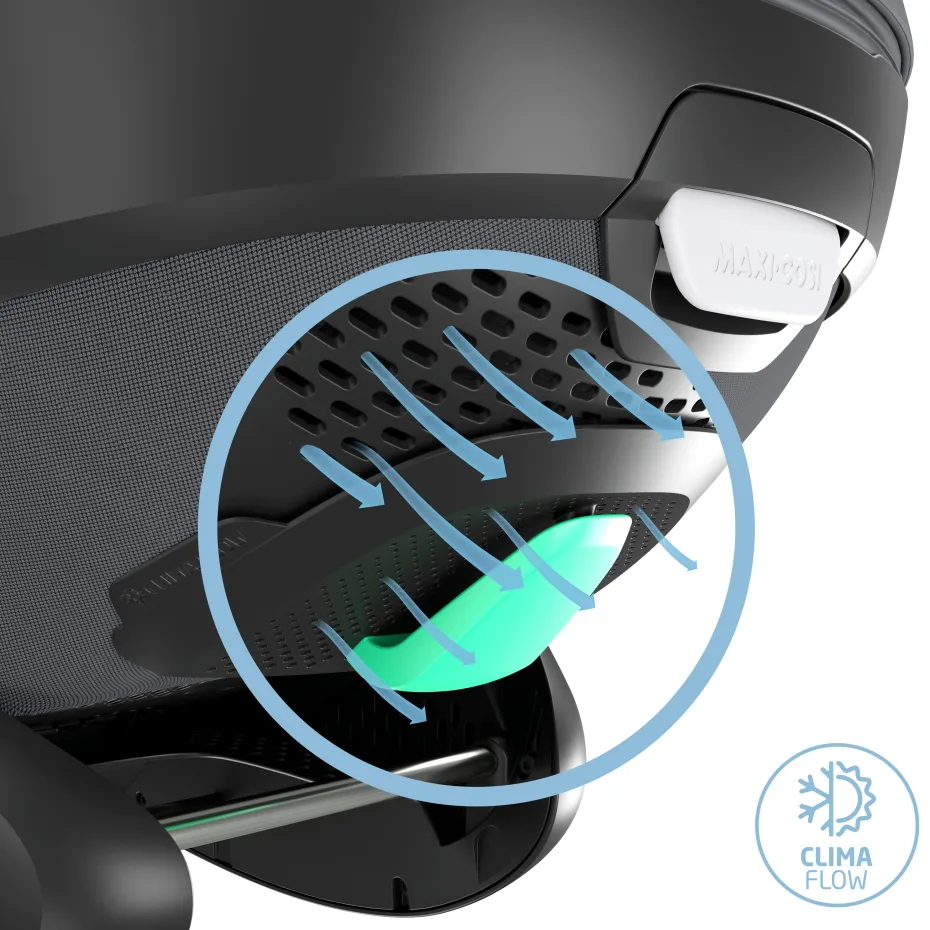
ClimaFlow, l’association d’ouvertures de ventilation, de mousse respirante et de tissu mesh ajouré signée Maxi-Cosi, paraît plus modeste mais se ressent au quotidien : moins de réveils avec la nuque moite après un trajet chaud. Sur un transfert méditerranéen en août, cela compte bien plus que sur le papier.

À l’usage (aéroport / voiture / hôtel)
Aéroport : this is where the Pebble pulls clear of the Cybex Cloud T i-Size. The Pebble 360 Pro² is TÜV-approved for aircraft use in any recline position, including the flattest, and the ADAC test notes an approval for certain aircraft too. It goes on a forward-facing passenger seat, held by the aircraft’s lap belt, so the baby needs a booked seat of its own rather than a parent’s lap. Airlines still set their own boarding and seating rules for any car seat, so confirm with yours before you rely on it, but a family that clears those steps can fly with its own seat rather than trust an airline bassinet or a rental desk’s mismatched loaner.
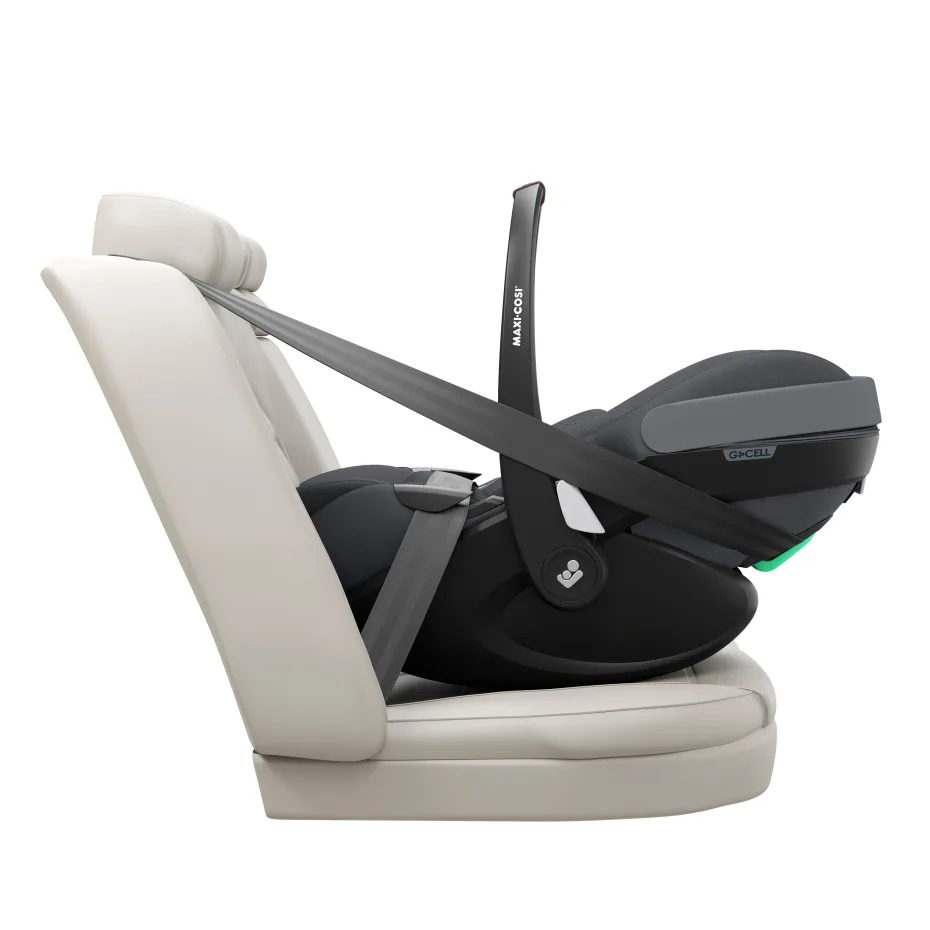
Voiture : without the base, the Pebble 360 Pro² installs on the vehicle’s own three-point belt, and ADAC’s 1.5 safety score on exactly that configuration is genuinely reassuring for anyone not ready to spend another €269.99 on day one. Add the FamilyFix 360 Pro and the ISOFIX connectors plus load leg take over, with visual indicators confirming a correct fit. One catch for hire cars abroad: the base is approved only on i-Size seating positions or in vehicles on Maxi-Cosi’s type list, so the belt fit is the fallback worth practising at home. ADAC’s handling sub-score, 2.8 in both configurations, is the one number worth pausing on. It sits in ADAC’s ‘satisfactory’ band, and the reasons are specific: high weight, a cover that is hard to remove, a slightly raised risk of operating errors and, on the belt alone, a more involved install. ADAC rates buckling the baby in as easy either way. For scale, the Cybex Cloud T i-Size managed 2.2 for handling on its Base T in ADAC’s October 2023 round, but 3.0 on the belt alone.
Hôtel : a capsule seat earns its keep in a hotel room as a portable, familiar place to put a jet-lagged baby down, and the flat recline helps more here than the marketing photos suggest. Keep it on the floor, never on an elevated surface such as a table or chair. Within the approval limits of 87cm and 13kg, the rule for when to move up is the head: once it reaches the top edge of the shell, the next seat is due, so watch the head rather than the eighteen months on the box.

Les caractéristiques qui comptent vraiment
- Tranche d’âge et de taille : birth (from 40cm) to approximately 18 months, up to 87cm and 13kg; also suitable for premature babies.
- Norme de sécurité : UN R129/03 (i-Size).
- Résultat des essais indépendants : ADAC/Stiftung Warentest, May 2024: 2.2 overall on the vehicle’s own belt (Safety 1.5, Handling 2.8, Ergonomics 2.0, Pollutants 1.0); 2.2 overall with the FamilyFix 360 Pro base (Safety 1.7, Handling 2.8, Ergonomics 2.1, Pollutants 1.0). The Pro² matches the tested original Pebble 360 Pro except for its cover, which was tested separately.
- Poids du siège : 4.7kg nominal, 5.2kg on the scales in the ADAC and Stiftung Warentest test; the FamilyFix 360 Pro base weighs 8.6kg.
- Dimensions : 44cm seat width; length varies with the recline, so check your boot space before you buy.
- Base : FamilyFix 360 Pro (ISOFIX avec jambe de force, vendue séparément, €269.99), nécessaire pour la rotation à 360 degrés et le coulissement de 17cm SLIDETECH ; une installation avec la ceinture trois points du véhicule est également possible sans base. La même base accueillera ensuite le Pearl 360 Pro pour l’âge tout-petit.
- Matériaux : 59 percent polypropylene, with small shares of EPP foam, other plastics, several steel grades and aluminium, plus 22 percent fabric.
- Entretien : the cover goes in the machine at 30°C or wipes down with a damp cloth, though ADAC found it hard to remove.
- Garantie : 24 months as standard, extended to five years if the seat is registered online within six months of purchase.
- Prix : €259.99 pour le siège sur le site allemand de Maxi-Cosi le 23 septembre 2026 (Twillic Graphite, en stock) ; les revendeurs allemands proposent également Twillic Black, Green et Truffle, et l’un d’eux l’affichait à €199 ce jour-là. Base FamilyFix 360 Pro : €269.99. Au tarif catalogue, l’ensemble approche €530.

Avantages & inconvénients
Ses vrais atouts :
- TÜV approval for aircraft use in every recline position, a real advantage on long-haul trips with a newborn.
- De solides résultats de sécurité, évalués indépendamment : 1.5 avec la ceinture seule, 1.7 avec la base, selon ADAC/Stiftung Warentest en mai 2024.
- Une fois installée, la base pivotante et coulissante simplifie l’installation d’un nouveau-né.
- La même base FamilyFix 360 Pro accueille ensuite le Pearl 360 Pro pour l’âge tout-petit : cet achat plus coûteux ne se limite donc pas à un seul siège.
À considérer avant l’achat :
- La base FamilyFix 360 Pro s’achète séparément pour €269.99 ; aux tarifs catalogue Maxi-Cosi, le coût total se rapproche davantage de €530 que des €259.99 annoncés.
- ADAC grades handling at only 2.8, ‘satisfactory’, citing high weight (5.2kg for the seat and 8.6kg for the base as tested), a hard-to-remove cover and a slightly raised risk of operating errors.
- Le tableau technique Maxi-Cosi ne donne aucune dimension extérieure, ce qui complique inutilement la vérification du coffre avant achat.
- Choisir précisément le Pro² : le Pebble 360 Pro de première génération a échoué au test de polluants ADAC d’octobre 2023 à cause de naphtalène dans son ancienne housse.

Score équipement FFH
Fonctionnalité : 8.8 / 10.
Qualité de fabrication & durabilité : 7.9 / 10.
Facilité d’utilisation : 7.7 / 10.
Praticité en famille : 8.2 / 10.
Tarif : $$$$ sur $$$$$.
Score équipement FFH : 8.2 / 10.

Verdict final
Buy the Pebble 360 Pro² for the aircraft approval and the safety numbers, not for the price. At €259.99 the seat costs about €10 less than the Platinum-line Cybex Cloud T i-Size we reviewed; add each brand’s base and the Maxi-Cosi system ends up roughly €20 dearer at German list prices, close to €530 against about €510. What tips it for a specific kind of family is the TÜV aircraft approval, set against ADAC grades that trail the Cybex on its base, 2.2 overall against 1.7. If the budget stops well under €500 for seat and base, a cheaper capsule is defensible: ADAC’s May 2023 test graded the belt-fitted Joie i-Snug 2, at about €119, 2.0 overall with the same 1.5 safety sub-score, though it is approved only to 75cm, roughly the first year.
Pour les familles qui prennent l’avion durant les dix-huit premiers mois de bébé, ce siège permet de garder la même retenue de l’aérogare au taxi puis à la chambre d’hôtel, au lieu de louer un modèle disparate à destination. Cette simplicité mérite la dépense.
Galerie
Maxi-Cosi Pebble 360 Pro² : questions fréquentes
À qui le Maxi-Cosi Pebble 360 Pro² convient-il le mieux ?
Families who want an aircraft-approved infant seat and a strong, independently tested safety score, and who are prepared to budget for the FamilyFix 360 Pro base as a near-essential second purchase. The seat is TÜV-approved for use on aircraft in every recline position, and ADAC/Stiftung Warentest rated it 2.2 overall in May 2024, with a 1.5 safety sub-score on the vehicle's own belt. It suits a family flying often with a newborn more than one doing mostly short local drives, where a simpler, cheaper i-Size capsule will do the job.
Quelle tranche d’âge, de taille et de poids couvre le Pebble 360 Pro² ?
De la naissance (40cm) à environ 18 mois, jusqu’à 87cm et un maximum de 13kg, under UN R129/03 (i-Size); it also suits premature babies, and the newborn inlay is used until the baby passes 60cm. Within those limits, the switch to the next seat is due once the child's head reaches the top edge of the shell, so watch the head rather than the calendar when planning the follow-on seat.
La base FamilyFix 360 Pro est-elle nécessaire, et qu’apporte-t-elle ?
Pas strictement, mais la rotation à 360 degrés et le coulissement SLIDETECH ne fonctionnent qu’une fois la base installée. The seat and the FamilyFix 360 Pro base are sold separately, at €259.99 and €269.99 (checked 23 September 2026). Without the base, the Pebble 360 Pro² installs on the vehicle's own three-point belt, and ADAC's May 2024 grades gave that configuration a 1.5 for safety. With the base fitted, ISOFIX and a load leg take over and the seat rotates and slides 17cm toward the parent for loading. The base is approved only on i-Size seating positions or in vehicles on Maxi-Cosi's type list, which matters in a hire car.
Le Pebble 360 Pro² peut-il réellement être utilisé en avion ?
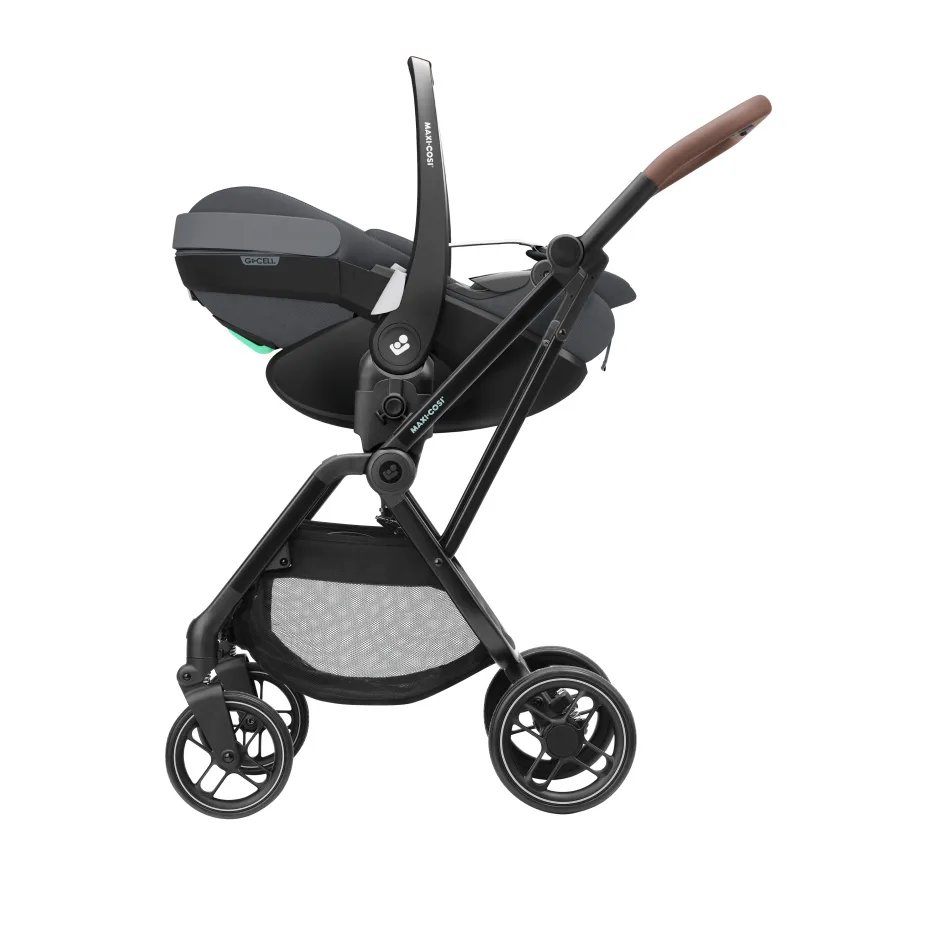
The Pebble 360 Pro² is TÜV-approved for use on aircraft, in every recline position including the flattest. The ADAC test notes an approval for certain aircraft too. It is allowed only on a forward-facing passenger seat, fastened with the aircraft's lap belt, so the baby needs its own booked seat rather than a parent's lap. Airlines still set their own rules on car seats in the cabin, so confirm with your carrier before you fly. Through the terminal, the shell clicks onto a compatible stroller for the walk between gates.
Le Pebble 360 Pro² est-il facile à installer et à utiliser au quotidien ?
Simple avec la base, un peu plus exigeant avec la ceinture seule. ADAC's May 2024 grades rate buckling the baby in as easy in both configurations and the base installation as easy, but flag a more involved install with the vehicle belt. The handling grade is 2.8 either way, only 'satisfactory' on ADAC's scale, pulled down by high weight (5.2kg for the seat and 8.6kg for the base as tested), a cover that is hard to remove and a slightly raised risk of operating errors. The Easy-in harness, designed to stay open and out of the way, is the part of the daily routine that most clearly helps.
Quelles homologations de sécurité et quels résultats de tests indépendants possède le Pebble 360 Pro² ?
Il est homologué selon UN R129/03 (i-Size) et a été évalué par ADAC et Stiftung Warentest en mai 2024, scoring an overall 2.2 both on the vehicle's own belt (Safety 1.5, Handling 2.8, Ergonomics 2.0, Pollutants 1.0) and with the FamilyFix 360 Pro base fitted (Safety 1.7, Handling 2.8, Ergonomics 2.1, Pollutants 1.0). The Pro² matches the original Pebble 360 Pro apart from its cover, so those crash results carry over from that seat's October 2023 test, which it failed only because of naphthalene in the old cover; the new cover was tested separately and passed. Its G-CELL side-impact system is designed to channel crash forces away from the child, and ADAC rated the side-impact injury risk very low on the belt and low on the base.
Quels sont les principaux inconvénients concrets du Pebble 360 Pro² ?
Le coût, la maniabilité et le poids. The FamilyFix 360 Pro base is a separate €269.99 purchase, so at list prices the system most families end up buying costs close to €530 rather than the €259.99 headline seat price. ADAC's handling grade of 2.8 is only 'satisfactory', citing high weight (5.2kg for the seat as tested, against a nominal 4.7kg), a hard-to-remove cover and a slightly raised risk of operating errors. Length varies with the recline, so check your boot space before ordering.
Le Pebble 360 Pro² justifie-t-il son prix face aux coques i-Size moins chères ?
Pour une famille qui prend souvent l’avion avec un jeune bébé, oui ; pour quelques trajets locaux occasionnels, probablement pas. Cheaper i-Size capsules with comparable crash results exist: ADAC's May 2023 test graded the belt-fitted Joie i-Snug 2, at about €119, 2.0 overall with the same 1.5 safety sub-score, though it is approved only to 75cm, roughly the first year. What the Pebble's premium buys is the 87cm range, the rotating and sliding base system and the aircraft approval. That approval is not exclusive to this seat either, since older capsules such as the Pebble Plus and Citi are TÜV Rheinland approved for aircraft too, so look for an aircraft marking on any cheaper model if flying is the point.
Comment le Maxi-Cosi Pebble 360 Pro² se compare-t-il au Cybex Cloud T i-Size ou au Doona Liki Trike S5 ?
La comparaison la plus directe est avec le Cybex Cloud T i-Size, another premium infant capsule; at German list prices the Maxi-Cosi system with its base costs about €20 more, roughly €530 against €510. On their bases, ADAC graded the Cybex better overall (1.7 against 2.2), for safety (1.3 against 1.7) and for handling (2.2 against 2.8); on the belt alone the gap narrows to 2.1 against 2.2, with the Cybex safer (1.0 against 1.5) but harder to handle (3.0 against 2.8). The Pebble's edge is the aircraft approval, which the ADAC test notes for the Pebble and not for the Cloud T. The Doona Liki Trike S5 answers a different question: it is rated for 10 to 36 months, so it overlaps with the Pebble's later months as a way to move a toddler around town, but it is not a car seat at any stage.