

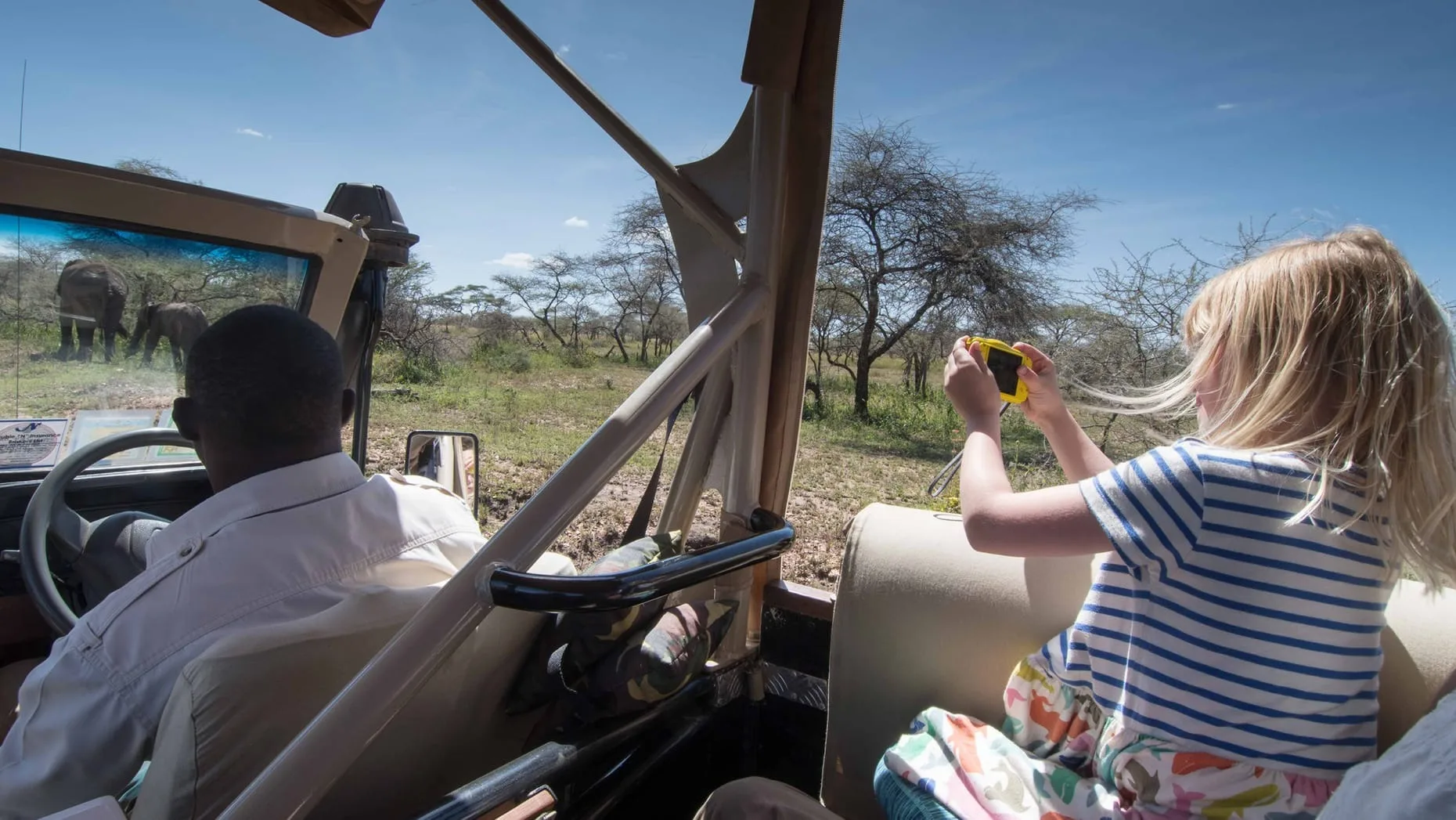
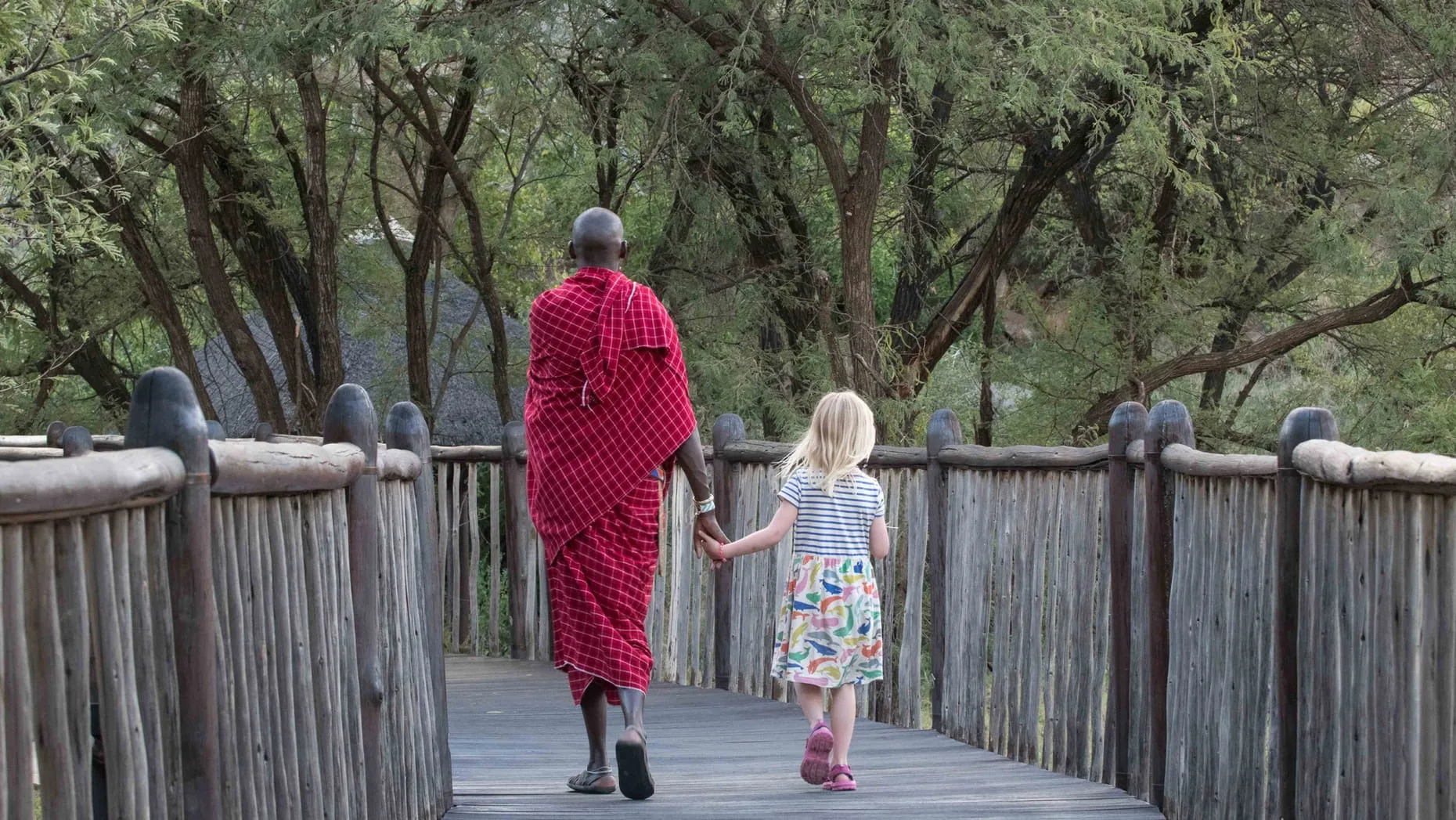
By our second morning, the children were already telling us what to look for. Our eight-year-old had spent the previous afternoon in the Discovery Centre, and she arrived at breakfast with a small field notebook and a considered opinion about where the leopard would be. The naturalist who ran the afternoon session had walked her group through spoor identification, and she had applied the lesson to a set of paw prints photographed near the waterhole fence line. She was not wrong about the leopard. That is the particular alchemy of the Four Seasons Safari Lodge Serengeti: the wilderness does the educating, and the lodge simply makes sure you are comfortable enough to pay attention.
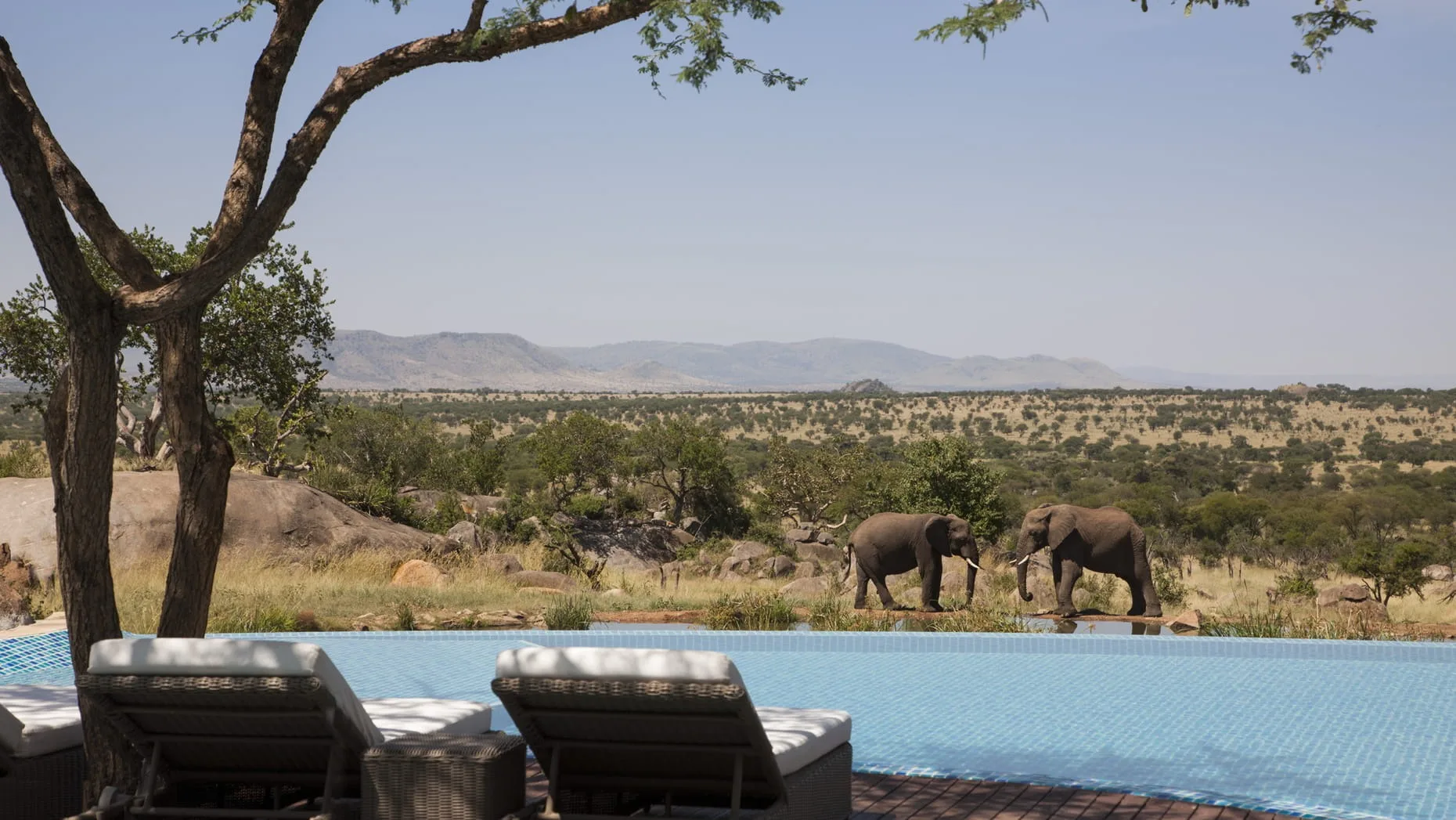
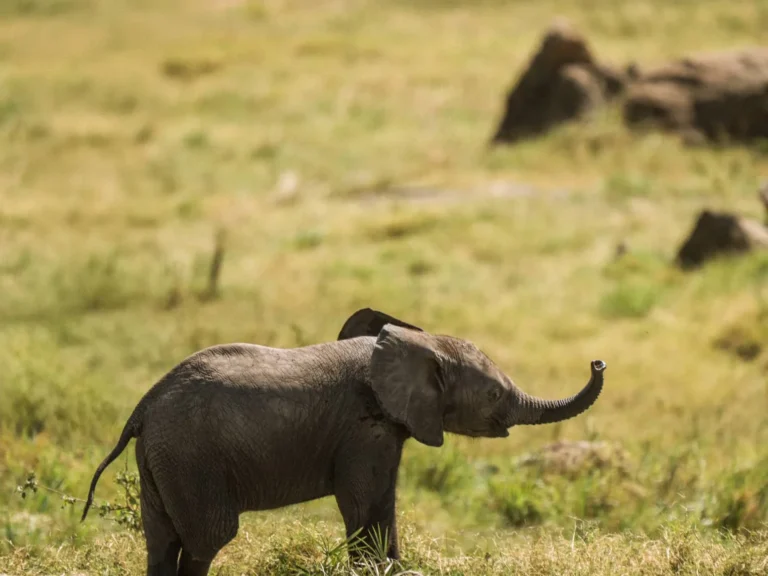
Positioned inside the Serengeti National Park itself, this property sits at the centre of one of the world’s most intact large-mammal migration ecosystems. The waterhole in front of the infinity pool is not a decorative feature. Elephants come to drink at four in the afternoon, and you watch them from a sunlounger with a cold drink in your hand. Cape buffalo materialise at dawn without announcement. The Seronera valley, just below the lodge’s slight rise, is one of the most productive year-round big-cat zones in the entire Serengeti, which means the wildlife does not require a specific season to deliver.
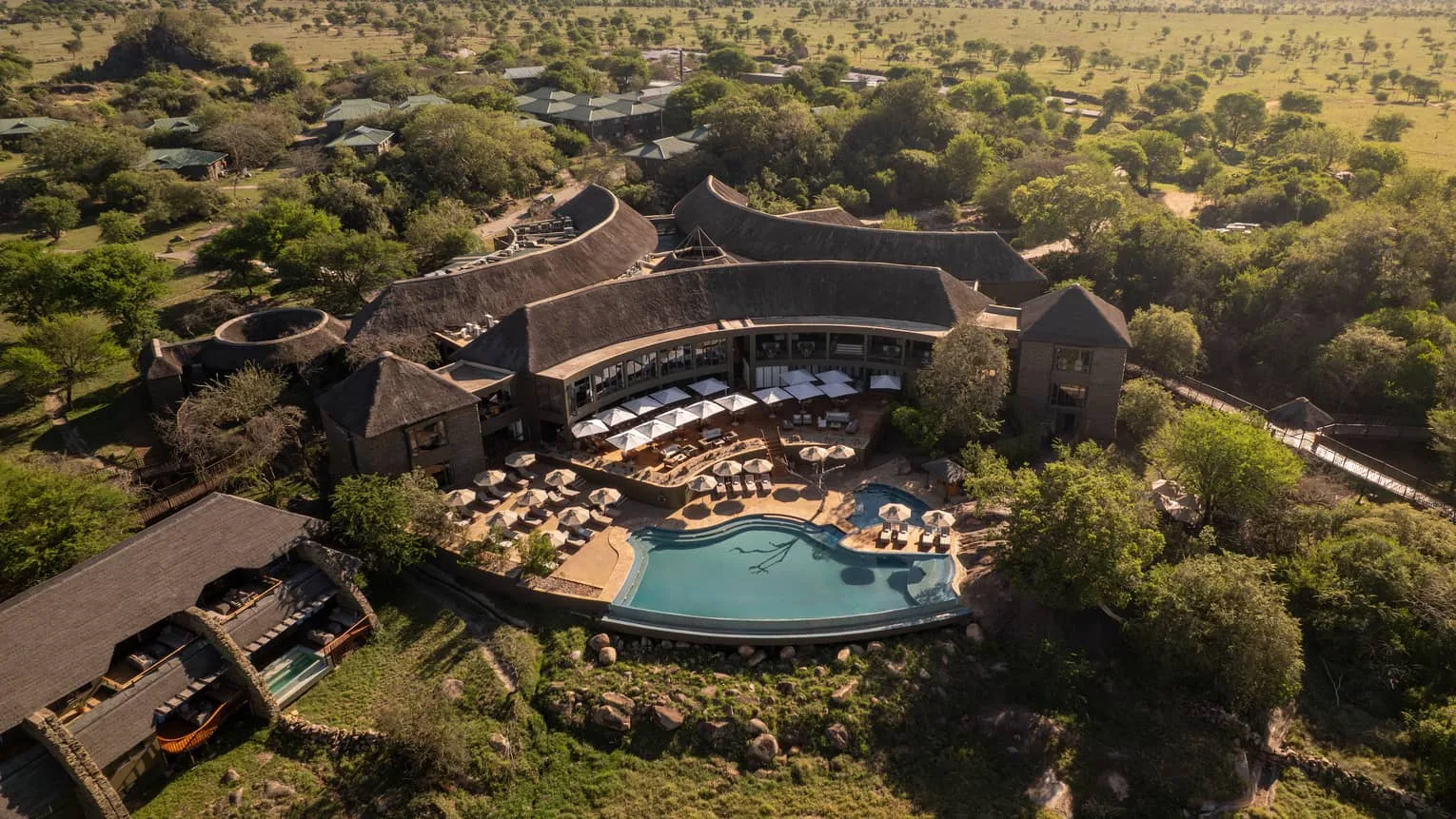
The lodge holds 77 accommodations across three tiers: 60 guest rooms, 12 suites and five villas. The architecture is low-slung, warm-toned and open to the landscape, with stone, timber and woven canvas panels in proportions that feel grown from the savannah rather than transplanted from a city hotel brief. Staff move quietly between buildings. The staff-to-guest ratio runs high, and you notice that not because anyone advertises it, but because requests are anticipated before you articulate them. Three restaurants, a spa, a Discovery Centre, the Kijana Klub children’s programme and a waterhole-facing infinity pool round out a property that functions as a complete destination for families who want the African bush without forfeiting the infrastructure of a full-service hotel.
Three caveats belong at the front. Children under two cannot stay; standard guest rooms have a maximum occupancy of two adults and one child; and the headline rates do not include game drives, park concession fees or Seronera Airstrip transfers. Those additions are material costs, and anyone planning this trip seriously has to build them into the budget from the beginning rather than treating them as incidentals.
Location & Accessibility
The lodge sits in Central Serengeti, approximately 45 minutes by road from Seronera Airstrip. Most families fly to Seronera via Arusha or Kilimanjaro, adding a light-aircraft leg to whatever international routing brings them to Tanzania. It is a long journey from almost anywhere in Europe or North America: at least one overnight flight, then a domestic connection to Arusha or Kilimanjaro, then a short bush flight to Seronera. Families who understand that geography in advance arrive with the right mindset. Chartering a direct connection from Kilimanjaro to Seronera collapses the internal transit from a full day into a single short flight.
Inside the park, there is no perimeter fence separating the lodge from the ecosystem. Wildlife moves across the property with complete freedom. A lone giraffe crossing the access track on arrival is a realistic expectation, not an exceptional event. The lodge’s position on a slight hill gives the pool terrace and most room terraces a clear unobstructed sightline over the Seronera valley floor, which is the specific geographical reason the Seronera area remains so productive for year-round game viewing. Leopard, lion, cheetah and wild dog all range through this part of the park across the calendar. When children can see zebra and wildebeest from the breakfast terrace without boarding a vehicle, the bar for every subsequent activity is set at a level most holidays never reach.
Road transfers from Seronera run approximately 45 minutes on a good day. The lodge manages these transfers and can coordinate logistics for families arriving on multiple flights. Confirm current transfer scheduling directly at booking; the airstrip operates with bush-flight timing that does not always align neatly with international connection windows.
Accommodation (Rooms & Suites)
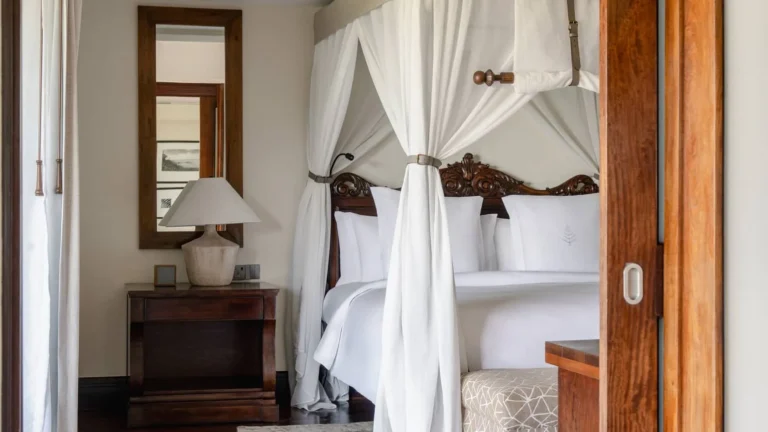
Standard guest rooms measure 55 square metres. The layout is clean and considered: a king bed, timber-framed joinery, a writing desk, and a private terrace or balcony oriented toward the surrounding bush. Ceiling height is generous, which keeps the rooms from feeling enclosed despite the warm colour palette of stone and local wood. Family occupancy in a standard room caps at two adults and one child. That is a real constraint. A family of four cannot share a standard room, and parents who book on that assumption will face an awkward conversation at check-in. A suite or a villa is the correct booking for two adults with two or more children.
Terrace Suites expand to 88 square metres with a proportionally larger private terrace and a sightline configuration that gives more direct orientation toward the landscape. For two adults and two children, these are the minimum sensible starting point. One-bedroom villas reach 121 square metres; two-bedroom villas 172 square metres; the Presidential Villa 242 square metres. Multi-generational families of five or six find the villa category the only configuration that separates sleeping spaces properly. Some villas include private plunge pools, which changes the morning routine entirely for families who would otherwise compete for the main infinity pool’s quietest hour.
The finish across all categories is consistent with what Four Seasons guests will have encountered at other properties in the portfolio: bathrobes in children’s sizes, a minibar stocked with consideration, and bed linen that makes an early bush-morning departure feel slightly less brutal. Blackout curtaining is present and effective, which matters considerably when equatorial dawn begins well before 6:00am.
One design note: the lodge is a walking property. The path between rooms and the main lodge buildings involves some distance, and after dark the route requires a ranger escort. This is not a hardship; it becomes routine within a day and adds to the sense of being truly inside the park rather than adjacent to it.
Family Amenities & Kids’ Activities
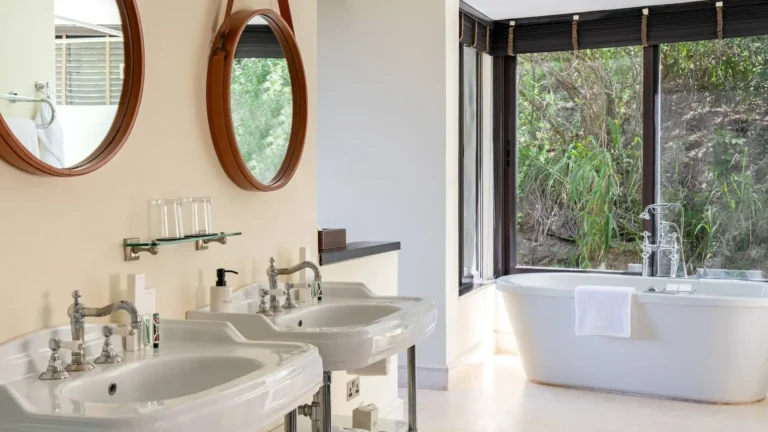
The Kijana Klub accepts children aged two to seventeen daily from 10:00 to 18:00. Children under four require adult supervision during sessions. From age four, drop-off is permitted. The programme is more substantive than what most luxury lodges describe as a children’s club. A cooking class that produces real food (children arriving back at the pool with plates of something they have made themselves) appeared as a highlight across multiple family accounts. Stargazing sessions with a naturalist guide. Swahili lessons. African drumming. Guided nature walks calibrated to the age range of the group. Bead jewellery making serves as a fine-motor counterpoint to the outdoor sessions, and it tends to produce the kind of objects that end up displayed at home for months after the trip.
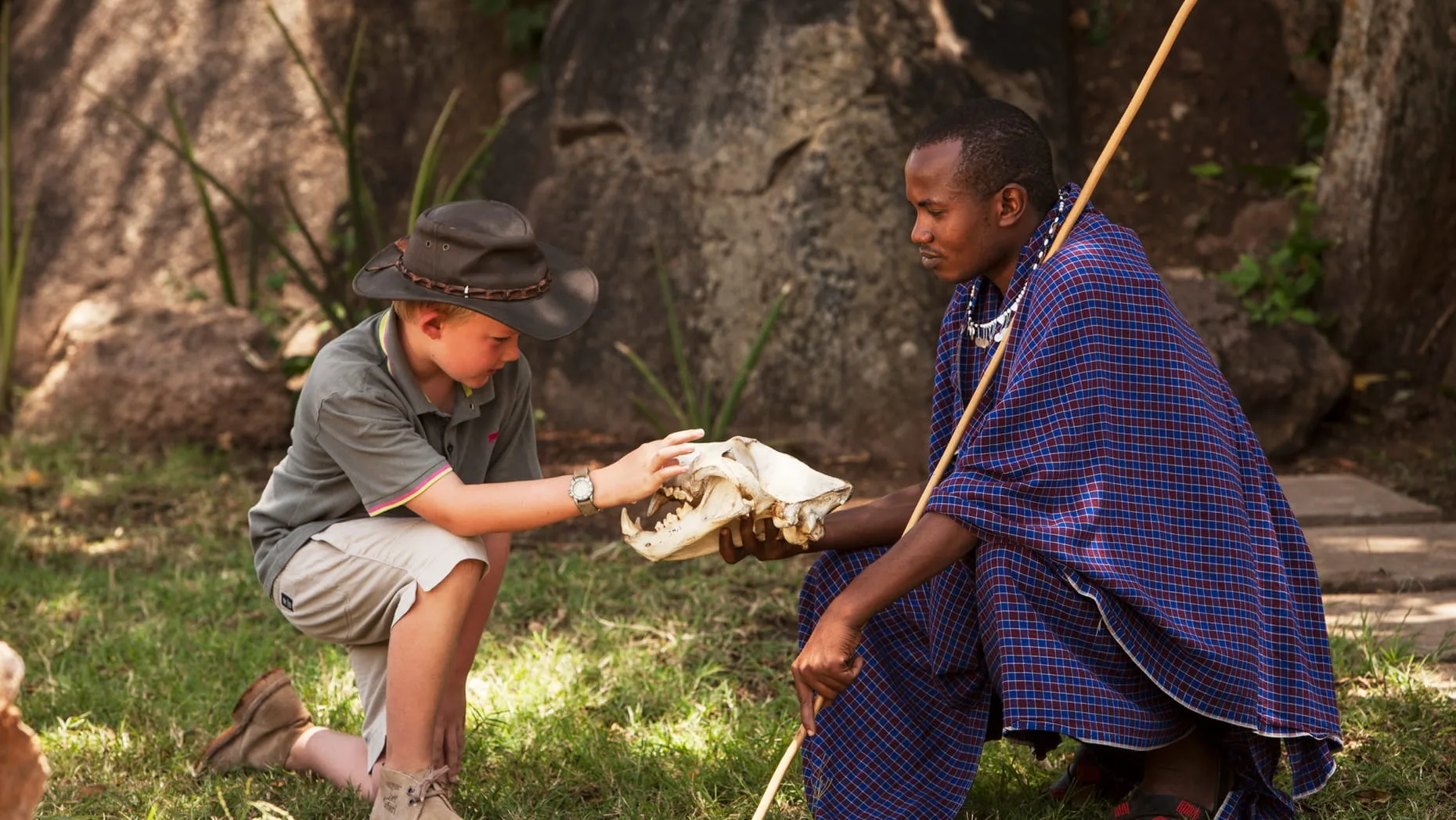
Running alongside the outdoor club, the Discovery Centre is the indoor dimension of that programme, and it is worth understanding as a separate, self-directed resource rather than a rainy-day fallback. It holds a microscopy station, display cases of insect and reptile specimens, geological samples from the park, wildlife reference books and a guided-activity schedule that runs in parallel with the club sessions. Older children find their way here independently during unstructured time. A tween who has tracked with a naturalist guide in the morning and then returned to examine samples under magnification in the afternoon is operating in a real educational mode rather than simply being occupied. That progression from field experience to analytical curiosity is the design logic of the programme, and it holds together across ages in a way that few hotel children’s programmes manage.
Overlooking the waterhole from a slight elevation, the infinity pool is positioned so that the view from the water’s surface is uninterrupted Serengeti plain. Morning pool sessions, before the first game drive, occupy the sharpest light of the day and the densest wildlife-movement window. Three elephants approached from the eastern side one morning, walking in single file across the dry ground toward the water. Close enough that the pool fell quiet. The pool deck is ample; no dedicated shallow section exists, but the entry steps are gradual and appropriate for confident young swimmers. A poolside bar and light food service run throughout the day, which makes the pool area function as both a recreation zone and a passive wildlife-observation platform.
Game drives themselves are private rather than shared: each vehicle is assigned to one party, seats up to six, and goes out with its own driver-guide at dawn and again in the late afternoon. That matters more than the brochure language suggests: there is no negotiating with strangers over how long to watch a pride of lions, and a stop that runs long because an eight-year-old will not stop asking questions is nobody’s problem but your own. A full-day option trades the midday return for a packed picnic lunch eaten in the vehicle or under a tree, turning a single drive into the day’s entire structure rather than a bracket around pool time. Children receive a Serengeti Passport at check-in, a booklet for logging every species spotted across the stay, which does in the vehicle what the Discovery Centre’s field journal does on land.
For adults who want time away from the children, the spa offers a full menu of treatments in dedicated rooms. The fitness centre is accessible to all guests. Babysitting can be arranged but requires advance notice; confirm current availability and rates when booking, particularly for peak-season travel when demand across the programme runs high.
Dining
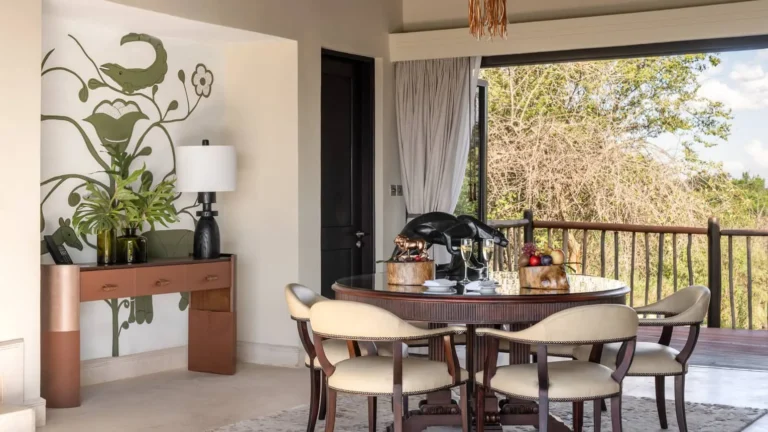
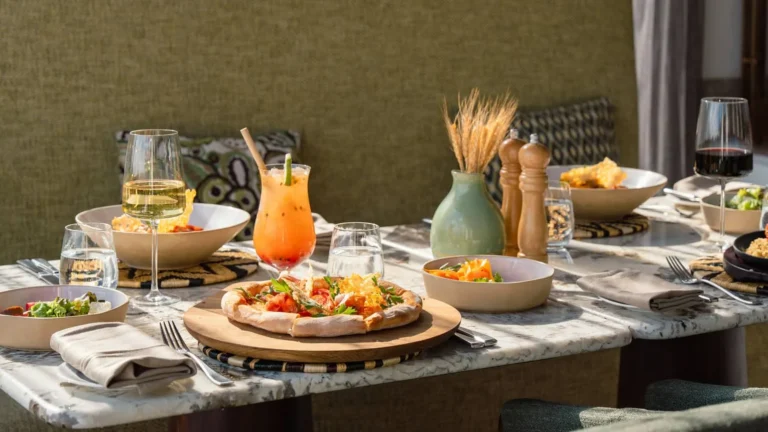
Three restaurants cover the lodge’s full meal range, and the standard flexible rate includes three meals daily alongside selected beverages and a laundry credit. That meals-included structure removes the per-item billing anxiety that can shadow multiday luxury lodge stays, especially when children are eating at unpredictable hours after long activity sessions in variable heat.
Nuru is the main all-day restaurant. Breakfast here was the meal of our stay. A spread of tropical fruit, egg stations, fresh local bread, cereals and hot Tanzanian dishes ran from shortly after six in the morning, timed to accommodate families leaving on early game drives. The kitchen understood the post-drive hunger rhythm too: returning families at ten or eleven in the morning found the service team unsurprised and well prepared. Nuru’s lunch and dinner menus move between Tanzanian cooking and continental standards, which means the range is broad enough to land something for every palate in the group.
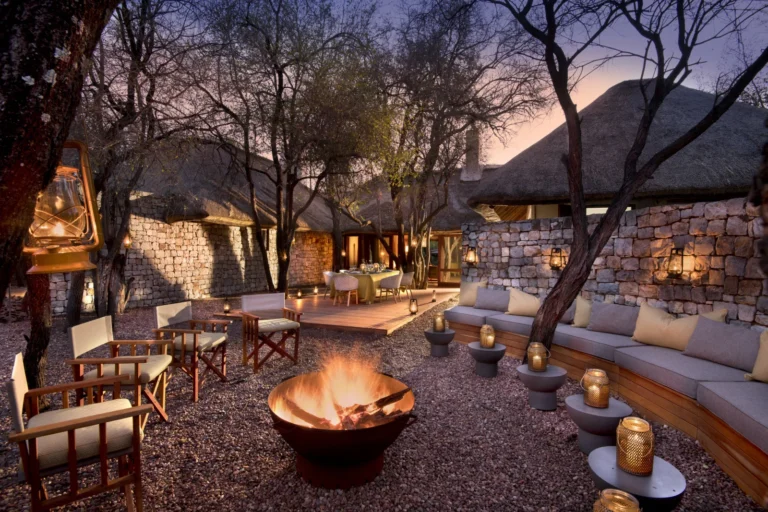
The Boma Grill operates in the evenings with tables arranged around a central fire pit under an open sky. The boma format (a traditional circular enclosure of the kind used across East Africa for centuries to protect livestock and gather communities) gives dinner a quality that children respond to immediately and physically. The fire. The darkness pressing in from the perimeter. The occasional sound from the plain beyond the light. Grilled meats, fresh fish and salads form the core of the menu. The Boma Grill was the meal the children recalled most vividly on the flight home, ahead of any game drive.
Maji Bar and Terrace occupies the space between the pool deck and the waterhole, serving drinks, snacks and light meals throughout the day. At sunset it becomes the natural congregation point for the entire lodge, the informal version of a game drive: stationary, cold drink in hand, watching the light turn amber and orange over the plain while whatever has come to drink at the waterhole negotiates the water’s edge. The Vineyard provides an adults-focused wine programme and tasting experiences that run in the evenings alongside rather than instead of the main dining venues.
The kitchen managed an allergen request we raised at check-in without requiring a follow-up reminder at any subsequent meal. A children’s menu is available across venues. Serving hours accommodate the irregular rhythms of a safari day with a flexibility that is more operationally demanding than it appears from the guest side.
Staff & Service Quality
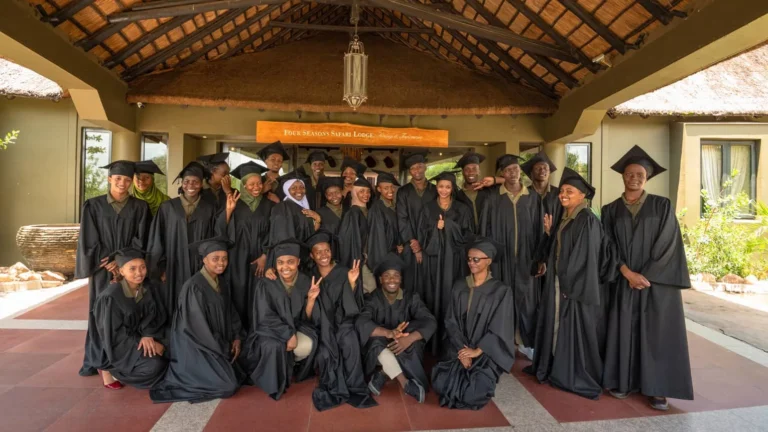
Service at this lodge is the thing guests remember most precisely, and it resists reduction to a single anecdote. Staff do not perform attentiveness. They do not hover or narrate what they are doing for you. What they do is know things: your children’s names by the second morning, the detail that your daughter prefers mango juice without ice, that your son asked the naturalist guide to explain what a termite mound is constructed from and the guide returned the next day with a small cross-section sample to show him. That level of operational specificity across a 77-room property running at capacity is a function of briefing culture, shift-handover quality and the kind of institutional investment in service that Four Seasons has built across the portfolio over a long period.
The naturalist guides who lead game drives and Discovery Centre programming are the staff members guests cite by name most often, and the reason is that guiding wildlife for children requires a different professional skill set than guiding for adults. It requires patience with questions that arrive out of sequence, the ability to shift explanatory register mid-sentence when a child spots something before the guide does, and the instinct to make a dung beetle as narratively interesting as a lion. The team here does that work at a consistent level, without condescension and without the low-grade impatience that can surface in guides whose primary client profile is adult-only groups.
Butler service is available and calibrated to the pace of a safari day rather than to a city-hotel expectation of on-demand responsiveness. Requested items arrive when they arrive; that is the correct cadence for a property where logistics are shaped by bush conditions, not a hotel corridor. The concierge team handles complex itinerary coordination across multiple drivers and guides without the communication gaps that can fragment a multi-day safari schedule.
Safety & Cleanliness
Living inside an unfenced national park requires a protocol, and the lodge has one that is clear and consistently applied. Guests do not move between accommodation and public areas unescorted after dark. Rangers provide the escort. The procedure is explained on arrival, and it becomes second nature within a day: you call the front desk, a ranger arrives within a few minutes, the walk is covered. Children adapt without friction when the escort is framed as part of the safari experience rather than as a restriction. The protocol is also, on reflection, reassuring in a way that a fenced perimeter would not be: it is evidence that the lodge takes the environment seriously rather than pretending it has been neutralised.
Room cleanliness is high throughout. Housekeeping operates during activity hours so rooms are turned over while guests are out, which avoids the midday interruption that can be disruptive on a schedule built around two game drives and an afternoon in the Discovery Centre. The lodge maintains lighting protocols at the waterhole perimeter to avoid disrupting nocturnal animal movement, which has a direct operational benefit for guests: the darkness near the water’s edge remains inhabited, and what comes to drink at night is visible from the correct point rather than scared off by ambient lodge light.
The property has trained medical staff on site. For emergencies requiring evacuation from the Serengeti, confirm current protocols directly with the lodge before travel; remote East African lodge emergency procedures differ materially from urban hotel emergency response, and families with specific medical considerations should have that conversation explicitly at the time of booking rather than on arrival.
Value & Pricing
Entry-level room rates run approximately €1,150 to €1,550 per night in lower-demand periods and €1,900 to €2,800 at peak. Those figures are for a standard guest room, which fits two adults and one child. A family of four needs a suite, which pushes the base rate to a meaningfully higher starting point. Against those numbers, three meals daily, selected beverages and laundry are included in the standard flexible rate, and that offset is real: a family eating three meals at lodge prices per day across a seven-night stay would otherwise face a substantial additional bill.
Park concession fees, Seronera Airstrip transfers and game drives are charged separately unless a package explicitly bundles them. Add those items carefully. A family of four, seven nights, with two game drives daily, will spend substantially more than the room rate alone implies. That is not an argument against the trip; it is an argument for planning it with accurate numbers rather than discovering the full cost at checkout.
Calibrated against comparable private safari lodges in the Serengeti with equivalent wildlife access, the Four Seasons offers something most camps cannot: a structured children’s programme, a full-service spa, multi-venue dining at restaurant quality, and a pool infrastructure. Smaller owner-operated camps provide more intimate bush immersion at lower nightly rates, and for couples or adults-only groups they are often the better choice. For families with two or more children of different ages who all need different things from a safari day, the lodge’s breadth of programme justifies the premium in a way that a pure wildlife camp, however beautiful, does not.
Why We Picked It
The Serengeti is one of the most studied and documented wildlife ecosystems on the planet, and this lodge positions a family inside it rather than adjacent to it. The Kijana Klub, the Discovery Centre, the naturalist-led tracking sessions and the cooking class are the mechanism by which a Serengeti stay becomes something a ten-year-old actually retains rather than a series of impressive images someone else took from a vehicle window. The educational infrastructure of this lodge is the differentiation that no other category of luxury hotel can replicate, because it requires the ecosystem to exist first and the programme to be built around it second. At this property, both conditions are met, and the pairing between landscape and curriculum is coherent rather than opportunistic.
A waterhole-facing infinity pool, three restaurants operating on an activity-day rhythm, and a service culture that personalises itself to each family within 24 hours of arrival mean that parents are not funding the children’s experience at the expense of their own. Both happen at the same time, from the same base, using the same staff infrastructure. That is the specific brief FFH applies when it evaluates whether a luxury property is structured for families or merely tolerant of them. The Four Seasons Safari Lodge Serengeti passes that test, and the score reflects that assessment accurately.
Book a suite or villa for any family of four or more. Confirm babysitting availability at booking, not on arrival. Build park fees, transfers and drives into your realistic budget from the start. Travel in late June or July for the best chance of witnessing the river crossings of the Great Migration. Travel in January through March for calving season and lower pricing. Either timing works. The lodge performs consistently across the calendar because the wildlife in the Seronera valley does not require a migration event to be worth watching.
Four Seasons Safari Lodge Serengeti: Family Questions Answered
What ages does the Kijana Klub accept and what does it do?
Kijana Klub accepts children aged 2 to 17, daily from 10:00 to 18:00. Children under four require adult supervision during sessions; drop-off is permitted from age four. Activities include guided nature walks, tracking sessions, Swahili lessons, African drumming, bead jewellery, stargazing with a naturalist guide and a cooking class. The Discovery Centre runs parallel programming with microscopy, specimens and wildlife reference stations.
Can you bring a baby or toddler under two to the Four Seasons Serengeti?
No. The lodge does not accept children under two years old. This is a firm published policy. Families with infants should plan their safari trip for when their youngest child has turned two, or consider a different lodge. The minimum age applies to all guests, including newborns.
Is babysitting available at the lodge?
Babysitting is available but must be arranged in advance. Confirm availability and the current per-hour rate directly with the lodge at the time of booking. The lodge does not publish babysitting as an on-demand service, so advance notice is recommended, particularly during peak season.
Is the Four Seasons Serengeti worth it for teenagers?
Yes, teenagers are among the strongest fit for this property. The Kijana Klub runs to age 17, but the real draw for teens is the game-drive and naturalist-guide experience. Tracking, wildlife photography, and night-sky sessions with a guide provide the level of intellectual engagement and independence that teens respond to. The Discovery Centre also works well for older children interested in ecology and wildlife science.
What room do you need for a family of four?
A standard guest room accommodates a maximum of two adults and one child. Families of four need a suite or villa. Terrace Suites (88 m²) are the minimum sensible booking for two adults and two children. One-bedroom villas (121 m²) and two-bedroom villas (172 m²) work for larger families or multi-generational groups. The Presidential Villa reaches 242 m². Confirm exact bedding configurations and interconnecting availability directly with the lodge when booking.
Are connecting rooms available and can they be guaranteed?
Connecting room options exist but availability depends on room number and lodge section, and cannot be guaranteed without direct confirmation at booking. The lodge does not publish a blanket connecting-room guarantee on its website. Contact reservations when booking to confirm whether a connecting configuration is available for your specific dates and to request it as a hard requirement rather than a preference.
What baby equipment can families bring or borrow?
The lodge provides baby cots and baby sterilisers on request. Children's bathrobes are supplied in rooms. For guests travelling with children aged 2 and above, high chairs are available in the restaurants. Additional baby kit (bottle warmers, changing mats) should be confirmed directly with the lodge before arrival, as the published list is limited. Note that the under-two policy means full infant equipment is not a core part of the lodge's offering.
What meals and dining are included in the room rate?
The standard flexible rate includes three meals daily plus selected beverages and a laundry credit. Game drives, park concession fees and Seronera Airstrip transfers are not included unless you book a specific package that bundles them. Premium wines, spa treatments and any purchased excursions outside the standard programme are charged separately. Confirm the exact inclusions of your specific rate at booking, as package terms vary by season.
How do you get from the airport to the lodge?
Most guests fly to Seronera Airstrip (within the Serengeti) via Arusha or Kilimanjaro, then transfer to the lodge, approximately 45 minutes by road. Light aircraft charters or scheduled bush flights connect the major Tanzanian airports to Seronera. The lodge arranges road transfers from Seronera. Budget extra time for connection flights and the international leg; this is a multi-segment journey from most origin cities. Confirm current transfer rates and preferred routing with the lodge at booking.
What does a week at the Four Seasons Serengeti realistically cost for a family of four?
Room rates for a suite suitable for four people start around €1,500–€2,200 per night in shoulder season and rise to €2,800–€4,000+ at peak. Three meals daily are included. Add park concession fees (charged per person per day inside the Serengeti), game drives (typically charged per vehicle per drive), and Seronera Airstrip transfers. A seven-night stay for a family of four, with daily game drives, realistically totals €25,000–€40,000 or more depending on season, room type and activity frequency. Prices require direct confirmation; the figures here are estimates based on published rate ranges.
Is it worth the price compared to other Serengeti lodges?
For families with school-age children, yes: the programme depth justifies the premium over smaller private camps. The Kijana Klub, Discovery Centre, naturalist-led tracking sessions, three-restaurant dining infrastructure, spa and infinity pool are genuine differentiators versus private tented camps that offer superior wildlife intimacy but minimal family programming. If your priority is pure wildlife immersion without children's activities, smaller owner-operated camps provide that at a lower nightly rate. If a full family experience (every age group simultaneously catered for) is the brief, the Four Seasons earns its position.
What are the main drawbacks families should know about?
The most material constraints are: no children under two; standard rooms fit only one child; and park fees, drives and transfers are all extra cost. The journey to the lodge is long from most origins. Post-dark movement requires ranger escorts, which is a minor adjustment families adapt to quickly. A single maintenance complaint appeared in the review record (a door latch issue in 2024). The remote location means evacuation-level medical emergencies require a protocol families should understand before arrival.
Which families should choose a different lodge?
Families with infants or children under two must go elsewhere. The age restriction is firm. Couples or adults-only groups wanting intimate bush immersion without the infrastructure of a full resort will find smaller private camps offer a more focused experience at lower cost. Families on a tight timeline who cannot absorb the multi-leg journey will find closer East African alternatives more manageable. Families with only one child of school age and two adults can make a standard room work; anyone above that headcount needs to price suites carefully.
How does the Four Seasons Serengeti compare to other FFH-reviewed safari and nature lodges?
For families combining wildlife and resort infrastructure, the Four Seasons Serengeti stands apart from most FFH-reviewed properties by category alone. Jean-Michel Cousteau Resort Fiji is the closest structural comparison: a conservation-led immersive lodge with a children's science programme, but in a Pacific island setting with a marine focus versus savannah wildlife. Soneva Fushi offers similar all-inclusive luxury and a strong children's programme in the Maldives, but with beach and reef rather than big game. Neither matches the Serengeti's wildlife density or the specific value of the Discovery Centre programming for children with a natural-history interest.
When should families visit for the Great Migration?
Late June through July is the peak crossing season in the Central Serengeti, when the wildebeest river crossings concentrate near the Grumeti and Mara rivers. The lodge's Central Serengeti location provides good year-round wildlife (predators in particular), but the calving season from January to March also draws families wanting to see newborn wildlife without peak-season pricing. Confirm current migration patterns and lodge availability well in advance; peak-season rooms fill far ahead of travel dates.