How do you give children the run of four Dalmatian islands without spending every morning repacking suitcases? We tried Dalmatian hotel-hopping once, and the question answered itself.
The quick version
- A skippered multi-cabin catamaran solves the luggage problem: one unpack for the whole circuit, no suitcase until the final airport morning.
- Late June and early September are the windows we book. July and August bring peak prices, full anchorages and loud Hvar Town evenings that do not suit early bedtimes.
- Croatia has used the euro and sat inside Schengen since 1 January 2023. Arriving from another Schengen country, we clear no border check; paying in euros already, we convert no currency.
- Our route runs Split to Stari Grad/Hvar to Vis to Korčula to Mljet to Dubrovnik: 12 nights door to door, 10 of them afloat or at our hotel reset.
- Maslina Resort on Hvar gets three mid-voyage nights as our land reset: a 145 m² three-bedroom suite, a Relais & Châteaux address, and (only if our dates land inside its own window) a family package with children's workshops and free transfers between Stari Grad and Hvar Town port.
- We take the one-way charter, Split to Dubrovnik, and pay for it: roughly €500 to €790 depending on operator, confirmed in writing at booking, never assumed the week before.
- Dubrovnik's cobblestoned Old Town gets a half-day from us, not the trip's centrepiece. It is hard on a stroller and harder on a child under five in the heat.
Why we chose the catamaran over hotel-hopping
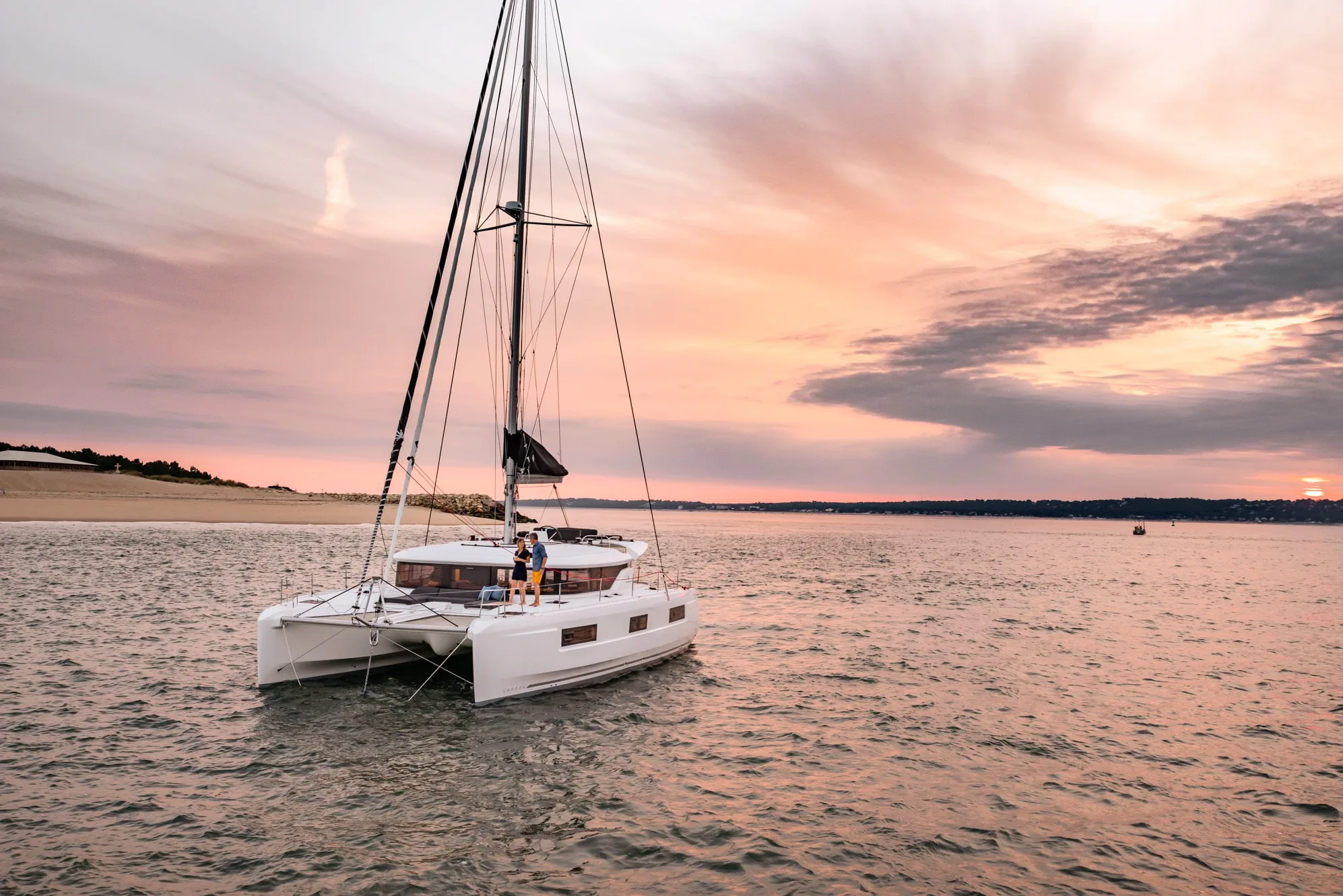
The mistake we nearly made was booking four different hotels across four islands. On paper it looks varied and flexible. In practice it means four mornings where someone is hunting for a missing sandal while the taxi idles outside. A skippered multi-cabin catamaran removed that entirely for us. Bags stayed on board; we unpacked once and did not touch a suitcase again until the final airport morning.
For our children, life aboard a crewed catamaran felt different from any other holiday format we have tried. Swim stops happened on the skipper's judgement: a clear bay, engine off, ladder down. No booking, no changing rooms, no queue. The boat was the base; the islands were the day trips. What we did not get for free was safety kit sized for our kids, and we will come back to exactly what that means and what it costs, because a brochure photo of a catamaran under sail tells you nothing about who is watching your four-year-old near open water.
The format sits between an all-inclusive and a multi-hotel itinerary. An all-inclusive gives the pool and the kids' club, but nothing moves. A land-based multi-hotel trip offers variety but also daily logistics and a different pillow every night. The catamaran gave us the flexibility of moving with the stability of a fixed home.
One genuine weakness is worth naming before the itinerary starts. A catamaran is not a hotel. If conditions are uncomfortable, small children feel it first. July and August in the Adriatic are usually calm, but an afternoon wind can make the crossing to Vis choppy, and we have sat through one. A good skipper holds in harbour and adjusts the day's plan, which is the right call; we built flexibility into every day rather than fighting it.
The skipper question: licence, cabins and privacy
Two questions came up before we booked, and no charter brochure answered either.
Do we need a sailing licence? Not on a skippered charter. The skipper is the vessel's legal master, and we needed no certificate, no logged sea miles and no radio ticket. That is the whole reason this format works for a family that has never sailed anything.
Taking the boat out ourselves would be a different proposition. Croatia recognises foreign qualifications through a list maintained by the Ministry of the Sea, Transport and Infrastructure, and the requirements are specific rather than approximate. An International Certificate of Competence has to state validity for coastal waters, not inland. A separate VHF radio operator's certificate is required whenever the vessel carries a VHF set, which every charter catamaran does, so in practice it is always required. The German SKS and SBF See, the RYA Day Skipper and the Austrian FB2 and FB3 all appear on that list with their own length and tonnage limits. One detail we could not settle: whether the radio certificate has to sit with the person actually at the helm or with any registered crew member. Operators told us a crew member is enough; the regulation itself ties it to the authorised person; only the ministry's own charter desk can resolve the difference. For our holiday the point was academic, because the answer was the skipper either way.
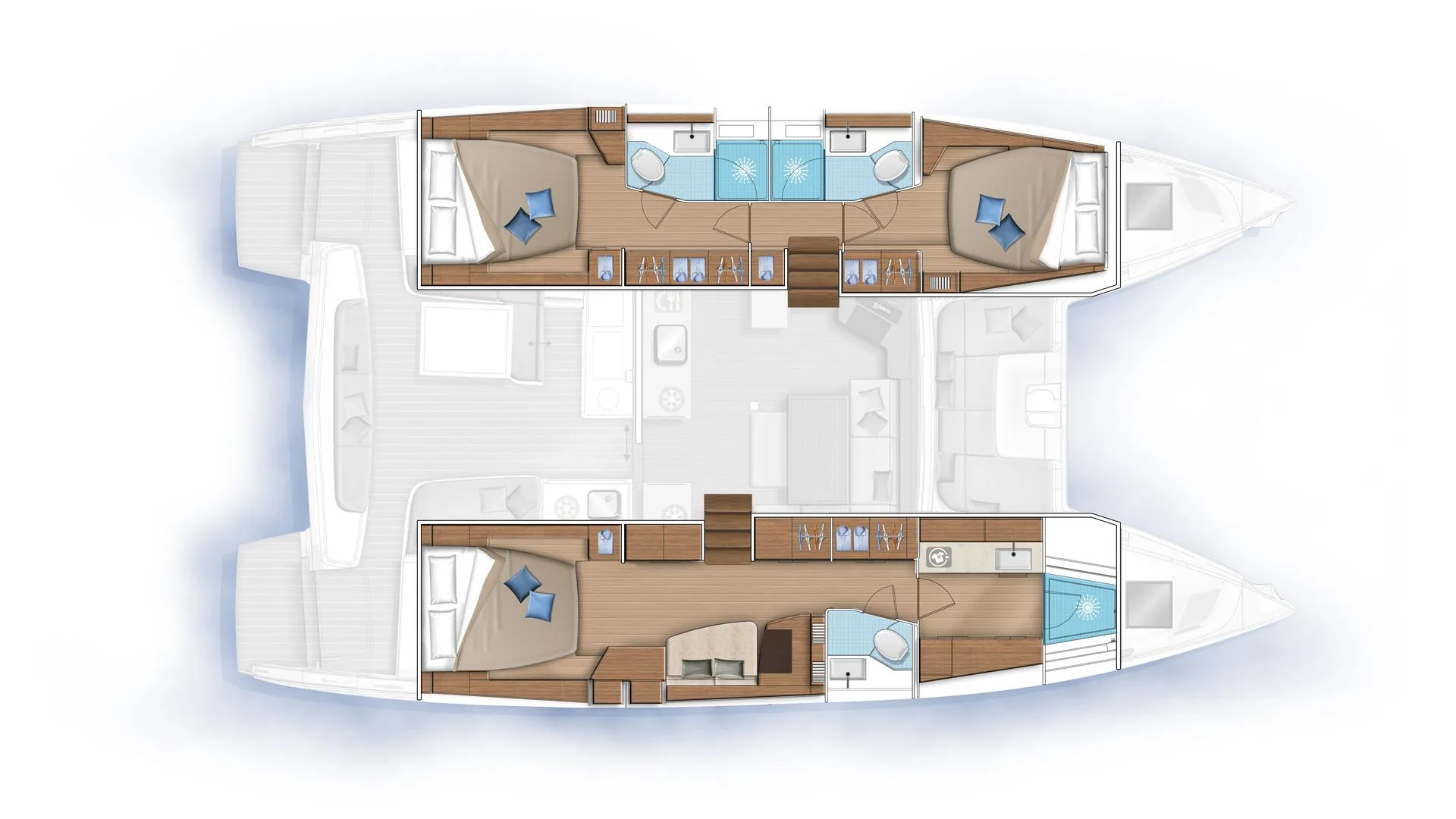
Where does the skipper sleep? On the boats worth chartering for this route, in a cabin of his or her own, and we made a point of confirming this before we paid a deposit. A 46-foot charter catamaran is configured with four double cabins in the two hulls, each with its own bathroom, plus one or two single cabins in the bows. The skipper takes a bow cabin. The four doubles and their four bathrooms stay with the family, which is the arrangement that makes a crewed boat tolerable for two weeks. Waypoint's published 2026 price list treats the skipper's own cabin as a condition of booking rather than a courtesy, and Nautika Centar Nava's charter FAQ says the same thing in almost the same words.
Smaller and older catamarans are where this gets uncomfortable, and it is worth knowing before the deposit rather than at the dock. Without a bow cabin the skipper either takes one of your doubles or sleeps on the saloon sofa, and one Croatian operator states the consequence in plain language on its own website: treat the saloon as the skipper's private area and allow enough time for him to sleep. That removes the boat's main indoor living space every evening. We ask which cabin the skipper will occupy, get the answer in writing, and treat a vague reply as an answer in itself.
Bathrooms are the detail nobody volunteers. A skipper with a bow cabin usually has no bathroom of his own and uses a guest head or the cockpit shower; a dedicated crew head belongs to fully crewed yachts one category above this one. Skipper's food was not included in any rate we checked, at any operator below.
When we go: price and crowds decide the month
Late June, for us, means roughly 20 June to 1 July. Early September means the first three weeks of the month. Both windows gave us sea temperatures of 22 to 25°C, anchorages that were pleasant rather than jammed, and charter rates 15 to 30% below the July and August peak. For a family with school-age children and any flexibility on dates, this single decision changes the trip more than any choice of island or vessel.
July and August are not impossible, but they are harder in three specific ways we have felt directly. Hvar Town's marina fills with party boats by mid-evening, which nobody trying to get a seven-year-old to sleep needs. Popular Pakleni Islands anchorages need an early arrival to secure a mooring. And the best family-capable catamarans are reserved by February for the summer peak, so we book six months ahead at minimum for a high-season departure; the same vessel in the first week of August costs noticeably more than in the first week of September.
September has a particular advantage: tourist volume drops sharply after the first week of the month, the sea stays warm, and the islands return to something close to their out-of-season character. Vis, always quieter than Hvar, empties to a fraction of its peak count. Korčula's restaurant tables are ours without a reservation. Mljet's national park, which sees a fraction of Hvar's traffic at any point in the season, is at its best.
Split: where we start
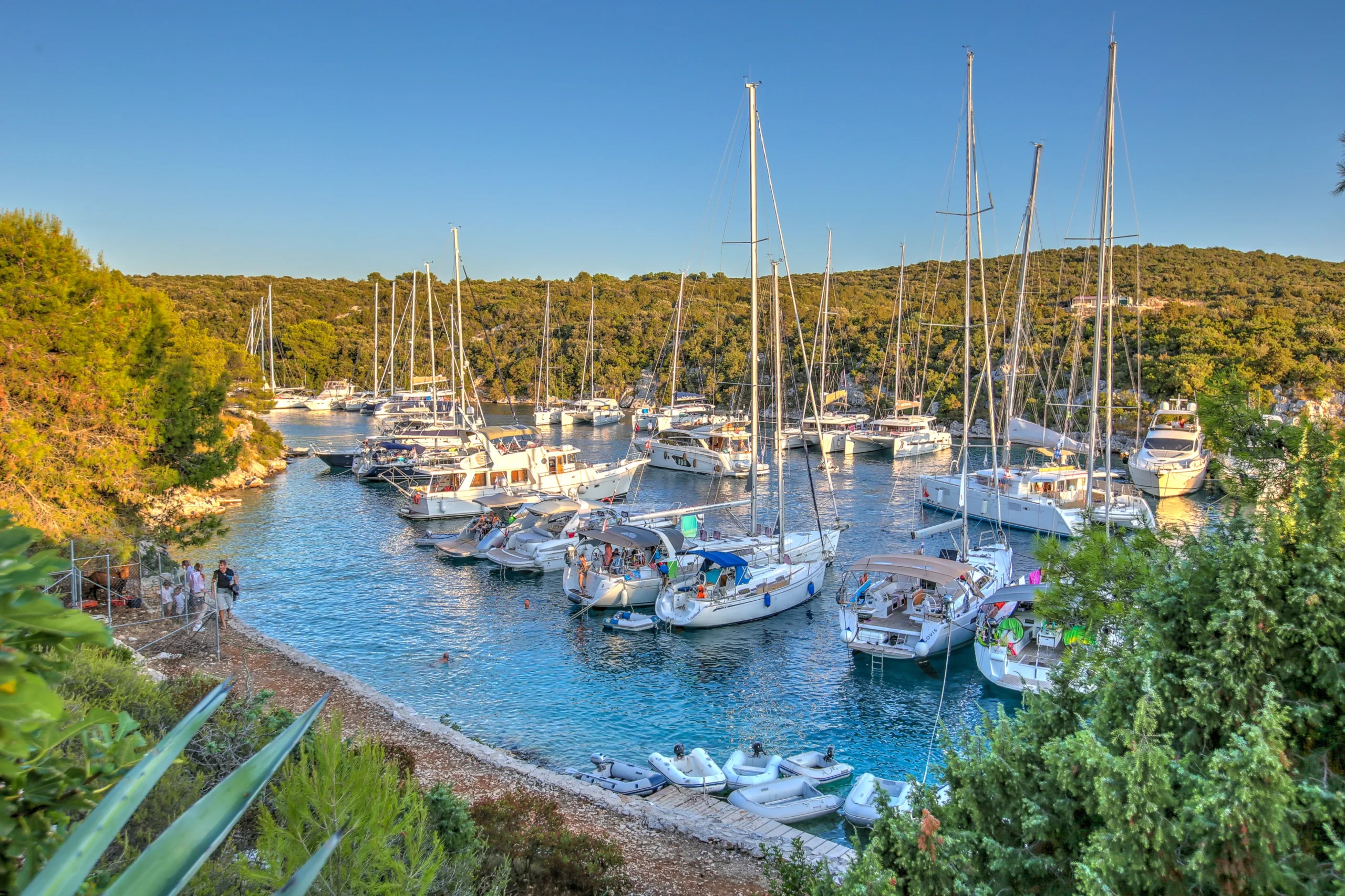
Split has a proper international airport with direct connections from most of Western Europe, an efficient ferry port and an organised charter base, and we build in a day here before boarding. The old town, built inside the walls of Diocletian's Palace, is one of the most unusual city centres in the Mediterranean: a Roman emperor's retirement home converted into a living neighbourhood over sixteen centuries. The Riva waterfront promenade is stroller-friendly, and the restaurants above the harbour are good enough on their own to justify arriving a day ahead of embarkation.
Our charter base is typically ACI Marina Split or the marina at Trogir, 27 kilometres to the northwest; we confirm the embarkation point with the operator at booking. Vessel briefing and provisioning take two to three hours, so we treat the first sailing leg as short by design.
Stari Grad, Hvar: our hotel reset
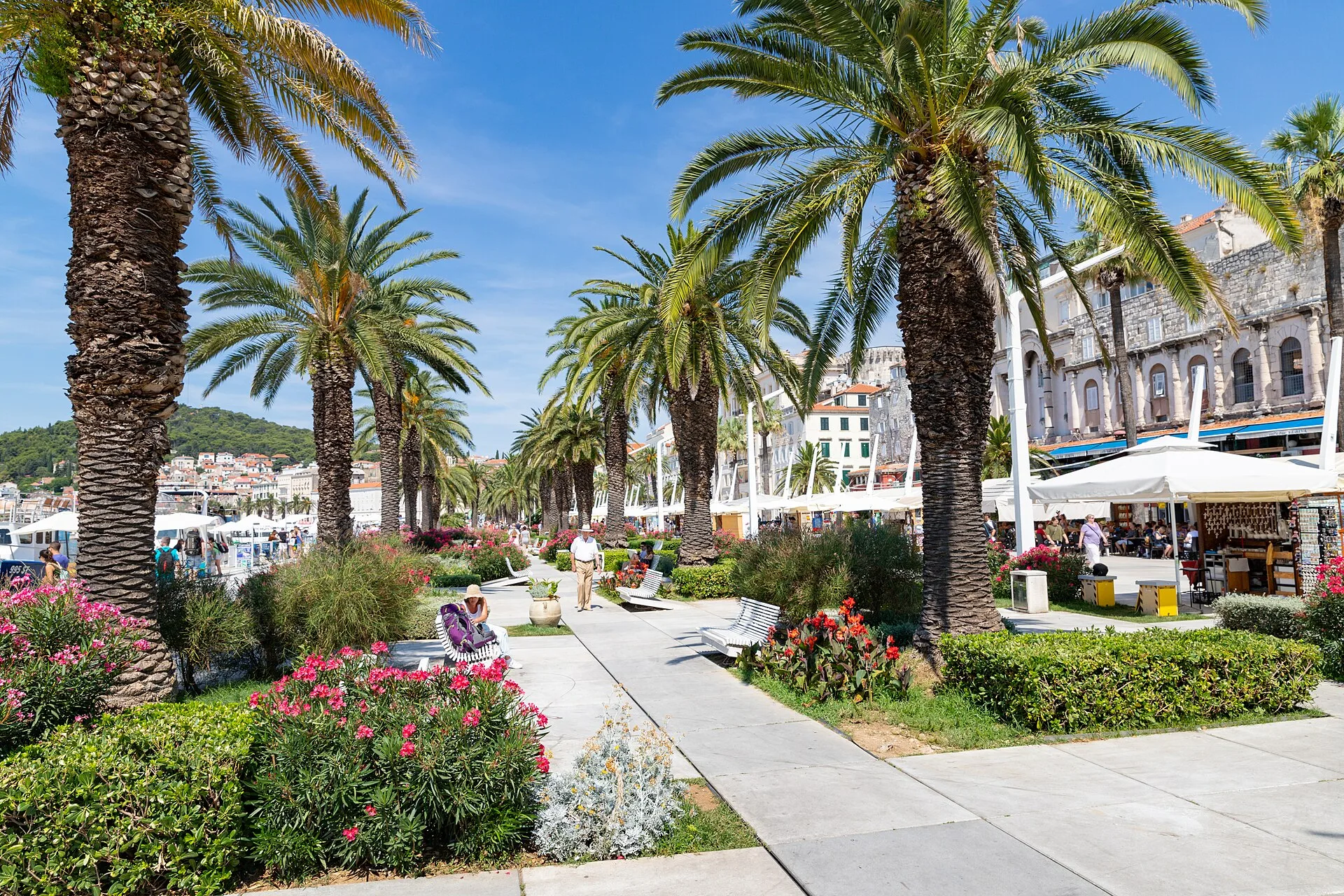
Stari Grad rather than Hvar Town is the anchorage we choose for a family. The bay is protected, the town is quieter, and this is where Maslina Resort sits: a Relais & Châteaux property in an olive grove about two kilometres from the harbour. Three nights here, midway through the voyage, are the decompression the trip needs.
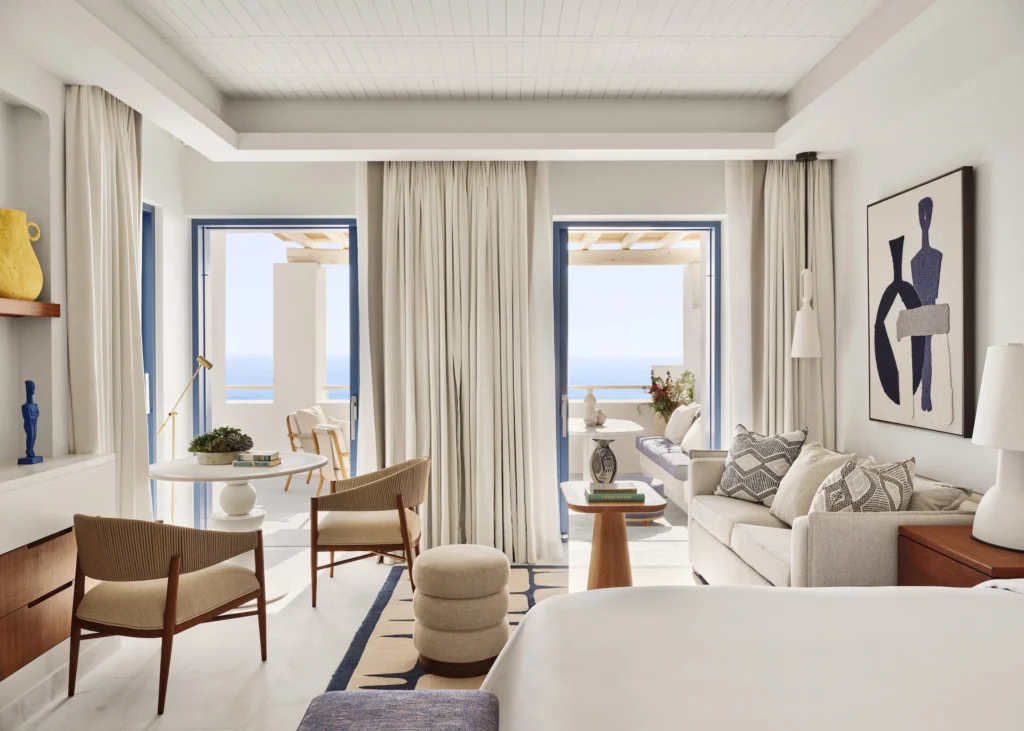
The suites are generous in the ways that matter after several days aboard. The two-bedroom family suite runs to 101 m². The three-bedroom suite is 145 m² with three separate king bedrooms and two bathrooms, which solves the morning bathroom queue that is the low-grade irritant of almost every family trip. At approximately US$2,412 a night at peak rates, three nights in the larger suite comes to around US$7,235 (roughly €6,700 to €7,100 depending on the exchange rate that week). That is a real spend inside a sailing holiday. It earns its place because our children are occupied by the resort's own programming and we actually rest, which is harder to put a number on than the room rate but easy to feel the absence of.
Maslina runs a Family Getaway package, and it is worth requesting, but only if the calendar lines up: the resort's own offer page states it runs 1 May to 15 June and 15 September to 15 October, which sits either side of the shoulder-season window we actually recommend for the sailing. Book inside those dates and the package adds children's workshops, an organic garden session, playroom activities and complimentary transfers between Stari Grad and Hvar Town port. Sail in late June or the first half of September, as we do, and none of that is on offer, only the suite itself, at the peak rate above. The transfer detail still matters either way: the two ports are 10 kilometres apart and the ferry connection is irregular, so without a hotel car an excursion to Hvar Town adds taxi logistics that become another piece of family administration.
Stari Grad has been continuously inhabited since Greek settlers from Paros arrived in the 4th century BC, and the Stari Grad Plain they laid out, a UNESCO World Heritage site, is compact enough to walk in an afternoon rather than a full day. For our older children, it made a better introduction to Croatian history than Dubrovnik's more crowded walls.
Vis: the quiet island
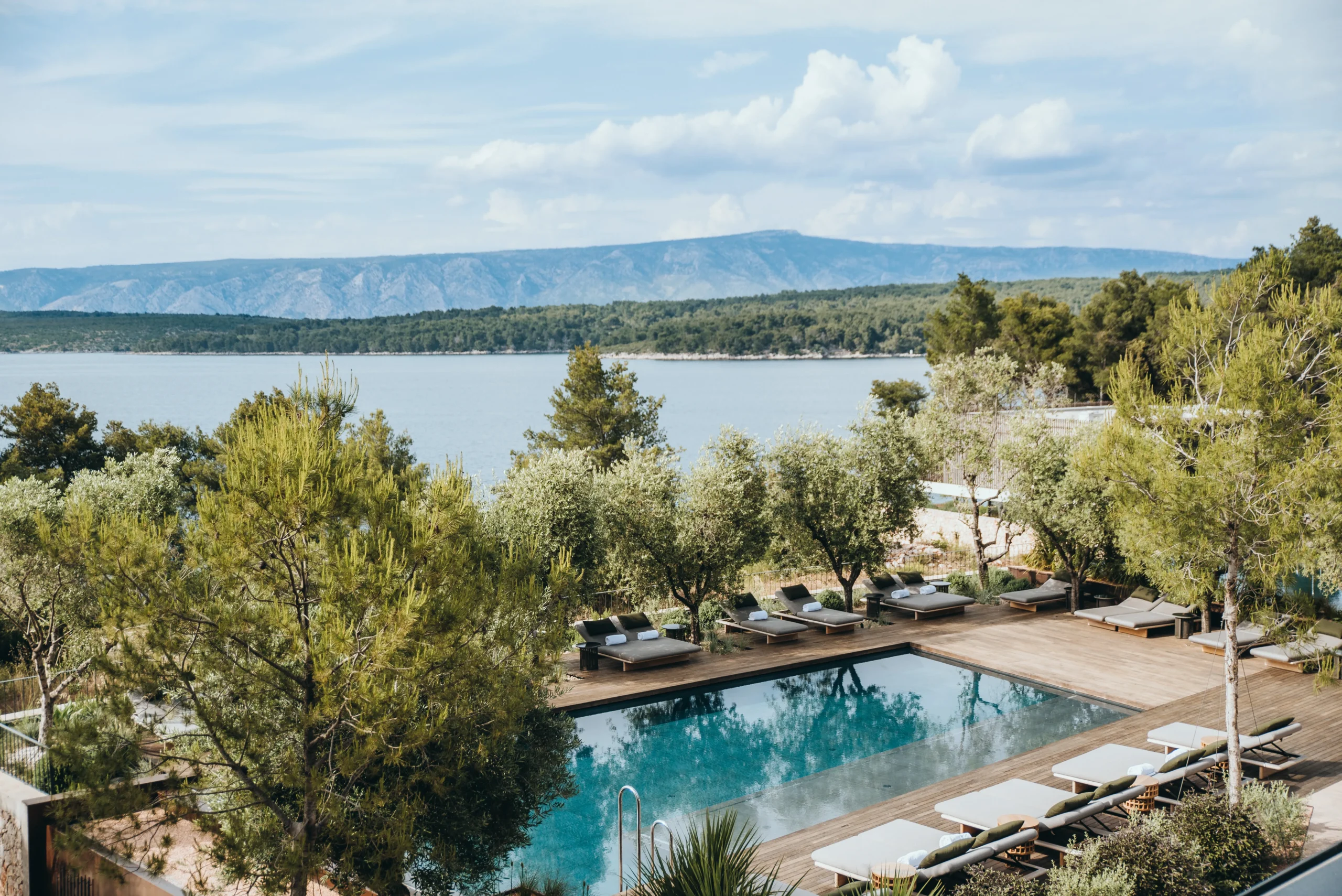
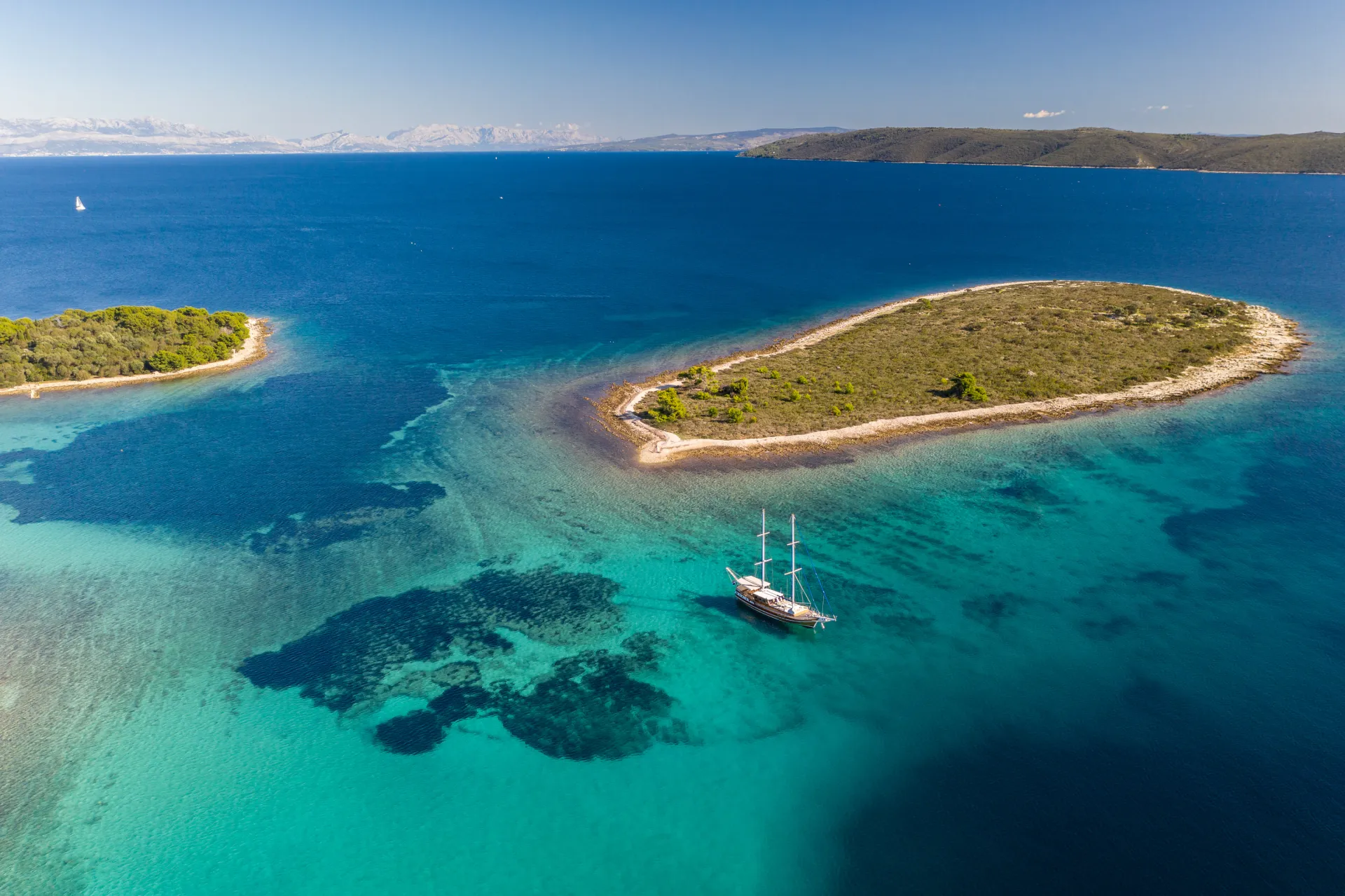
Vis is two to three hours' sailing from Stari Grad depending on wind, and every leg of it happens in daylight; nothing on this route asks a child to sleep through a crossing. The island remained a closed Yugoslav military zone until 1989 and carries a residual quiet into the present day. It has one main town on the northeast coast (also called Vis) and Komiža on the southwest, smaller and more atmospheric. Our skipper anchored off Komiža when the bay was settled; the quayside leads up to a town that runs at the right pace for an evening ashore with children.
The Blue Cave (Modra špilja) sits on the nearby islet of Biševo, roughly 45 minutes by water taxi from Komiža. Entry works by small boat during a weather-dependent window, usually mid-morning to early afternoon, when light enters a submerged opening and turns the cave interior an electric blue; the effect itself lasts only a few minutes and the whole visit is over in fifteen. It is spectacular for a child who responds to caves and strange light. It also means a queue of boats waiting outside and a real chance of cancellation if the sea is up, with no warning given in advance. We treat it as a wish, not a fixed appointment; building the day's schedule around it nearly guarantees disappointment.
Vis Town has several restaurants that are good rather than tourist-adapted, and the local Vugava white wine is specific to the island. An evening ashore after a day of swimming is exactly the pace this format is built for.
Korčula: the walled town
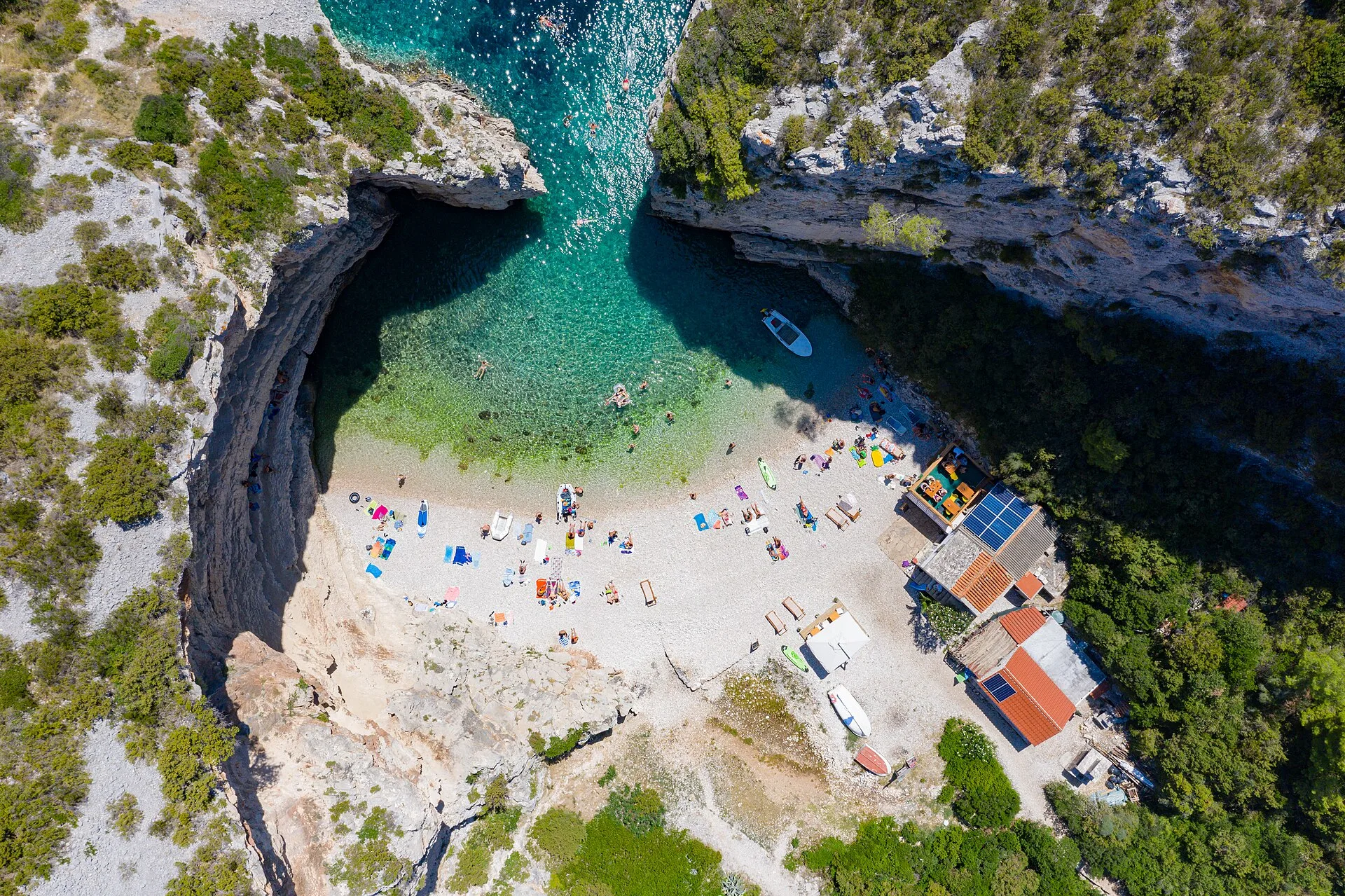
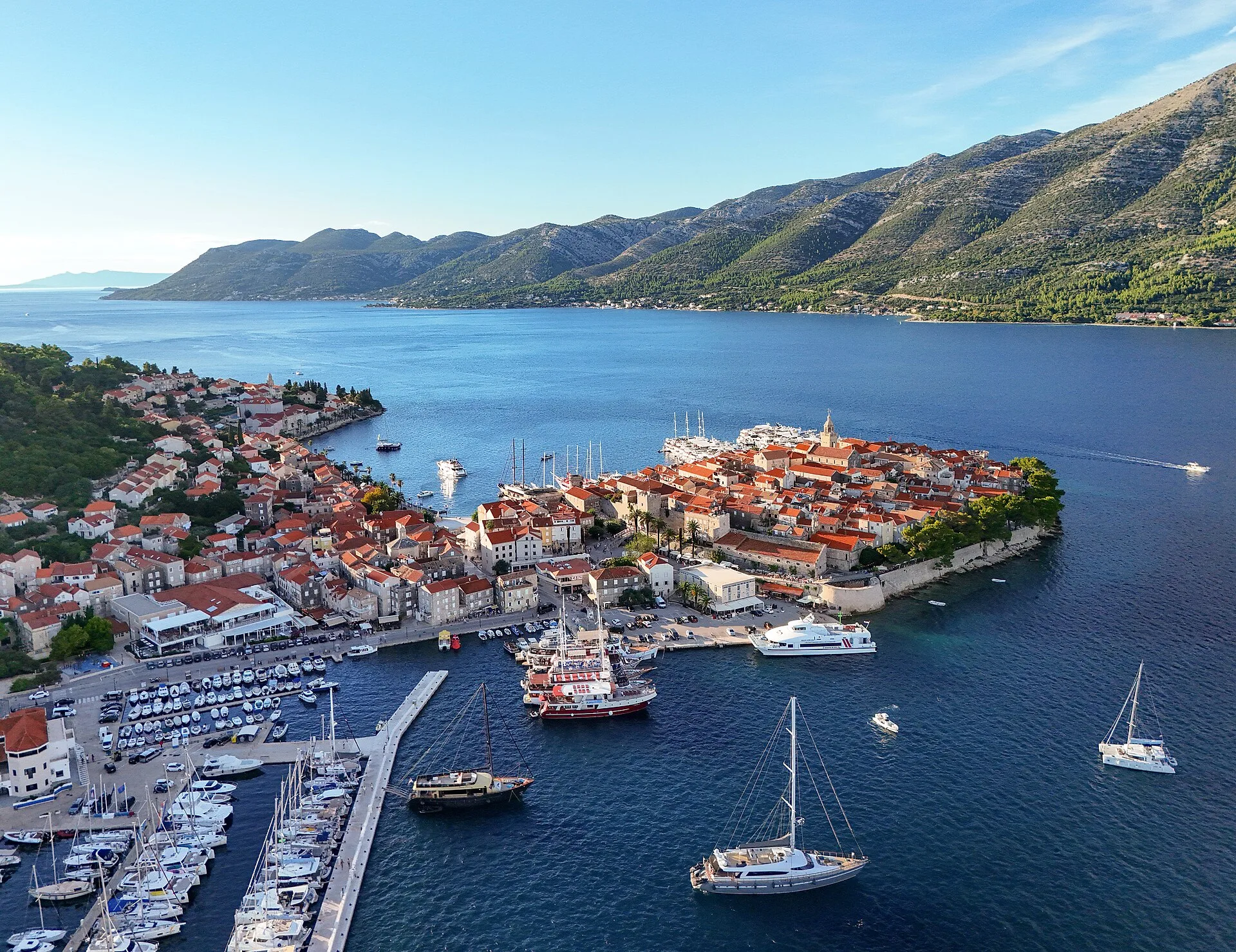
Korčula Town occupies a small peninsula joined to the main island by a narrow isthmus. Its medieval street layout, laid out in a herringbone pattern to manage the Adriatic wind, makes it one of the best-preserved walled towns in the region. Our catamaran anchored off the old harbour; the distance to the town gate was short by tender or water taxi.
The town is smaller and far less congested than Dubrovnik's old city, and our children responded well to it: city walls to walk, a small cathedral and the alleged birthplace of Marco Polo (disputed by historians, but the house is there and children do not care about the dispute). The perimeter walk takes twenty minutes. In shoulder season, restaurants inside the walls were good and tables were free without a reservation.
Mljet: the national park
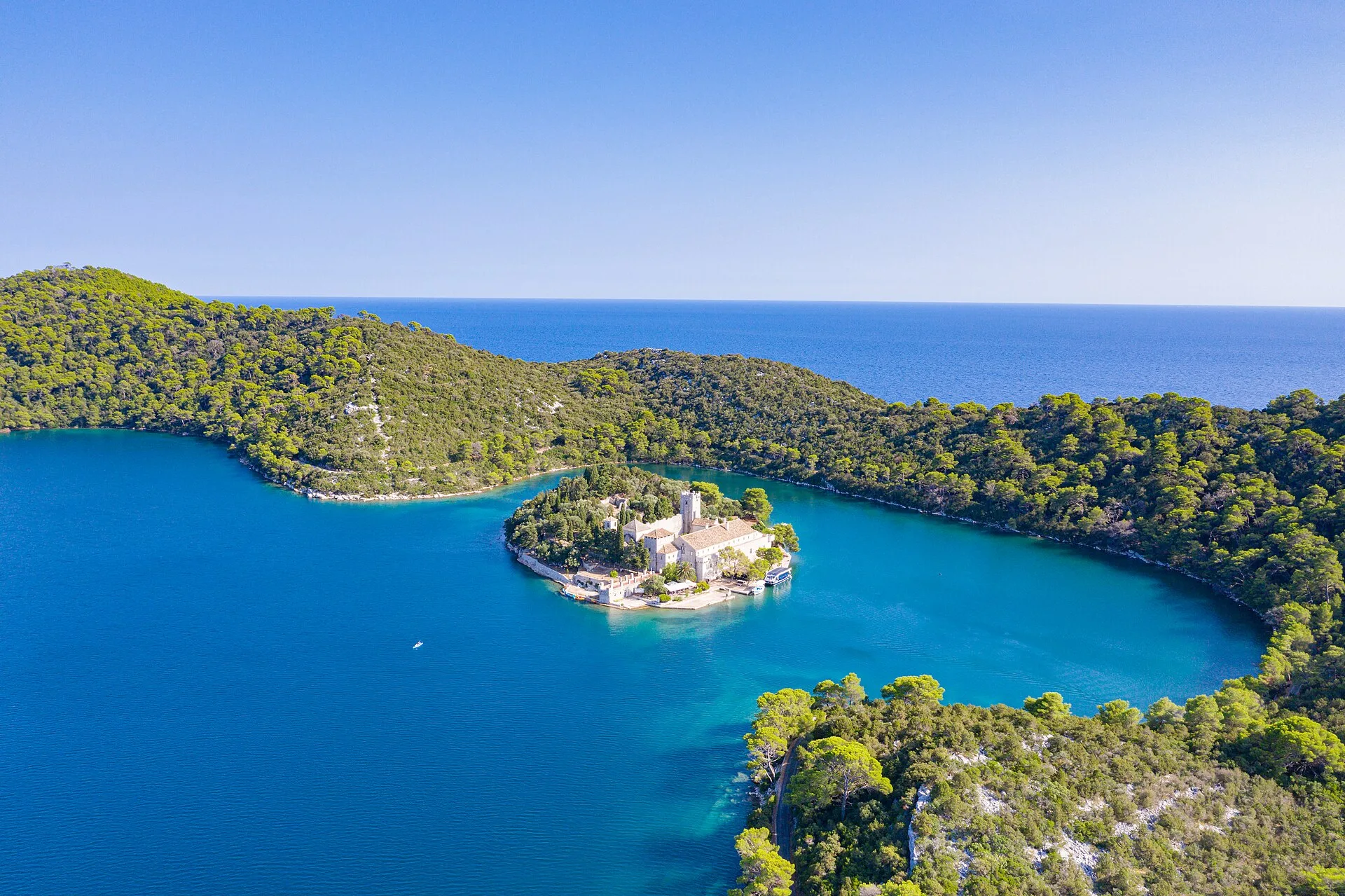
Mljet is the last island before Dubrovnik, and the one that surprised us most. The western third of the island is a national park built around two saltwater lakes connected by a short channel, with a small island in the larger lake holding a twelfth-century Benedictine monastery. The official 2026 price list sets summer entry (1 June to 30 September) at €25 per adult, children under seven free; the ticket covers the return solar-boat crossing to the monastery island, access to every land site in the park, the marked walking trails around both lakes, parking at Vrbovica and the scheduled electric train. Bicycle hire is not part of it; we paid for that separately at the lakeside stands.
The lakes themselves are calm, clean and warmer than the open sea, because the enclosed bay heats faster. For a family with a child who finds open-water swimming from the boat a little daunting, this was the easiest and most relaxed swimming of the whole trip. Kayaks and paddleboards are available for hire in season, and the rental rates are modest by Croatian marina standards.
Our anchorage at Polače, on the island's north coast just inside the park boundary, was well sheltered. The village has a few restaurants and a basic provisions shop. Mljet receives far fewer visitors than Hvar or Korčula at any point in the season; the evenings here are genuinely quiet in a way that Hvar Town, even in September, never quite manages.
Dubrovnik: the endpoint, not the highlight
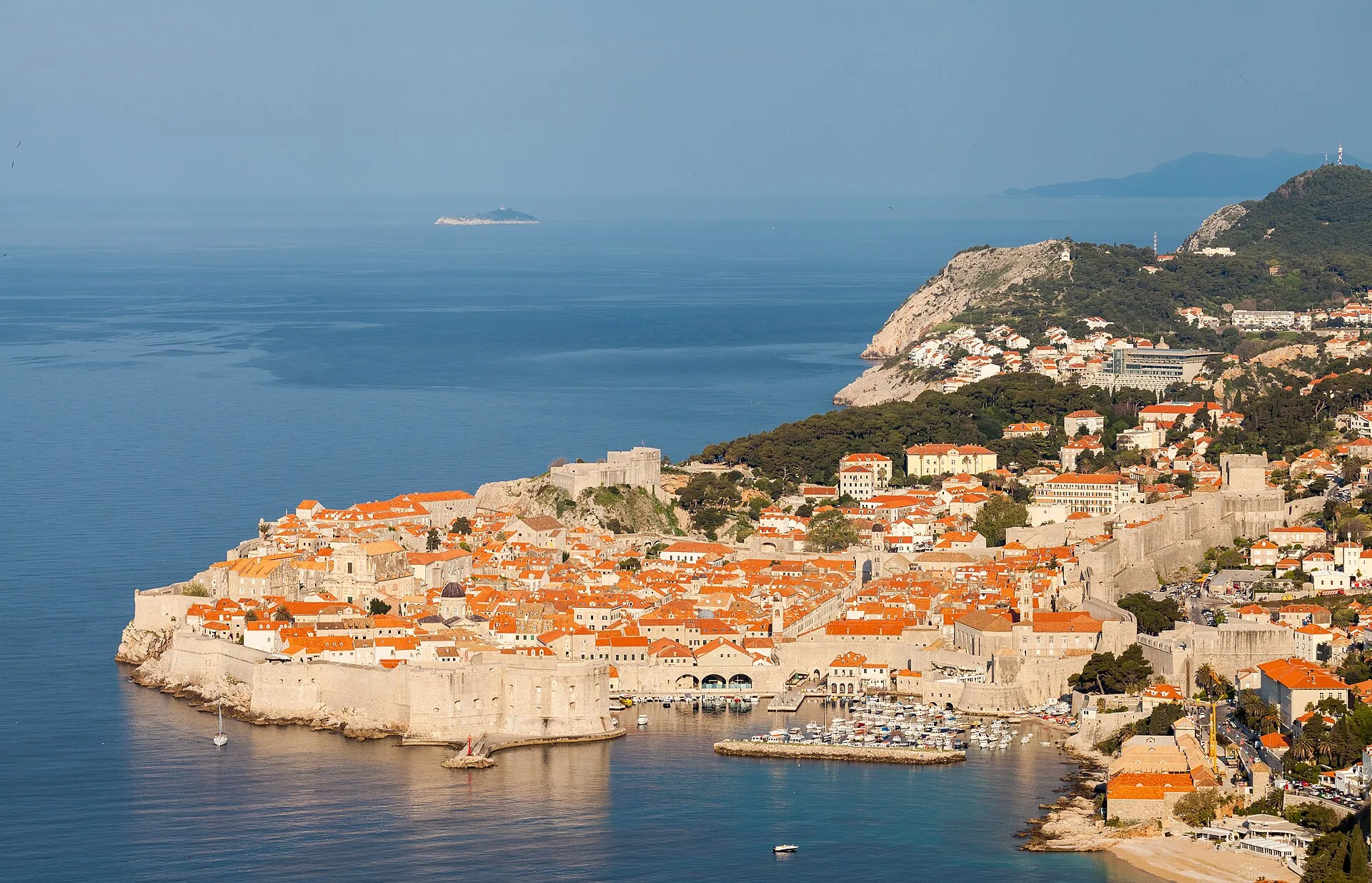
Dubrovnik is not the highlight of this trip for us. It is the endpoint, and it earns one night rather than two. The Old Town is UNESCO-listed and visually striking, but it is also one of the most visited sites in Europe: cruise ships deposit several thousand passengers at a time into the same streets, and in July and August the congestion is real. The city walls walk is 1.94 km, and the official ticket office prices an adult at €40 in high season (child 7 to 18, €15), covering Fort Lovrijenac, the Western pre-walls and the Coin Collection as well as the walls themselves. Budget closer to two hours for the full circuit rather than a quick loop; the surface is uneven in places and it is not a route we would call stroller-friendly.
One warning is worth repeating on its own: the cobbled streets and stepped lanes of the Old Town are hard on a stroller and genuinely hard on a child under five in peak heat. With a child that age in the party, we keep the Dubrovnik section short and start in the morning before temperatures peak. The Buža bars built into the outer cliff face, reached through gaps in the city wall, are worth finding with older children.
One night at a Dubrovnik hotel gave everyone a proper bath, a meal at a table that does not move and an easy airport departure the next morning. We book well ahead; the better addresses above the Lapad peninsula and in the old town fill early for summer dates.
One-way or round-trip: what the repositioning fee buys
Standard charter contracts run out of a home port and return to it. A catamaran taken from Split returns to Split, which means either sailing the full circuit back north from Dubrovnik, a long passage usually sailed against the wind, or leaving the boat and flying home with an unused return leg still in the contract. For this directional circuit, the standard round-trip contract forces a choice between that windward slog and wasted charter nights, and neither suited us with children aboard.
One-way charter is the answer we took. ABA VELA, based in Split, offers the Split-to-Dubrovnik passage on request for roughly €500, covering skipper time and fuel; Waypoint, which runs its own base in Dubrovnik as well as Trogir, charges €790 plus a day's mooring for a catamaran this size. Several operators publish no one-way fee at all, and Waypoint also runs a recurring offer that waives its fee entirely, availability permitting, so we ask rather than assume. Whichever figure applies, we confirm it in writing at the time of booking, before any other contract detail is agreed; this is not part of a standard weekly product and treated as on-request everywhere we checked.
Whether the fee earns its place depends on our own travel logistics. Flying home from Dubrovnik anyway, it almost certainly does: the alternative is an eight-to-ten-hour return sail to Split against the prevailing summer wind, not a comfortable day with children aboard. Without fixed Dubrovnik flights, a round-trip around the central islands avoids the fee entirely.
Which ages this trip actually suits
We get asked which children this works for more than any other question, and the honest answer changes by age band rather than by one cutoff.
Under 3. We would not book this format for a child this age, and we say so plainly. A toddler not yet walking confidently needs constant hands-on attention near open guardrails, there is nowhere on a moving boat to put down a nap routine reliably, and the unfamiliar creaks and swell through the night undo sleep that a hotel room would protect. A single-base hotel with day ferry trips serves this family configuration better, whatever our own enthusiasm for the charter format.
4 to 8. This is where the format starts to earn its keep, and it is also where the equipment conversation stops being optional. We do not assume any of the following is standard: a correctly sized personal flotation device for each child's actual weight, railing or netting mesh around open decks, and a clear swim-stop policy from the skipper (engine off, ladder down, someone watching the water, not the phone). None of it comes free. Railing netting alone runs from roughly €100 to €200 depending on operator and boat size, on top of the charter rate, and we request every item in writing before the deposit, not at the dock. Heat management matters as much as safety kit at this age: shade in the cockpit, a fixed nap window and sunscreen reapplied after every swim stop did more for our afternoons than any itinerary decision.
9 to 12. Water confidence and independence both increase, and this is the band that got the most out of Korčula's walls, the Blue Cave and climbing the swim ladder unassisted. Boredom on a long sailing leg is the real risk here rather than safety, and we found a fishing line, a deck of cards and a task (holding a course, tying a fender) did more than a tablet ever did.
13 to 17. A teenager wants some independence from the rest of us, and a 46-foot boat does not give much room for it; a larger crewed catamaran or a gulet, both covered below, buys back cabin space and privacy that a smaller boat cannot. Motion sickness is worth asking about directly at this age too: a teenager who gets seasick in a car often struggles more on a sailing catamaran heeling under wind than on the flatter ride of a motor yacht or a gulet under engine.
Across every age band, one rule held: we confirmed child safety equipment in writing before paying a deposit, and never assumed a photo of a smiling family on a foredeck meant the boat we were booking carried netting sized for a four-year-old.
The next step up: a crewed 55-foot catamaran
A 46-foot boat with one skipper is the entry point to this route for us, not its ceiling. The class immediately above changes two things that matter more than length: the crew grows to two, and the crew stops living in our space.
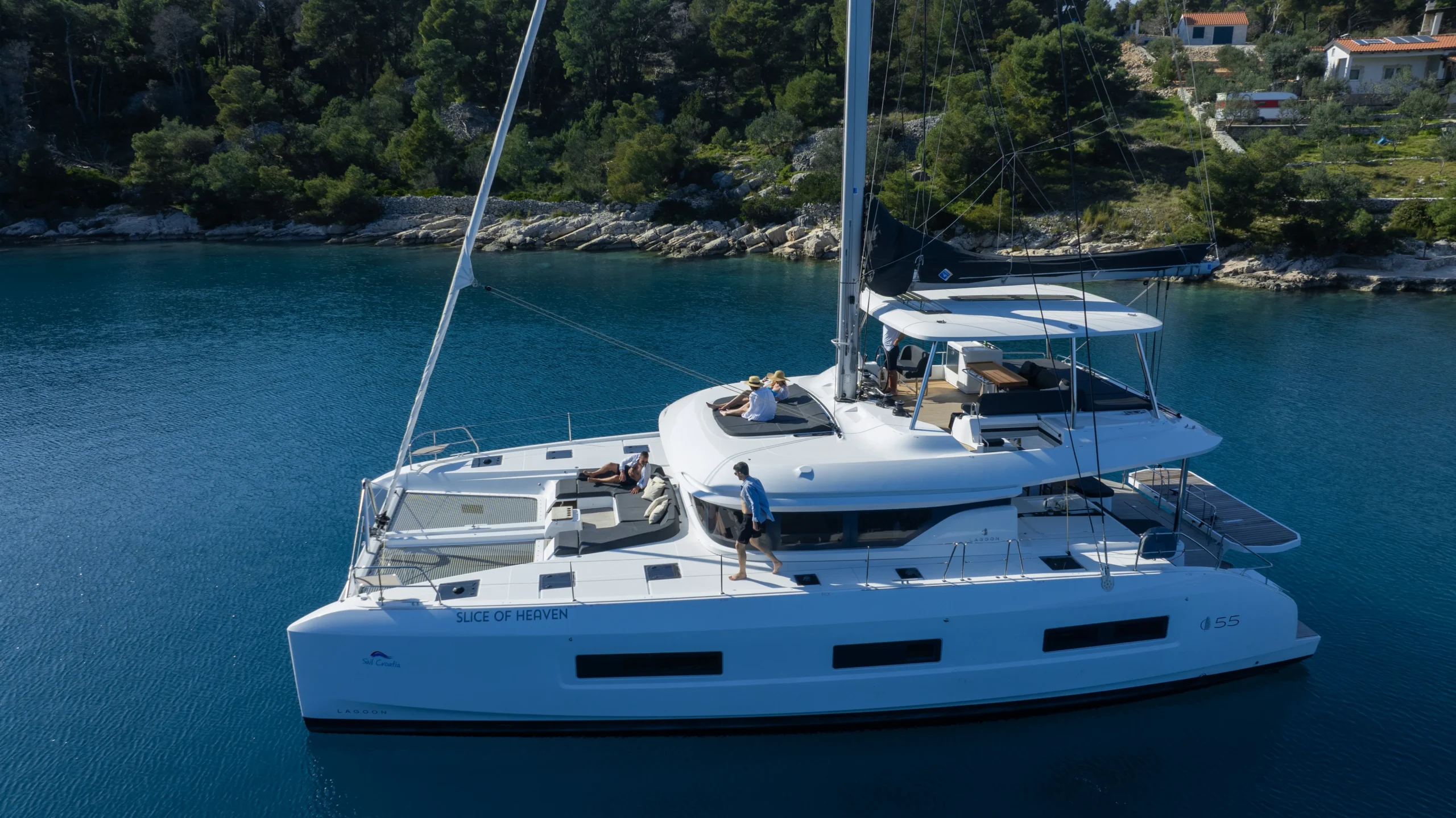
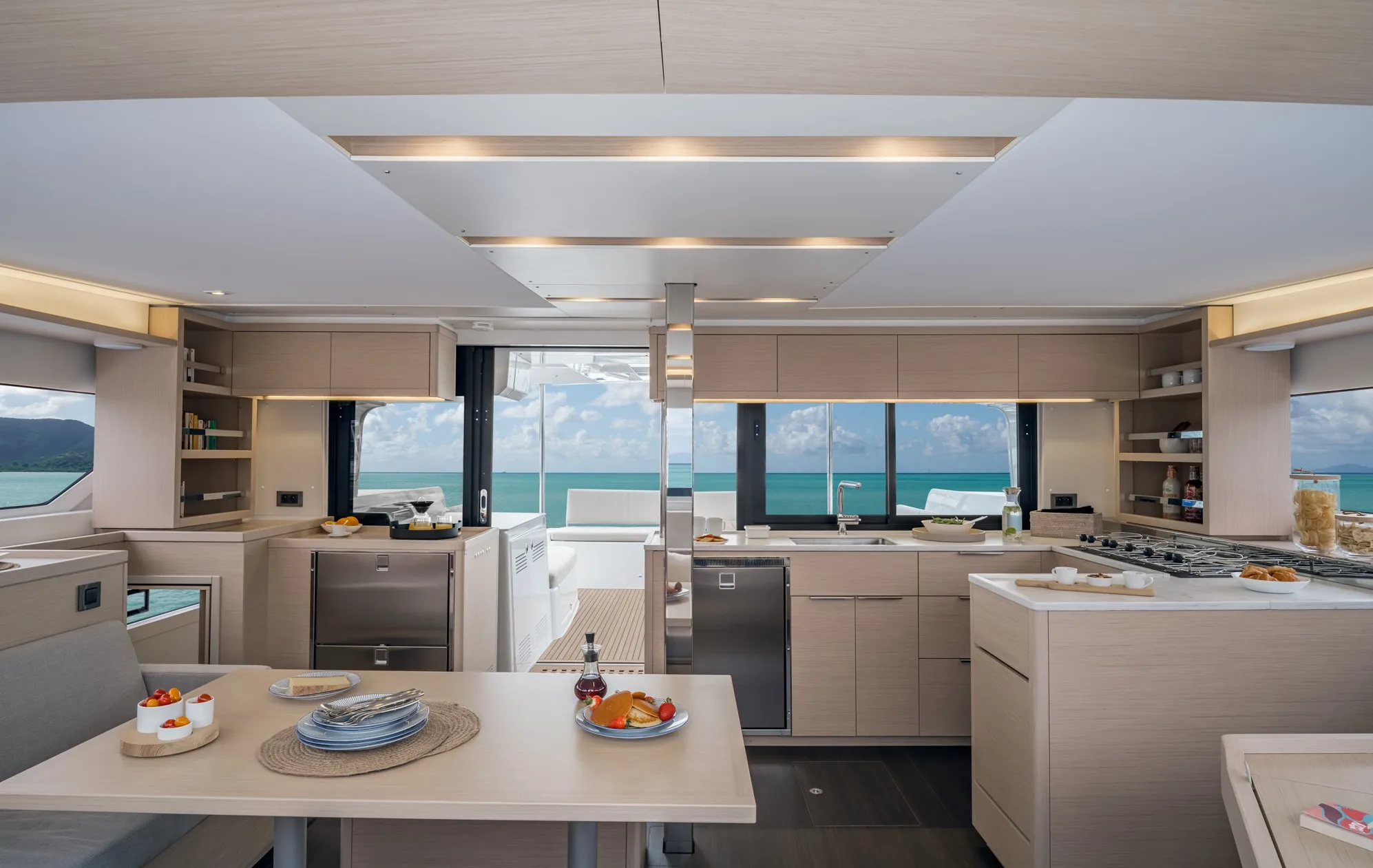
On a Lagoon 55 the sleeping arithmetic finally resolves. Slice of Heaven, a 2024 boat working out of ACI Marina Split with sail-croatia.com, carries eight guests in four double cabins, each with its own bathroom, and puts the skipper and host in their own cabins in the bows, with their own bathrooms too. The question that dominates the smaller boat, where the skipper sleeps and whose bathroom he shares, simply stops being a question. Air conditioning, a generator and a watermaker come with the class, which in practice means the showers work like showers rather than a rationed resource.
What it costs, from the operator's own published rates: for 2027, 25,859 € to 30,269 € for a week in September and 26,859 € to 30,589 € in June; the only 2026 figure the operator publishes is October, from 18,379 €, a different season entirely and not directly comparable to the 2027 summer figures. Skipper and host sit inside every one of those numbers. Set the 2027 September rate against our own Lagoon 46 chain (about 14,400 € in 2026, see below), and the second crew member with the crew's own bathrooms works out to roughly ten thousand euros a week extra, once we allow for the year difference rather than pretend it away.
The wider market sits in the same band, current listings, no year attached by the brokers themselves: a Lagoon 55 with crew from 19,200 € to 33,200 € a week in Croatia, a Bali 5.4 with six cabins and twelve berths from 18,200 € to 28,900 €, a Lagoon 620 from 18,320 €, a Fountaine Pajot Alegria 67 from 35,000 €. Most crewed listings for this coast are quoted Split to Dubrovnik as standard, so the one-way problem that shapes the bareboat decision largely disappears at this level. What replaces it is the Advance Provisioning Allowance: many crewed catamarans add 8,000 € to 12,000 € on top for fuel, food, drinks and berths, and we budget for that separately rather than folding it into the headline rate.
The motor yacht: stability, space and a cook
Anyone who arrives at this article already picturing a yacht rather than a sailing boat usually wants three specific things, and a motor yacht is the class that delivers them: it does not heel, it carries a proper crew including someone whose job is the food, and it has enough deck to keep an eleven-year-old and a four-year-old apart when that becomes necessary.
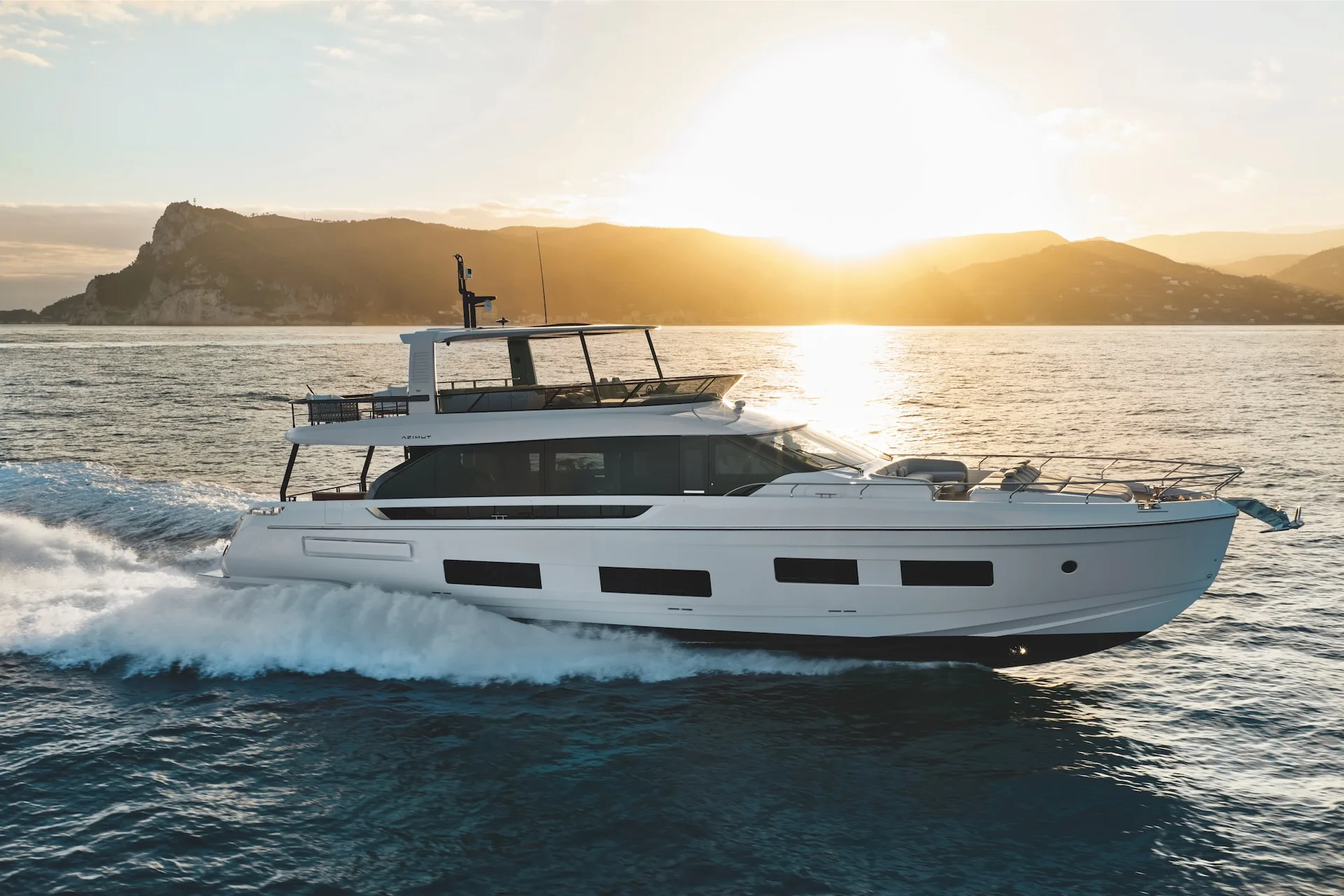
Balance, a 2026 Azimut 82 Fly of 24.8 metres chartered through splendidyachting.com, is the clearest published example on this coast, though the photographs on the operator's own listing show the Azimut 82 Fly model rather than this individual hull. Eight guests in four cabins, all en suite: a full-beam master, two VIP doubles and a twin, which is the layout that actually suits two adults and three children. Three crew, a skipper, a hostess and a deckhand, with breakfast and a light meal prepared aboard. The toy list is where the difference from a sailing charter becomes obvious: a Williams jet tender, a jetski, a Seabob, an electric jetsurf, wakeboard, waterskis, a towable tube and paddleboards.
Published 2026 rates run from 49,950 € in the low band to 59,850 € for the peak weeks between late June and early September, with the shoulder weeks either side at 52,450 € and 56,650 €. Croatian VAT sits inside those numbers already. The Advance Provisioning Allowance does not: budget 30% on top for fuel, food, drinks, port fees and berths, refunded to the extent it goes unspent. A one-way run down to Dubrovnik is an advertised product here rather than a favour, which fits this itinerary exactly.
Above this sits a class most families do not need and should still know exists. Nikita, a 29.9-metre Riva 100 Corsaro with five cabins and five crew including a chef and a stewardess, starts at 100,000 € a week, 2026 rate.
The gulet: the answer for grandparents and big groups
The class that suits a family travelling with grandparents, or two families sharing, is the one most guides to Croatia skip entirely. A gulet is a broad wooden motor-sailer with a fixed crew, a cook, and far more shaded deck than any catamaran at a comparable price.
Andi Star, 26 metres, rebuilt in 2023 and offered through goolets.net, shows why the class works for this kind of group. Ten guests in five en-suite cabins, and the layout is the point: one 15 m² master and four triple cabins, each a double bed plus a single. A parent and a child sharing one cabin, without anyone sleeping in a saloon or a bow berth, is a configuration no 46-foot catamaran offers at any price. Four crew run the boat, one of them a cook who shops ashore and feeds ten people without anyone needing to find a restaurant that will seat them.
Rates run 20,500 € to 24,000 € a week across the operator's published 2027 season (no 2026 rate is published for this boat), and the inclusions are unusually broad: crew wages and their food, fuel for four hours of cruising a day, air conditioning for twelve hours, all bed, bath and beach linen, WiFi and Croatian VAT. Food is priced per person rather than folded in: 610 € each per week for half board, 50 € more each for the dinner upgrade, drinks packages from 220 €, and port taxes of roughly 1,500 € to 2,000 € for the week on top. A comparable 27-metre gulet, Morning Star, offers six cabins for twelve guests at 24,000 € to 28,900 € (2026) with full board at 700 € per person.
The seasickness argument decides some of our family bookings on its own. A gulet cruises at about eight knots under engine with almost no heel, a materially different ride from a sailing catamaran working upwind, and it is the reason we would point a family with a child who has been seasick before toward this class rather than talk them out of sailing Croatia altogether.
What the four classes actually cost
Every figure below is published by the operator rather than quoted on request, and each one is for a full charter week, priced as the boats themselves are sold. We have labelled the year wherever operators publish more than one, because a Lagoon 46 in 2026 and a gulet in 2027 are not the same comparison unless we say so.
- 46-foot catamaran, one skipper (2026 rates). 4,580 € to 16,500 € for the boat depending on the week, plus 240 € a day for the skipper. Our own early-September week costs 11,000 €, landing near 14,400 € all in with the one-way fee, safety pack and netting. Eight berths, four bathrooms, skipper in a bow cabin sharing a guest head.
- 55 to 65-foot catamaran, skipper and host (2027 rates for the vessel we name; wider market unlabelled by brokers). 18,379 € to 33,200 €, crew included, plus an Advance Provisioning Allowance of 8,000 € to 12,000 € at many operators. Eight to twelve berths, crew in their own bow cabins with their own bathrooms.
- Crewed motor yacht, 25 to 30 metres (2026 rates). 49,950 € to 59,850 € for an Azimut 82 Fly, plus 30% Advance Provisioning Allowance; 100,000 € upward for a 30-metre Riva. Eight to ten guests, three to five crew, no heel, a full water-toy inventory.
- Gulet, 26 to 32 metres (2026 to 2027 rates, mixed by operator). 19,500 € to 29,000 € including VAT, crew and four hours of daily cruising, plus 610 € to 700 € per person per week for board and 1,500 € to 2,500 € in port taxes. Ten to fourteen guests, and the only class offering triple cabins.
The pattern is worth naming because it is not linear. Going from one skipper to a crew of two roughly doubles the weekly bill. Going from sail to a motor yacht roughly doubles it again. The gulet breaks the pattern: it costs about the same as a crewed catamaran while sleeping more people and feeding them, which is why it wins for a group of ten and loses for a family of four.
Where we would book it, and what the parts cost
Croatian charter is a busy market with thin public pricing. Most operators publish a fleet and a contact form, then quote on request, which makes comparison harder than it should be. We checked ten operators in September 2026 and list only what each one actually puts in public; where an operator keeps a number behind a quote request, we say so rather than guess.
Waypoint: Trogir, with its own Dubrovnik base
The operator we would call first for this route, because it is the only one here publishing a full 2026 season price table for each individual boat. Two own bases mean the one-way leg is an internal transfer rather than a favour. waypoint.hr
- Catamarans: Lagoon 46 Fly, Lagoon 50 Fly, Lagoon 450 Fly, Lagoon 40
- Skipper: 240 € per day on the Lagoon 46 and 450, 250 € on the Lagoon 50, 220 € below 45 feet
- One-way to Dubrovnik: 790 € for a 45 to 49 foot catamaran, plus one day's mooring
- Family kit: railing net 200 €, paddleboard 130 € per week, kayak 170 €, automatic lifejackets in the standard inventory
- Published 2026 shoulder-season week: Lagoon 46 Fly at 11,000 € for 5 to 19 September, 8,000 € from 19 September
ABA VELA: Split, and the cheapest published one-way
A two-boat operation rather than a fleet, so availability is the constraint, not choice. Worth the call for the repositioning fee alone, the lowest published figure we found anywhere. abavela.com
- Catamarans: Lagoon 42 (2019, four cabins plus two), Lagoon 400 (2012, four plus two)
- Skipper: 200 € per day or 1,500 € per week; hostess 900 € per week
- One-way Split to Dubrovnik: a flat 500 €, on request, arranged at booking
- Family kit: railing net 100 €, paddleboard 100 €, automatic lifejacket 10 €, one junior lifejacket in the inventory
- Published rates: date-driven only, so late June and early September are not visible without a query
Nautika Centar Nava: the widest fleet and the best children's kit
An official Lagoon dealer, which shows in the range: everything from a Lagoon 38 to a SIXTY 5. The only operator here pricing its children's equipment item by item instead of promising to arrange it. navaboats.com
- Catamarans: Lagoon 38, 40, 42, 43, 450 Fly, 46, 51 and 51 Iconic, 55, SIXTY 5
- Bases: Port of Split and Rogoznica, plus ACI Slano near Dubrovnik
- Skipper: 1,750 € per booking on the Lagoon 46, food not included
- Family kit: child safety netting 150 €, snorkelling set 25 €, paddleboard 150 €, kayak 170 €, a children's water scooter 120 €; tourist tax free under twelve
- Published week (2027): Lagoon 46 at 11,100 € in early September, 11,900 € in late June, 8,200 € from mid September
Ultra Sailing: Fountaine Pajot instead of Lagoon
The alternative if we would rather not share a hull design with everyone else in the anchorage, with bases at both ends of the route. Children's lifejackets are fitted to sizes and weights given at booking, which is the right way round. ultra-sailing.hr
- Catamarans: Fountaine Pajot Isla 40, Lucia 40, FP 44, Elba 45, Saona 47, Saba 50, Aura 51, Alegria 67; Lagoon 40
- Bases: ACI Split, Marina Baotić at Trogir, ACI Dubrovnik, Pomer
- Skipper: 230 € to 350 € per day including VAT
- Mandatory extras: catamaran pack 495 € to 655 €, snorkelling sets included in it
- One-way: not published, though the Dubrovnik base exists; we would ask directly
Croatia Yachting: sixty-four Lagoon 46s
Scale is the argument here. If the exact week we need is gone everywhere else, this is where a four-plus-two Lagoon 46 is most likely to still exist. croatia-yachting-charter.com
- Catamarans: 64 Lagoon 46s, all four double cabins plus two singles and four bathrooms, plus Lagoon 38 to 55, Bali, Fountaine Pajot, Nautitech
- Bases: ACI Split, Split Zapadna obala, Kaštela, Trogir, Seget
- Skipper: roughly 1,000 € to 1,400 € per week, food extra
- Family kit: safety netting and children's lifejackets chargeable on request, price not published
- Worth noting: its own boat pages state the licence rule plainly, sailing and VHF certificates both required for bareboat
Angelina: a Bali fleet with every extra priced
Bali hulls have a solid forward cockpit and a garage door aft rather than a trampoline, which we noticed some families prefer with small children aboard. Extras are published to the euro. angelina.hr
- Catamarans: Bali 4.0 through 5.8 and Catspace, Lagoon 380 S2, 40 and 42, Fountaine Pajot, Catana, Dufour 48 Cat
- Bases: Trogir, Split, Rogoznica, Kremik, and Komolac near Dubrovnik
- Family kit: safety netting 30 € to 200 € by boat size, automatic lifejacket 15 € per person per week, paddleboard 100 €, kayak 150 €
- Skipper and one-way: both offered, neither rate published
Sunsail: the international option
Familiar if we had chartered before in the Caribbean or Greece, with the standardised handover that comes with it. The least transparent of the ten on anything a family specifically needs. sunsail.com
- Catamarans: Sunsail 424, 454L and 464 with four cabins, 465 with five
- Bases: Marina Agana near Trogir, roughly thirty minutes from Split airport, and Dubrovnik
- Rates, skipper, one-way, family kit: none of it published; everything runs through the booking engine
Sail Croatia: crewed catamarans out of ACI Split
Where we would look for the 55-foot class with skipper and host included rather than added on. Publishes per-week rates by season for each individual boat, which almost nobody at this level does. sail-croatia.com
- Typical boat: Lagoon 55 Slice of Heaven (2024), eight guests in four en-suite cabins, crew in bow cabins with their own bathrooms
- Crew: skipper and host included in the rate
- Published week: 25,859 € to 30,269 € in September 2027; 18,379 € upward in October 2026, a different season and a different year, not the same comparison
- One-way: Split to Dubrovnik is how crewed itineraries on this coast are normally quoted, so we ask for it as the default
Splendid Yachting: crewed motor yachts, Šibenik and Kaštela
The motor-yacht end, run by a German-speaking operator, with a fleet list that carries a starting week price for every hull instead of a contact form. splendidyachting.com
- Fleet: Galeon 640 Fly from 13,550 €, Azimut 68 to 82 Fly 27,450 € to 49,950 €, Princess 72 from 29,000 €, Cyrus 34M from 67,250 €, Riva 100 Corsaro from 100,000 € (2026 rates)
- Crew: three on a 25-metre boat, five and up beyond 30 metres
- On top of the rate: Advance Provisioning Allowance of 25% to 35%; Croatian VAT already inside the quoted rates
- One-way: a seven-day Šibenik to Dubrovnik run is an advertised product
Goolets: gulets, and the only triple cabins on this list
The specialist for the wooden motor-sailer class, the answer for ten to fourteen people travelling together. Rates include the crew, their food and the fuel for a normal cruising day. goolets.net
- Croatian fleet (2027 rates): Andi Star 26 m from 20,500 €, Anđeo 27 m from 21,000 €, Eleganza 27 m from 21,500 €, Korab 25 m from 18,500 €, Alessandro I 40 m from 60,000 €
- Crew: four on a 26-metre gulet, including a cook; five from 32 metres
- Board: priced per person, 610 € to 700 € a week, plus drinks packages from 220 €
- Also budget: port taxes of roughly 1,500 € to 2,500 € for the week, which the rate does not cover
Two things are worth knowing before the first call. Only Waypoint and ABA VELA publish both a skipper rate and a one-way fee, so those two are the only operators we could price without waiting for a quote. And Dream Yacht Charter, which surfaces in every search for this route, blocks automated access to its own site, so we could not verify its Croatian fleet or its rates and left it out rather than repeat numbers we had not seen ourselves.
What does not work, and who should choose differently
We would not book this format for a family whose youngest is under three, for the reasons above: constant hands-on supervision near open guardrails, no reliable nap routine on a moving boat, and sleep disrupted by unfamiliar sounds through the night. A single-base hotel with day ferry trips serves that family configuration better, whatever our own enthusiasm for the charter format.
We know families who need a fixed daily programme find the catamaran's flexibility uncomfortable rather than freeing. A skipper adjusts the route for wind, holds in harbour when conditions are borderline, and occasionally swaps one anchorage for another. For a family that needs structure instead, a resort holiday with a fixed children's schedule serves that need without the variables a boat introduces.
For a family locked into peak summer with no flexibility on dates, the trip still works, but it is harder in every specific way described above. We would book the catamaran by February, reserve the Maslina suite at the same time, and go in expecting the Pakleni Islands anchorages and Hvar Town waterfront to be busier than this guide otherwise implies. The core rhythm of sailing and swimming holds even in August; the difficulty concentrates in the evenings at the larger ports.
How we chose, and what we would book
Three questions settled it for us. Is the timing achievable outside the July and August peak? Late June or early September, confirmed at booking, not hoped for later. Are our children old enough that a full day of sailing and swimming, rather than an overnight passage, still leaves them in a good mood by evening? Generally yes from about four upward, on this route, since nothing here requires an overnight crossing. And is the budget realistic for the combination of charter costs, the Maslina nights and a Dubrovnik hotel, none of which we fold into one blended number below?
If all three answers are yes, the Split-to-Dubrovnik circuit on a skippered catamaran is among the best family itineraries the Mediterranean currently offers us. The stops reward different ages differently: Stari Grad and Korčula for history-responsive children, Vis and Mljet for swimmers, Split and Dubrovnik for the adults who want a city evening.
Our own booking: a 12-night trip, 10 of them on the water or at Maslina. Two nights in Split before boarding. A 10-night one-way charter from there, departing in the last week of June or the first ten days of September: three nights at Maslina Resort as the mid-voyage reset, in the three-bedroom suite for a group of five or six; two nights in the Vis and Komiža area; two off Korčula; two at Polače on Mljet; one final night in Dubrovnik before the airport.
The boat we would book, and what it costs
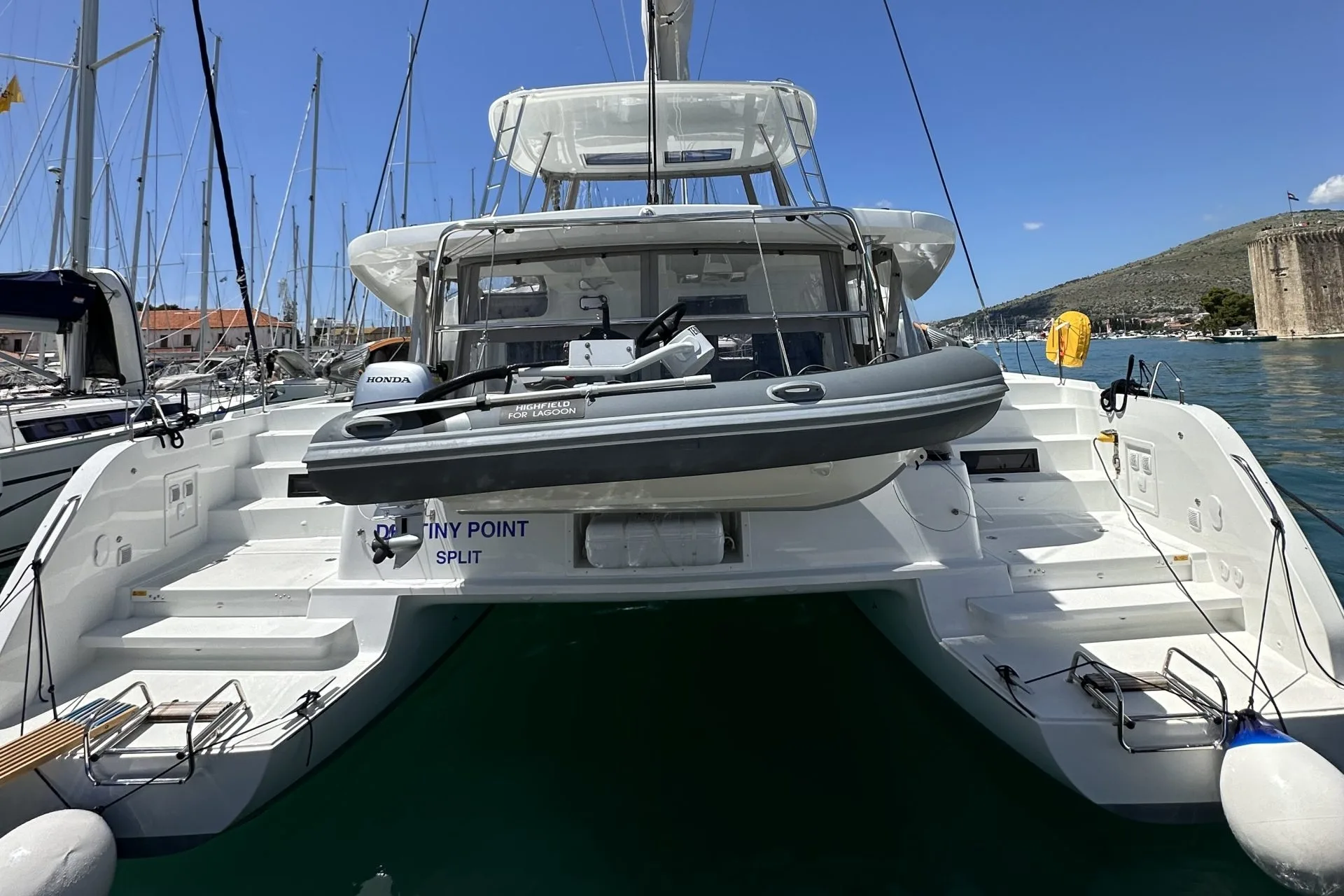
Destiny Point, a 2024 Lagoon 46 Fly on Waypoint's dock at ACI Marina Trogir, is the specific vessel this itinerary is built around. Fourteen metres, four double cabins with a bathroom each, two single cabins in the bows, twelve berths in total, air conditioning, a generator and a 20 hp dinghy for the swim stops and shore runs. The skipper takes one bow cabin; the family has everything else.
Every number below is published on the boat's own page rather than quoted on request, unusual enough in this market to be the main reason we name this boat and this operator. All figures are 2026, the only year Waypoint has published so far. A charter week in the 5 to 19 September window costs 11,000 €. The skipper adds 240 € per day. Ending the charter in Dubrovnik instead of returning to Trogir adds 790 € plus a day's mooring. The mandatory safety pack for a catamaran this size is 730 €, and railing netting, which we treat as compulsory rather than optional with a child under eight aboard, is 200 €. One charter week with skipper, one-way and netting included therefore lands near 14,400 €, before moorings, fuel, food, and the extra nights our actual itinerary needs beyond a single standard week.
Our recommended trip runs 10 nights afloat and at Maslina, longer than the standard 7-night charter week this rate describes, so we ask the operator for a bespoke quote on the extra nights rather than assume the difference is free; a rough guide is the daily rate implied by the weekly figure above, plus the fixed extras (skipper, one-way, safety pack, netting) only once. On top of the boat, we budget the Maslina suite (roughly US$7,235 for three nights, above) and separate, unpriced nights in Split and Dubrovnik hotels, neither of which any operator or hotel in this piece has quoted us a figure for. We would rather say that plainly than publish a blended range that cannot be checked against its own parts.
The same boat in the last week of June costs the same 11,000 €. The week of 27 June to 18 July costs 14,000 €. That 3,000 € gap between the last days of June and the middle of July, for an identical boat with an identical skipper, is the most concrete argument for shoulder season anywhere in this article.