Nine and a half. That is the ratio of staff to villas at Soneva Fushi, and it rewrites what luxury means more completely than any chandelier could. The families spending the most on travel right now are spending it on attention, quiet, and something their children will still be talking about at eighteen. They are not spending it on marble.
The quick version
- The defining shift in affluent family travel for 2025–2026 is a move away from visible opulence and toward emotional richness, privacy, and genuine calm.
- The best properties in this mode share three markers: a high staff-to-guest ratio, a documented design philosophy with specific non-negotiable choices, and a children’s programme that required real investment to build.
- “Quiet luxury” is also a marketing term being applied to understaffed and under-invested properties. Knowing how to tell the difference is the job.
- Five properties currently lead this field: Soneva Fushi, Jean-Michel Cousteau Resort Fiji, Dachsteinkoenig in Austria, Vila Vita Parc in the Algarve, and Cheval Blanc Randheli in the Maldives.
- Six Senses, with its 2025 “Grow With Six Senses” programme, is setting a new benchmark for children’s wellness programming across more than two dozen properties worldwide.
Why the shift is real
For a decade, premium family travel operated on a legible logic: more facilities equalled more value. The waterslides were bigger, the suites were grander, the pools were longer. Itineraries were dense. Returning guests compared amenity lists the way other people compare league tables, and for a decade that remained the prevailing model.
That point has now passed. What we are seeing across the top end of the market reads less as a trend and more as exhaustion. Parents arriving at hotels in 2025 and 2026 are not requesting less stimulation in the abstract. They are very specific people who have had the spectacle and found it wanting: they booked the resort with seven pools and came home more tired than they left. They are now looking for the trip that restores something. The industry terms for this are “quiet luxury,” “slow travel,” and “hushpitality.” The underlying demand is simpler: presence, and time that actually feels expansive rather than managed.
The economics follow the preference. Forward bookings for trips in the $100,000-plus bracket are up 49% year-over-year. Wellness tourism is projected to grow at double-digit rates annually from a substantial global base. The families spending at this level have decided, with some precision, that what they are buying is relief rather than spectacle. Virtuoso’s luxury travel advisors now describe “mood boarding” client trips around emotional states rather than destination categories: restoration, connection, meaning.
The five properties doing this properly
What separates a property with a real philosophy from a marketing campaign is operational. You can see it in the ratio: how many staff are actually present per guest? You can detect it in the design choices: what did the founders specifically refuse to include, and why? And you can test it in the children’s programme: is it an activity rota dressed in a name, or a real curriculum with trained staff and outcomes?
Five properties are currently passing all three of those tests with conviction.
Soneva Fushi, Maldives
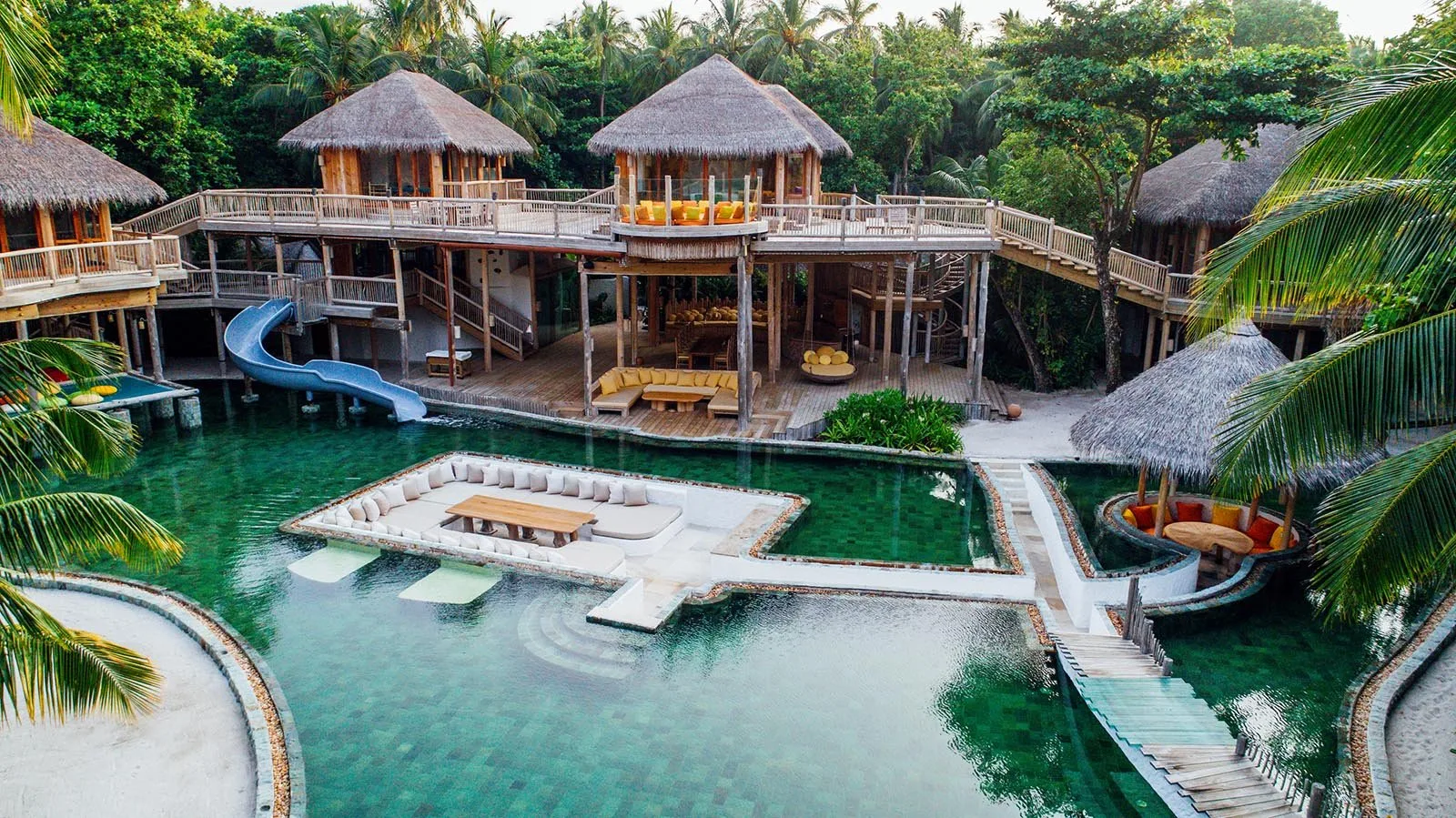
The numbers here are worth stating plainly. Sixty-three villas. Six hundred staff. Each villa with a dedicated Barefoot Guardian on call around the clock. The ratio works out to roughly 9.5 staff per villa, and it is not a marketing boast but a design specification. No amount of renovation budget or lobby design produces what this ratio produces, which is a quality of attentive service that feels effortless rather than efficient.
Our full review of Soneva Fushi covers the property in depth. The headline facts: shoes come off on arrival and go into a bag until departure, television sets are absent from all villas by founding policy, and the open-air Cinema Paradiso uses headsets rather than speakers to avoid disturbing the marine life at night. These are not quirky touches. They are the physical expression of a philosophy the founders built into the infrastructure rather than the brand language. Guests do not encounter “No News, No Shoes” as a concept. They encounter it as something physical: silence, and the specific texture of sand underfoot from the moment they step off the boat.
The World’s 50 Best Hotels 2025 ranked Soneva Fushi 28th and gave it the Art of Hospitality Award, the first time an Asian property has received it. The award recognises the philosophy of unhurried, hyper-personalised service specifically, not the size of the facilities. For children, The Den is a kids’ zone oriented around curiosity and making things, not around keeping small people occupied. We’d book one of the private island villas for families with teenagers who need room to disappear; beach villas work better with under-tens.
Jean-Michel Cousteau Resort, Fiji
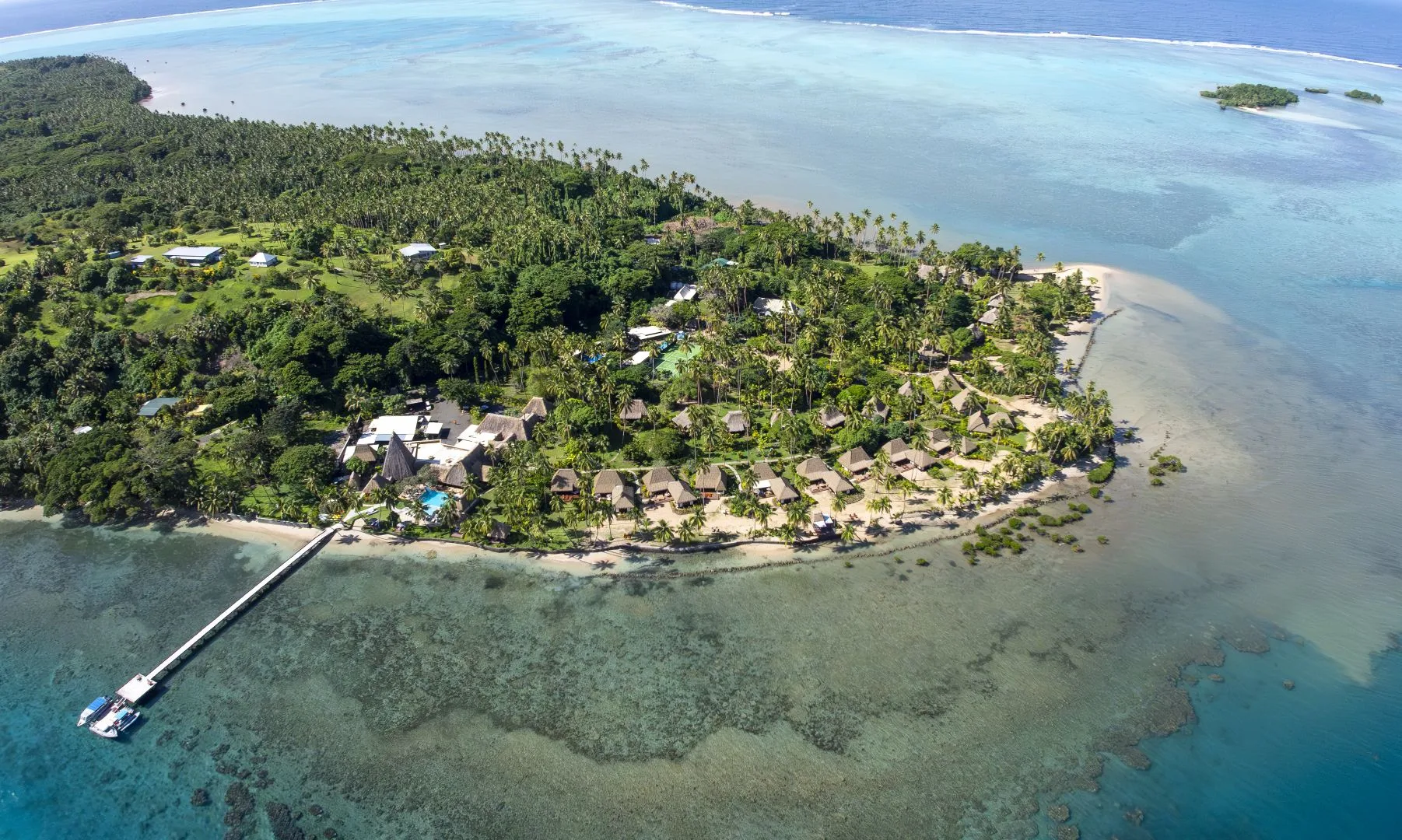
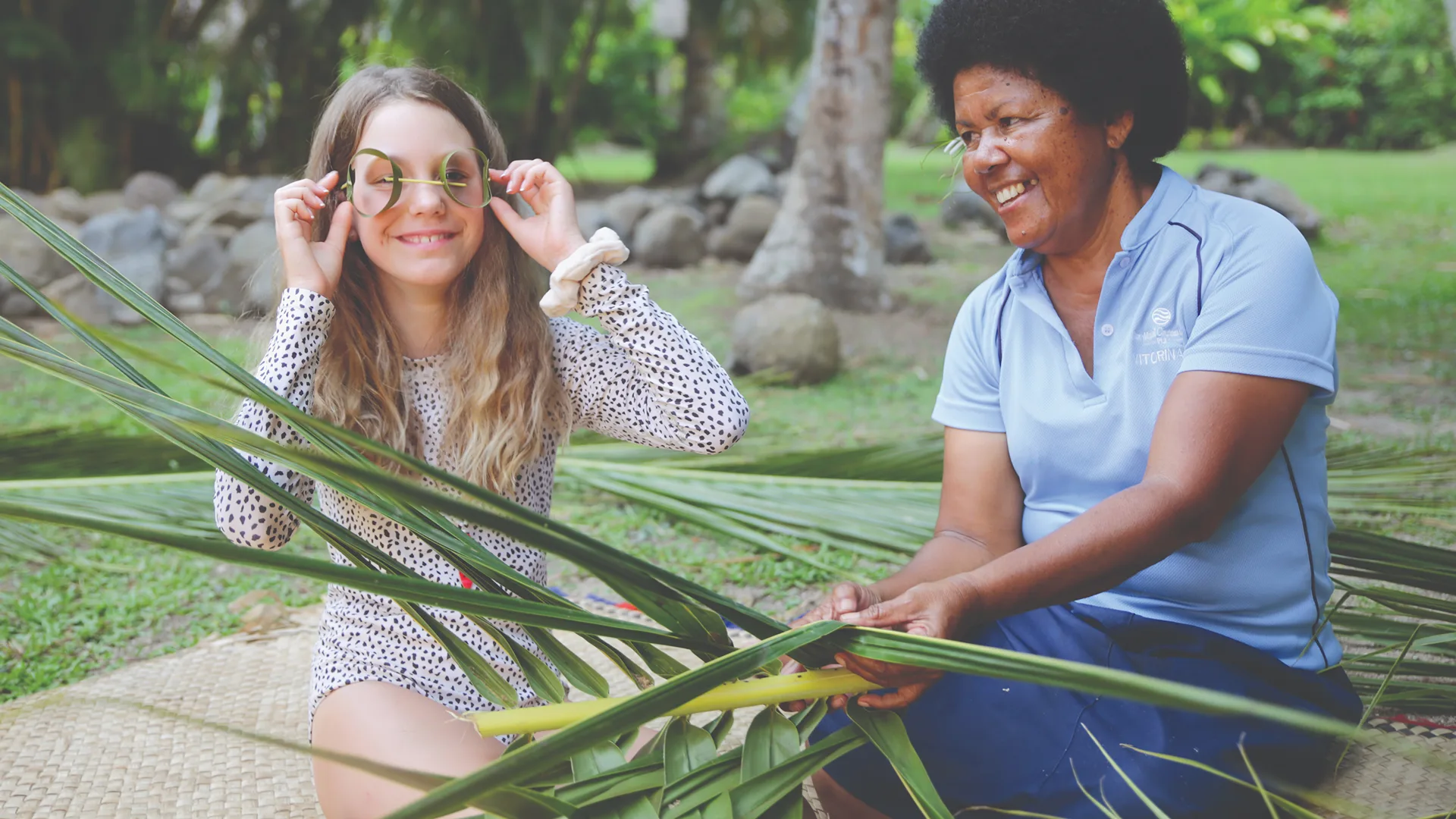
No televisions. No telephones. Both are founding decisions, made at opening and maintained for 30 years. The absence shapes the entire stay. What we found at Jean-Michel Cousteau Resort is a property whose architecture says the relationship between a family and this ocean is the thing, and it will not compete with screens for that.
The children’s programme is where the resort separates itself most clearly. Every child aged five and under receives their own included nanny for the entire stay. Children aged six to twelve get a personal Fijian “buddy,” a friend and cultural companion from check-in to check-out. The Kids Bula Club runs conservation work, ocean discovery, and cultural immersion rather than supervised play in an eco-themed wrapper. A six-hectare organic farm produces roughly a quarter of the resort’s food, and children visit it as part of the programme. This is not sustainability as a claim. It is sustainability as an operating fact, and children encounter it as such.
The MICHELIN Guide lists the property. The resort is widely recognised as a benchmark for sustainability-first luxury in the South Pacific. The real case, though, is simpler: this is the rare resort where removing the screens creates more for a family with school-age children rather than less. In our experience, the children who visit at eight years old tend to remember this particular trip at eighteen, which is not something that can be said of many resort holidays at equivalent cost.
Dachsteinkoenig Familux Resort, Gosau, Austria
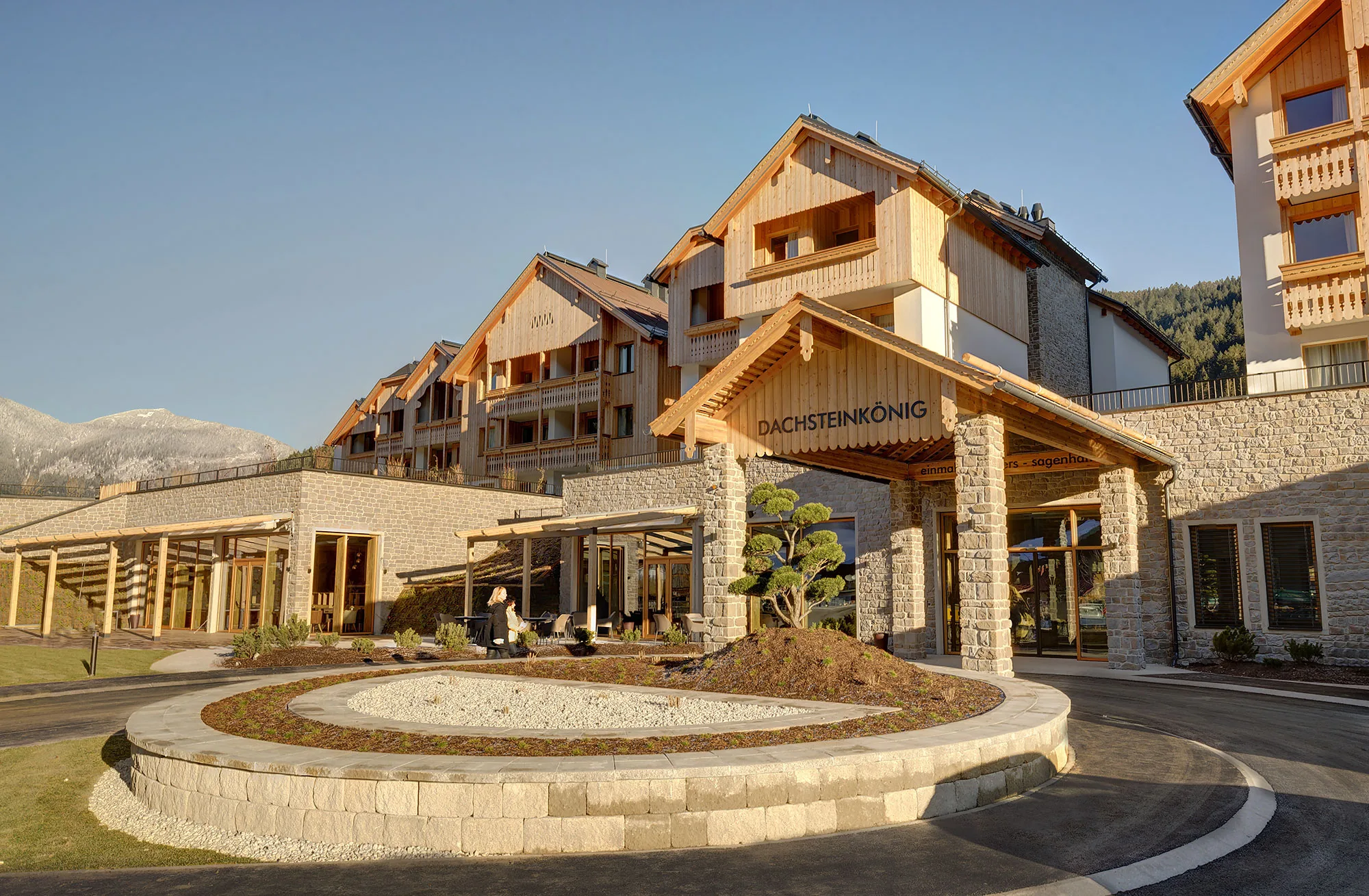
Austria does family hospitality better than most of Europe, and Dachsteinkoenig sits at the top of that category. Kinderhotel Award 2025, first place in Austria. recognised by Skiresort.info in the Children’s Hotel category. It has also earned Connoisseur Circle recognition across five separate years of independent travel assessment.
The design philosophy here is about separation rather than compromise. One hundred and five family suites, each with a dedicated children’s room, plus twelve private chalets with sauna. The adults-only wellness and sauna area is substantial, functioning as a parental sanctuary while children are occupied in their own world elsewhere in the resort. This is the solution to the central tension of family luxury that most properties paper over: the choice between your child and your rest. Dachsteinkoenig has built its physical infrastructure specifically to resolve that tension, so that neither parental rest nor a child’s experience needs to be sacrificed.
Set at the foot of the Dachstein massif in Upper Austria, the resort offers ski-in/ski-out access in winter and hiking and lake access in summer. The design ethos is described as “sophisticated, tastefully casual” which, in the Austrian context, means craft is taken seriously without performing formality. We’d book one of the private chalets for families wanting their own outdoor space and sauna. The suites are excellent; the chalets are a different level of privacy entirely.
Vila Vita Parc, Algarve, Portugal
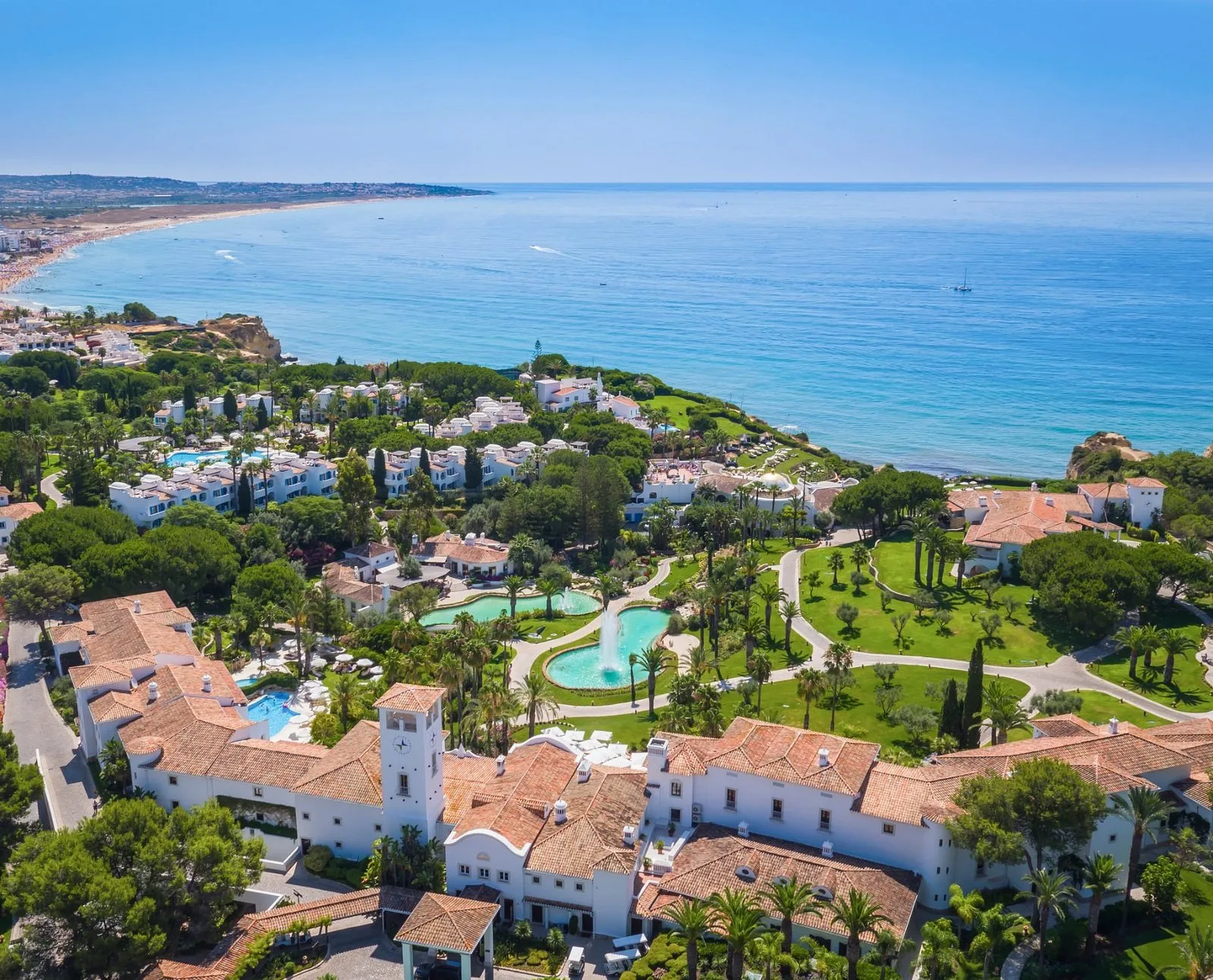
Fifty-four acres above the Atlantic coast. That scale produces something most hotels cannot replicate: the feeling of an estate rather than a resort, where multiple clusters of accommodation and dining are distributed across grounds large enough that you are never part of a managed crowd. Our full Vila Vita Parc review covers the balance between the formal and the informal across this particular configuration of space and service.
Three separate children’s clubs, divided by age. A crèche taking children from six months to three years. A Kids’ Park for ages four to twelve with marine biology sessions, ocean education through a Zoomarine partnership, cooking, and wellbeing programming. The Michelin two-starred Ocean restaurant, run by Austrian chef Hans Neuner, is adults-only; children eat at any of the other restaurants on the estate. The arrangement means nothing is compromised and nobody is eating somewhere they would not have freely chosen for the meal itself.
The Algarve is a practical destination: direct flights from most major European cities, warm water from April, a climate that is reliable without being relentless. Vila Vita’s estate scale makes it feel like a private world in a region that can tip toward crowded. For multi-generational groups where grandparent calm and toddler energy are happening simultaneously, the private pool villas sleeping four to ten are the right call.
Cheval Blanc Randheli, Maldives
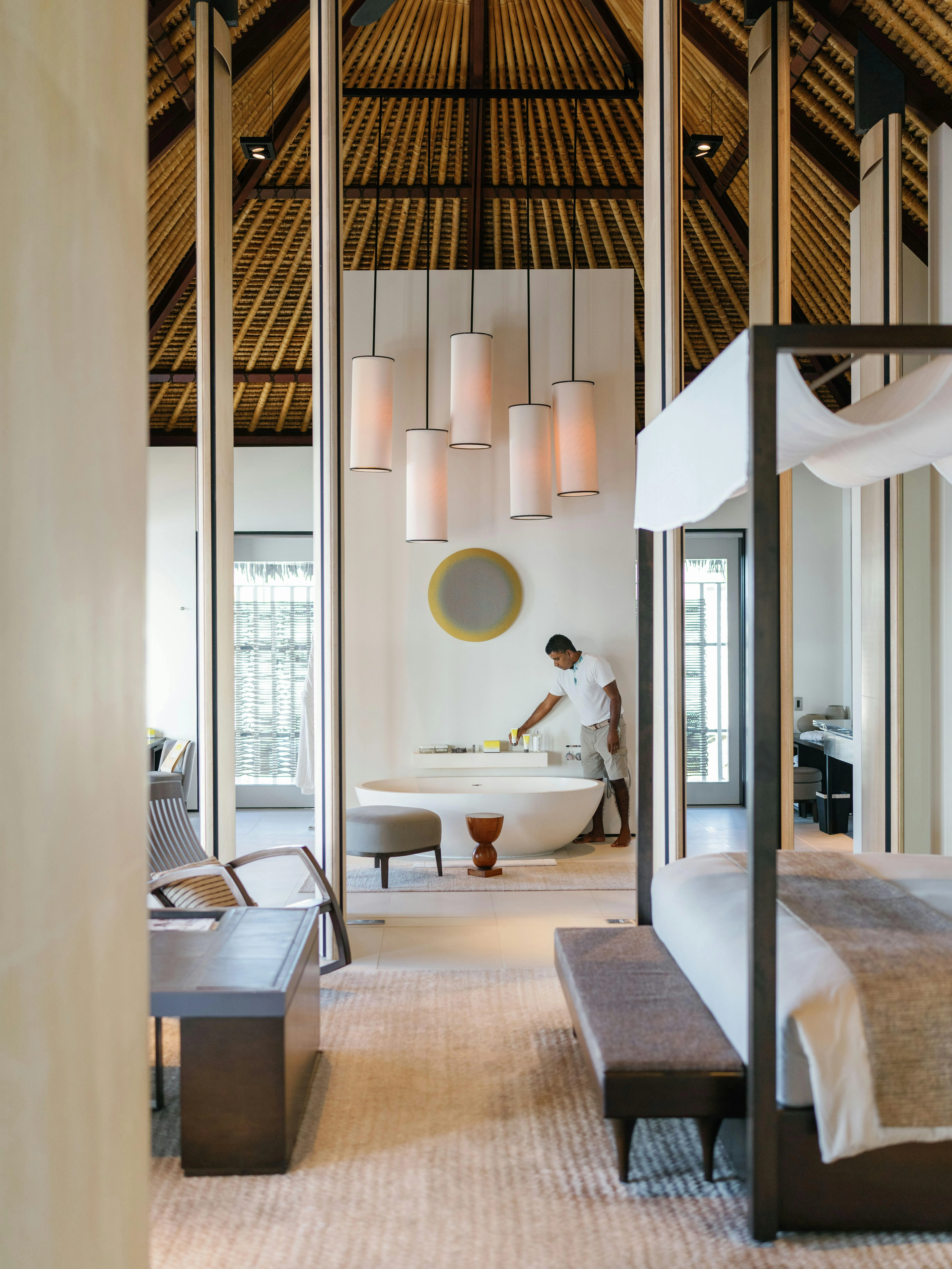
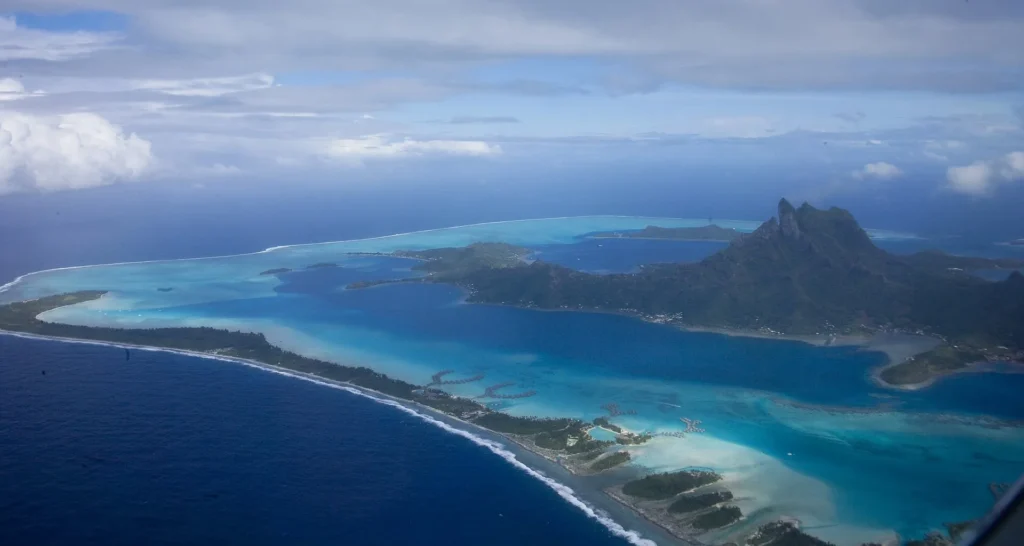
The Maldives is not short of properties that claim privacy. Cheval Blanc Randheli, in the northern Noonu Atoll, makes a specific and different case: French restraint applied to a tropical setting. LVMH ownership, Jean-Michel Gathy design, 46 villas (44 overwater, each with a private infinity pool). Our full Cheval Blanc Randheli review addresses the operational detail, including how the service model holds at peak occupancy.
What distinguishes this property within the Maldives category is the absence of noise. No DJ. No poolside entertainment programming. No crowd-building energy of the kind that competes with the atoll for your attention. The Noonu Atoll location is itself a design choice: further north, longer seaplane transfer, fewer surrounding resorts. The isolation is not accidental.
Le Carrousel, the kids’ club, runs a pool, slide, and creative nature workshops. Le Paddock for teenagers covers water sports, cooking labs, and gaming. Staff ratios in both clubs are sufficient for parents to hand off their children and sit by the water without conducting remote management from a sun lounger. That sounds like a minimum standard, but it is not something the majority of comparable properties at this price point reliably deliver.
Six Senses: worth watching closely
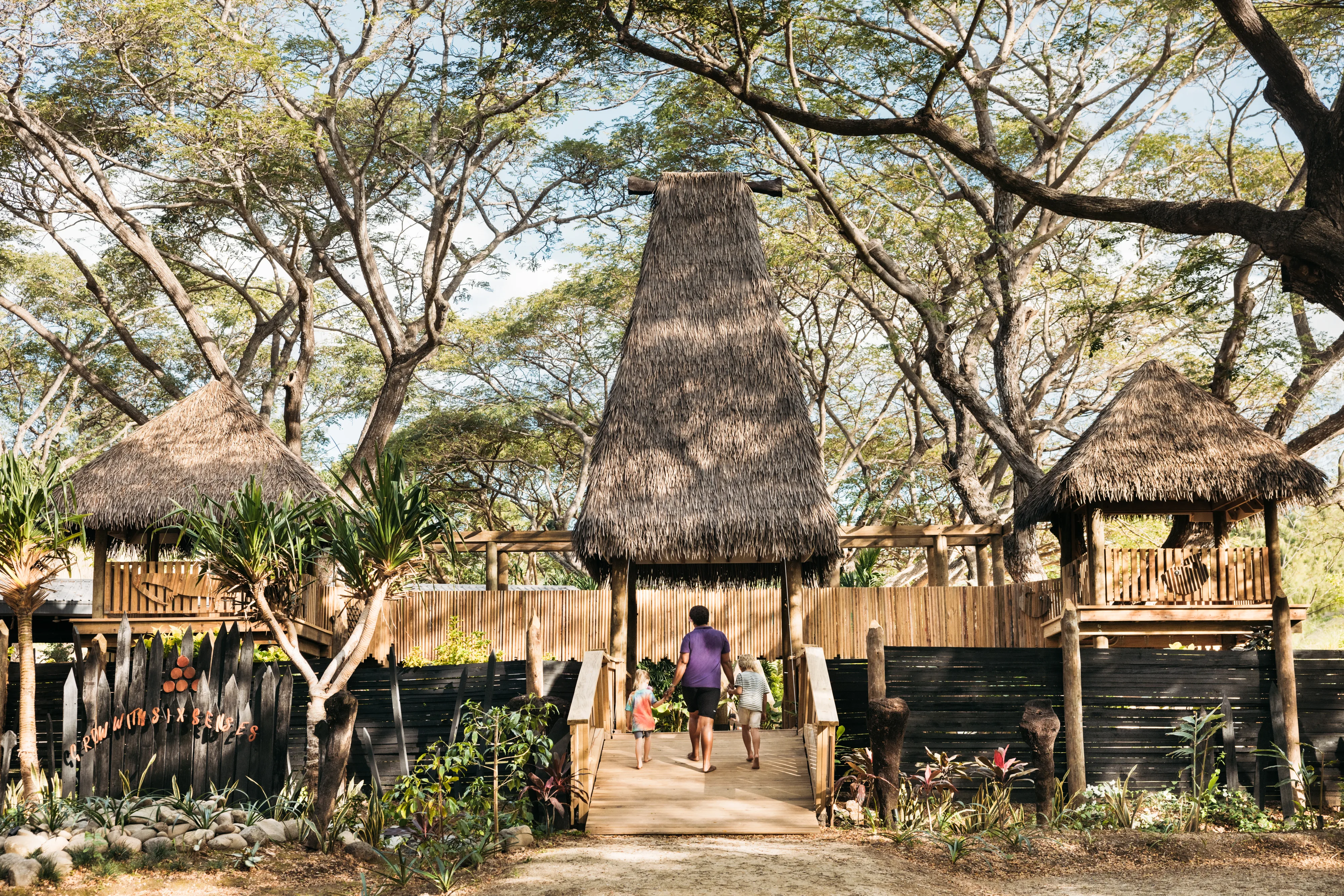
Six Senses does not yet have an FFH hotel review, but the brand belongs in this conversation. In 2025, it launched “Grow With Six Senses” globally: a children’s programme built around six dimensions of wellness including social, environmental, physical, and emotional. Children earn passport stamps as they move through activities. The Earth Lab runs upcycling and organic gardening workshops. Larger family suites, designed for multi-generational configurations, were also introduced alongside the programme and are now available across the portfolio.
This is structured experiential education delivered at hotel-group scale across more than two dozen properties worldwide. The ambition is real. Whether the execution is consistent across properties is the question we would want to answer with actual reviews before making firm recommendations.
Telling the real thing from the rebrand
“Quiet luxury,” “slow travel,” and “intentional hospitality” are being applied to properties that are calm mainly because they are understaffed, and have removed amenities rather than replaced them with something better. The hotel industry was working through significant labour shortages in early 2025, with around two-thirds of properties reporting staffing shortages — though only a small fraction described themselves as severely understaffed. “Minimalist staffing” is a convenient frame for a practical constraint.
The questions worth asking before booking a property in this category:
- Staff-to-guest ratio. Ask for the number. A property with a documented philosophy has it and shares it readily. Industry average for mid-luxury sits at roughly 1–2 staff per guest. Soneva Fushi runs 9.5 per villa. The gap between those figures is not cosmetic.
- Documented design choices. What did the founders specifically refuse to include, and why? “No televisions in bures” is a founding decision. “Curated calm atmosphere” is a phrase on a website.
- Children’s programme depth. Who runs it? What are their qualifications? What does a full day look like? A roped-off room with supervised activities is not a programme.
- Food provenance. Intention here tracks with intention everywhere. Jean-Michel Cousteau’s six-hectare farm is not decoration. It is the same instinct that produced the no-television policy.
The greenwashing parallel is exact: a “curated” programme is sometimes simply a reduced one, and a “private” resort is sometimes one that could not fill its rooms. Discernment is the job. The properties above have documented histories, real numbers, and specific choices that pre-date the marketing language by years.
What we would book
For a Maldives stay with children aged two to twelve, we’d choose Soneva Fushi over Cheval Blanc Randheli. Both are exceptional; Soneva’s staff ratio and No News, No Shoes philosophy produce a quality of unhurried attention that the LVMH polish does not quite match. Cheval Blanc is the right call for families with teenagers, or for parents who want French design rigour and properly adult mealtimes.
For a long-haul stay that is also an education, Jean-Michel Cousteau in Fiji is the one. The travel is real effort from Europe and the Americas. The combination of personal buddy for every child, no screens, Fijian cultural immersion, and a coral reef immediately outside the bure is a rare assembly of things that are hard to find together.
For European families who want to stay in the continent’s time zones: Dachsteinkoenig in Austria handles winter without compromise, and Vila Vita Parc handles summer. Neither tries to do everything. Both have decided what they are and built the infrastructure to support it.
The honest note across all five: this type of holiday costs serious money, and the properties are not pretending otherwise. What they’re selling is attention at a specific level, and that requires staff numbers and physical infrastructure that show up in the price. When a property in this category disappoints, the usual gap is between what the positioning promised and what the operation invested. These five have closed that gap, or come closest. The rest of the FFH hotel reviews apply the same standard.