
We have done the dawn-flight version of the European family trip: the 4 a.m. taxi, the security queue with a sleeping toddler over one shoulder, the wasted arrival day spent waiting for a room. The sleeper train is the antidote. Done properly, with a private en-suite cabin booked rather than a shared couchette gambled on, an overnight train is both your transport and your hotel for the night: you go to bed in a city and wake in the mountains, having paid for one thing instead of two. Here is the city-to-mountains itinerary we would actually book in 2026, leg by leg, with the trade-offs stated plainly.
The quick version
- The principle: on a long leg, the overnight train replaces a hotel night rather than adding one; one fare covers the journey and the bed, and kills the dawn airport run at both ends.
- Book the private cabin or don’t bother. The new-generation ÖBB Nightjet Comfort sleeper has its own en-suite WC and shower; that, or a whole privately-booked 4-berth couchette, is the FFH-grade experience. A shared 6-berth couchette with strangers and a corridor loo is not.
- Our spine: Paris → Berlin or Brussels → Prague on European Sleeper, then Vienna → Venice on the ÖBB Nightjet, finishing in the Dolomites at Sonnwies, or via the Austrian Alps at Kinderhotel Dachsteinkönig.
- Book 2–6 months ahead. Nightjet opens up to six months out; European Sleeper runs only three nights a week per route and the good cabins sell first.
- Don’t believe every line on the map. The headline new route, European Sleeper’s Brussels–Milan, is planned, not running: first departure 9 September 2026. Do not build a June family trip around an unbookable train.
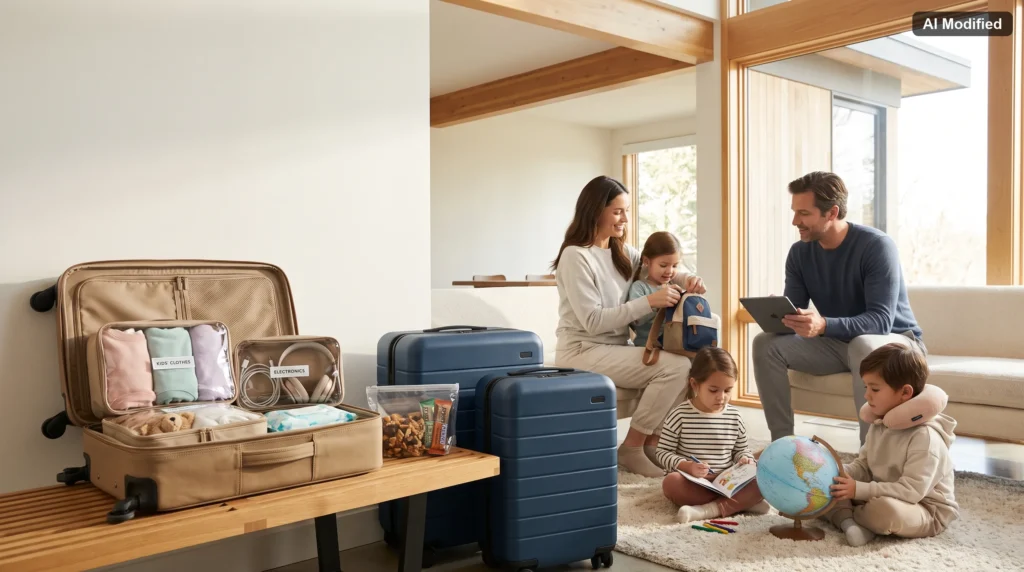
- Pack for a small box. Catering is thin, cabins are compact; bring supper, snacks and a night bag, and travel with one cabin-fold stroller (Stokke YOYO3) and one carry-on each (Peak Design 45L).

Why a sleeper now, and not five years ago
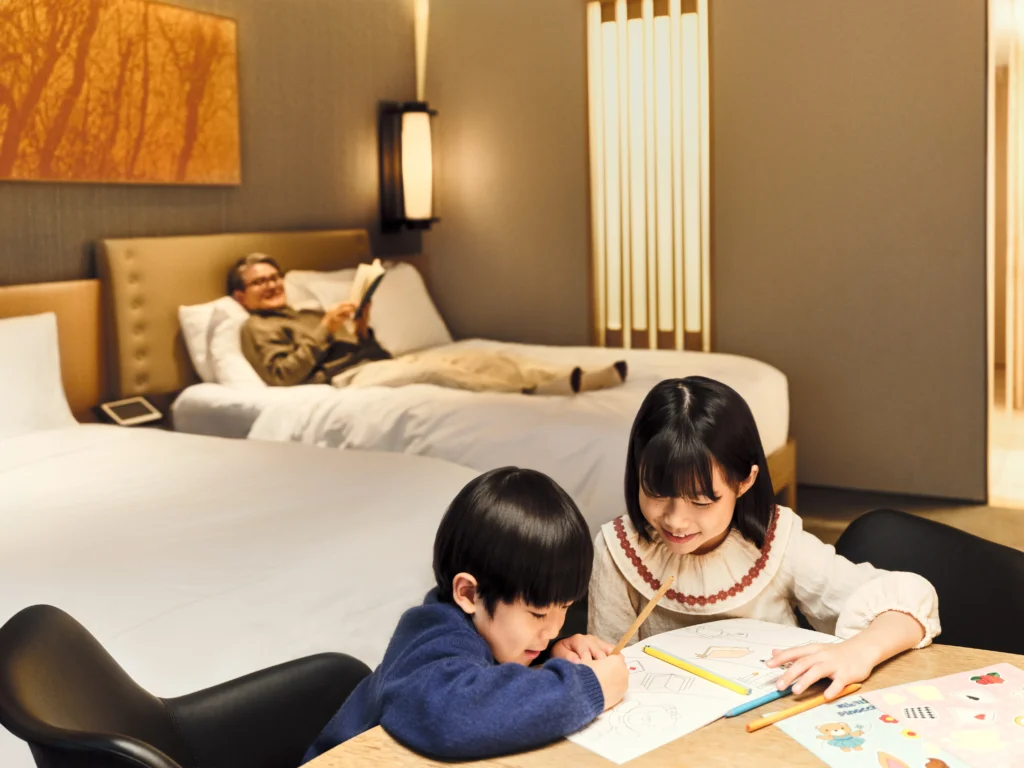
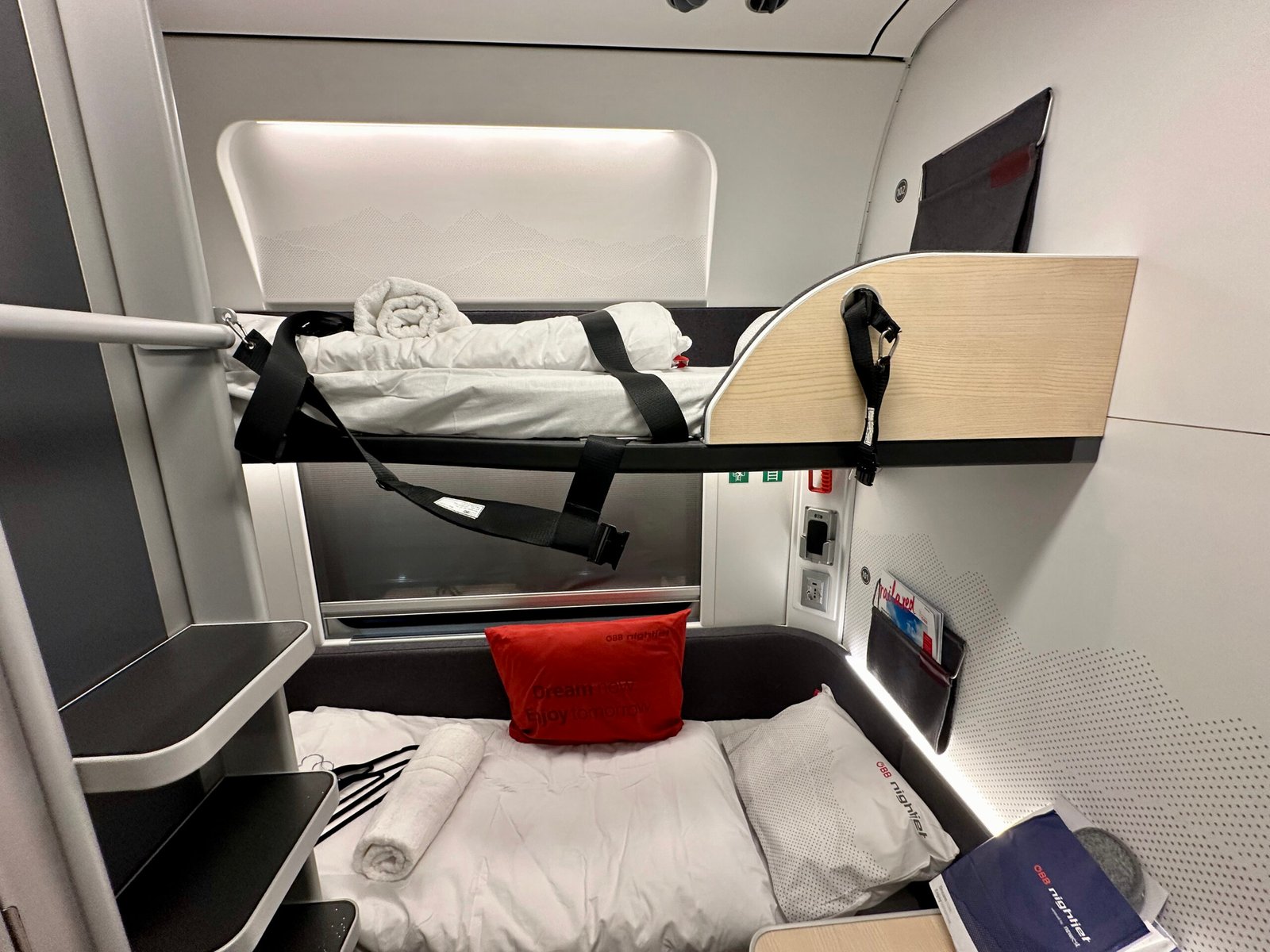
The thing that has actually changed is the rolling stock. ÖBB is rolling out a fleet of new seven-car Nightjet sets (built by Siemens and entering service in stages through 2026) and they are a different proposition from the rattling couchettes a lot of us last endured as students. Each new-generation train carries two sleeping cars whose Comfort compartments have their own en-suite cubicle (a private WC and a shower), not a shared loo down a swaying corridor. There is a Comfort Plus compartment with two transverse beds, a little more floor and a separate shower cubicle, and there are individual lockable mini-cabins for solo travellers. Beds are full-length (190–192 cm), with fixed ladders rather than the old fold-out gymnastics. That single upgrade, a private bathroom inside the cabin, is what turns a night train from an ordeal into a room with a moving view.
The network is widening at the same time. The 2026 night-train map published by the campaign group Back-on-Track in June adds five new connections, including European Sleeper’s revived Paris–Berlin and new Polish links to Prague and Munich. But the same map quietly drops about ten lines for 2026 (among them several ÖBB routes and the long Stockholm–Narvik run), which is exactly why the leg-by-leg discipline below matters: check the specific train still runs before you fall in love with it.

Leg 1: Paris → Berlin, the flagship overnight
Start in Paris. European Sleeper revived the Paris–Berlin overnight on 26 March 2026, running three nights a week. The eastbound service leaves Paris Nord at 17:45 and, calling at Mons, Brussels-Midi, Liège and Aachen, arrives Berlin Hbf around 09:59 the next morning; roughly seventeen hours, the bulk of it asleep. From 13 July 2026 the route extends to Hamburg, which is useful if your mountains are Nordic rather than Alpine.
This is the leg that proves the whole idea. You spend the late afternoon in Paris, have an early supper, board, and the children are asleep before Belgium. There are three comfort classes (sleepers, made-up couchettes and seats), with the sleeper the one to book for a family: budget seats start around €49, classic couchettes from about €79, and the proper Comfort Plus sleeper from roughly €139. That sleeper fare is the trick of this trip made visible: it is buying both the 700-kilometre journey and the night’s bed, so a Berlin hotel night and a morning of dead travel time simply vanish from the plan. Note the catch: the train towards Berlin runs only on Tuesday, Thursday and Sunday, so your dates have to bend to the timetable, not the other way round.
If your children are very small and the idea of a full night on rails worries you, the honest alternative on this corridor is a daytime Eurostar, which links Paris and Brussels city-centre to city-centre in 1 hour 22 minutes (under-fours travel free on a lap); do that hop by day and take the sleeper only on the longer stretch east. Knowing when not to take the night train is part of doing this well.
Leg 2: Brussels → Prague, the long, easy crossing
If you would rather thread the trip through Central Europe, European Sleeper’s Brussels–Prague service is the most relaxed long leg on the continent. The eastbound train (ES 453) leaves Bruxelles-Midi at 19:22 and runs via Amsterdam, Berlin and Dresden to reach Prague’s main station at 11:55 the following morning; about sixteen and a half hours, with a Classic shared compartment from about €70 one-way and private sleepers above that. It runs Monday, Wednesday and Friday eastbound.
The appeal for a family is that you cover four countries without anyone having to sit upright in a departure lounge, and Prague is a genuinely child-friendly arrival: trams, a castle, a riverbank. We have not reviewed a hotel in Prague, Brussels or Berlin yet, so we will name them but not pretend to a recommendation; treat these as commissioning notes for our editors rather than booked picks. What we will say is that this is the leg to choose if your idea of a holiday is cities rather than summits, and it dovetails neatly with Leg 1 because European Sleeper’s Berlin–Brussels segment runs on alternating nights, giving you six nights a week of connectivity across that stretch.
Leg 3: Vienna → Venice, the Dolomites gateway
This is our favourite leg, and the one that earns the "city to mountains" promise. The ÖBB Nightjet from Vienna to Venice runs straight through with no change: depart Wien Hbf 21:39, arrive Venezia Santa Lucia 08:34; about eleven hours, a proper night’s sleep. Fares step up cleanly by privacy: a berth in a 6-berth couchette from about €59, a 4-berth from €69, a bed in a 2-bed sleeper from €99, a single sleeper from €129. For a family of four we book the whole couchette or a two-bed sleeper so nobody shares with strangers, and on the new-generation stock that means the en-suite cabin, breakfast pushed through the door, and the Alps sliding past the window at dawn.
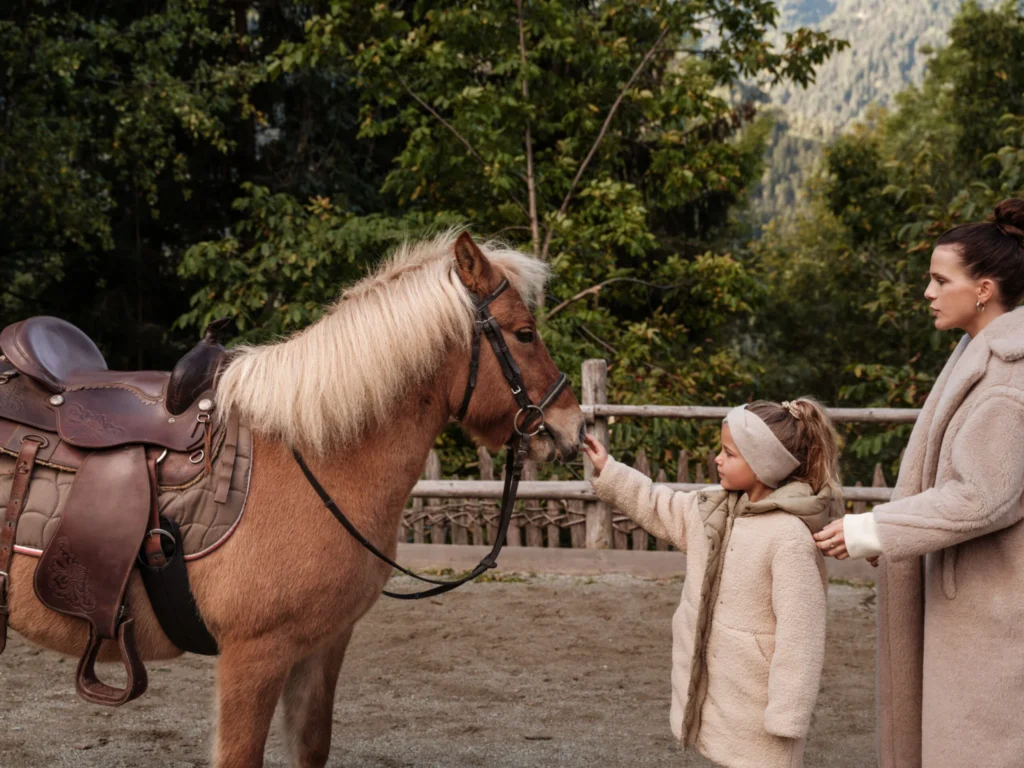
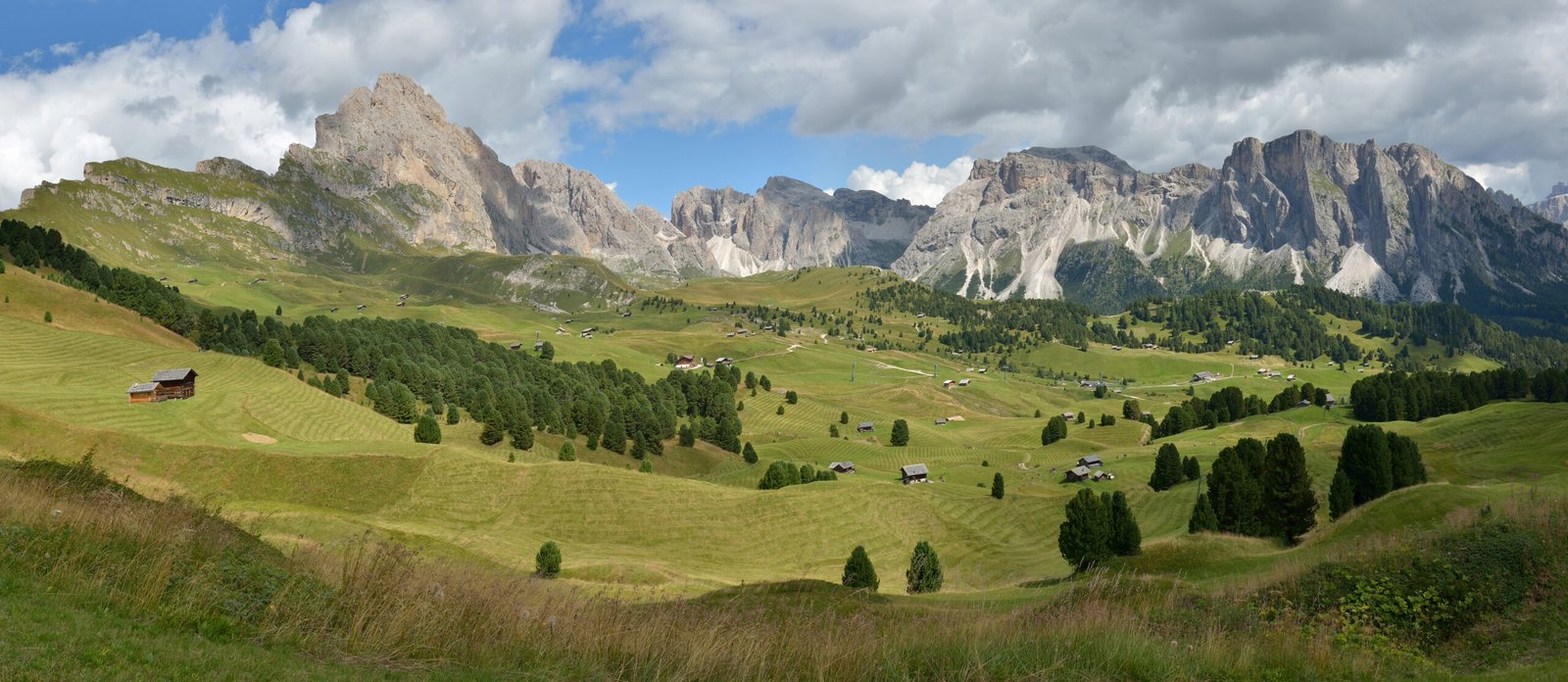
You arrive in Venice with a full day in hand. From there the Dolomites open up by rail and connecting bus: Bolzano sits a little over three hours from Venice, summer brings direct Frecciarossa services up to Bolzano, and Trenitalia’s FRECCIALink couples a fast train with a coach into Val Gardena: Ortisei, Santa Cristina, Selva. That is your overland route to the mountains payoff: Sonnwies in Lüsen, the design-led family hotel at the foot of the Dolomites, with its own farm, paddling pools and a kids’ world that takes children from babies upward. The broader region (see our Dolomites destination guide) is as good as European family travel gets, and reaching it without a single flight is the quiet win here.
One 2026 caveat worth knowing: ÖBB has pruned its Italian network for this timetable (the Munich/Vienna–La Spezia sleepers are gone, and the Wien–Florence-Rome and Wien–Verona-Milan trains have been re-routed via Graz), so confirm your exact train and stops at the time of booking rather than assuming last year’s pattern.
The Alpine alternative: Vienna → the Austrian Alps
If the Italian Dolomites are not your endpoint, the same overnight logic delivers you to the Austrian side. The new-generation Nightjet’s Comfort sleepers run on the core Austrian and German corridors, and from Salzburg or the Salzkammergut it is a short transfer to Kinderhotel Dachsteinkönig in Gosau, one of the strongest infant-and-toddler hotels in Europe, with childcare from days old and bath-warm baby pools. Take the sleeper into Austria, wake near the Dachstein, and you have done city-to-mountains without an alarm clock. For the wider snow-season picture (which Alpine and Dolomites hotels are worth the journey), see our companion piece, Best Family Ski & Snow Hotels: the Alps & Dolomites in 2026.
The Nordic variation: Berlin/Hamburg → Stockholm
For a summer trip north, Snälltåget runs a seasonal sleeper from Berlin and Hamburg via Copenhagen and Malmö up to Stockholm: Berlin depart 21:09, Stockholm arrive 13:17, around sixteen and a half hours, operating roughly late May to early January (daily in July). Book the private compartment (for your group of up to six, converted to beds with linen included) from about SEK 1,999 Berlin–Stockholm for two; seats are a fraction of that but not what you want with children overnight. Catering is honest about its limits: a kiosk between Berlin and Malmö, a restaurant only on the Swedish stretch, and a pre-order breakfast bag for SEK 99. New for 2026, Snälltåget also adds a daytime Stockholm–Hamburg train, so you can do one direction by day if a full night unsettles a toddler.
What it costs, and why it really does replace a hotel night
Run the maths and the appeal sharpens. A private new-generation Nightjet Comfort sleeper for two sits in the region of €107–€159 depending on dates, a single from about €159, and a whole family couchette from around €199, and ÖBB lets one to two adults plus up to four or five children take a private couchette at a package price. Every one of those fares is buying the journey and the night’s accommodation in one line item. Set that against a top-tier family room in Vienna or Venice, plus the dawn flight you would otherwise need to make the connection work, and the sleeper is frequently the cheaper option as well as the calmer one. The saving is real precisely because it is a subtraction: one fewer hotel night, one fewer airport, one fewer wasted day.
By age: who loves which leg
0–3. The cabin is tight and a light-sleeping baby may not love the motion, so book a whole private couchette or sleeper so there are no strangers and you can settle them on your terms. Ask the attendant for the bunk safety net; two small children can share a lower berth. Bring the milk and the supper: onboard food is minimal.
4–8. This is the bracket the sleeper is made for. The bunk beds and the ladder are an adventure, and breakfast handed through the cabin door at dawn is the kind of small magic that becomes the story of the whole trip. The Vienna–Venice leg, waking to the Alps, is the one they will remember.
9–12. Happy with a window, a reading lamp and a charging point at the bunk; let them track the route on a paper map. The longer crossings (Brussels–Prague, Berlin–Stockholm) suit this age: long enough to feel like a journey, short enough not to drag.
13–17. Manage expectations on connectivity: cross-border Wi-Fi is patchy to absent, so pre-load downloads before you board rather than promising a signal you cannot guarantee. Give them the upper bunk and an evening of films and most teenagers come round to the romance of it by morning.
The honest counter-point: when not to do this
We would be doing you a disservice to sell the sleeper as a cure-all. A few hard truths:
- The headline new route isn’t running. European Sleeper’s much-trailed Brussels–Milan has been pushed to a first departure of 9 September 2026 (German engineering works and Swiss certification), and the Amsterdam leg it was to carry is now not expected before 2027. Do not plan a summer trip around it.
- Shared classes are a false economy. A 6-berth couchette puts your family in with strangers and a corridor WC. If the private cabin or a whole-couchette booking is sold out, take a day train and a hotel instead. That is the whole point of booking early.
- Catering is thin. New-generation sleeper room service is limited and the hot dishes are microwaved; couchette breakfast is two rolls, jam and coffee. Bring a proper picnic supper and plenty of snacks.
- Short hops don’t justify a night. For a 90-minute corridor like Paris–Brussels, a daytime high-speed train plus one good hotel beats an overnight every time. Use the sleeper for the long legs, not the short ones.
- Light sleepers and motion. Trains stop, couple and accelerate through the night; some children sleep through it, some don’t. If yours is the latter, the daytime-train-plus-hotel version of any leg is no failure; it is the right call.
How to book it, and what we’d actually do
Book early and book private. Nightjet tickets open up to six months ahead; European Sleeper runs only three nights a week per route, so the good cabins go first: aim for two to six months out, and longer for peak summer and the Christmas markets. Reserve the new-generation Comfort en-suite sleeper on the ÖBB legs and a whole private couchette or two-bed sleeper on the others; never gamble a family on a shared compartment. Pack light and pack smart: one Peak Design 45L carry-on per person fits the compact cabin where wheelie cases do not, and a single cabin-fold Stokke YOYO3 handles the platform-to-cabin shuffle and the city days at either end.
If we were booking tomorrow, we would do this: an afternoon in Paris, the 17:45 European Sleeper to Berlin in a Comfort Plus sleeper; a few city days; then south to Vienna and the 21:39 Nightjet to Venice in a private en-suite cabin, waking to the Alps; and a final transfer up to Sonnwies in the Dolomites, or, for younger children, the Austrian-Alps version ending at Kinderhotel Dachsteinkönig. Two overnight trains, zero flights, two hotel nights saved, and the rarest thing in family travel: arrivals that feel like the start of the day rather than the wreckage of one.