
Key Takeaways
- ETIAS is a €20 online pre-travel authorisation for visa-exempt nationals (US, UK, Canada, Australia, NZ and around 60 others) entering the Schengen area. It is not a visa.
- Every passport needs its own application, with no family group option. Children under 18 and adults over 70 apply for free.
- UK citizens need ETIAS post-Brexit, regardless of prior EU travel history.
- ETIAS is not yet open. Launch has shifted from Q4 2026 to 2027. Any site currently charging for ETIAS is a scam.
- The application takes around 10 minutes; most approvals arrive within minutes. Authorisation is valid for 3 years or until passport expiry.
- EES, the EU’s biometric border stamp, is already live since April 2026. It requires no advance application but adds time at first Schengen entry.
Practical Checklist
- Wait for the official launch announcement in 2027, then apply at travel-europe.europa.eu/etias only.
- Apply for every passport in the travelling party, including infants and toddlers (free under 18, free over 70).
- Apply at least two weeks before departure to allow for any manual review (up to 4 days) or document requests (up to 14 days).
- Check that each passport has at least 3 months’ validity beyond the planned departure date from the Schengen area.
- For skip-generation travel, prepare a Declaration of Representation if a grandparent will apply on a child’s behalf.
- If a child’s passport expires and they get a new one, the old ETIAS is void — submit a new (free) application.
- Factor extra border time into connections at Schengen airports: EES biometric registration has lengthened first-entry queues.
What if the one piece of admin you forgot stranded your family at check-in before a €15,000 European summer? ETIAS, the EU’s new pre-travel authorisation, is coming — and the families most likely to get caught are the ones who book the trip perfectly and handle the paperwork last.
The quick version
- ETIAS is mandatory for visa-exempt nationals (US, UK, Canada, Australia, NZ and around 60 more) entering the Schengen area. It is not a visa: it is a €20 online authorisation, valid for 3 years or until your passport expires.
- Every passport in your family needs its own application, including infants and toddlers. Children under 18 apply for free. Adults over 70 also apply for free.
- UK citizens need it. Brexit removed the right of free movement; British passports are on the required list regardless of prior EU ties.
- The application takes roughly 10 minutes. Most decisions arrive within minutes; a small number go to manual review, which can take up to 4 days.
- ETIAS is expected to launch in 2027. Q4 2026 was officially declared no longer feasible in July 2026. It is not yet possible to apply, and any site currently taking money for ETIAS is a scam.
- EES, the EU’s biometric border stamp, has been live since April 2026. It requires no advance application, but it does add time at first entry into the Schengen area.
What ETIAS is (and what it isn’t)
The European Travel Information and Authorisation System is the EU’s pre-travel screening programme for nationals of visa-exempt countries. Think of it as the Schengen equivalent of the US ESTA or the UK’s own ETA: you complete a short online form before you travel, pay a small fee, and receive an electronic authorisation linked to your passport. No consulate visit, no physical documents, no interview — the process is entirely online, and you need only a valid passport, an email address, and a payment card.
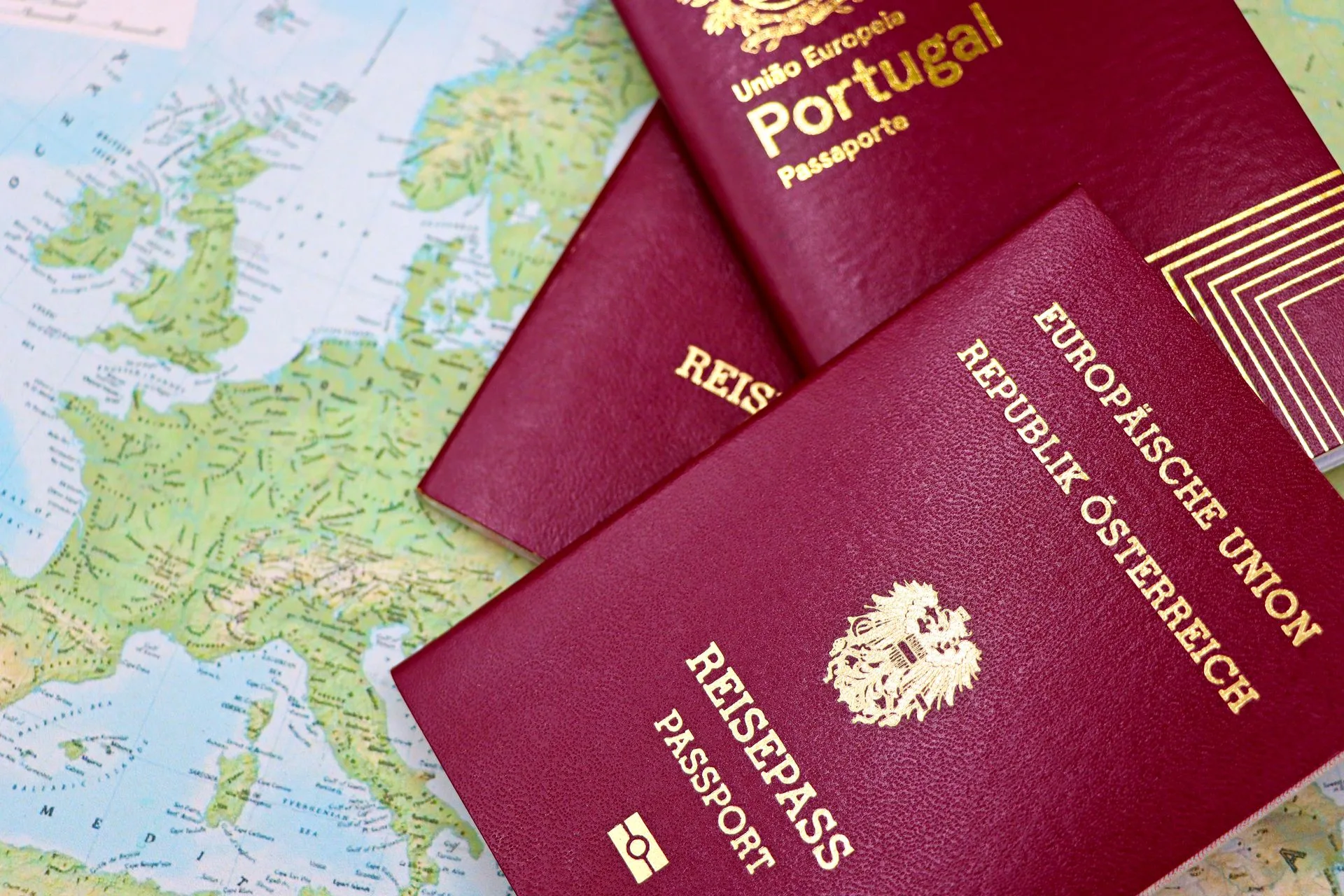
What ETIAS is not is a visa. It does not grant unconditional entry rights (Schengen border officers retain full discretion) and it does nothing for nationalities that already require a Schengen visa. If your passport currently requires a visa to enter Europe, ETIAS changes nothing for you. For the roughly 60 visa-exempt nationalities it covers, it adds one step: a mandatory pre-clearance before the trip, completed at home in advance rather than at the border.
One point of persistent confusion worth addressing directly: ETIAS is frequently conflated with a separate system called EES, which has already launched. They are different things. EES went fully operational across all Schengen external borders on April 10, 2026. It is an automated biometric border-stamp (fingerprints and a facial image) that replaces paper passport stamping. You do not apply for EES, you do not pay a fee, and there is nothing to prepare in advance. It happens automatically when you present your passport at the border. The practical consequence for families is longer queues at first entry into the Schengen zone, particularly at major airports in peak season. EES caused measurable disruption at European airports during summer 2026, prompting aviation industry bodies to write to EU leadership warning the situation had reached a critical point. That disruption, and the reluctance to layer another new system on top before EES stabilised, is the direct reason ETIAS has been pushed back again.
Who needs it: every passport in your family
The nationalities that will require ETIAS include the United States, the United Kingdom, Canada, Australia, New Zealand, Japan, South Korea, Brazil, Mexico, Singapore, the UAE, Israel, Ukraine, and most of Latin America. If your passport currently lets you enter the Schengen area without a visa, it almost certainly goes on the ETIAS list.
For British families, a word of particular clarity: UK citizens need ETIAS. Post-Brexit, British passports no longer carry Schengen membership or free movement rights. The UK was explicitly placed on the ETIAS-required list when the regulation was drafted. Decades of European travel without form-filling do not create an exemption, and having previously held an EU passport changes nothing about the position under current law.
For families, the more operationally significant rule is this: every passport holder needs their own separate authorisation. There is no family group option, no add-a-child function, no blanket coverage under one adult’s application. A family of four (two parents, two children) needs four applications. A family of six travelling with grandparents needs six applications. This sounds obvious stated plainly, but the error pattern that will catch families out is almost certainly the same in every case: adults apply, forget the toddler, arrive at check-in, and discover that an infant in a pram needs a document the portal can provide in minutes. That scenario (avoidable with five minutes of extra care at the application stage) is the genuine operational risk at the heart of this article.
The fee exemptions matter here. Adults aged 18 to 70 pay €20 each. Children under 18 pay nothing. Adults aged 70 or over pay nothing. A family of two parents with two children pays €40 in total. Two grandparents travelling alone with a grandchild pay nothing at all, but all three still apply. The application itself is always required; the fee waiver is applied automatically based on the passport birth date.
One nuance for skip-generation travel: a grandparent can submit an ETIAS application on a grandchild’s behalf only with documented legal guardianship or a signed Declaration of Representation from the parents. An older sibling without documentation cannot apply on a younger child’s behalf. If grandparents are taking grandchildren to Europe without parents present, sort the paperwork chain well in advance — it is not complicated, but it requires a document from home that takes time to prepare.
Mixed-nationality families add another layer. A US-passport-holding parent and a UK-passport-holding parent both need ETIAS; their French-passport cousin in the same travelling party does not. Each person’s ETIAS requirement follows their individual passport, not the group’s collective nationality.
The timeline: when it starts, and when to apply
Here is where things stand as of July 2026: ETIAS is not yet accepting applications. The official portal still carries Q4 2026 as the target launch date, but EU-LISA (the agency responsible for building and running the system) has formally acknowledged this is no longer achievable, and the realistic launch window has shifted to 2027 with no specific month yet confirmed.

This will not surprise anyone who has followed the system’s history. ETIAS was originally legislated for 2021 and has been postponed in every subsequent year, 2022 through 2025, each time for a combination of technical and political reasons. The EES rollout has been the most recent blocker: EU officials concluded it would be unwise to introduce ETIAS while airports were still adapting to the biometric border-stamp. The prerequisite is finally in place; the implementation agency has simply run out of road for a 2026 delivery.
For practical planning, this means: if you are travelling to Europe in 2026, you do not need ETIAS. If you are travelling in 2027, treat it as a near-certainty. Book your trips now without concern, and add ETIAS to the pre-travel checklist once the portal opens and the confirmed launch date is announced. Once live, apply at least two weeks before departure. Most applications resolve in minutes, but the fraction referred for manual review can take up to four days, and cases requiring additional documentation can take up to fourteen days.
When ETIAS does launch, expect a grace period of approximately six months during which the requirement is encouraged but not yet strictly enforced for boarding. After that window closes, an airline that boards a passenger without valid ETIAS faces substantial EU member-state penalties and may be required to cover the cost of returning denied passengers. Airlines will check, including at online check-in, by querying ETIAS status against the passport number entered when booking. An invalid or missing authorisation will surface before the airport queue, not at it.
The three-year validity means that once you apply, you are covered for multiple European trips without reapplying: one application, three years of travel, or until the passport it is linked to expires, whichever comes first. A child who travels frequently to Europe will apply once and be covered throughout primary school. The one catch to note: if a child’s passport expires and they receive a new one, the ETIAS on the old document becomes invalid, and a new (free) application tied to the new passport number is needed before the next trip.
The cost and the family maths
The fee is €20 per person for adults aged 18 to 70. It was raised from the original €7 set in the 2018 regulation, revised in July 2025 to reflect inflation and the real cost of screening 1.4 billion potential travellers across multiple EU security databases. The figure is broadly in line with comparable systems: the US ESTA runs around $40, the UK’s ETA is £20.
The family maths is simple. Two parents plus two children under 18: €40 total. Two parents, two grandparents over 70, and three children: €40 total (only the two parents pay; grandparents and all children are fee-exempt). A solo travelling grandparent with one grandchild: €0. In every case, every person in the travelling party still submits their own individual application, and the fee waiver for the age-exempt members is applied automatically by the system.
Against the cost of the European family trips worth doing, €40 is a rounding error. The real risk is not the fee. It is assuming that one adult’s application covers someone else in the party, at any age, including infants who will not even remember the trip.
How to apply: the only safe route
The single official ETIAS portal is at travel-europe.europa.eu/etias. That is the only legitimate address; all genuine EU digital services sit on the europa.eu domain, and there is no ETIAS mobile app, no third-party service that can apply on your behalf at a legitimate fee, and no reason to use anything other than the official portal.
The scam risk is real and well documented. More than a hundred unofficial websites have been identified impersonating the legitimate ETIAS system, copying the look of official EU portals and charging inflated fees. Some charge €50 or more for a service that costs €20 or nothing. ABTA, Frontex (the EU’s border agency), and multiple consumer organisations have issued public warnings. The rule is absolute: the only safe ETIAS portal is travel-europe.europa.eu/etias. Since the system is not yet open, any site currently accepting ETIAS applications or payment is fraudulent.
When the portal opens, what you will need is: a valid passport with at least three months’ validity beyond your planned departure from the Schengen area; an email address (all communications, including the authorisation itself, arrive by email); and a credit or debit card for the fee where it applies. No flight bookings, hotel confirmations, or supporting financial documents are required at the application stage. The form asks yes/no questions about travel history, health conditions, and criminal record. The process takes approximately ten minutes, and for most applicants the decision arrives within minutes of submission.
A small proportion of applications are referred for manual review, typically triggered by database flags such as prior overstays, undeclared criminal convictions for serious offences within the past twenty years, or inconsistencies in declared travel history. Manual review takes up to 96 hours. If additional documentation is requested, up to 14 days. An interview requirement (rare) extends this to 30 days. Refusals can be appealed, but the ETIAS remains invalid during an appeal and the traveller cannot enter the Schengen area while awaiting the outcome. The case for applying early rather than close to departure is clear: the system rewards planning ahead, and the families most likely to sail through are those who sort it weeks before, not the night before the flight.
EES: the other new border requirement you need to know about
Since April 10, 2026, every non-EU, non-exempt traveller entering the Schengen area for a short stay has their passport details, facial image, and fingerprints registered in a digital biometric record at the border. This is EES (the Entry/Exit System) and it is already live at every Schengen external border. Unlike ETIAS, it requires nothing from you in advance: no application, no fee, no form. You present your passport; the biometric capture happens automatically. Children under twelve provide a facial image only; twelve and over provide fingerprints as well. The practical consequence is that first entry into the Schengen zone now takes measurably longer, particularly at high-traffic airports during summer peak, so build extra time into your connections and explain to children what will happen at the border so the biometric step does not catch them off guard.

The European trips worth having: sorting this first
The Schengen zone covers the continent’s most compelling family destinations: the Dolomites in autumn light, the Aegean in July, Atlantic Portugal, the Austrian Alps in deep winter. A summer week at Sani Beach in Halkidiki or Ikos Dassia on Corfu will require a short online form for every non-EU passport in your party. A ski week at Sonnwies in the Dolomites or Kinderhotel Dachsteinkönig in Austria will need the same. If you are building a family ski trip to the Alps or Dolomites, or designing an itinerary by sleeper train across Europe, ETIAS will be part of the pre-departure checklist before long, and the same authorisation covers every Schengen trip for three years once issued.
None of this is burdensome. The application is ten minutes, the fee is modest, and the authorisation covers three years of European travel. What it requires is applying for every passport individually (adults and infants alike) and doing it at the official portal only. Bookmark travel-europe.europa.eu/etias, watch for the confirmed launch announcement in 2027, and when the portal opens, work through every passport in the household before you work through anything else in the pre-trip checklist. The Europe that justifies a long-haul flight or a carefully chosen hotel is worth a ten-minute form.